Uploaded Tactic
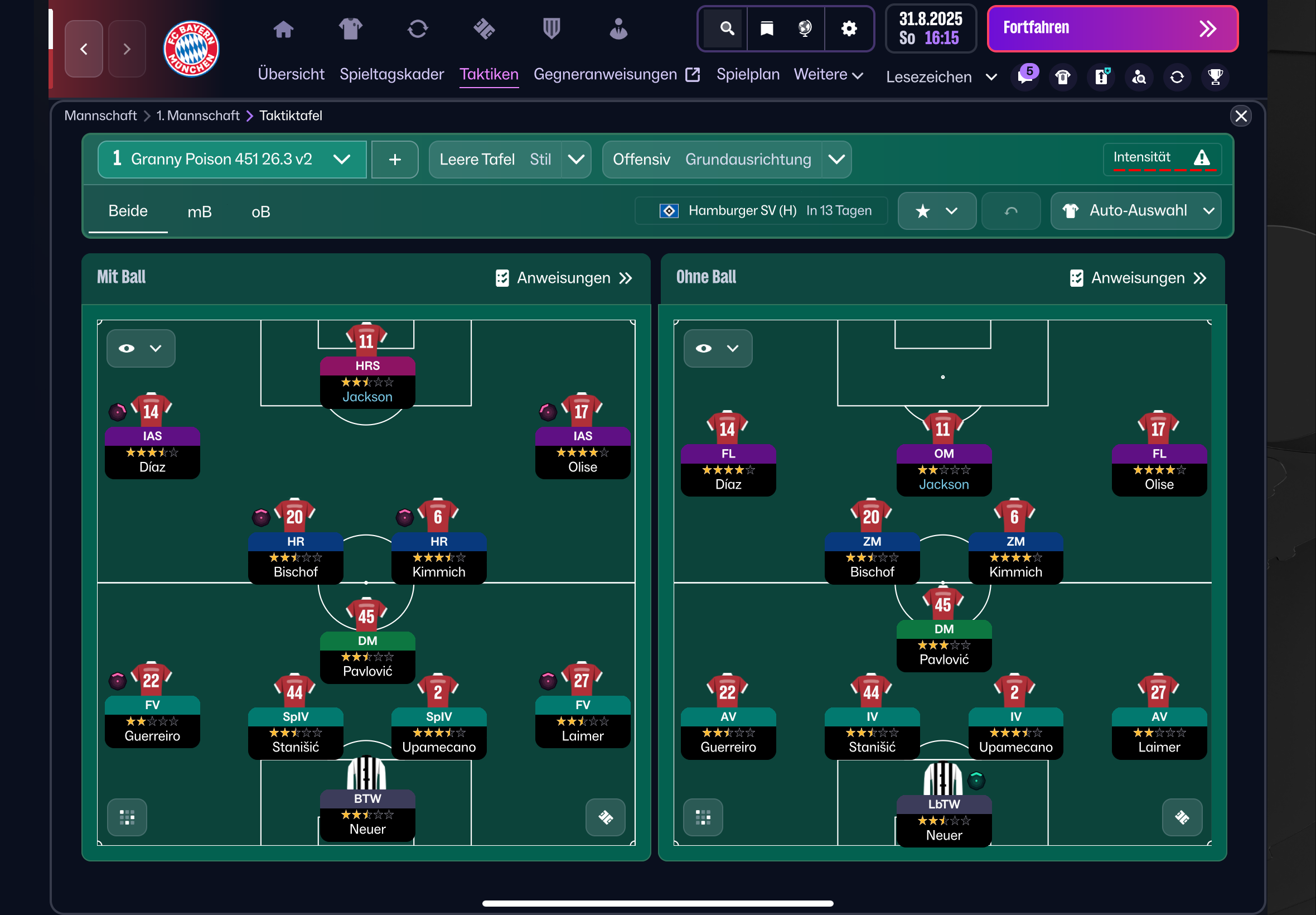
Formation & Style
Tactical Style:Offensiv
Mentality:Attacking
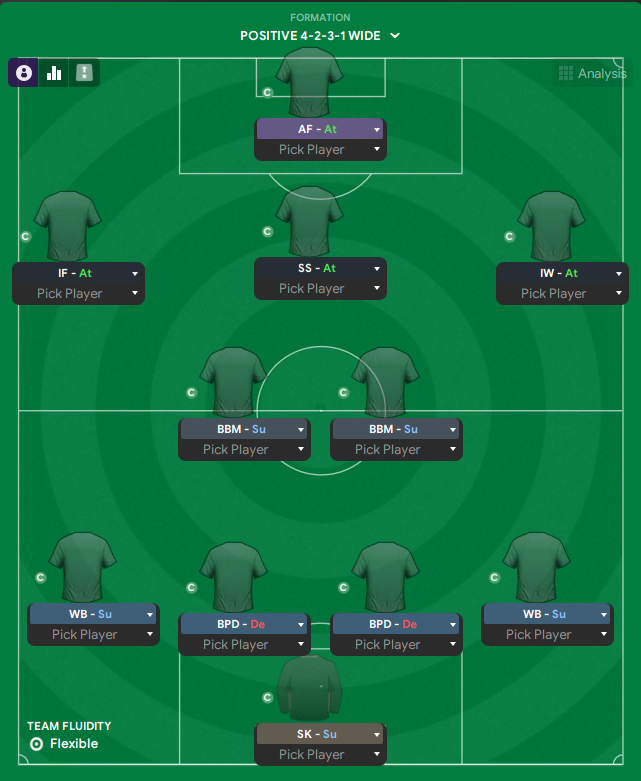
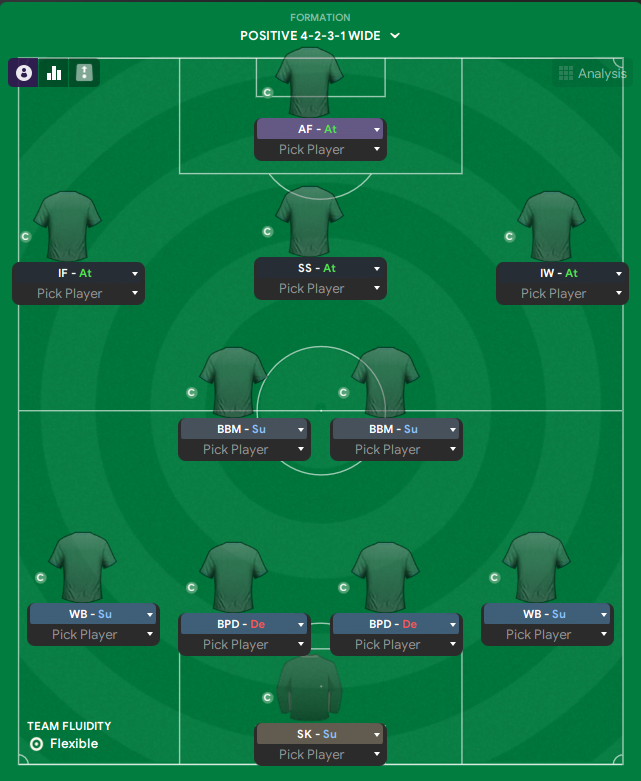
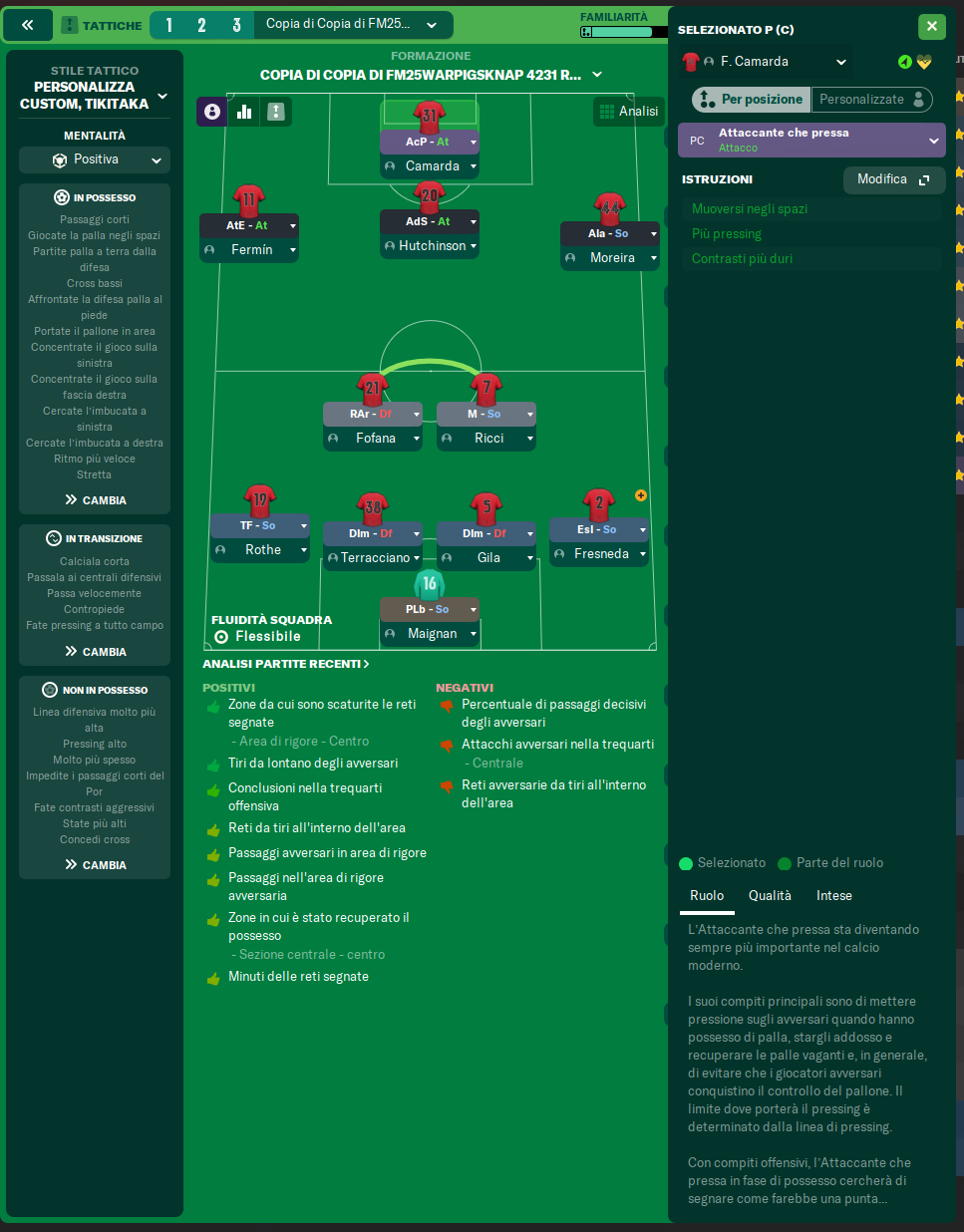
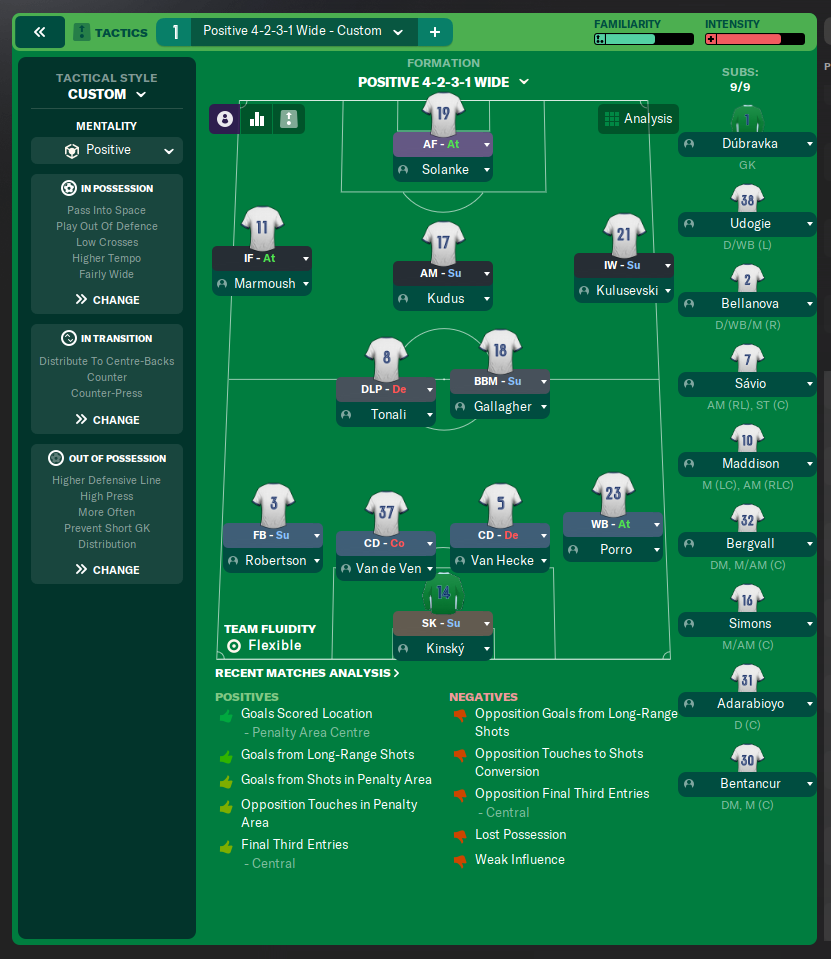
Formation:4-2-3-1 Wide
Team Fluidity:Structured
In Possession
Play Out of Defence
Be More Expressive
Work Ball Into Box
Focus Play Through the Middle
In Transition
Counter-Press
Counter
Out of Possession
Higher Defensive Line
Higher Line of Engagement
Prevent Short GK Distribution
Team Shape Without Ball
Shape:4-2-3-1
Description:Compact defensive framework with support from midfielders to limit opponent's space.
Evidence:DM at [3,3] with 'Defend' duty, Full-Backs at [2,1] and [2,5] providing width.
Team Shape With Ball
Shape:4-2-3-1
Description:Wide shape in attack with versatility to switch between central and wide penetrations.
Evidence:Inside Forwards at [6,1] and [6,5] stretching the defense, creating room for the ST at [6,3].
Phase Description
Attacking Play
Utilizing the width provided by the full-backs and inside forwards to create spaces for the shadow striker.
Defensive Transition
Immediate pressure applied to regain possession, inviting the opponent to make mistakes.
Main Focus
Creating overloads in the central and wide areas to penetrate the opponent's defensive shape.
Key Strengths
Central Control
The midfield triangle of two CM and a DM ensures control of the central areas.
Width and Depth
Utilizing inside forwards to stretch the pitch and create opportunities for penetration.
Defensive Solidity
The back four with a dedicated DM provide a strong foundation to prevent counterattacks.
Conflicting Directions
High Defensive Line vs. Quick Opponents
A high defensive line may expose defenders against rapid counter-attacks.
Transition Vulnerability
Possible disconnection in midfield during transitions can lead to quick turnovers.
Overcommitment in Attack
Attacking players may leave defense exposed with aggressive forward runs.
Tactical Suggestions
Strengthen Transition Defense
Consider adding a more defensive duty for one of the CMs to cover for counterattacks.
Adjust Defensive Line
Evaluate the need for a slightly lower defensive line against faster attacking teams.
Increase Central Width
Utilize a roaming playmaker to enhance central control and link play more effectively.
Ask Questions About Your Lineup
Related Tactics
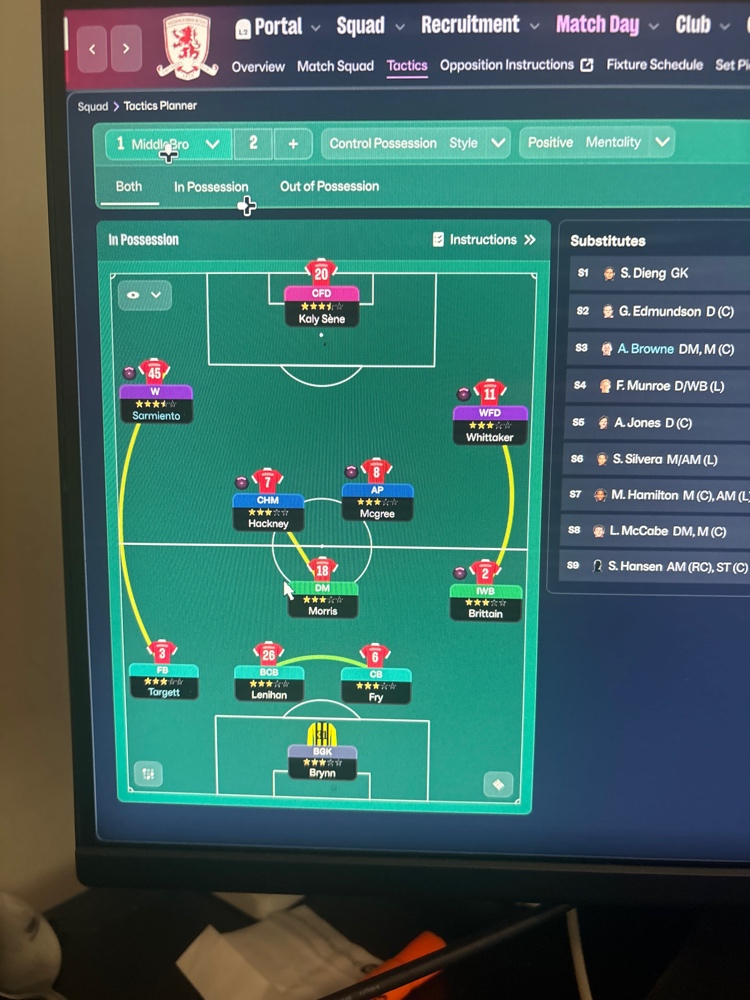
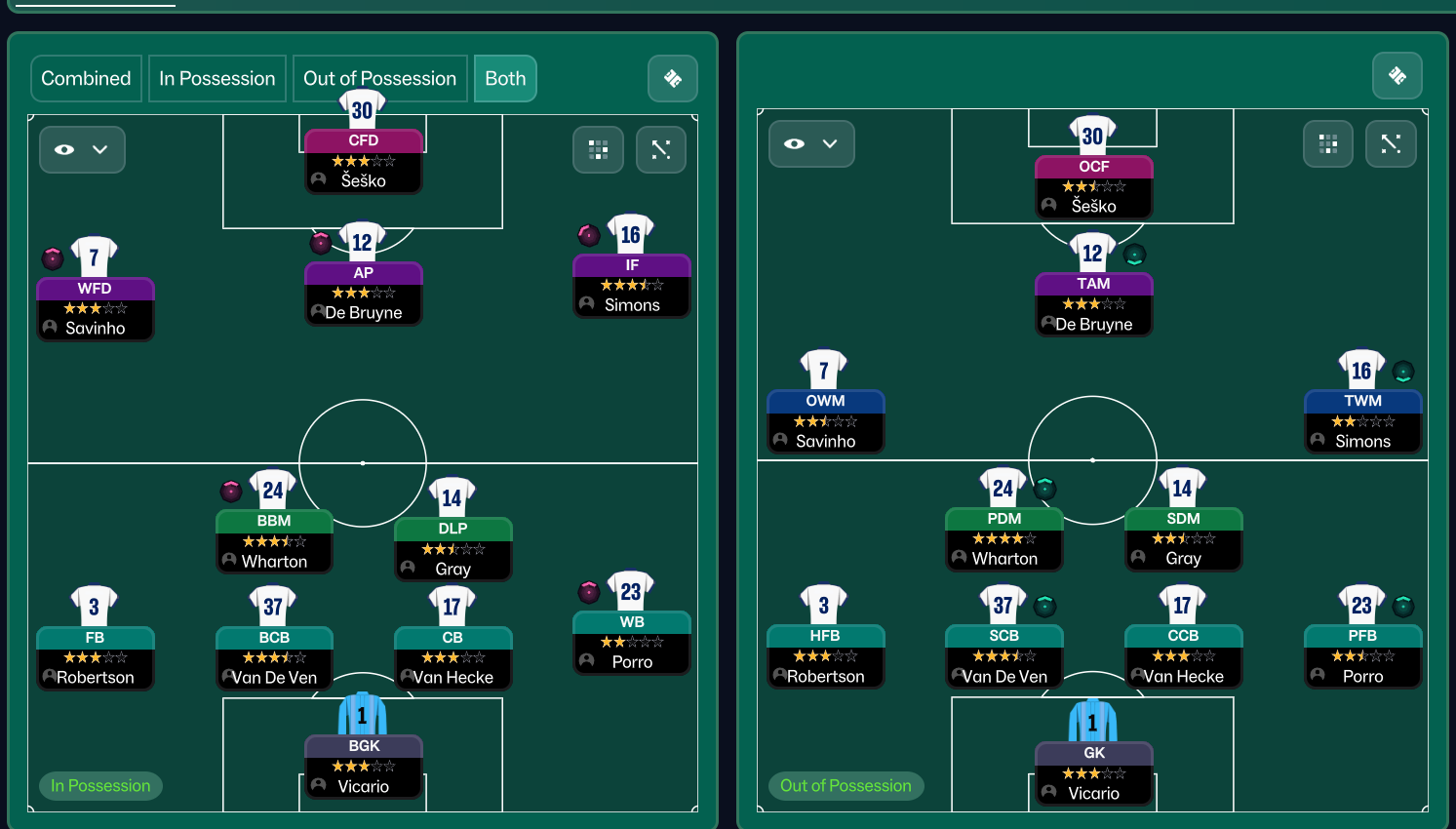
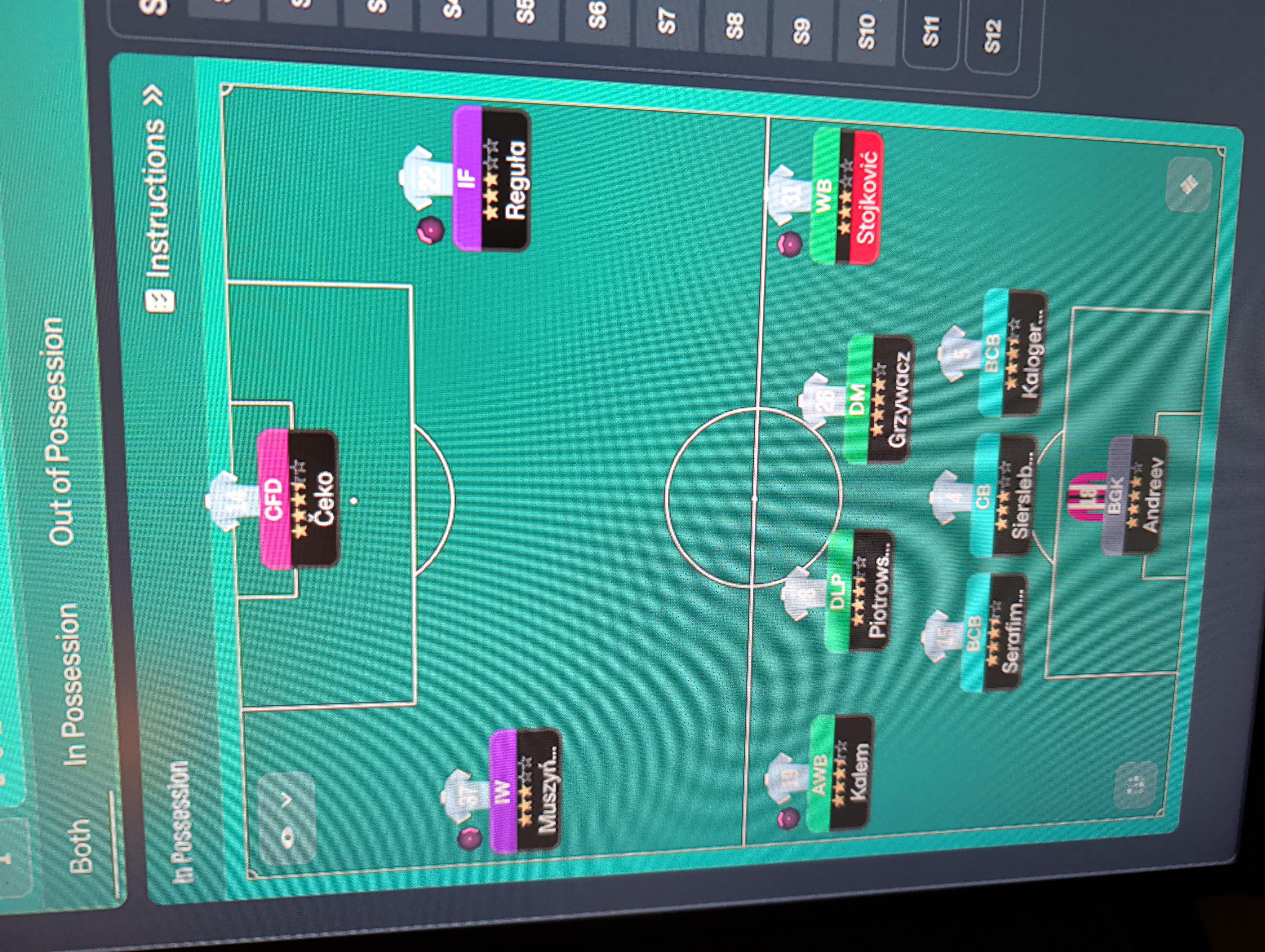
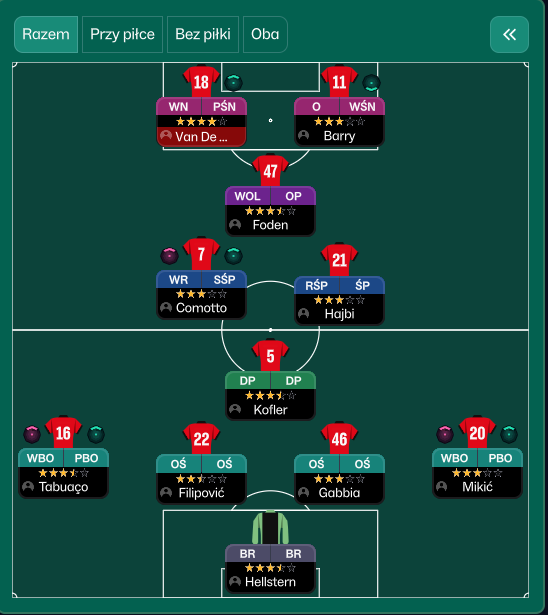
More Offensiv tactics
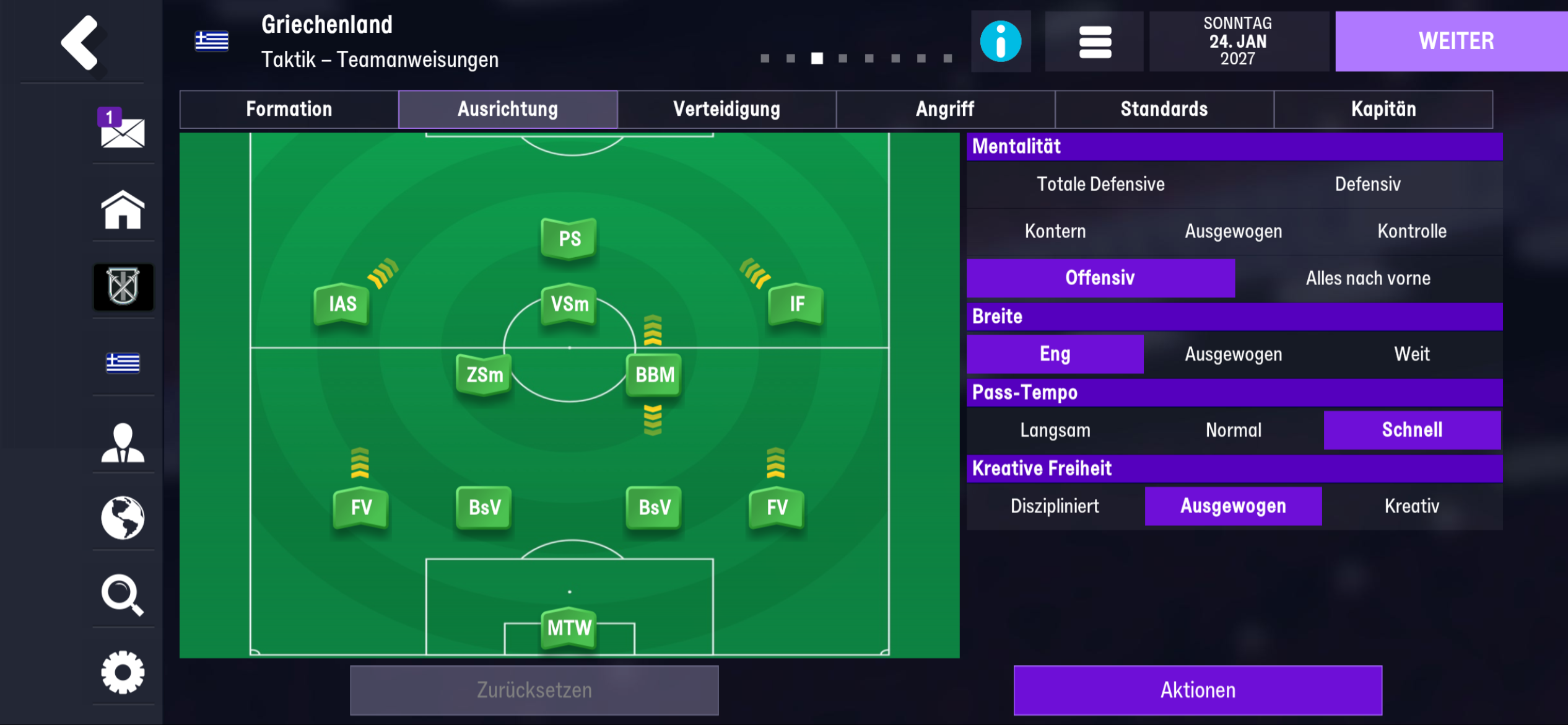
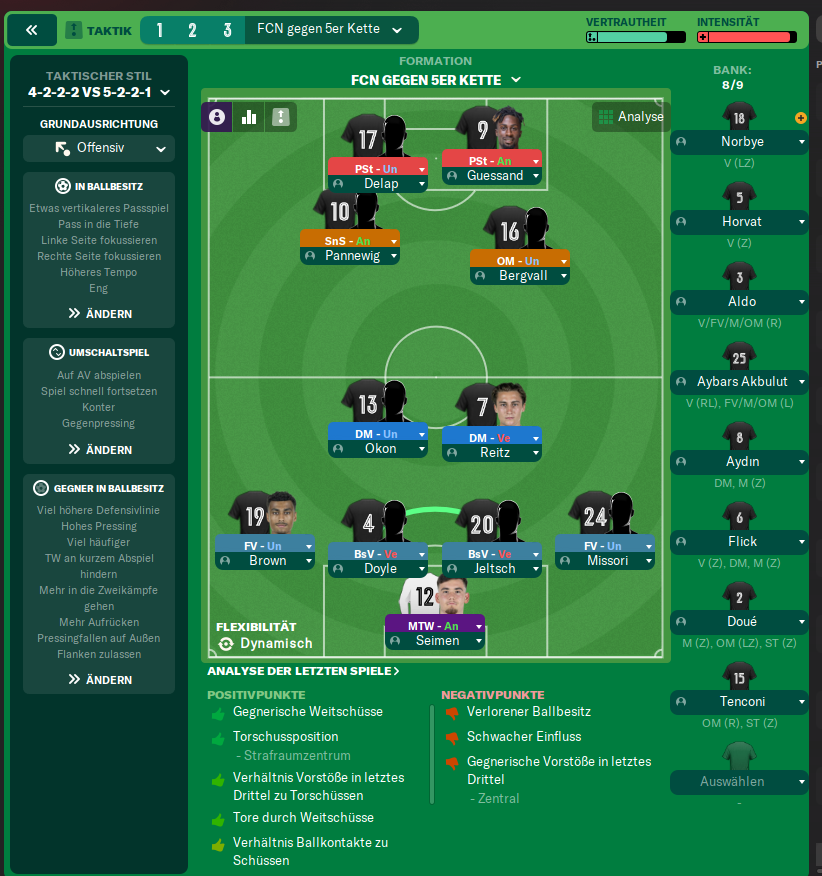
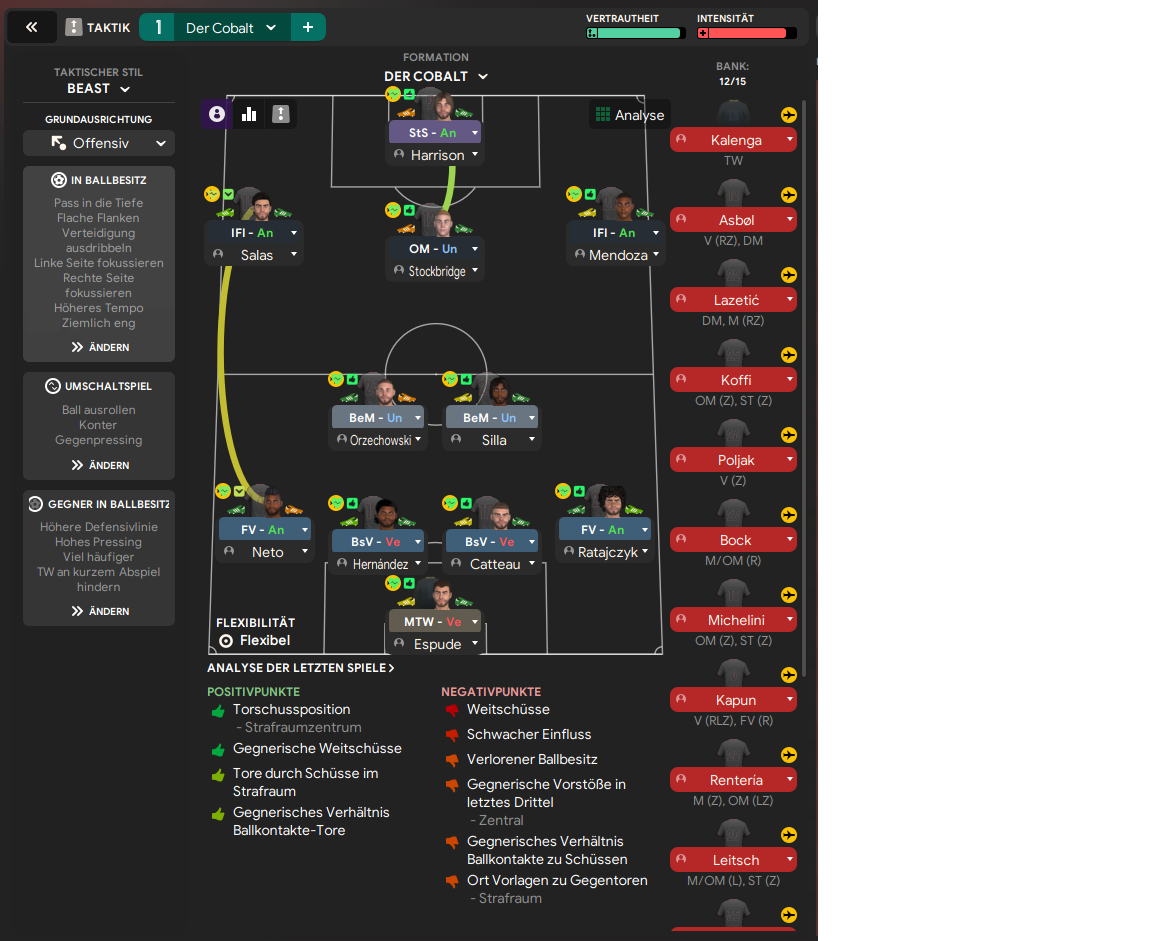
Guides for this formation
The tactical theory behind the 4-2-3-1 Wide: roles, instructions, and the trade-offs that decide whether the system holds up.
Player pairings
Midfield Pairs in 4-2-3-1 and 4-4-2
Double pivots and flat pairs in 4-2-3-1 and 4-4-2: when each pairing works, when it collapses, and the AMC unicorn that rescues both.
Read guide
Playing styles
Gegenpressing: A Full Guide
Klopp-style gegenpressing in FM, including squad profile, line-and-press pairing, sustainable workload, and the antipatterns to avoid.
Read guide