4-2-3-1 Wide (Positive) Tactic
4-2-3-1 Wide
Utilizing flanks to stretch the opposition and create space. Utilizing wing-backs to provide width gives the team the ability to stretch the opposition.
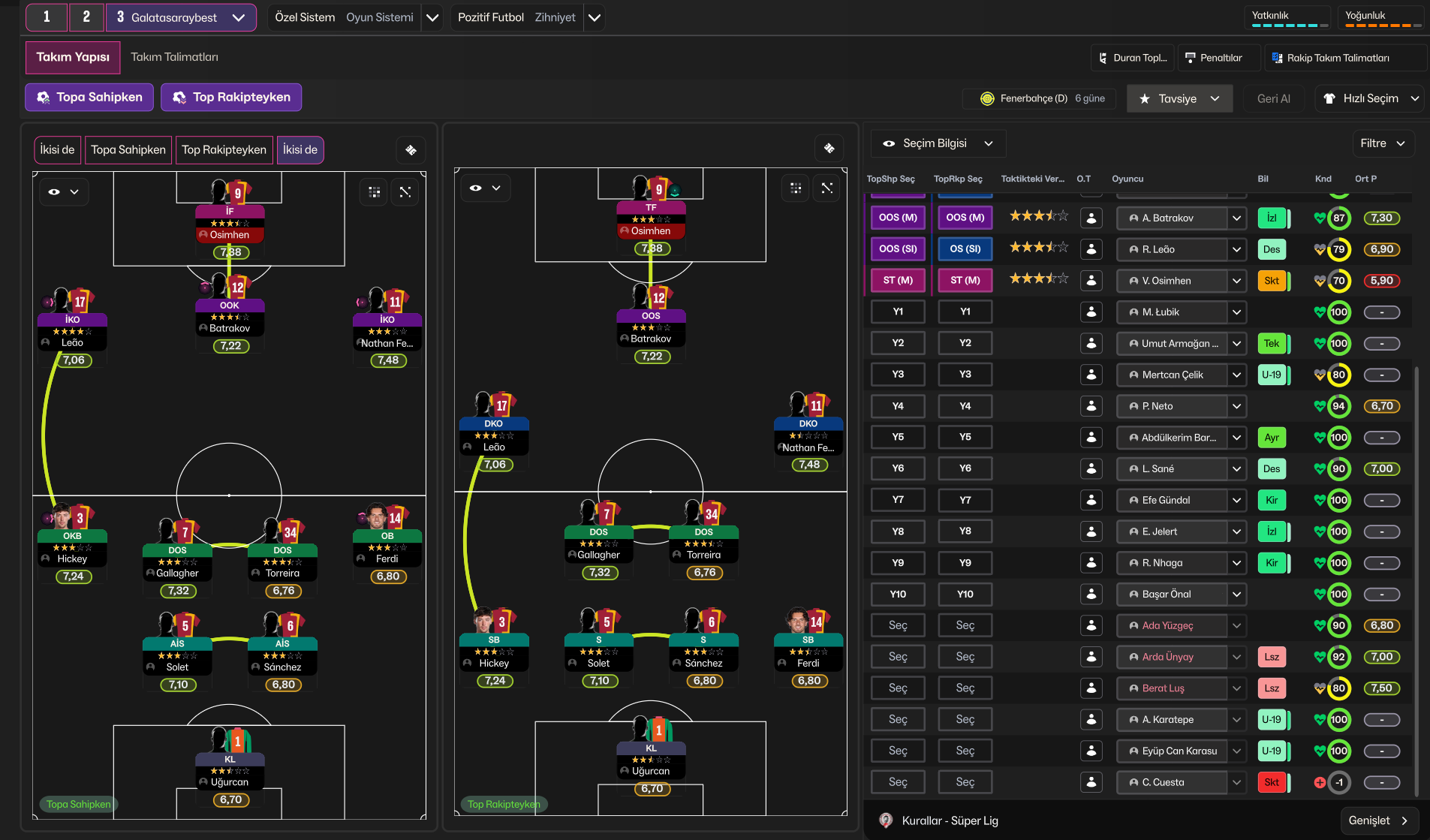
Loading tactical analysis...
Formation and style
Positivity
Positive
4-2-3-1 Wide
In possession
Play Out of Defence
Focus Play Down the Left
More Risky Passes
Shorter Passing
Overlap Left
In transition
Counter-Press
Counter
Out of possession
Higher Defensive Line
Higher Line of Engagement
Prevent Short GK Distribution
Trigger Press More Often
Player roles
GK
Goalkeeper
Defend
RB
Wing-Back
Attack
CB
Ball-Playing Defender
Defend
CB
Ball-Playing Defender
Defend
LB
Wing-Back
Attack
CM
Deep-Lying Playmaker
Support
CM
Box-to-Box Midfielder
Support
RW
Inside Forward
Attack
AM
Attacking Midfielder
Support
LW
Inside Forward
Attack
ST
Target Forward
Attack
Phase description
Focus on wide play, utilizing inside forwards to cut inside and create goal-scoring opportunities.
Quick transition to pressing, regaining possession high up the pitch.
Utilizing flanks to stretch the opposition and create space.
Team shape defence
4-2-3-1
Compact shape with two holding midfielders providing support to the back line.
4 defenders and 2 defensive midfielders
Team shape attack
4-2-3-1
Fluid attacking movement with width provided by wing play.
Use of inside forwards and wing-backs giving multiple attacking options
Key strengths
Strong Wing Play
Utilizing wing-backs to provide width gives the team the ability to stretch the opposition.
Wing-Backs (WBs) at [2,5] and [2,1] running forward.
Fluid Attacking Options
The combination of inside forwards and an attacking midfielder creates flexibility in attack.
Inside Forwards (IF) at [6,2] and [6,4] with an AM at [5,3].
Conflicting tactics
Risk of being Overrun in Midfield
With two central midfielders against teams playing three or more in midfield.
2 CM roles at [3,3] and [3,4] with distribution that might lack control.
Vulnerability to Counterattacks
With wing-backs pushing high, space is left behind them.
Wing-Backs at [2,1] and [2,5] are often caught out of position.
Risk exposures
Risk Exposures
Items
Defensive Transitions
Team might struggle if quickly countered, especially from the wings.
Wing-Backs push high while leaving gaps.
Midfield Control
Potential for being outnumbered in midfield battles.
Formation only allows 2 central midfielders.
Role synergies
Role Synergies
Items
DLP-S and BBM-S
The balance between deep playmaking and box-to-box support aids in transitioning play.
DLP-S at [3,3] and BBM-S at [3,4].
Wing-Backs and Inside Forwards
Wing-Backs provide width, creating space for Inside Forwards to cut inside.
WBs at [2,1] and [2,5] with IFs at [6,2] and [6,4].
Suggested questions
How can we improve midfield control against stronger opponent midfield setups?
Should we adapt our defensive alignment to better manage counter-attacks?
What adjustments can enhance the unpredictability of our attacking play?
Related Tactics
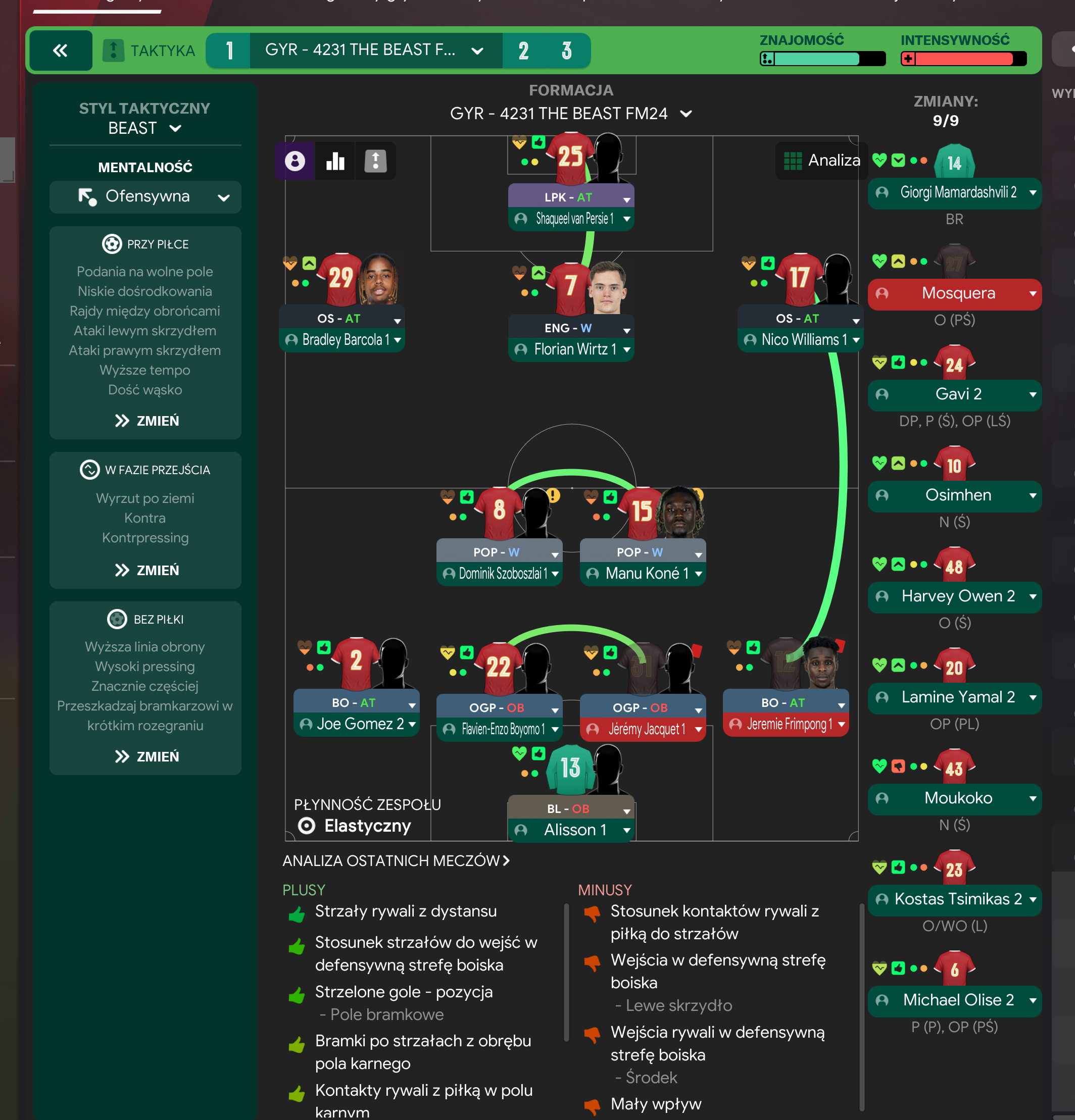
Gegenpress 4-2-3-1 Wide
Gegenpress
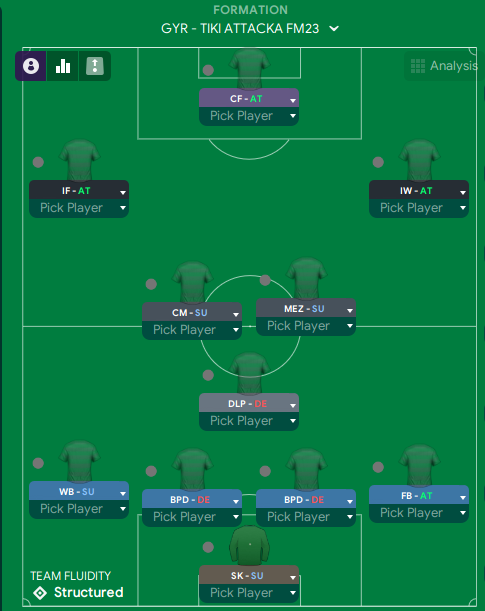
Tiki-Taka 4-2-3-1 Wide
Tiki Taka
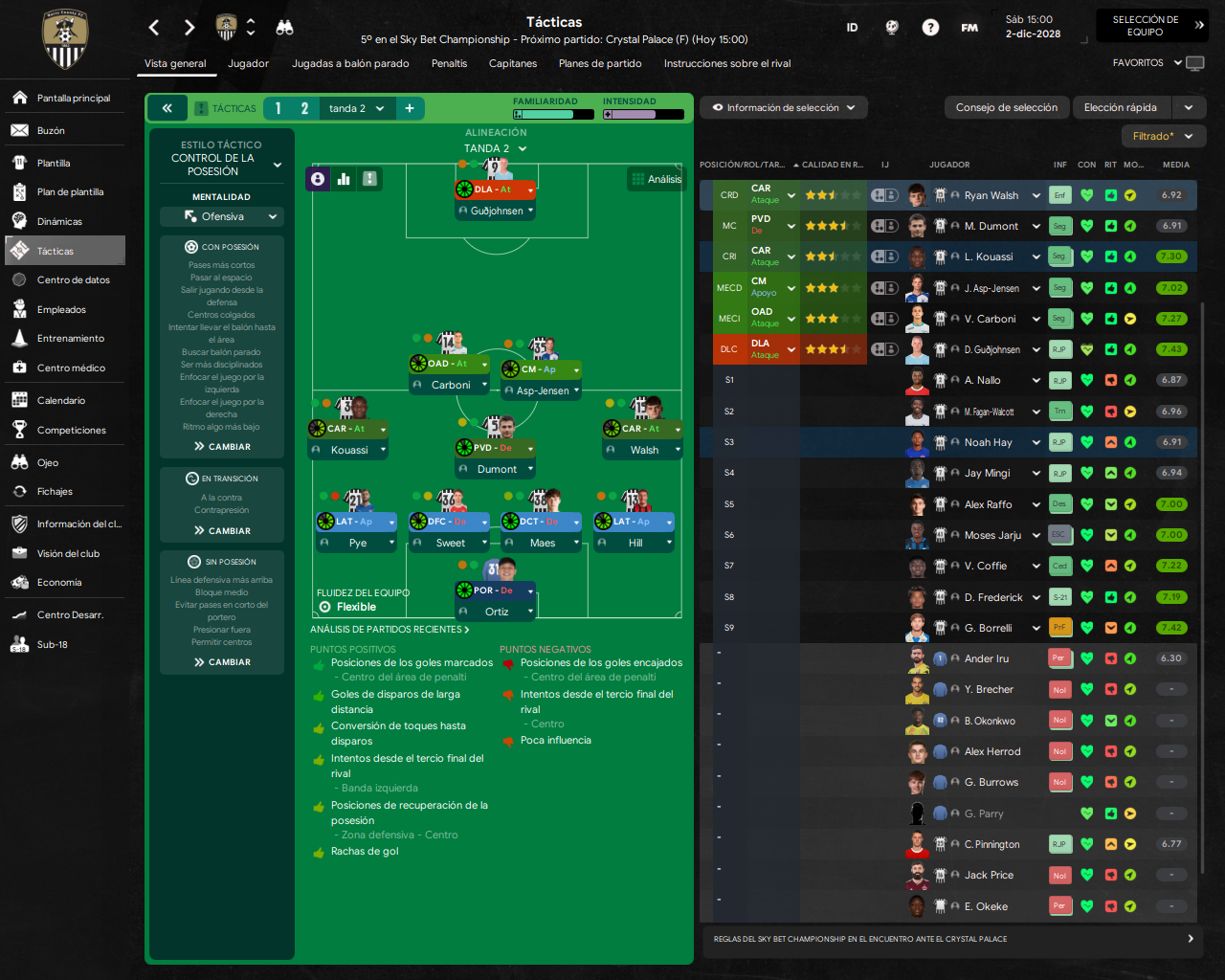
4-2-3-1 Wide Formation
Control de la posesión
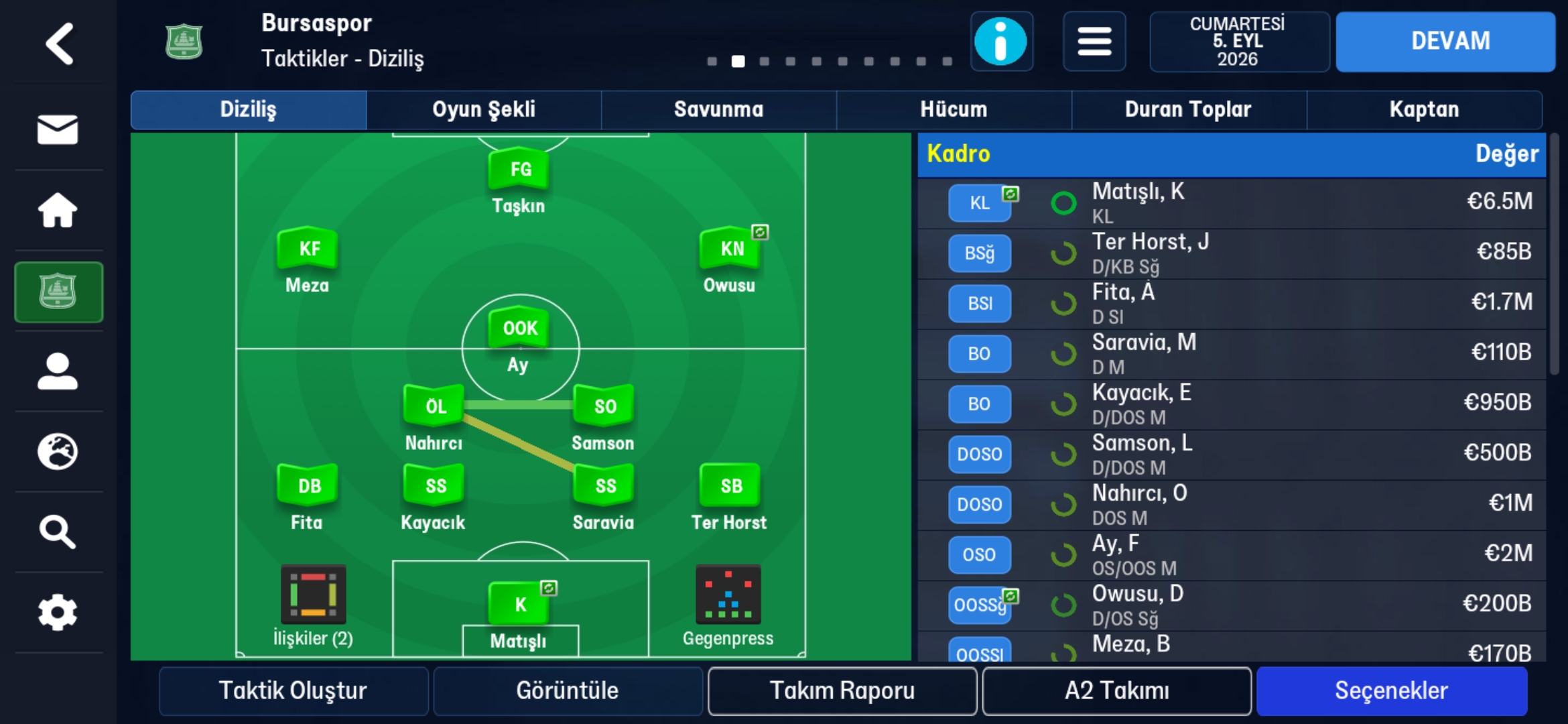
Gegenpress 4-2-3-1 Wide
Gegenpress
Gegenpress 4-2-3-1 Wide
Gegenpress
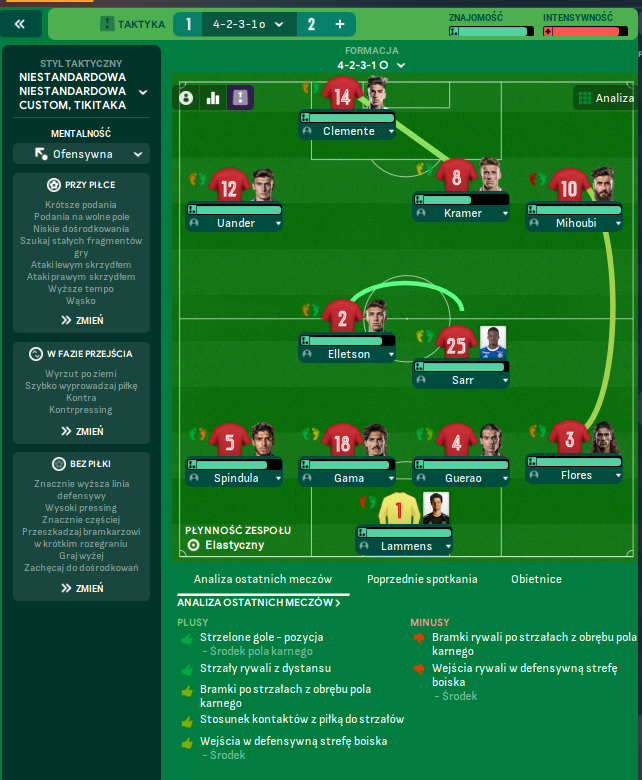
Tiki-Taka 4-2-3-1 Wide
Tiki-Taka
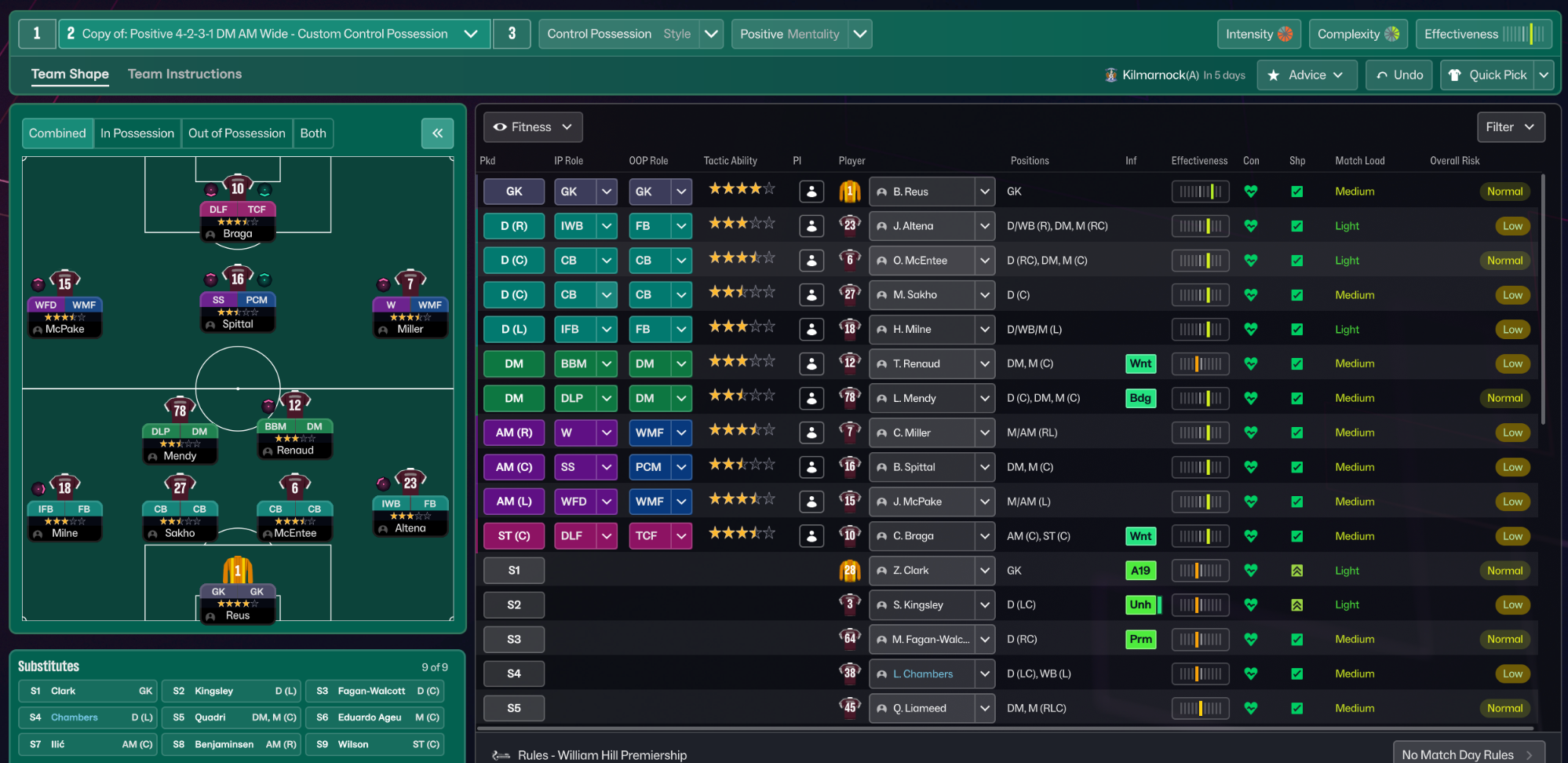
Control Possession 4-2-3-1 Wide
Control Possession
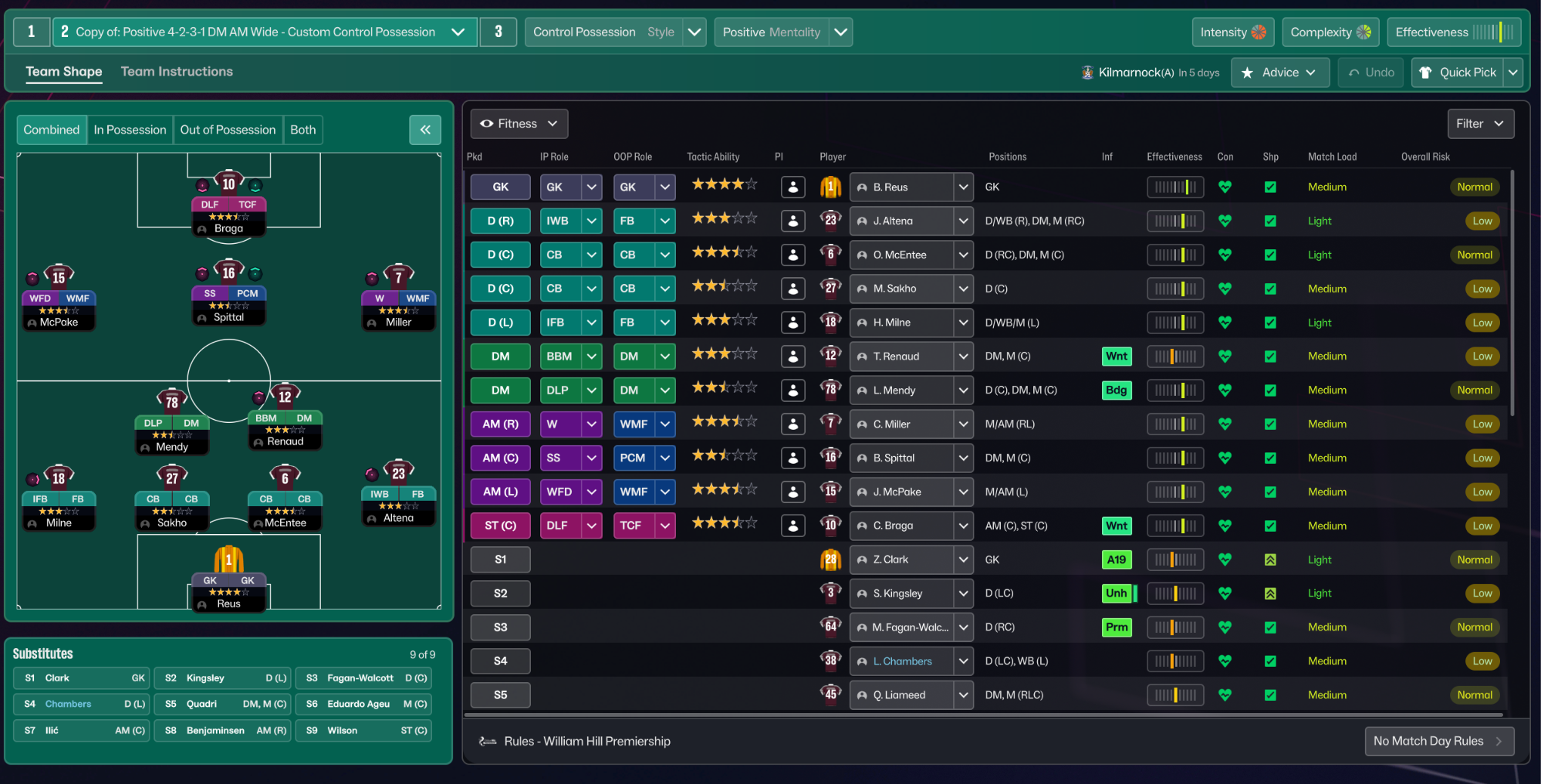
Control Possession 4-2-3-1 Wide
Control Possession
Guides for this tactic
The tactical theory behind the 4-2-3-1 Wide: roles, instructions, and the trade-offs that decide whether the system holds up.
Playing styles
Gegenpressing: A Full Guide
Klopp-style gegenpressing in FM, including squad profile, line-and-press pairing, sustainable workload, and the antipatterns to avoid.
Read guide
Player pairings
Midfield Pairs in 4-2-3-1 and 4-4-2
Double pivots and flat pairs in 4-2-3-1 and 4-4-2: when each pairing works, when it collapses, and the AMC unicorn that rescues both.
Read guide
Foundations
Mentality, Duty & Roles
How Mentality, Duty, and Role interact in FM, why duty trumps mentality every time, and the role-on-top-of-duty composition rules.
Read guide