Uploaded Tactic
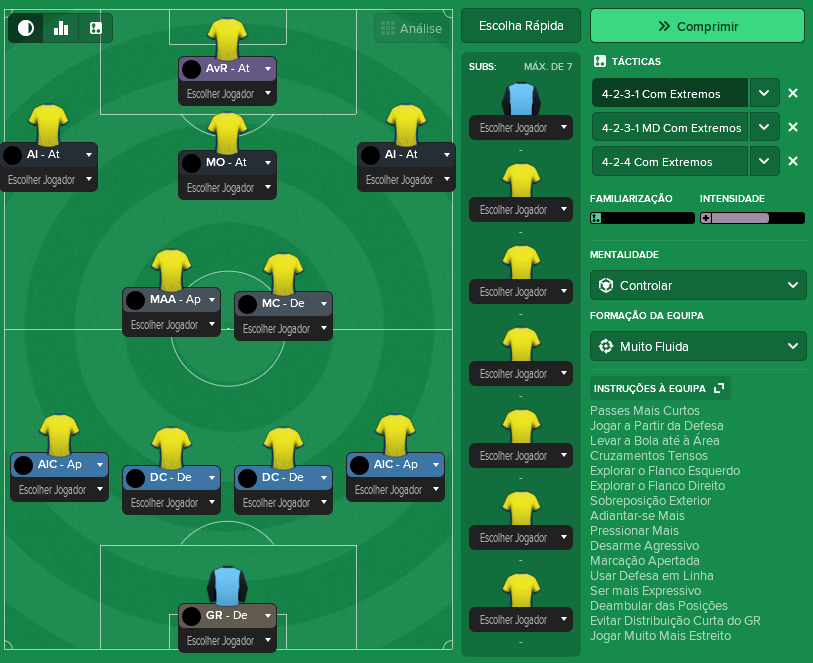
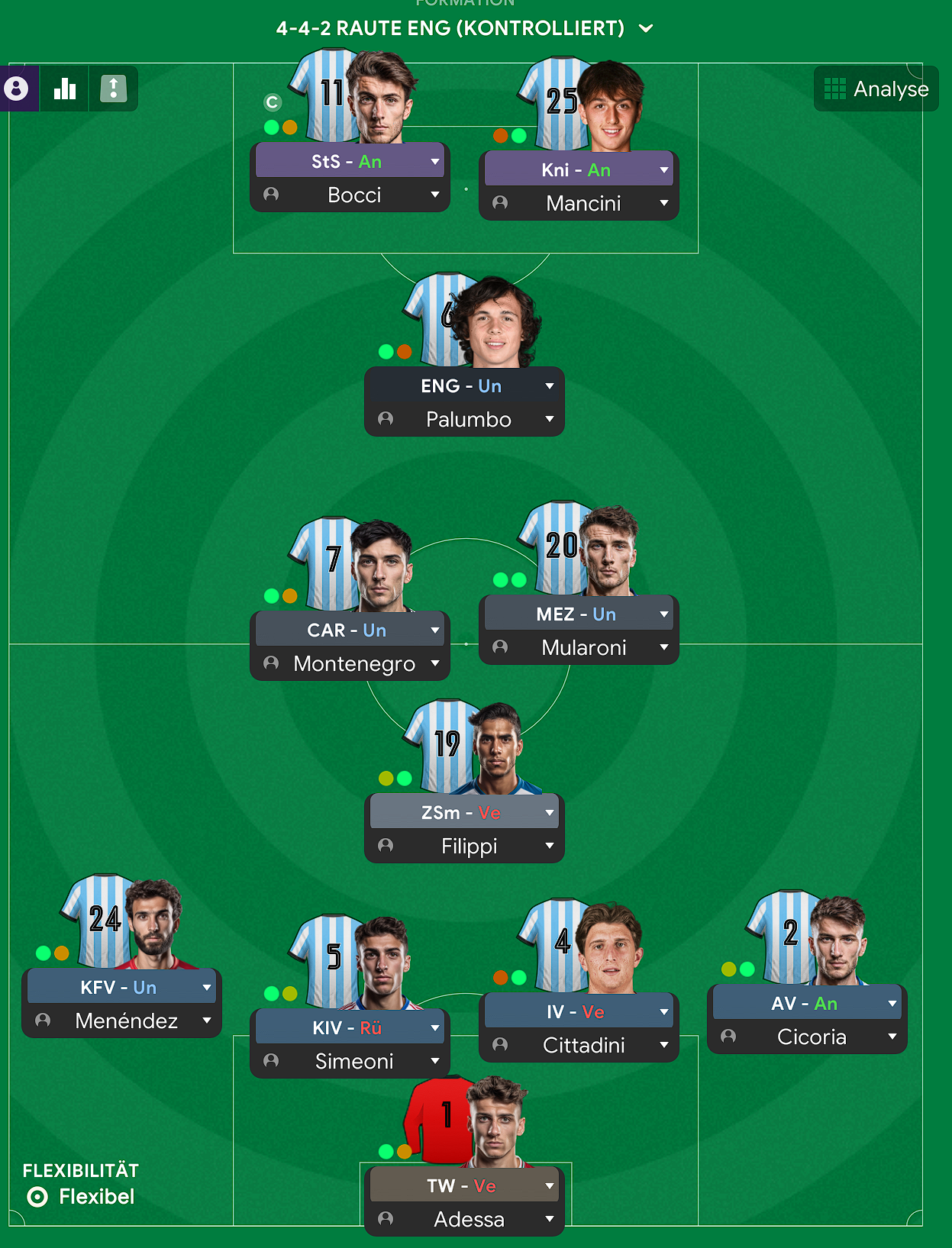
Formation & Style
Tactical Style:Controlled
Mentality:Control
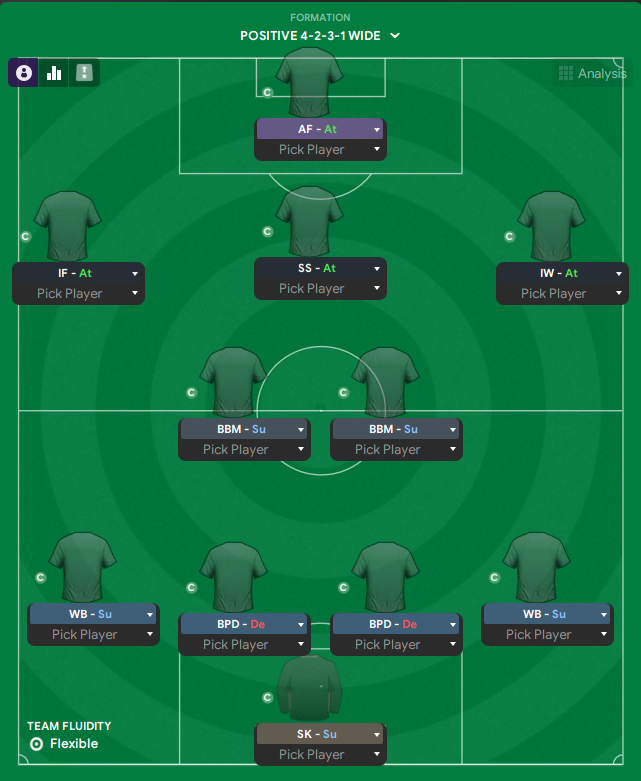
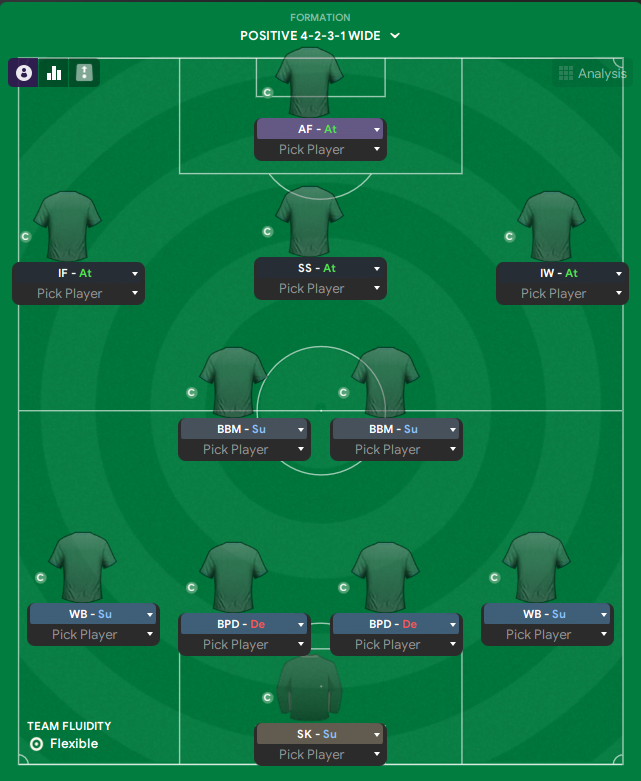
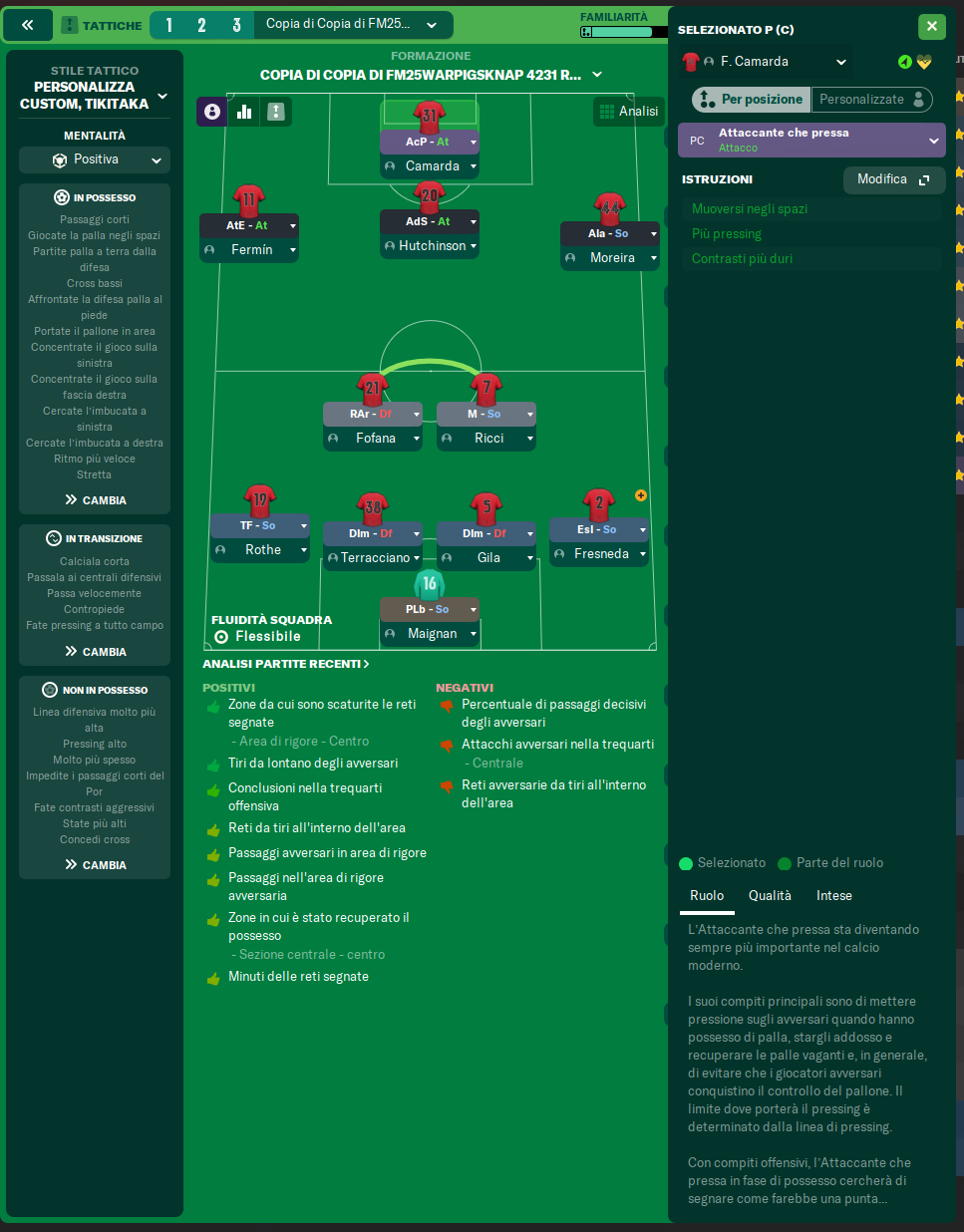
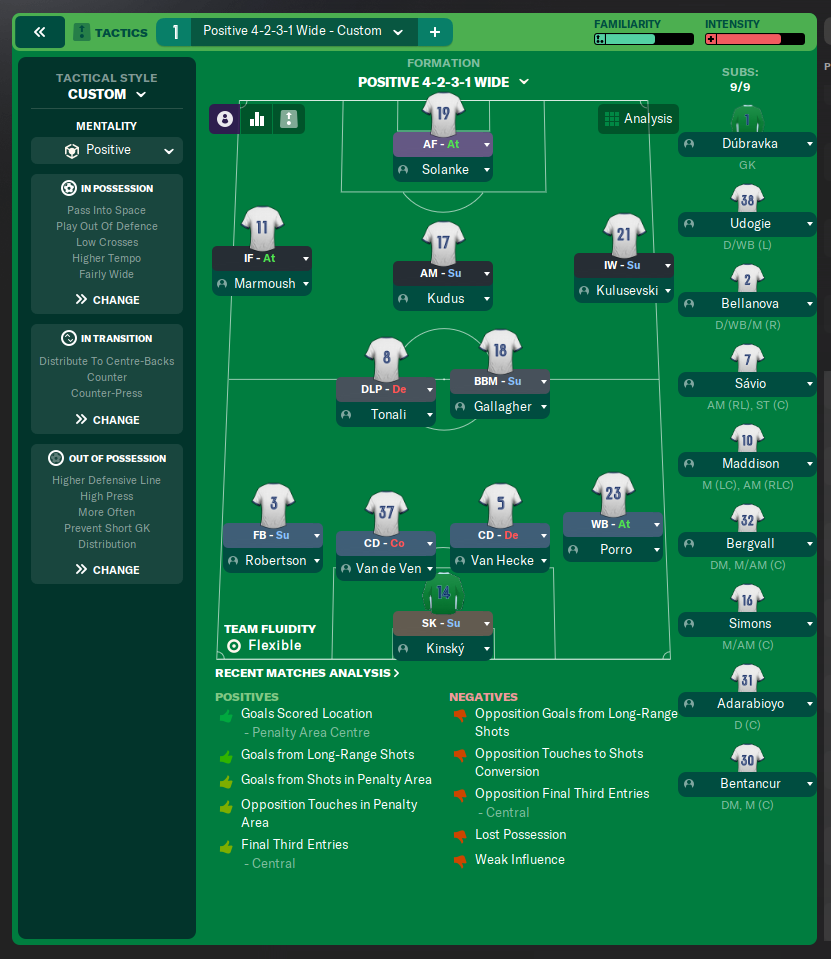
Formation:4-2-3-1 Wide
Team Fluidity:Very Fluid
In Possession
Shorter Passes
Play Out of Defence
Get Ball to Area
Cross More Often
Exploit Left Flank
Exploit Right Flank
Be More Expressive
Work Ball Into Box
Pass Into Space
In Transition
Counter Press
Counter
Out of Possession
Higher Defensive Line
Higher Line of Engagement
Prevent Short GK Distribution
Trigger Press More Often
Team Shape Without Ball
Shape:4-2-3-1
Description:Compact and structured defense ready to press.
Evidence:With a higher defensive line and a double pivot maintaining shape.
Team Shape With Ball
Shape:4-2-3-1 Wide
Description:Exploits flanks and supports central striker with wingers and attacking midfielder.
Evidence:Involvement of wide players and an attacking midfielder.
Phase Description
Attacking Play
Utilizes width and quick passing to create opportunities.
Defensive Transition
How quickly the team reorganizes after losing possession, emphasizing a counter press.
Main Focus
To control the game through possession and pressing high up the pitch.
Key Strengths
Width and Fluidity
Utilizes wide play effectively through full-backs and wingers.
Dynamic Midfield Partnership
Combines defensive stability with attacking support in midfield.
High Pressing Ability
Can disrupt opposing build-up play with high pressing.
Conflicting Directions
Potential Overlap Issues
Full-backs may overlap with wingers leading to congestion.
Midfield Balance
Risk of being outnumbered in midfield against teams with three central midfielders.
Defensive Vulnerabilities
High defensive line may expose the back four to counterattacks.
Tactical Suggestions
Consider Midfield Reinforcement
A third midfielder would provide more control in the middle.
Adjust Defensive Line
Consider lowering the defensive line to avoid being caught on the break.
Use of Wing Play
Increased focus on wing play with crossing could be enhanced.
Ask Questions About Your Lineup
Related Tactics
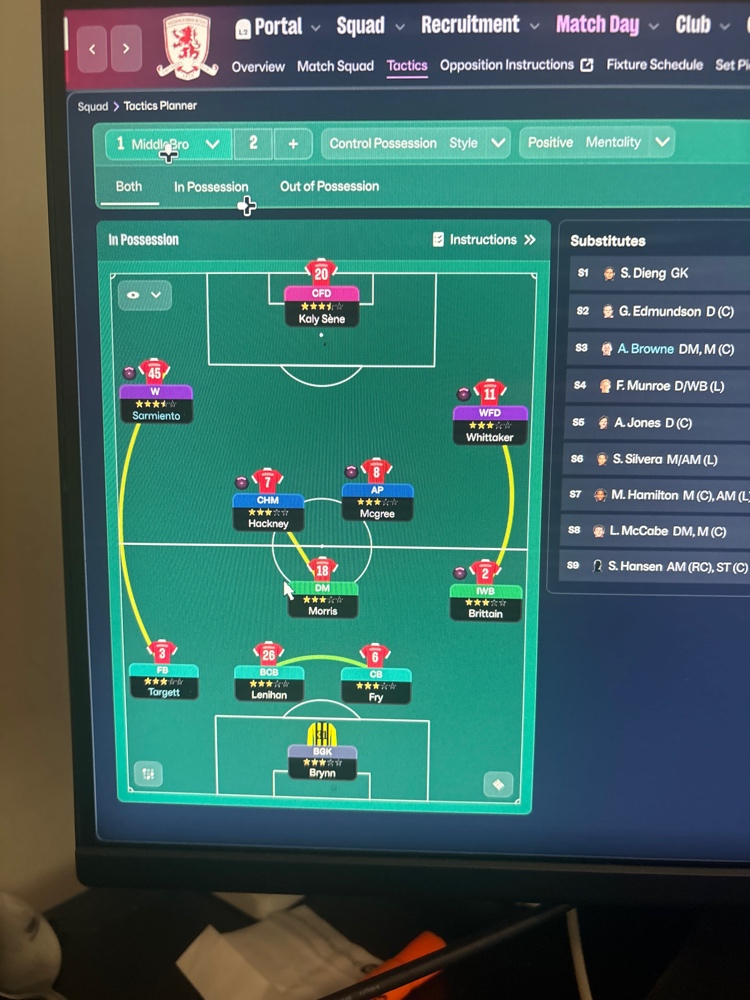
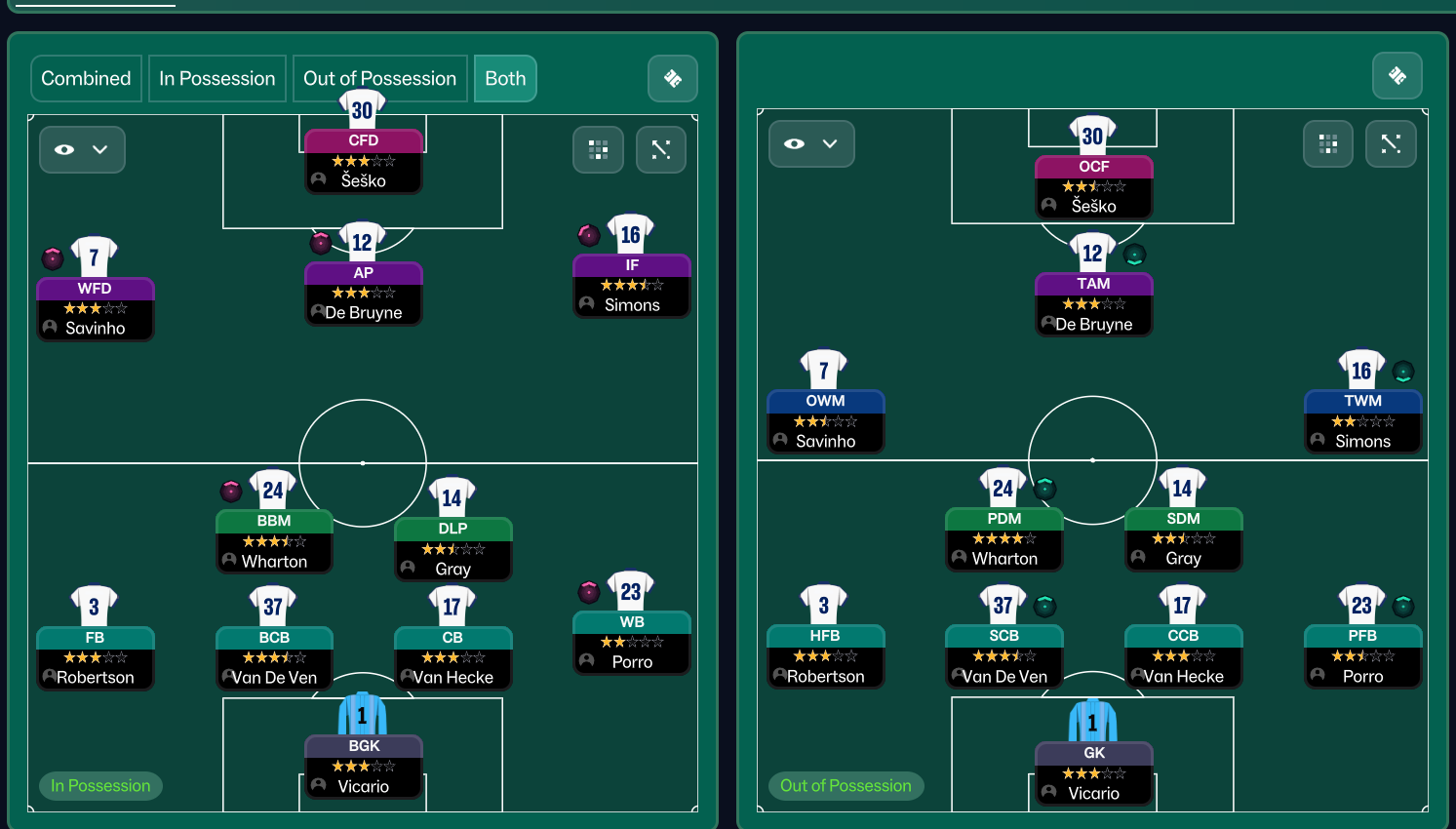
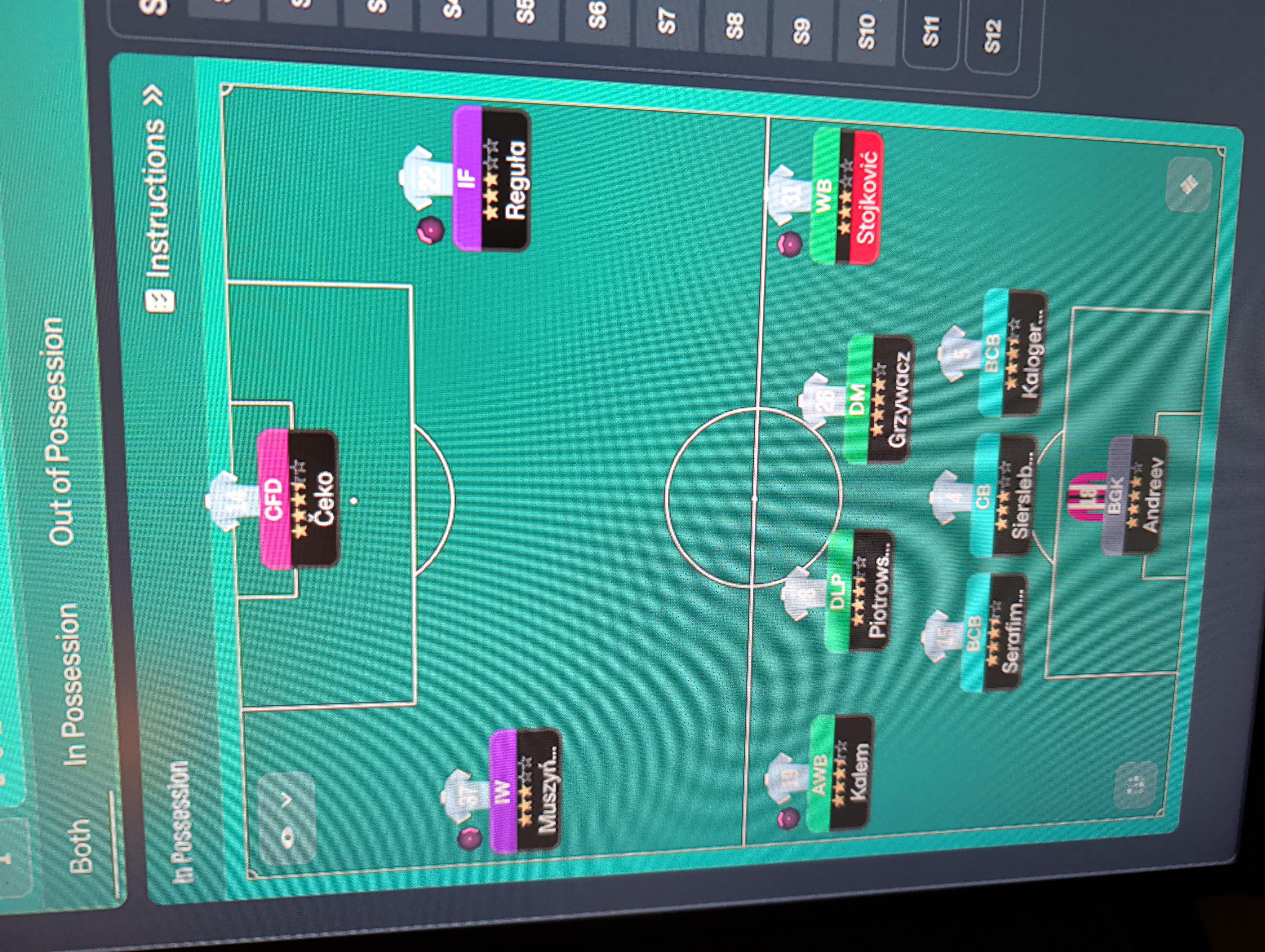
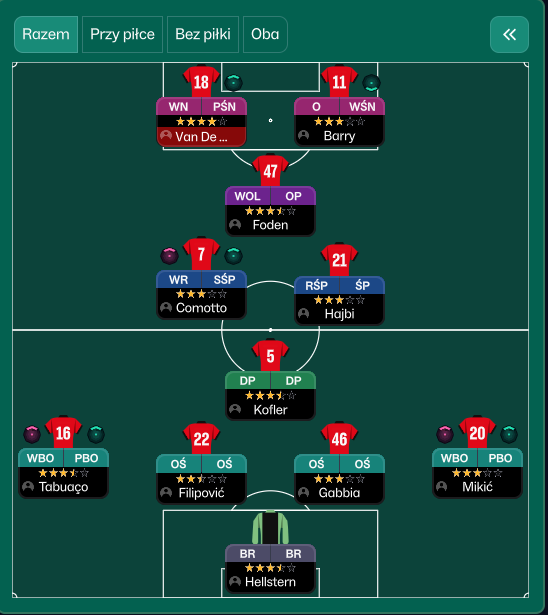
More Controlled tactics
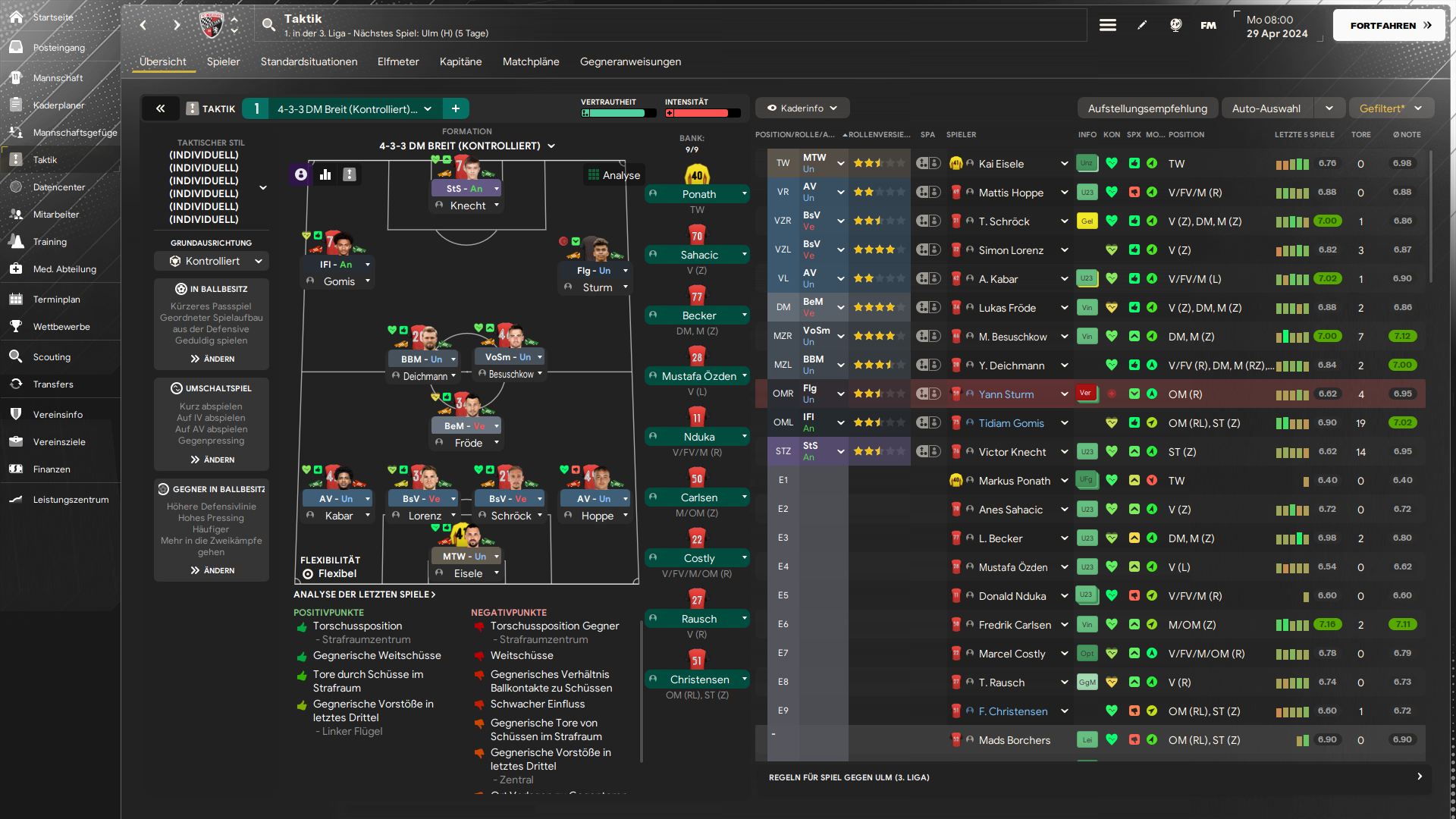
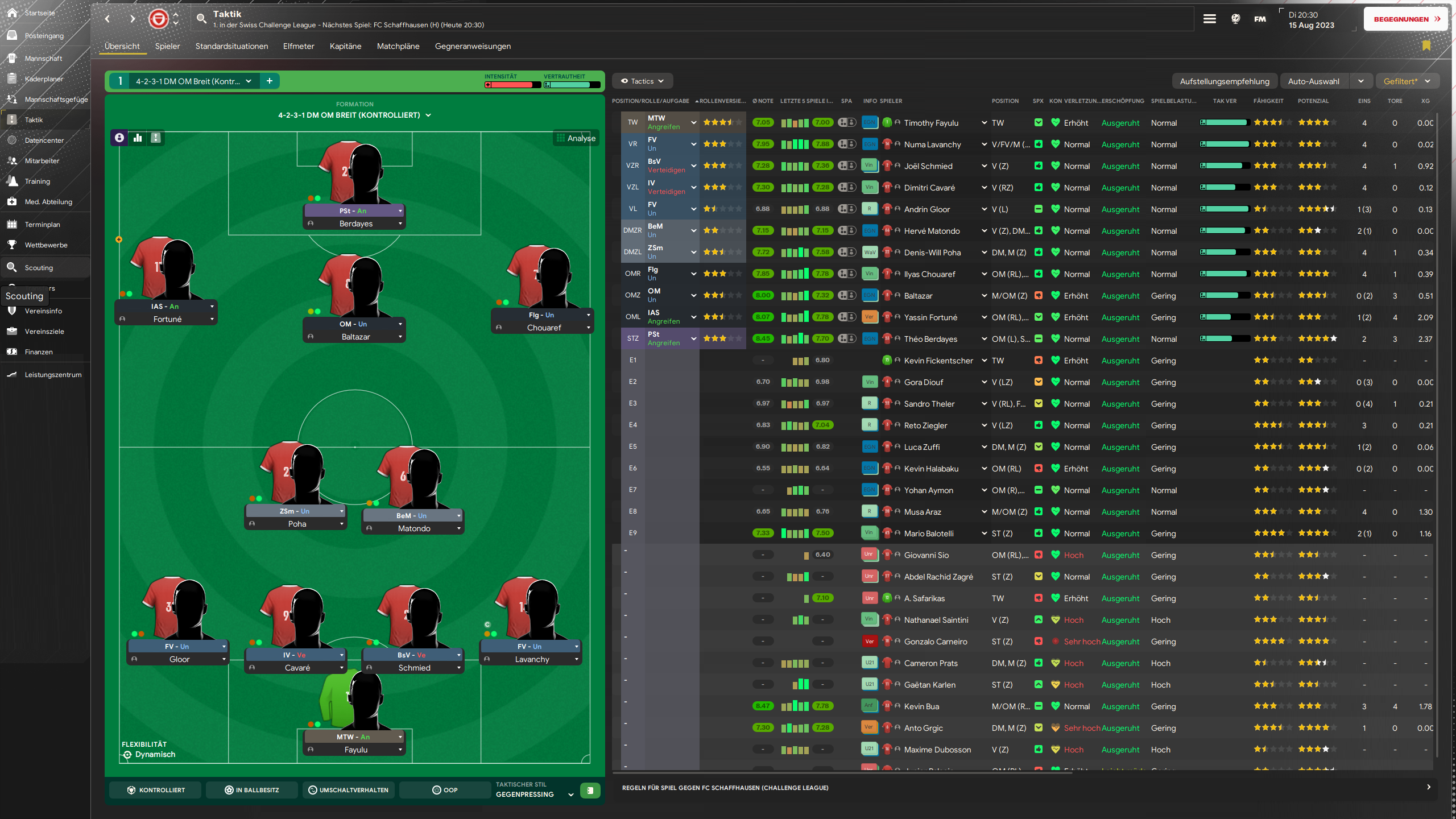
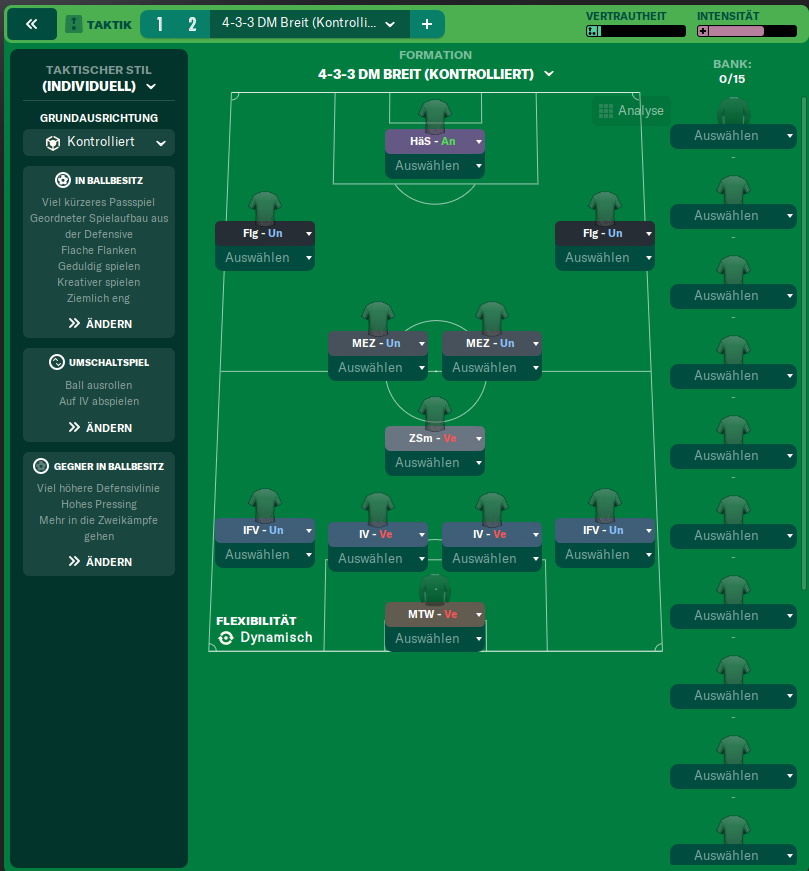
Guides for this formation
The tactical theory behind the 4-2-3-1 Wide: roles, instructions, and the trade-offs that decide whether the system holds up.
Player pairings
Midfield Pairs in 4-2-3-1 and 4-4-2
Double pivots and flat pairs in 4-2-3-1 and 4-4-2: when each pairing works, when it collapses, and the AMC unicorn that rescues both.
Read guide
Playing styles
Gegenpressing: A Full Guide
Klopp-style gegenpressing in FM, including squad profile, line-and-press pairing, sustainable workload, and the antipatterns to avoid.
Read guide