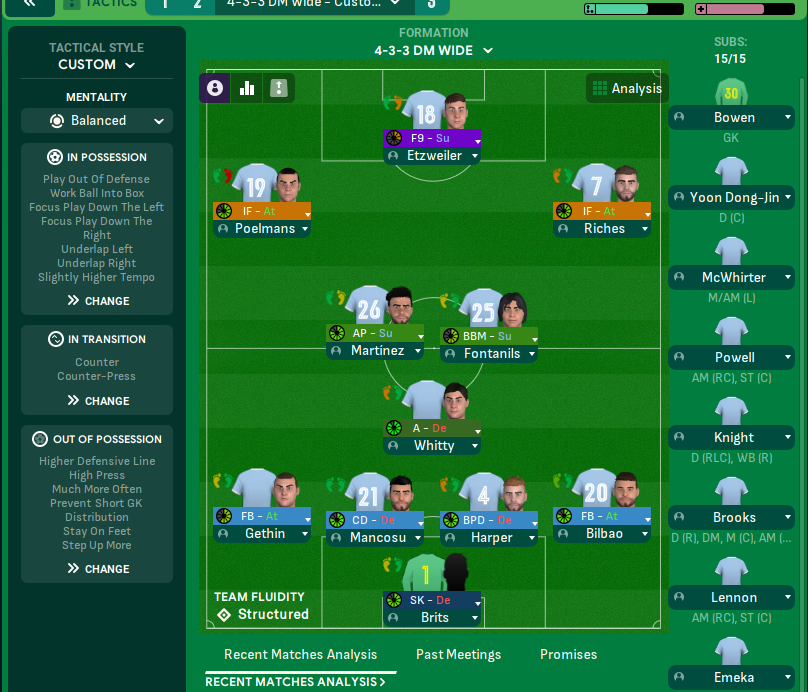
Uploaded Tactic
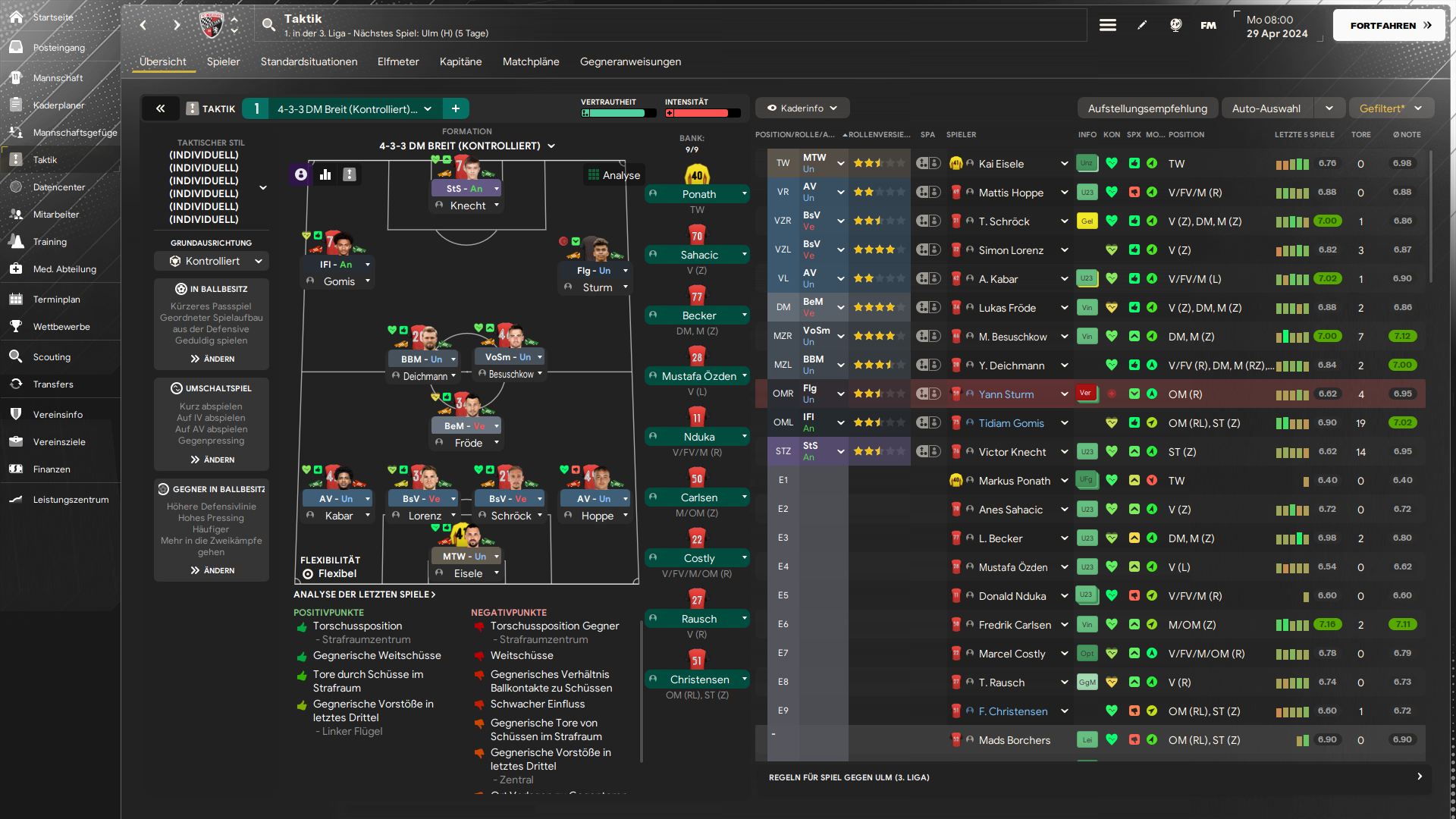
Formation & Style
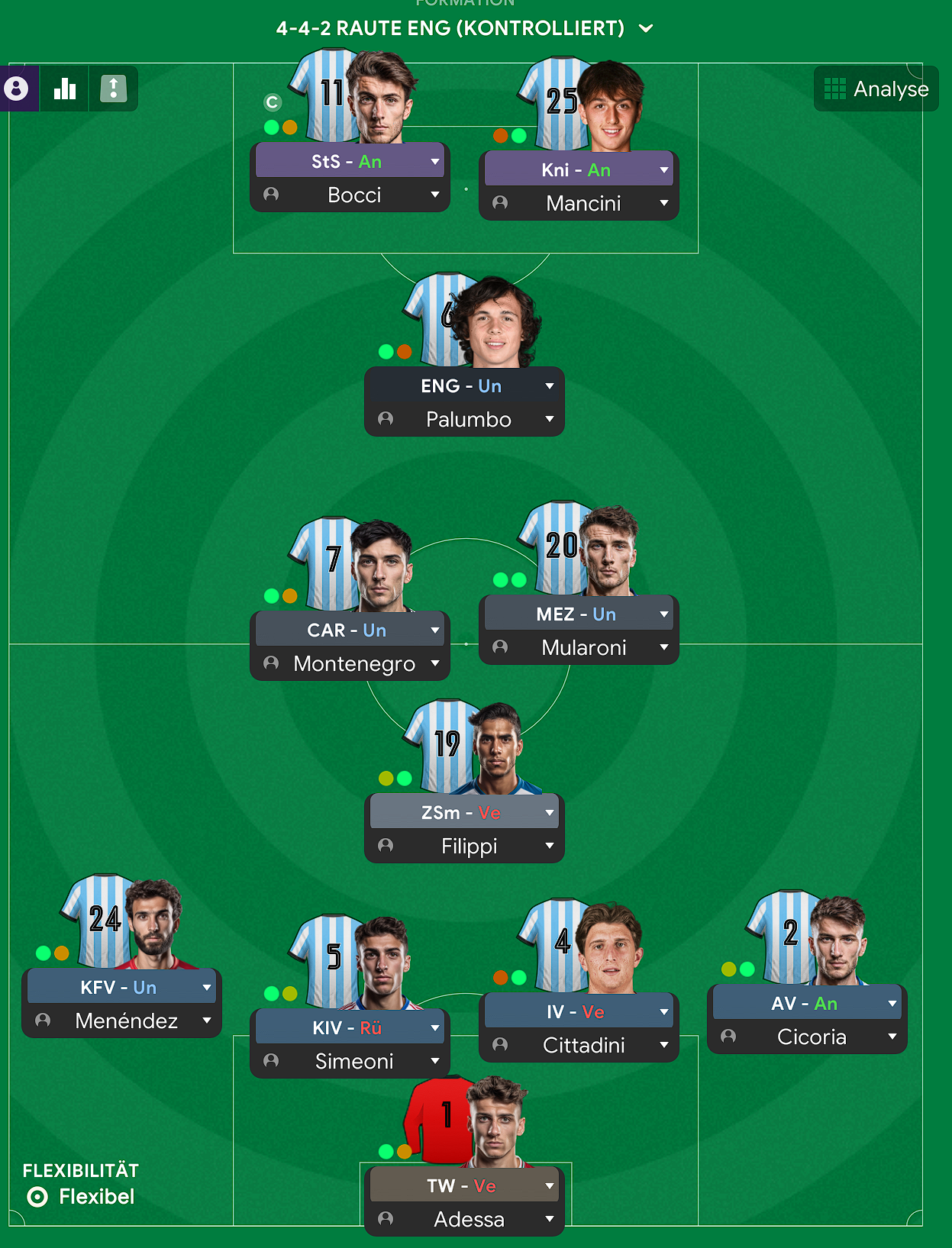
Tactical Style:Controlled
Mentality:Positive
Formation:4-3-3 DM Wide
Team Fluidity:Flexible
In Possession
Shorter Passing
Structured Build-Up Play
Focus Play Through the Middle
Work Ball Into Box
In Transition
Counter-Press
Counter
Distribute to Full-Backs
Out of Possession
Higher Defensive Line
Higher Line of Engagement
Prevent Short GK Distribution
Trigger Press More Often
Team Shape Without Ball
Shape:4-1-4-1
Description:A compact defensive structure with a single pivot.
Evidence:DM (BWM-S) at [3,3] provides support while the flat back four absorbs pressure.
Team Shape With Ball
Shape:4-3-3
Description:A dynamic attacking formation utilizing width and central penetration.
Evidence:Wingers (AV) at [6,2] and [6,4] stretching the opposition while a CF (CF-A) at [6,3] centralizes the threat.
Phase Description
Attacking Play
Utilizes wing play to stretch defenses while maintaining central dominance through the midfield.
Defensive Transition
Quickly regains possession through aggressive pressing.
Main Focus
Ball retention and gradual buildup towards the final third.
Key Strengths
Dynamic Midfield Control
The combination of a BWM and two supporting midfielders allows for both defensive stability and attacking transitions.
Wide Play Threat
Wingers can exploit the flanks, offering varied attacking options.
Balanced Defensive Structure
Flat back four ensures stability against counter-attacks.
Conflicting Directions
Vulnerability to Crosses
Height and positioning of full-backs can lead to being stretched against teams utilizing wide play.
Lack of Immediate Pressing Depth
Midfielders can become overwhelmed in transitions against quick counter-attacks.
Dependence on Wingers
Team relies heavily on wingers for width and creativity.
Tactical Suggestions
Consider Alternate Width Strategies
Using Inside Forwards instead of traditional wingers could add central penetration.
Increase Defensive Depth
Adjusting player roles in defense may help during high-pressure situations.
Enhance Counter-Attacking Options
Incorporating a faster forward could maximize counter-attack potential.
Ask Questions About Your Lineup
Related Tactics
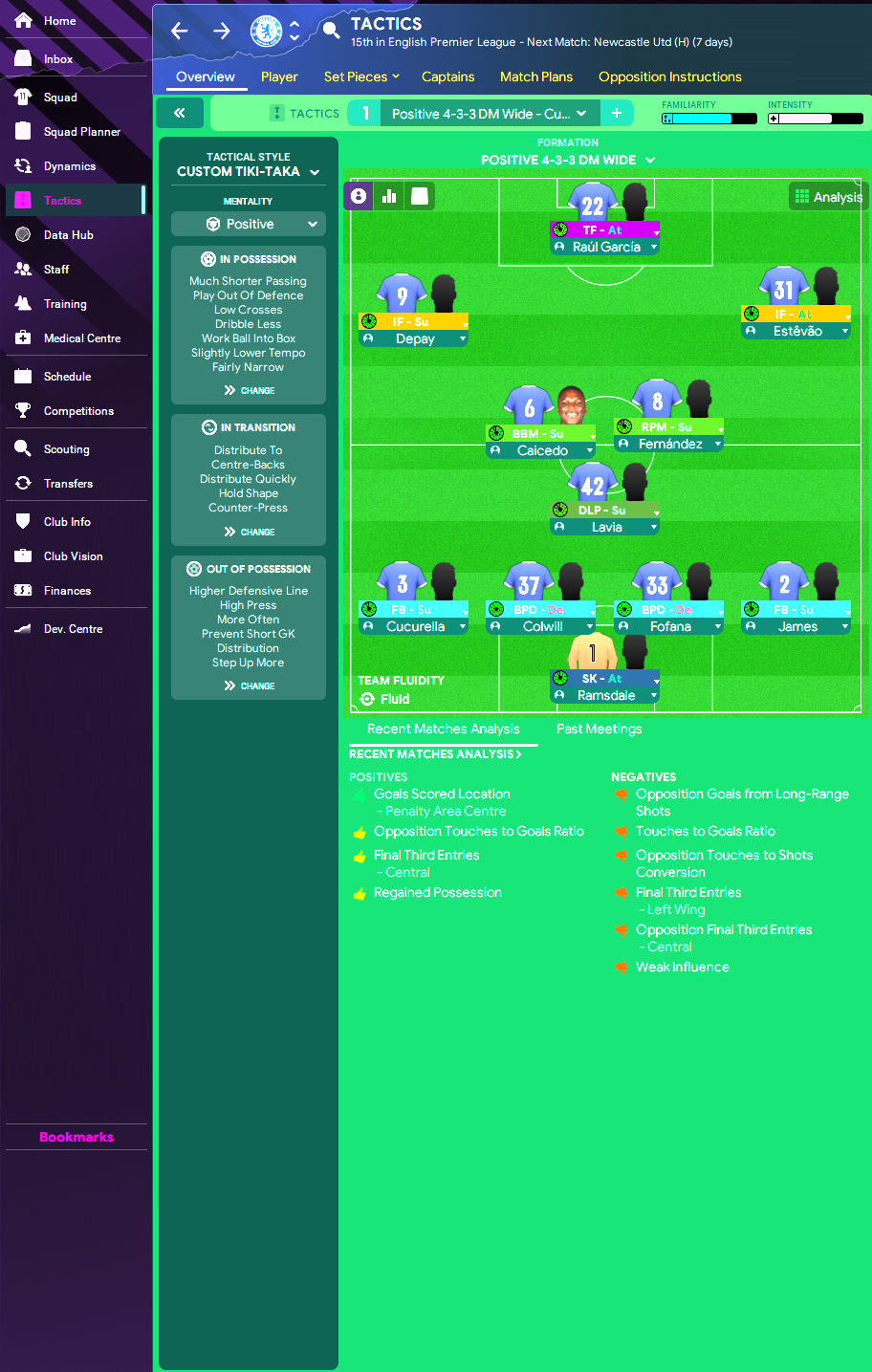
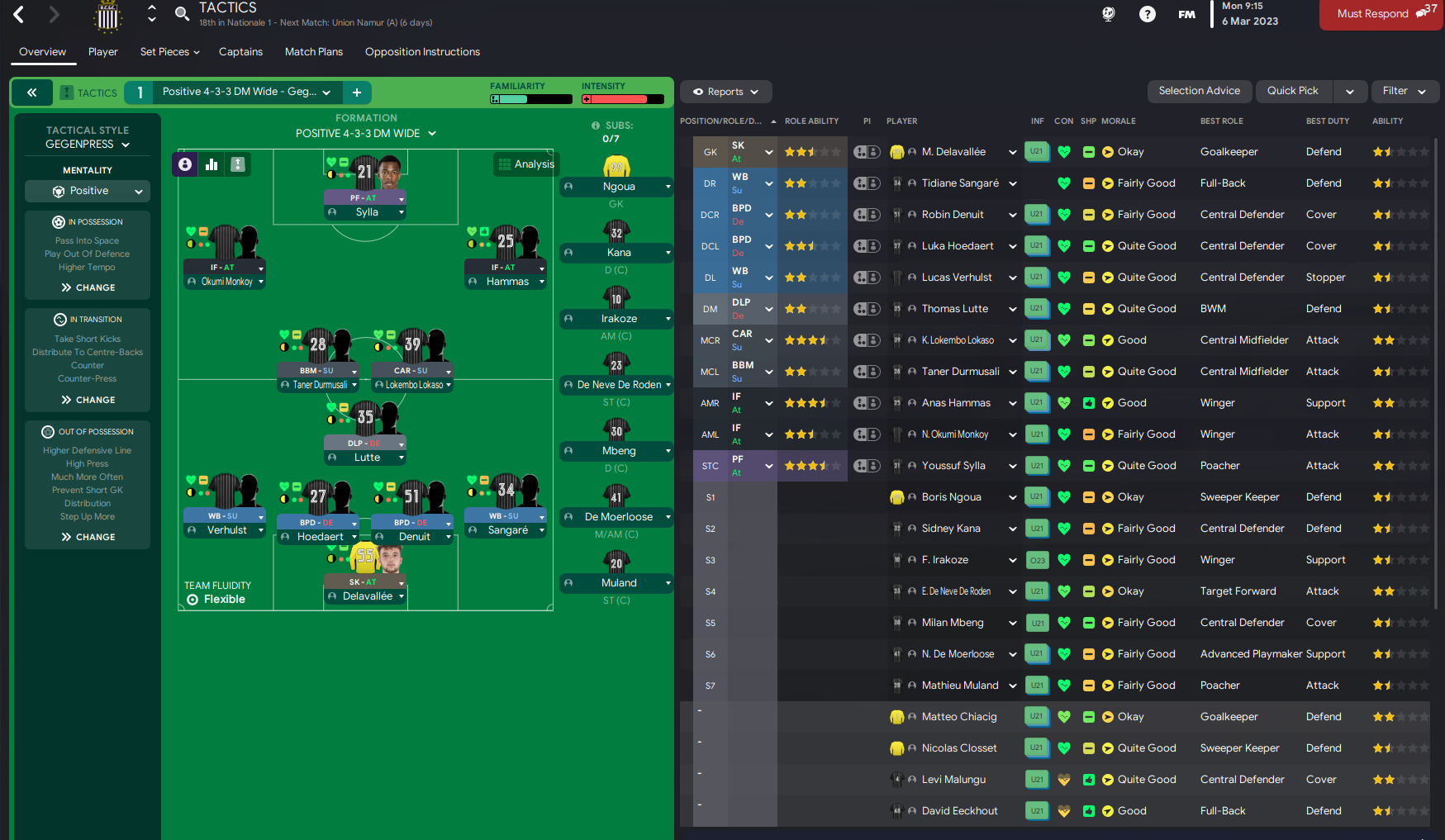
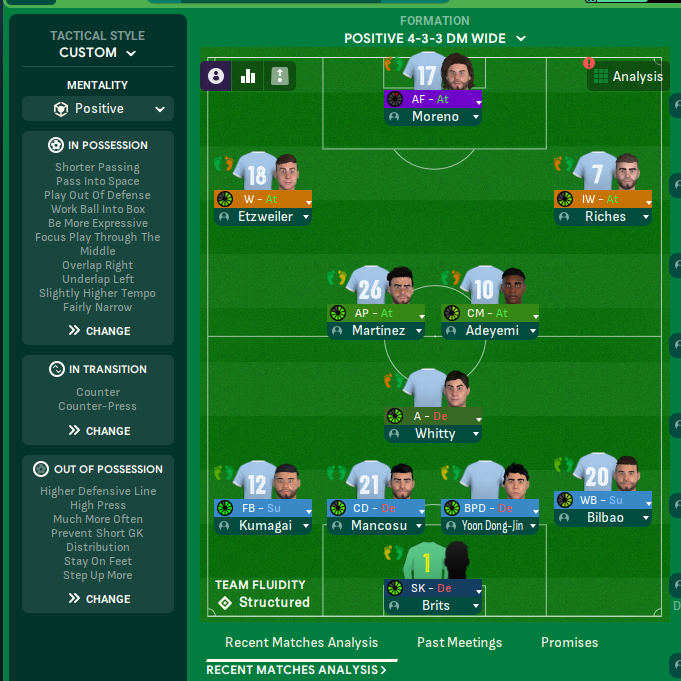
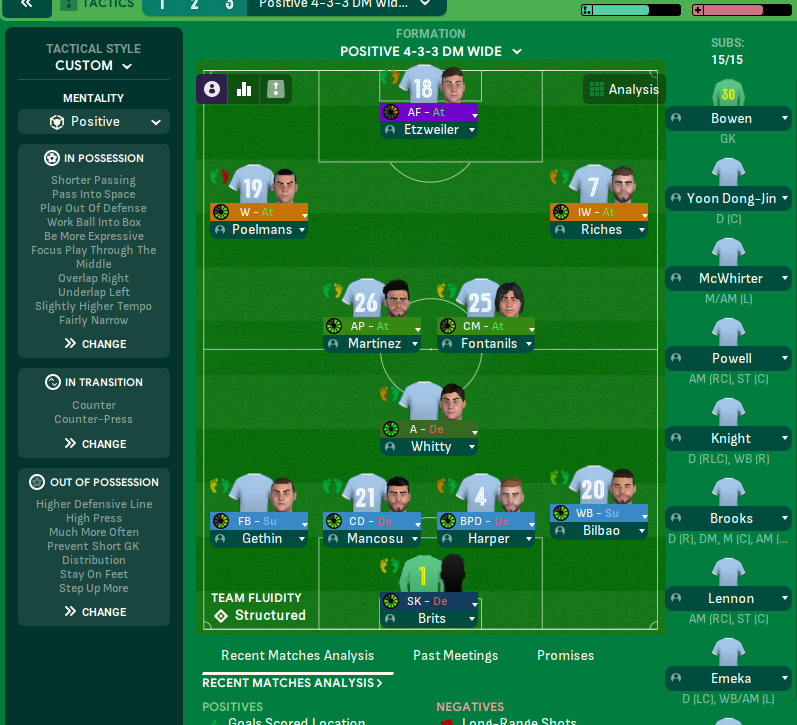
More Controlled tactics
Guides for this formation
The tactical theory behind the 4-3-3 DM Wide: roles, instructions, and the trade-offs that decide whether the system holds up.
Foundations
Understanding the 4-3-3 Formation
Master the classic 4-3-3: player roles, tactical variations, and the trade-offs that decide whether it sings or stalls.
Read guide
Player pairings
Midfield Trios
Holder, runner, creator: the role distribution rule for three-man midfields, the AMC variants, and the antipatterns that break them.
Read guide
Playing styles
Gegenpressing: A Full Guide
Klopp-style gegenpressing in FM, including squad profile, line-and-press pairing, sustainable workload, and the antipatterns to avoid.
Read guide