Uploaded Tactic
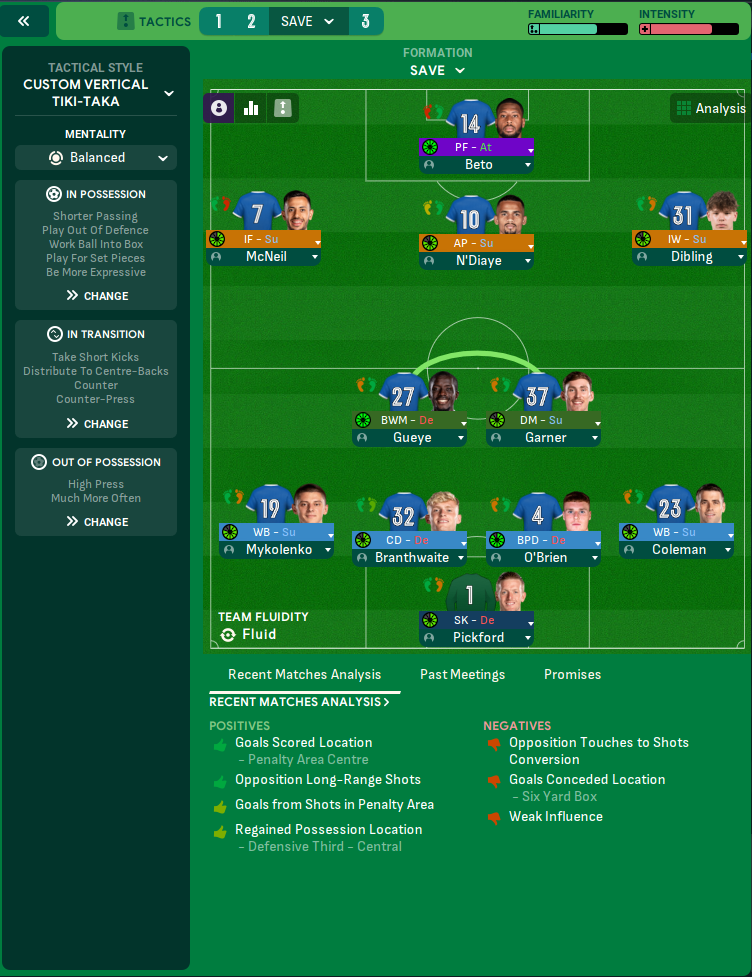
Formation & Style
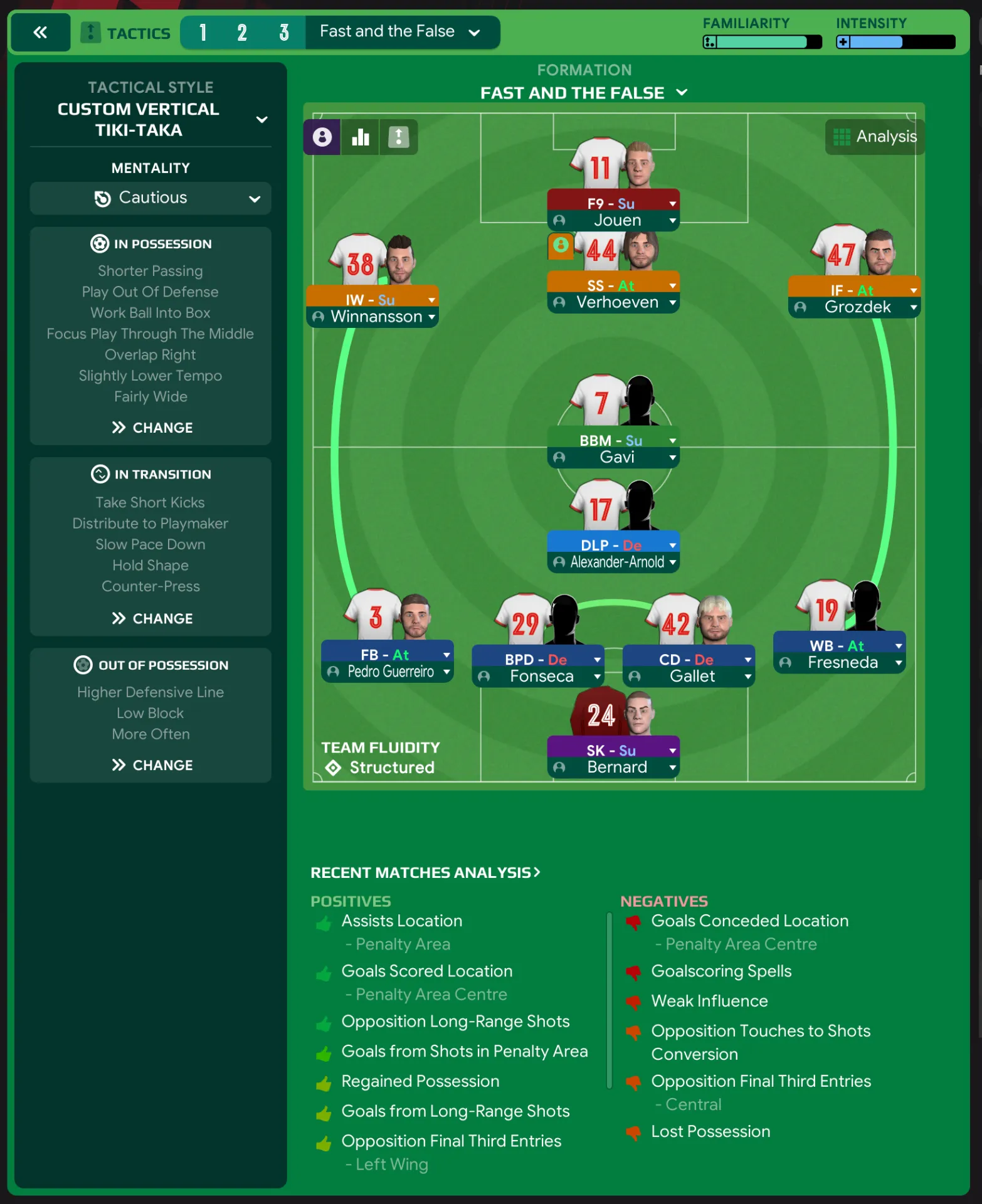
Tactical Style:Custom Vertical Tiki-Taka
Mentality:Balanced
Formation:4-2-3-1 Wide
Team Fluidity:Fluid
In Possession
Shorter Passing
Play Out Of Defence
Work Ball Into Box
Be More Expressive
In Transition
Distribute To Centre-Backs
Counter
Counter-Press
Out of Possession
High Press
Much More Often Prevent Short GK Distribution
Team Shape Without Ball
Shape:4-2
Description:Compact and organized, the back four supported by a solid midfield duo offering protection.
Evidence:BWM-D at [3,3] and DM-S at [3,4] maintain stability in front of the defence.
Team Shape With Ball
Shape:4-3
Description:Fluid attacking shape with penetration through the wings facilitated by the role of the Inside Forward and Inverted Winger.
Evidence:IF-S at [5,1] and IW-S at [5,5] stretch the opposition width.
Phase Description
Attacking Play
Focus on building from the back using short passes and emphasizing width through the Wing-Backs. Creative players in the AM and wide positions are tasked to penetrate defenses.
Defensive Transition
Employing a counter-press to regain possession quickly after losing the ball, with a high pressing line to disrupt opponents.
Main Focus
Creating goal-scoring opportunities through combined play in and around the penalty area.
Key Strengths
Fluidity in Attack
The attacking players are well-positioned to interchange and exploit defenses through movement.
Defensive Resilience
The BWM and DLP roles help win back possession effectively and allow counter-attacks.
Pressing Approach
A high pressing strategy to apply pressure early and recover possession quickly.
Conflicting Directions
Counter-Attacking Risk
The desire for short passing could conflict with the high press, leading to vulnerabilities against rapid counters.
Ball Retention vs. Pressing
While focusing on possession through shorter passes, the high pressing intensity might lead to fatigue.
Overloading Wide Areas
The use of wing-backs may lead to defensive gaps in the center if not properly balanced with central midfield roles.
Tactical Suggestions
Adjust Pressing Intensity
Consider moderating the pressing intensity to assure defensive balance and player stamina across the game.
Utilize Anchoring Midfielder
Implementing an additional anchoring midfielder could enhance stability, especially against direct counters.
Wider Shape Maintenance
Maintain width through sustained support from Wing-Backs while ensuring adequate cover for central defenders.
Ask Questions About Your Lineup
Related Tactics
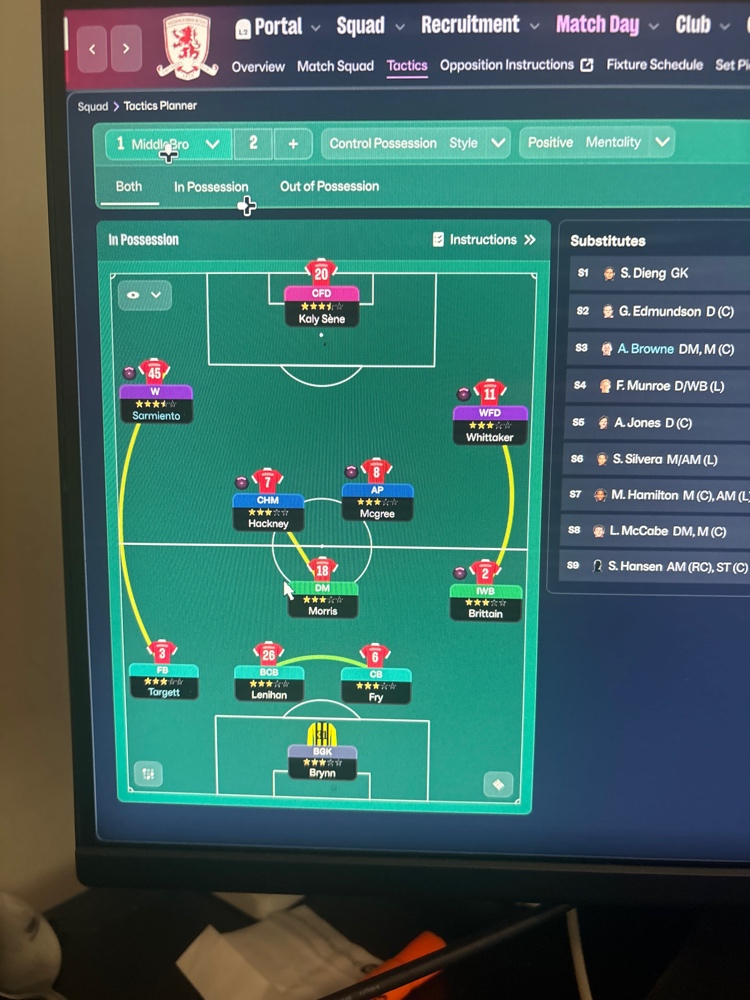
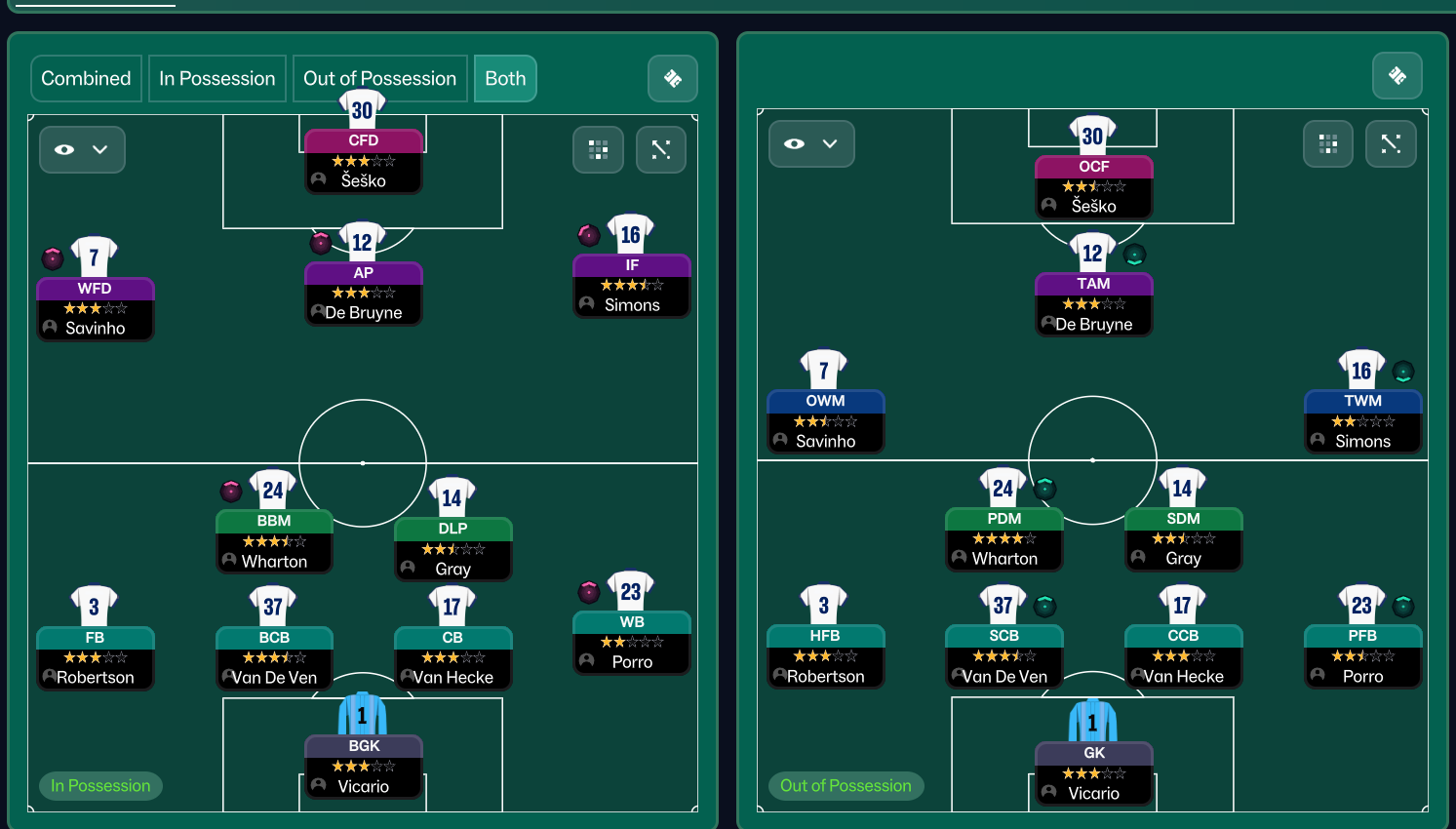
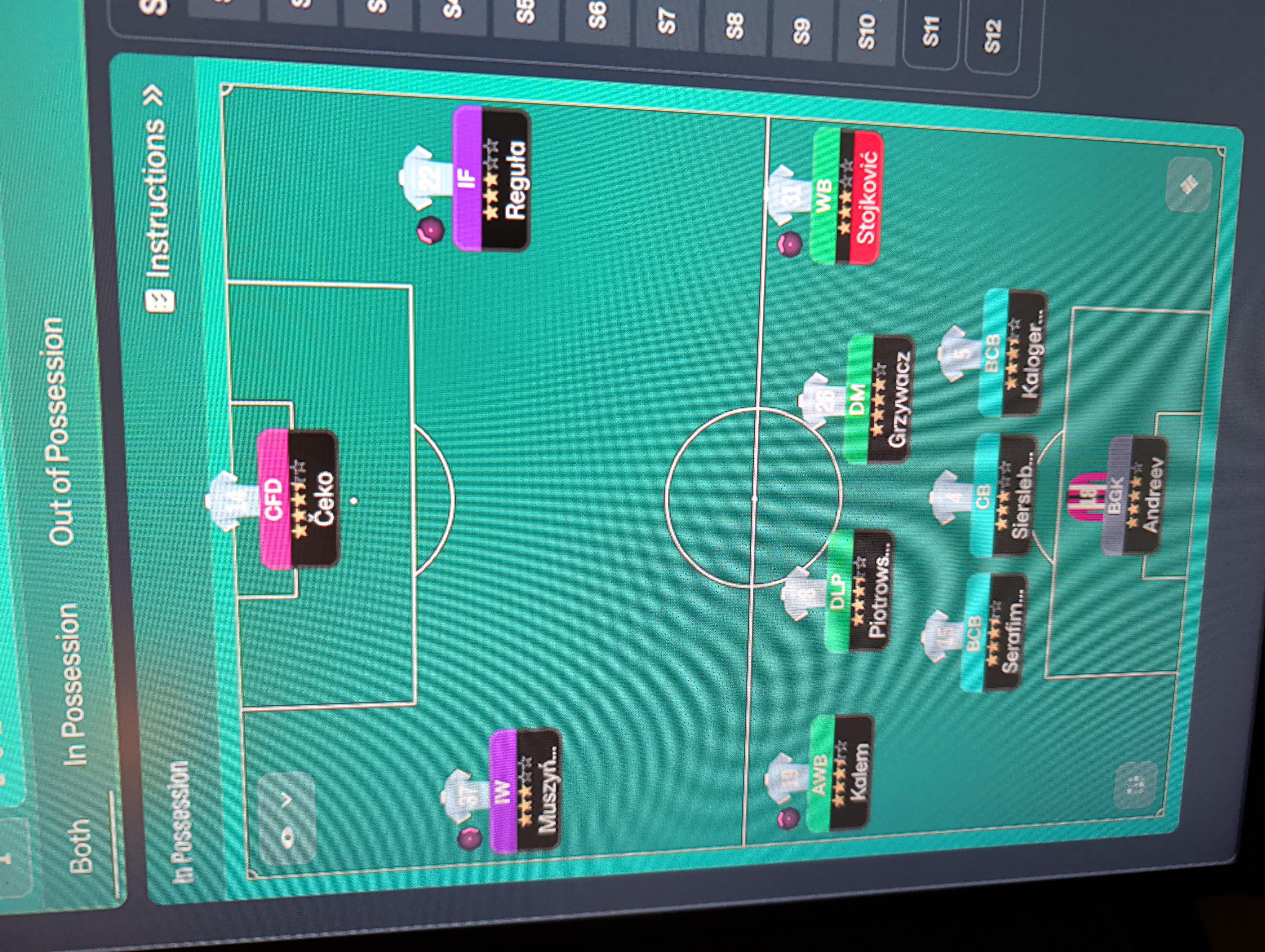
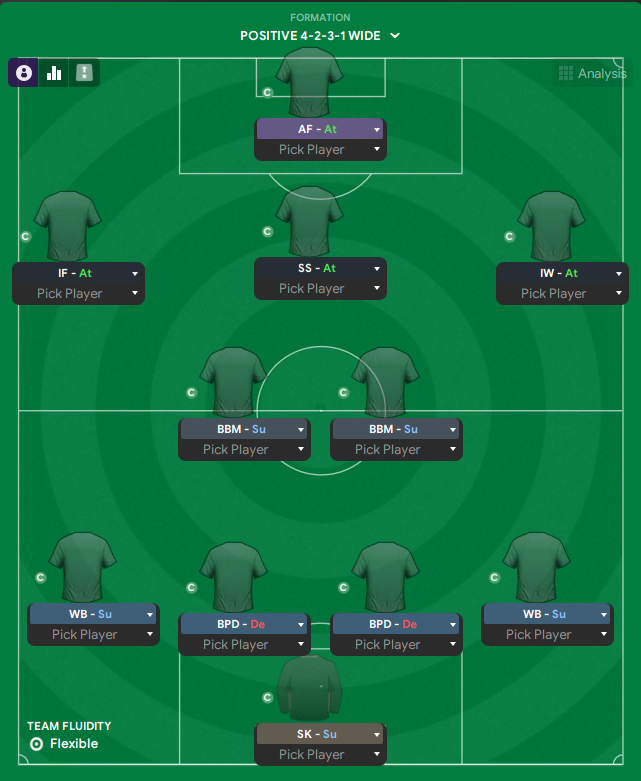
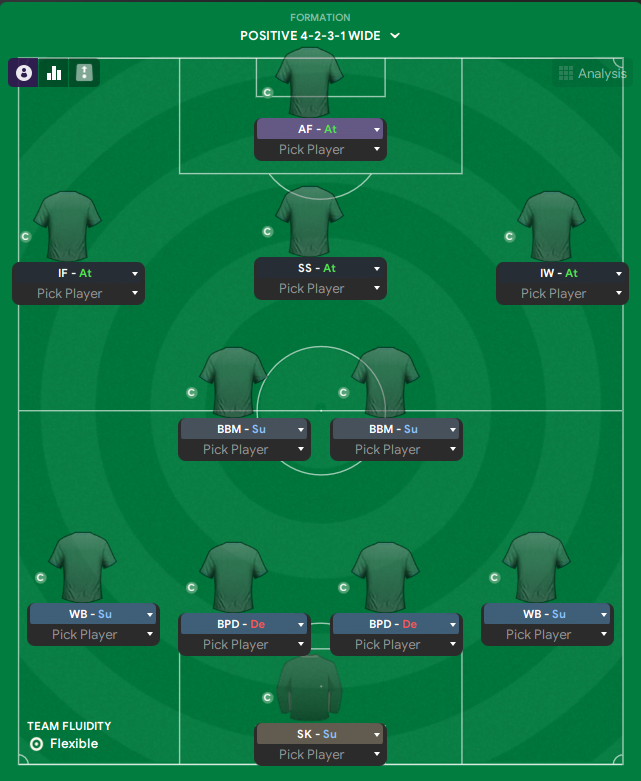
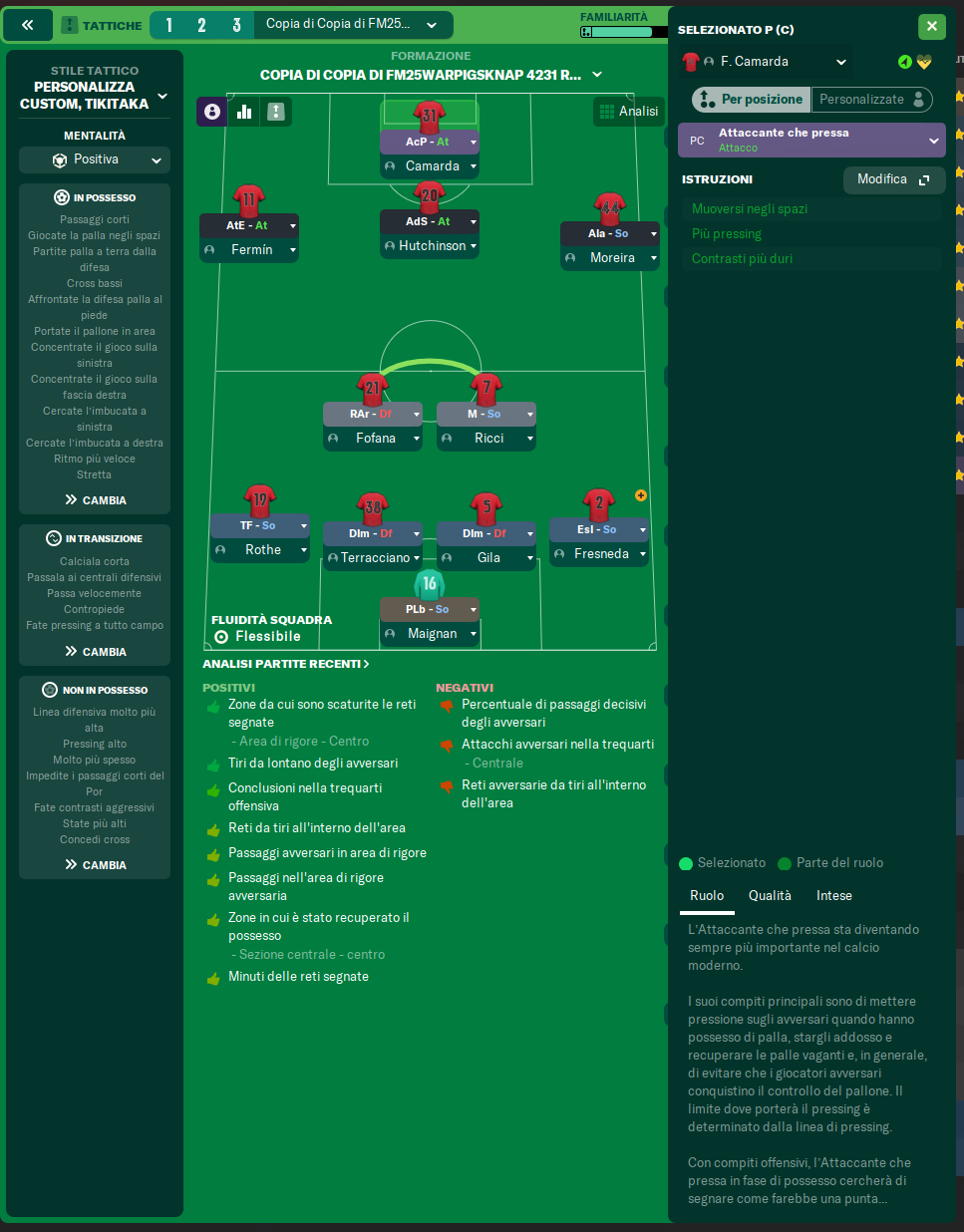
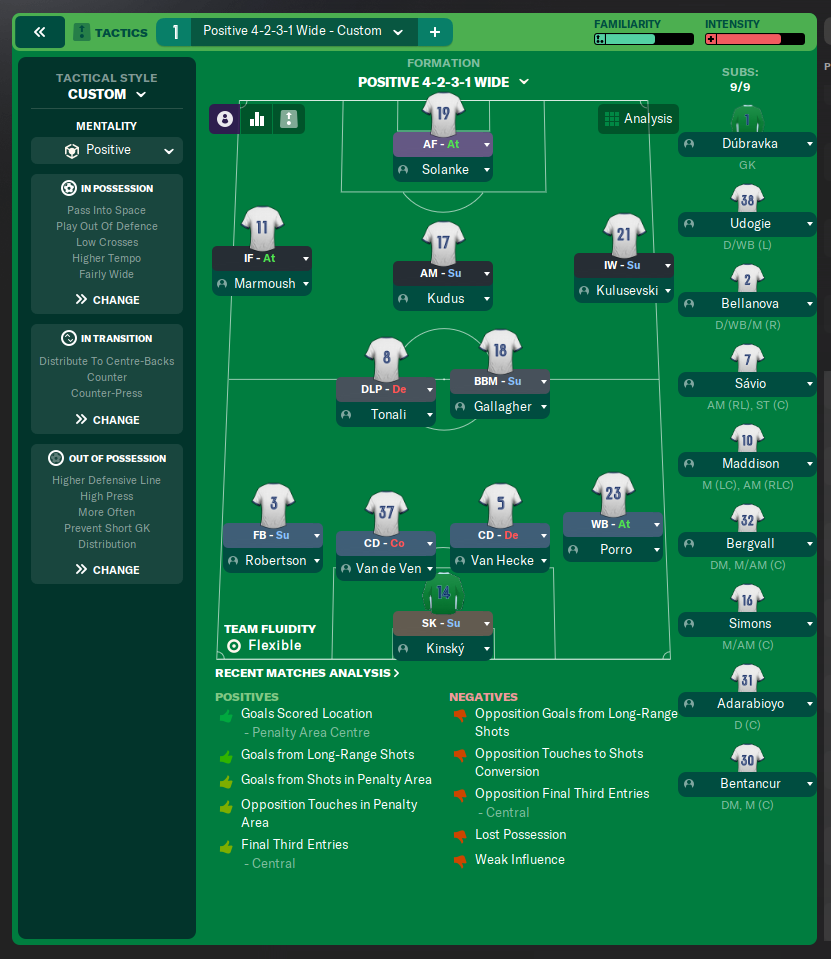
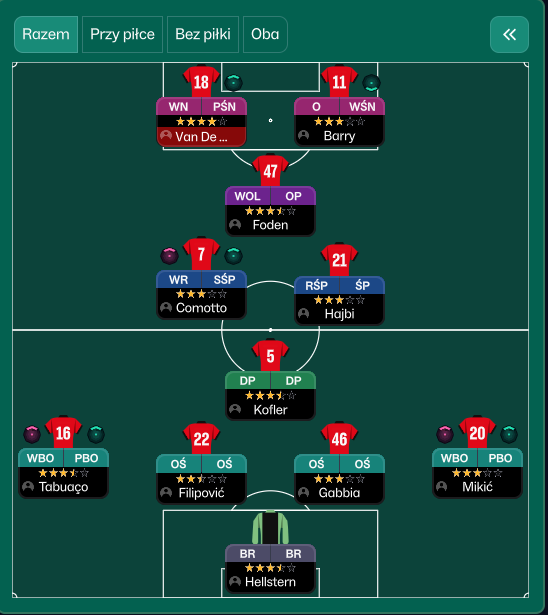
More Custom Vertical Tiki-Taka tactics
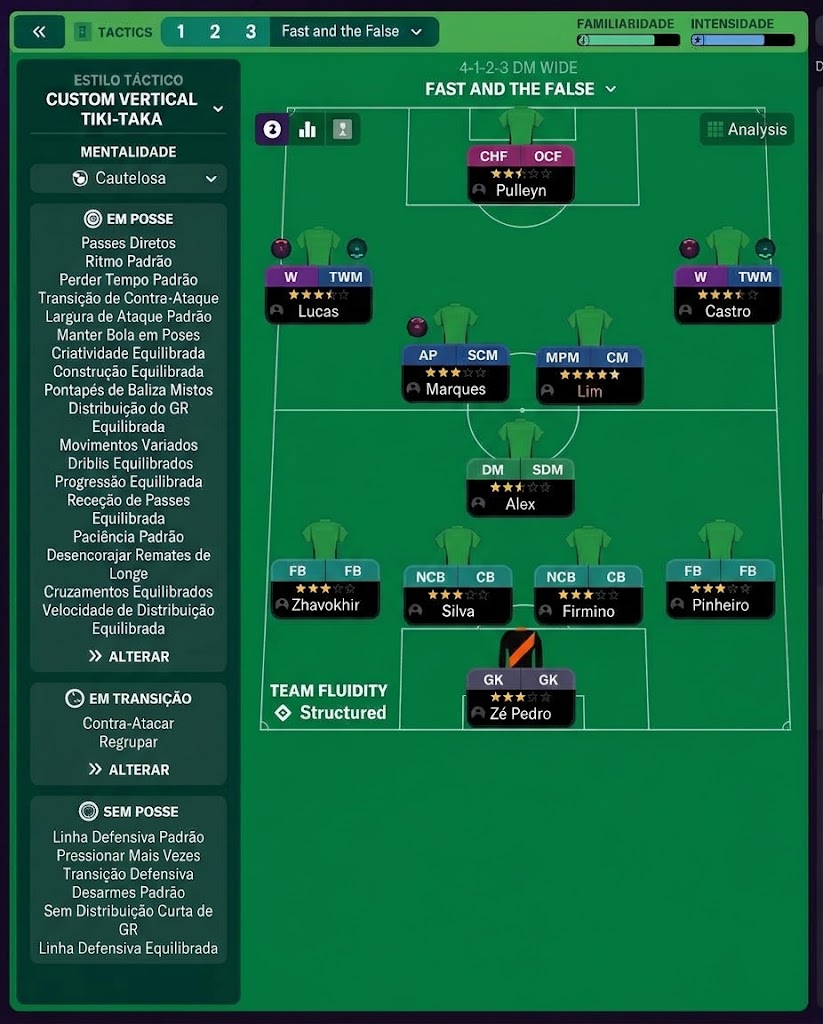
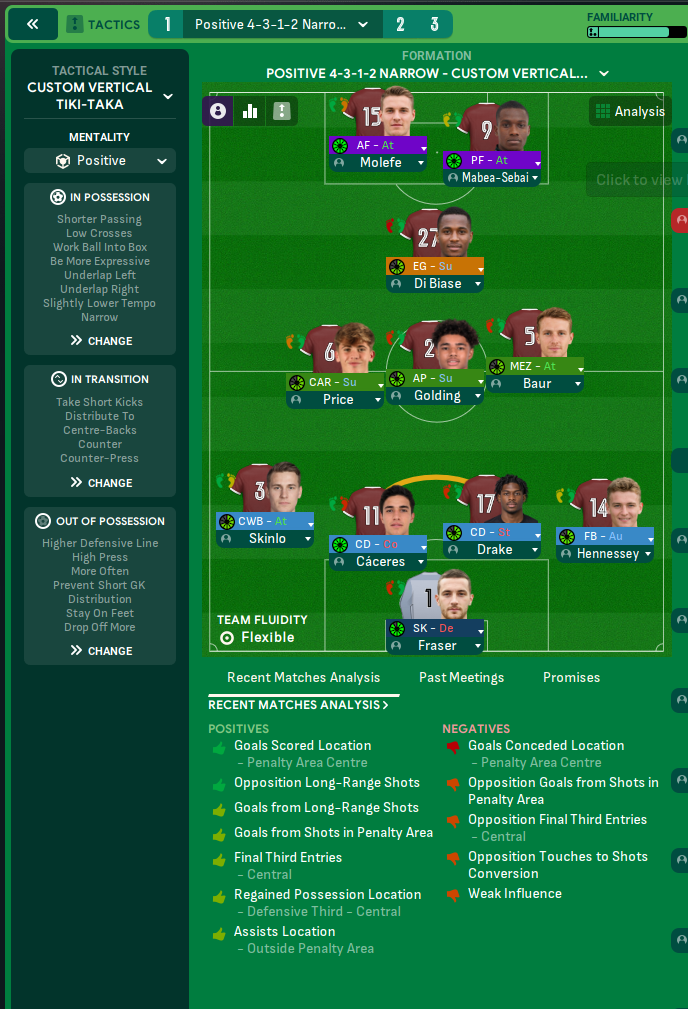
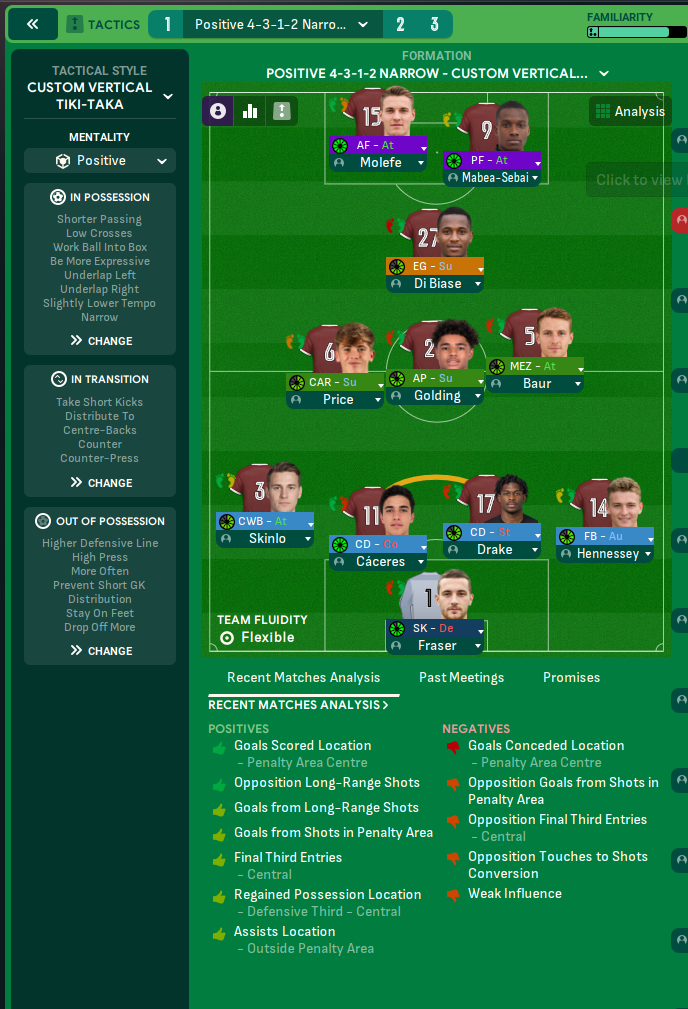
Guides for this formation
The tactical theory behind the 4-2-3-1 Wide: roles, instructions, and the trade-offs that decide whether the system holds up.
Player pairings
Midfield Pairs in 4-2-3-1 and 4-4-2
Double pivots and flat pairs in 4-2-3-1 and 4-4-2: when each pairing works, when it collapses, and the AMC unicorn that rescues both.
Read guide
Playing styles
Gegenpressing: A Full Guide
Klopp-style gegenpressing in FM, including squad profile, line-and-press pairing, sustainable workload, and the antipatterns to avoid.
Read guide