Uploaded Tactic
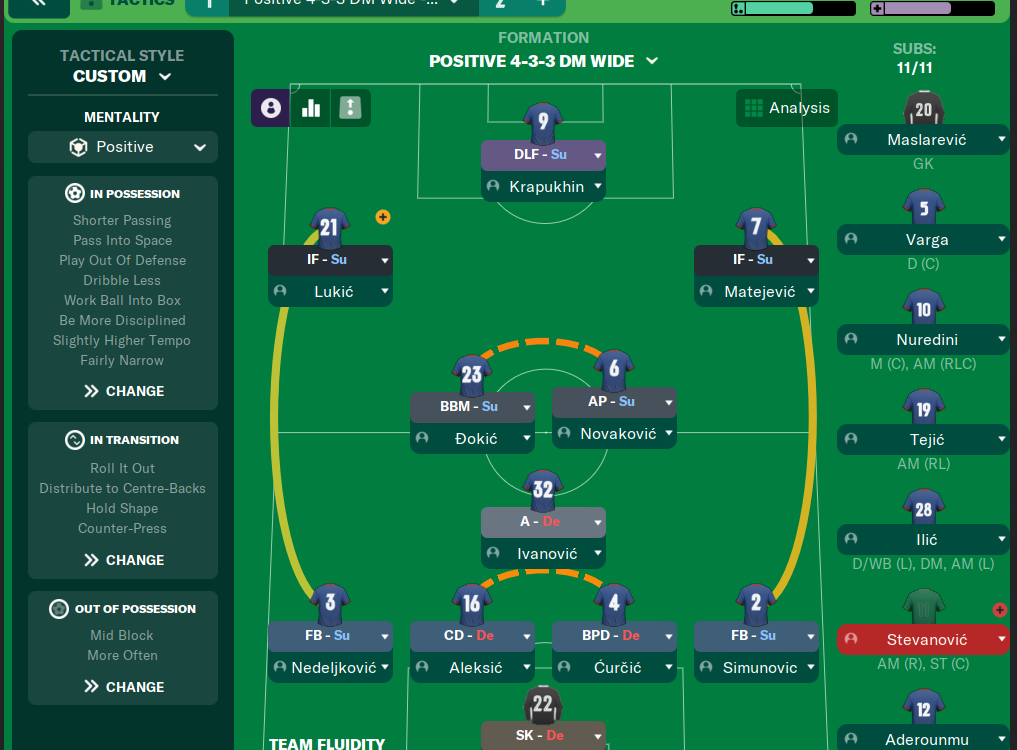
Formation & Style
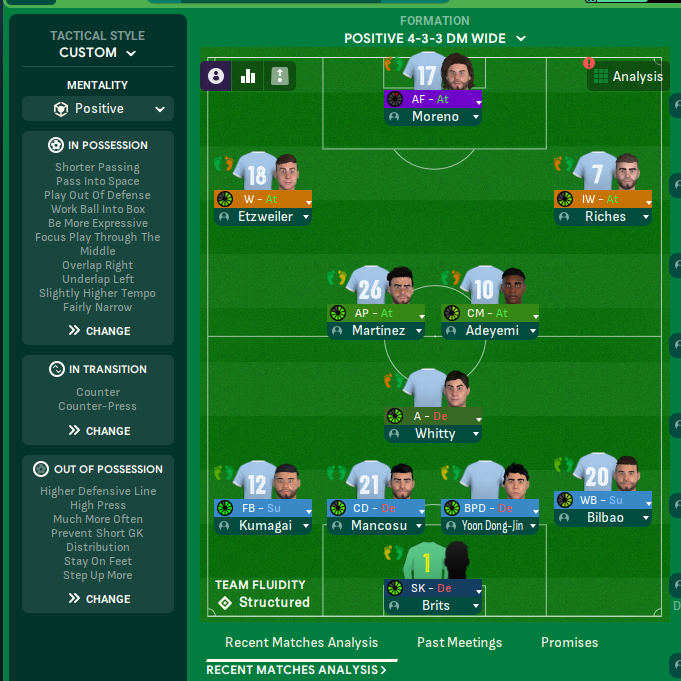
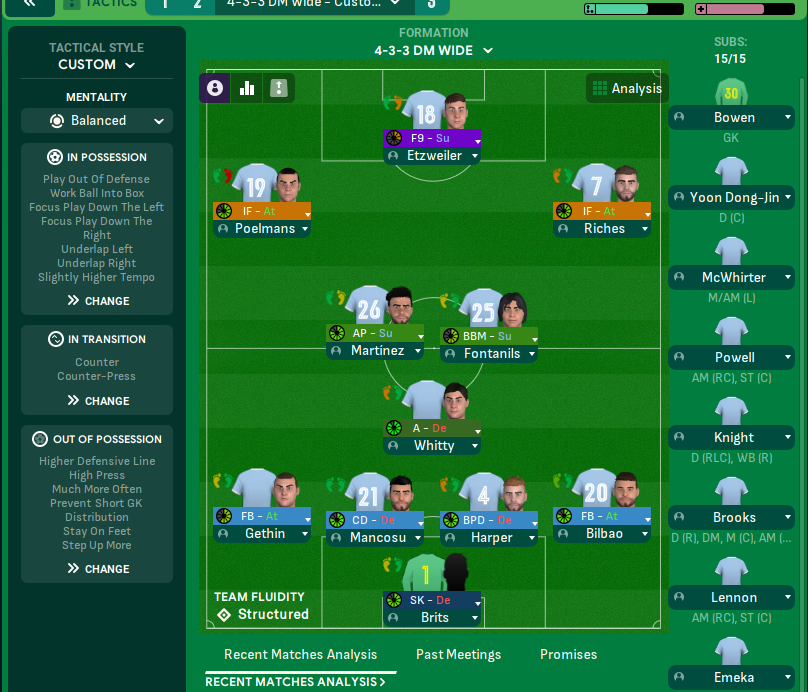
Tactical Style:Custom
Mentality:Positive
Formation:4-3-3 DM Wide
Team Fluidity:null
In Possession
Shorter Passing
Pass Into Space
Play Out Of Defense
Dribble Less
Work Ball Into Box
Be More Disciplined
Slightly Higher Tempo
Fairly Narrow
In Transition
Roll It Out
Distribute to Centre-Backs
Hold Shape
Counter-Press
Out of Possession
Mid Block
More Often
Team Shape Without Ball
Shape:Mid Block Structure
Description:The team operates with a mid-block to apply pressure in zones while maintaining defensive integrity.
Evidence:Use of a mid block with the instruction 'Mid Block' and the presence of an anchor in DM.
Team Shape With Ball
Shape:Wide and Fluid
Description:Spread shape with emphasis on feeding inside forwards and supporting runs from the midfield.
Evidence:Use of inside forwards (Lukić, Matejević) alongside a deep-lying forward creates width and movement.
Phase Description
Attacking Play
The tactic encourages patient build-up from the back with a focus on ball retention and exploiting spaces on the flanks.
Defensive Transition
Quickly regrouping and holding shape to maintain a structured position while pressuring opponents.
Main Focus
The main focus is on creating goal-scoring opportunities through intricate passing and exploiting the space afforded by inside forwards.
Key Strengths
Fluid Midfield Play
The combination of Advanced Playmaker and Box-to-Box Midfielder enhances creativity and transitions.
Width in Attack
Inside forwards stretching the defensive line allows for more space for midfielders to operate.
Structured Defensive Unit
Strong central defense complemented by full-backs who can provide width when in possession.
Conflicting Directions
Dependency on Flanks
Overreliance on inside forwards may become predictable against teams solid defensively.
Counter-Press Limitations
Counter-press effectiveness can decrease against teams that are adept at countering pressure.
Game Management Challenges
A 'Positive' mentality might invite pressure as the game progresses, potentially leading to exposure.
Tactical Suggestions
Consider Adjusting Mentality
Shifting to a more cautious mentality may help to balance between attack and defensive solidity as games progress.
Enhance Midfield Transition
Utilizing a Playmaker with an Attack duty could enhance attacking fluidity and provide another goal threat.
Rotate Full-Backs' Duties
Introducing one wing-back with an Attack duty could create more dynamism and contribute to width in attack.
Ask Questions About Your Lineup
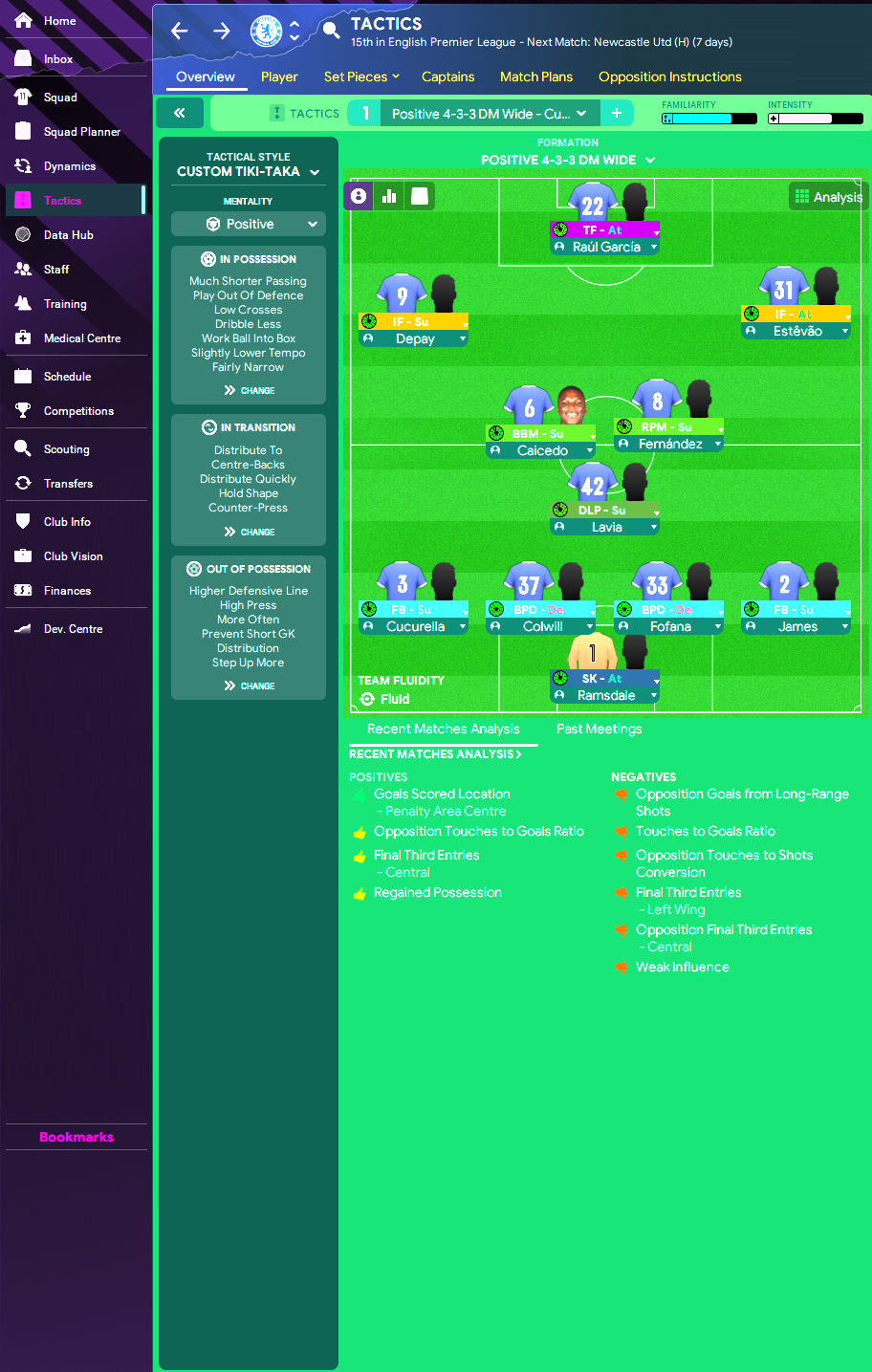
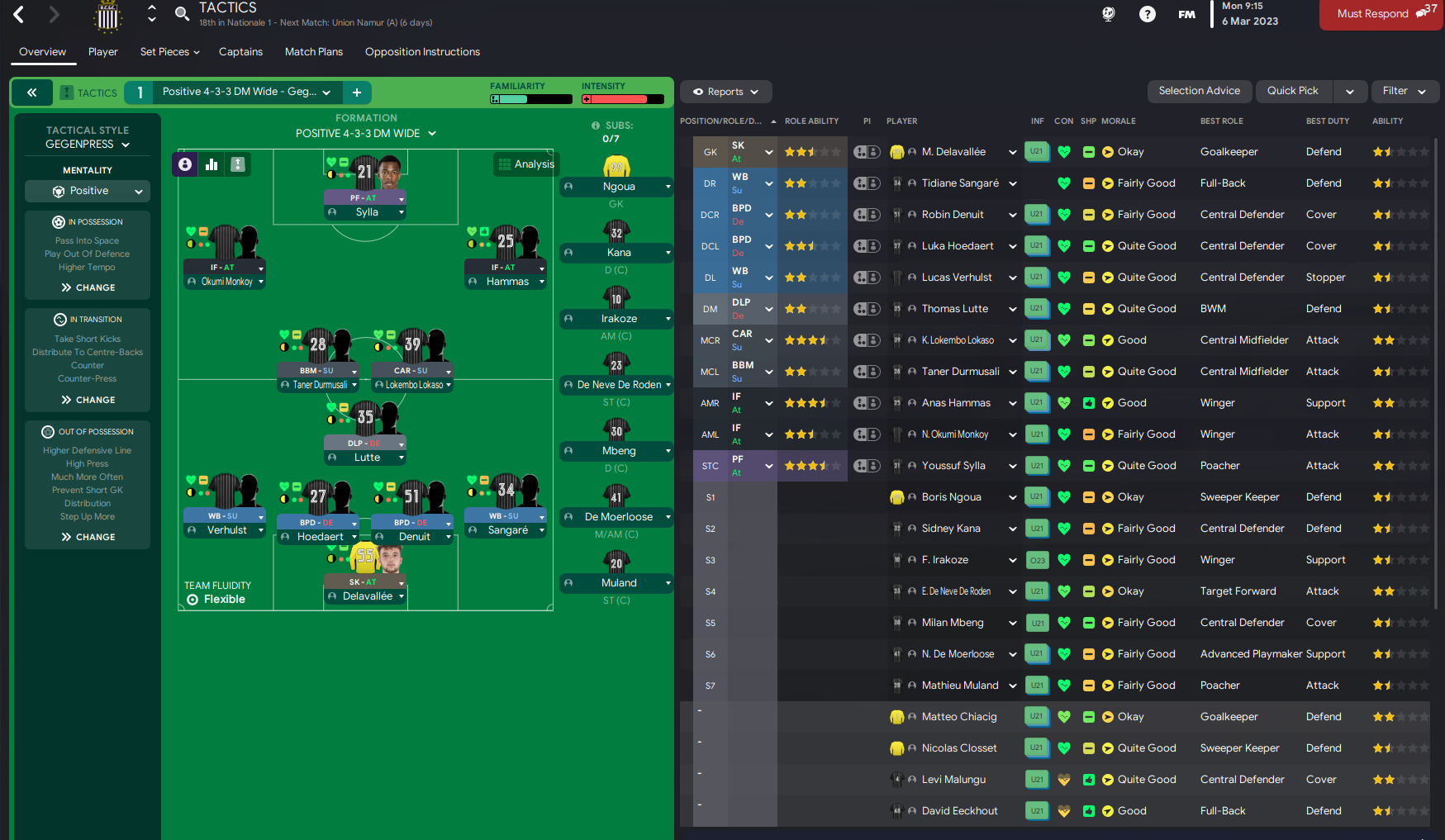
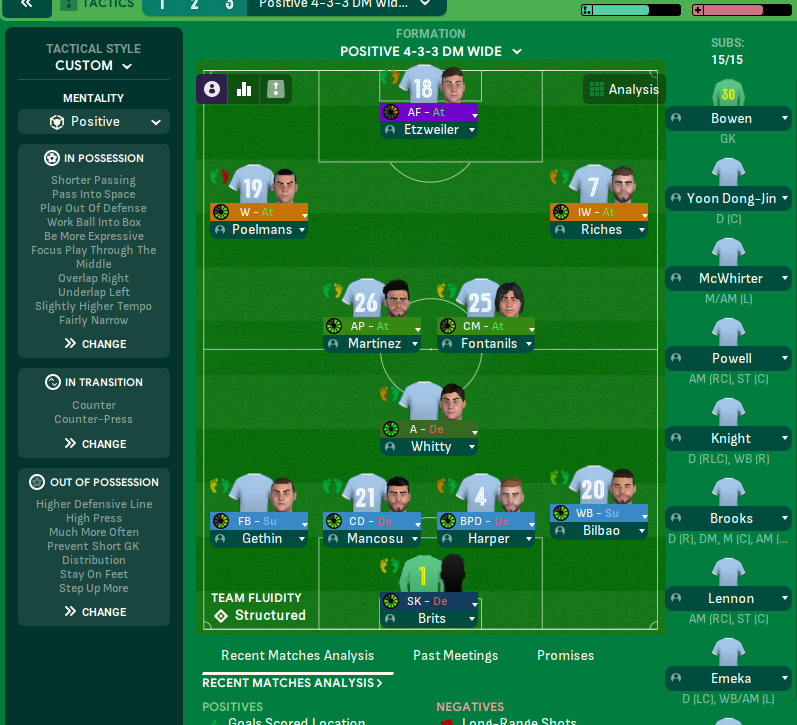
Related Tactics
Guides for this formation
The tactical theory behind the 4-3-3 DM Wide: roles, instructions, and the trade-offs that decide whether the system holds up.
Foundations
Understanding the 4-3-3 Formation
Master the classic 4-3-3: player roles, tactical variations, and the trade-offs that decide whether it sings or stalls.
Read guide
Player pairings
Midfield Trios
Holder, runner, creator: the role distribution rule for three-man midfields, the AMC variants, and the antipatterns that break them.
Read guide
Playing styles
Gegenpressing: A Full Guide
Klopp-style gegenpressing in FM, including squad profile, line-and-press pairing, sustainable workload, and the antipatterns to avoid.
Read guide