Uploaded Tactic
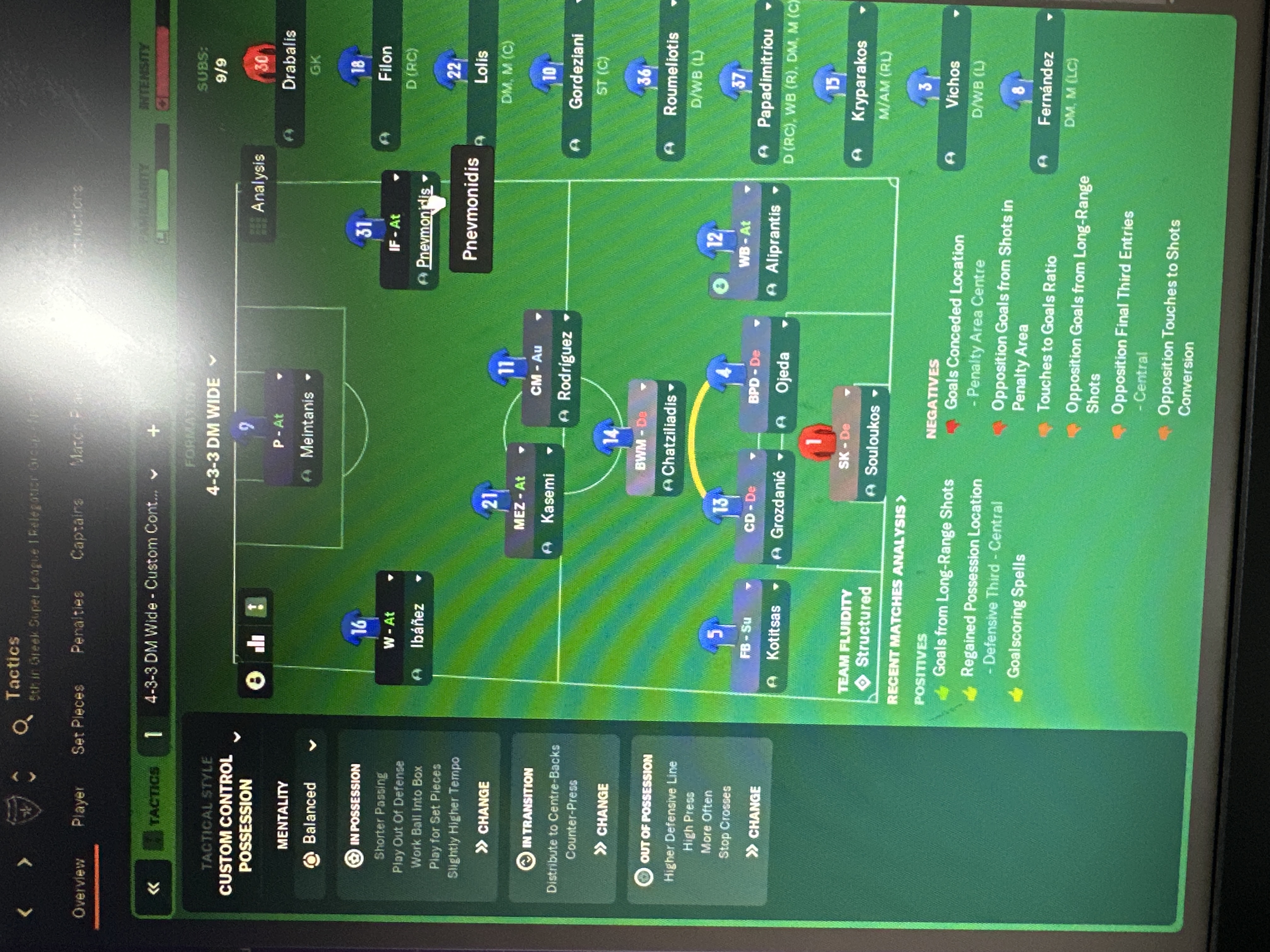
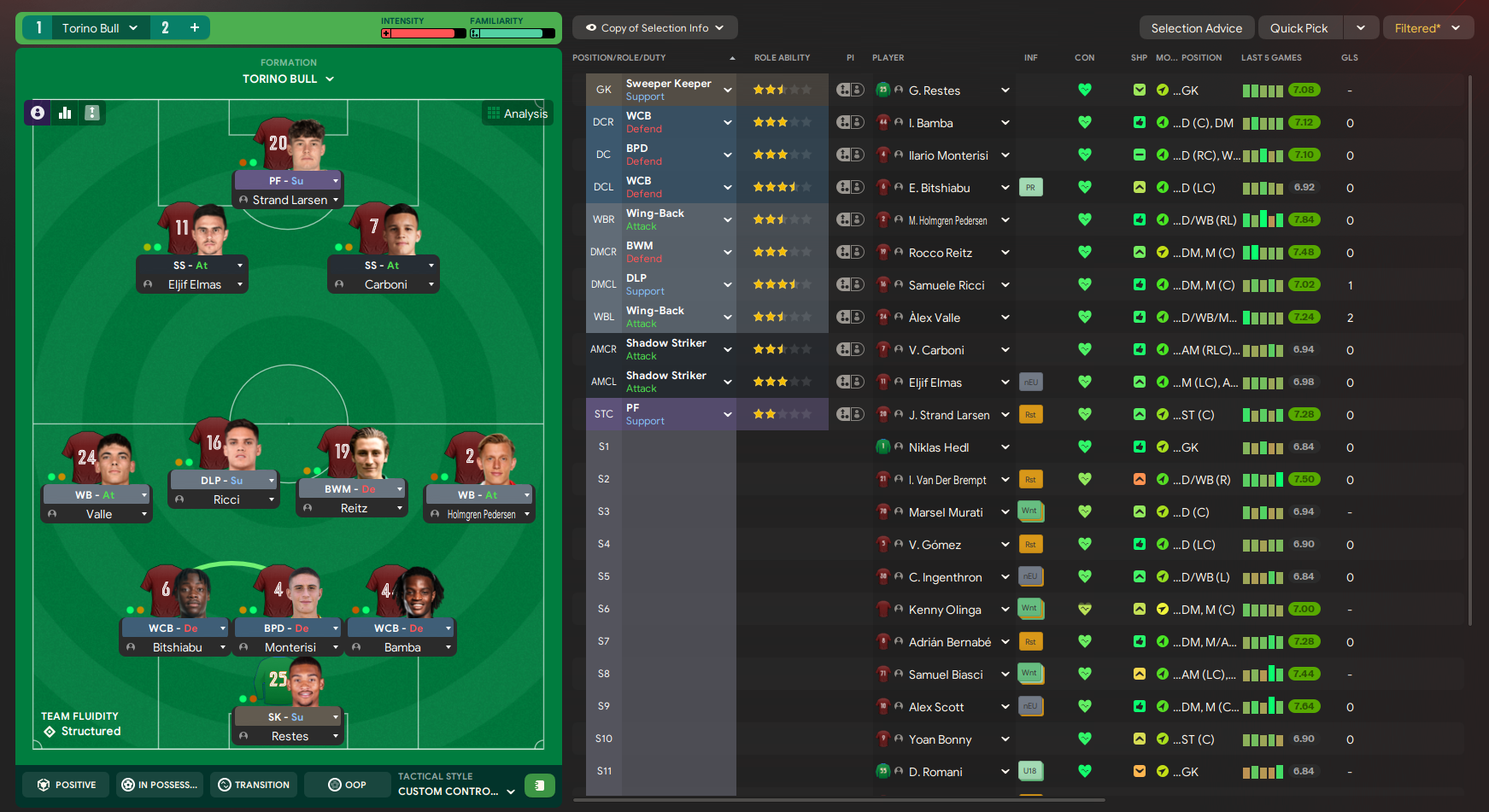
Formation & Style
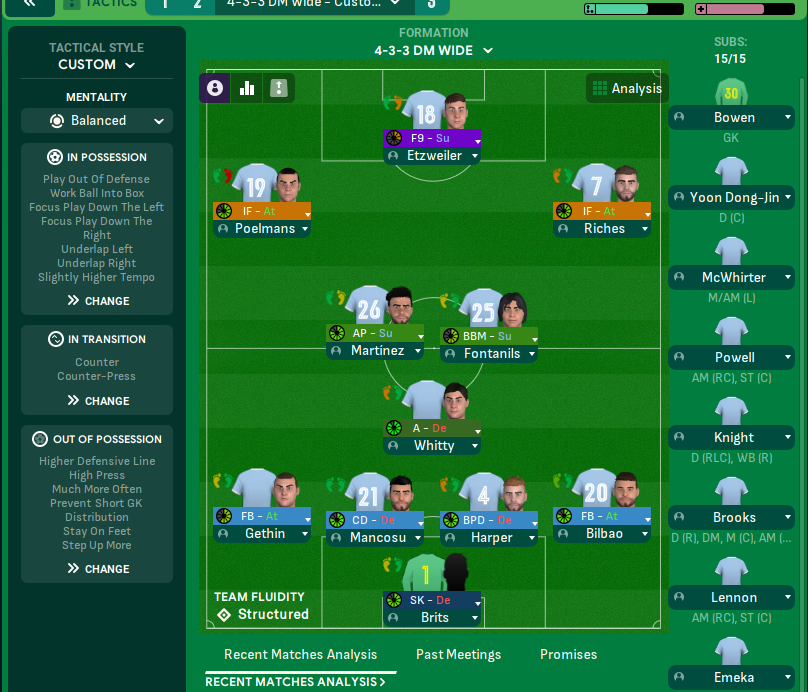
Tactical Style:Custom Control
Mentality:Balanced
Formation:4-3-3 DM Wide
Team Fluidity:Structured
In Possession
Shorter Passing
Play Out Of Defense
Work Ball Into Box
Slightly Higher Tempo
In Transition
Distribute to Centre-Backs
Counter-Press
Out of Possession
Higher Defensive Line
High Press
More Often
Stop Crosses
Team Shape Without Ball
No team shape without ball data available
Team Shape With Ball
No team shape with ball data available
Key Strengths
Control of Possession
The team effectively maintains possession through short passing and a structured approach, making it difficult for opponents to regain the ball.
Width in Attack
Using a wide formation allows for the creation of spaces and opportunities for forwards to exploit, particularly through the inside forwards and overlapping full-backs.
Defensive Solidity
The use of a higher defensive line coupled with a counter-press allows for immediate recovery of possession when lost, emphasizing an aggressive defensive approach.
Regained Possession Location
The team has shown strengths in regaining possession in the defensive third, allowing for quick transitions into offensive plays.
Conflicting Directions
Pressing vs. Structural Play
While the high press is beneficial, it may conflict with a structured approach that prioritizes maintaining shape in midfield, potentially leaving gaps when applying the press.
Counter-Pressing Efficiency
If not executed properly, the counter-press can lead to disorganization when the team loses the ball, making them vulnerable to quick counter-attacks.
Balance Between Attack and Defense
The attacking mentality of the inside forward may lead to defensive gaps, especially if the full-backs advance too high without adequate cover from midfielders.
Higher Tempo Challenges
Increasing the tempo can lead to rushed decisions, particularly in midfield, which may contradict the overall control strategy.
Tactical Suggestions
Adjust Full-Backs' Roles
Consider changing one full-back to an attacking role to create more overlaps while ensuring the other remains defensively disciplined.
Enhance Midfield Cover
Introduce a more defensive-minded midfielder to provide added protection against counter-attacks while maintaining ball distribution.
Refine Pressing Triggers
Implement specific player triggers for pressing to prevent the entire team from being caught out of position during counter-pressing situations.
Incorporate Dynamic Substitutions
Utilize substitutions tactically, adjusting for tiredness and making changes to exploit weaknesses in opposition late in the game.
Ask Questions About Your Lineup
Related Tactics
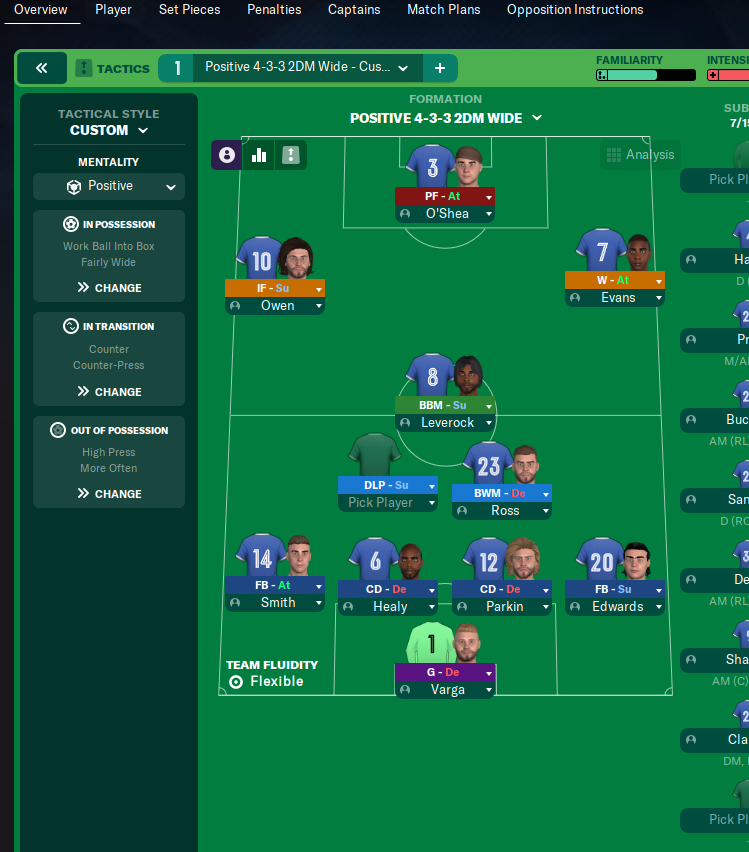
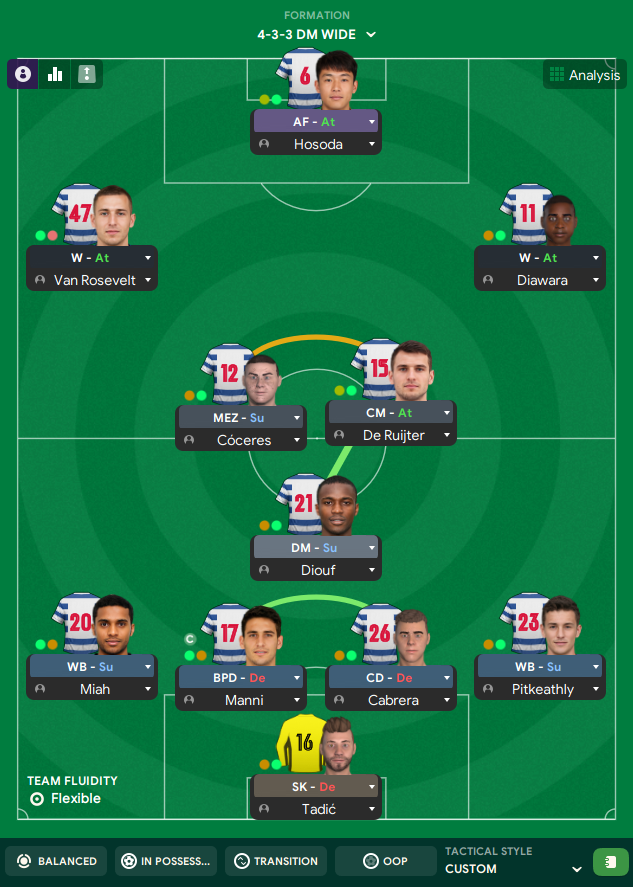
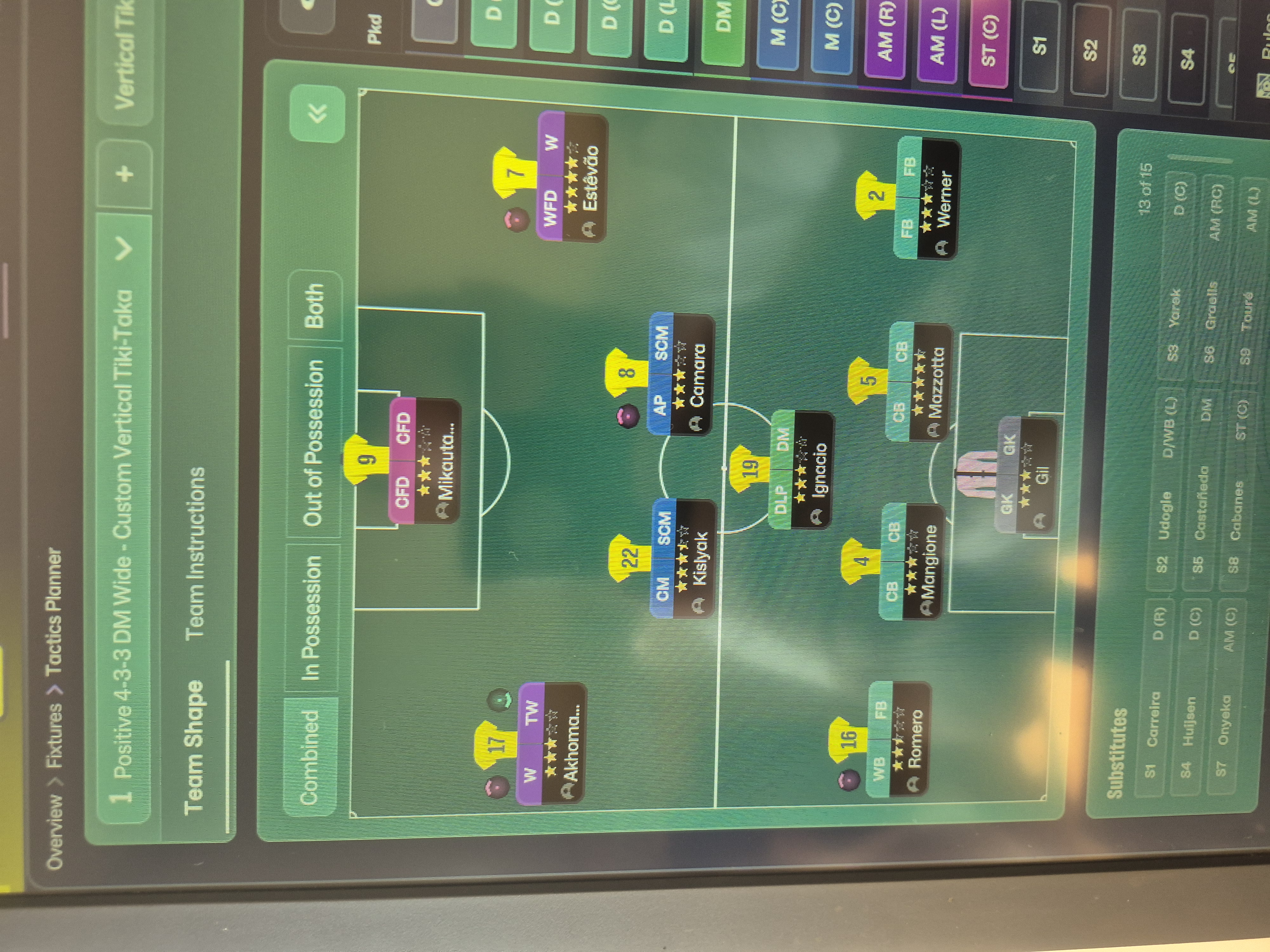
More Custom Control tactics
Guides for this formation
The tactical theory behind the 4-3-3 DM Wide: roles, instructions, and the trade-offs that decide whether the system holds up.
Foundations
Understanding the 4-3-3 Formation
Master the classic 4-3-3: player roles, tactical variations, and the trade-offs that decide whether it sings or stalls.
Read guide
Player pairings
Midfield Trios
Holder, runner, creator: the role distribution rule for three-man midfields, the AMC variants, and the antipatterns that break them.
Read guide
Playing styles
Gegenpressing: A Full Guide
Klopp-style gegenpressing in FM, including squad profile, line-and-press pairing, sustainable workload, and the antipatterns to avoid.
Read guide