Uploaded Tactic
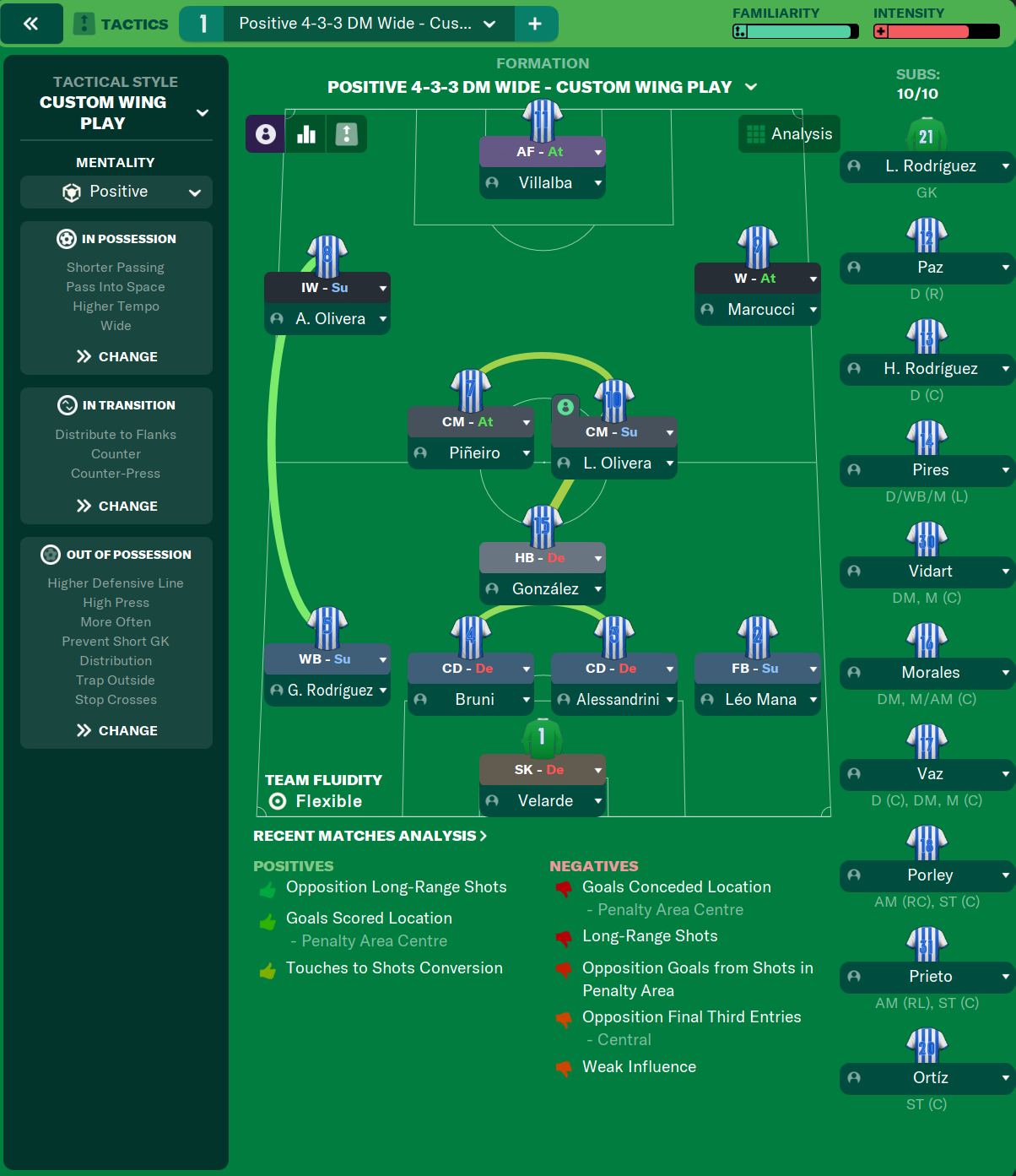
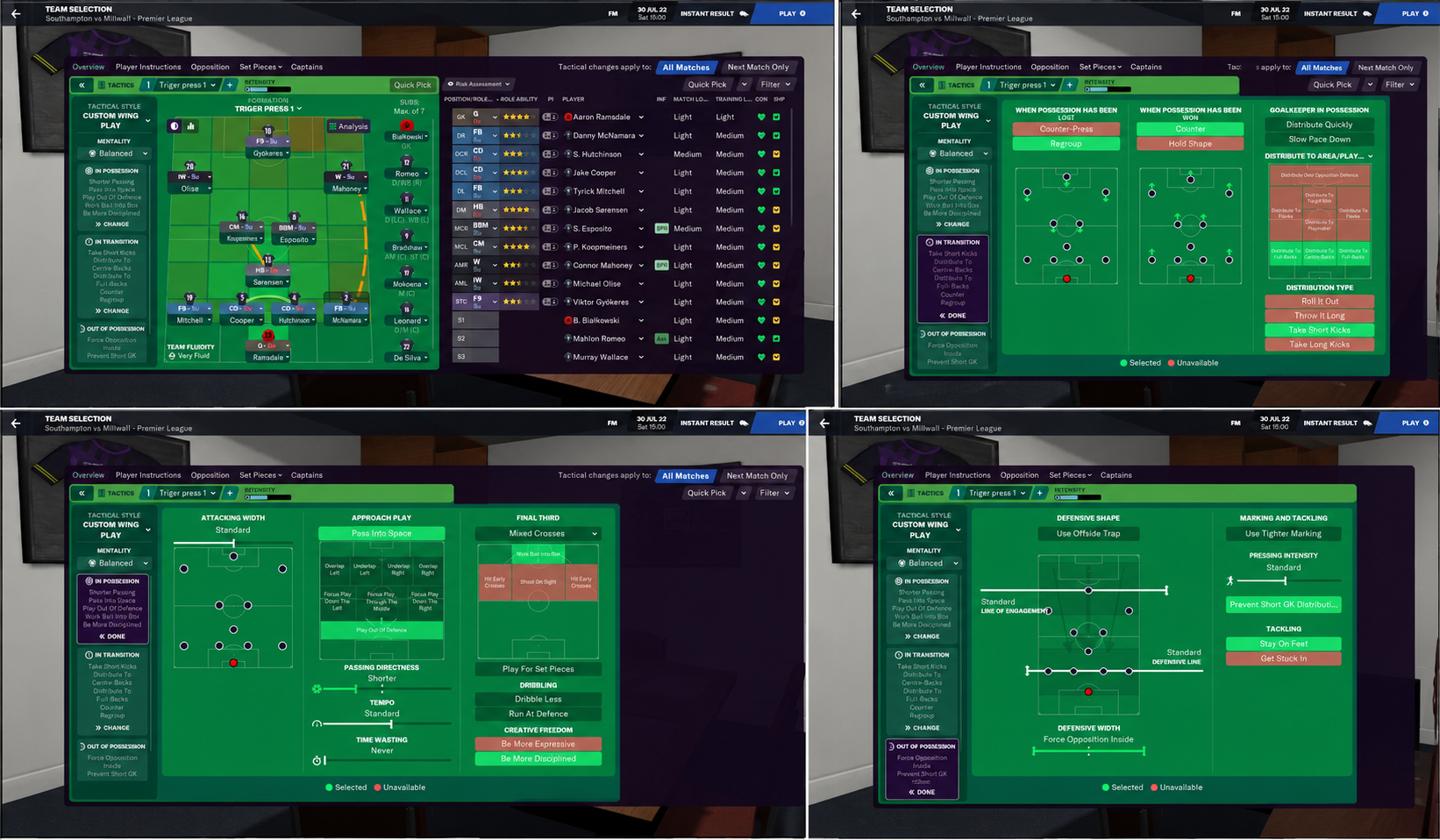
Formation & Style
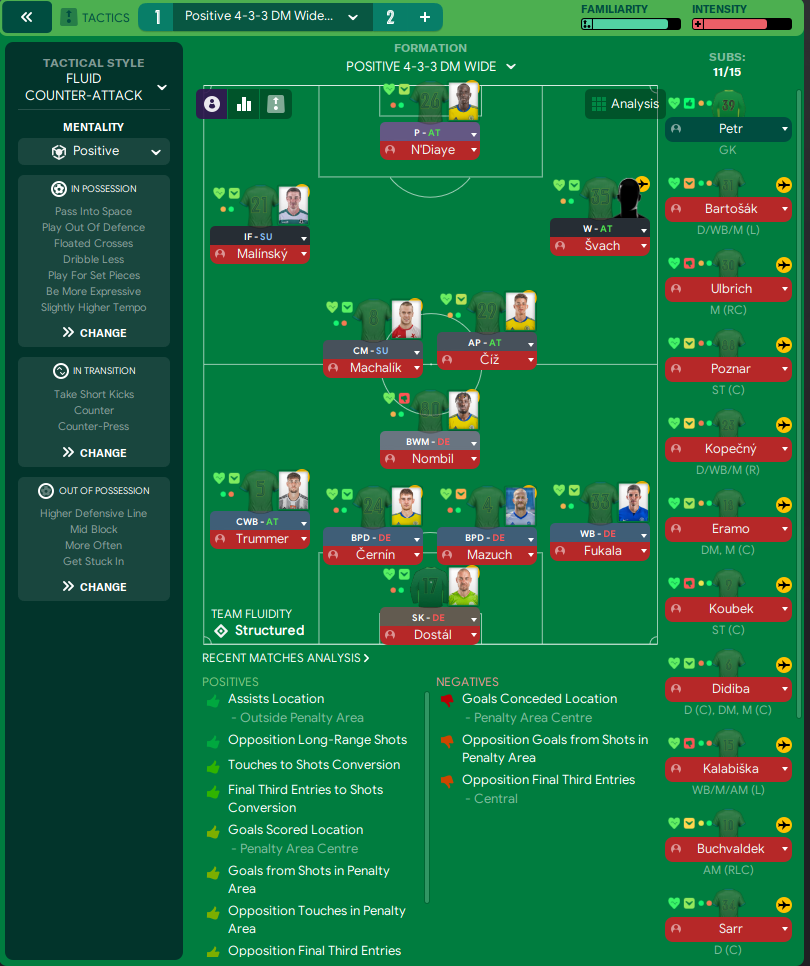
Tactical Style:Custom Wing Play
Mentality:Positive
Formation:4-3-3 DM Wide
Team Fluidity:Flexible
In Possession
Shorter Passing
Pass Into Space
Higher Tempo Wide
In Transition
Distribute to Flanks
Counter
Counter-Press
Out of Possession
Higher Defensive Line
High Press
More Often
Prevent Short GK Distribution
Trap Outside
Stop Crosses
Team Shape Without Ball
Shape:Compact
Description:Team maintains a compact shape, with the DM providing cover and CBs maintaining defensive solidity.
Evidence:With CD-De at [2,2] and [2,3], supported by HB-De at [3,3].
Team Shape With Ball
Shape:Wide
Description:Utilizes width through inside forward and winger, with CM support from deep to create numerical advantages.
Evidence:W at [5,4], IW at [5,2], and CMs supporting from [4,2] and [4,3].
Phase Description
Attacking Play
The tactic focuses on getting the ball wide to utilize the inside winger and winger in wide areas while also integrating attacking midfielders into the box.
Defensive Transition
Quickly press the opponents to regain possession after losing the ball, supported by a high line to compress space.
Main Focus
Maximizing width and delivery into the box from wide areas, complemented by central overloads.
Key Strengths
Utilization of Width
The inside winger and winger maximize play down the flanks creating space.
Central Dominance
Presence of multiple midfielders in close proximity allows for ball retention and fluid movement.
Defensive Solidity
A dedicated half-back and two center-backs provide strong defensive structure.
Conflicting Directions
High Press May Lead to Vulnerability
Aggressive pressing can leave space in behind if not executed effectively.
Dependence on Flanks
Heavy reliance on wide play could render the tactic predictable against teams that defend narrow.
Defensive Line Risks
Higher defensive line can become a risk against rapid attackers.
Tactical Suggestions
Consider Balancing Width and Central Play
Incorporating more central attacking options can make the play less predictable.
Assess Pressing Triggers
Adjusting pressing frequency can help maintain defensive stability.
Experiment with Defensive Line
Adjusting the defensive line based on opposition pace can enhance defensive stability.
Ask Questions About Your Lineup
Related Tactics
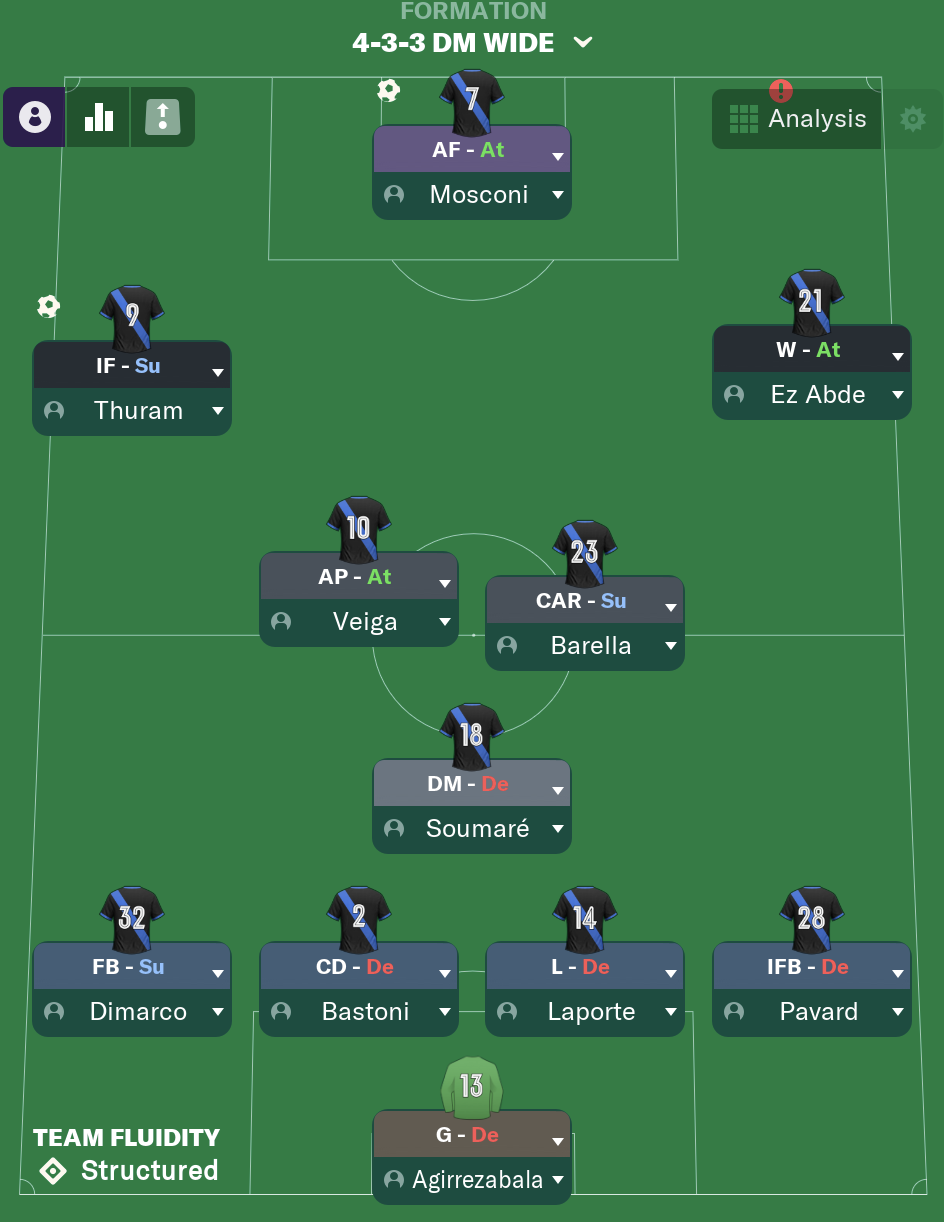
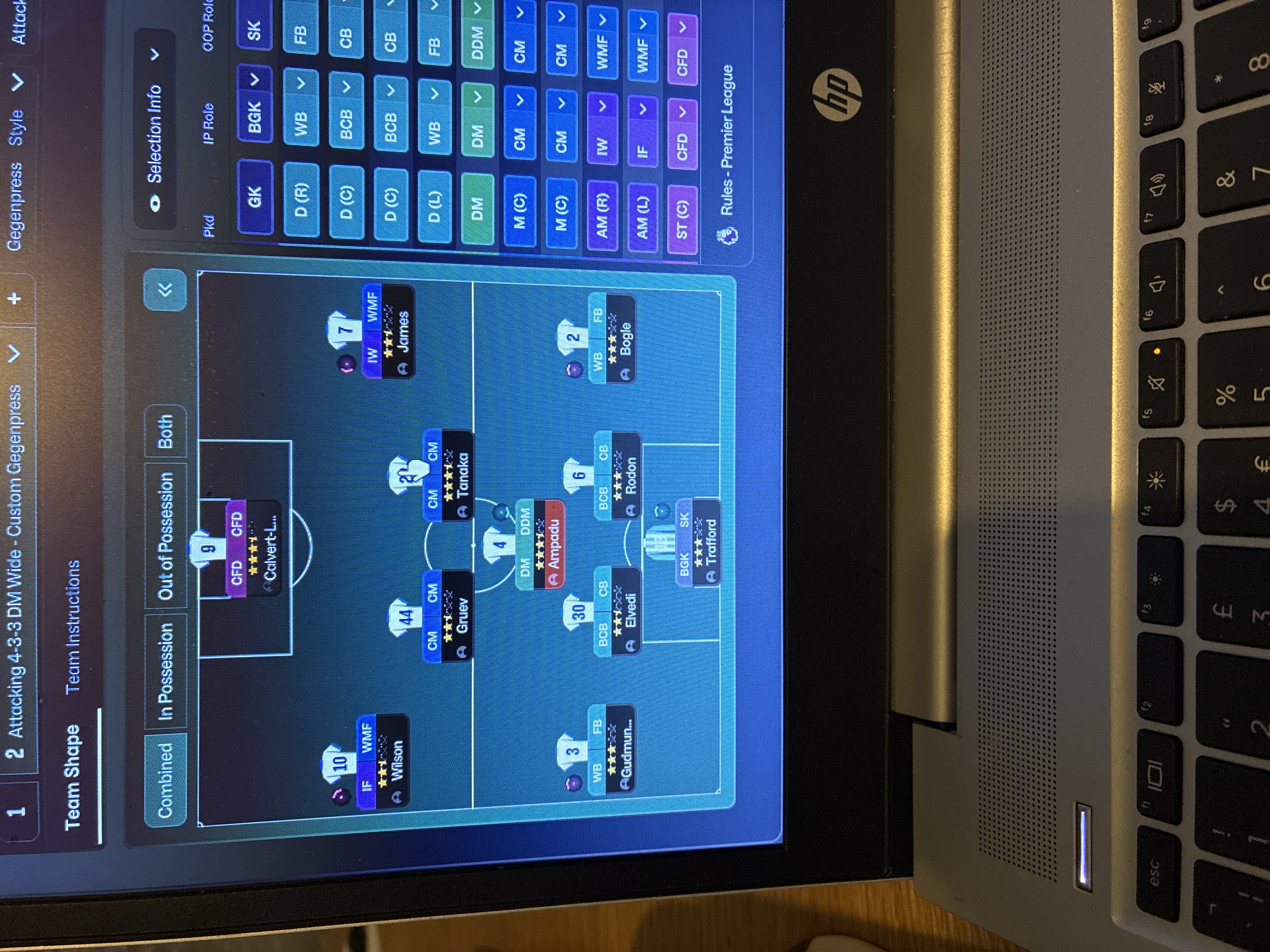
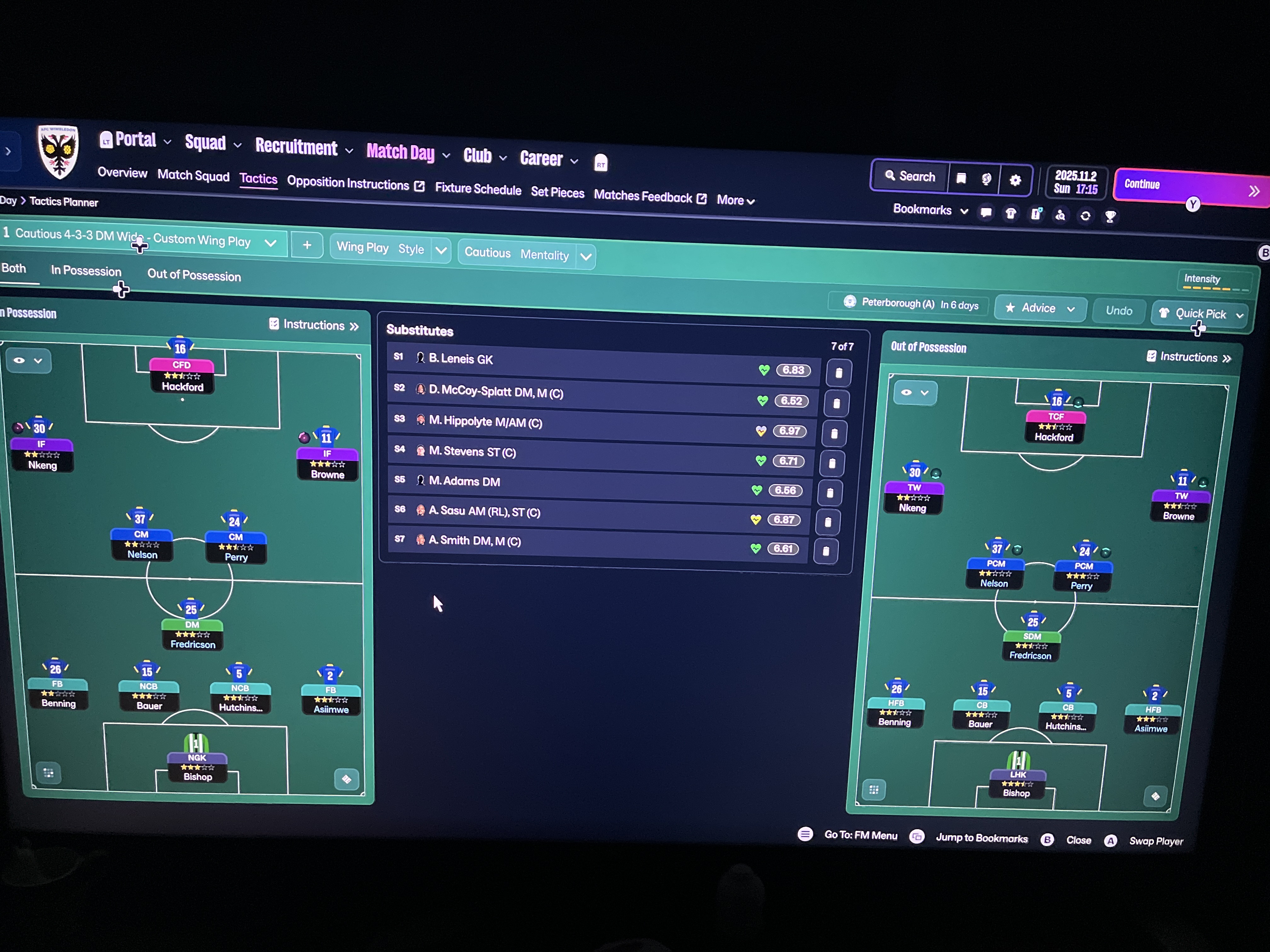
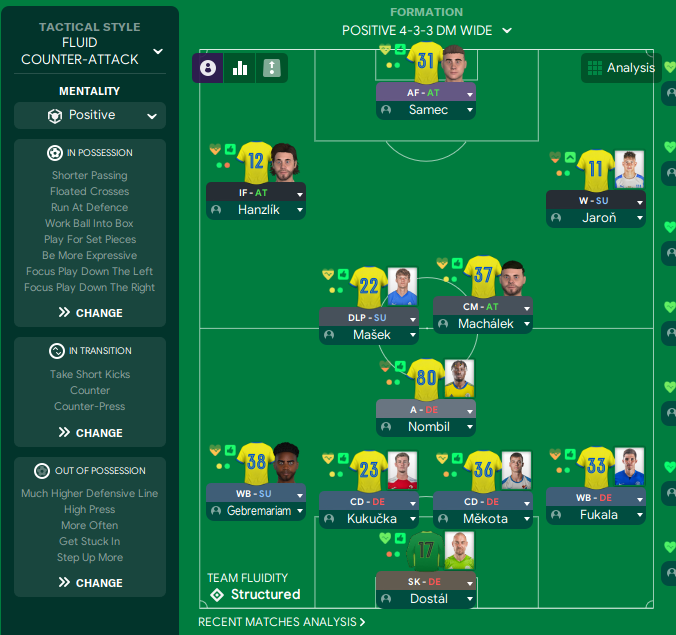
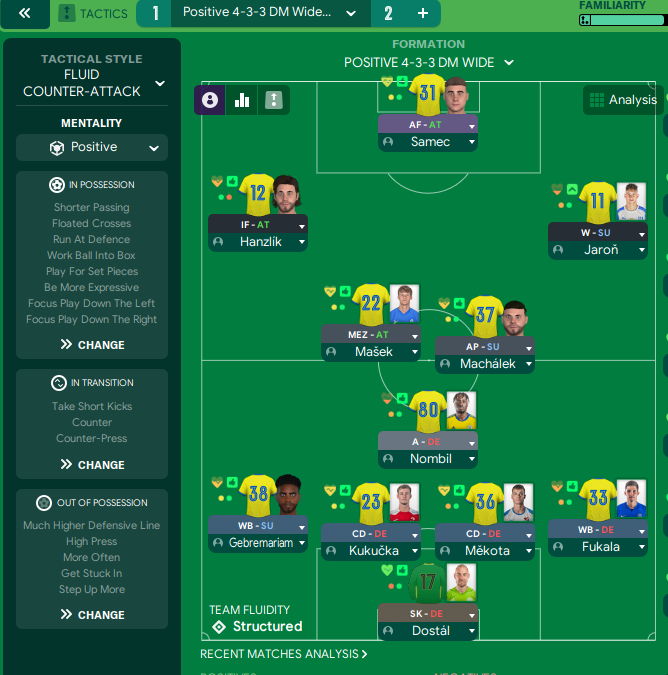
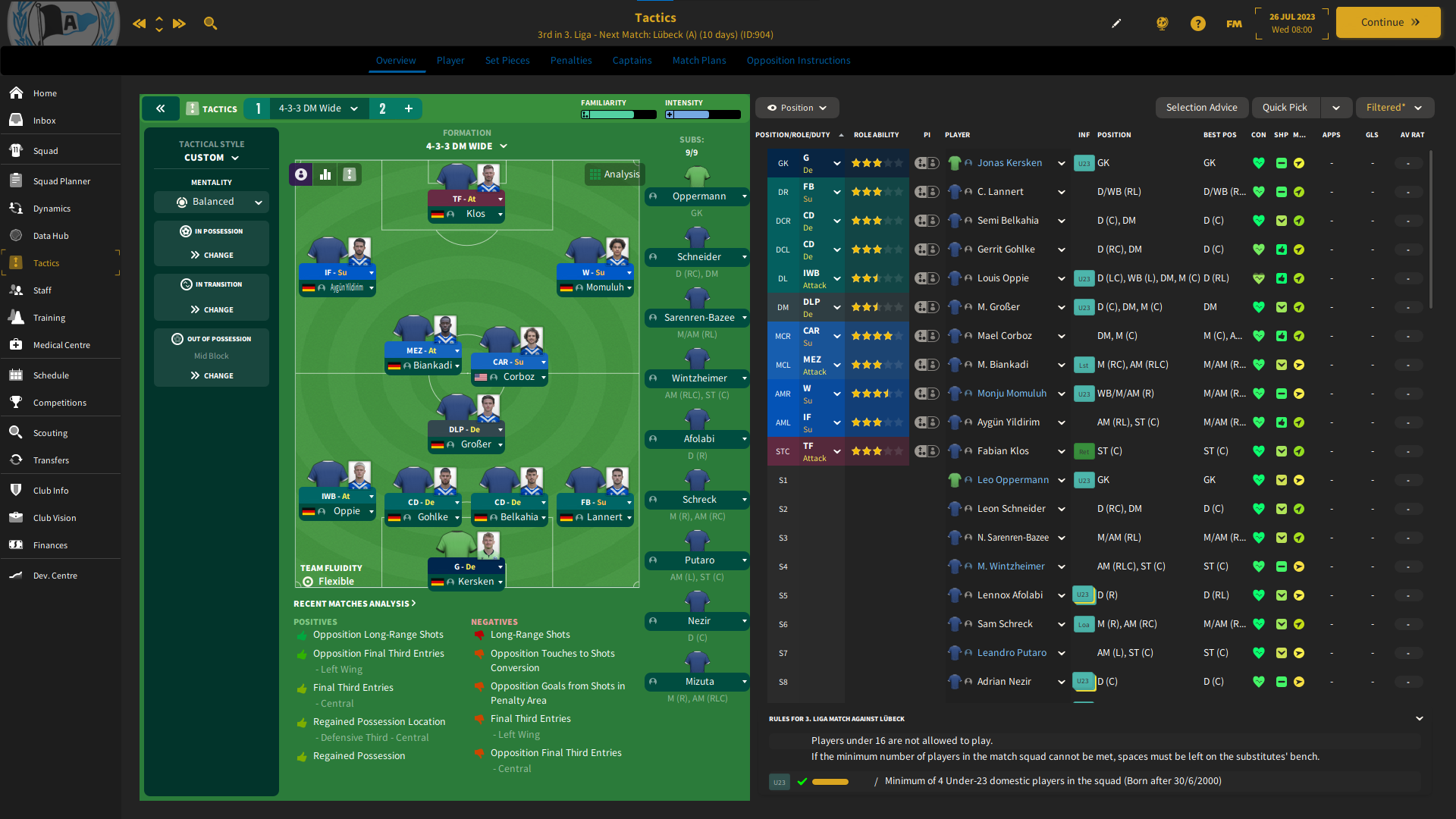
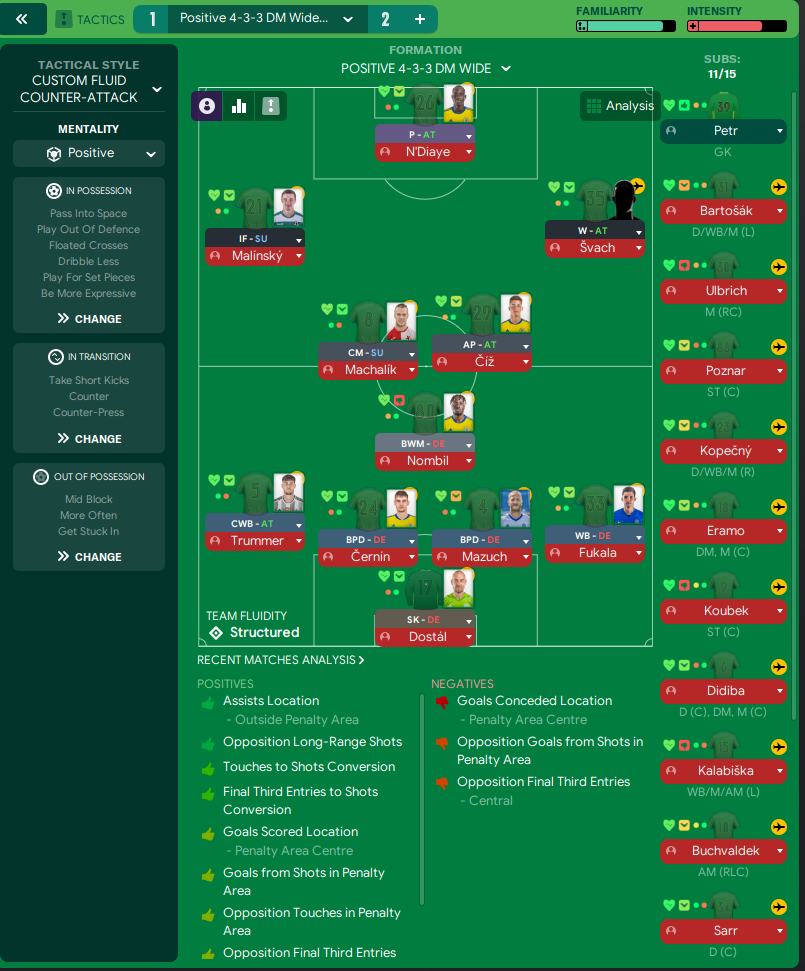
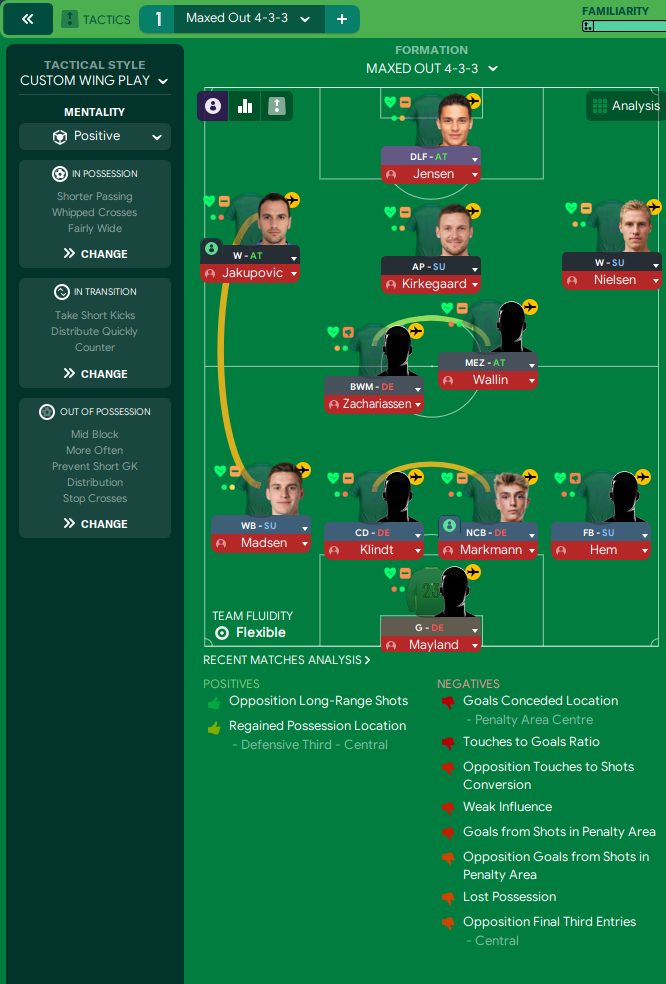
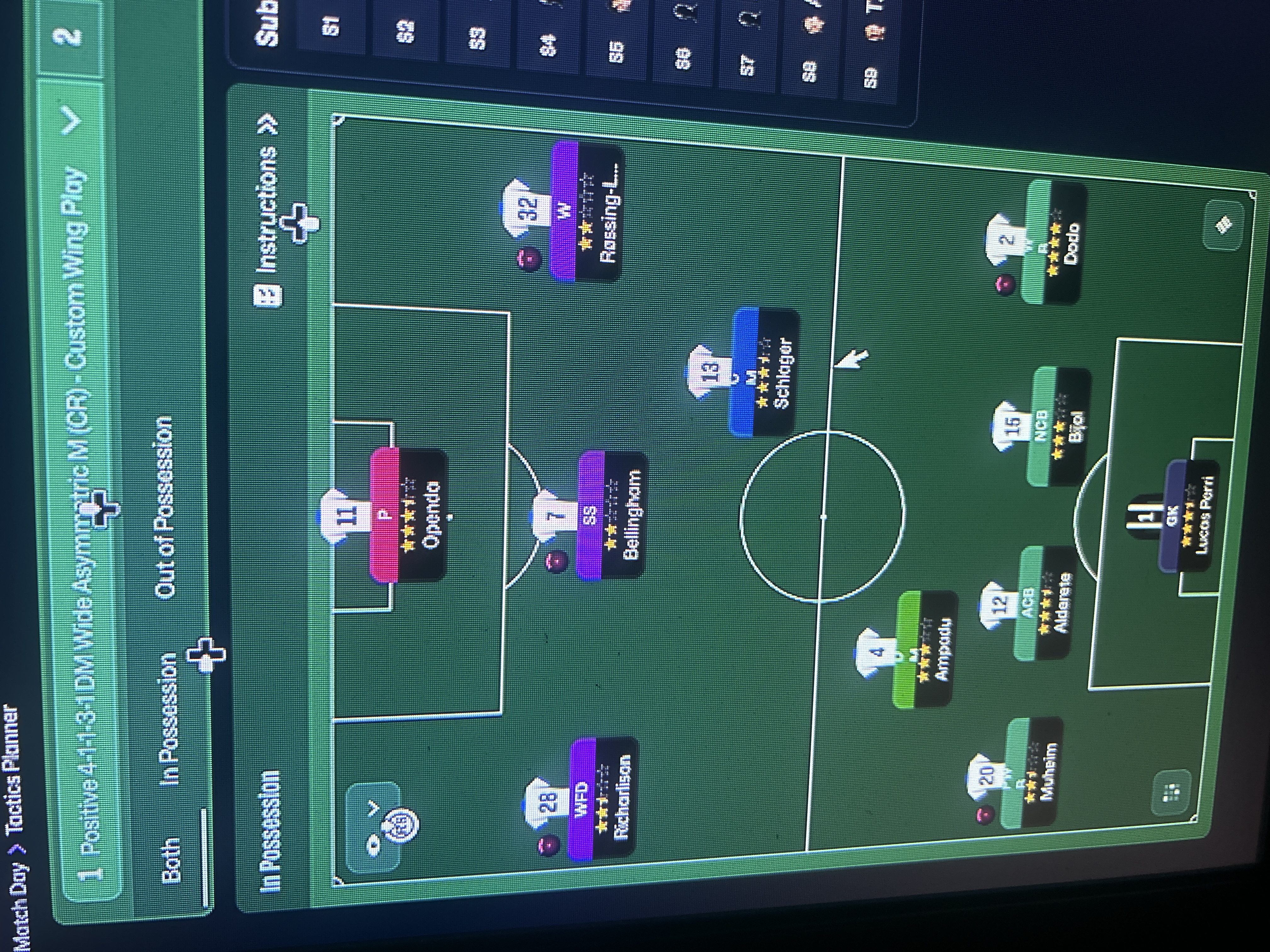
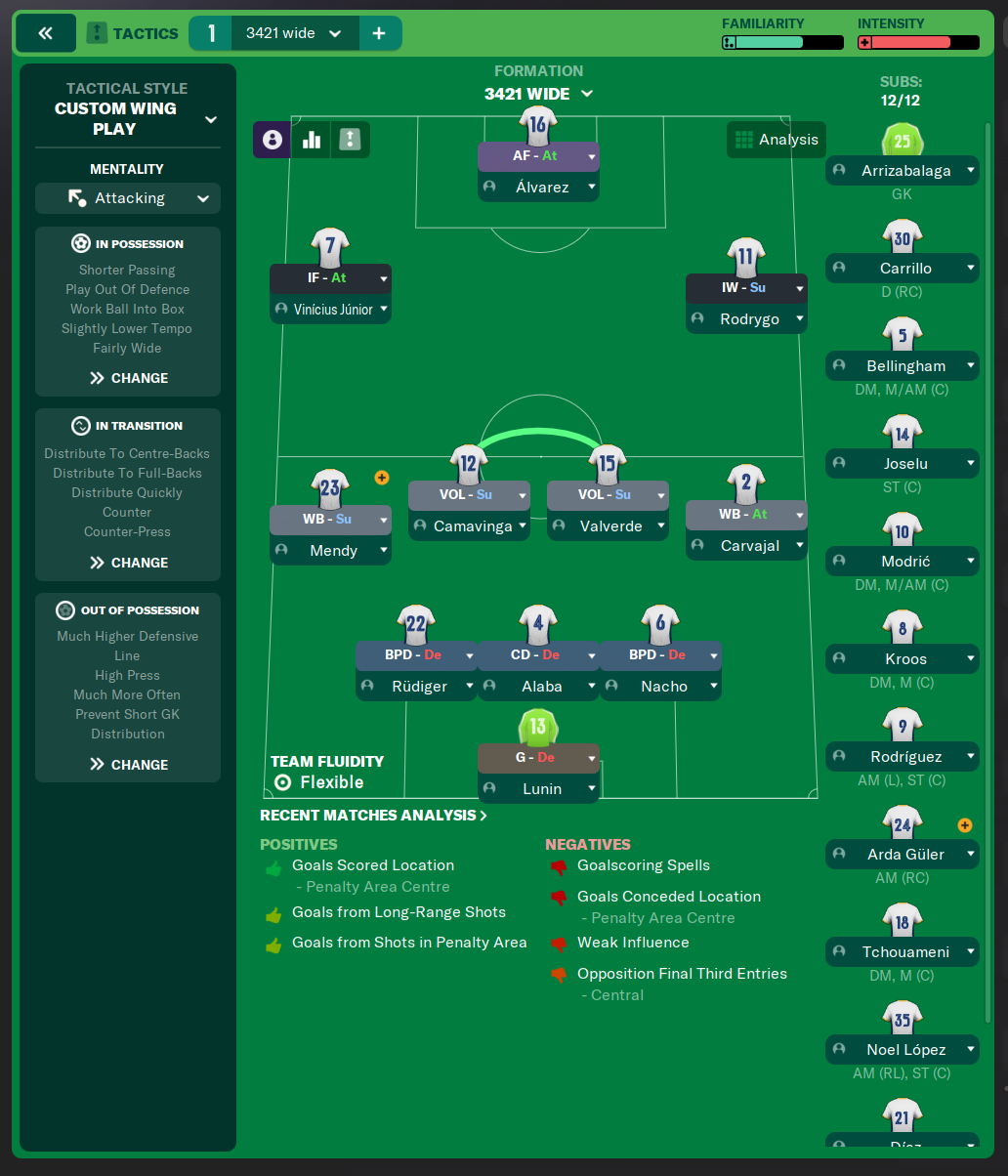
More Custom Wing Play tactics
Guides for this formation
The tactical theory behind the 4-3-3 DM Wide: roles, instructions, and the trade-offs that decide whether the system holds up.
Foundations
Understanding the 4-3-3 Formation
Master the classic 4-3-3: player roles, tactical variations, and the trade-offs that decide whether it sings or stalls.
Read guide
Player pairings
Midfield Trios
Holder, runner, creator: the role distribution rule for three-man midfields, the AMC variants, and the antipatterns that break them.
Read guide
Playing styles
Gegenpressing: A Full Guide
Klopp-style gegenpressing in FM, including squad profile, line-and-press pairing, sustainable workload, and the antipatterns to avoid.
Read guide