Uploaded Tactic
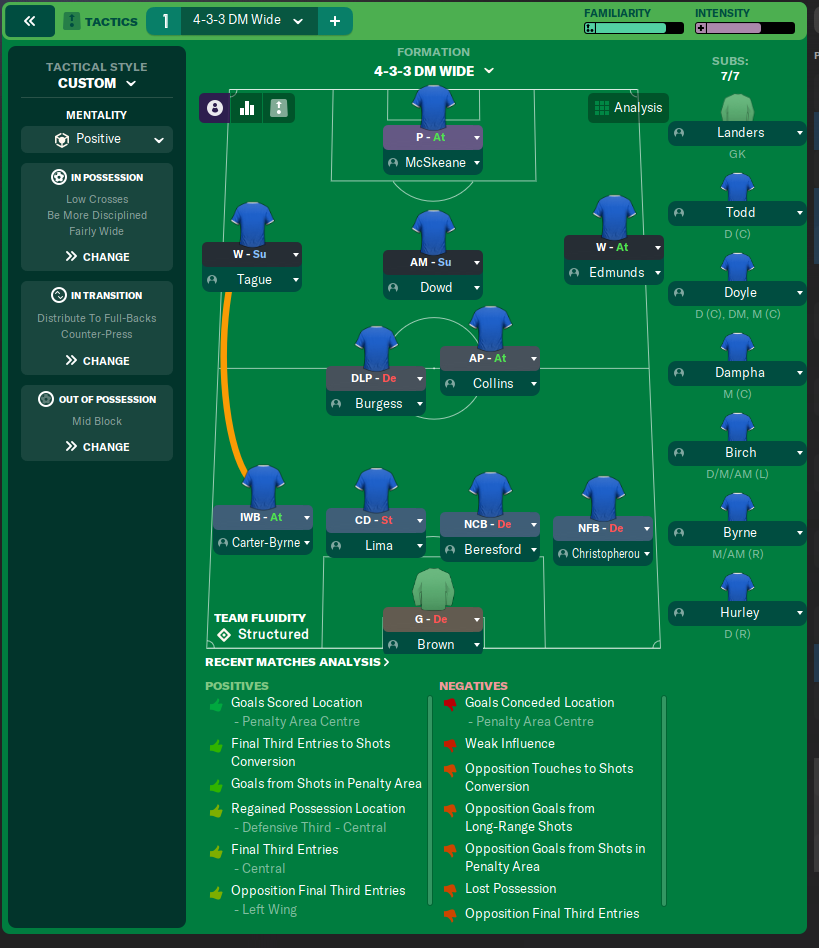
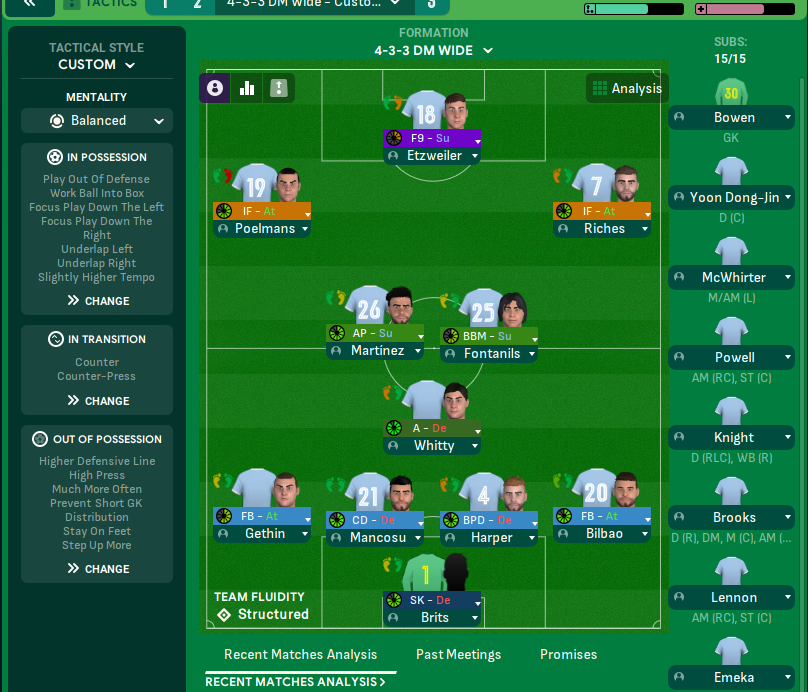
Formation & Style
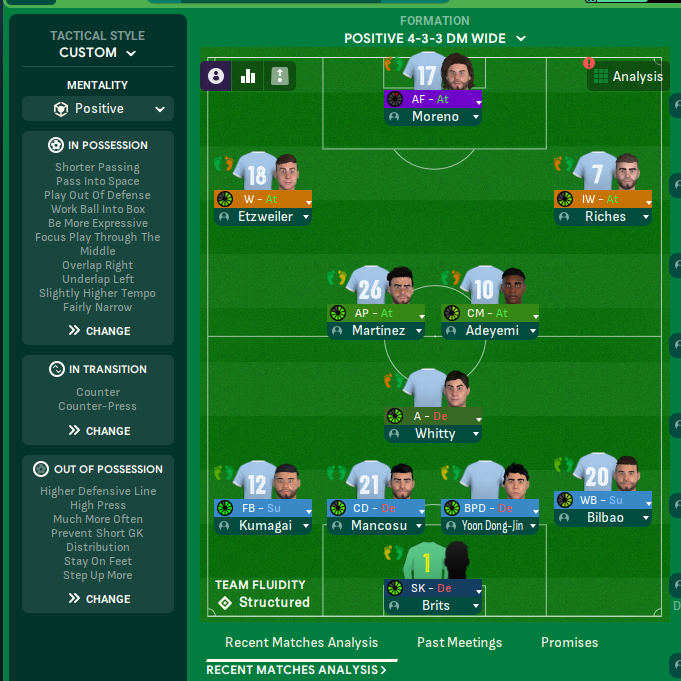
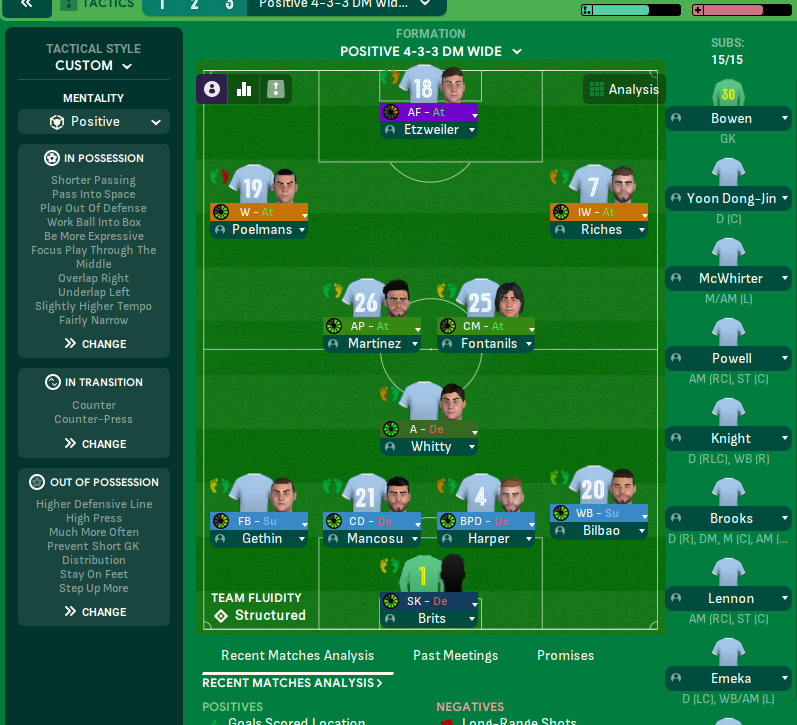
Tactical Style:Custom
Mentality:Positive
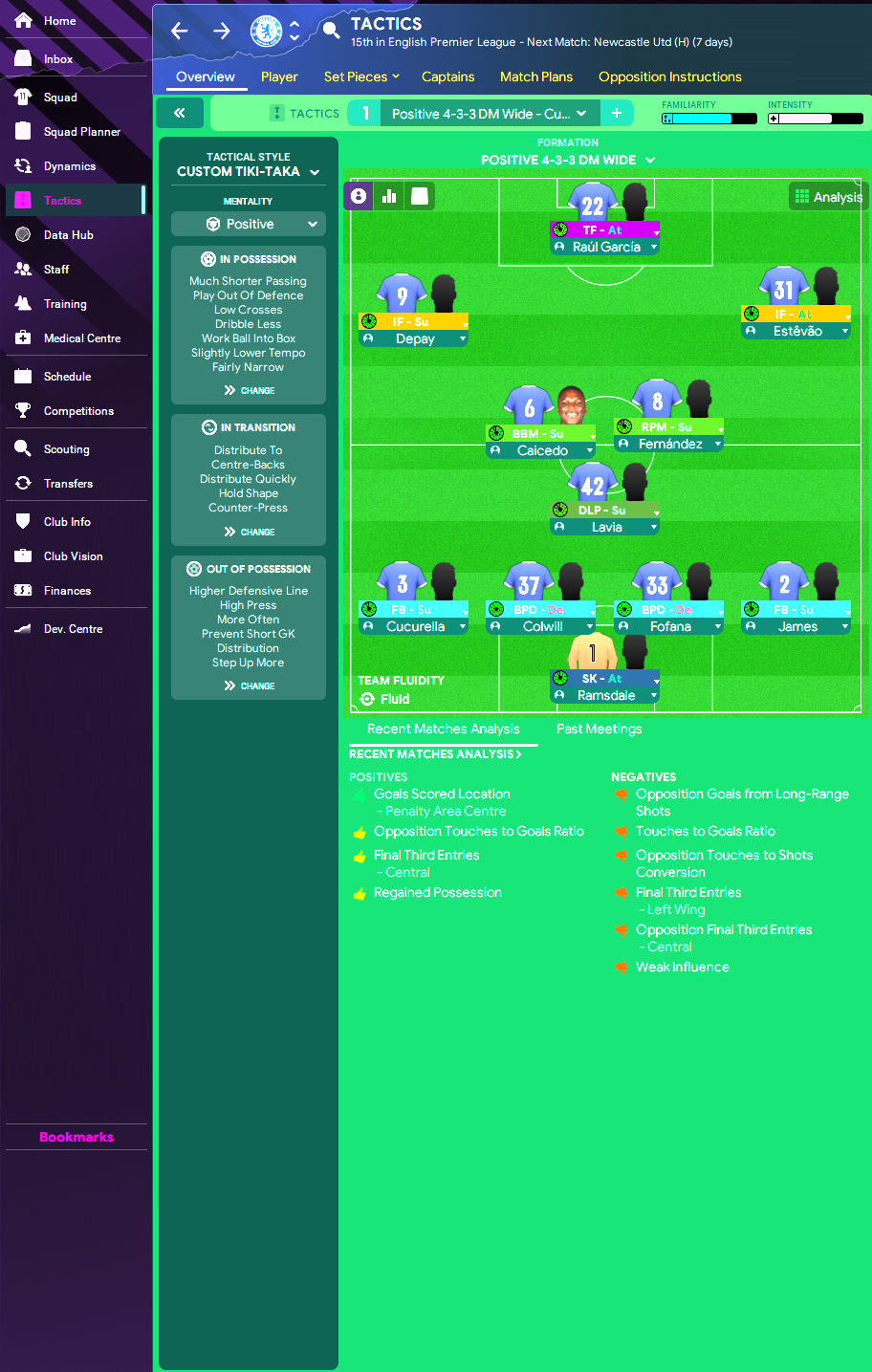
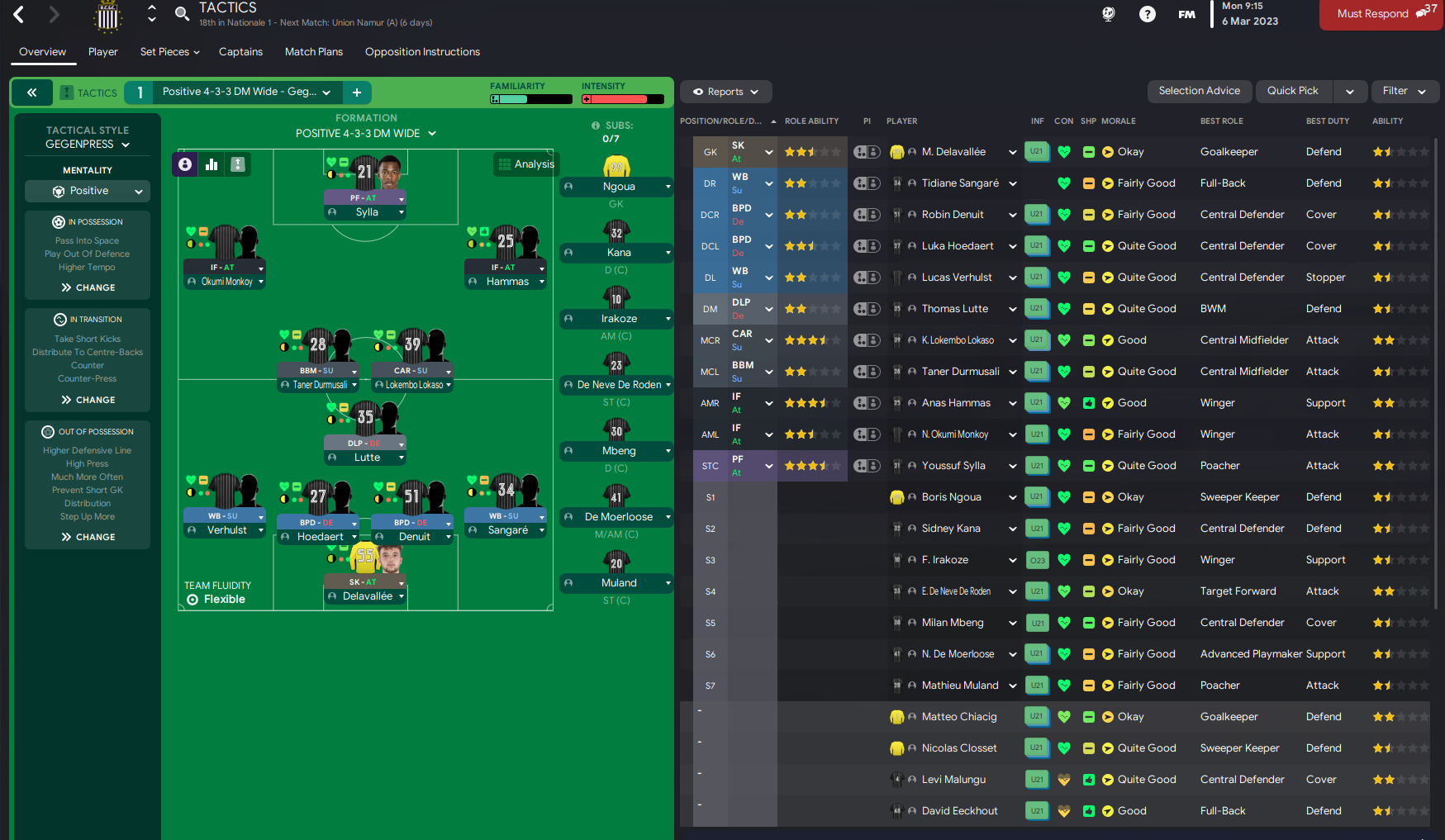
Formation:4-3-3 DM Wide
Team Fluidity:Structured
In Possession
Low Crosses
Be More Disciplined
Fairly Wide
In Transition
Distribute To Full-Backs
Counter-Press
Out of Possession
Mid Block
Team Shape Without Ball
Shape:Mid Block
Description:The team stays compact in the midfield area and looks to discourage central play.
Evidence:The 'Mid Block' instruction indicates a focus on preventing the opposition from easily accessing the attacking third.
Team Shape With Ball
Shape:Wide Play with Central Overloads
Description:The wingers stretch the opposition while the midfielders look to exploit central spaces.
Evidence:The instruction to play 'Fairly Wide' combined with the use of wingers suggests an intention to open up space.
Phase Description
Attacking Play
Focus on spreading the play wide and utilizing the wingers for crosses and inside runs.
Defensive Transition
Focus on regrouping quickly and maintaining a mid block.
Main Focus
Building through midfield with short passes before exploiting width.
Key Strengths
Fluid Midfield Dynamics
The combination of a deep-lying playmaker (DLP) and an attacking playmaker (AP) creates a layered midfield presence.
Wide Threat from Wingers
Wingers can provide width and quick transitions into the final third.
Inverted Wing-Back Support
An inverted wing-back (IWB) adds depth to attacking play while supporting the central defense.
Conflicting Directions
Weak Influences from Central Defense
Central defenders may struggle against teams that employ quick through balls or direct plays.
Potential Overcommitment
The IWB could leave gaps defensively if caught too far upfield.
Vulnerability to Long-Range Shots
The midfield setup offers little protection against long shots.
Tactical Suggestions
Adjust Defensive Duties
Consider adjusting the duties of central defenders to support or defend depending on the situation.
Exploit Central Areas More
Encourage more central runs from midfielders, especially the AP.
Use Team Instructions to Counteract Weaknesses
Implement instructions like 'Prevent Short GK Distribution' to limit quick counter-attacks.
Ask Questions About Your Lineup
Related Tactics
Guides for this formation
The tactical theory behind the 4-3-3 DM Wide: roles, instructions, and the trade-offs that decide whether the system holds up.
Foundations
Understanding the 4-3-3 Formation
Master the classic 4-3-3: player roles, tactical variations, and the trade-offs that decide whether it sings or stalls.
Read guide
Player pairings
Midfield Trios
Holder, runner, creator: the role distribution rule for three-man midfields, the AMC variants, and the antipatterns that break them.
Read guide
Playing styles
Gegenpressing: A Full Guide
Klopp-style gegenpressing in FM, including squad profile, line-and-press pairing, sustainable workload, and the antipatterns to avoid.
Read guide