Uploaded Tactic
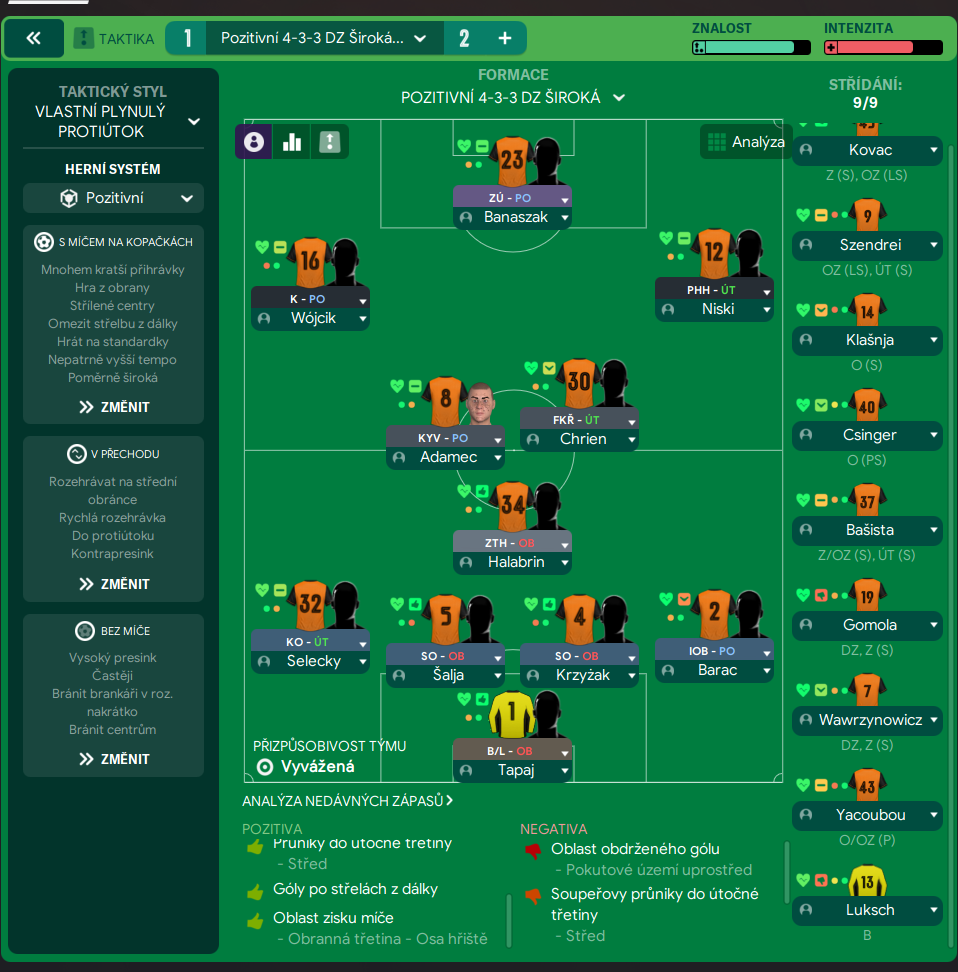
Formation & Style
Tactical Style:Possession Play
Mentality:Positive
Formation:4-3-3 Wide
Team Fluidity:Balanced
In Possession
Short passing
Focus play through the middle
Higher tempo
Overlap on the flanks
In Transition
Counter-press
Quick transition to attack
Out of Possession
High pressing
Block central areas
Stay on feet
Team Shape Without Ball
No team shape without ball data available
Team Shape With Ball
No team shape with ball data available
Key Strengths
Midfield Control
The midfield trio is well-suited for controlling possession and dictating the tempo of the game.
Wide Play
The wide players can stretch the opposition, creating space for midfielders and forwards.
High Pressing
The tactic employs a high press to regain possession quickly, disrupting the opponent's buildup.
Defensive Solidity
With two central defenders and a physically capable goalkeeper, the defense is structured to absorb pressure.
Conflicting Directions
Tempo vs. Controlled Build-Up
Though there is a desire for quick transitions, a short passing game may slow the tempo.
Overlapping vs. Defensive Duties
Wingbacks are tasked with supporting attacks but may leave gaps defensively if not balanced properly.
Pressing vs. Fatigue
High pressing demands may lead to fatigue, especially if the team lacks depth.
Compactness vs. Width
While using width in attack, maintaining defensive compactness can sometimes be a challenge.
Tactical Suggestions
Review Wingback Duties
Consider adjusting wingback roles based on the opposition's strengths to maintain balance.
Adjust Tempo Settings
Test different tempo settings to find a rhythm that suits the squad's capabilities.
Depth Integration
Ensure that substitutes are used effectively to maintain fitness levels and tactical integrity.
Set-Piece Organization
Work on set-piece strategies to maximize scoring opportunities and minimize defensive vulnerabilities.
Ask Questions About Your Lineup
Related Tactics
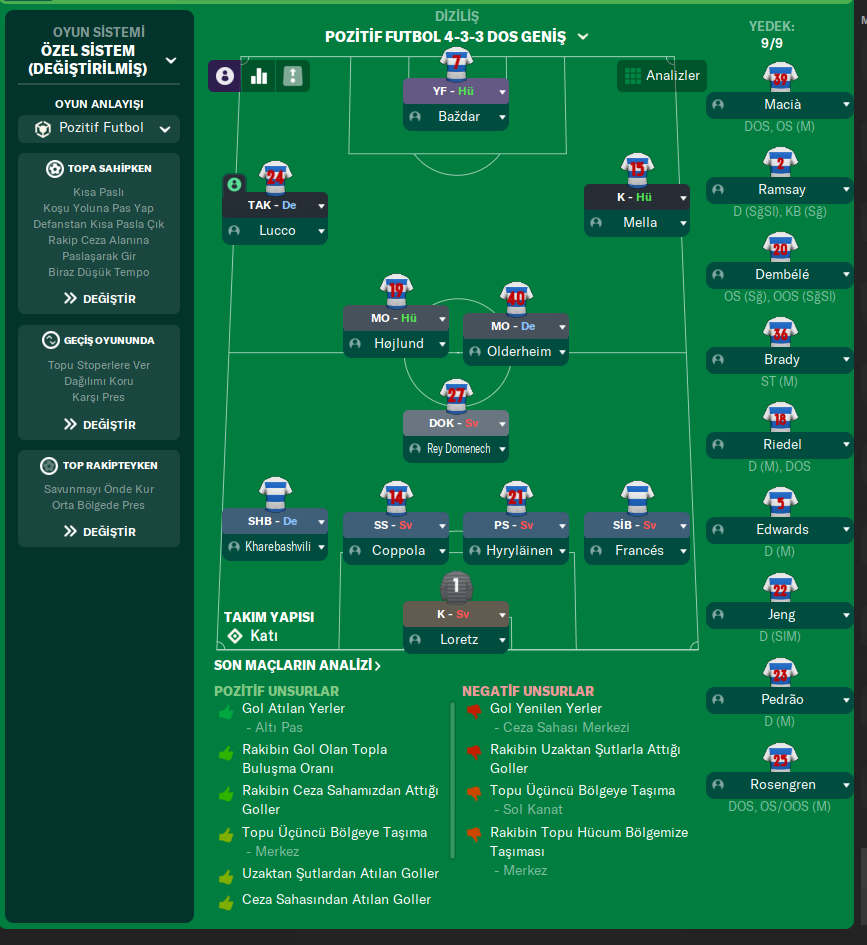
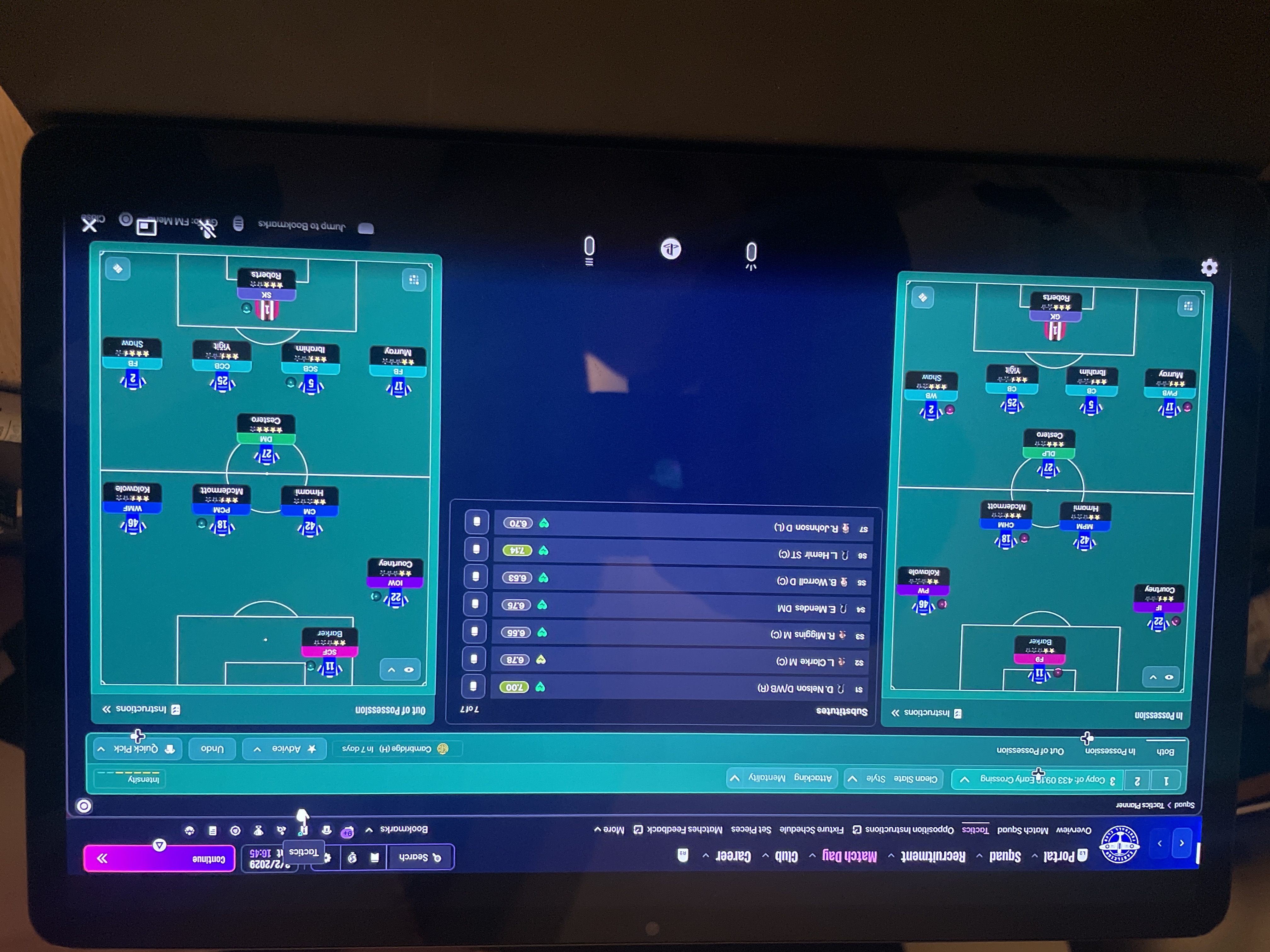
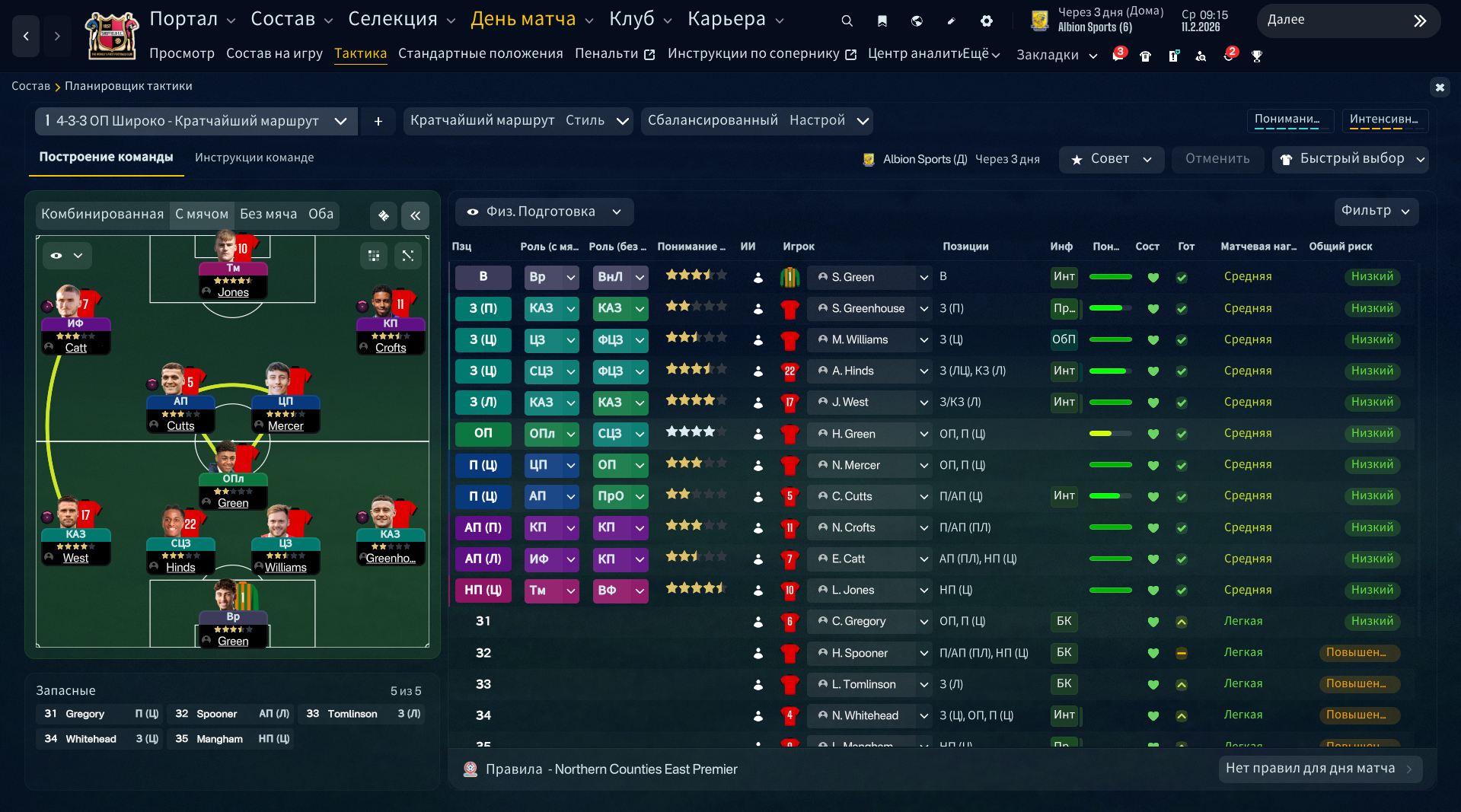
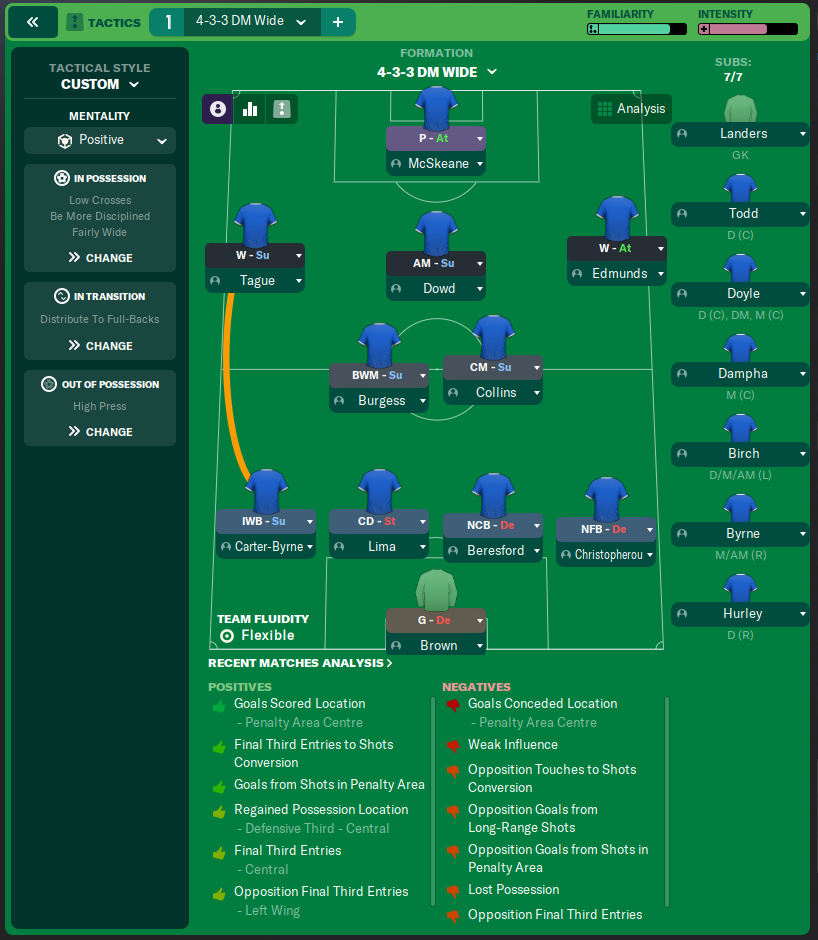
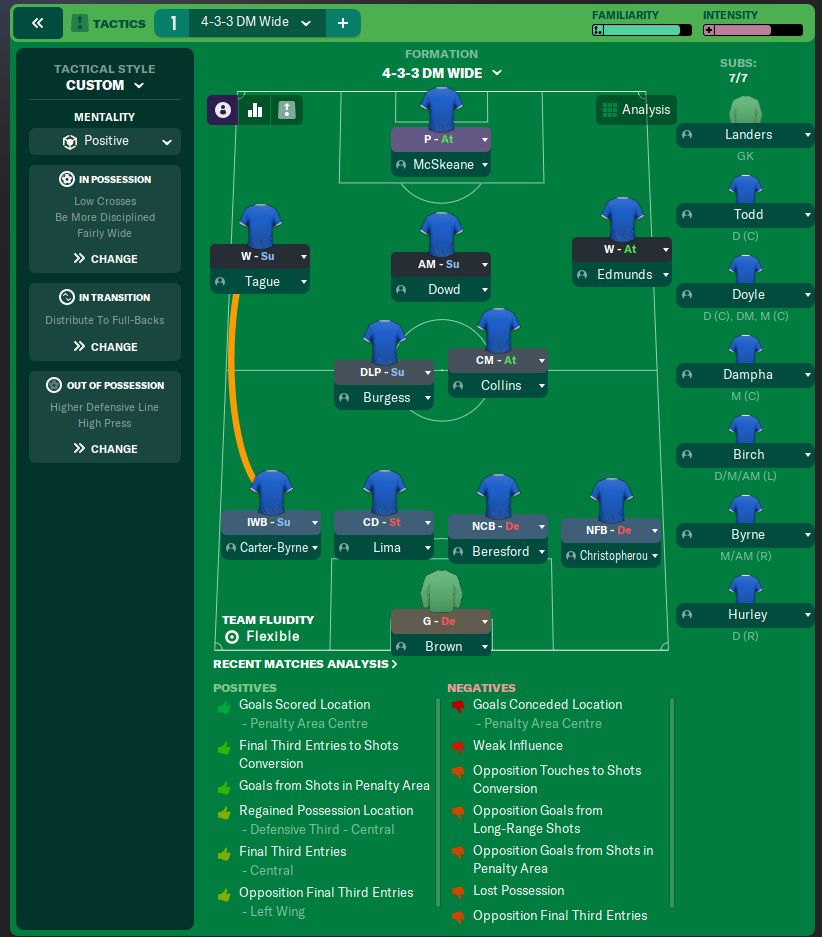
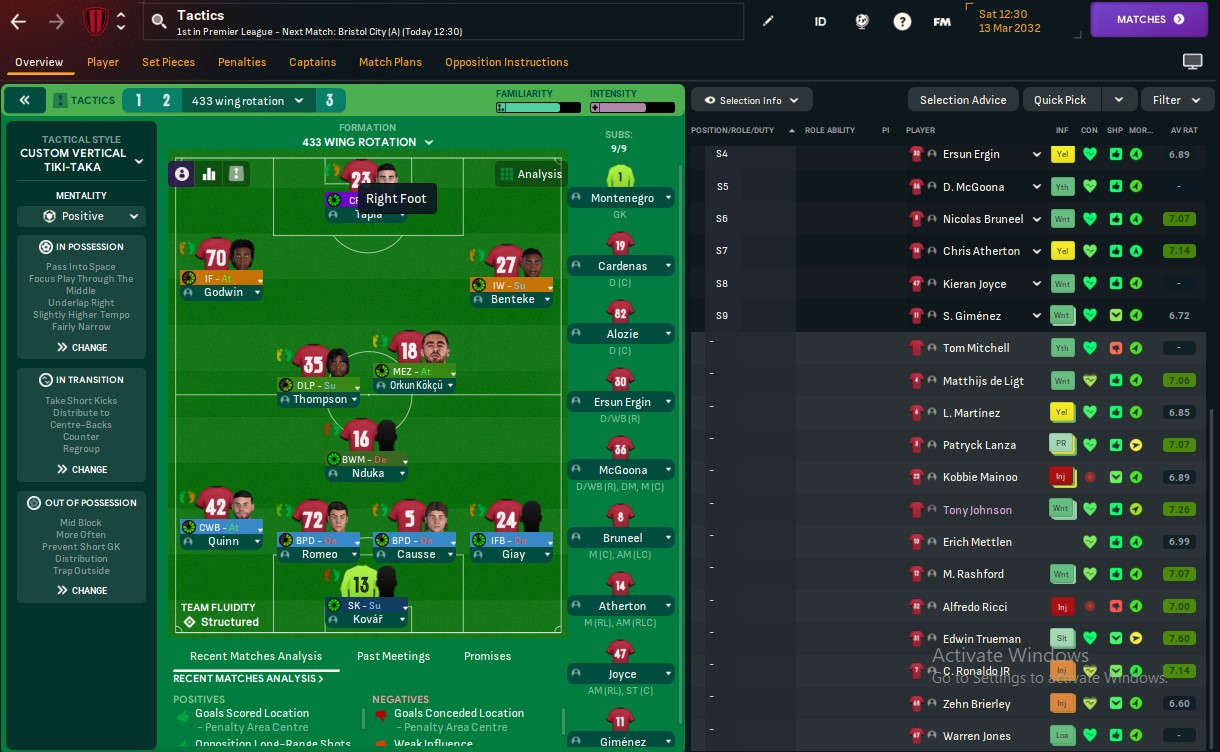
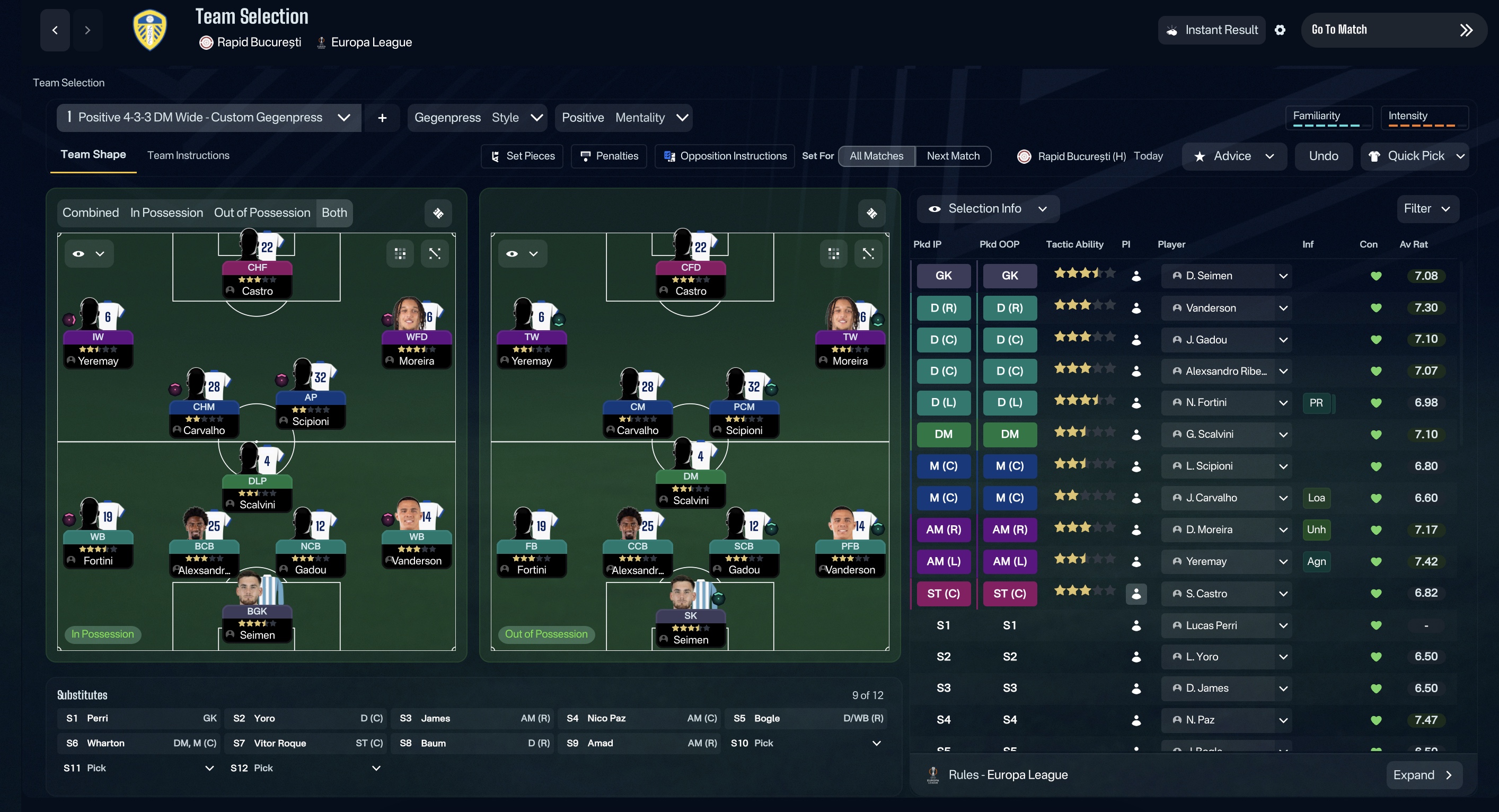
More Possession Play tactics
Guides for this formation
The tactical theory behind the 4-3-3 Wide: roles, instructions, and the trade-offs that decide whether the system holds up.
Foundations
Understanding the 4-3-3 Formation
Master the classic 4-3-3: player roles, tactical variations, and the trade-offs that decide whether it sings or stalls.
Read guide
Player pairings
Midfield Trios
Holder, runner, creator: the role distribution rule for three-man midfields, the AMC variants, and the antipatterns that break them.
Read guide
Playing styles
Gegenpressing: A Full Guide
Klopp-style gegenpressing in FM, including squad profile, line-and-press pairing, sustainable workload, and the antipatterns to avoid.
Read guide