Uploaded Tactic
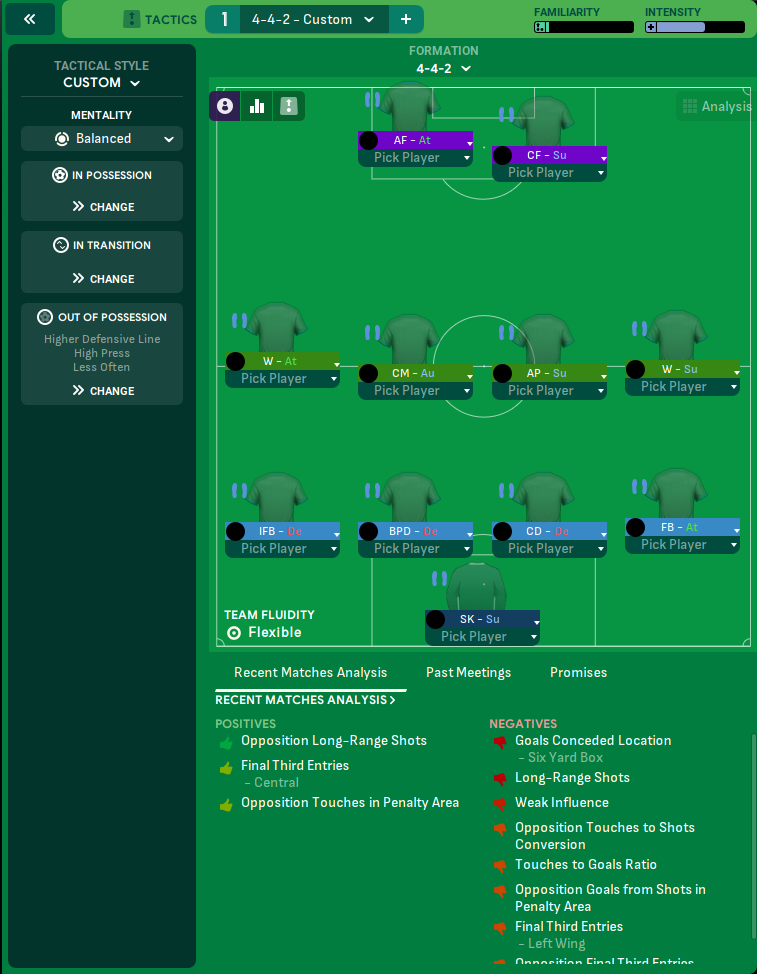
Formation & Style
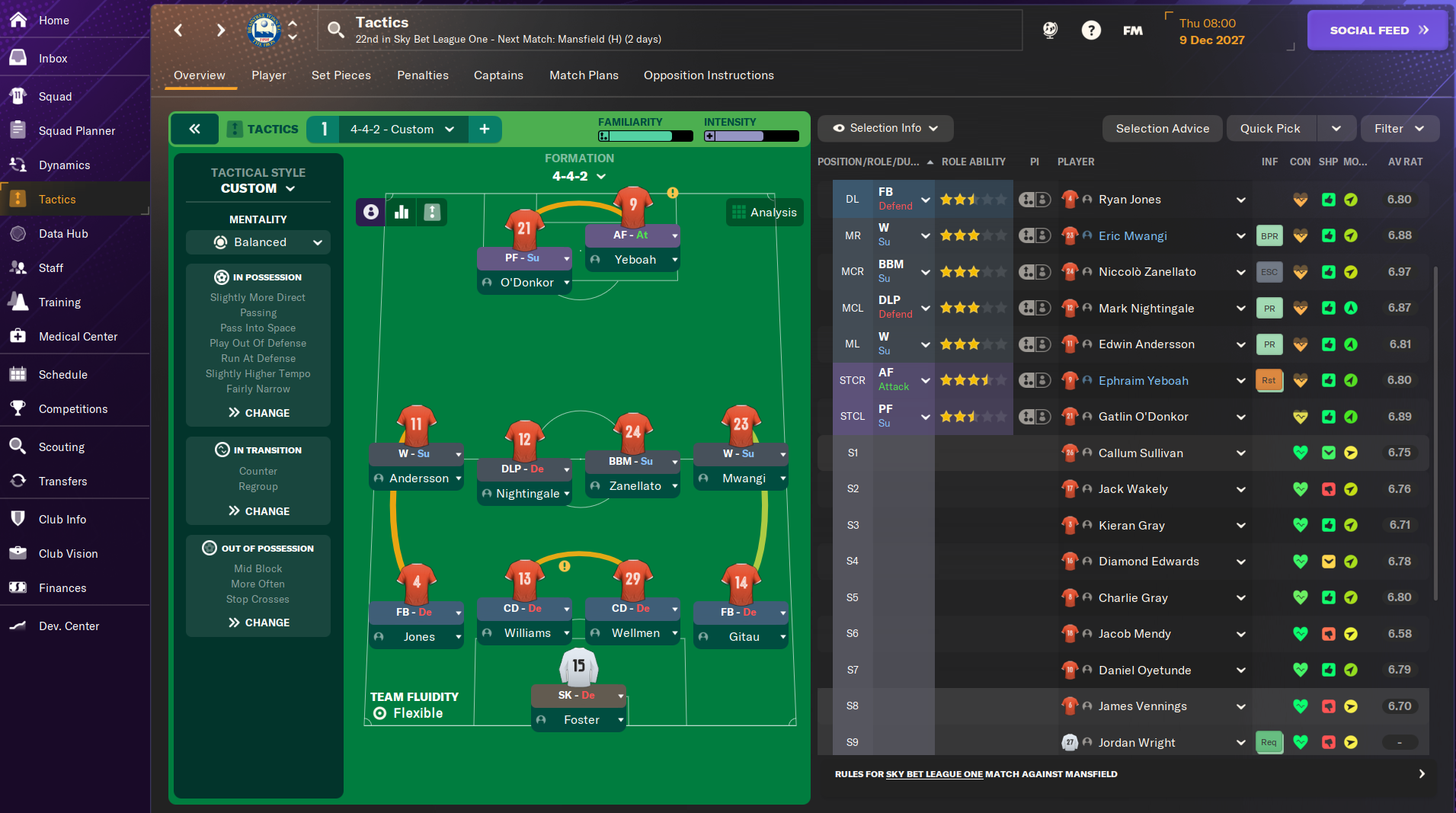
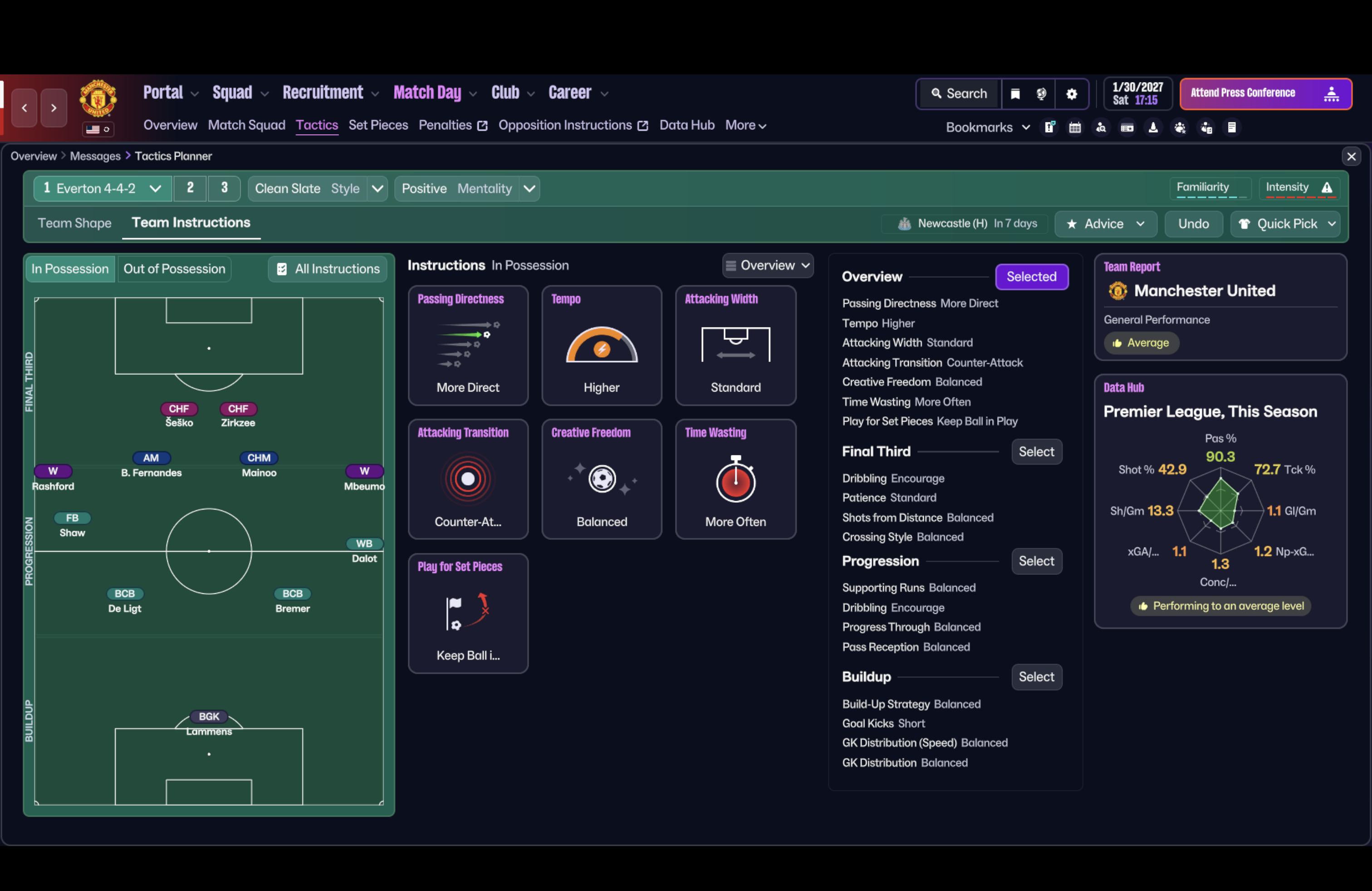
Tactical Style:Custom
Mentality:Balanced
Formation:4-4-2
Team Fluidity:Flexible
In Possession
Play Out of Defence
Focus Play Through The Middle
Work Ball into Box
In Transition
Counter-Press
Counter
Out of Possession
Higher Defensive Line
Less Often
Team Shape Without Ball
Shape:Compact 4-4-2
Description:The defensive shape is compact, creating density in the midfield and denying space.
Evidence:4 Defenders (CD, BPD, FB, IFB) at [2,1], [2,2], [2,3], [2,4]
Team Shape With Ball
Shape:Expansive 4-4-2
Description:Attacking shape is wide with wingers stretching the play and forwards interchanging positions.
Evidence:AF-A, CF-S, and W-A at [6,2], [6,3], [5,1], [5,3] respectively.
Phase Description
Attacking Play
Utilizing wing play effectively while maintaining central presence through midfield.
Defensive Transition
Immediate pressing to regain possession, focusing on compactness.
Main Focus
Creating goal-scoring opportunities through a combination of wing and central play.
Key Strengths
Wing Play
With an attacking full-back and a winger, there's a strong emphasis on width.
Midfield Control
The combination of an Advanced Playmaker and a Central Midfielder offers both creative and direct play.
Flexibility in Attack
Two strikers provide different pathways to goal, allowing adaptability in attack.
Conflicting Directions
Long Range Vulnerability
The higher defensive line may leave gaps for long-range shots against.
Weak Influence in Central Areas
A central midfield setup could lead to being outmanned if opposition plays through the middle.
Inconsistent Wing Play
The reliance on wingers may lead to ineffective attacks if they are double-marked.
Tactical Suggestions
Adjust Defensive Line
Consider lowering the defensive line to reduce vulnerability to long-range shots.
Strengthen Central Midfield
Deploy a more defensive option in midfield to better handle opposition attacks through the center.
Encourage More Width
Reinforce wing tactics through overlapping runs by both full-backs to exploit wide areas.
Ask Questions About Your Lineup
Related Tactics
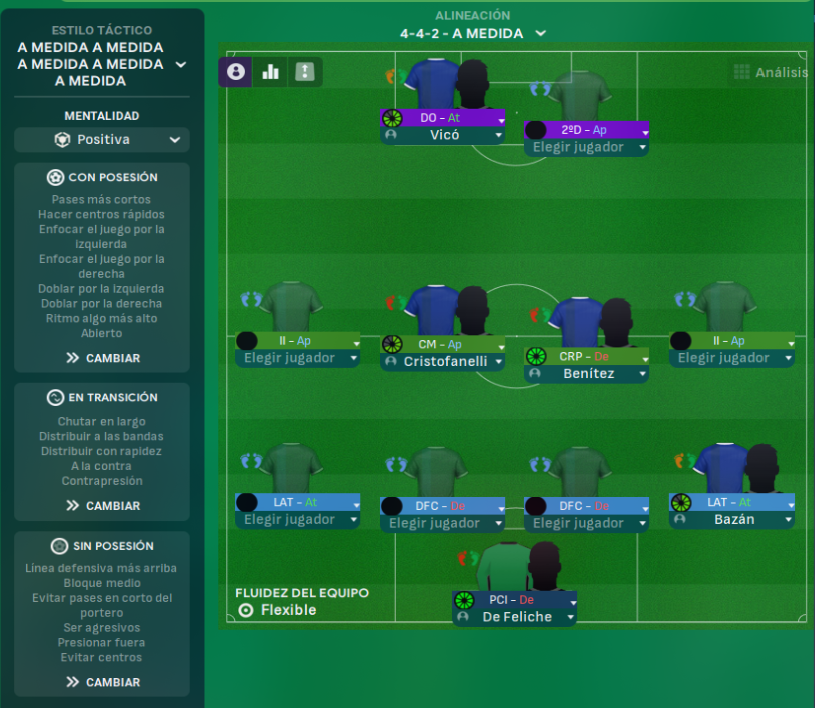
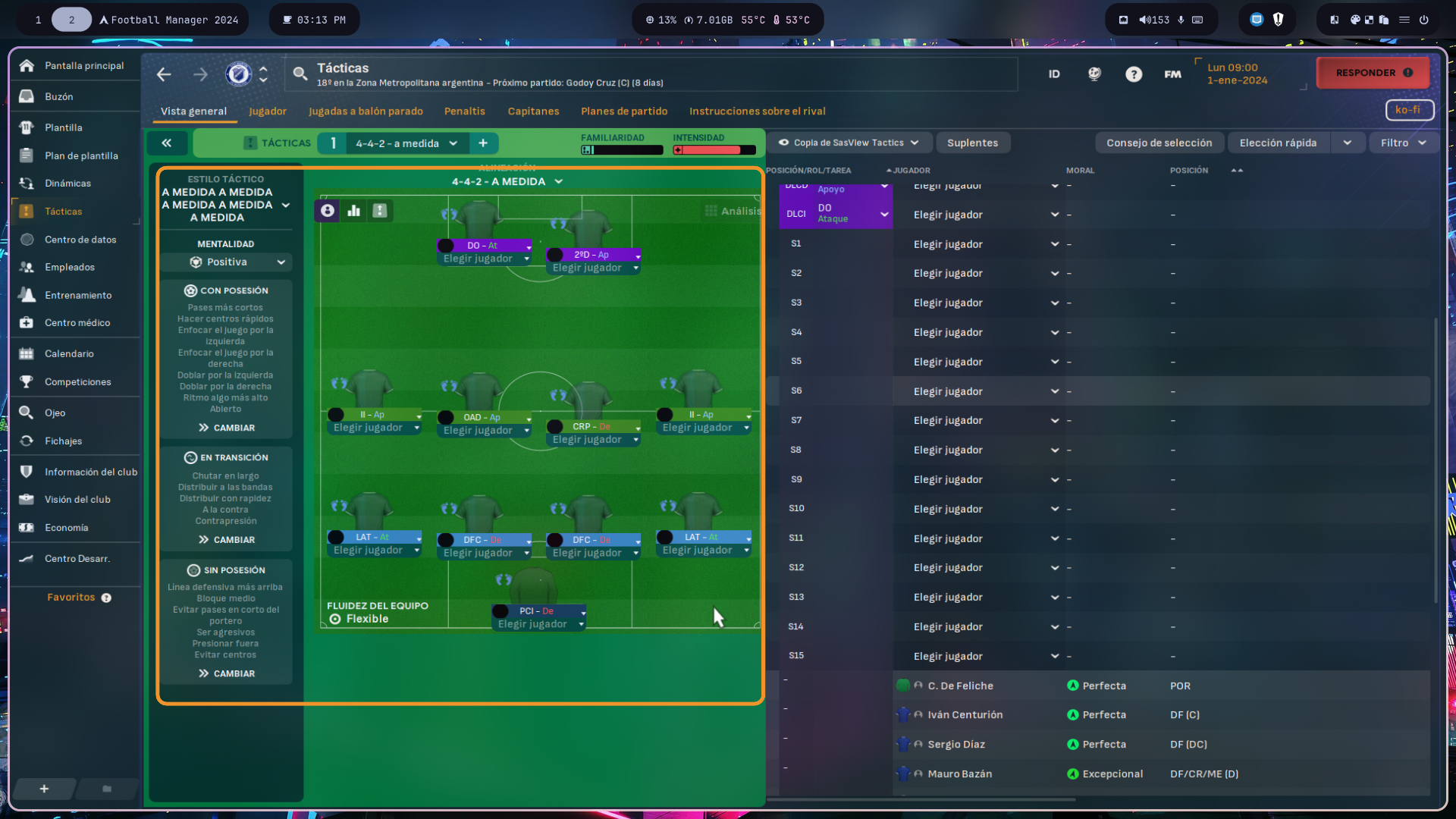
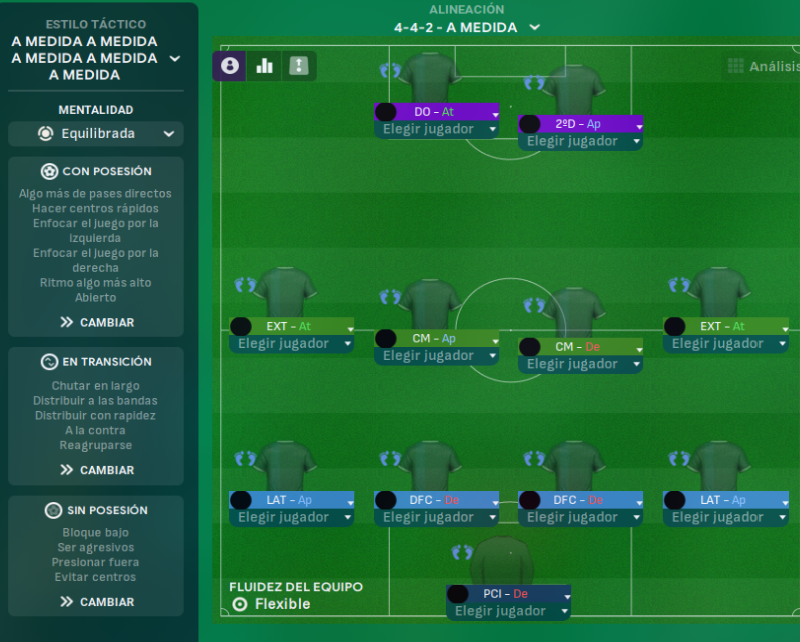
Guides for this formation
The tactical theory behind the 4-4-2: roles, instructions, and the trade-offs that decide whether the system holds up.
Player pairings
Midfield Pairs in 4-2-3-1 and 4-4-2
Double pivots and flat pairs in 4-2-3-1 and 4-4-2: when each pairing works, when it collapses, and the AMC unicorn that rescues both.
Read guide
Playing styles
Direct, Vertical Football
Long-ball football done well in FM. When direct, vertical play is the right choice, and what the Direct Passing TI actually changes.
Read guide
Playing styles
Counter-Attacking Excellence
Sit deep, win the ball, and break in three passes. The roles, instructions, and squad profile that make it work.
Read guide