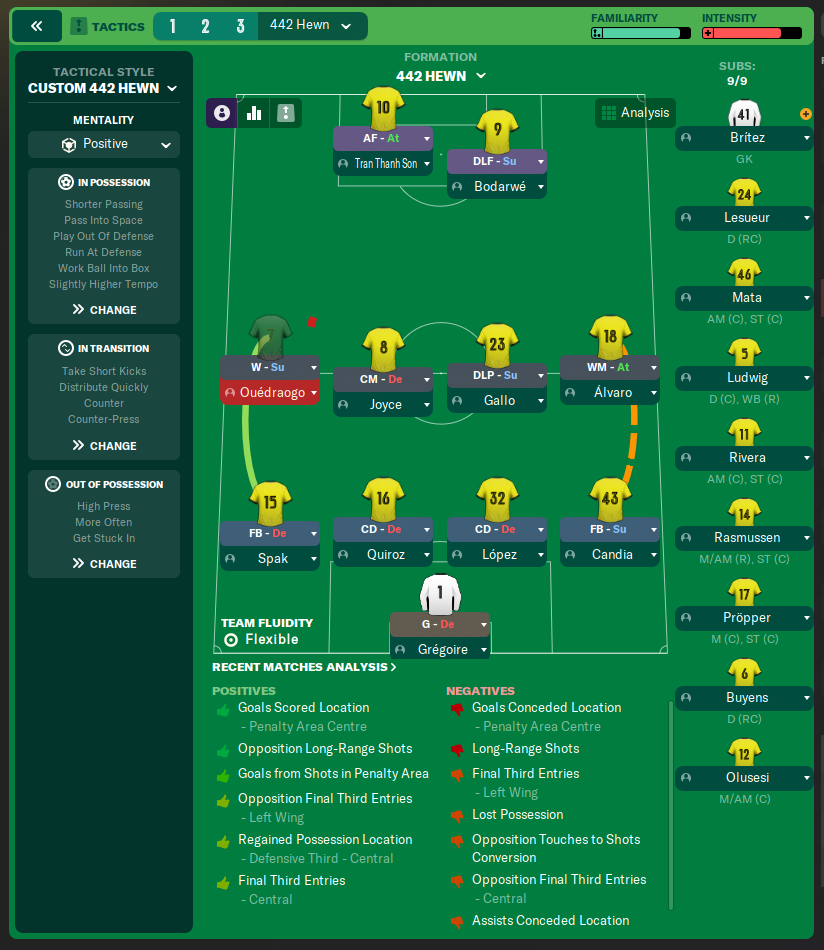
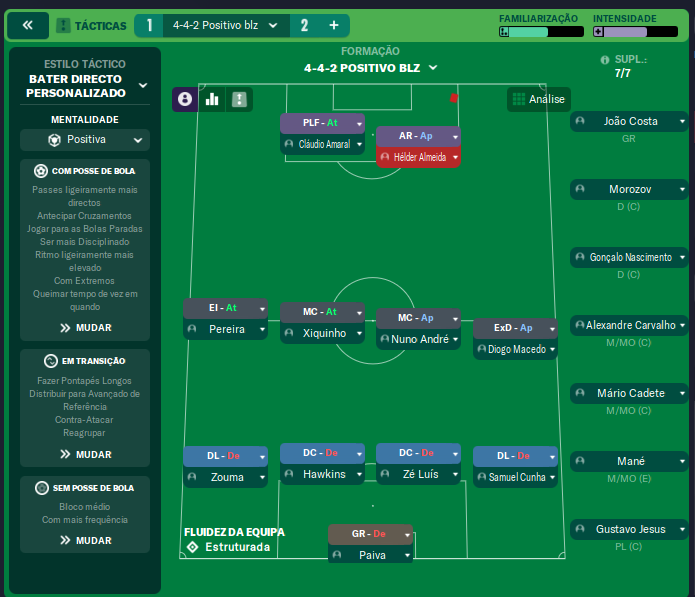
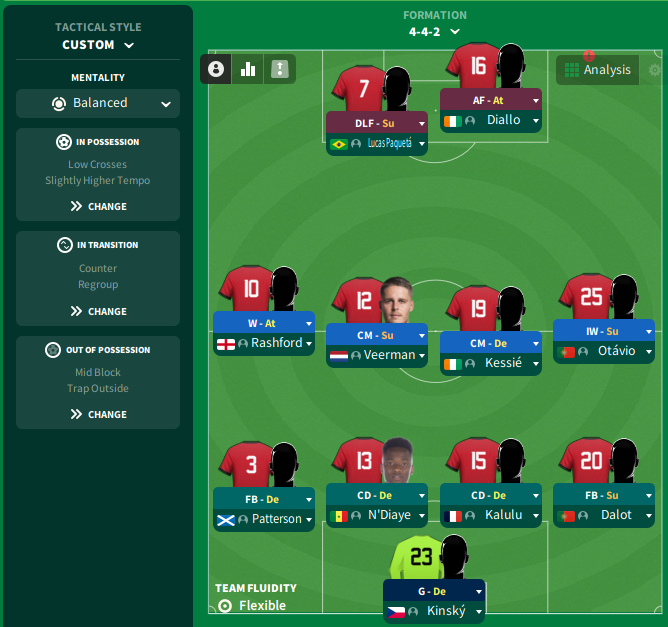
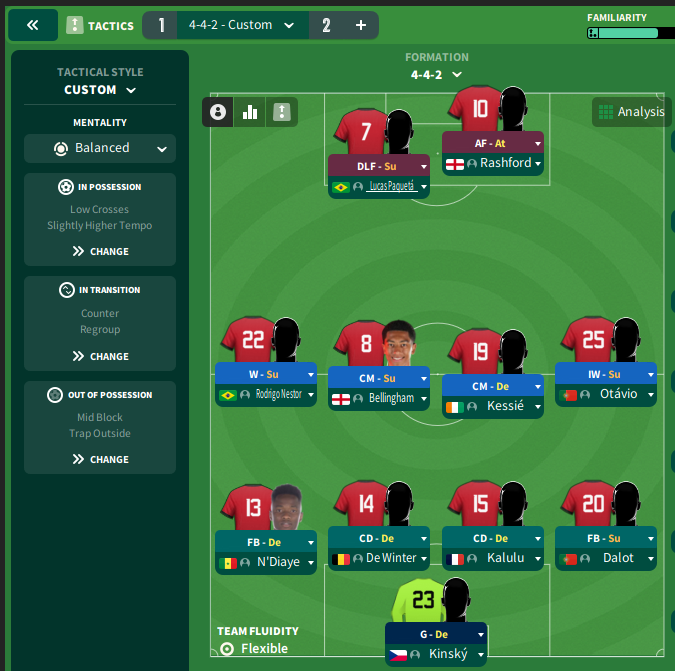
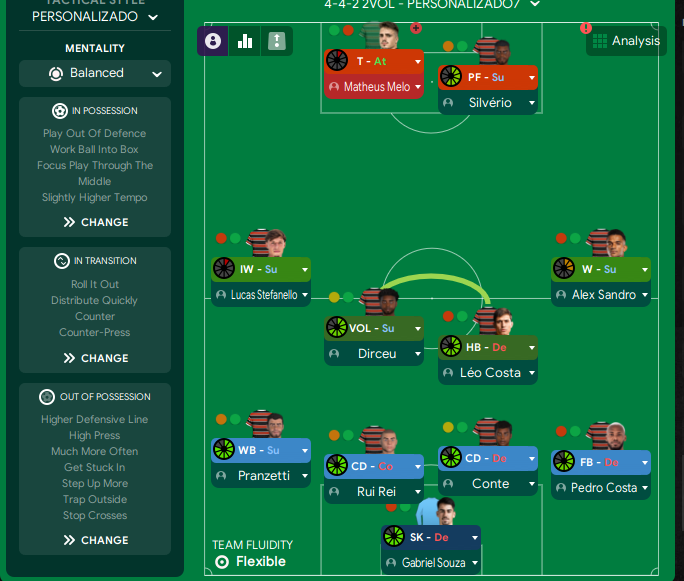
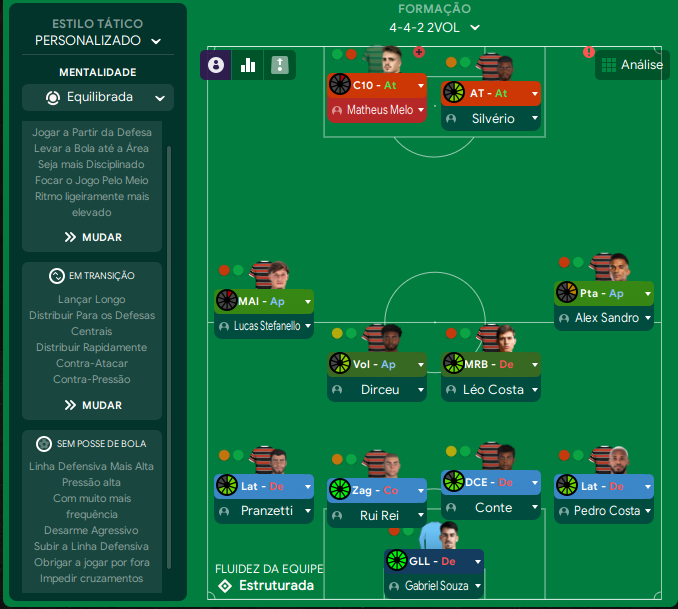
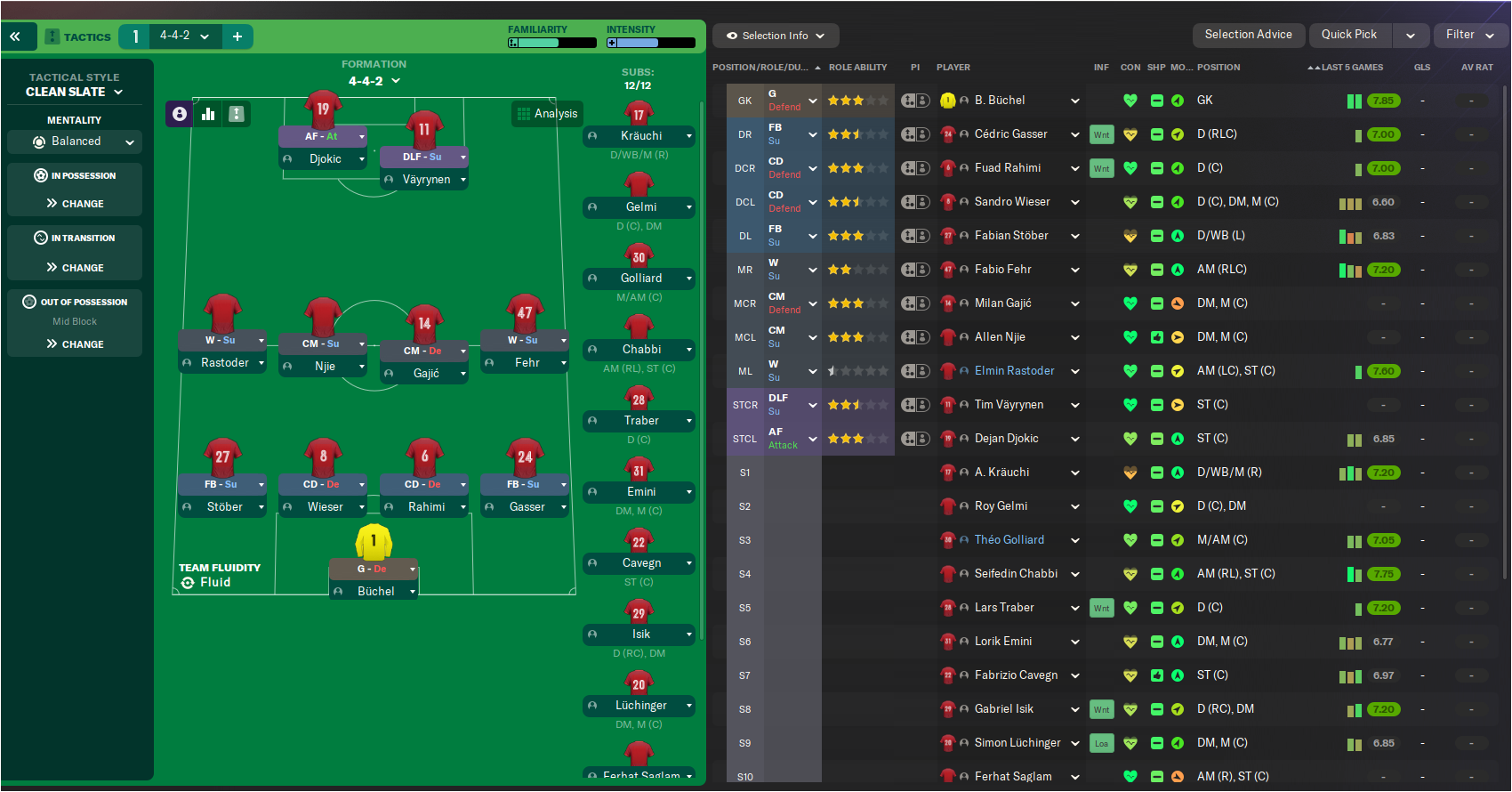
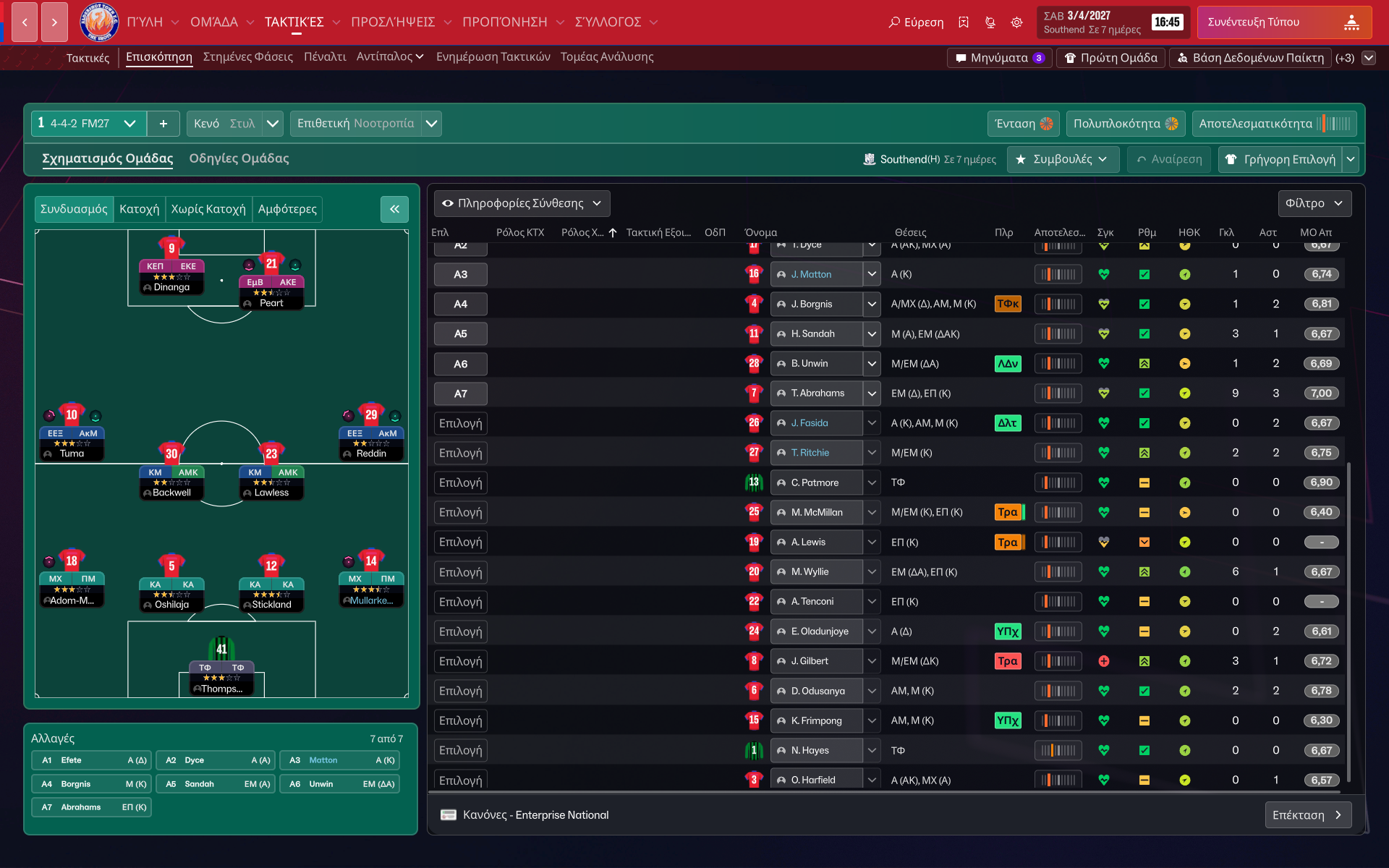
4-4-2
Utilize width and pace from wingers. Strong width from wingers helps stretch the opponent's defense.
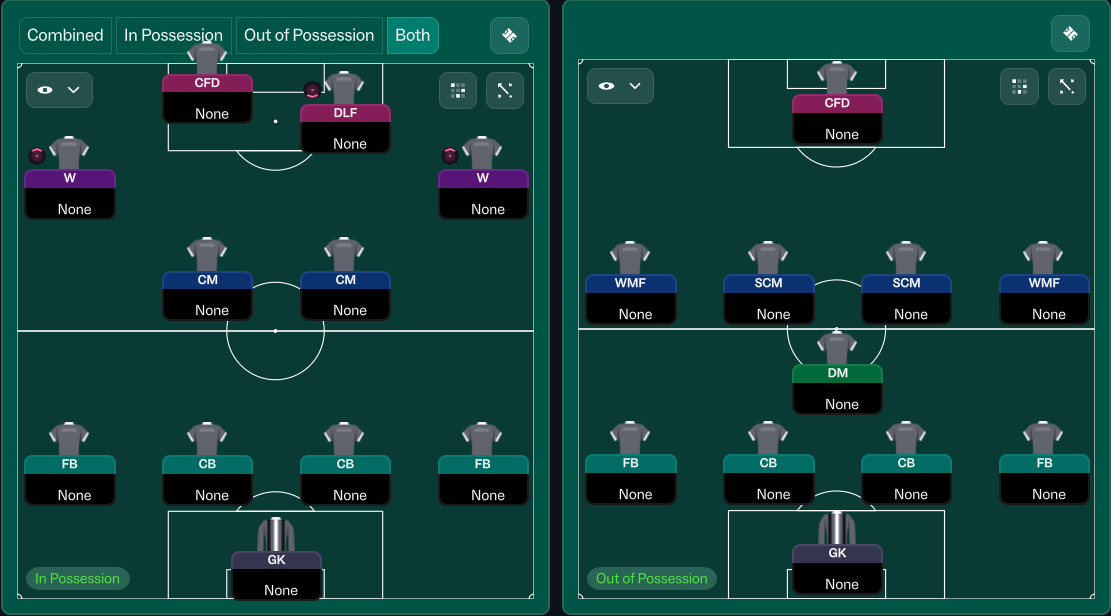
Loading tactical analysis...
4-4-2
Distribute to Full-Backs
Work Ball Into Box
Counter
Counter-Press
Lower Defensive Line
Higher Line of Engagement
Prevent Short GK Distribution
GK
GK
None
DF
FB
None
DF
CB
None
DF
CB
None
DF
FB
None
CM
CM
None
CM
CM
None
AM
W
None
AM
W
None
ST
DLF
None
ST
CFD
None
Focus on wide play with wingers and overlapping full-backs.
Quickly shift to a counter-press after losing possession.
Utilize width and pace from wingers.
Flat 4
Standard defensive structure with two banks of four players.
CBs supported by FBs at [2,1], [2,2], [2,4], [2,5].
4-4-2
Balanced attack with two strikers supported by wingers.
DLF at [6,3] and CFD at [6,2], with W at [5,1] and [5,5].
Strong width from wingers helps stretch the opponent's defense.
W at [5,1] and W at [5,5] support wide play.
Two banks of four make it difficult for opposing teams to penetrate.
Flat 4 defensive shape at [2,1], [2,2], [2,4], [2,5].
Midfield lacks natural ball-winning roles to counter high press.
CM roles without specific duties or defenders with no pressing strategy.
Dependence on wide play can lead to predictable attacks.
No advanced roles in central area of midfield.
Midfield Control
Potential lack of control in central midfield against stronger teams.
Two CM positions with no specific roles increase vulnerability.
Defensive Transitions
Vulnerability to fast breaks if possession is lost.
Counter-Press could be insufficient against quick attackers.
DLF and W
DLF can pull defenders and create space for W to attack.
DLF at [6,3] supports creating space for overlapping W at [5,1].
FB and SCM
Full-backs can overlap with the SCM for varied attacking options.
FB at [2,1] and SCM at [4,2] can create one-twos.
What roles could enhance central control and stability?
How can the attacking structure be varied to surprise defenses?
What adjustments can be made to mitigate transition vulnerabilities?
The tactical theory behind the 4-4-2: roles, instructions, and the trade-offs that decide whether the system holds up.
Sit deep, win the ball, and break in three passes. The roles, instructions, and squad profile that make it work.
Double pivots and flat pairs in 4-2-3-1 and 4-4-2: when each pairing works, when it collapses, and the AMC unicorn that rescues both.
How Mentality, Duty, and Role interact in FM, why duty trumps mentality every time, and the role-on-top-of-duty composition rules.