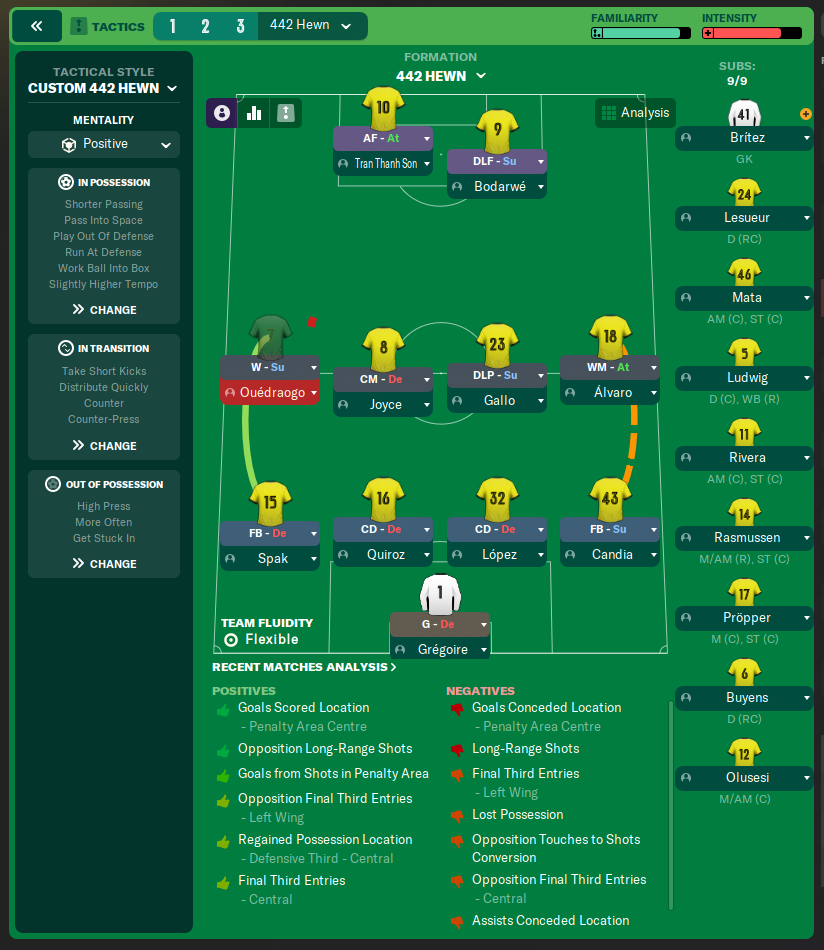
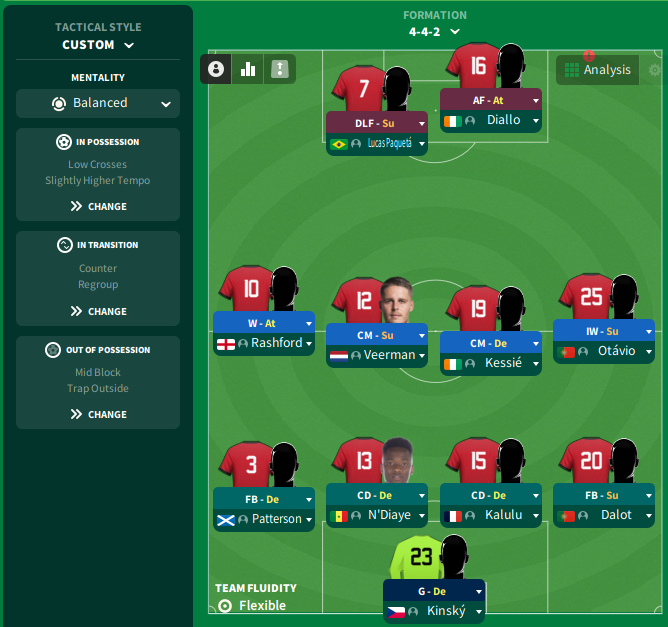
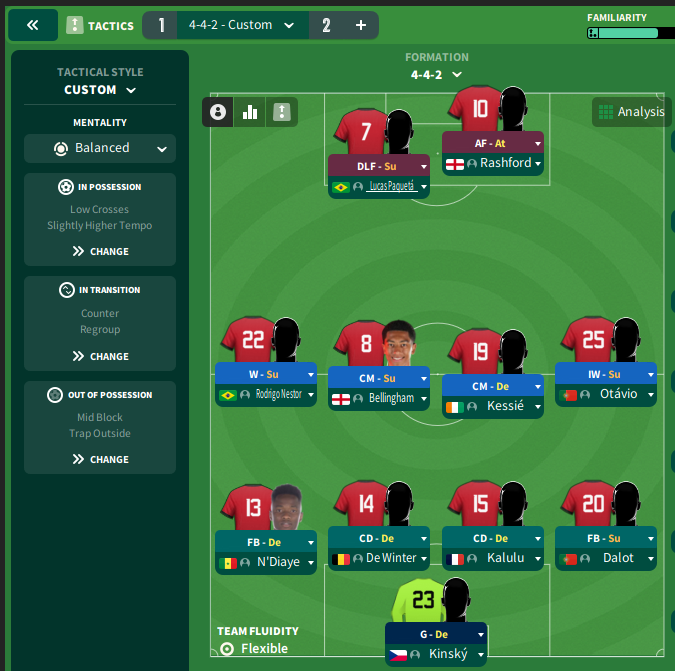
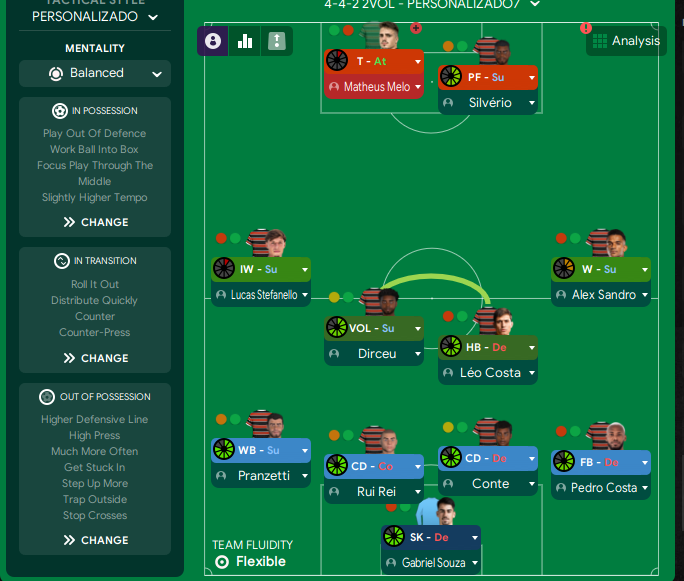
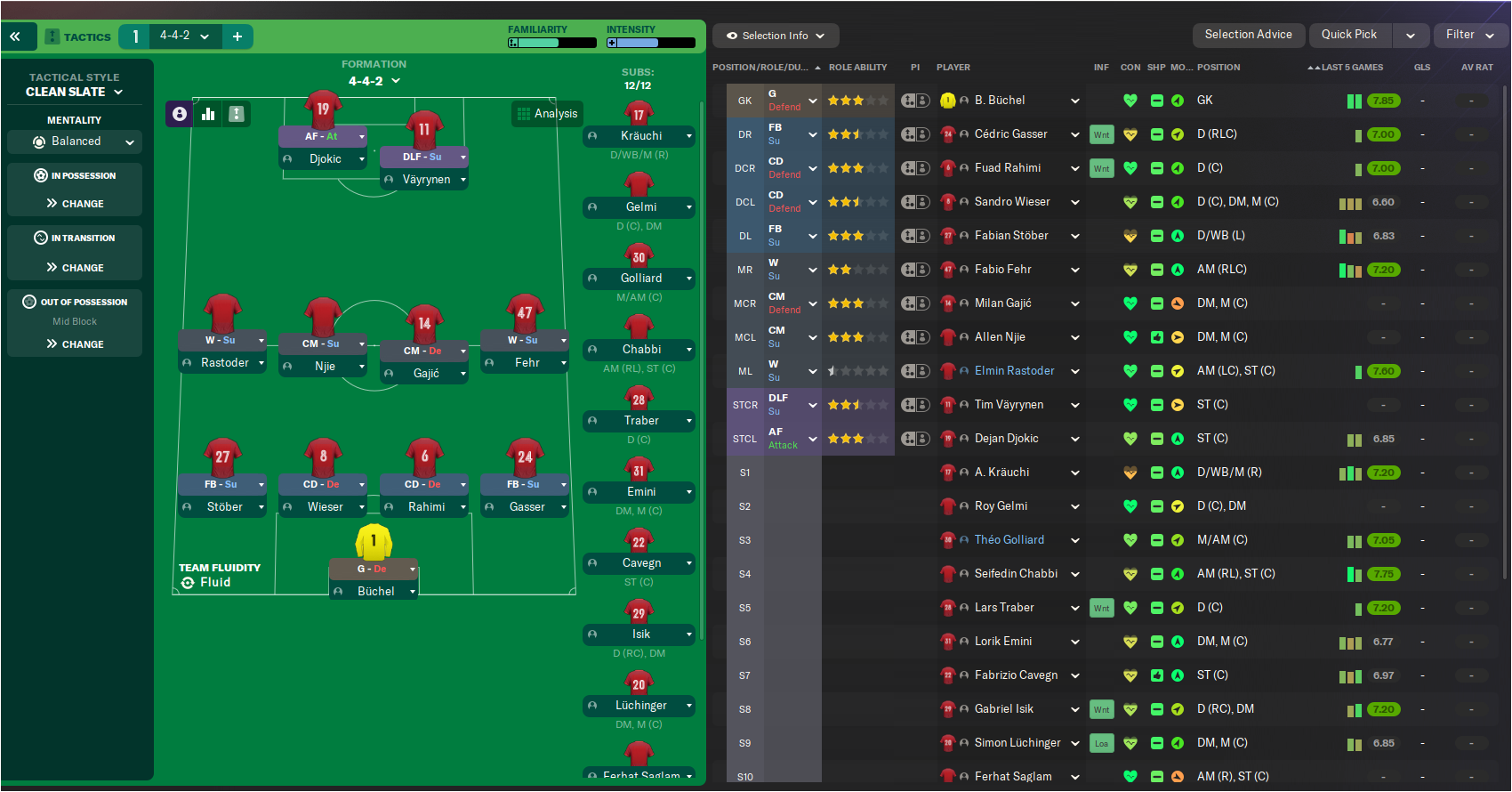
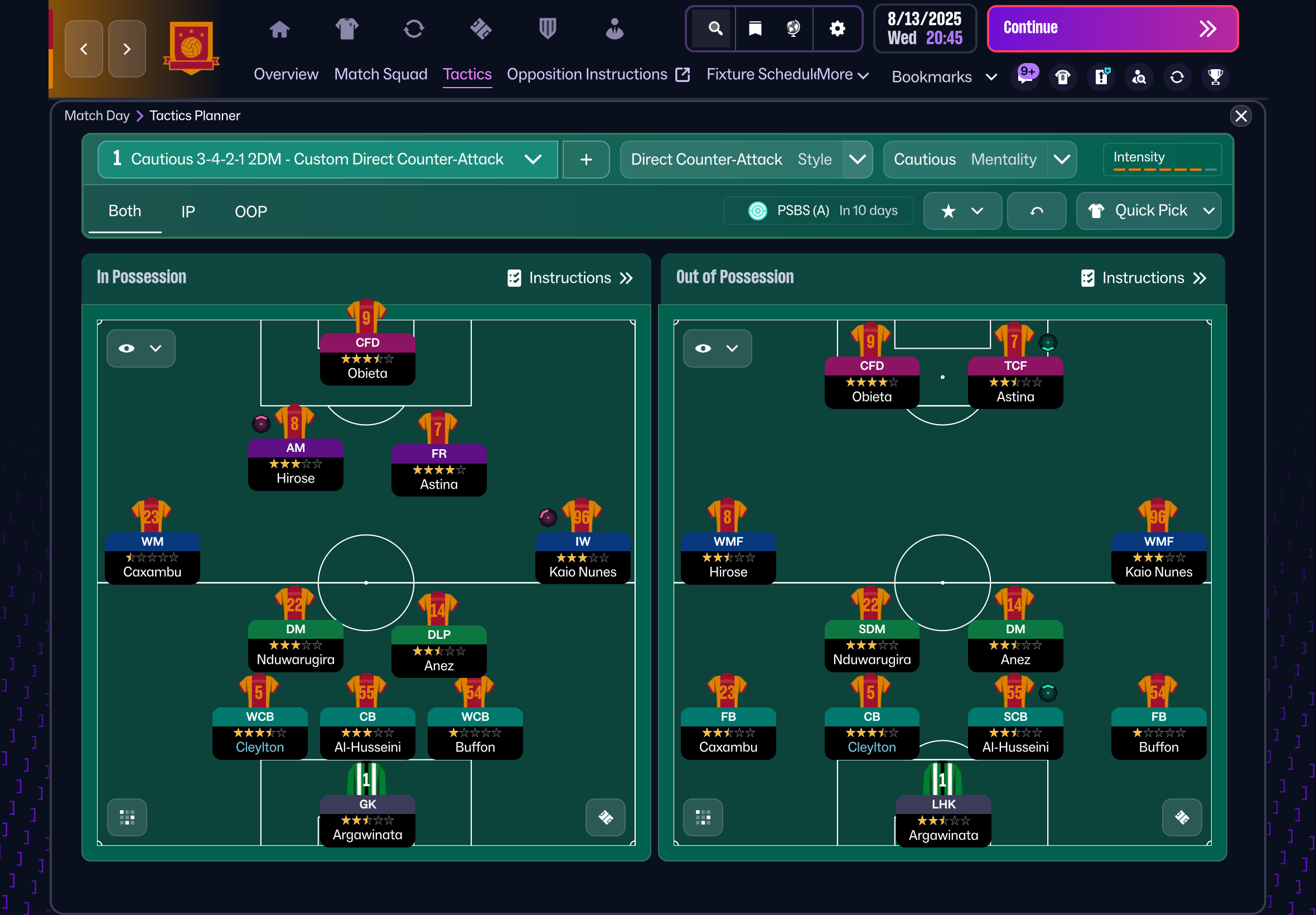
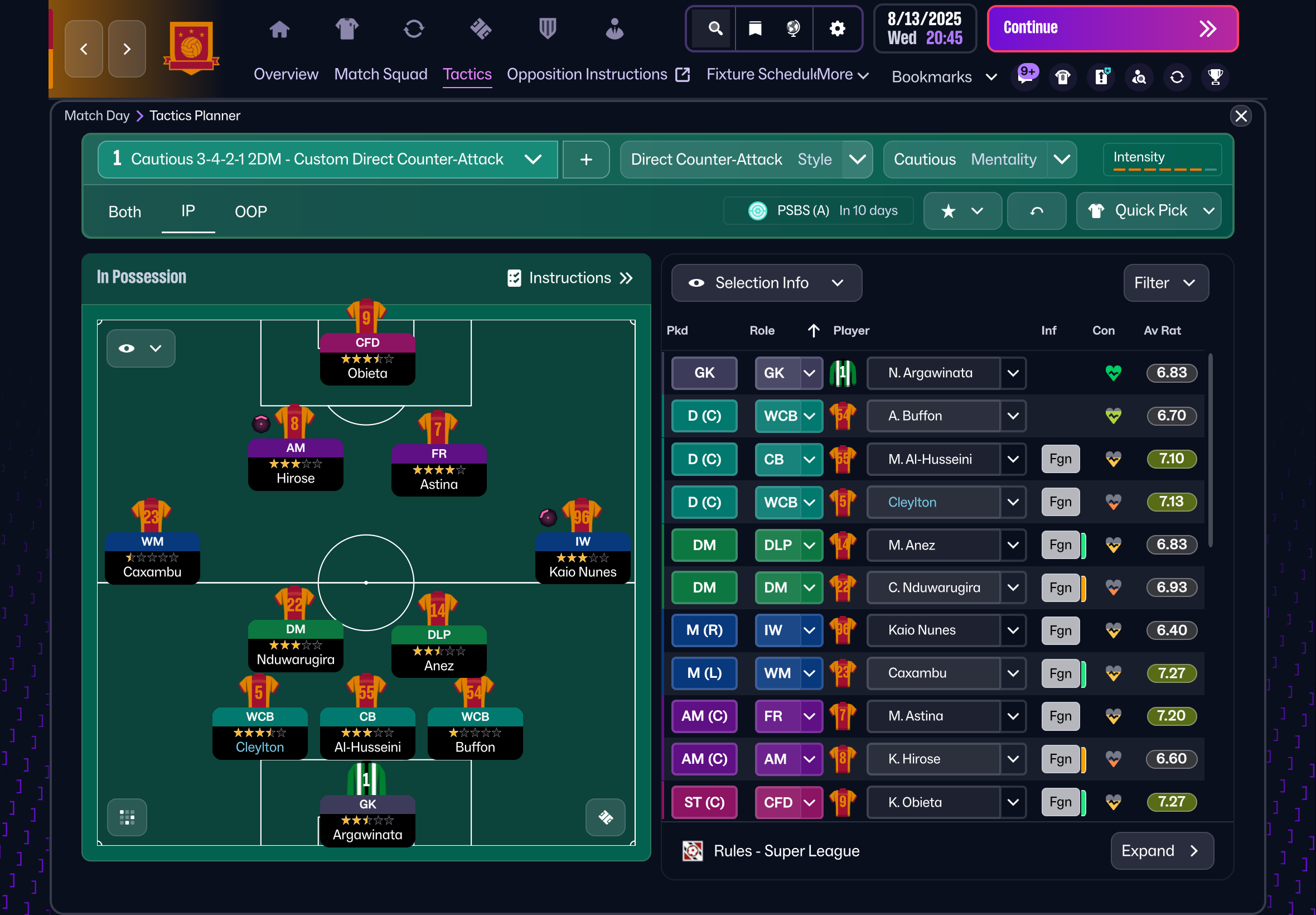
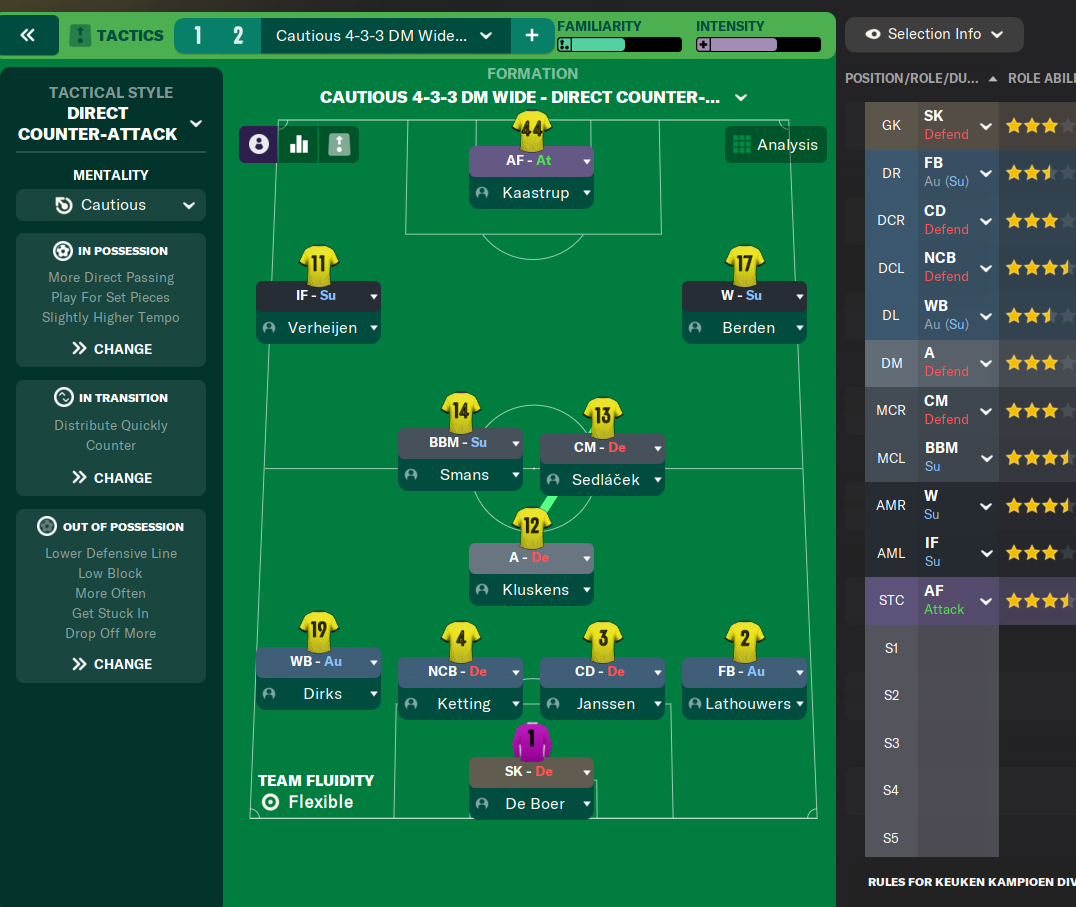
4-4-2
Counter-attacking through the forward pair and wide midfielders. Counter on winning possession combined with the Direct Counter-Attack style gives a…
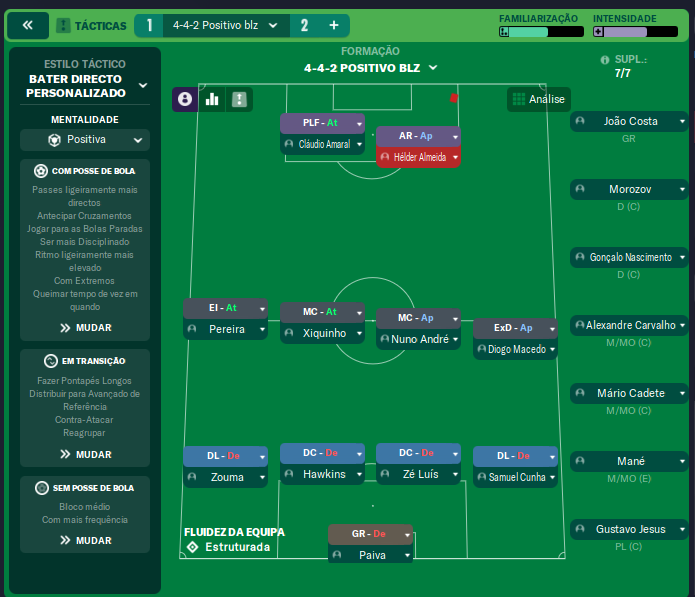
Loading tactical analysis...
Direct Counter-Attack
Positive
4-4-2
Structured
GK
Goalkeeper
Defend
DL
Full-Back
Defend
DC
Centre-Back
Defend
DC
Centre-Back
Defend
DR
Full-Back
Defend
ML
Inverted Winger
Attack
MC
Central Midfielder
Attack
MC
Central Midfielder
Support
MR
Wide Midfielder
Support
ST
Pressing Forward
Attack
ST
Advanced Forward
Support
Slightly Shorter Passing
Play for Set Pieces
Be More Disciplined
Slightly Higher Tempo
Wide Attacking Width
Waste Time
Take Long Kicks
Distribute to Target Forward
Counter
Regroup
Standard Line of Engagement
More Urgent Pressing
Counter on winning possession combined with the Direct Counter-Attack style gives a coherent plan to attack space quickly after regaining the ball.
PF [6,2] and AF [6,4] provide a forward pair to run onto balls.
A Pressing Forward paired with an Advanced Forward on Support gives one runner and one link, so the front two complement each other.
PF [6,2] At with AF [6,4] Su.
Waste Time slows play and clashes with a direct counter-attack style and a positive mentality, which want quick progression.
WM [4,5] and PF [6,2] are asked to attack space while Waste Time is set.
Regroup on losing possession contradicts more urgent pressing, so the team neither counter-presses nor holds a settled block.
CM [4,2] At and CM [4,4] Su are pulled between pressing and dropping.
Gaps in midfield
The attacking CM and IW leave little cover in front of the defence when the press is beaten.
CM [4,2] At and IW [4,1] At with no defensive midfielder.
high
Left flank defending
The Inverted Winger on Attack offers little track-back, leaving the left full-back exposed.
IW [4,1] At in front of FB [2,1] De.
medium
PF + AF
One forward presses and runs the channels while the other links play, which suits the counter.
PF [6,2] At, AF [6,4] Su.
PF + AF
CB + FB defensive base
Four defensive-duty defenders give a stable base behind the attacking midfield.
CB [2,2], CB [2,4], FB [2,1], FB [2,5] all De.
CB + FB defensive base
Do you want to counter quickly or control the game?
Does the squad have a ball-winning midfielder who could cover the CMs?
Wide, disciplined build-up with a quick transition to the two forwards after winning the ball.
Regroups on losing the ball while the pressing is otherwise urgent, which is inconsistent.
Counter-attacking through the forward pair and wide midfielders.
4-4-2
Two flat banks of four with the forwards leading the press.
FB [2,1], CB [2,2], CB [2,4], FB [2,5] behind IW [4,1], CM [4,2], CM [4,4], WM [4,5].
2-4-4
Full-backs stay back while the wide men and the two forwards push on, stretching the pitch.
IW [4,1] At, WM [4,5] Su, PF [6,2], AF [6,4].
The 4-4-2 has a clear counter-attacking shape, a complementary front pair and a solid back four. However, its instructions contradict each other: Waste Time, Regroup and shorter passing work against the direct counter style and pressing. With two attacking midfielders and no screen in front of the defence, it is exposed in the centre. Make the passing more direct and counter-press on losing the ball, and consider removing Waste Time to bring the instructions into line with the style.
The tactical theory behind the 4-4-2: roles, instructions, and the trade-offs that decide whether the system holds up.
Long-ball football done well in FM. When direct, vertical play is the right choice, and what the Direct Passing TI actually changes.
Sit deep, win the ball, and break in three passes. The roles, instructions, and squad profile that make it work.
Routines, takers, and target picks. How to turn corners and free-kicks into a reliable third of your goal output.