Uploaded Tactic
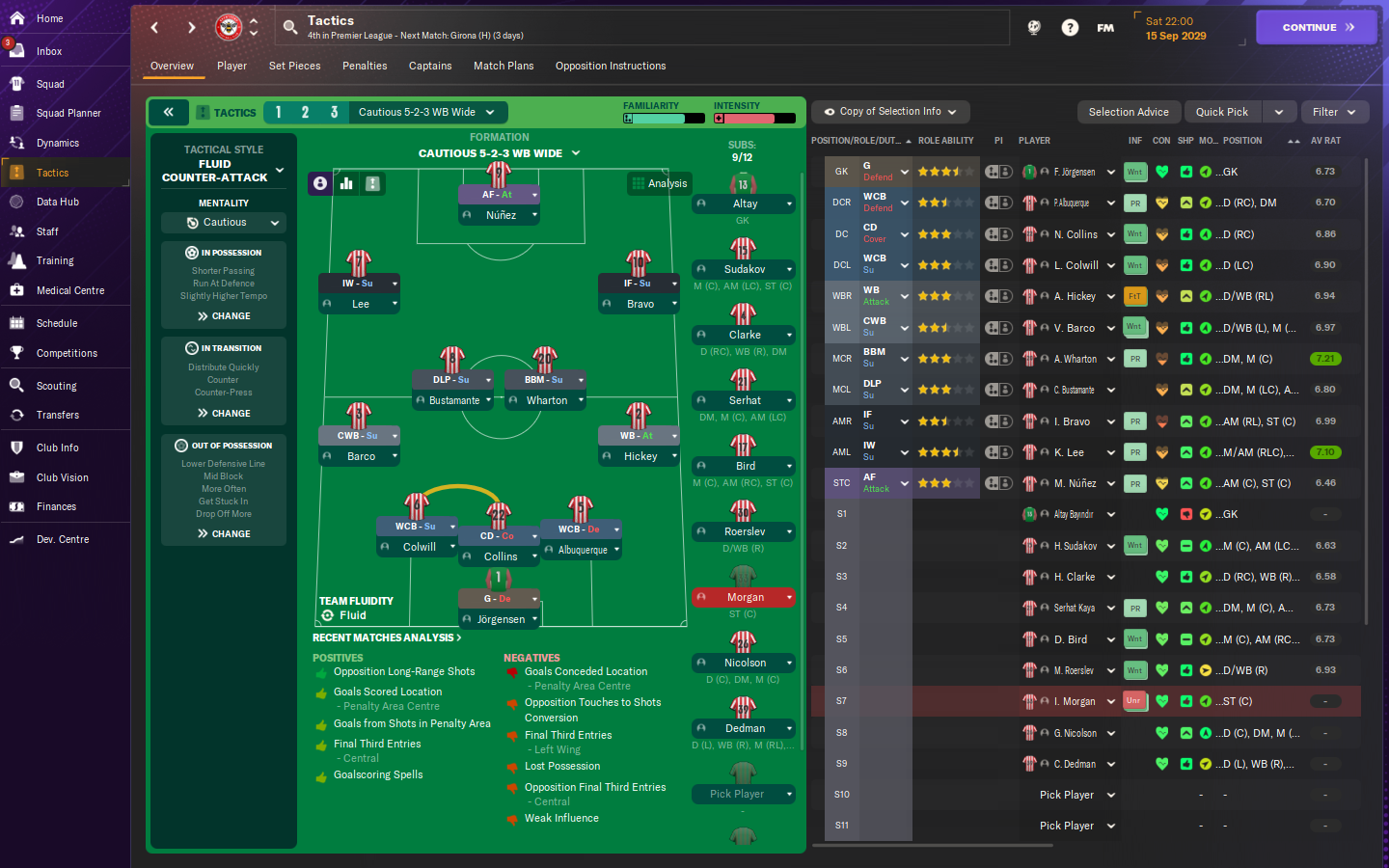
Formation & Style
Tactical Style:Fluid
Mentality:Cautious
Formation:5-2-3 WB Wide
Team Fluidity:Fluid
In Possession
Shorter Passing
Run At Defence
Slightly Higher Tempo
In Transition
Distribute Quickly
Counter
Counter-Press
Out of Possession
Lower Defensive Line
Mid Block
More Often Get Stuck In
Drop Off More
Team Shape Without Ball
Shape:5-4-1
Description:Defensive solidity with a compact shape to limit space for opposition attackers.
Evidence:5 defenders (3 CBs + 2 WB) and a deep midfield pivot providing immediate cover.
Team Shape With Ball
Shape:3-3-2
Description:Wide players and a lone striker looking for gaps in the opposition defence to exploit.
Evidence:The use of WBs and IF/IW combinations to deliver crosses and create scoring opportunities.
Phase Description
Attacking Play
The tactic focuses on using wing-backs to stretch the play while attempting to counter-attack quickly after regaining possession.
Defensive Transition
The team aims to recover quickly and then transition into structured defensive organization.
Main Focus
Utilizing wide areas and quick transitions to create goal-scoring opportunities.
Key Strengths
Defensive Stability
The compact shape with 5 defenders provides solid cover against attacks.
Wide Play Utilization
Wing-backs and inside forwards create opportunities through width.
Counter-Attacking Threat
Quick transitions allow the team to exploit spaces left by the opposition.
Conflicting Directions
Lack of Central Overlap
With wide-focused roles, central attacking options may be underutilized.
Excessive Cautious Mentality
Cautious mentality may limit offensive opportunities even with a good shape.
Risk of Isolated Striker
One forward may become isolated if wing support is limited.
Tactical Suggestions
Adjust Mentality
Switching to a Balanced or Positive mentality could increase offensive output.
Encourage Central Play
Consider integrating a playmaker role to create central overlaps.
Rotate Wing-Back Duties
Alternating duties could optimize crossing opportunities and defensive coverage.
Ask Questions About Your Lineup
Related Tactics

More Fluid tactics
Guides for this formation
The tactical theory behind the 5-2-3 WB Wide: roles, instructions, and the trade-offs that decide whether the system holds up.