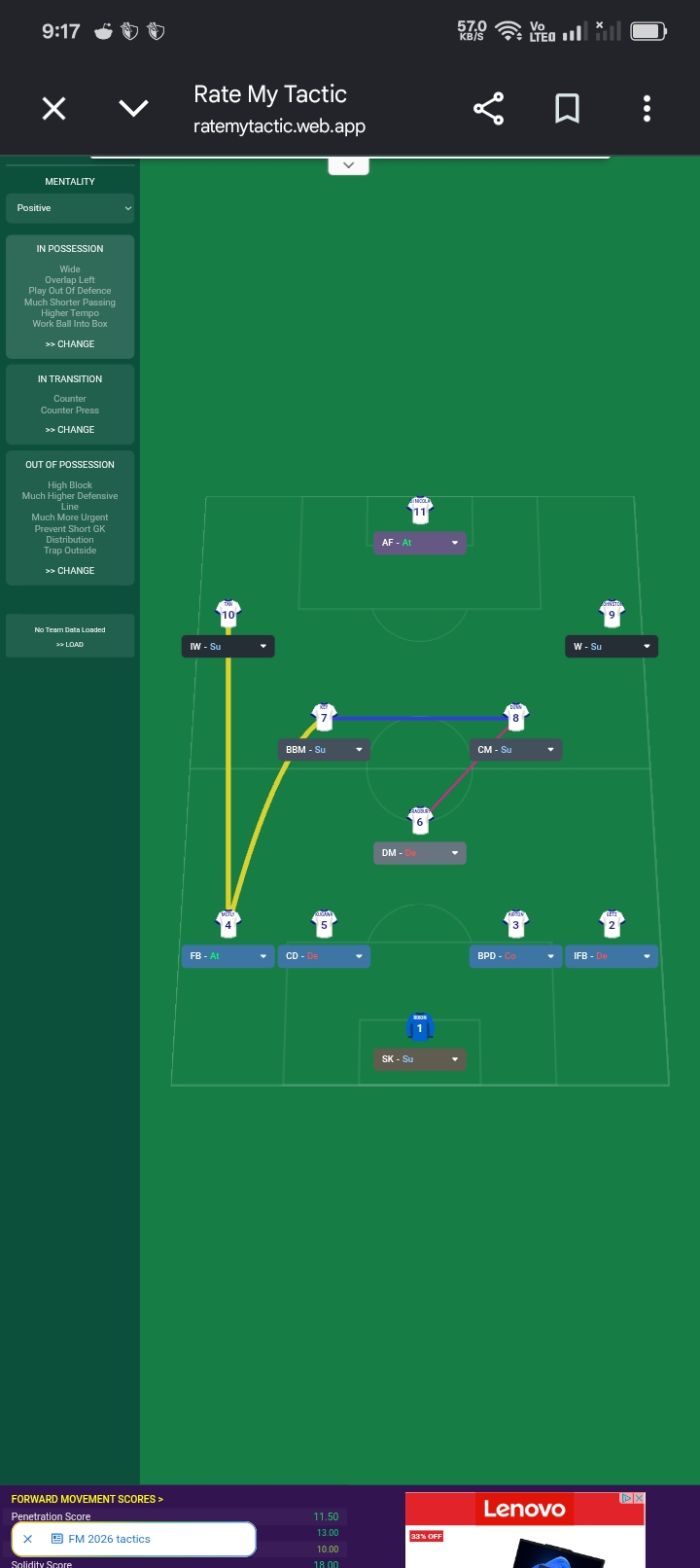
Uploaded Tactic
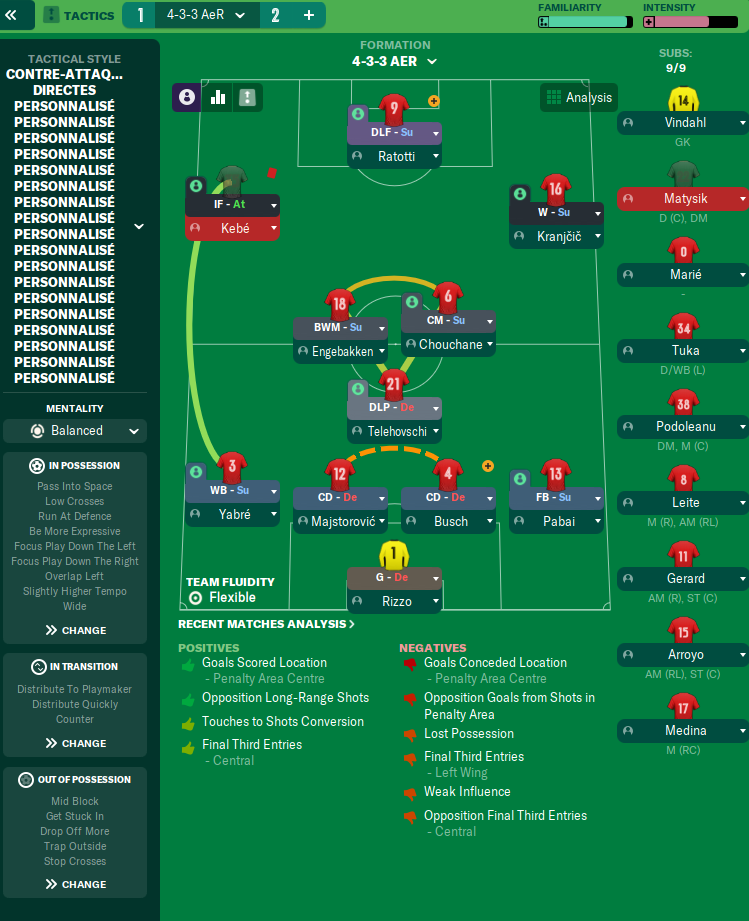
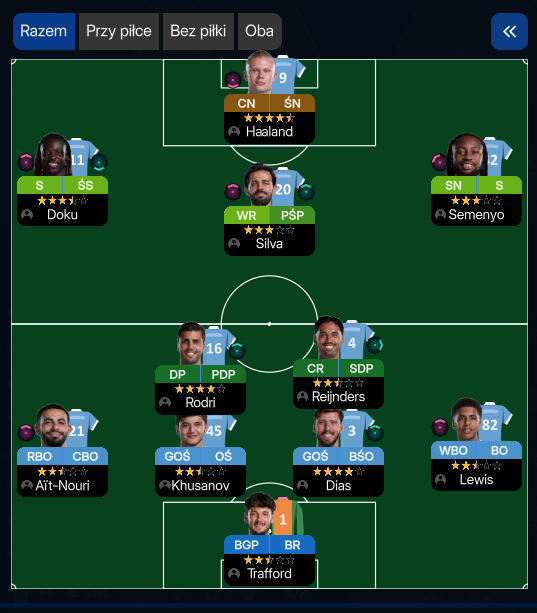
Formation & Style
Tactical Style:Counter-Attack
Mentality:Balanced
Formation:4-3-3
Team Fluidity:Flexible
In Possession
Pass Into Space
Low Crosses
Run At Defence
Be More Expressive
Focus Play Down The Left
Overlap Left
Slightly Higher Tempo
Wide
In Transition
Distribute To Playmaker
Distribute Quickly
Counter
Out of Possession
Mid Block
Get Tighter
Drop Off More
Trap Outside
Stop Crosses
Team Shape Without Ball
Shape:Mid Block
Description:Defensive organization in a mid block to limit spaces in the central areas.
Evidence:Instructions such as 'Drop Off More' and 'Trap Outside'.
Team Shape With Ball
Shape:Wider Formation
Description:Stretching the play using width in attack to create spaces for overlapping runs.
Evidence:Use of instructions like 'Overlap Left' and 'Wide'.
Phase Description
Attacking Play
Utilizing pace on the wings and quick transitions through the DLF to exploit spaces upfront.
Defensive Transition
Quickly reverting to a mid-block, ready to counter-press after losing possession.
Main Focus
Exploiting space on the left flank while utilizing the BWM to break up opposition play.
Key Strengths
Fluid Midfield
The BWM supports the attack while also providing defensive cover.
Dynamic Front Three
With an IF and W, the forward line is versatile and can exploit defensive gaps.
Counter-Attacking Threat
Utilizing pace and direct play allows for effective counter-attacks.
Conflicting Directions
Defensive Vulnerability
Tactical setup might struggle against teams with strong wing play.
Lack of Central Presence
Midfield could be outnumbered against teams with more central players.
Limited Transition Support
The reliance on wing play can make transition slower in central areas.
Tactical Suggestions
Increase Central Options
Adding another central midfielder could provide stronger control over the game.
Adjust Defensive Depth
Consider lowering the defensive line to prevent quick transitions from opponents.
Utilize the Bench More
Substitutions can provide freshness and new tactical dynamics.
Ask Questions About Your Lineup
Related Tactics
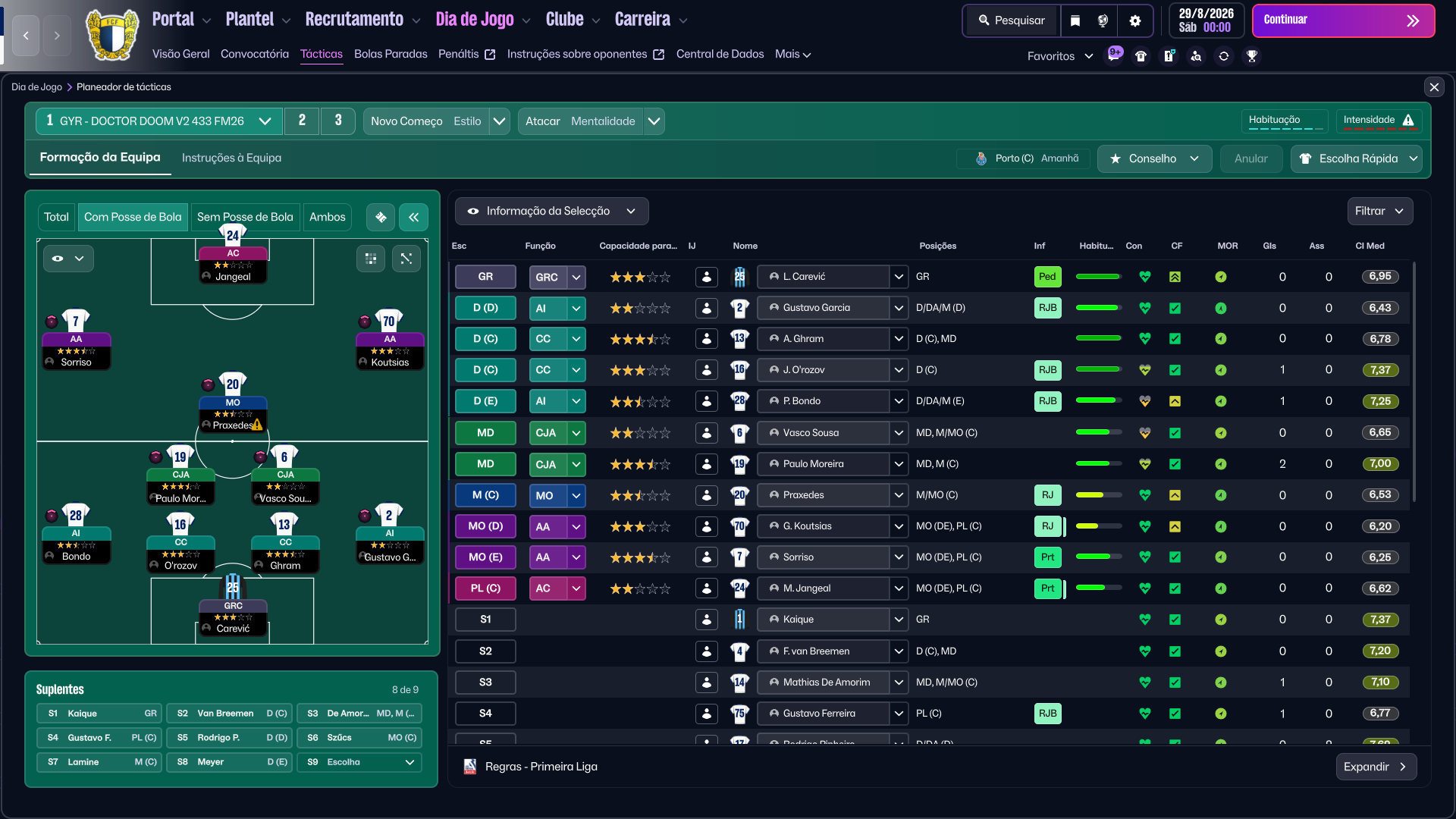
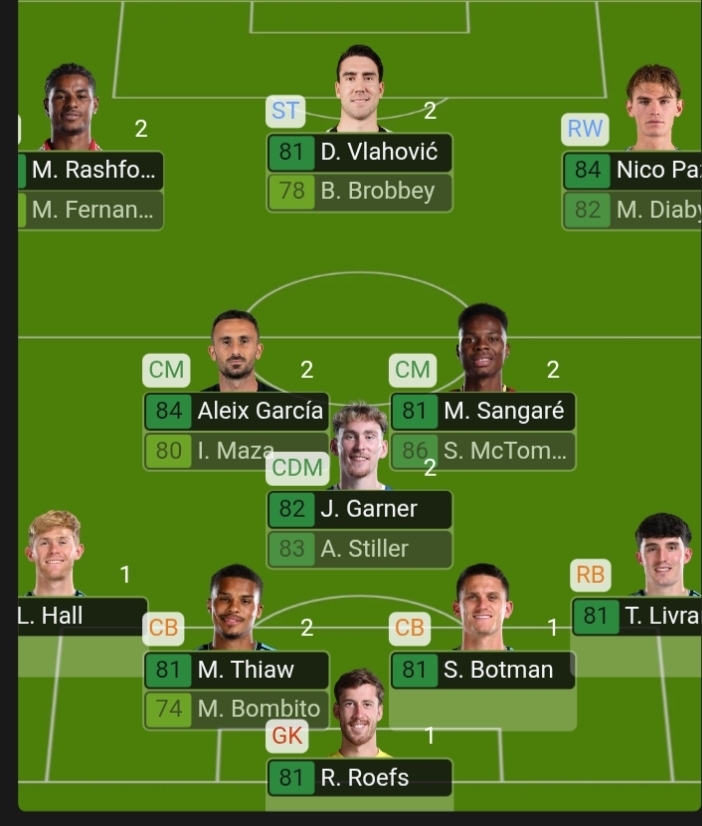
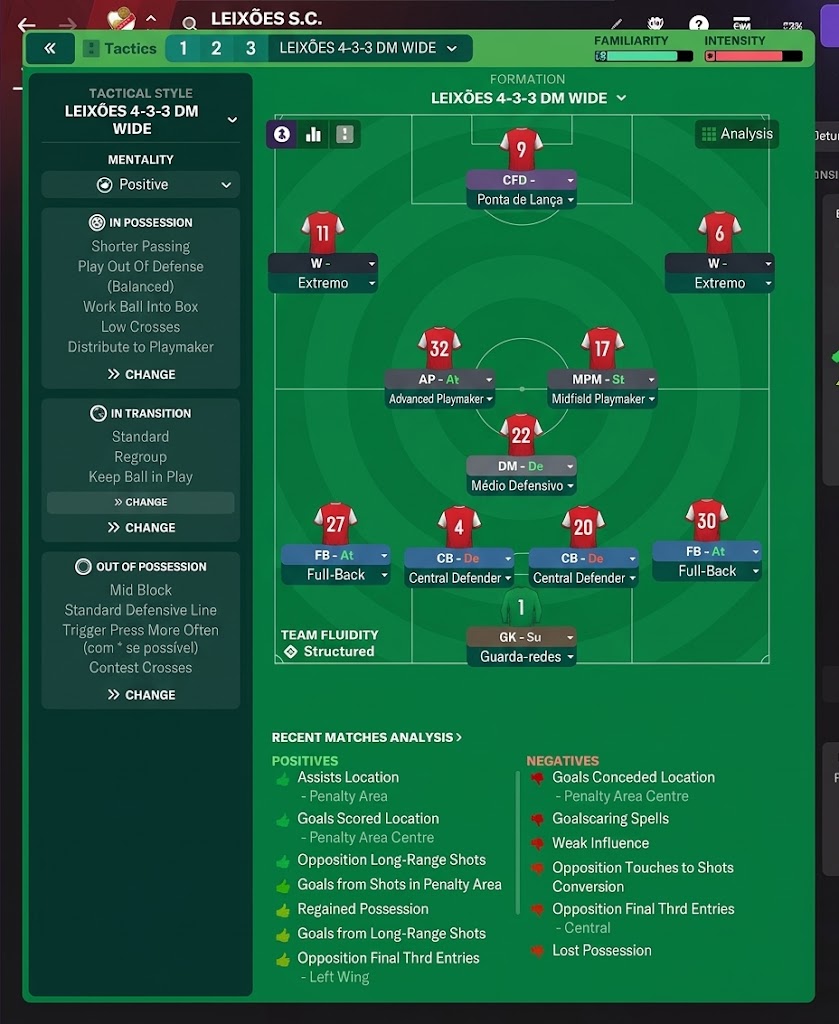
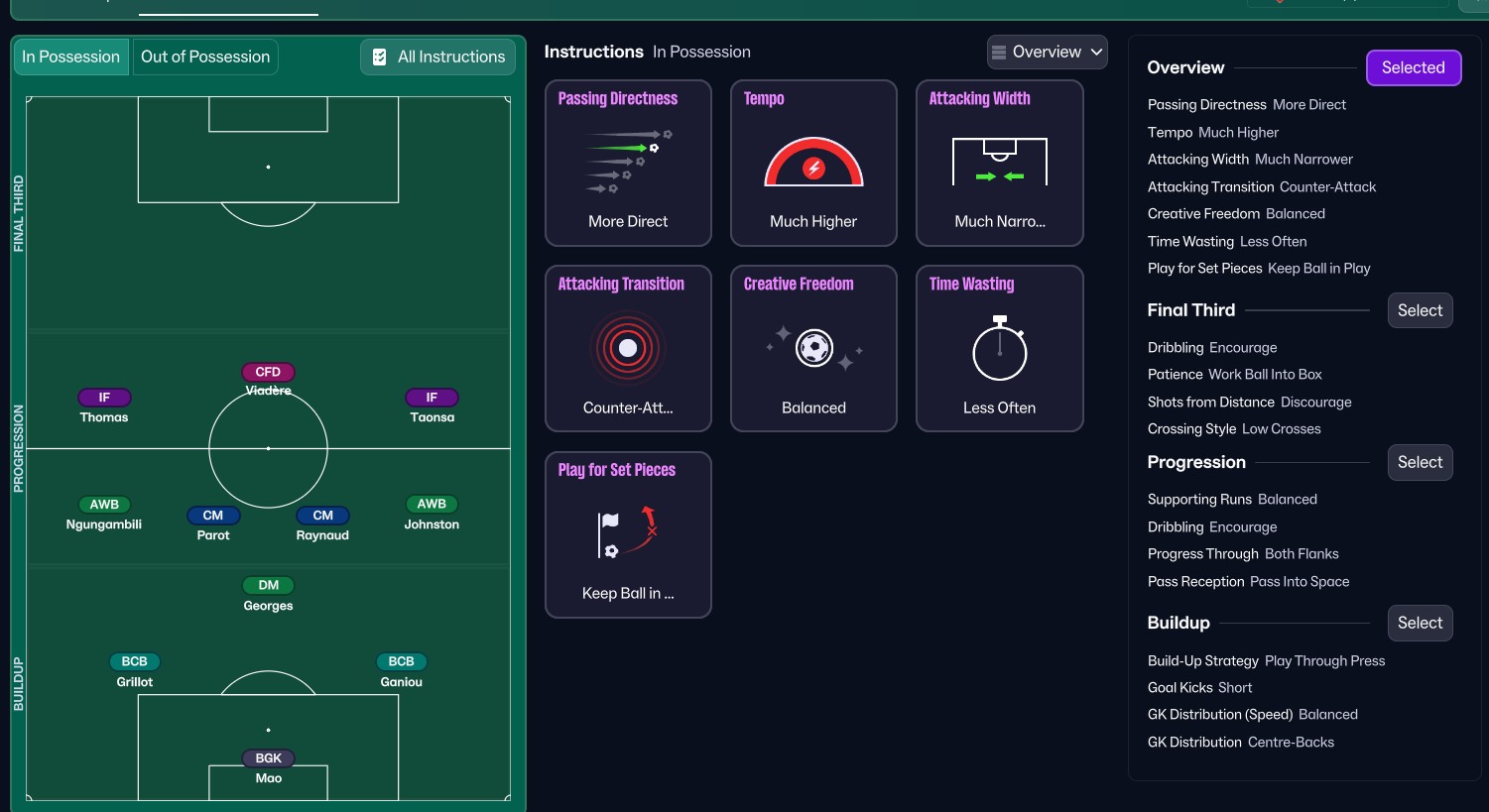
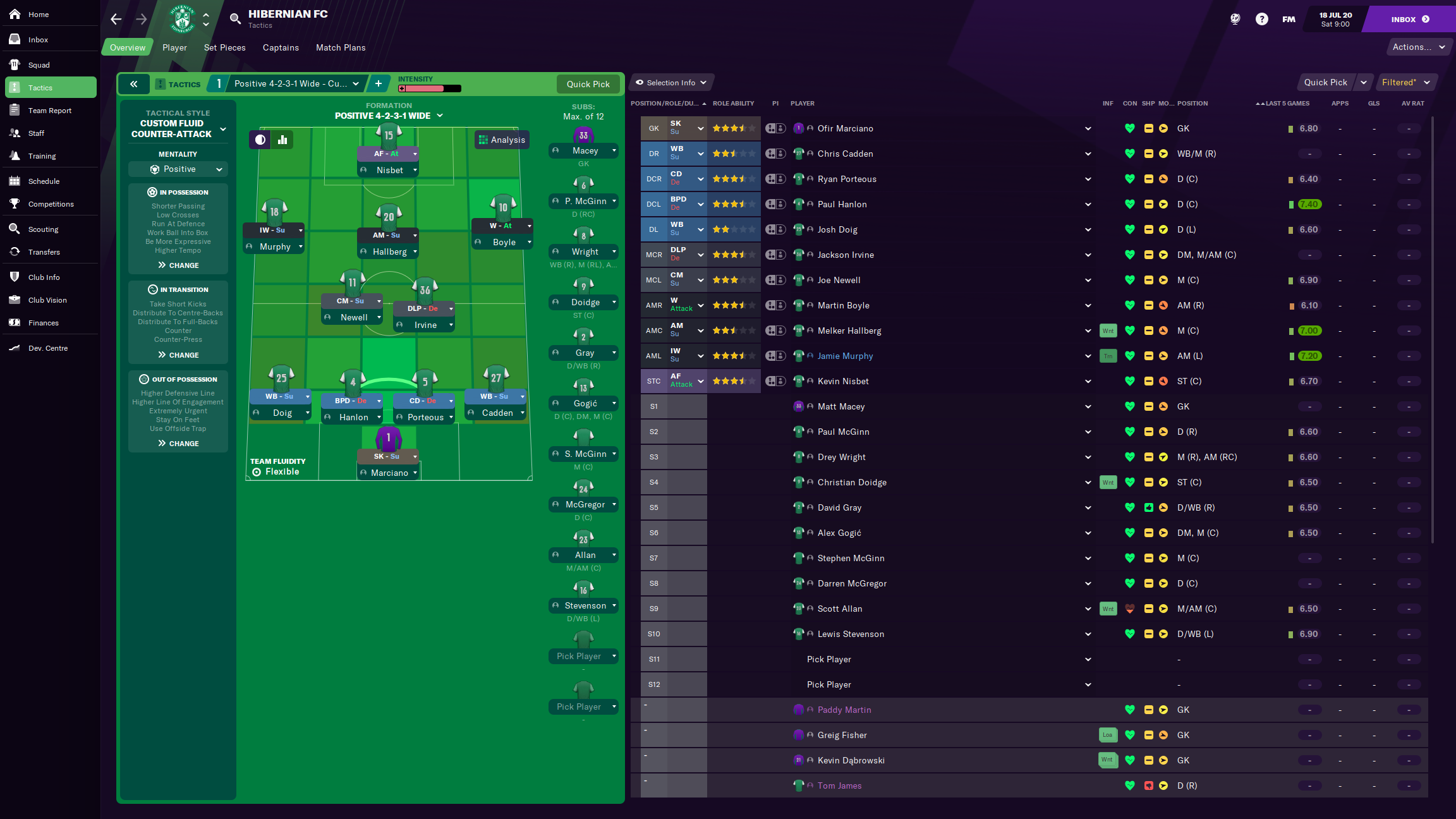
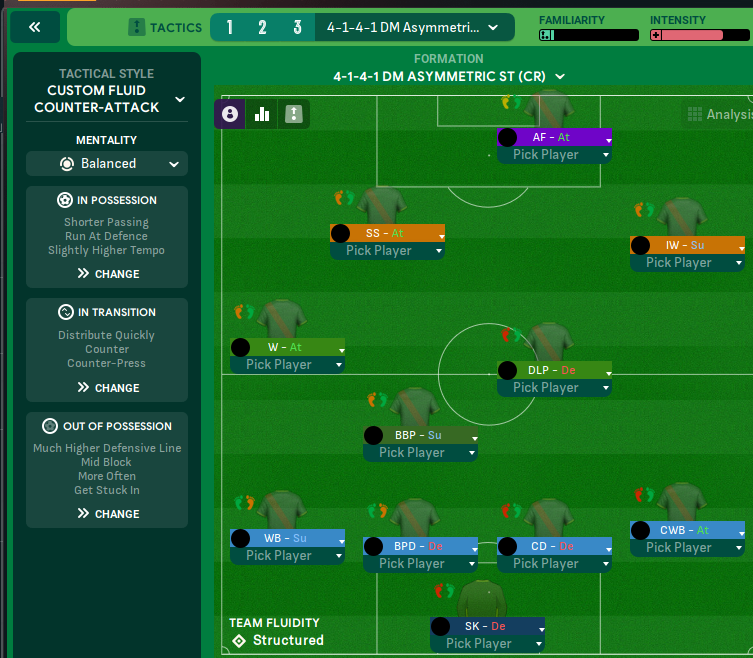
More Counter-Attack tactics
Guides for this formation
The tactical theory behind the 4-3-3: roles, instructions, and the trade-offs that decide whether the system holds up.
Foundations
Understanding the 4-3-3 Formation
Master the classic 4-3-3: player roles, tactical variations, and the trade-offs that decide whether it sings or stalls.
Read guide
Player pairings
Midfield Trios
Holder, runner, creator: the role distribution rule for three-man midfields, the AMC variants, and the antipatterns that break them.
Read guide
Playing styles
Gegenpressing: A Full Guide
Klopp-style gegenpressing in FM, including squad profile, line-and-press pairing, sustainable workload, and the antipatterns to avoid.
Read guide