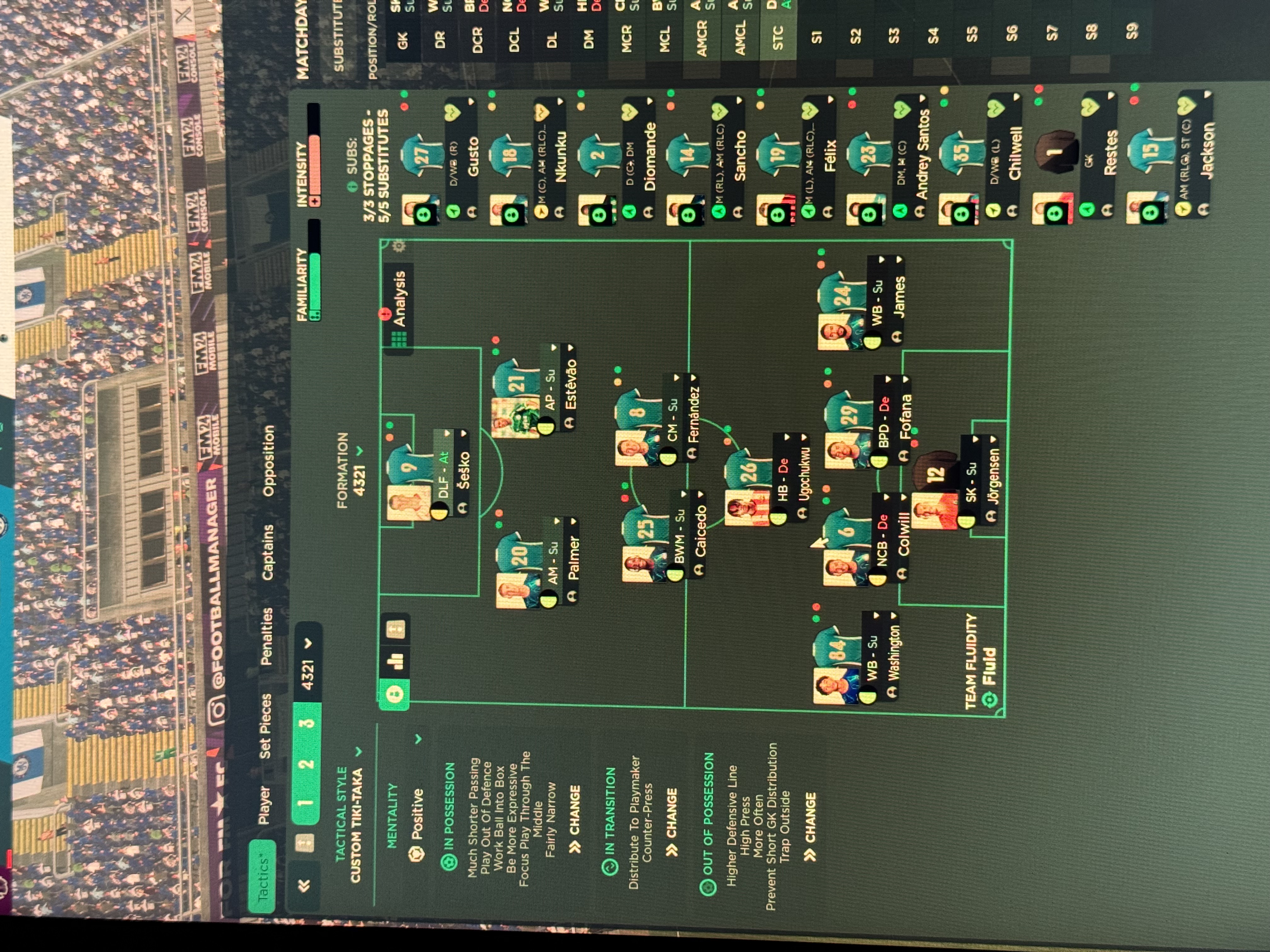
Fluid Counter-Attack 4-3-2-1 (Positive) Tactic
4-3-2-1
Control possession and create high-quality chances through structured buildup. Utilizes wing-backs and wingers to create space and options for attacking.
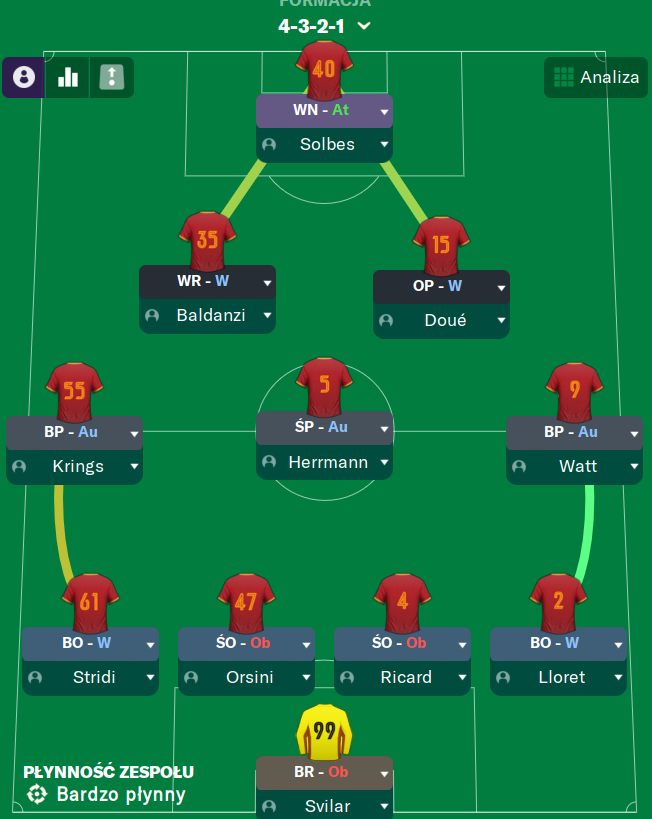
Loading tactical analysis...
Formation and style
Fluid Counter Attack
Positive
4-3-2-1
Very Fluid
In possession
Work Ball Into Box
Play Out of Defence
Overlap on Left
Overlap on Right
In transition
Counter-Press
Counter
Out of possession
Higher Line of Engagement
Higher Defensive Line
Get Stuck In
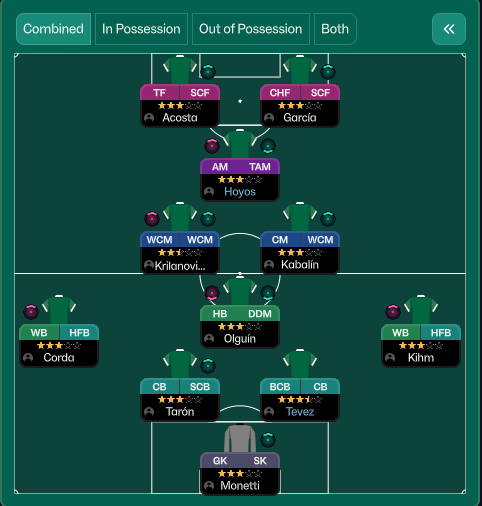
Player roles
GK
Goalkeeper
Defend
LB
Wing-Back
Attack
CB
Ball-Playing Defender
Support
CB
Central Defender
Defend
RB
Wing-Back
Attack
CM
Box-to-Box Midfielder
Support
CM
Advanced Playmaker
Support
LW
Winger
Attack
AMC
Advanced Playmaker
Support
RW
Winger
Attack
ST
Advanced Forward
Attack
Phase description
Utilizes width through wing-backs and wingers, creating overloads and spacing for the advanced playmaker to link up with the striker.
Focuses on quickly regaining possession with a counter-press, aiming to exploit gaps before the opposition can reorganize.
Control possession and create high-quality chances through structured buildup.
Team shape defence
Compact
Maintaining good shape with a focus on pressing the opposition.
Higher Line of Engagement and Get Stuck In indicates intensity in defensive actions.
Team shape attack
Flexible
Encourages overlaps and inside runs from wingers and wing-backs.
Overlap on Left and Right combined with Work Ball Into Box promotes a tactical approach to stretching defenses.
Key strengths
Strong Width and Overlaps
Utilizes wing-backs and wingers to create space and options for attacking.
The roles of 'Wing-Back (At)' at [2,5] and 'Winger (At)' at [6,1/6,3] promote overlaps for attacking play.
Balanced Midfield Dynamics
Offers both defensive stability and attacking creativity.
'Box-to-Box Midfielder (Su)' at [3,3] and 'Advanced Playmaker (Su)' at [3,4] provide coverage and offensive support.
Conflicting tactics
Lack of Defensive Depth
The midfield structure may leave the back line exposed against counter-attacks.
'Box-to-Box Midfielder (Su)' at [3,3] may venture forward excessively, risking gaps.
Over-reliance on Wings
Heavy focus on wing play may become predictable without central penetration.
With wingers and wing-backs positioned wide, central players might struggle for involvement.
Risk exposures
Risk Exposures
Items
Defensive Transition
Quick transitions may expose defenders if caught out of position.
'Higher Line of Engagement' invites pressure when possession is lost.
Midfield Stability
The CM roles may leave gaps if not coordinated.
'Box-to-Box Midfielder (Su)' at [3,3] can result in leaving the defense vulnerable during transitions.
Role synergies
Role Synergies
Items
Winger and Wing-Back
Creates overloads on the flanks leading to crosses and cutbacks.
'Winger (At)' at [6,1] and 'Wing-Back (At)' at [2,5] synergize for width.
Advanced Playmaker and Striker
Facilitates creative link-up play.
'Advanced Playmaker (Su)' at [3,4]' and 'Advanced Forward (At)' at [6,3] enhance attacking dynamics.
Suggested questions
How can we ensure more central penetration in our attacking play?
What adjustments can we make to our defensive structure to better handle counter-attacks?
Should we consider varying our tactics based on opposition strengths and weaknesses?
Related Tactics
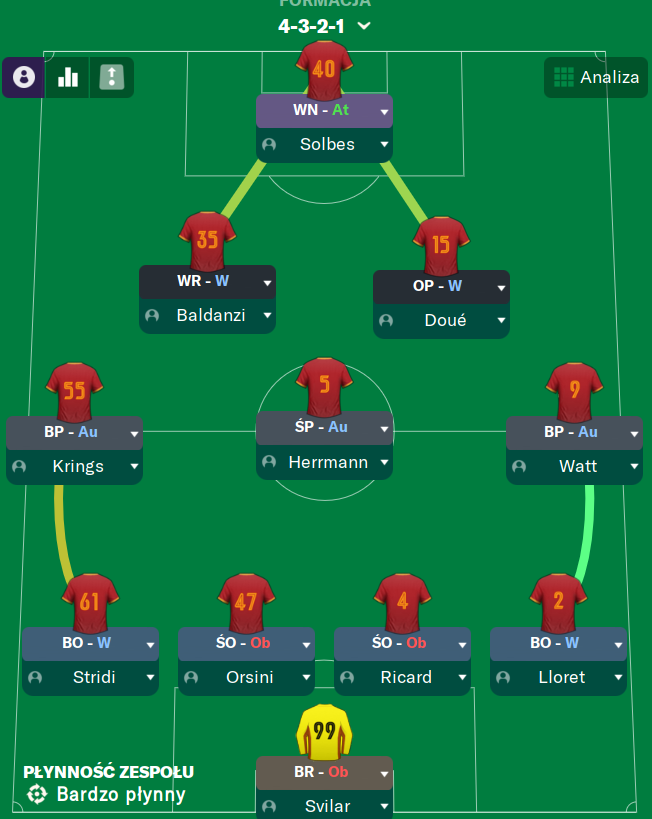
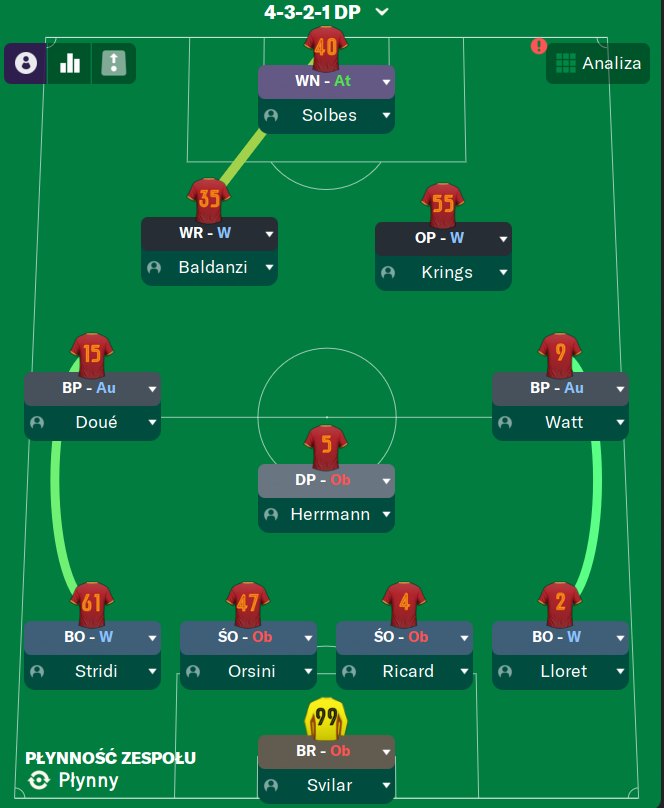
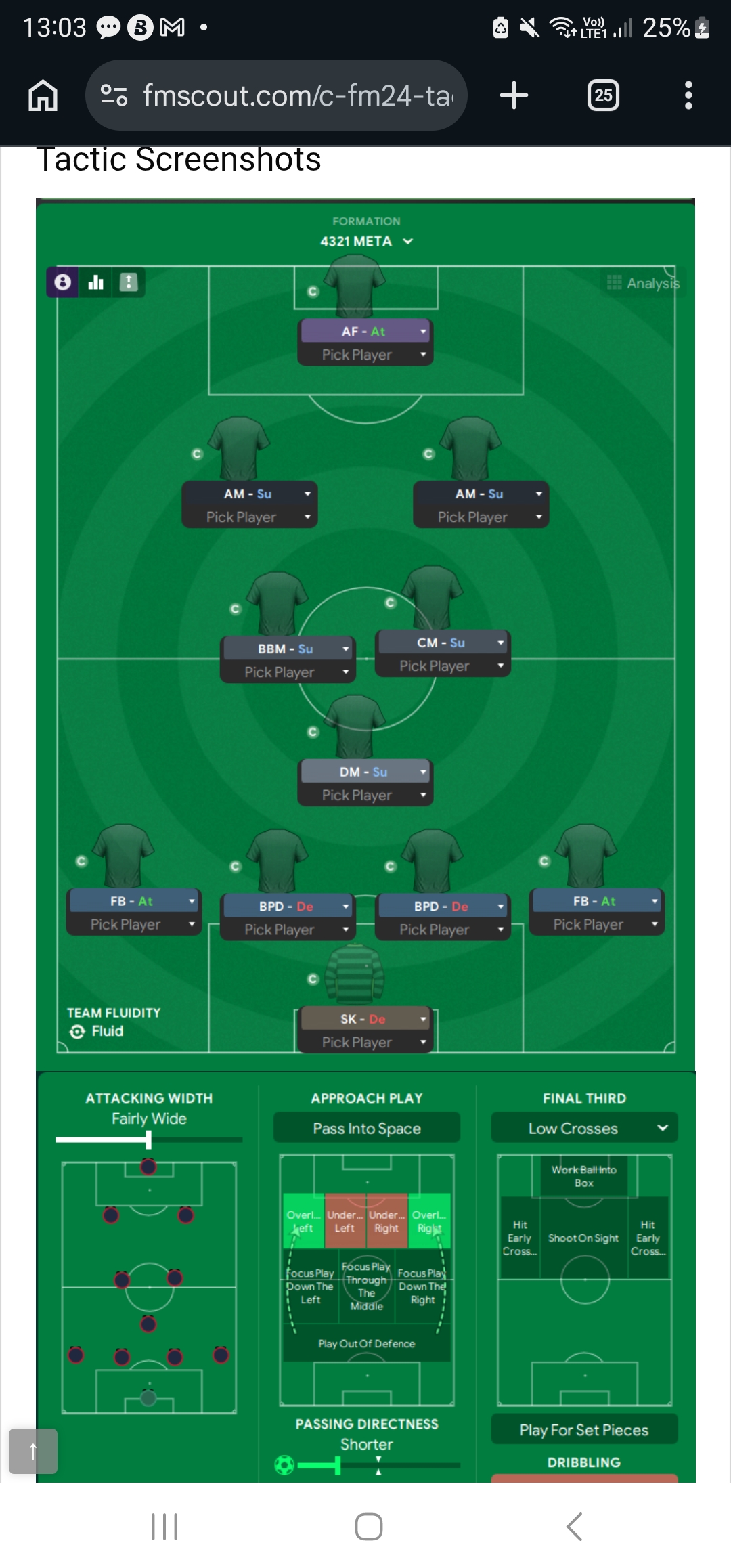
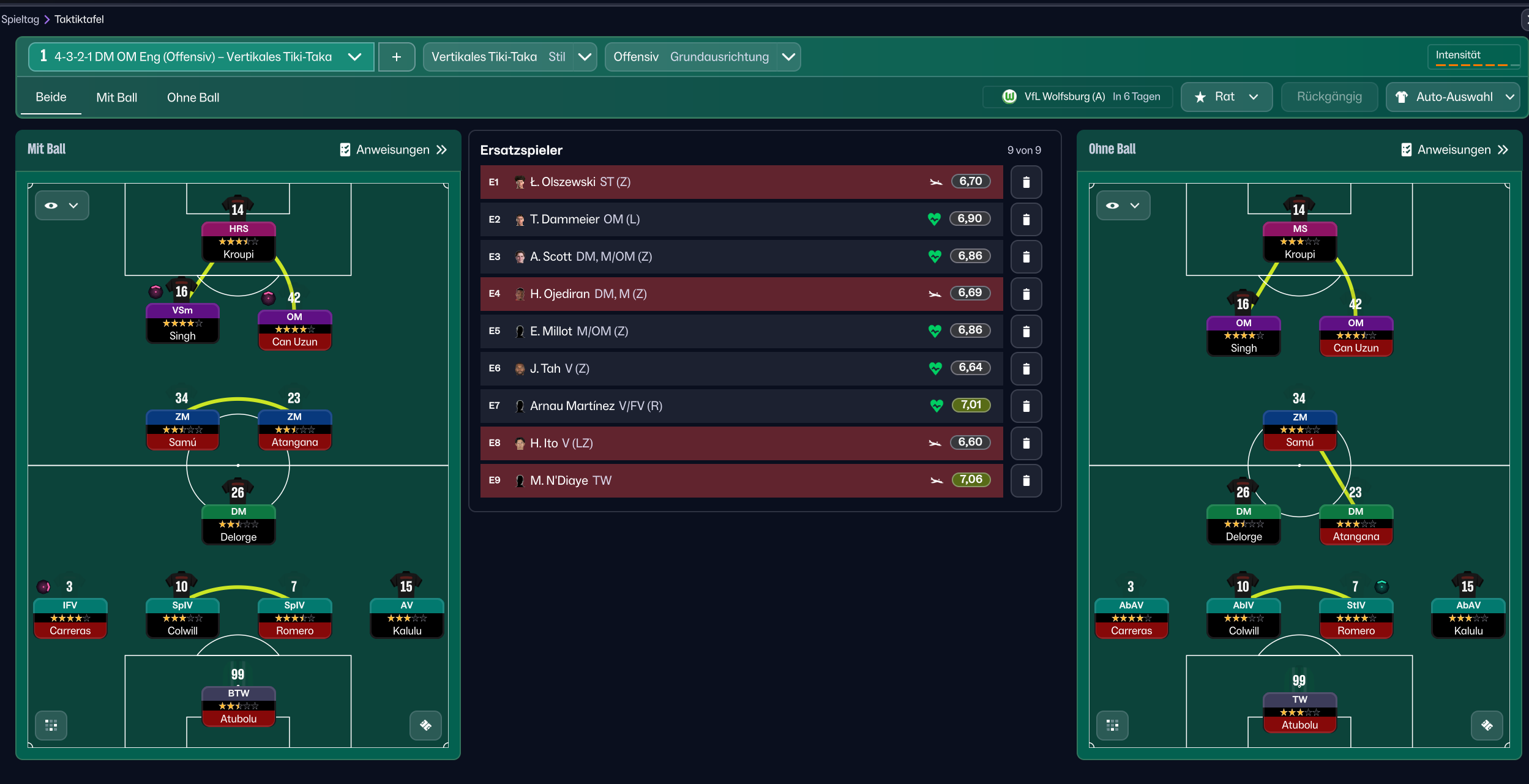
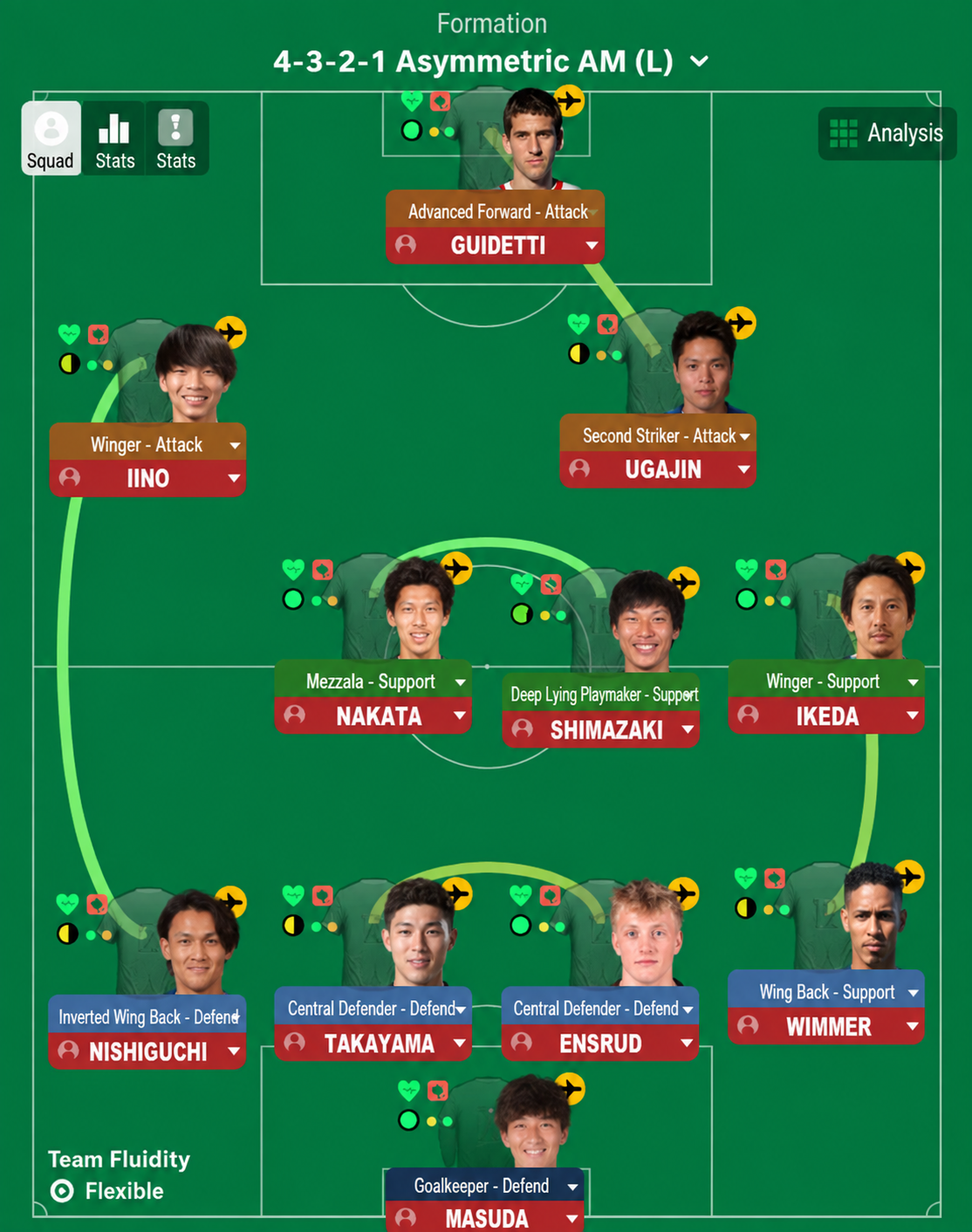
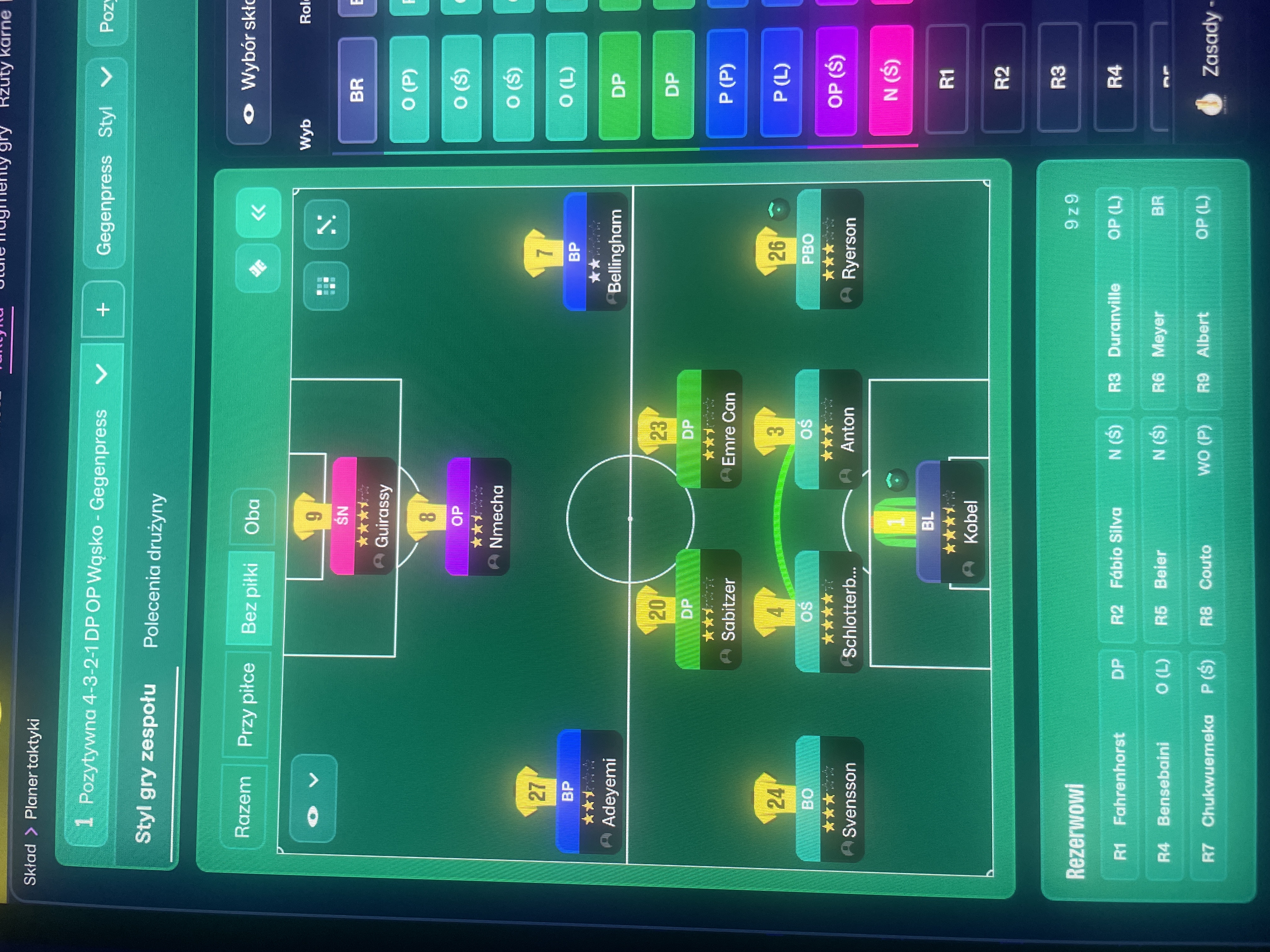
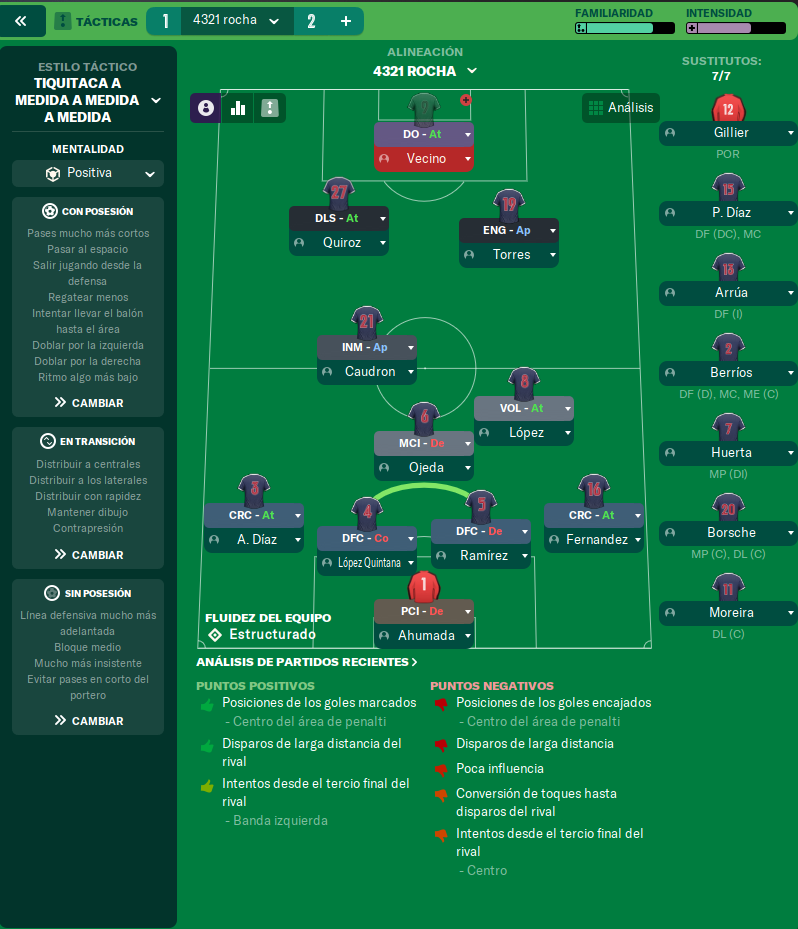
More Fluid Counter Attack tactics
Guides for this tactic
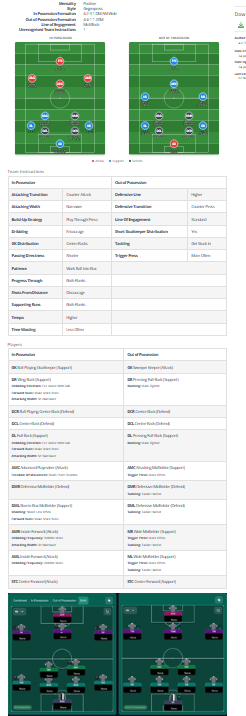
The tactical theory behind the 4-3-2-1: roles, instructions, and the trade-offs that decide whether the system holds up.
Match preparation
Game-State Tactics
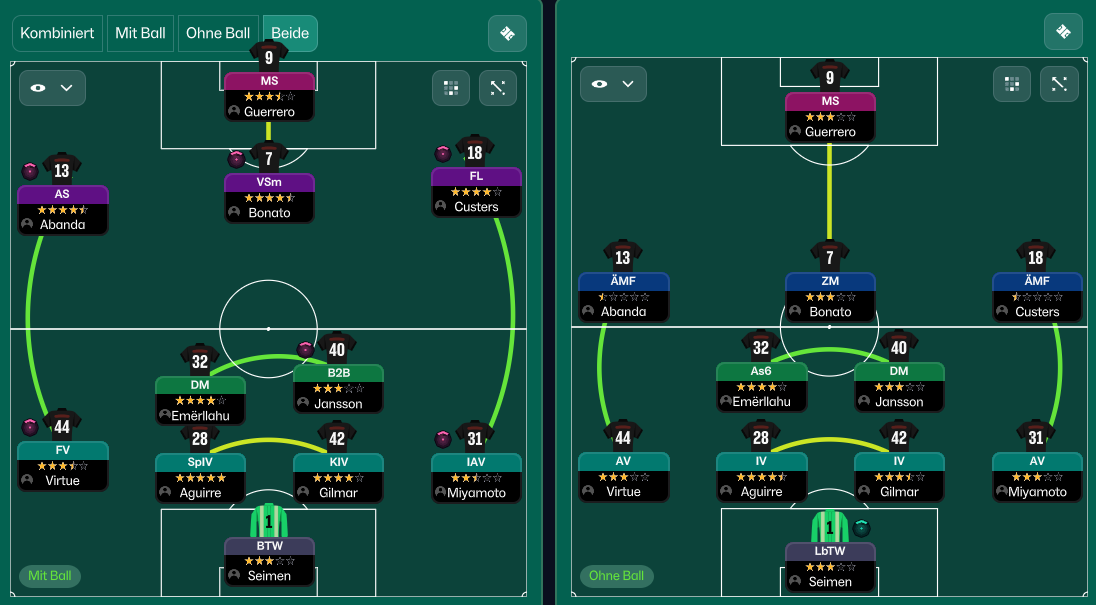
Protect a 1-0, chase a 1-0, hold a draw away. How to manage game state in FM through duties and roles, not by lurching to Defensive.
Read guide
Match preparation
In-Match Tactical Changes
Mentality, duty, role, instruction, sub. The change hierarchy from lightest to heaviest intervention, and 60th-minute patterns by game state.
Read guide
Match preparation
Reading the Match Tablet
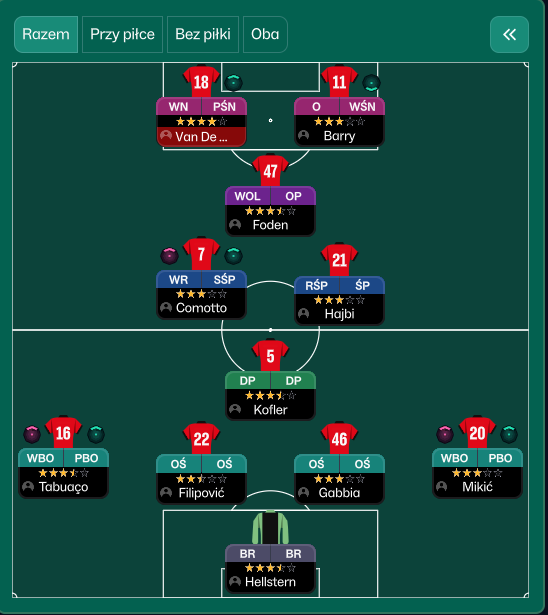
Pass map, average position, xG, possession by zone: what each tablet panel tells you in FM and the tactical change it should trigger.
Read guide