Uploaded Tactic
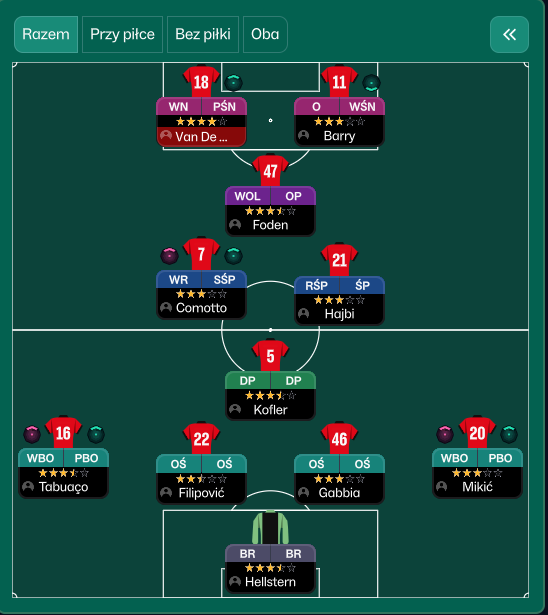
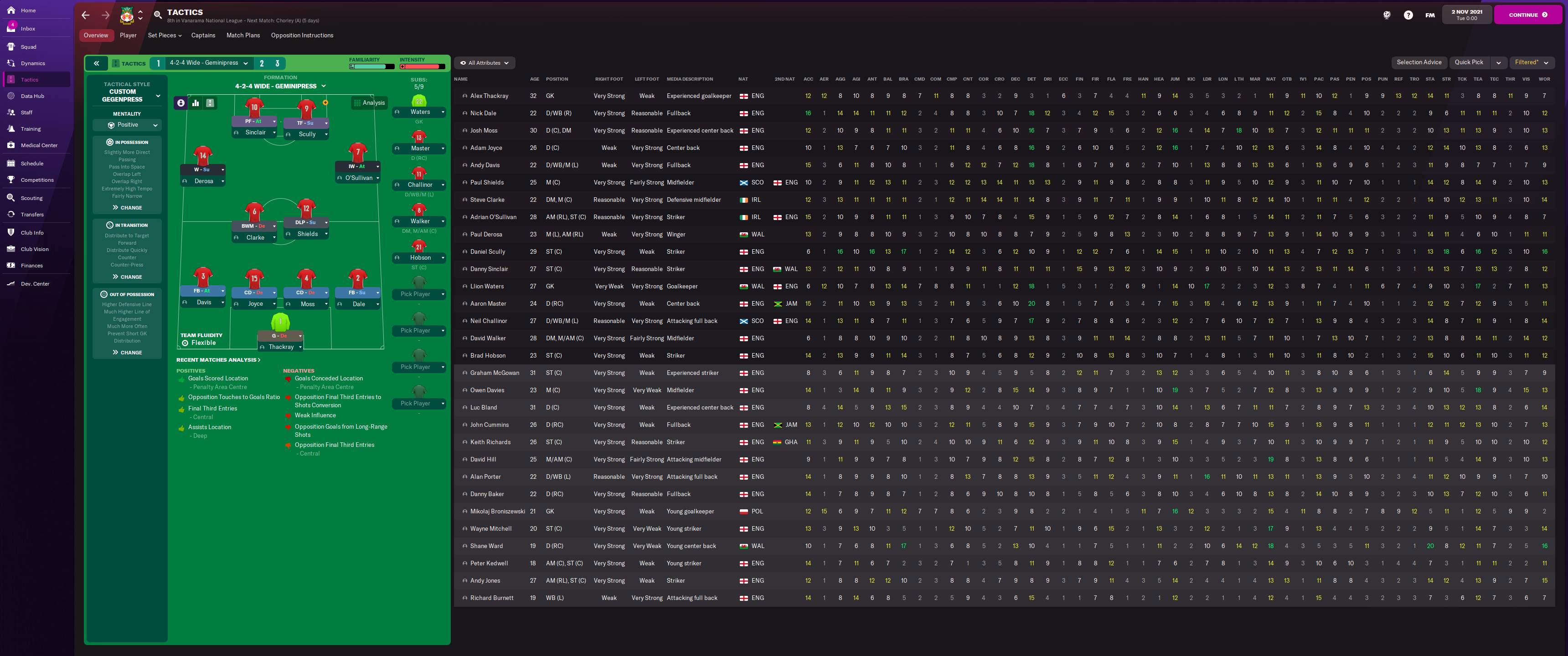
Formation & Style
Tactical Style:Fluid Counter Attack
Mentality:Positive
Formation:4-2-3-1 Wide
Team Fluidity:Rigid
In Possession
Play Out of Defence
Pass Into Space
Use Width
In Transition
Counter
Counter Press
Out of Possession
Higher Defensive Line
Higher Line of Engagement
Prevent Short GK Distribution
Team Shape Without Ball
Shape:Compact
Description:A compact shape with four defenders and two holding midfielders.
Evidence:LB and RB positioned wider to provide defensive support while allowing for wider plays.
Team Shape With Ball
Shape:Fluid
Description:Fluid attacking movement focusing on width and penetrating runs.
Evidence:Using Inside Forwards to cut inside while the wing-backs provide overlap.
Phase Description
Attacking Play
Focus on quick, transitional play utilizing the width from wing-backs and inside forwards.
Defensive Transition
Pressing high to recover possession quickly.
Main Focus
Exploit spaces left by opponents and create goal-scoring opportunities from wide positions.
Key Strengths
Width in Attack
Utilization of wing-backs and wide playmakers to stretch opponent defenses.
Quick Counter Attacks
Ability to quickly transition from defense to attack with pacey players.
Creative Midfield
Dynamic midfield playmaker supports both defense and offense.
Conflicting Directions
Aggressive Pressing
High pressing might expose a compact shape if not supported properly.
Width vs. Central Play
Over-reliance on wing play might crowd the sides and limit central creativity.
Defensive Stability
With wing-backs pushing forward, the center might be exposed against quick countering teams.
Tactical Suggestions
Enhance Central Control
Consider adding a more structured playmaker in midfield to enhance central control.
Adjust Defensive Shape
Lowering the defensive line to offer more stability against speedy counter-attacks.
Utilize Target Man Option
Consider introducing a more physical presence upfront to hold up play and create space.
Ask Questions About Your Lineup
Related Tactics
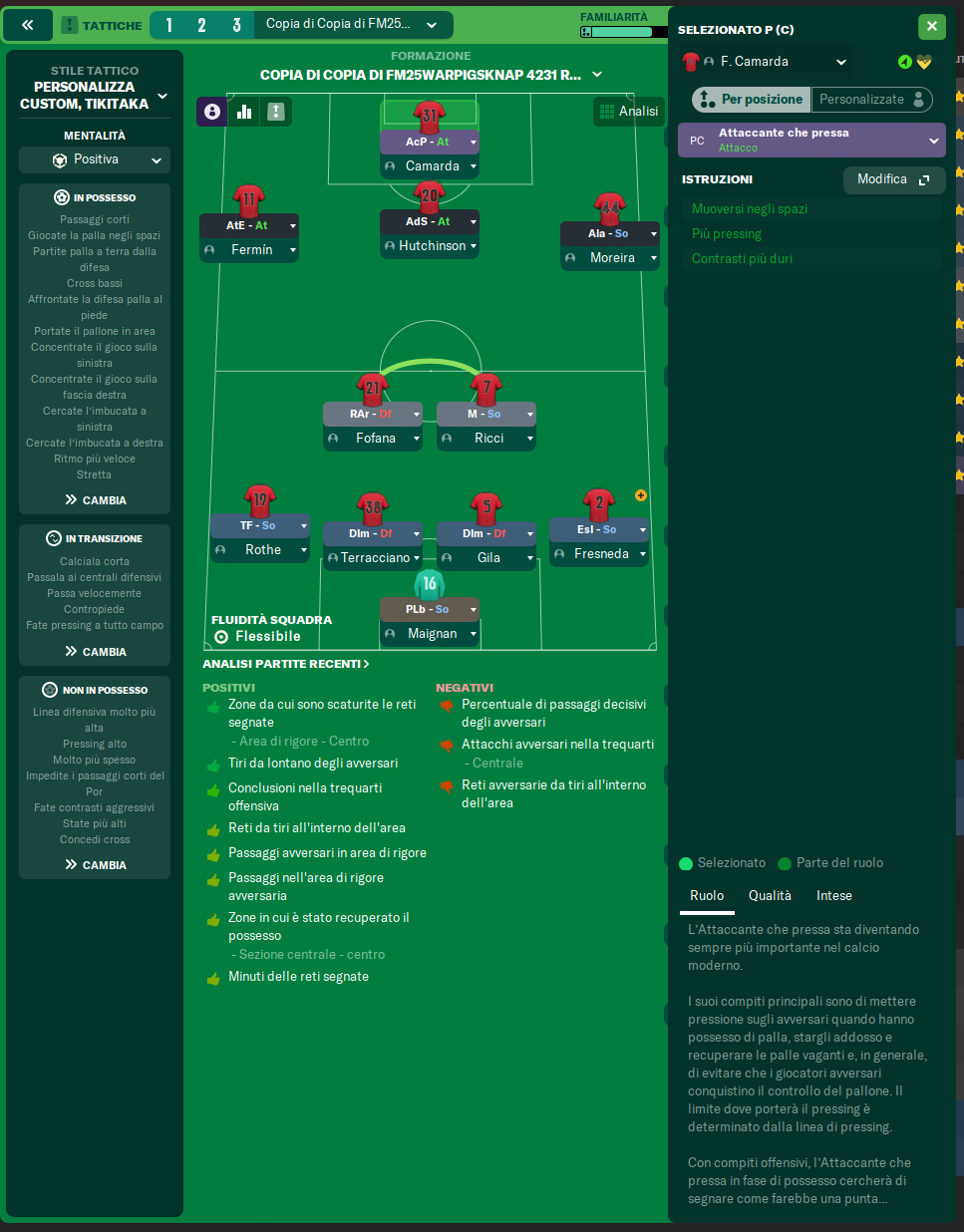
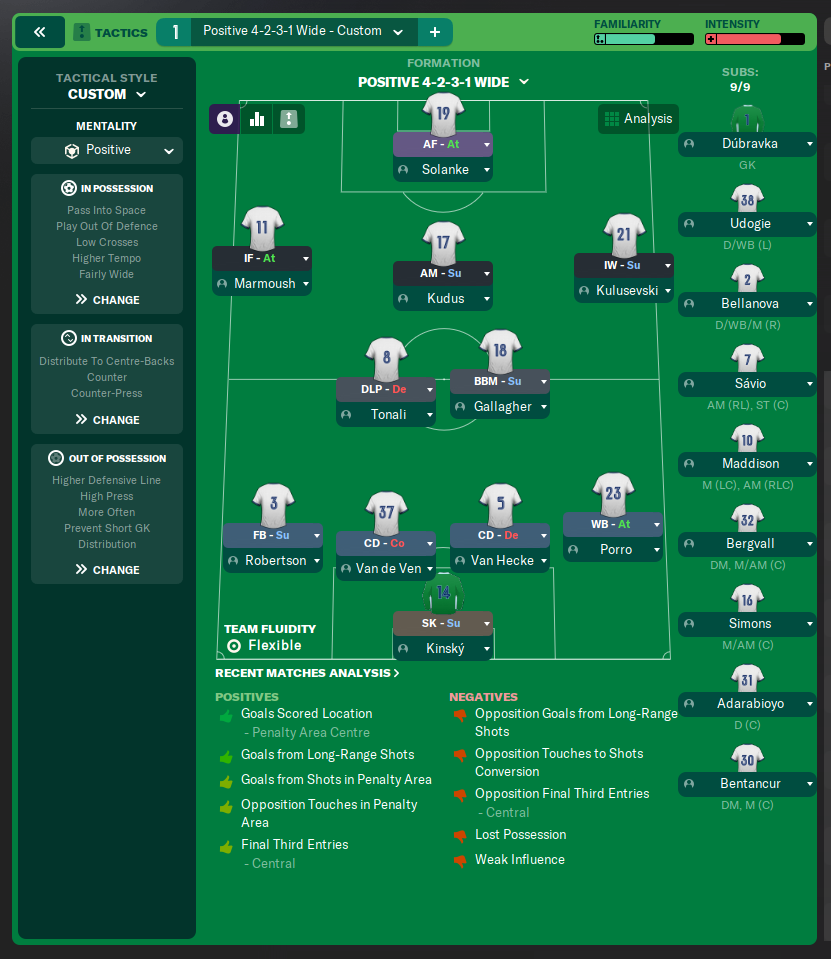
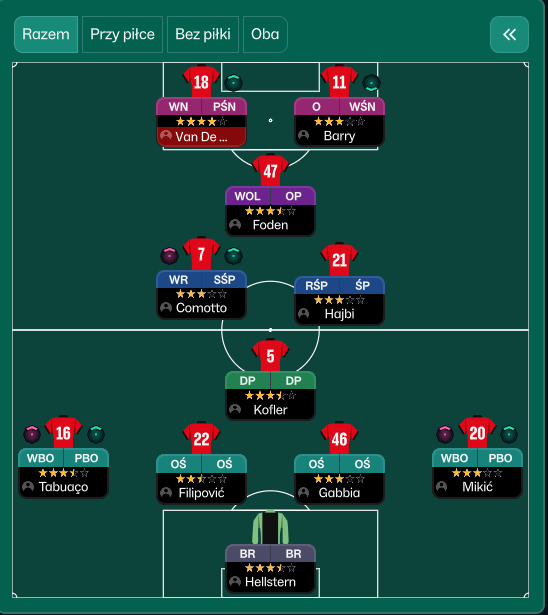
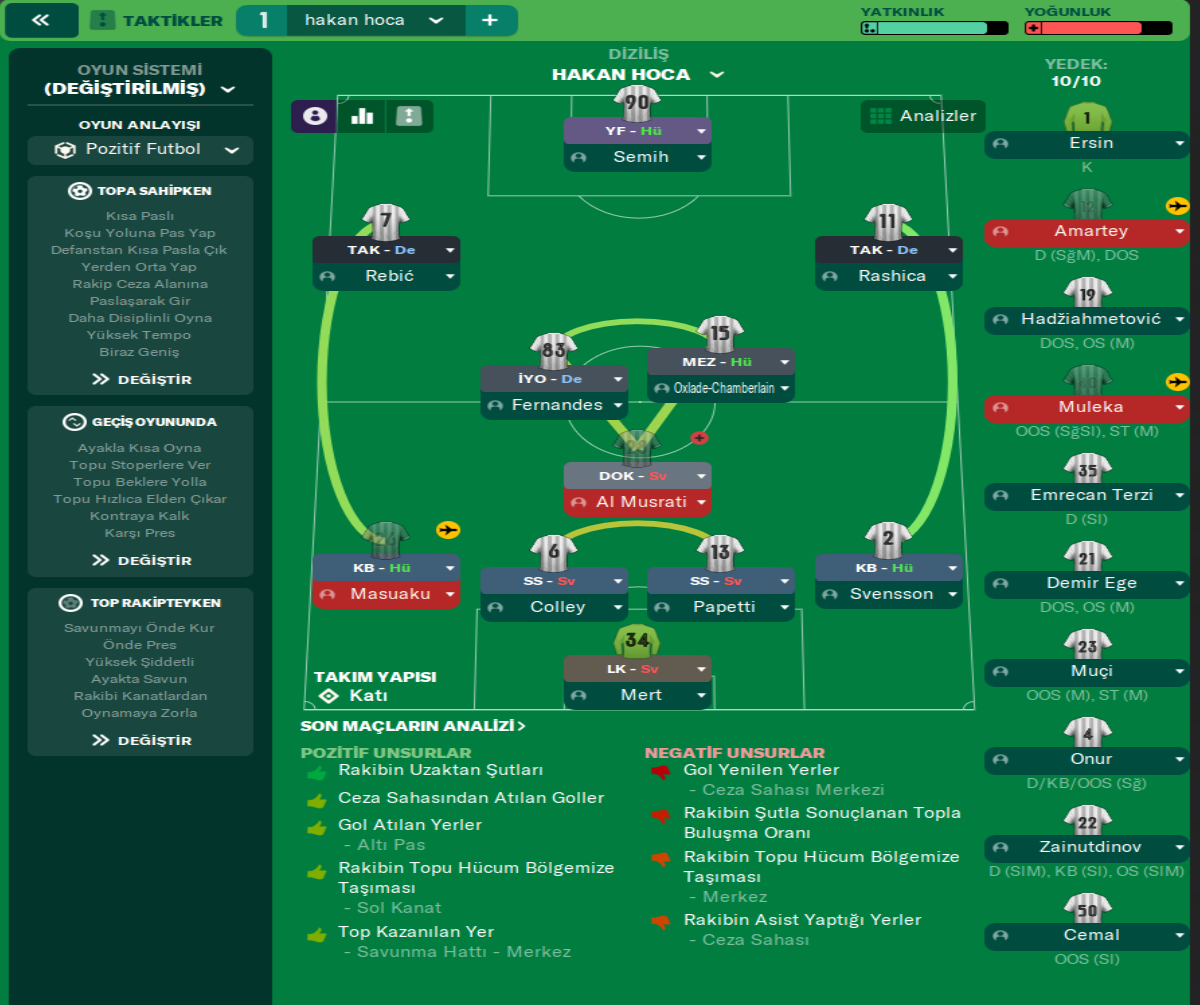
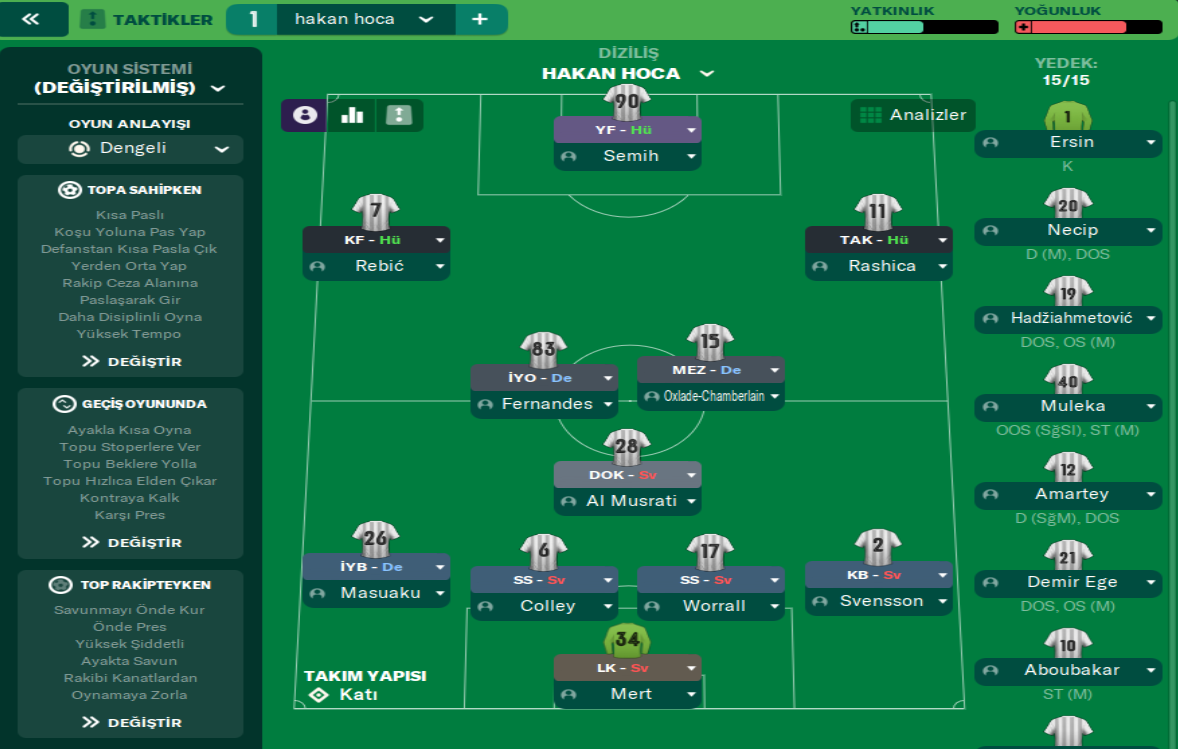
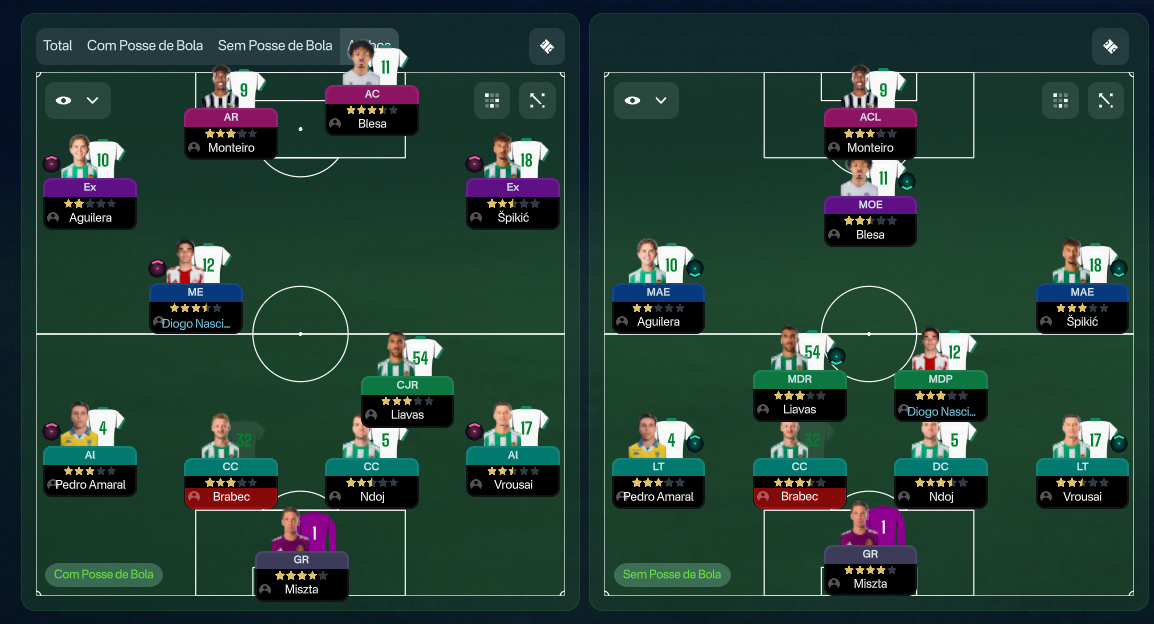
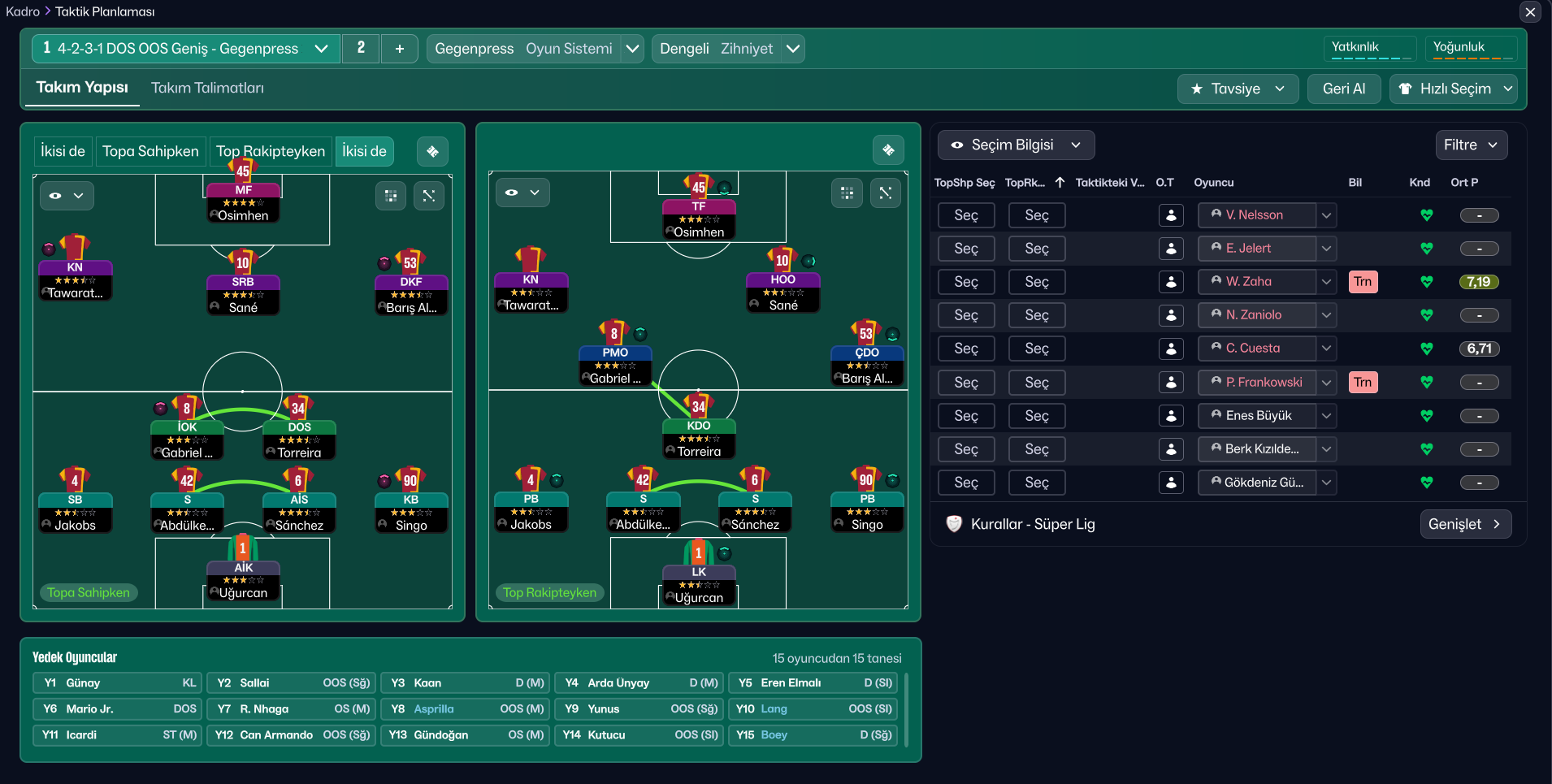
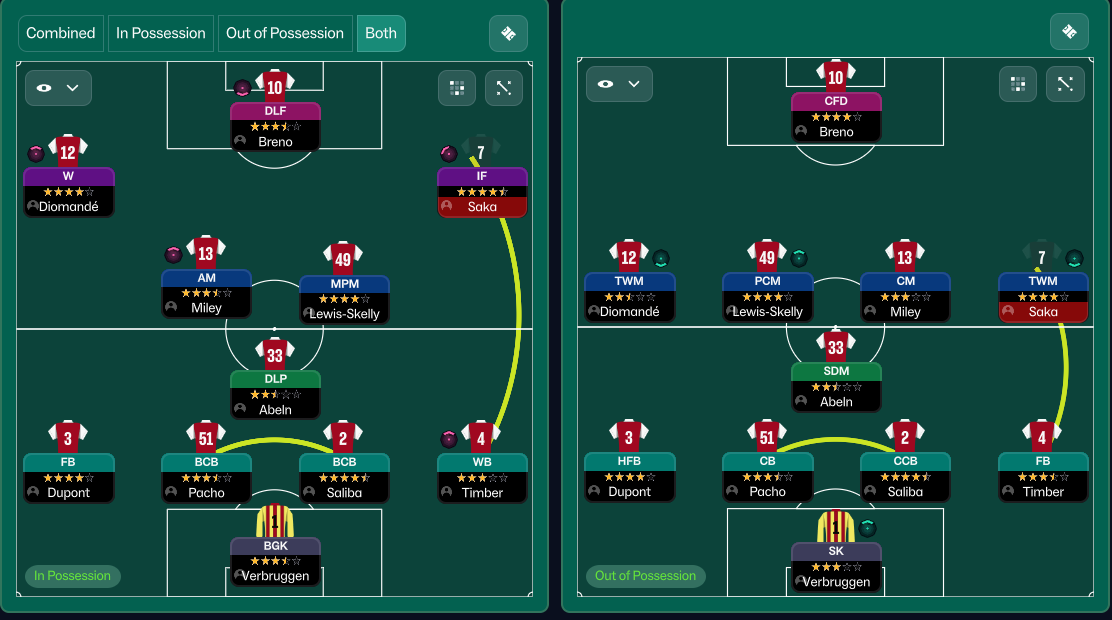
More Fluid Counter Attack tactics
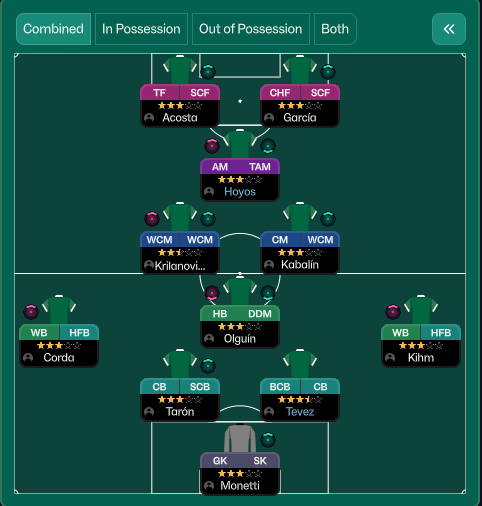
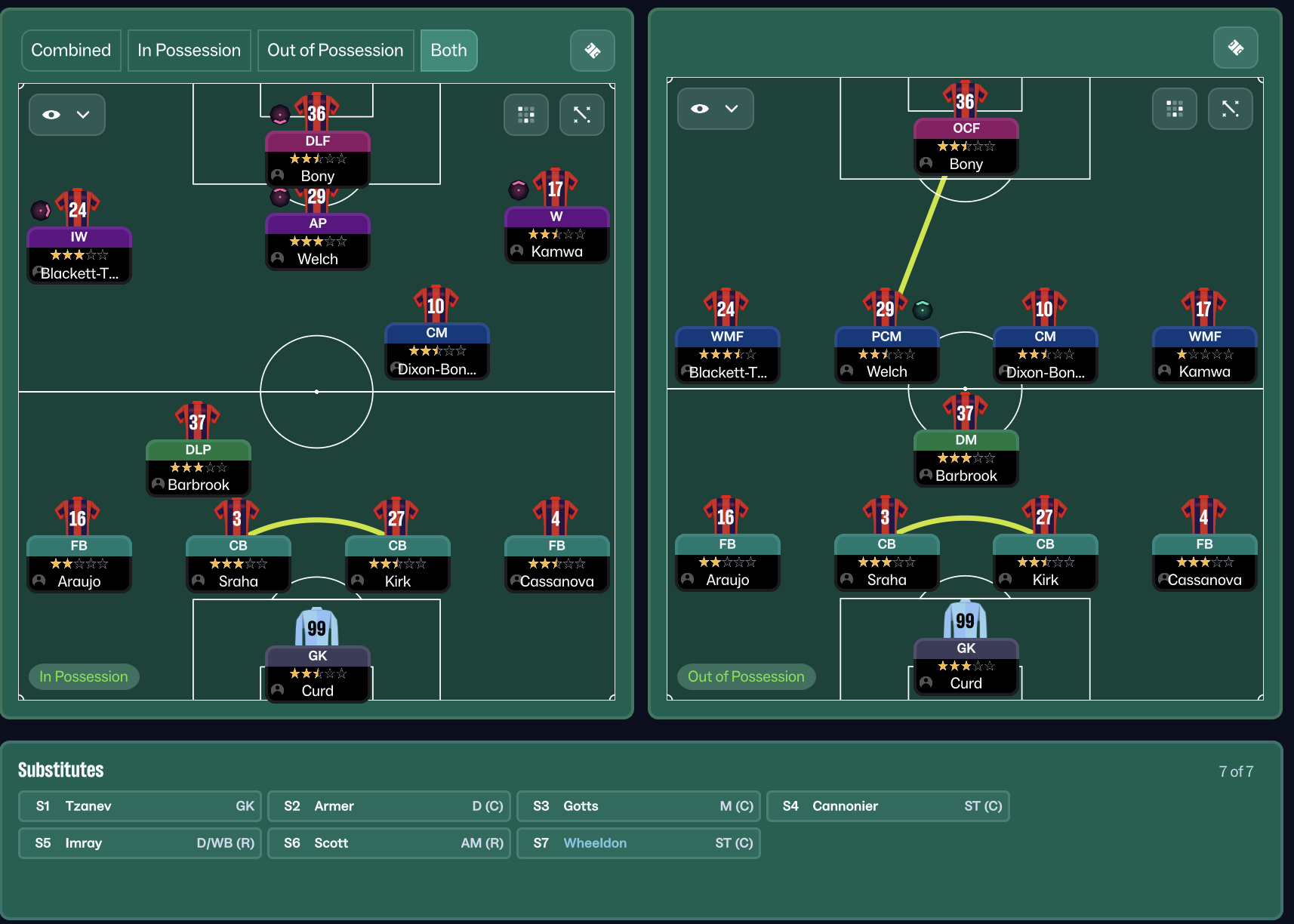
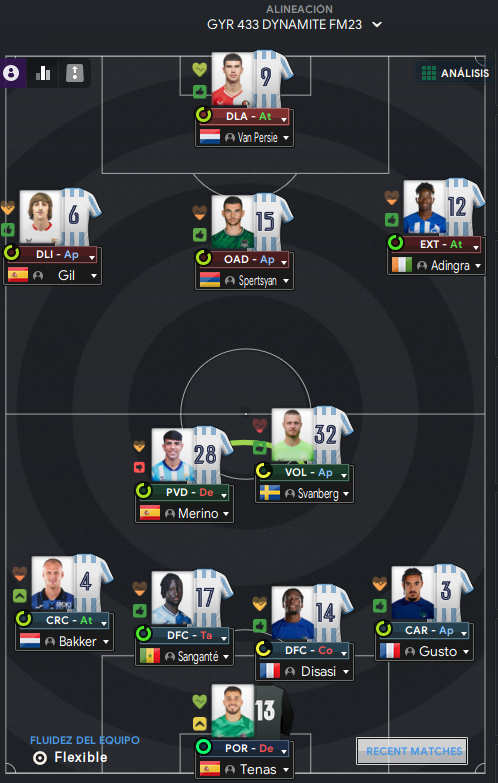
Guides for this formation
The tactical theory behind the 4-2-3-1 Wide: roles, instructions, and the trade-offs that decide whether the system holds up.
Player pairings
Midfield Pairs in 4-2-3-1 and 4-4-2
Double pivots and flat pairs in 4-2-3-1 and 4-4-2: when each pairing works, when it collapses, and the AMC unicorn that rescues both.
Read guide
Playing styles
Gegenpressing: A Full Guide
Klopp-style gegenpressing in FM, including squad profile, line-and-press pairing, sustainable workload, and the antipatterns to avoid.
Read guide