Uploaded Tactic
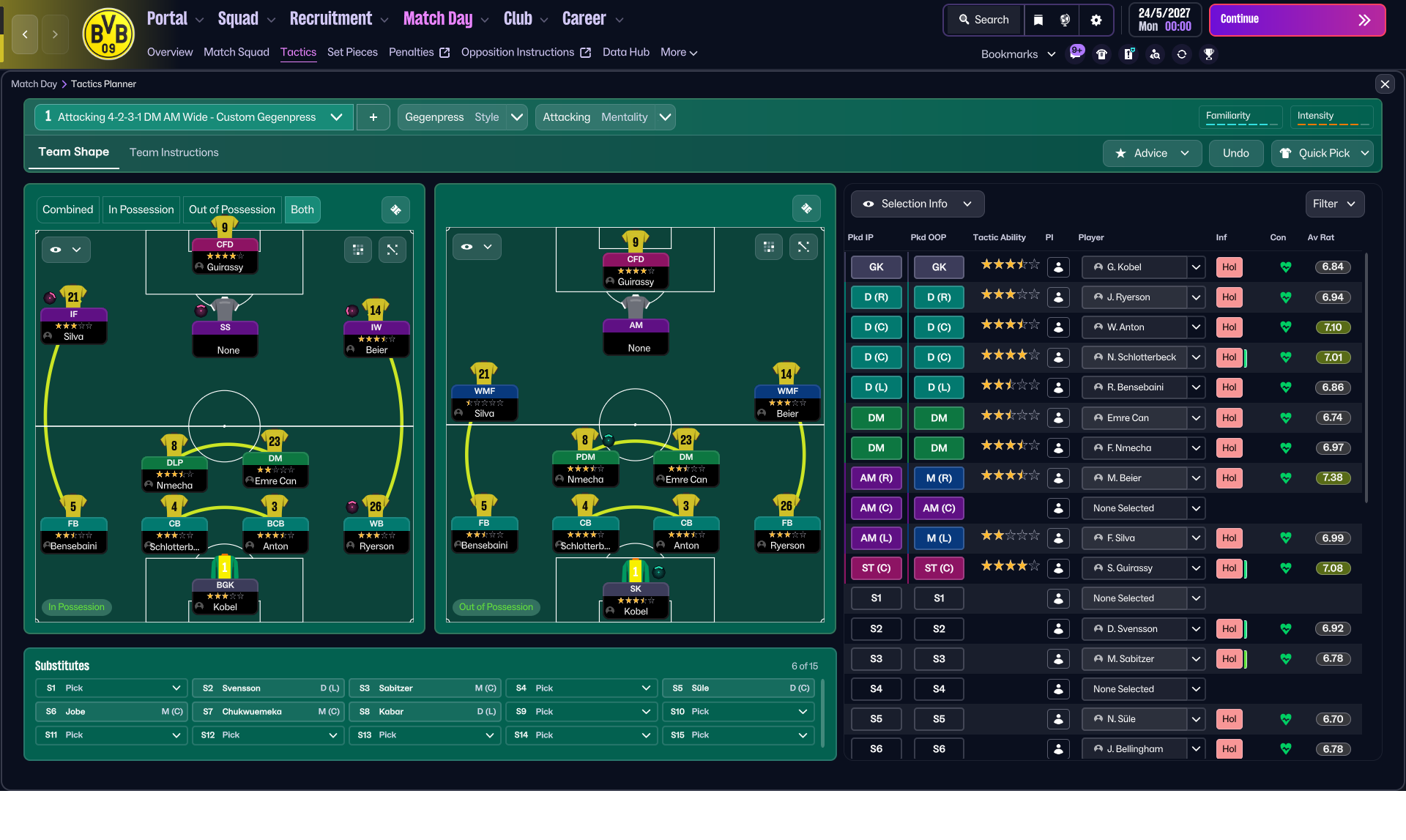
Formation & Style
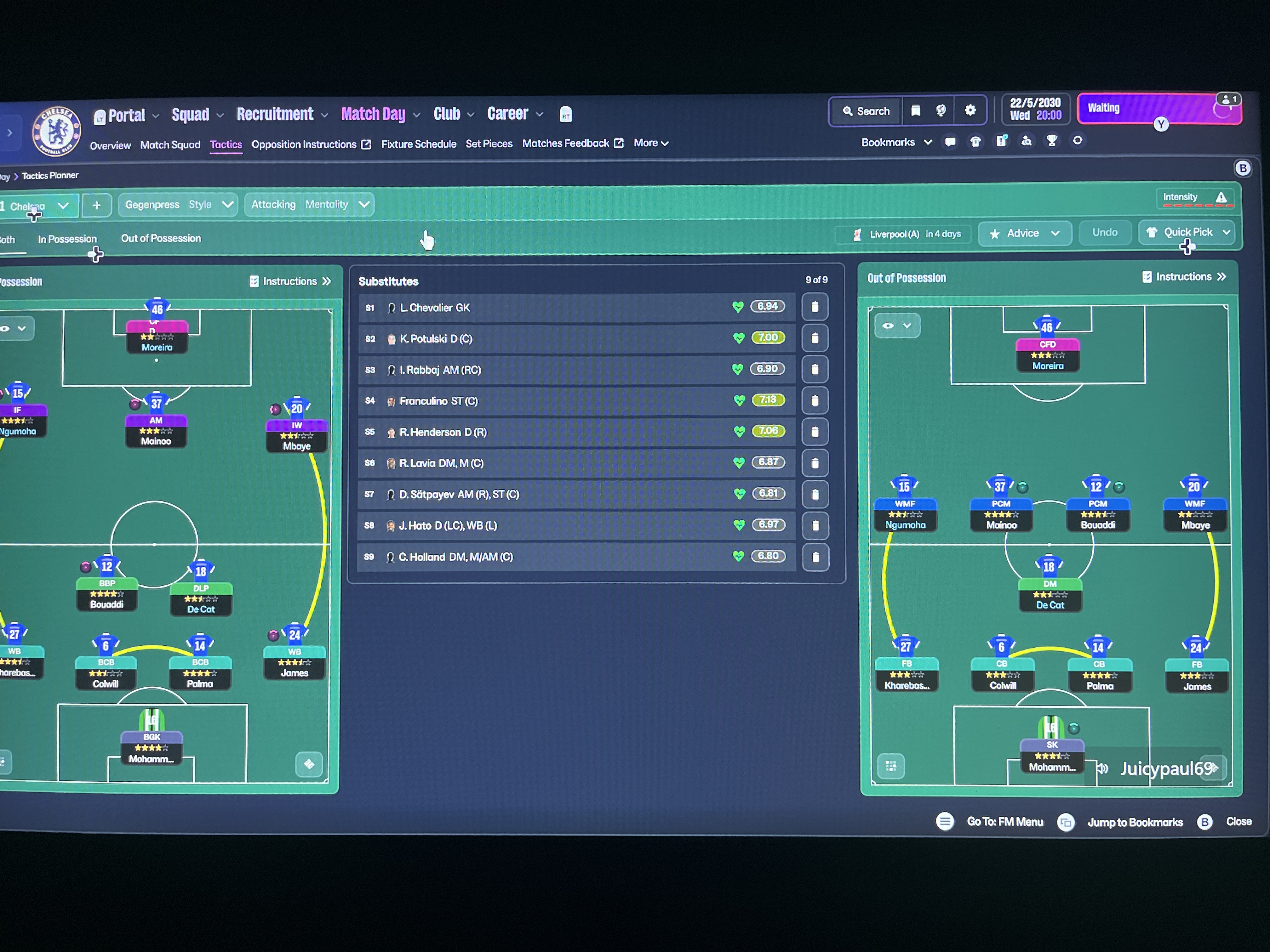
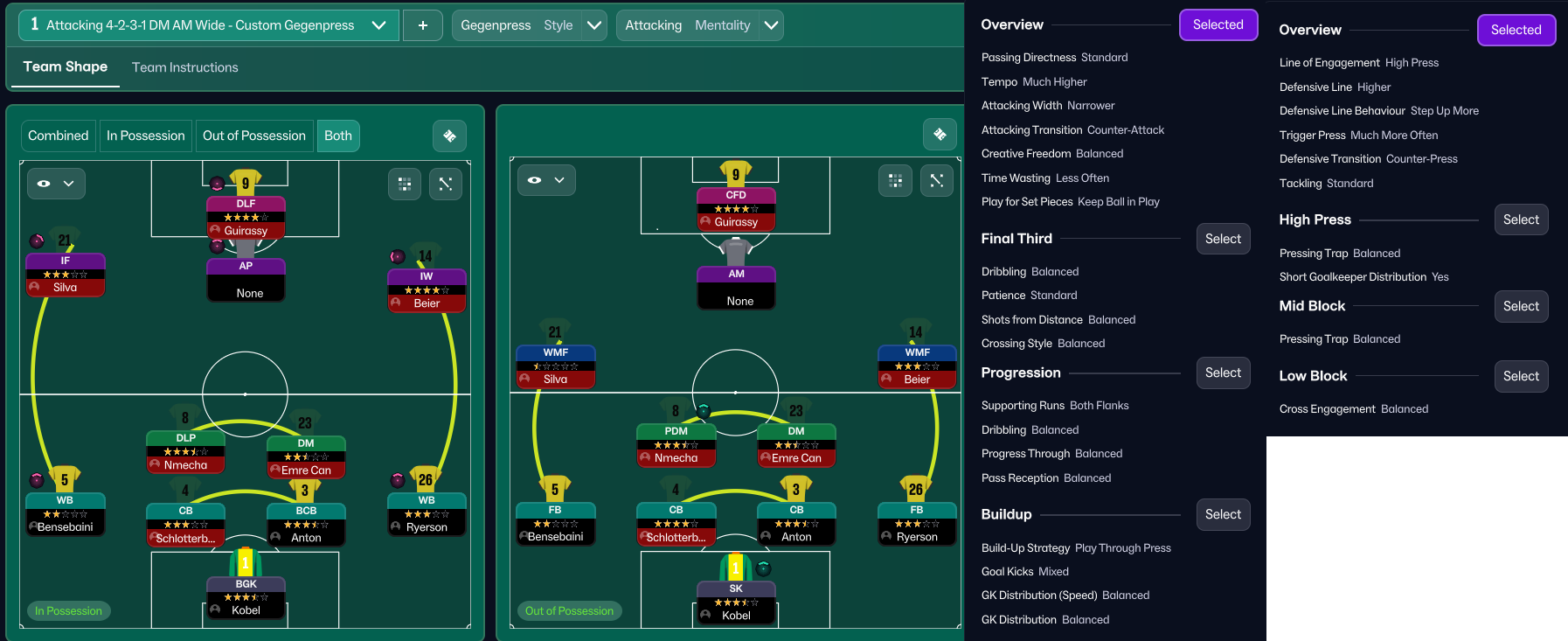
Tactical Style:Gegenpress
Mentality:Attacking
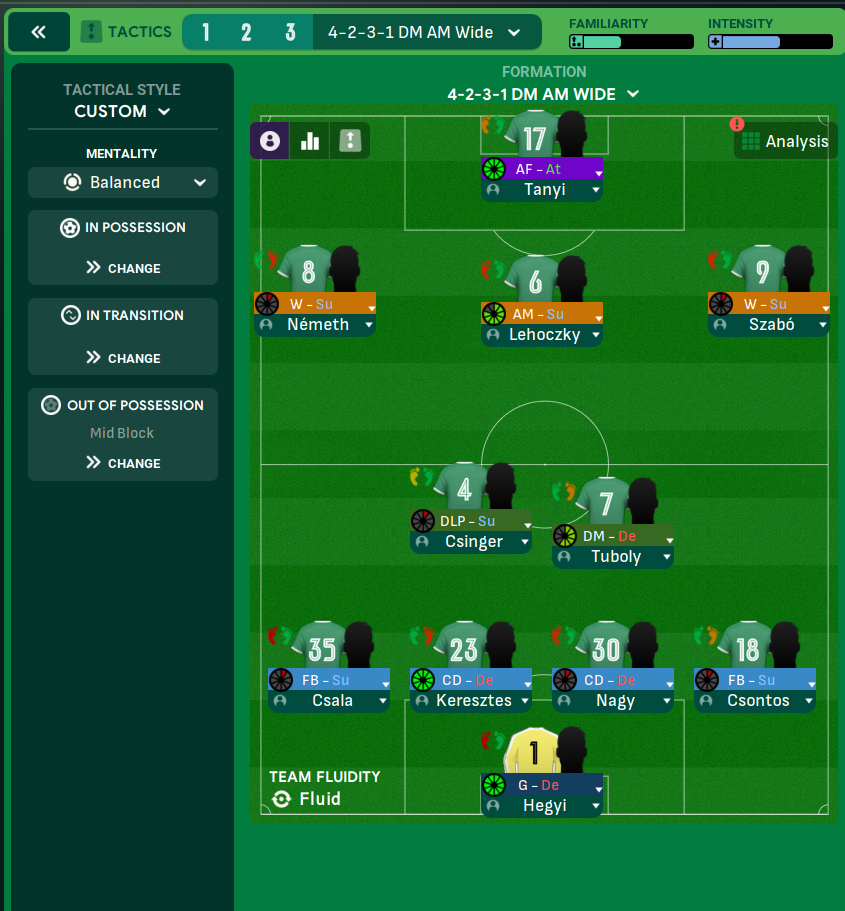
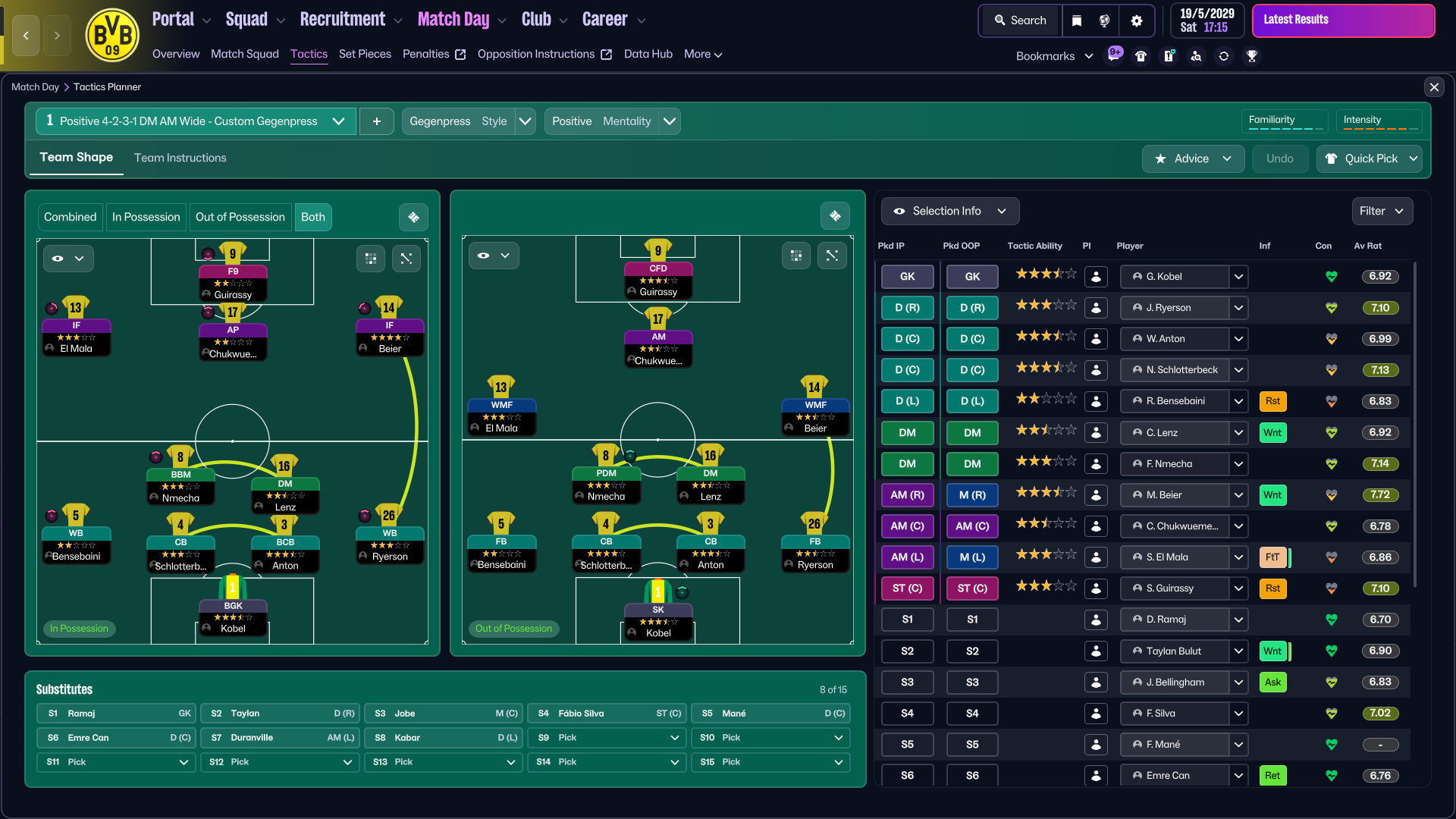
Formation:4-2-3-1 DM Wide
Team Fluidity:Custom
In Possession
Play Out of Defence
Focus Play Down Both Flanks
Be More Expressive
In Transition
Counter-Press
Counter
Out of Possession
Higher Line of Engagement
Much Higher Defensive Line
Prevent Short GK Distribution
Use Offside Trap
Team Shape Without Ball
Shape:4-2-3-1
Description:Focused on compactness with a high defensive line, pressing opponents quickly.
Evidence:Higher Defensive Line and Prevent Short GK Distribution indicate a proactive defensive approach.
Team Shape With Ball
Shape:4-2-3-1
Description:Utilizes width from wingers and overlapping full-backs to create high-quality crossing opportunities.
Evidence:Focus Play Down Both Flanks with attacking full-backs supports the wide strategy.
Phase Description
Attacking Play
Quick, aggressive ball movement targeting wider areas to create crossing opportunities.
Defensive Transition
Immediate pressure on the ball after losing possession, aiming to regain it quickly.
Main Focus
Exploiting flanks through overlapping full-backs and quick transitions.
Key Strengths
Fluid Attack
The wingers and CAM can interchange roles, creating unpredictable patterns.
Strong Midfield Battles
Two capable midfielders can dominate possession and disrupt the opposition.
Pressing Game
Aggressive pressing allows the team to regain possession effectively.
Conflicting Directions
Vulnerability to Counterattacks
A higher defensive line can leave space behind for attackers.
Over-reliance on Wide Play
Heavy focus on wings may lead to congestion in the middle if the width is cut off.
Central Play Disruption
The absence of a traditional central midfielder may lead to less control in the center.
Tactical Suggestions
Consider a Rotation Strategy
Use substitutions to rotate wingers for freshness and unpredictability.
Adjust Defensive Line Based on Opponent
Tweak the defensive line height against teams with fast attackers.
Enhance Central Control
Consider adding a third central midfielder for better control and creativity.
Ask Questions About Your Lineup
Related Tactics
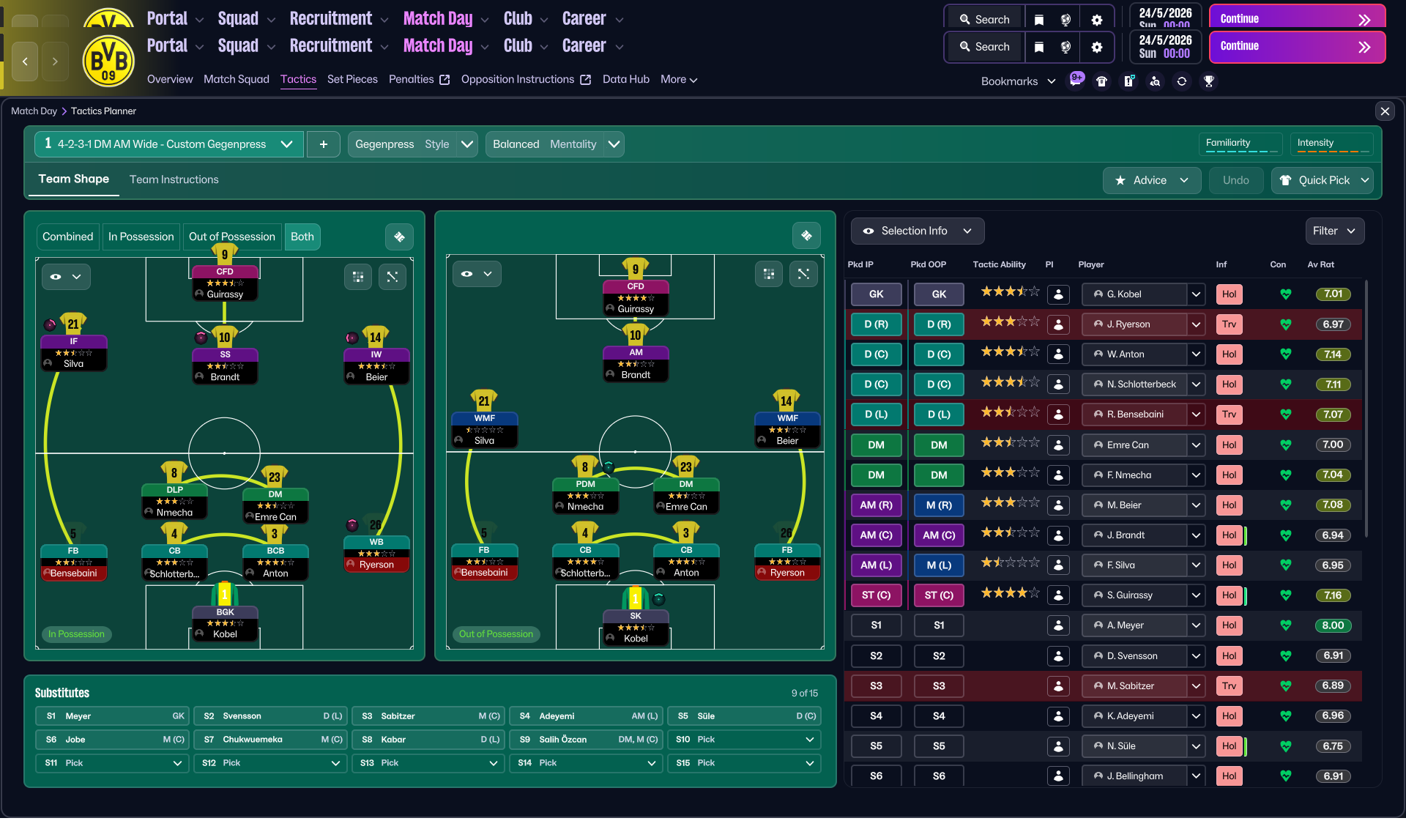
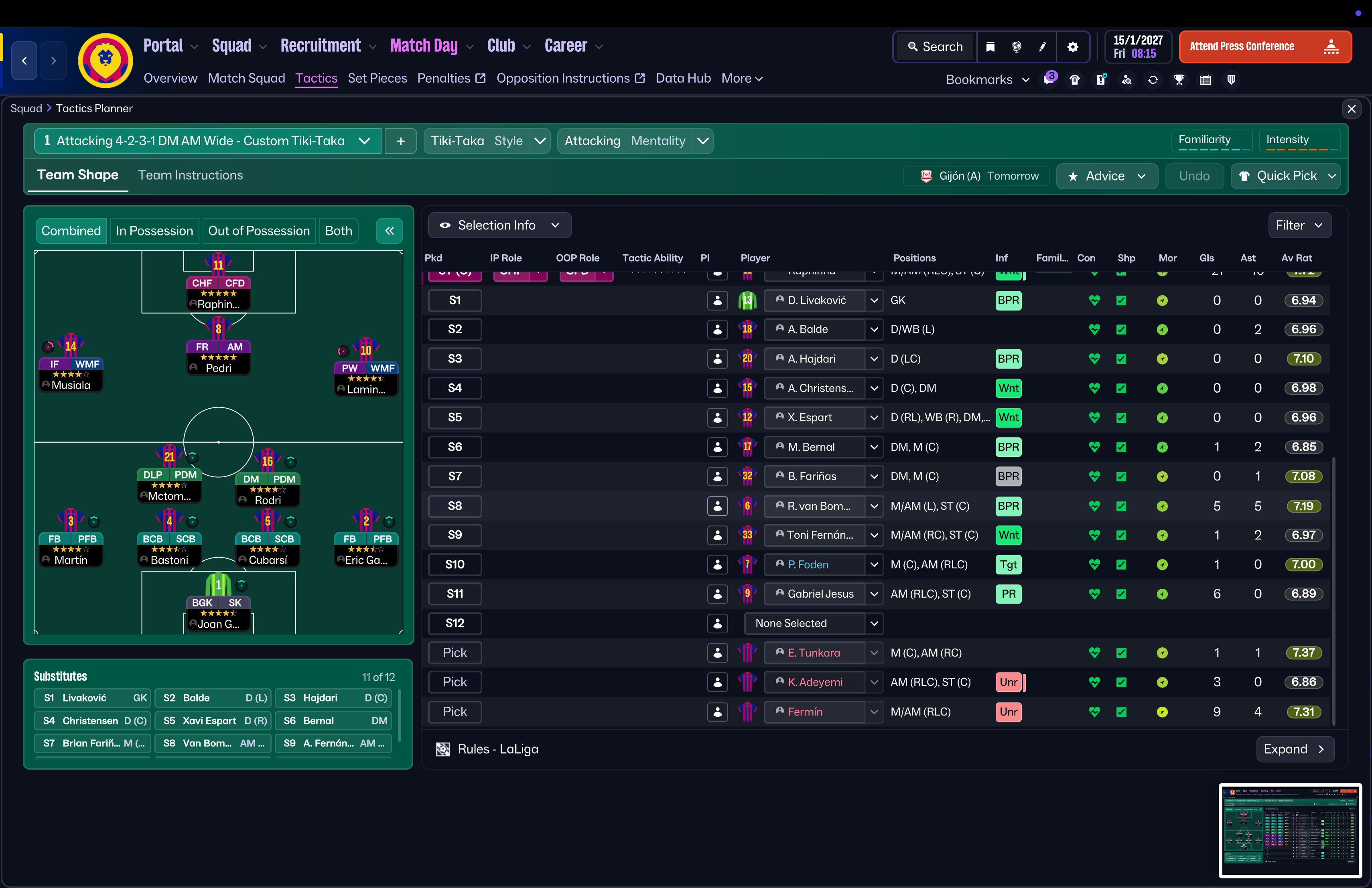
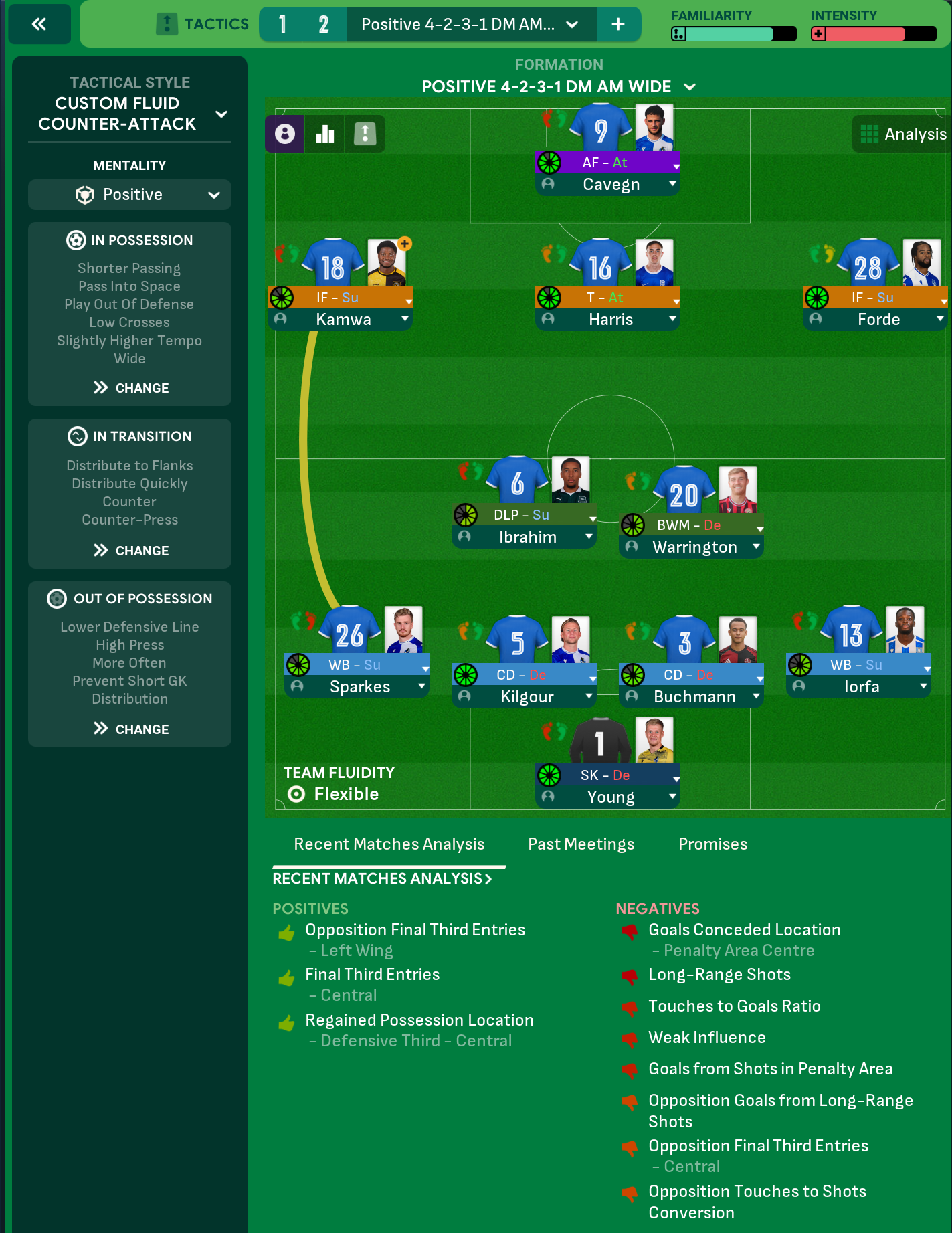
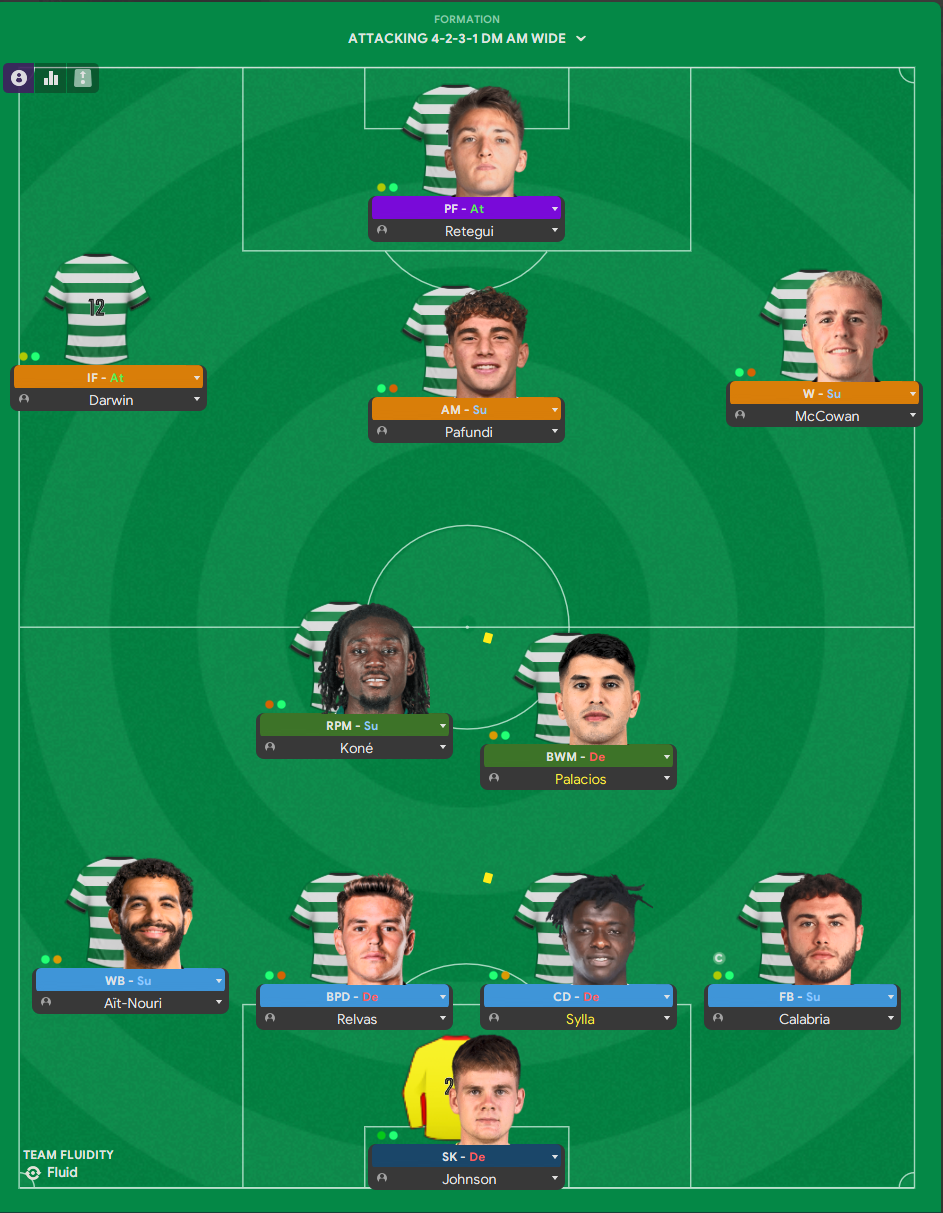
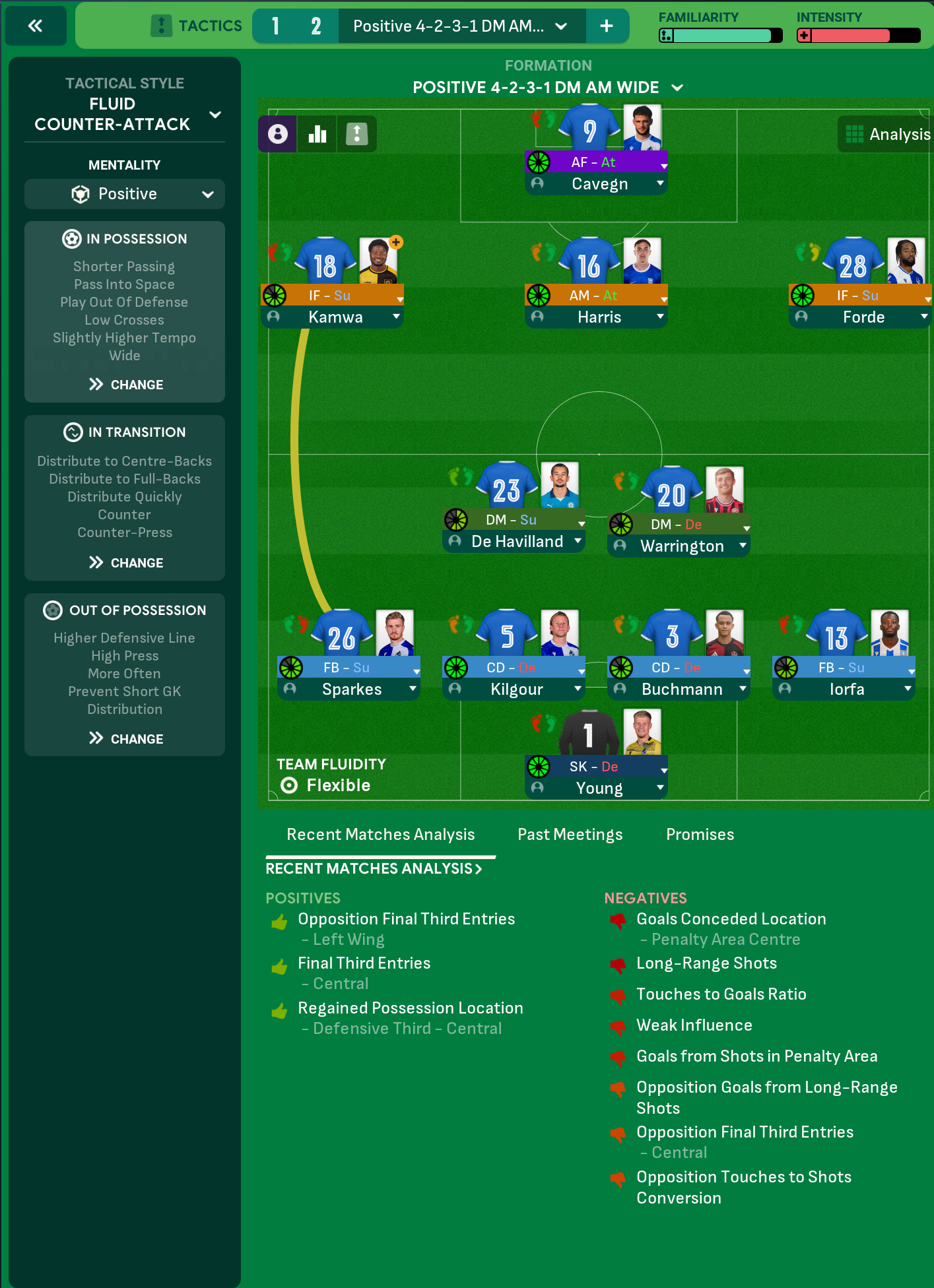
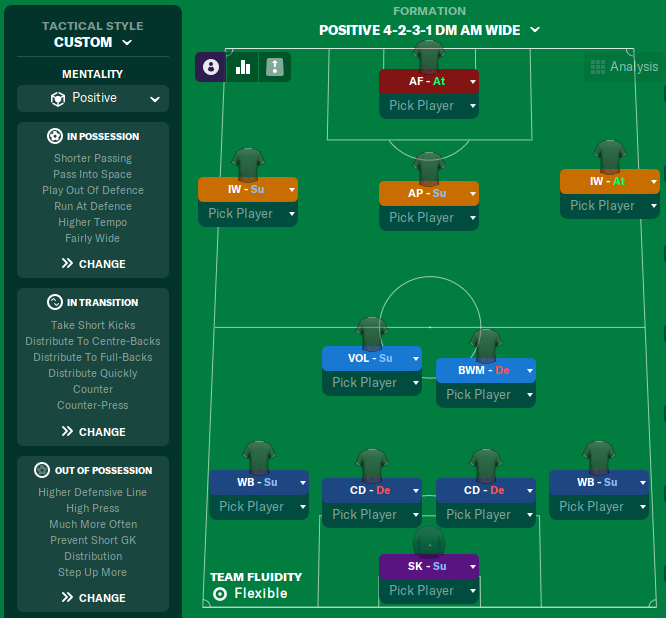
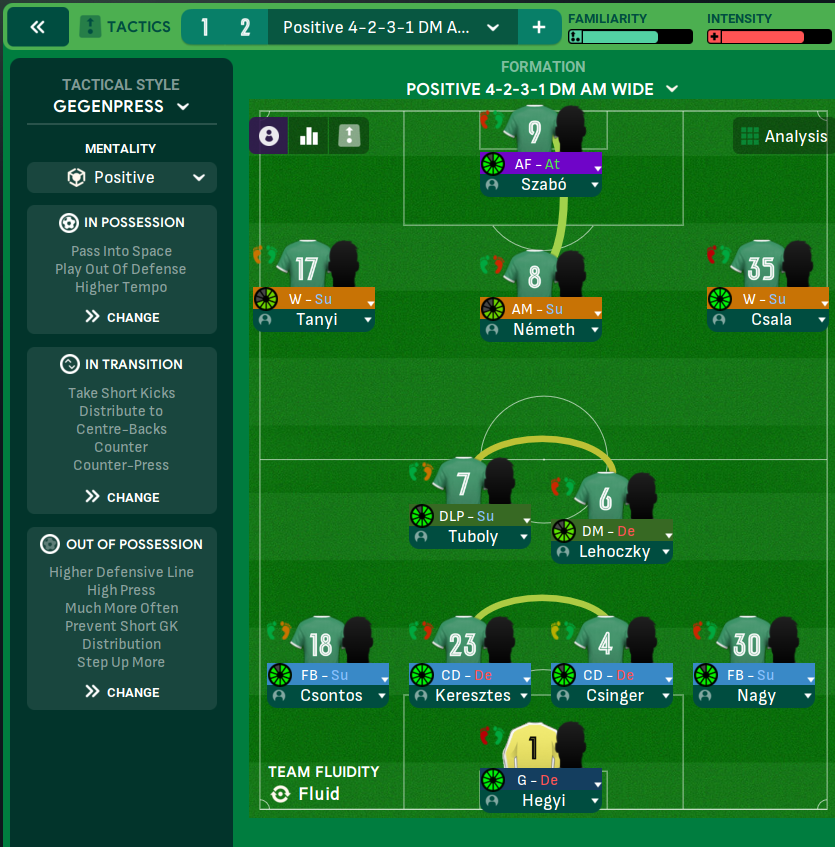
More Gegenpress tactics
Guides for this formation
The tactical theory behind the 4-2-3-1 DM Wide: roles, instructions, and the trade-offs that decide whether the system holds up.
Player pairings
Midfield Pairs in 4-2-3-1 and 4-4-2
Double pivots and flat pairs in 4-2-3-1 and 4-4-2: when each pairing works, when it collapses, and the AMC unicorn that rescues both.
Read guide
Playing styles
Gegenpressing: A Full Guide
Klopp-style gegenpressing in FM, including squad profile, line-and-press pairing, sustainable workload, and the antipatterns to avoid.
Read guide