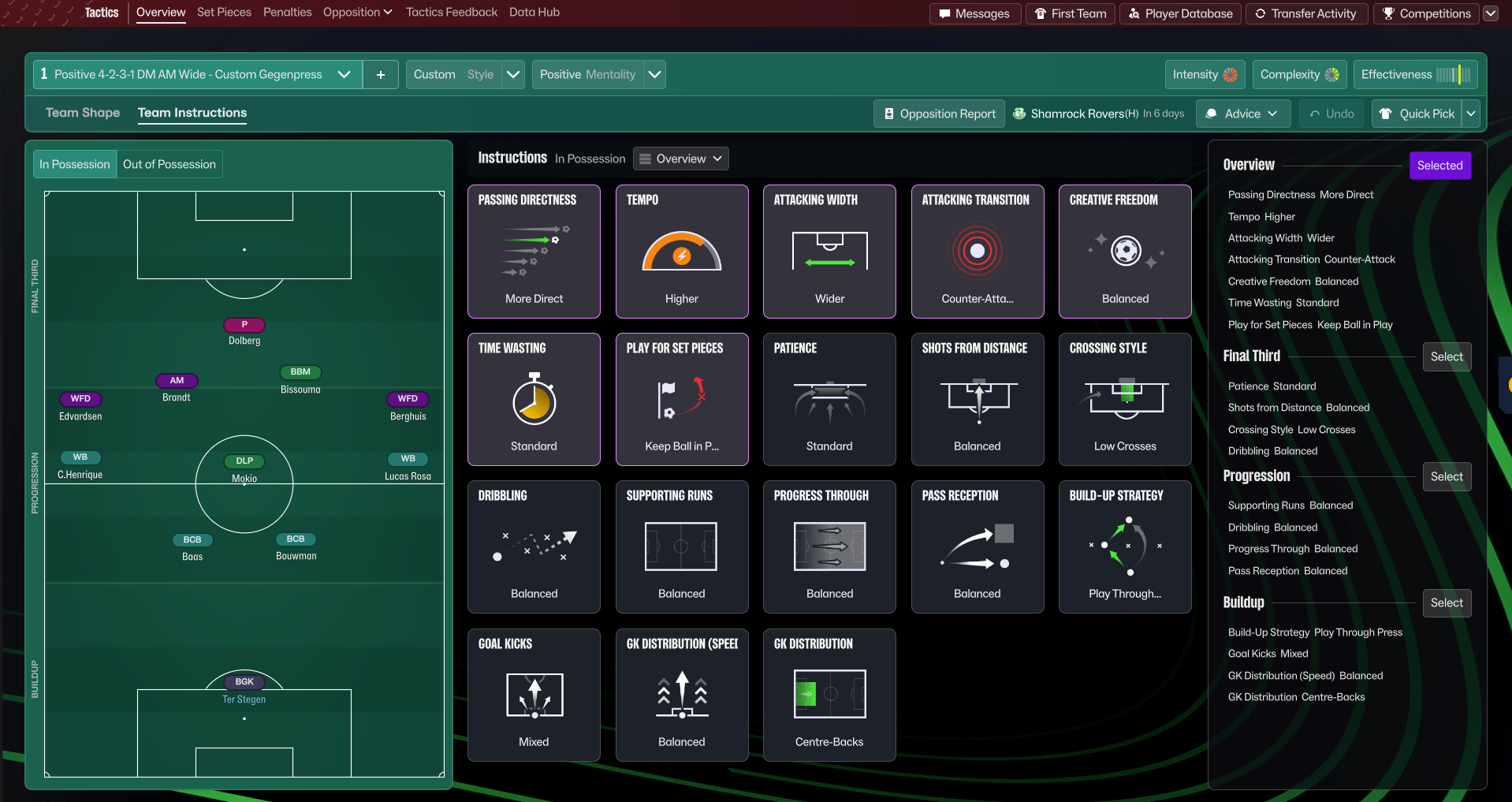
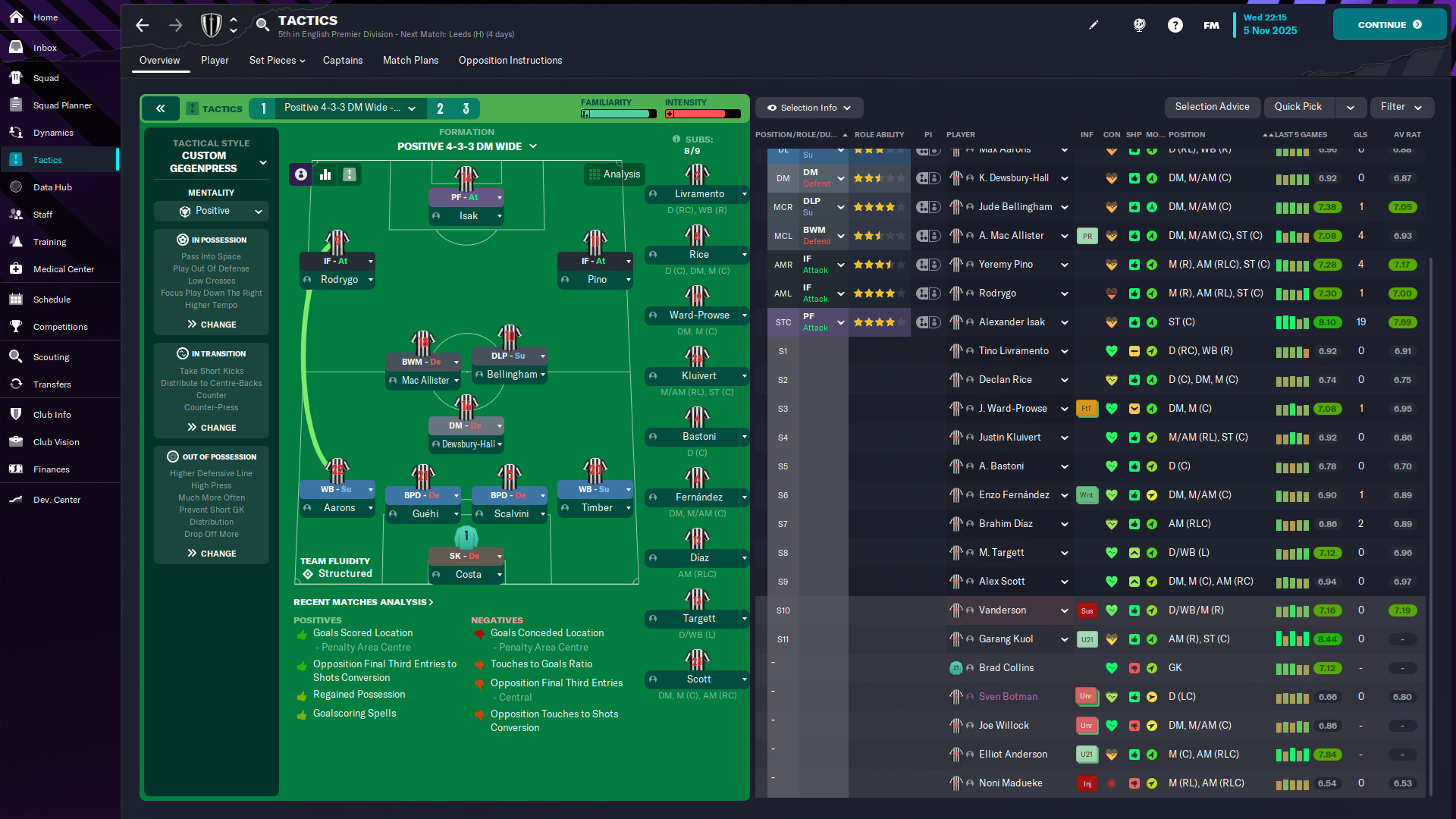
4-2-3-1 DM Wide
Winning the ball high and attacking quickly through the centre. Gegenpress style, high press, much more often trigger press and counter-press all point…
Loading tactical analysis...
4-2-3-1 DM Wide
4-2-2-2 DM Wide
Attacking
Gegenpress
1
3
Ball-Playing Goalkeeper
Sweeper Keeper
2
2
Centre-Back
Centre-Back
2
4
Ball-Playing Center-Back
Centre-Back
2
1
Full Back
Full Back
2
5
Wing Back
Full Back
3
2
Deep-Lying Playmaker
Pressing Defensive Midfielder
3
3
Defensive Midfielder
Defensive Midfielder
5
1
Inside Forward
Wide Midfielder
5
3
Second Striker
Center Forward
5
5
Inside Winger
Wide Midfielder
6
3
Center Forward
Center Forward
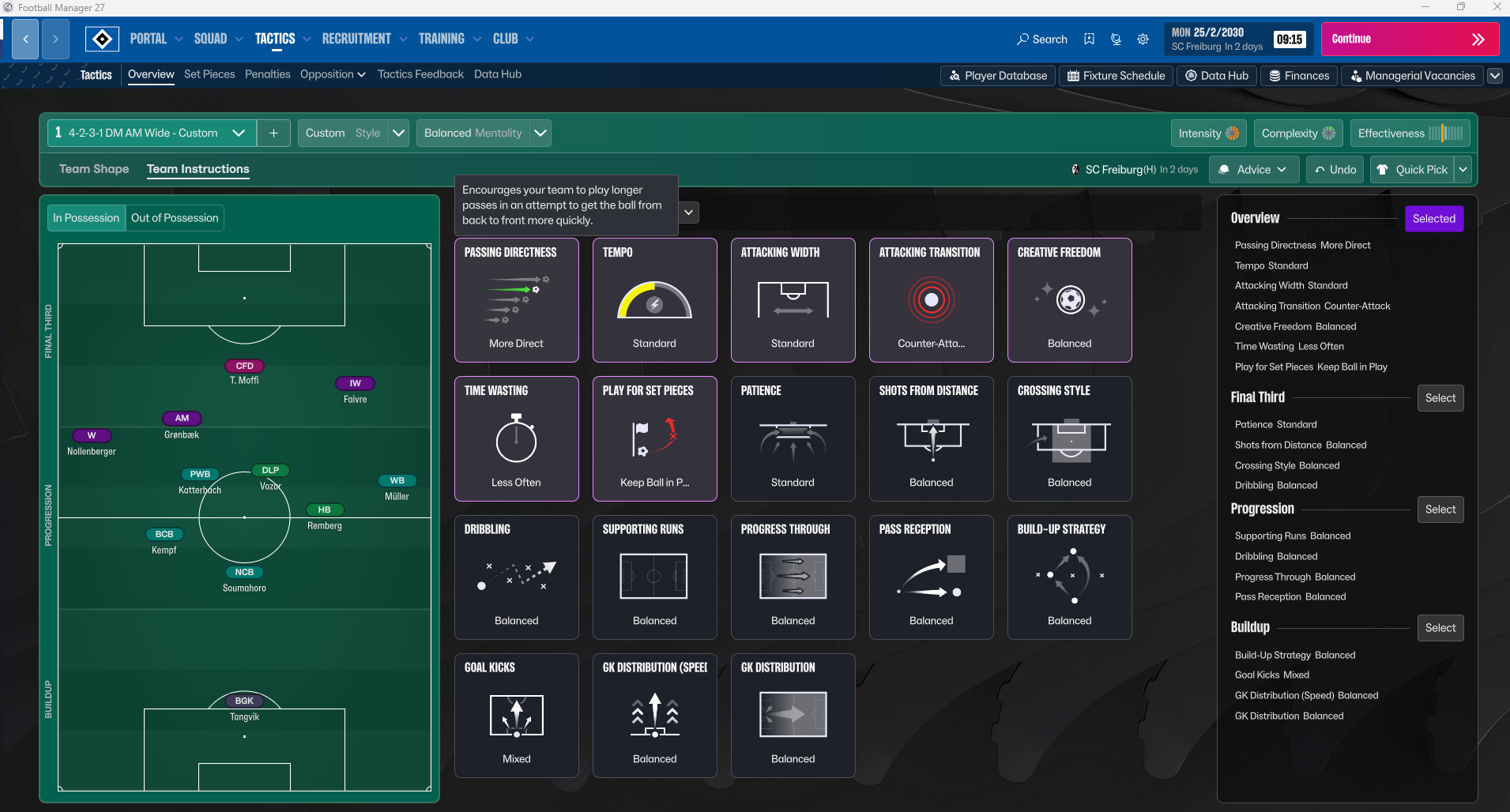
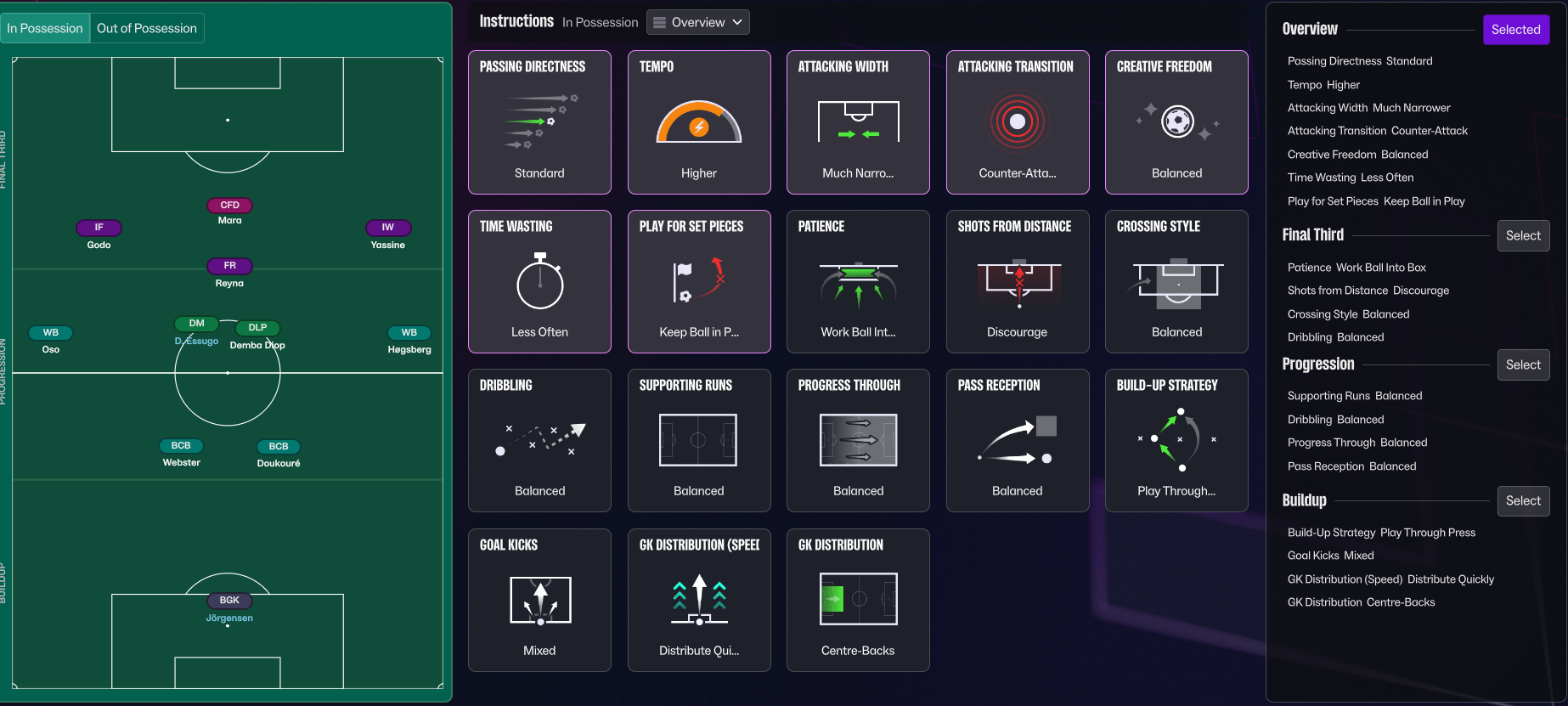
Standard
Much Higher
Narrower
Counter-Attack
Balanced
Standard
Keep Ball in Play
Standard
Balanced
Balanced
Balanced
Balanced
Balanced
Balanced
Play Through Press
Mixed
Balanced
Center-Backs
High Press
Higher
Much More Often
Counter-Press
Standard
Yes
Balanced
Balanced
Balanced
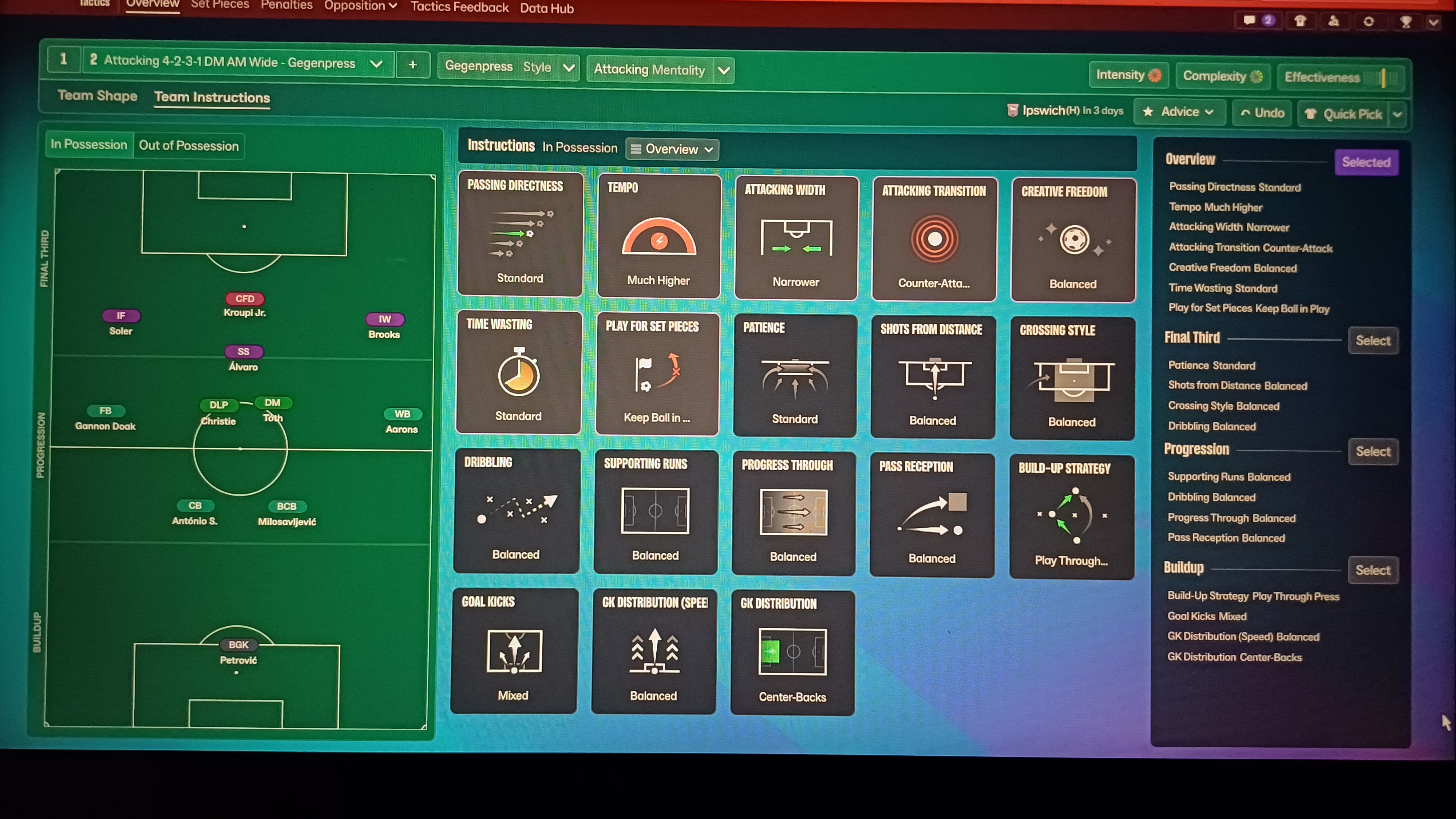
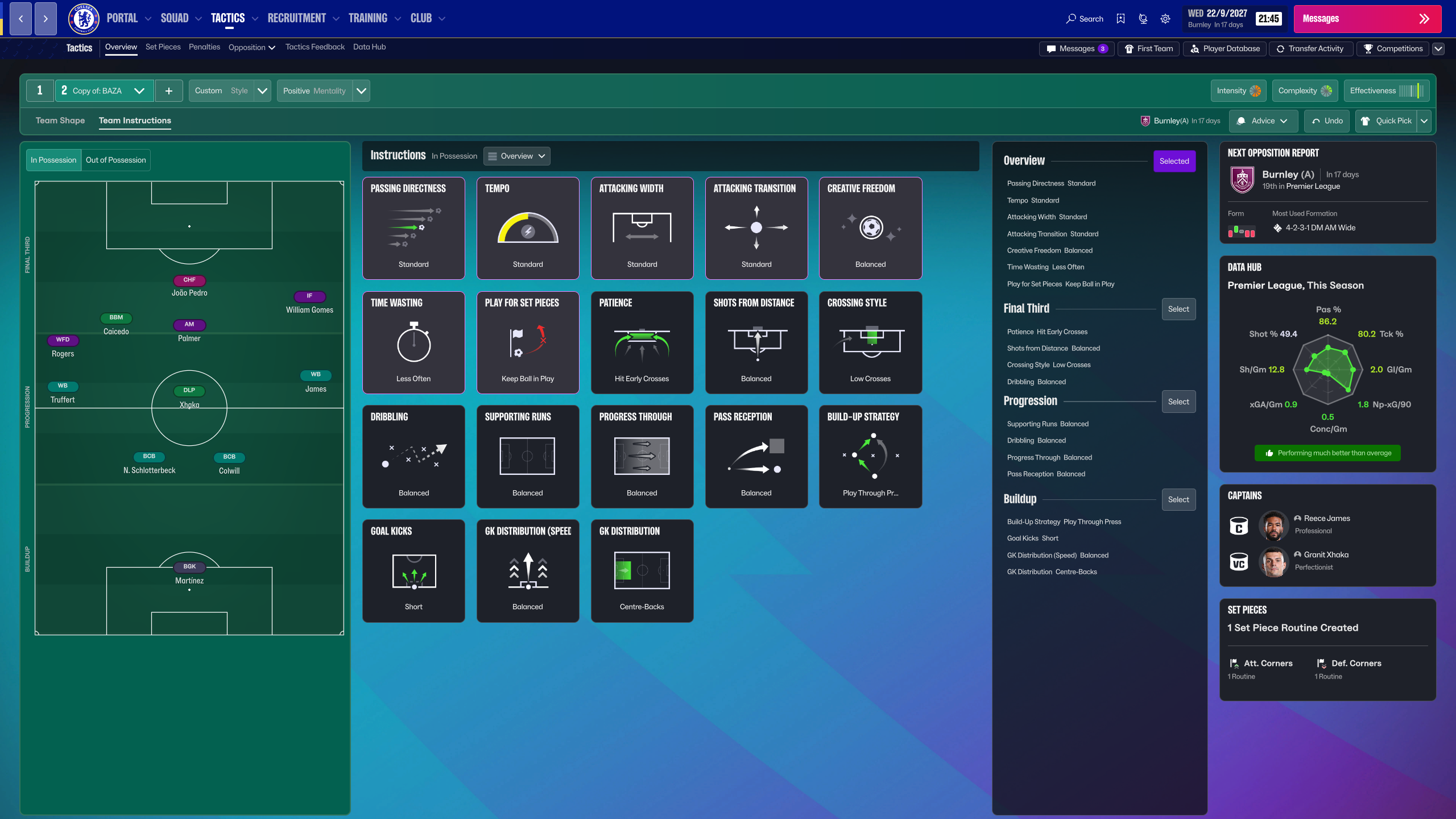
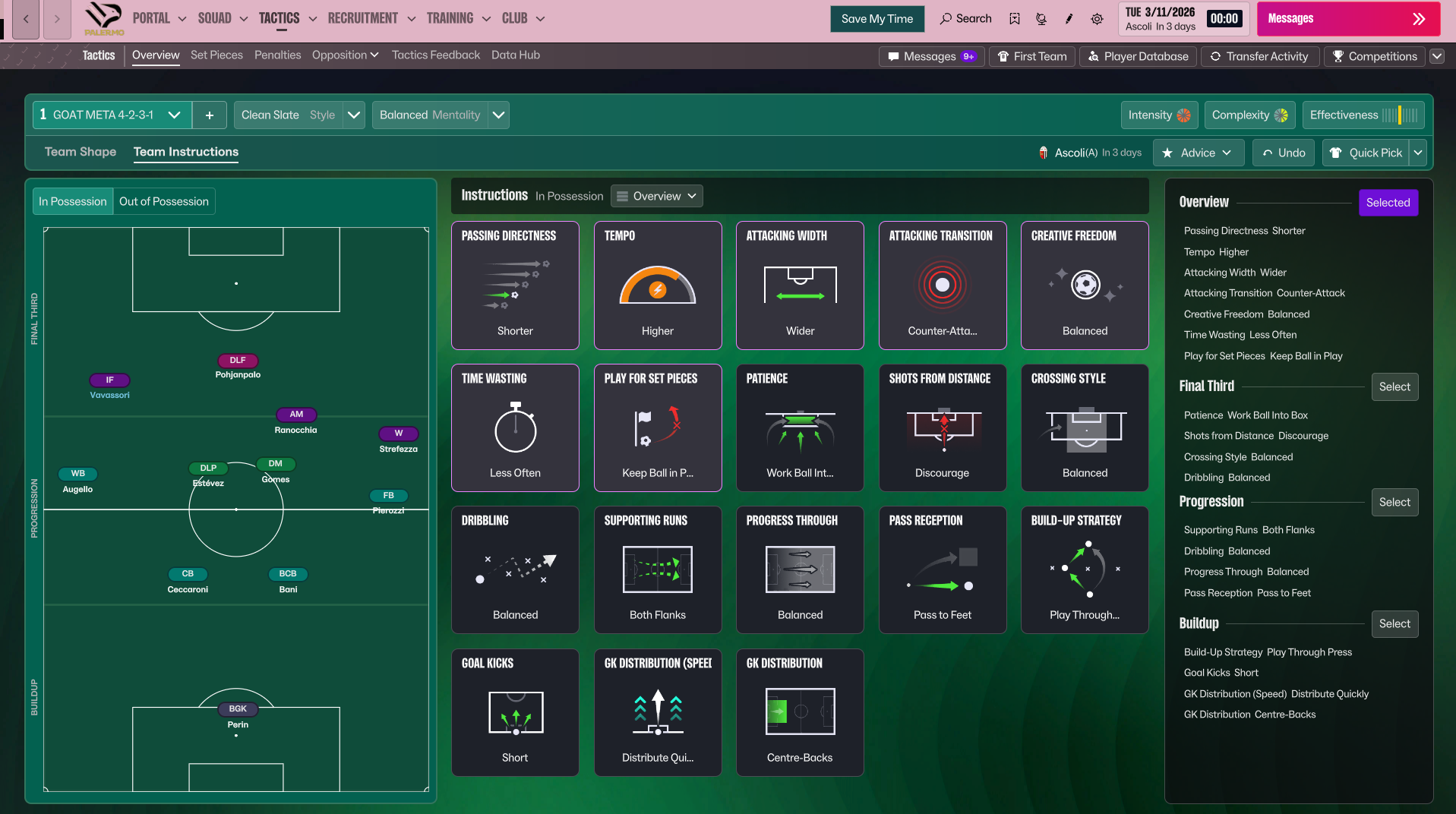
Gegenpress style, high press, much more often trigger press and counter-press all point the same way, so the team aims to win the ball back high and quickly.
[3,2] Pressing Defensive Midfielder leads the press out of possession and [6,3] Center Forward leads the line.
Narrower width with inside forward, second striker and inside winger gives short passing links and a good counter-press position after losses.
[5,1] Inside Forward, [5,3] Second Striker and [5,5] Inside Winger sit close to [6,3] Center Forward.
Much Higher tempo has the con 'Much less control of the ball.', which clashes with a patient build-up through the centre-backs and a deep playmaker.
[3,2] Deep-Lying Playmaker and [2,4] Ball-Playing Center-Back want time on the ball.
Counter-Attack needs quick vertical play, but passing is standard and reception balanced, so counters lack a clear outlet.
[6,3] Center Forward is the only striker while [5,3] Second Striker also drops.
Space behind a higher line
A higher line with a much-more-often press is exposed to balls over the top if the press is beaten.
[2,2] Centre-Back and [2,4] Ball-Playing Center-Back defend a high line with [1,3] Sweeper Keeper covering.
high
Wing-back space on the right
The wing-back pushes high in possession, leaving space on the right when possession is lost.
[2,5] Wing Back is only a Full Back out of possession and sits behind [5,5] Inside Winger.
medium
Second striker + centre forward
Two central forwards press together and combine in tight spaces.
[5,3] Second Striker and [6,3] Center Forward
Deep-lying playmaker + ball-playing centre-back
Together they provide progressive passing from deep, supporting the centre-back distribution.
[3,2] Deep-Lying Playmaker and [2,4] Ball-Playing Center-Back
Do your players have the technical quality to play through the press at this tempo?
Are your centre-backs quick enough to defend a higher line?
Do you face opponents who sit deep or press high?
This is a committed gegenpress tactic with a narrow attacking shape and clear pressing roles, but it is stretched by extremes: much higher tempo, a higher line and play-through-press build-up from the back all invite turnovers and balls in behind. Dial back the tempo and the line first so the press stays aggressive without being reckless.
Fast, narrow, short-link attacks with quick transitions, built from the back through the centre-backs and a deep playmaker.
Immediate counter-press to win the ball back, backed by a high press and a higher line.
Winning the ball high and attacking quickly through the centre.
clean slate
clean slate
control possession
clean slate
gegenpress
clean slate
clean slate
clean slate
The tactical theory behind the 4-2-3-1 DM Wide: roles, instructions, and the trade-offs that decide whether the system holds up.
Klopp-style gegenpressing in FM, including squad profile, line-and-press pairing, sustainable workload, and the antipatterns to avoid.
Double pivots and flat pairs in 4-2-3-1 and 4-4-2: when each pairing works, when it collapses, and the AMC unicorn that rescues both.
FM27 keeps FM26's tactic system. Here is what stays the same, the small changes that can catch you out, and what the new Tactical Effectiveness system asks of you.