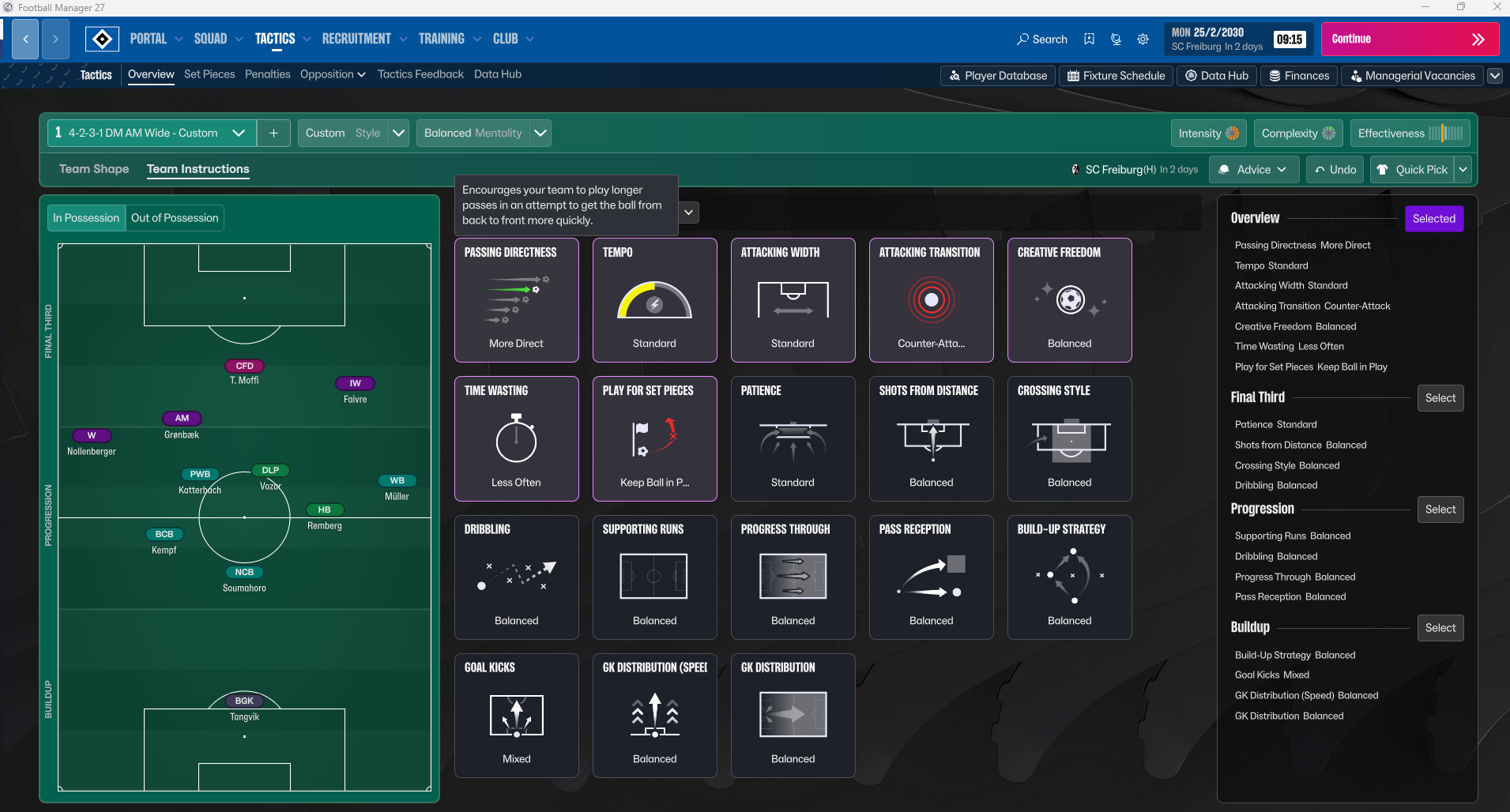
4-2-3-1 DM Wide
Utilizing wide players and through balls to create goal-scoring opportunities. Players are positioned effectively to exploit spaces in the opponent's…
Loading tactical analysis...
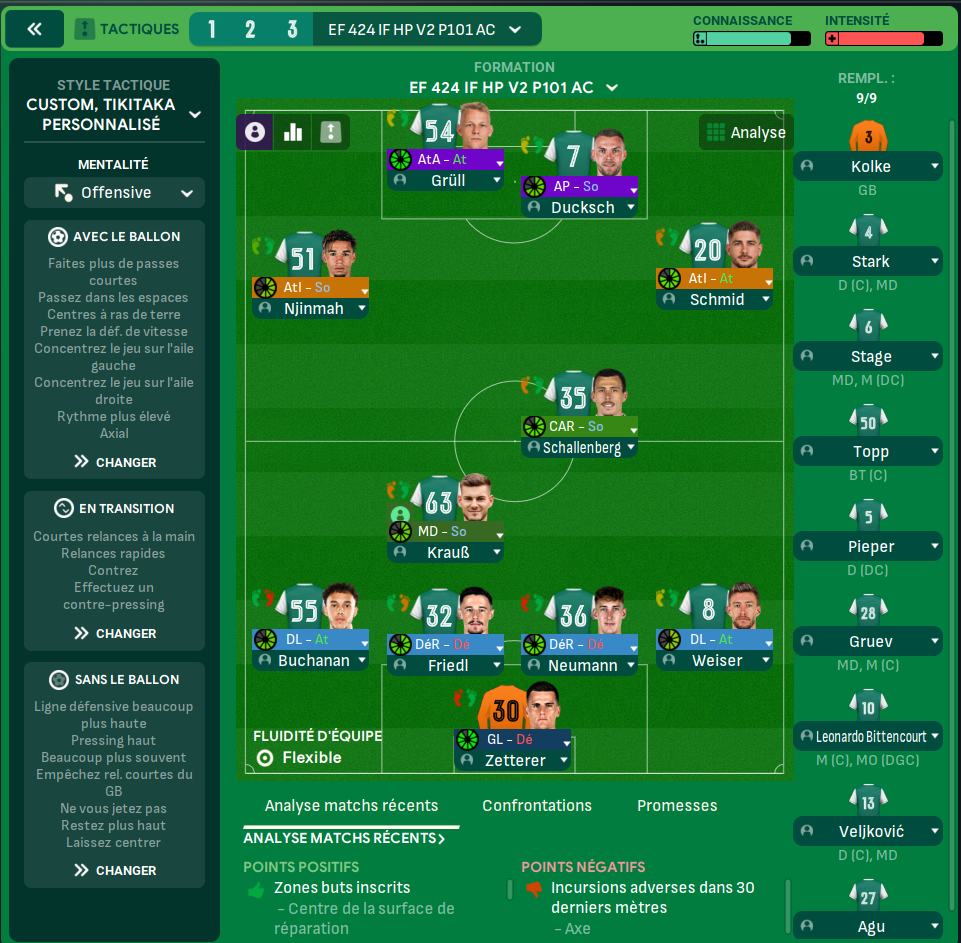
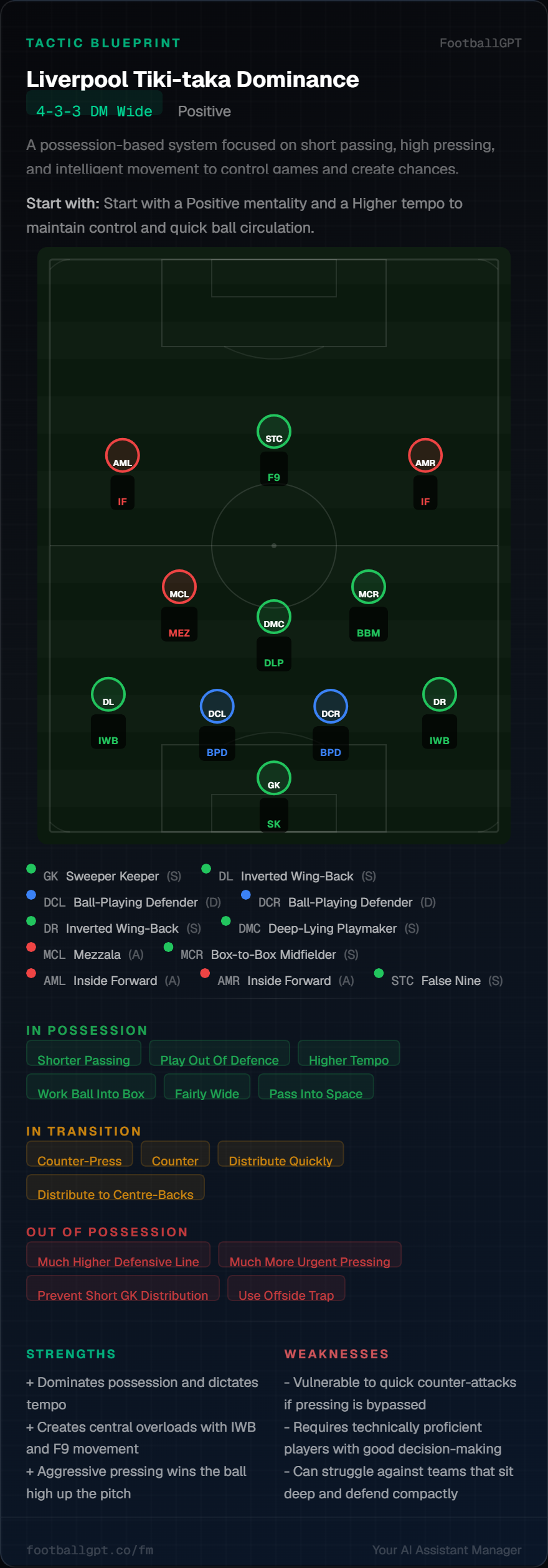
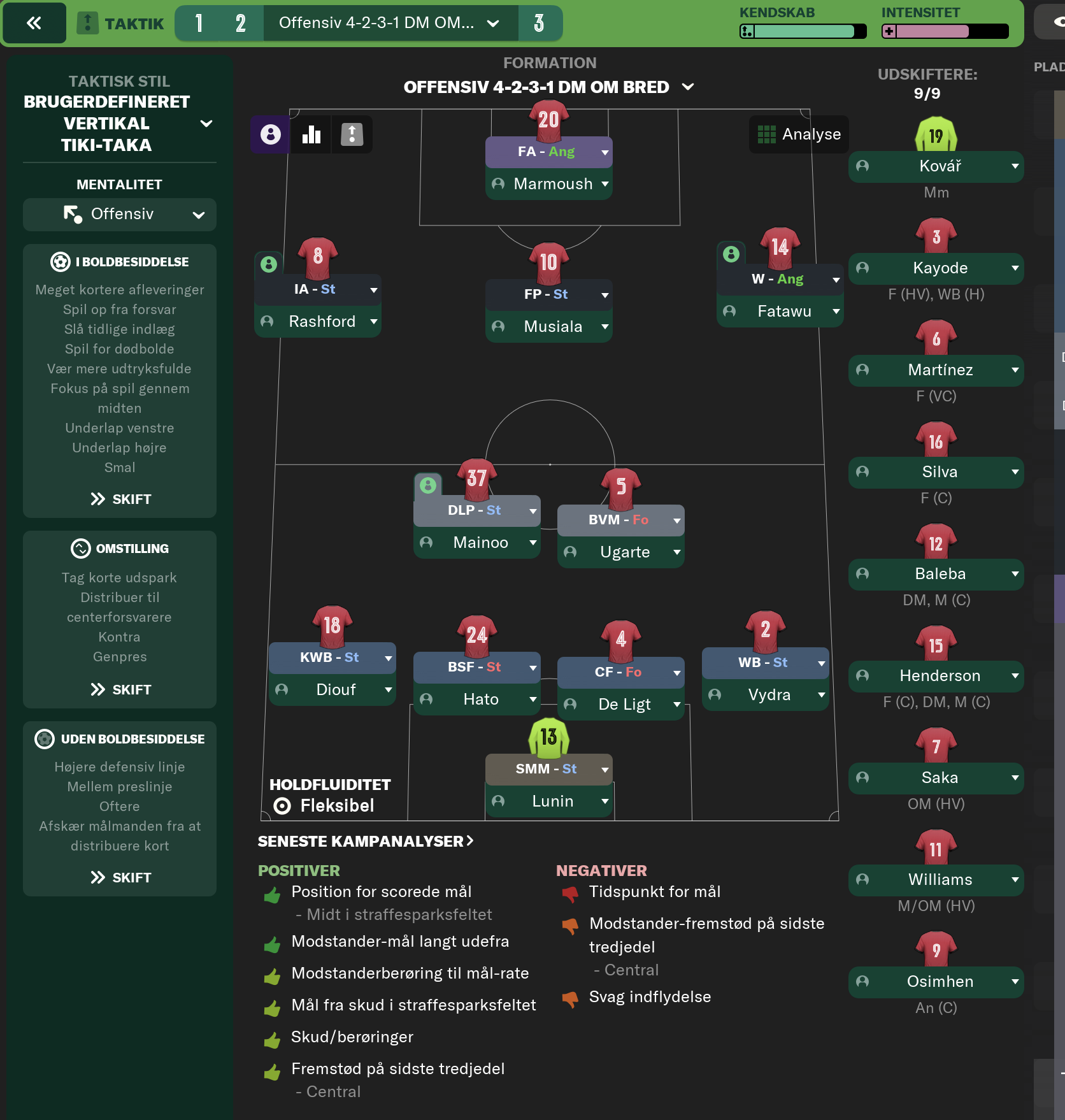
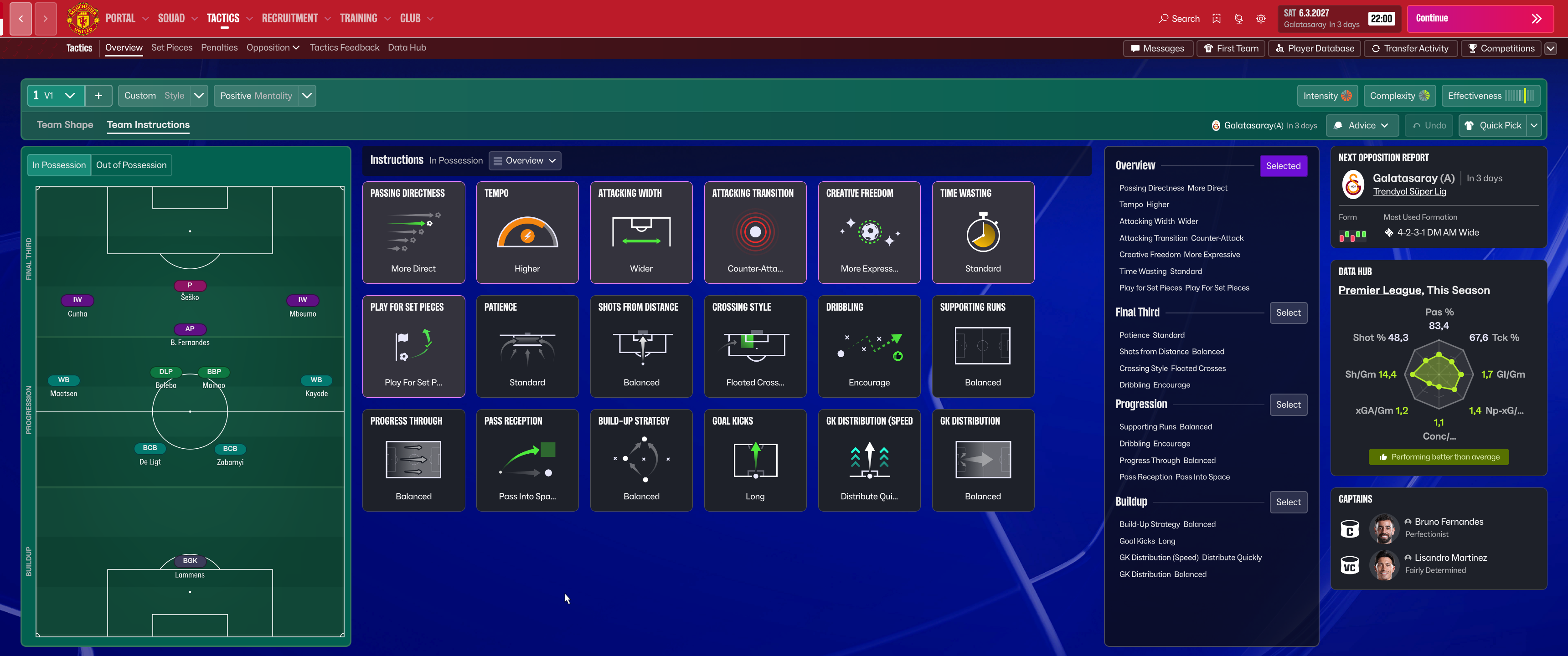
Tiki-taka
Offensive
4-2-3-1 DM Wide
Flexible
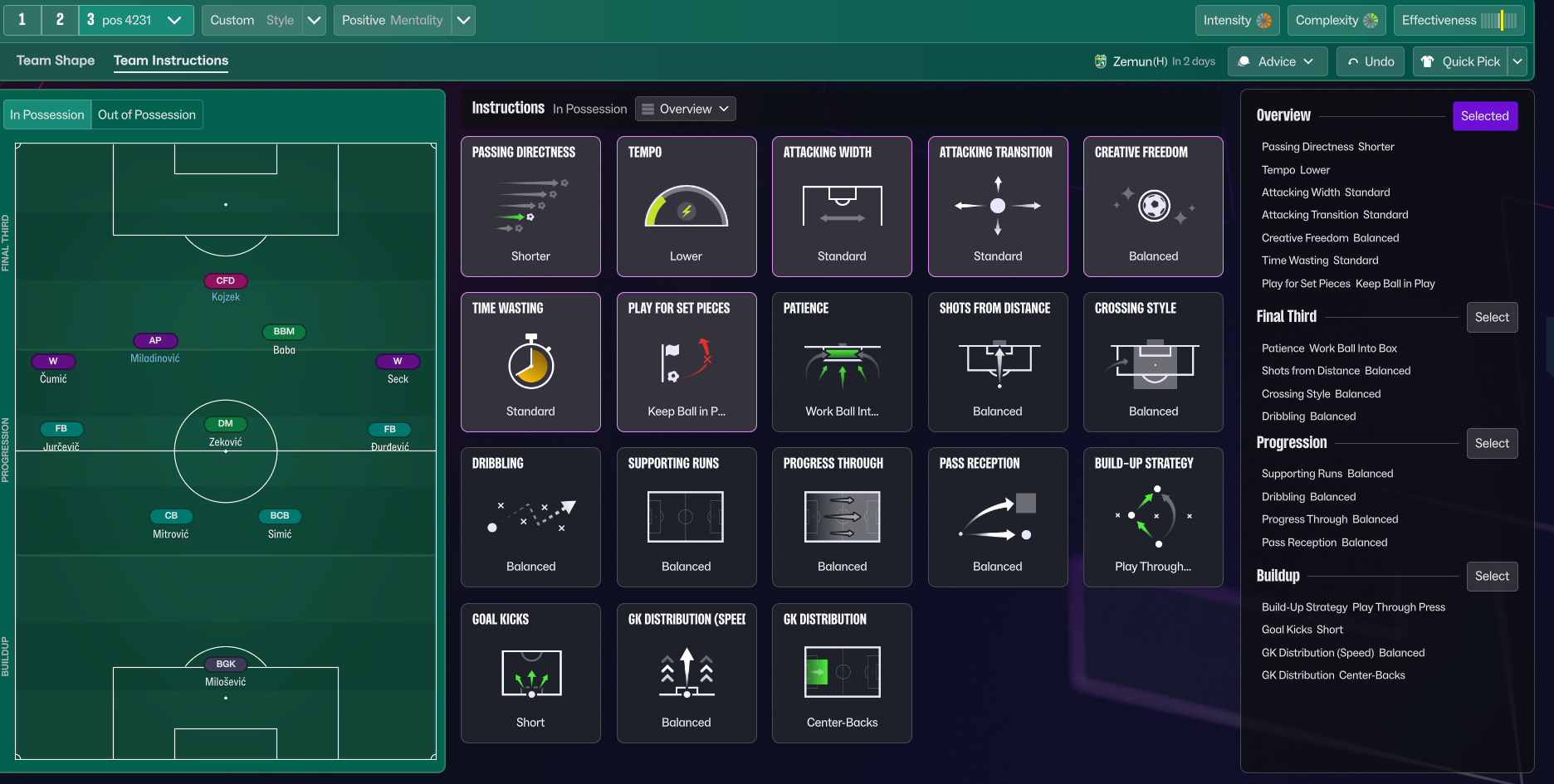
Shorter Passing
Play Out of Defence
Focus Play Down Both Flanks
Counter
Counter-Press
Higher Defensive Line
Higher Line of Engagement
Prevent Short GK Distribution
GK
Goalkeeper
Defend
RB
Wing-Back
Support
CB
Ball-Playing Defender
Defend
CB
Ball-Playing Defender
Defend
LB
Wing-Back
Support
CM
Deep-Lying Playmaker
Support
CM
Ball-Winning Midfielder
Forward
RW
Winger
Attack
CAM
Advanced Playmaker
Support
LW
Inside Forward
Attack
ST
Advanced Forward
Attack
Quick ball movement with emphasis on maintaining possession and building up from the back.
Immediate counter-press to regain possession as soon as the ball is lost.
Utilizing wide players and through balls to create goal-scoring opportunities.
4-2
A compact shape that offers support in midfield while maintaining a solid back line.
Ball-Winning Midfielder (BVM-Fo) at [3,3] and Deep-Lying Playmaker (DLP-Su) at [3,2] ensure midfield coverage.
4-3
Dynamic offensive structure with wingers stretching the pitch and a strong central presence.
Advanced Playmaker (AP-Su) at [5,3] links the play while the Inside Forward (IF-A) at [6,2] aims for goal.
Players are positioned effectively to exploit spaces in the opponent's penalty area.
Inside Forward (IF-A) at [6,2] positioned centrally in the box frequently.
Wingers can deliver quality crosses into the box, providing numerous goal-scoring opportunities.
Wingers (W-A) at [5,1] and [5,5] are positioned to cross effectively.
Vulnerabilities at the back could be exploited by swift counter-attacking teams.
Higher Defensive Line may leave space behind if not properly managed.
Dependence on WB for width can be nullified by opponent's strong wide play.
Wing-Backs supporting the attack can be caught out of position.
Defensive Shape
The high defensive line may lead to vulnerabilities against quick counter-attacks.
Ball-Playing Defender (BPD) at [2,2] could be dragged out of position.
Midfield Balance
Lack of defensive cover if ball is lost in midfield.
Deep-Lying Playmaker (DLP-Su) at [3,3] must track back quickly.
Winger and Inside Forward
Winger stretches the width while Inside Forward attacks spaces, creating goal opportunities.
Winger (W-A) at [5,1] and Inside Forward (IF-A) at [6,2].
Deep-Lying Playmaker and Ball-Winning Midfielder
DLP maintains possession while BWM presses to regain ball quickly.
DLP at [3,2] and BWM at [4,3] effectively balance attack and defense.
How can player fatigue be managed in such an attacking setup?
Are there specific weaknesses in the opponent that can be exploited with this formation?
Should team instructions be adjusted based on the strength of the opposition?
clean slate
clean slate
control possession
clean slate
gegenpress
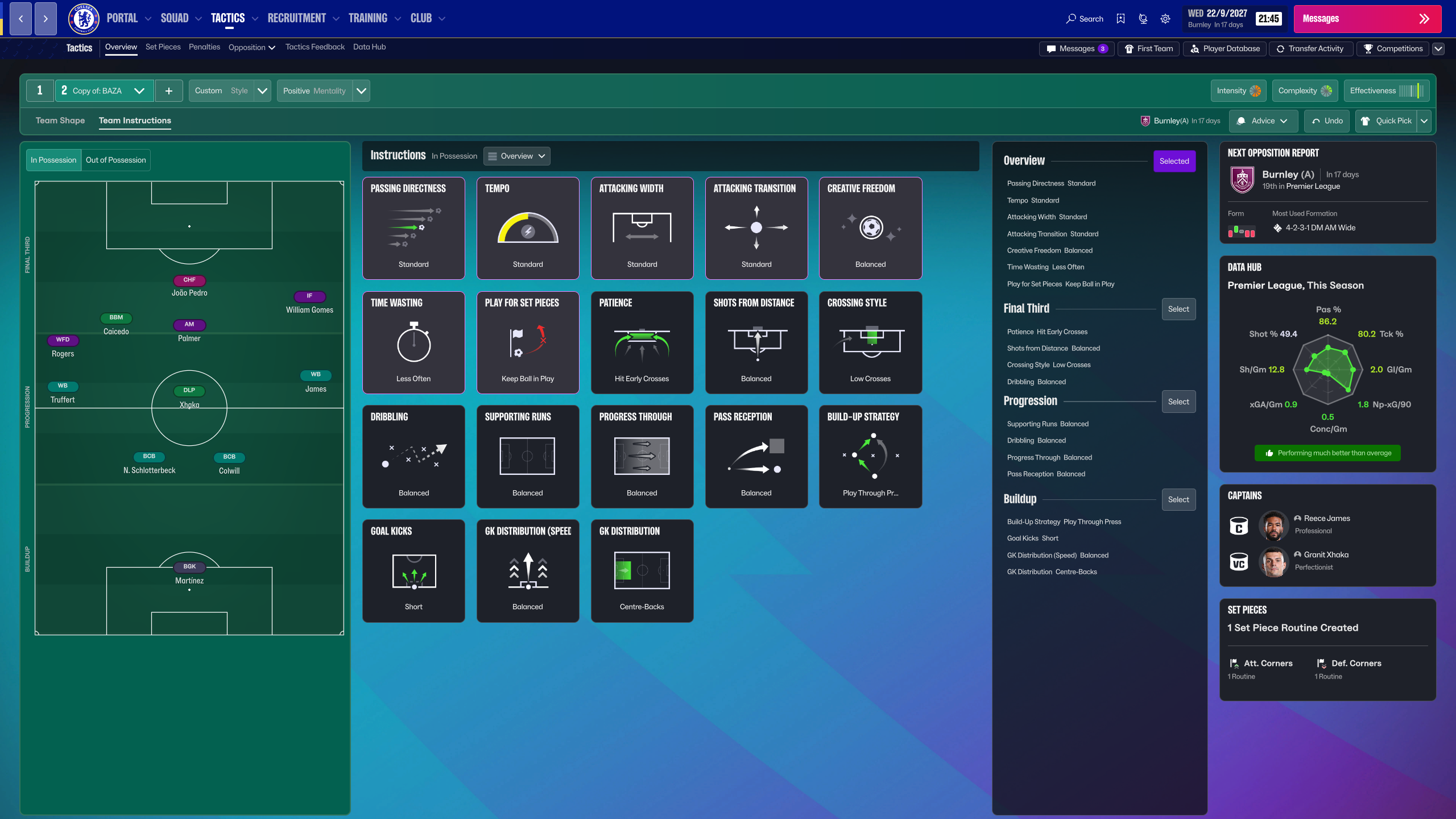
clean slate
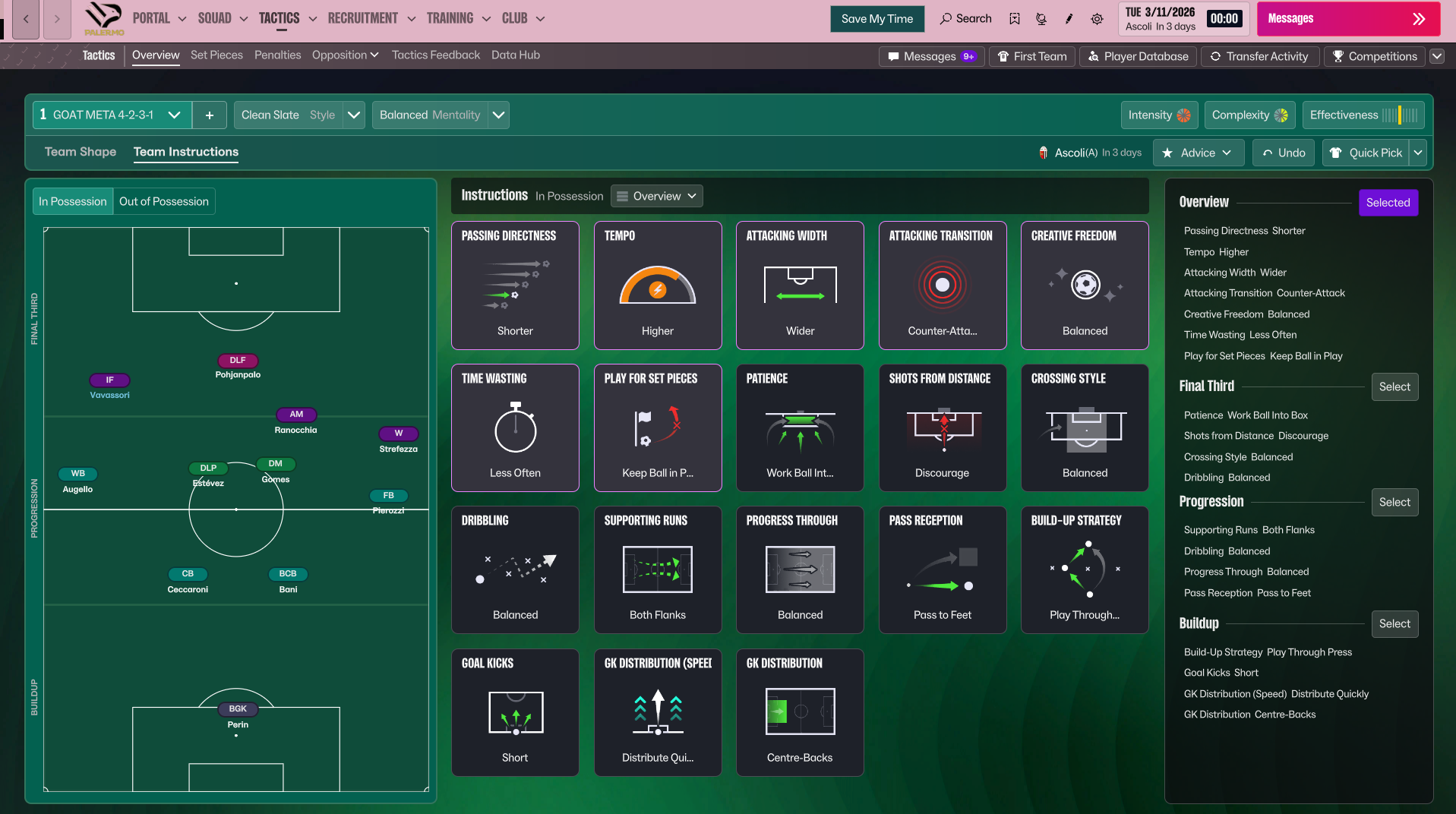
clean slate
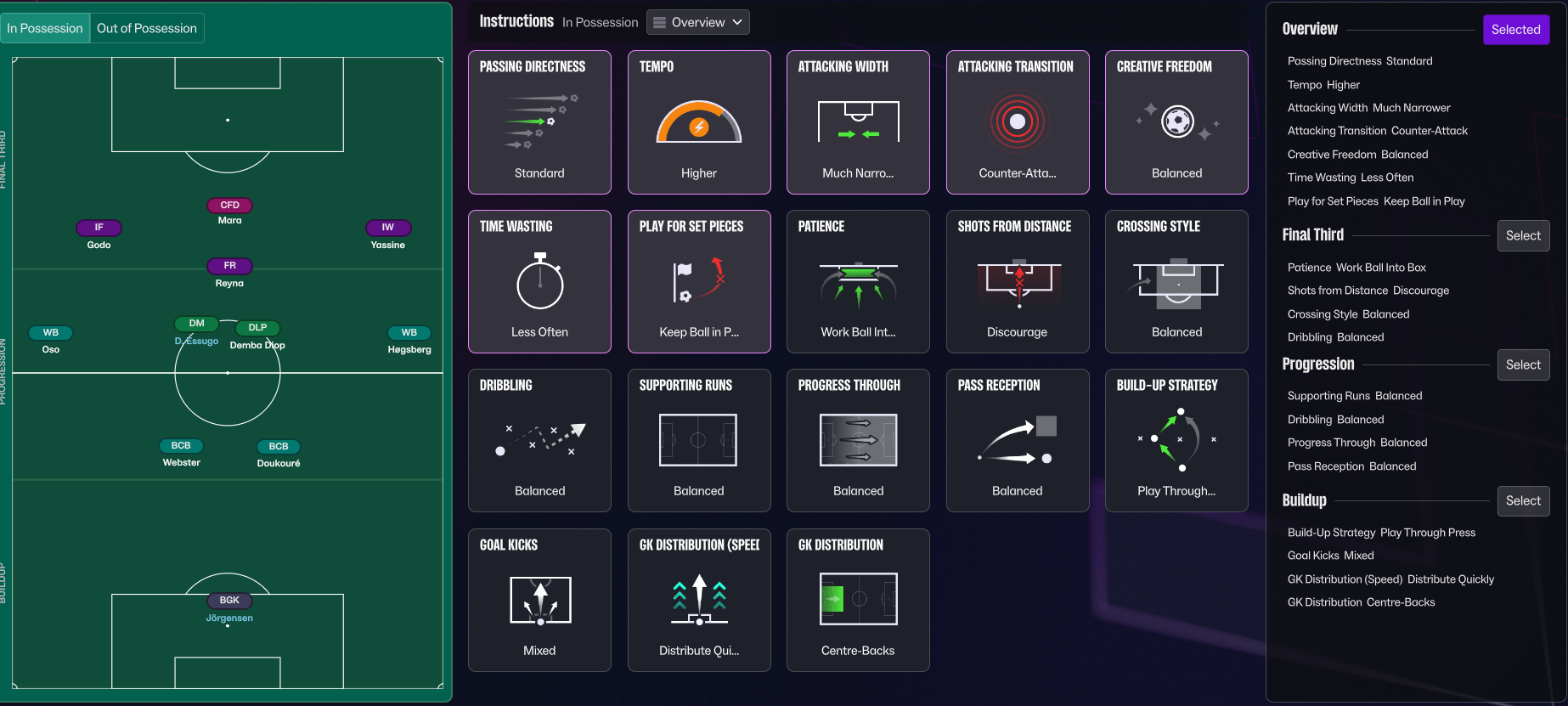
clean slate
The tactical theory behind the 4-2-3-1 DM Wide: roles, instructions, and the trade-offs that decide whether the system holds up.
Double pivots and flat pairs in 4-2-3-1 and 4-4-2: when each pairing works, when it collapses, and the AMC unicorn that rescues both.
Klopp-style gegenpressing in FM, including squad profile, line-and-press pairing, sustainable workload, and the antipatterns to avoid.
What Higher Tempo, Wider, and Narrower actually do in FM, plus the dial contradictions and antipatterns players run into most often.