
4-2-3-1 DM Wide
Central possession and left-sided progression, combined with a high press led by the front and midfield roles. The narrower attacking width supports short…
Loading tactical analysis...
4-2-3-1 DM Wide
4-4-1-1 2 DM
4-2-3-1 DM AM Wide
Positive
Clean Slate
1
3
Goalkeeper
Goalkeeper
2
2
Ball-Playing Center-Back
Centre-Back
2
4
Ball-Playing Center-Back
Centre-Back
3
4
Inside Wing-Back
Full Back
4
2
Box-To-Box Midfielder
Defensive Midfielder
4
4
Attacking Midfielder
Pressing Central Midfielder
5
1
Wide Forward
Wide Midfielder
5
5
Wide Forward
Wide Midfielder
3
1
Wing Back
Full Back
6
3
Center Forward
Tracking Centre Forward
4
3
Defensive Midfielder
Defensive Midfielder
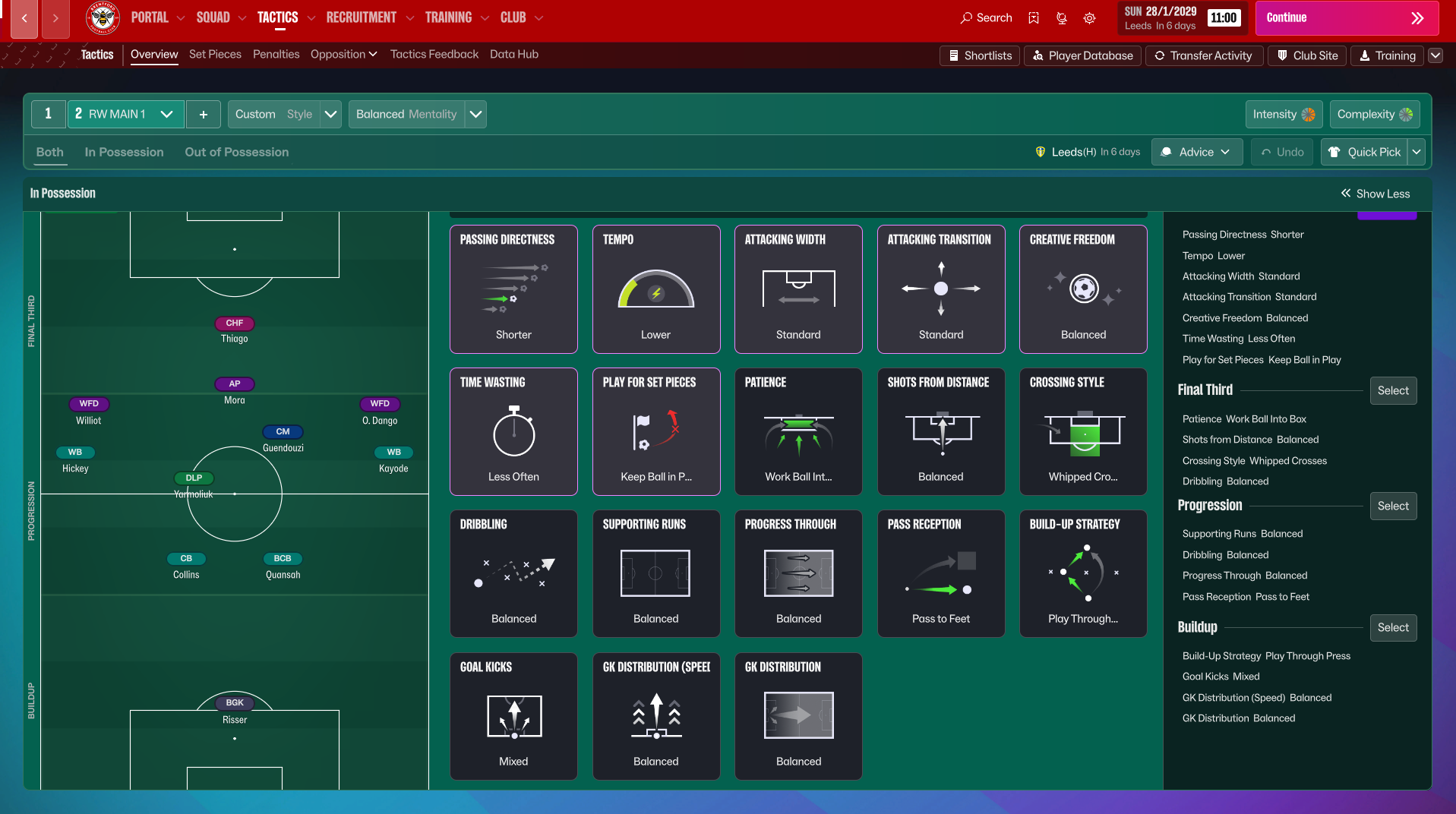
Standard
Higher
Narrower
Standard
Balanced
Less Often
Keep Ball in Play
Standard
Balanced
Balanced
Balanced
Overlap Left
Left
Balanced
Play Through Press
Mixed
Balanced
Center-Backs
High Press
Standard
Drop Off More
More Often
Standard
Get Stuck In
Yes
Balanced
Balanced
Balanced
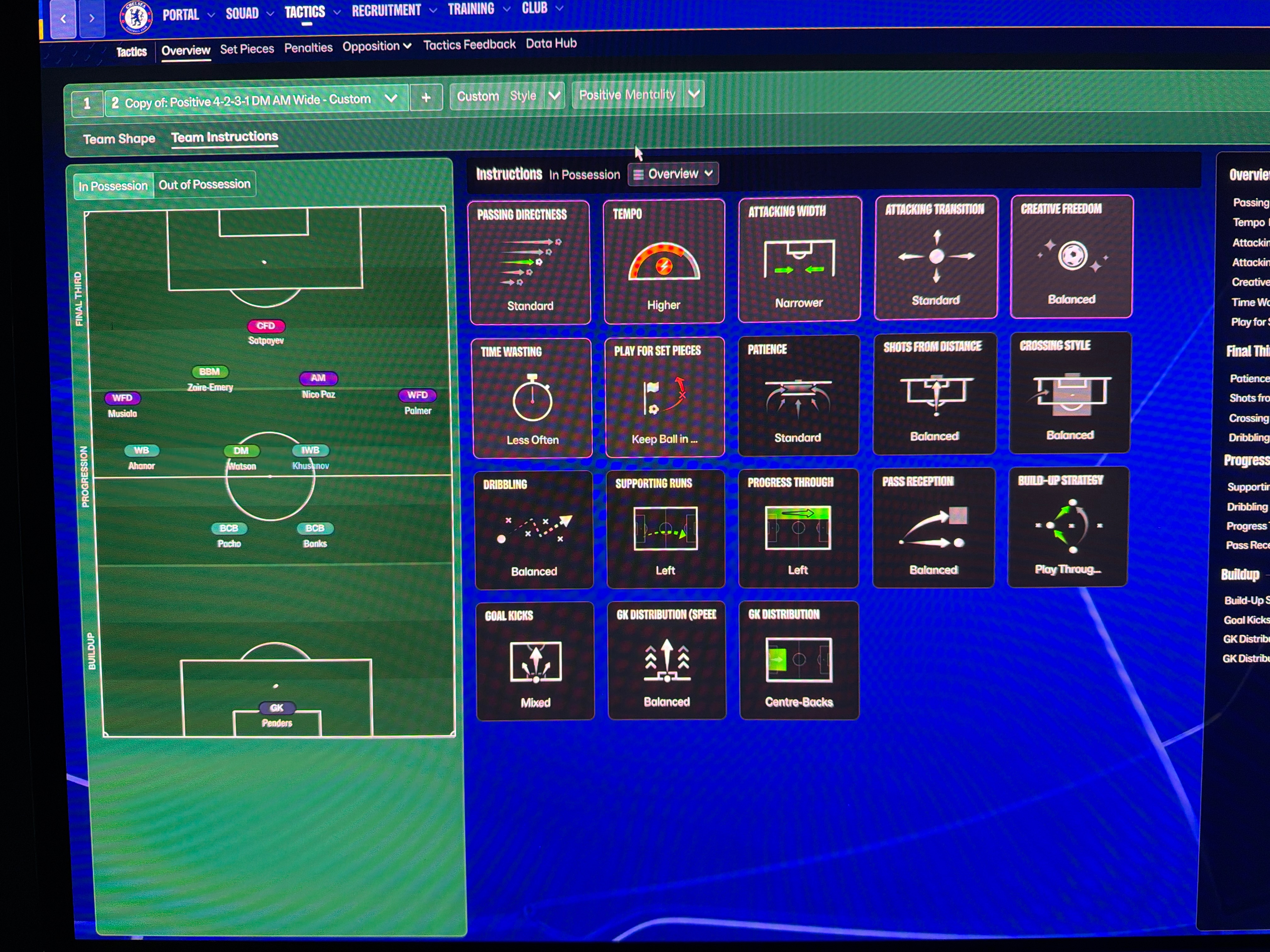
The narrower attacking width supports short central connections, while Play Through Press and the two Ball-Playing Centre-Backs offer a clear route to retain and progress the ball.
Attacking Width is Narrower; Play Through Press is selected; [2,2] and [2,4] are Ball-Playing Centre-Backs.
High Press and More Often pressing are backed by a Pressing Central Midfielder and a Tracking Centre Forward, giving the shape pressure from the front and midfield.
Line of Engagement is High Press; Trigger Press is More Often; [4,4] is a Pressing Central Midfielder and [6,3] is a Tracking Centre Forward.
A High Press seeks to contest possession high up the pitch, but Drop Off More makes the defensive line less inclined to step up, potentially opening space between the lines for opponents to use.
Line of Engagement is High Press; Defensive Line Behaviour is Drop Off More; [4,4] is a Pressing Central Midfielder.
Progress Through Left and Overlap Left focus the attack on one flank, but Narrower attacking width can reduce the room available to stretch the opposition there and leaves the approach easier to anticipate.
Progress Through is Left; Supporting Runs - Overlap is Left; Attacking Width is Narrower; [3,1] is a Wing-Back.
Space behind the defensive line
High Press can leave the side exposed to direct passes over the press. The Standard defensive line offers no particularly deep protection, while Drop Off More also risks conceding space in front as the line retreats.
Line of Engagement is High Press; Defensive Line is Standard; Defensive Line Behaviour is Drop Off More; [1,3] is a Goalkeeper.
medium
Fouls and defensive disorganisation
Get Stuck In increases the chance that defenders are drawn out and concede free-kicks; paired with More Often pressing, this also demands substantial off-ball effort across the team.
Tackling is Get Stuck In; Trigger Press is More Often; [2,2] is a Centre-Back.
medium
High press supported from the front
The Tracking Centre Forward can contribute to the pressing work, while the Pressing Central Midfielder supports pressure behind the forward line.
[6,3] is a Tracking Centre Forward; [4,4] is a Pressing Central Midfielder.
Left-flank progression and overlap
The left-focused progression and overlap give the Wing-Back at [3,1] a defined route to support attacks, while the opposing Inside Wing-Back can occupy an interior lane.
Progress Through is Left; Supporting Runs - Overlap is Left; [3,1] is a Wing-Back and [3,4] is an Inside Wing-Back.
How can I reduce the space between my High Press and defensive line?
What should I look for in my Ball-Playing Centre-Backs to make Play Through Press safer?
How can I make my left-focused progression less predictable while keeping the Wing-Back involved?
This is a positive 4-2-3-1 with a coherent central build-up plan, a useful high-press structure and a clear left-sided attacking route. Its main weakness is the tension between pressing high and asking the defensive line to drop off, with Get Stuck In adding avoidable foul and shape risks. I would first balance the defensive-line behaviour, then consider safer tackling and a less restrictive attacking width to make the left flank harder to contain.
Build from the Ball-Playing Centre-Backs through the press, then progress predominantly down the left with an Overlap Left. Narrower width supports central combinations, while the Wide Forwards and Centre Forward provide the attacking line.
The defensive transition is Standard, so the extraction specifies neither an immediate counter-press nor a deliberate regroup after losing possession.
Central possession and left-sided progression, combined with a high press led by the front and midfield roles.
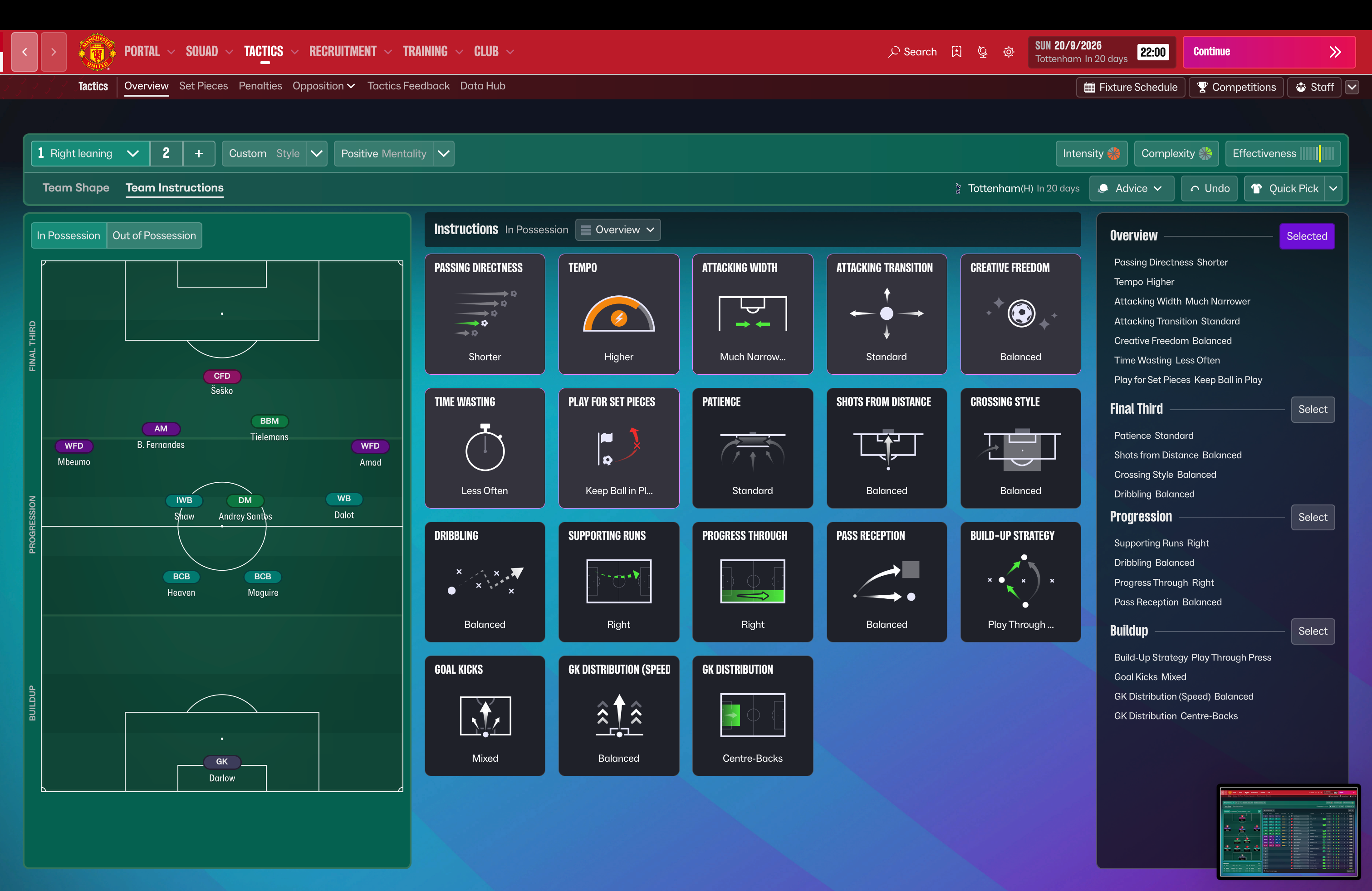
clean slate
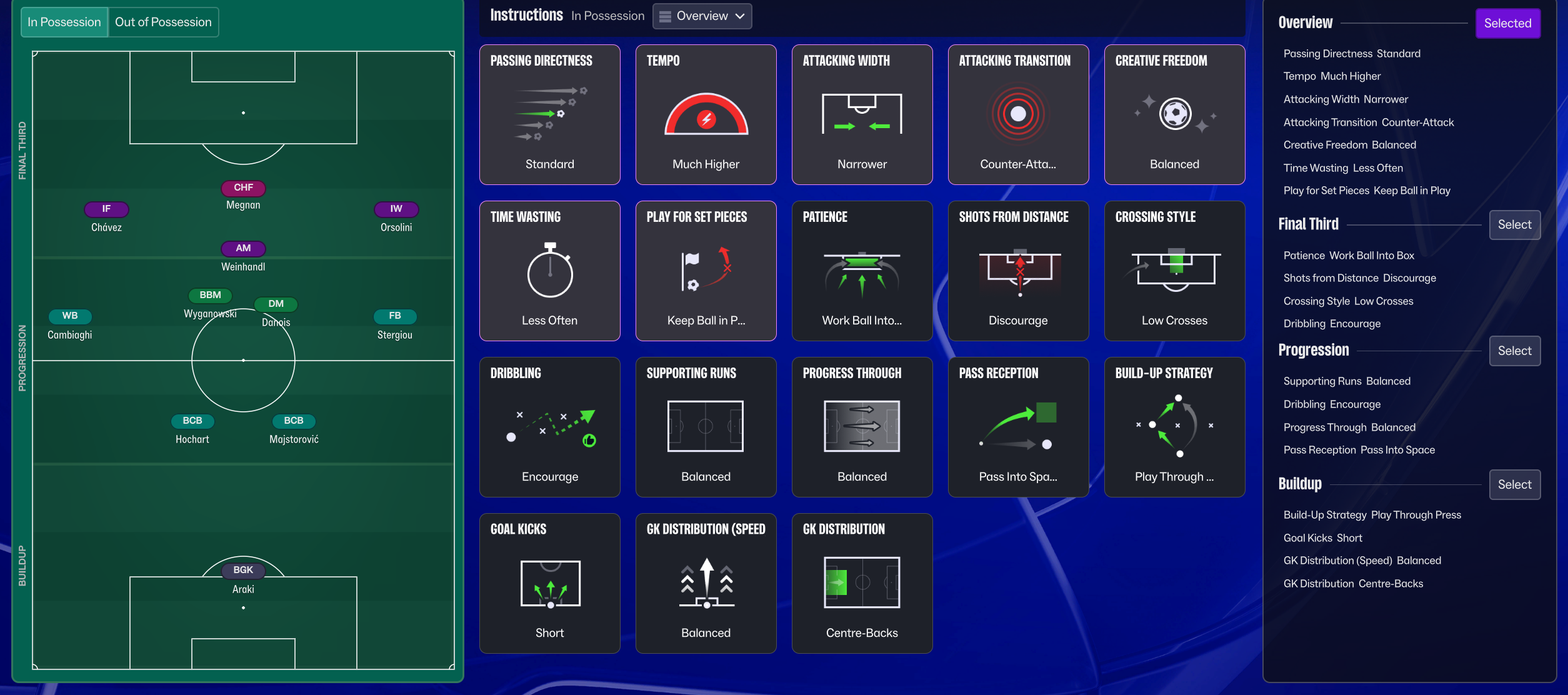
clean slate
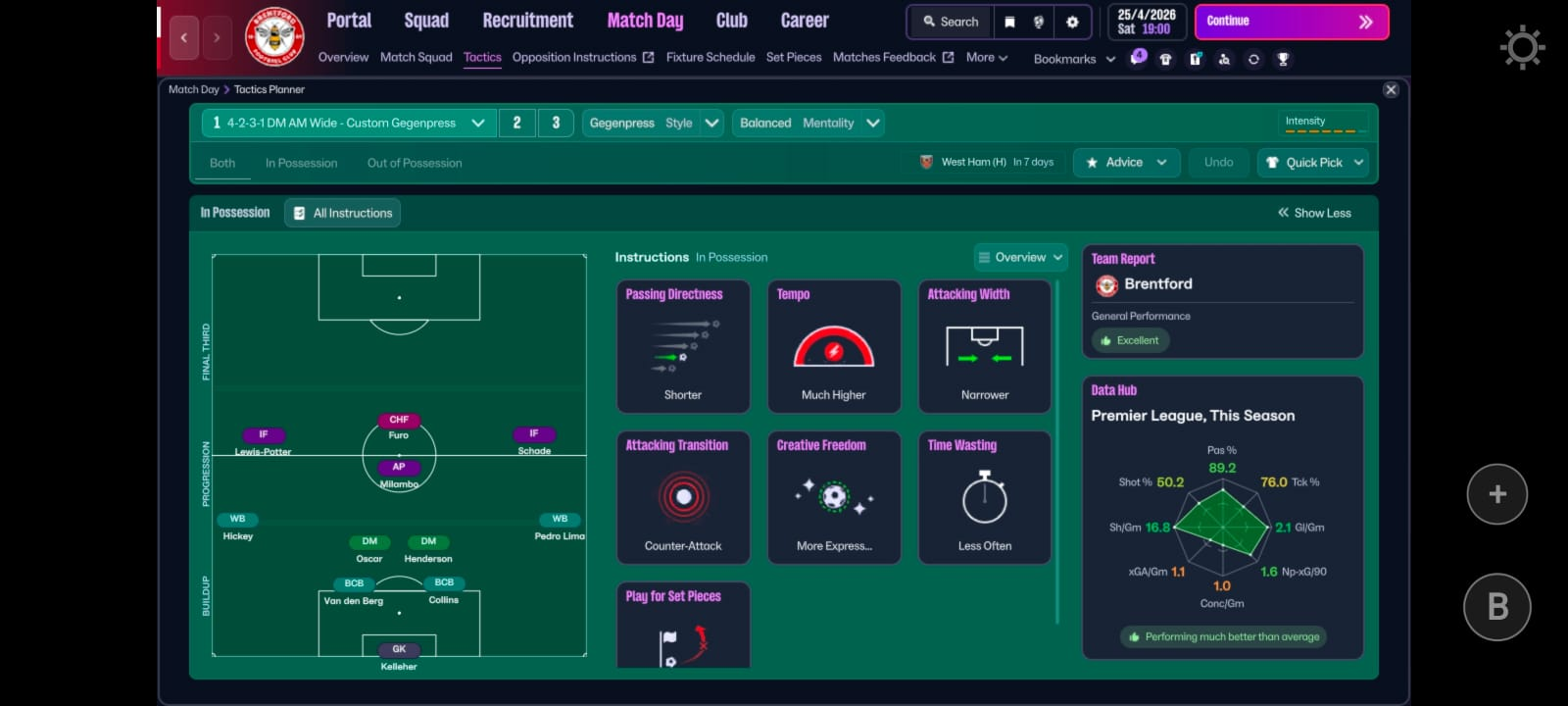
gegenpress
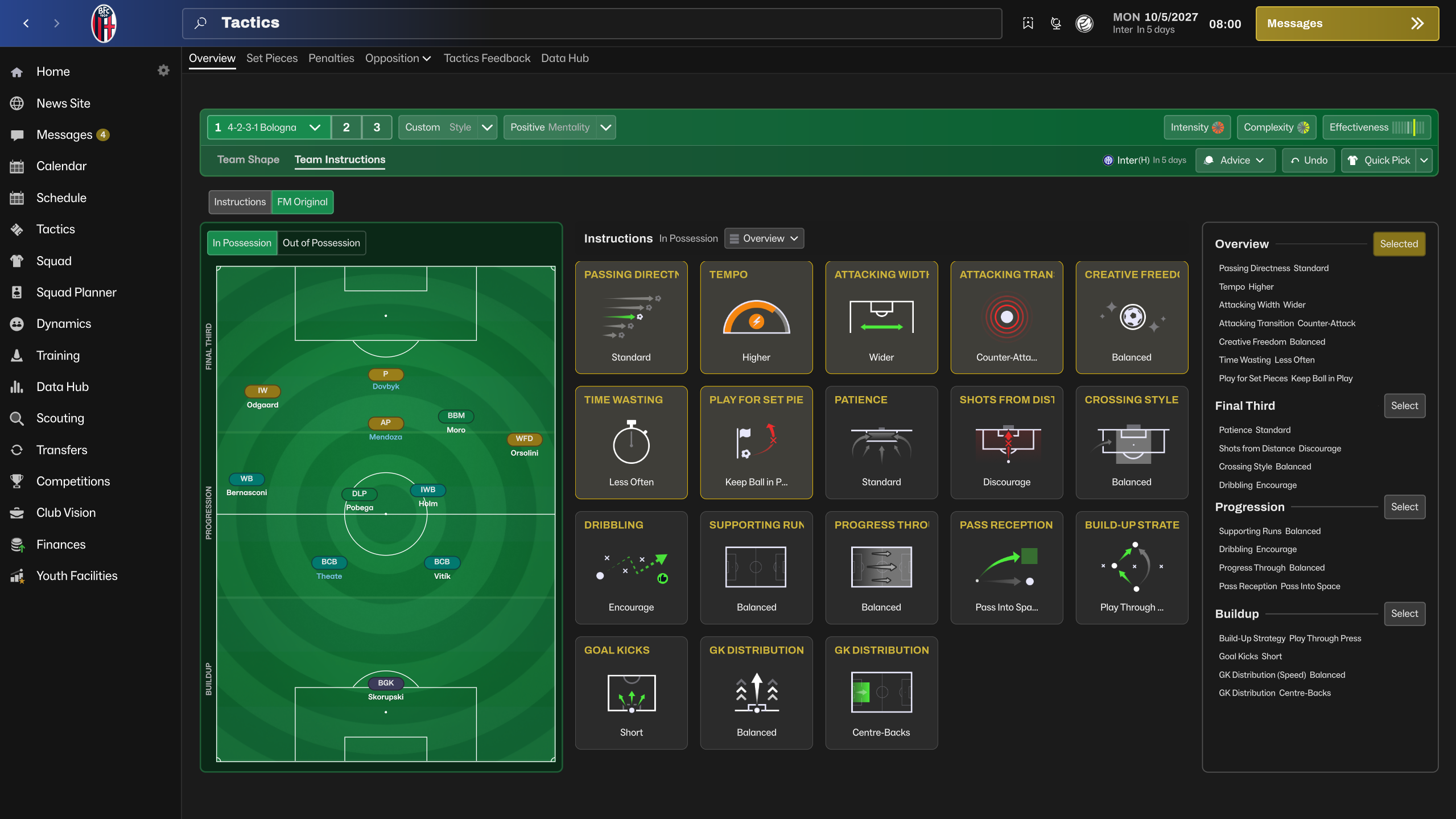
clean slate
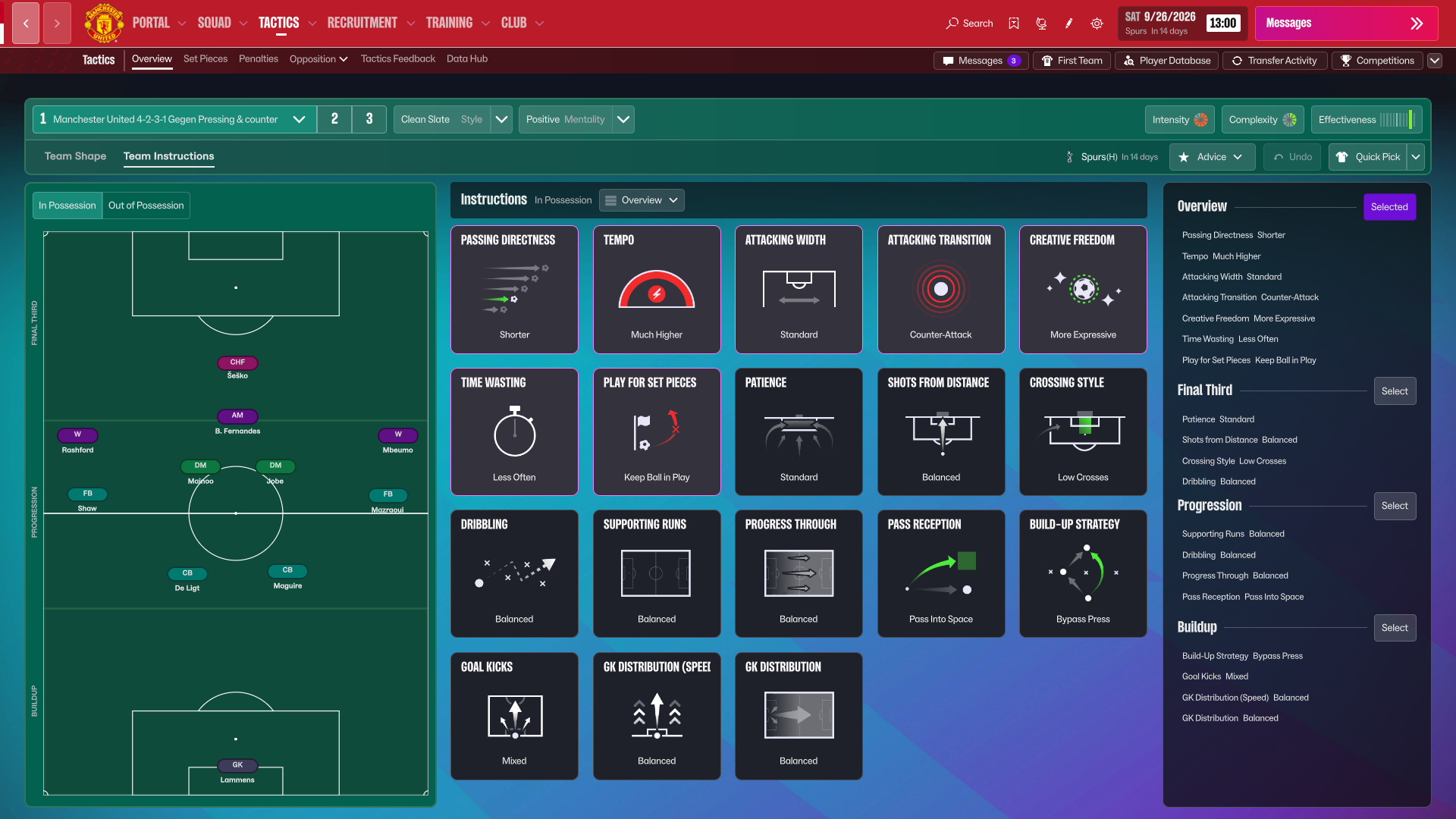
clean slate
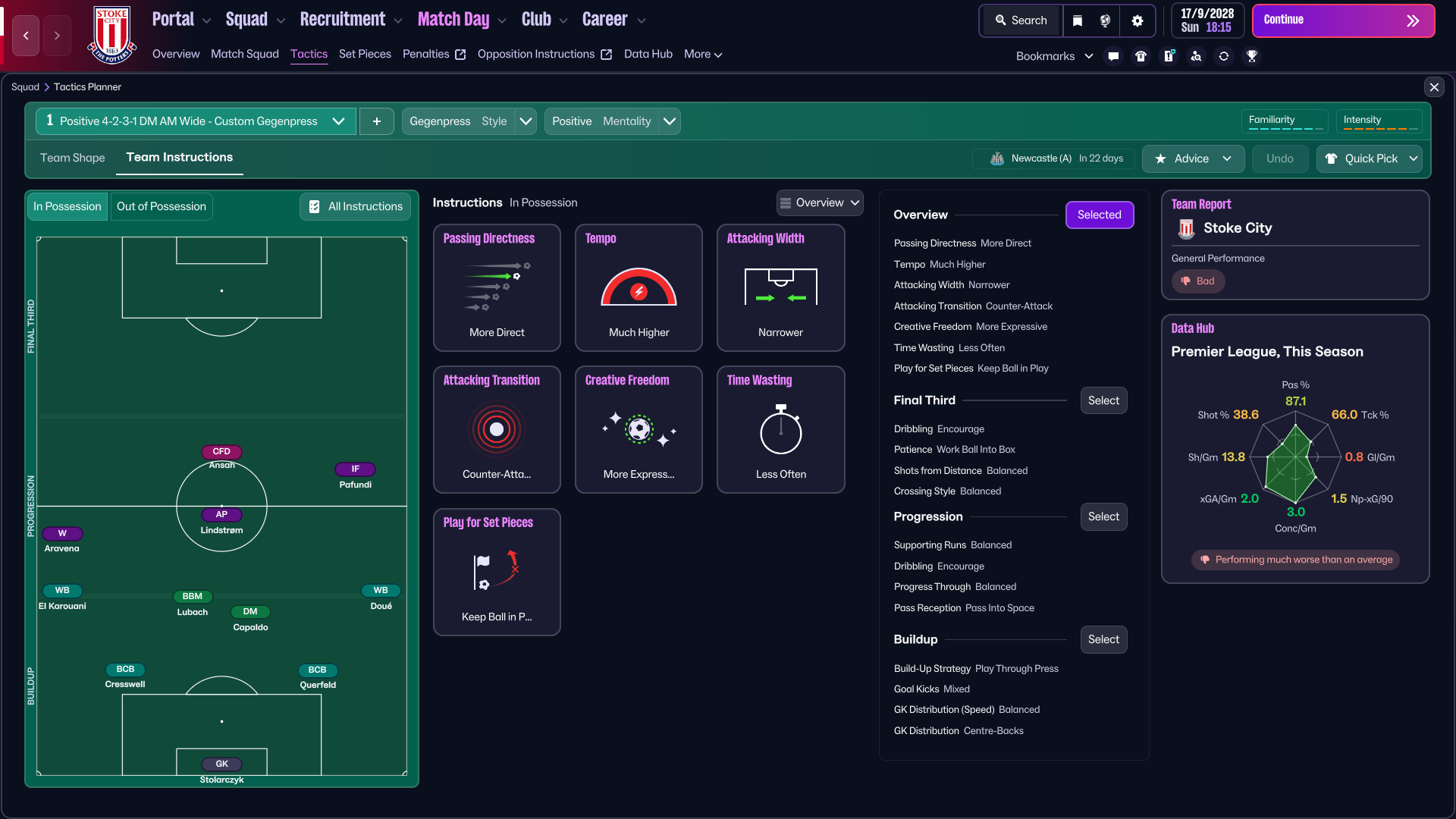
gegenpress
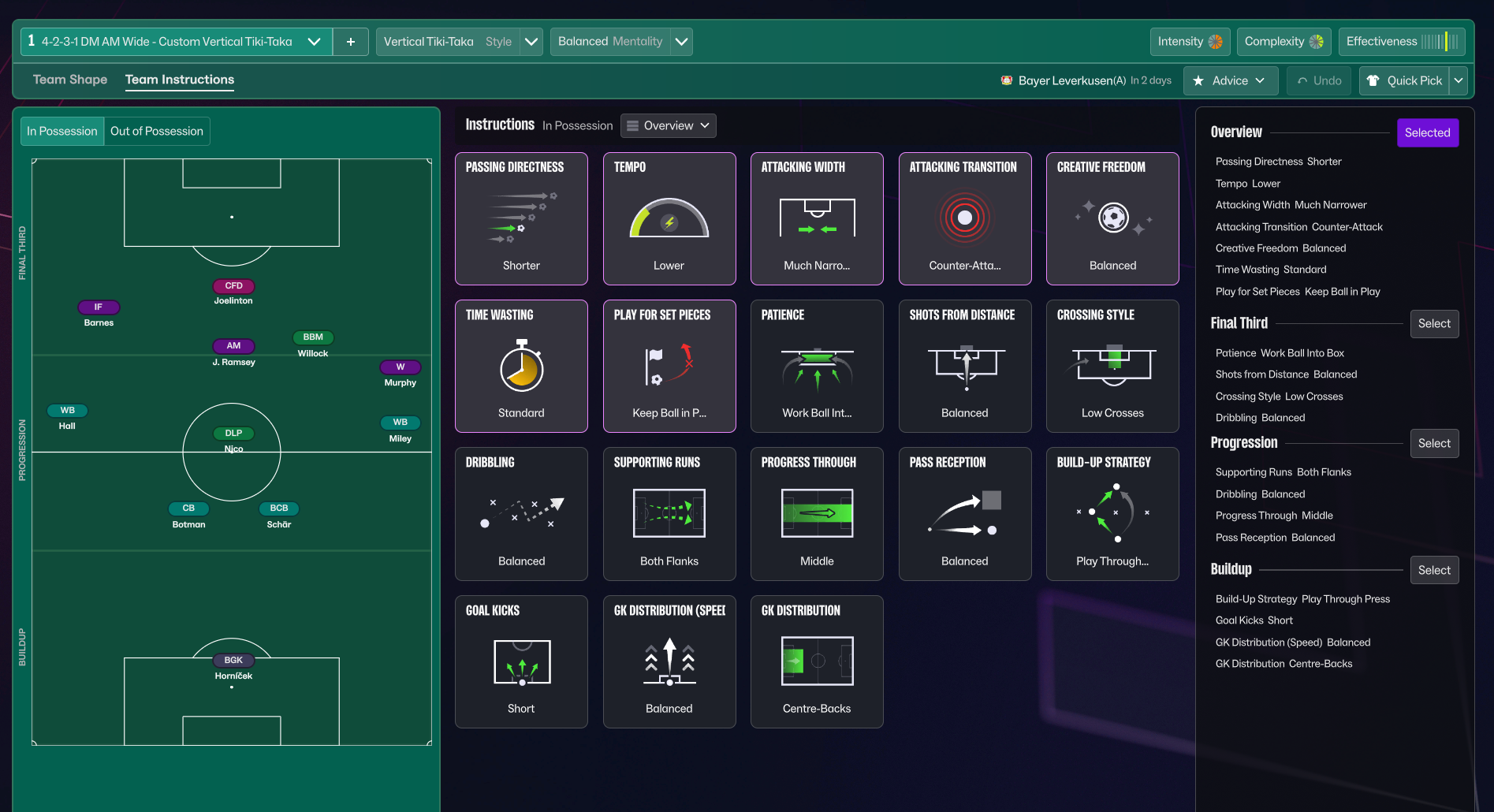
vertical tiki taka
control possession
The tactical theory behind the 4-2-3-1 DM Wide: roles, instructions, and the trade-offs that decide whether the system holds up.
Double pivots and flat pairs in 4-2-3-1 and 4-4-2: when each pairing works, when it collapses, and the AMC unicorn that rescues both.
Klopp-style gegenpressing in FM, including squad profile, line-and-press pairing, sustainable workload, and the antipatterns to avoid.
Routines, takers, and target picks. How to turn corners and free-kicks into a reliable third of your goal output.