
4-2-3-1 DM Wide
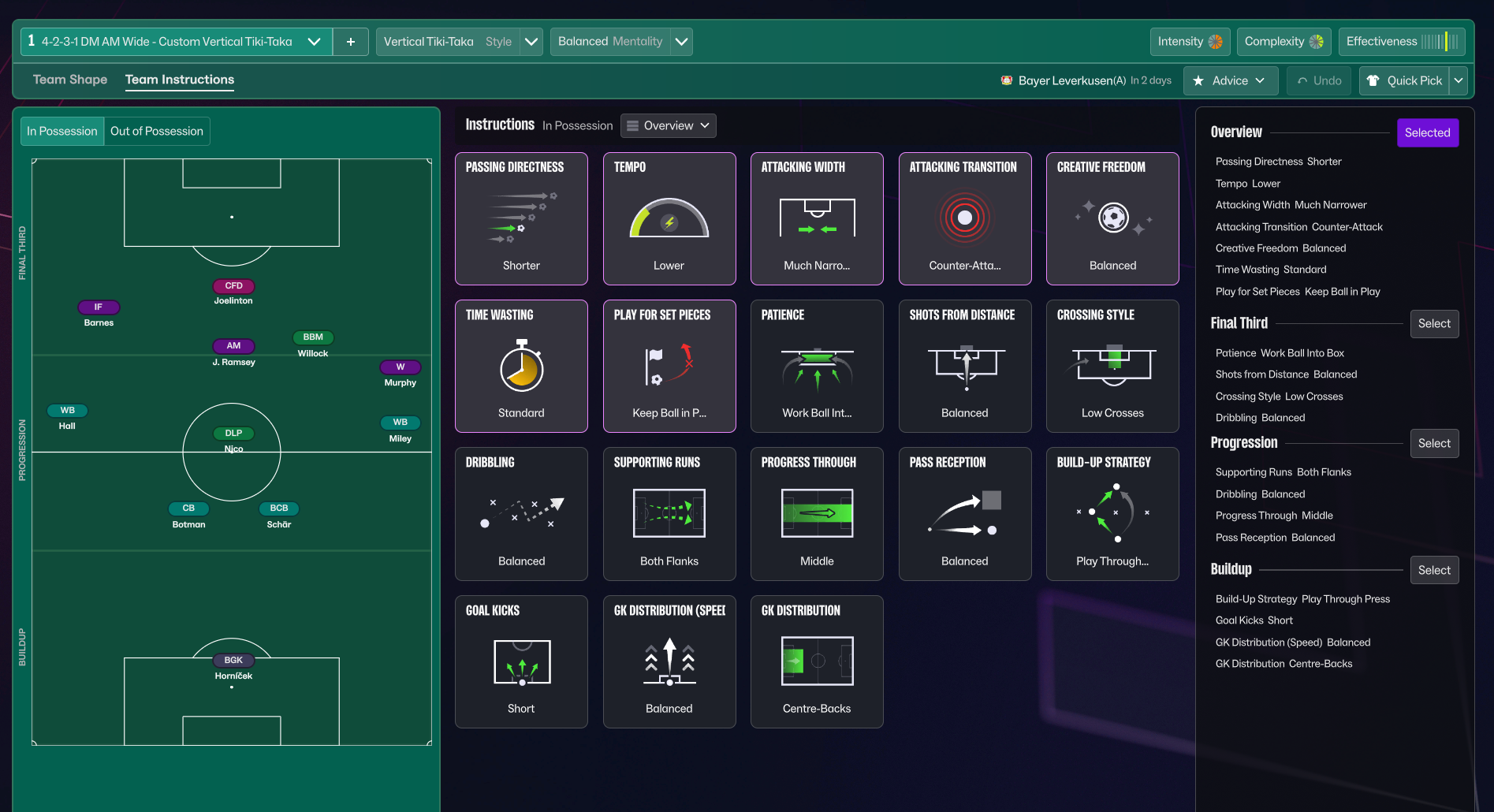
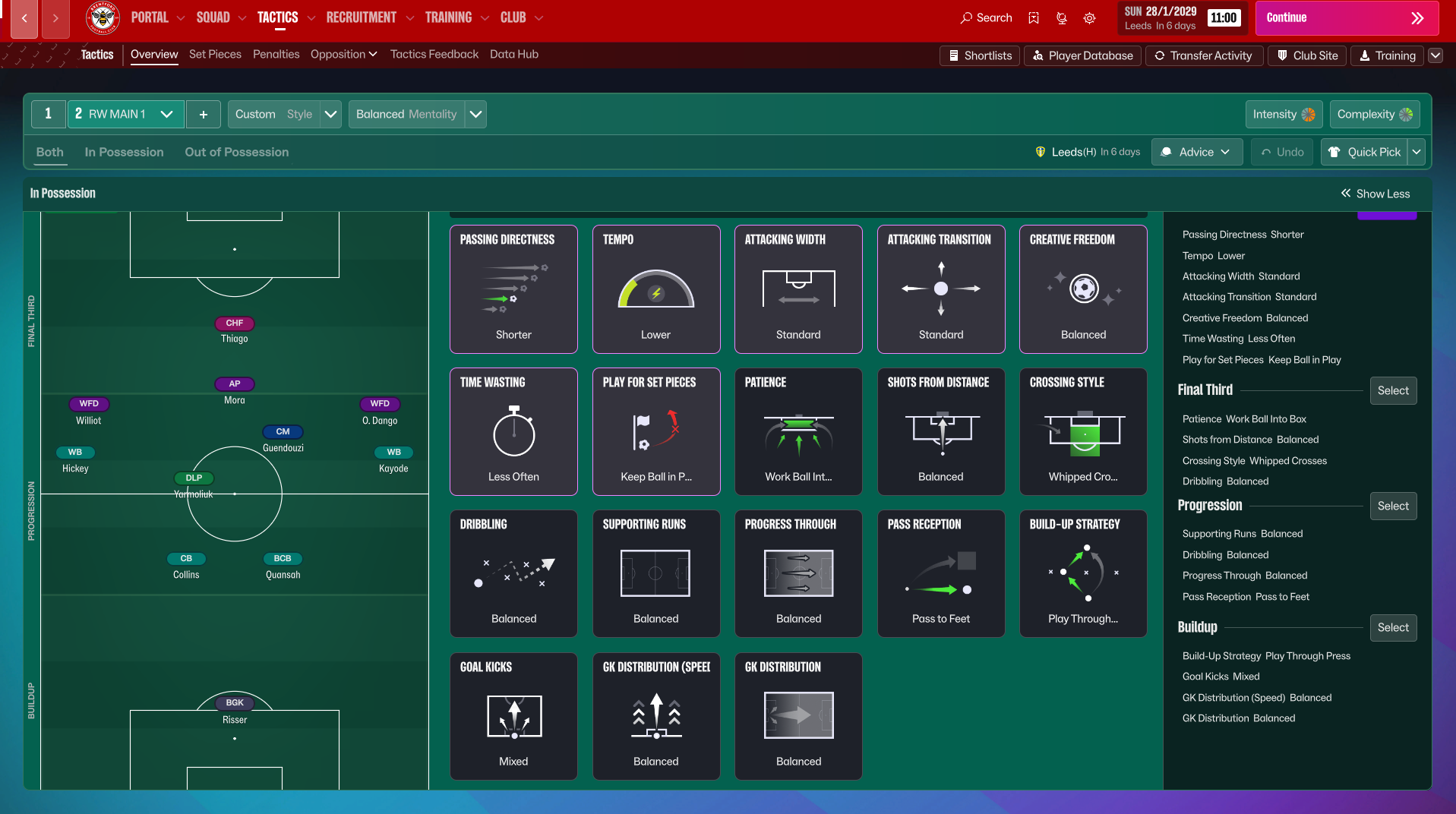
Controlled central possession backed by an aggressive high press. Short goal kicks, Play Through Press and distribution to the Centre-Backs fit a…
Loading tactical analysis...
4-2-3-1 DM Wide
4-1-4-1 DM
Balanced
Vertical Tiki-Taka
1
3
Ball-Playing Goalkeeper
Sweeper Keeper
2
1
Wing Back
Full Back
2
2
Centre-Back
Centre-Back
2
4
Ball-Playing Center-Back
Centre-Back
2
5
Wing Back
Full Back
3
3
Deep-Lying Playmaker
Defensive Midfielder
4
4
Box-To-Box Midfielder
Pressing Defensive Midfielder
5
3
Attacking Midfielder
Attacking Midfielder
5
1
Inside Forward
Wide Midfielder
5
5
Winger
Wide Midfielder
6
3
Center Forward
Center Forward
Shorter
Lower
Much Narrower
Counter-Attack
Balanced
Standard
Keep Ball in Play
Work Ball Into Box
Balanced
Low Crosses
Balanced
Overlap Both Flanks
Balanced
Middle
Balanced
Play Through Press
Short
Balanced
Center-Backs
Underlap Balanced
High Press
Higher
Balanced
More Often
Counter-Press
Standard
Yes
Balanced
Balanced
Balanced
Short goal kicks, Play Through Press and distribution to the Centre-Backs fit a Ball-Playing Goalkeeper and a Ball-Playing Centre-Back. The Deep-Lying Playmaker gives an outlet in front of the defence.
[1,3] Ball-Playing Goalkeeper, [2,4] Ball-Playing Centre-Back and [3,3] Deep-Lying Playmaker
High Press, a Higher line, Counter-Press and More Often triggers suit a team that is narrow and close together. The Sweeper Keeper covers the space behind the high line.
[1,3] Sweeper Keeper and [4,4] Pressing Defensive Midfielder
Counter-Attack asks for quick, direct breaks. That clashes with Shorter passing, Lower tempo and Work Ball Into Box, which all build slowly.
[4,4] Box-To-Box Midfielder and [3,3] Deep-Lying Playmaker are set up for control, not breaks
Overlap Both Flanks and Low Crosses need width. Much Narrower width pulls the team inward and leaves the wing-backs and wide forwards little room to work.
[2,1] Wing-Back, [2,5] Wing-Back and [5,5] Winger
Space behind the high line
A Higher line with only two centre-backs is exposed to through balls if the press is beaten. The wing-backs push on, which widens the gaps.
[2,2] Centre-Back and [2,4] Ball-Playing Centre-Back
high
Wide channels in transition
Narrow attack plus advancing wing-backs and Counter-Press leaves the flanks open if possession is lost.
[2,1] Wing-Back and [2,5] Wing-Back
medium
Ball-Playing Goalkeeper + Ball-Playing Centre-Back + Deep-Lying Playmaker
They form a safe passing triangle from the back and progress play centrally.
[1,3] Ball-Playing Goalkeeper, [2,4] Ball-Playing Centre-Back, [3,3] Deep-Lying Playmaker
Attacking Midfielder + Centre Forward
The Attacking Midfielder supports the striker in central areas.
[5,3] Attacking Midfielder and [6,3] Centre Forward
Is the team strong enough in recovery pace to play a Higher line?
Do you want possession control or quick counters?
Are your wing-backs good enough at crossing to justify Overlap Both Flanks?
This is a pressing, possession-based tactic with a solid short build-up and a central attacking focus. It is held back by mixed messages: Counter-Attack against slow, short play, and overlaps against a very narrow shape. A high line with two centre-backs is the main defensive risk. Moving Attacking Transition to Standard, lowering the line and widening the shape slightly would make the tactic more coherent.
Short, patient build-up from the goalkeeper and centre-backs, progressing centrally to the Attacking Midfielder and Centre Forward with low crosses as a secondary option.
Counter-Press after turnovers with a High Press and Higher line, relying on the compact shape to win the ball back quickly.
Controlled central possession backed by an aggressive high press.
clean slate
clean slate
clean slate
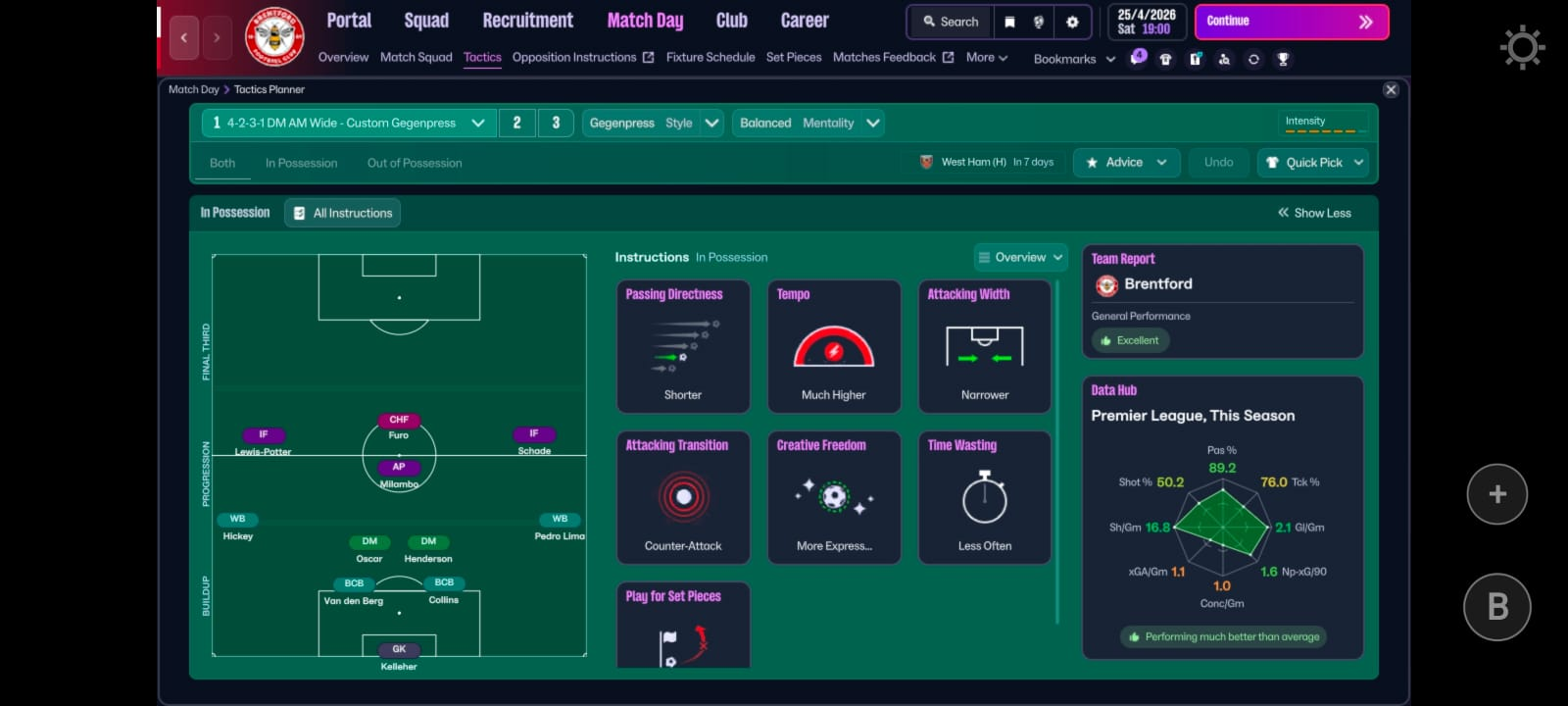
gegenpress
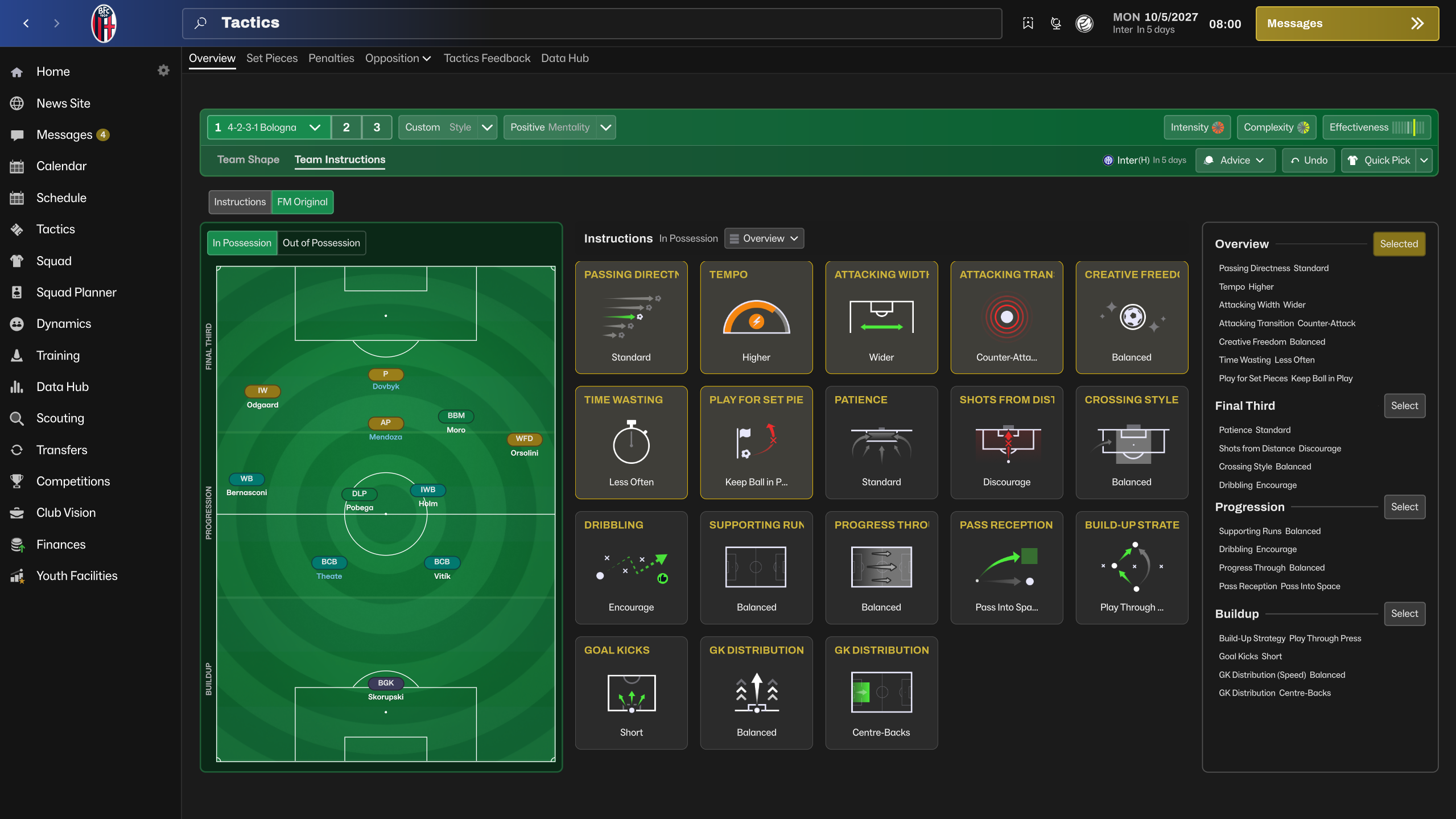
clean slate
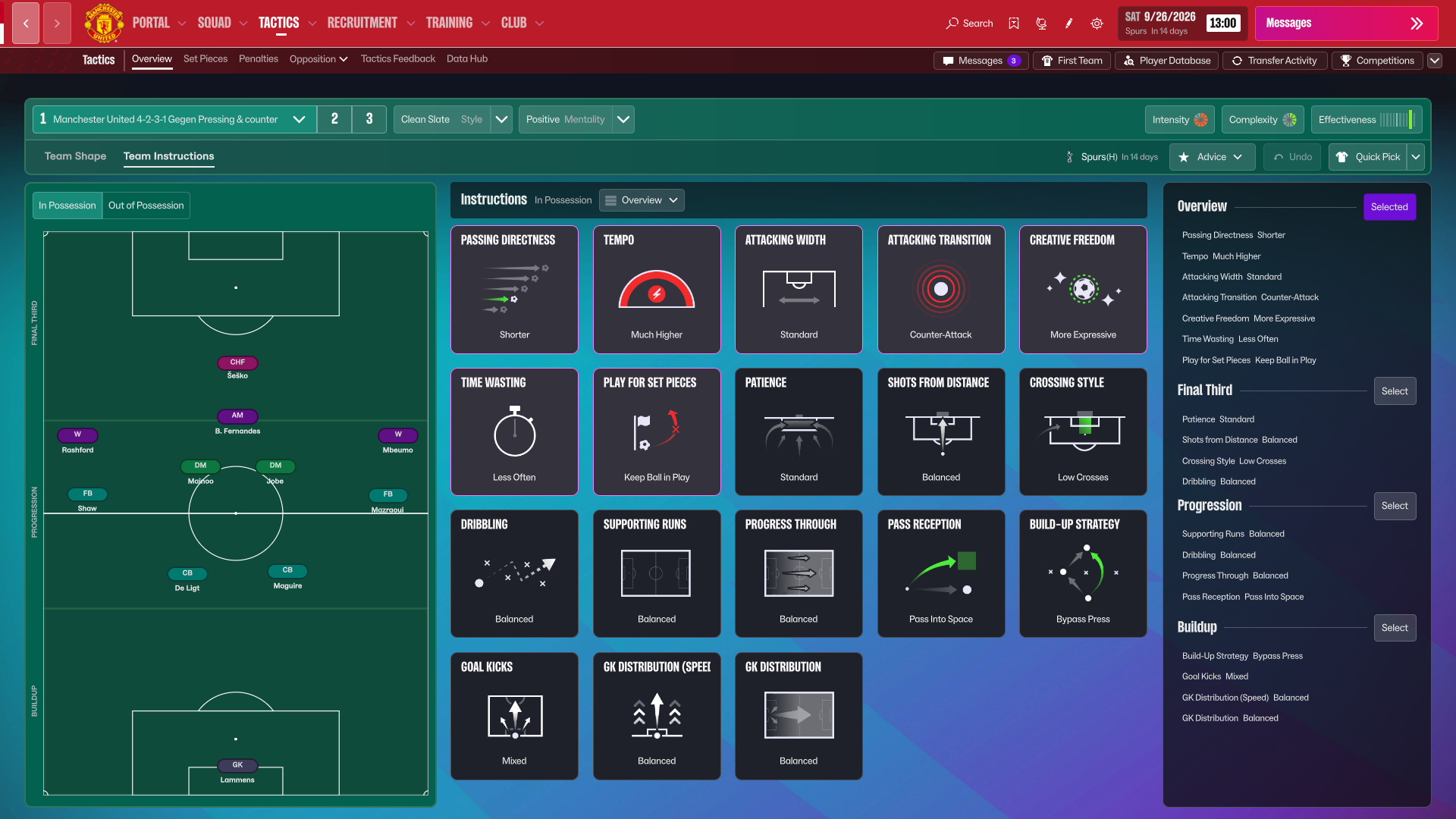
clean slate
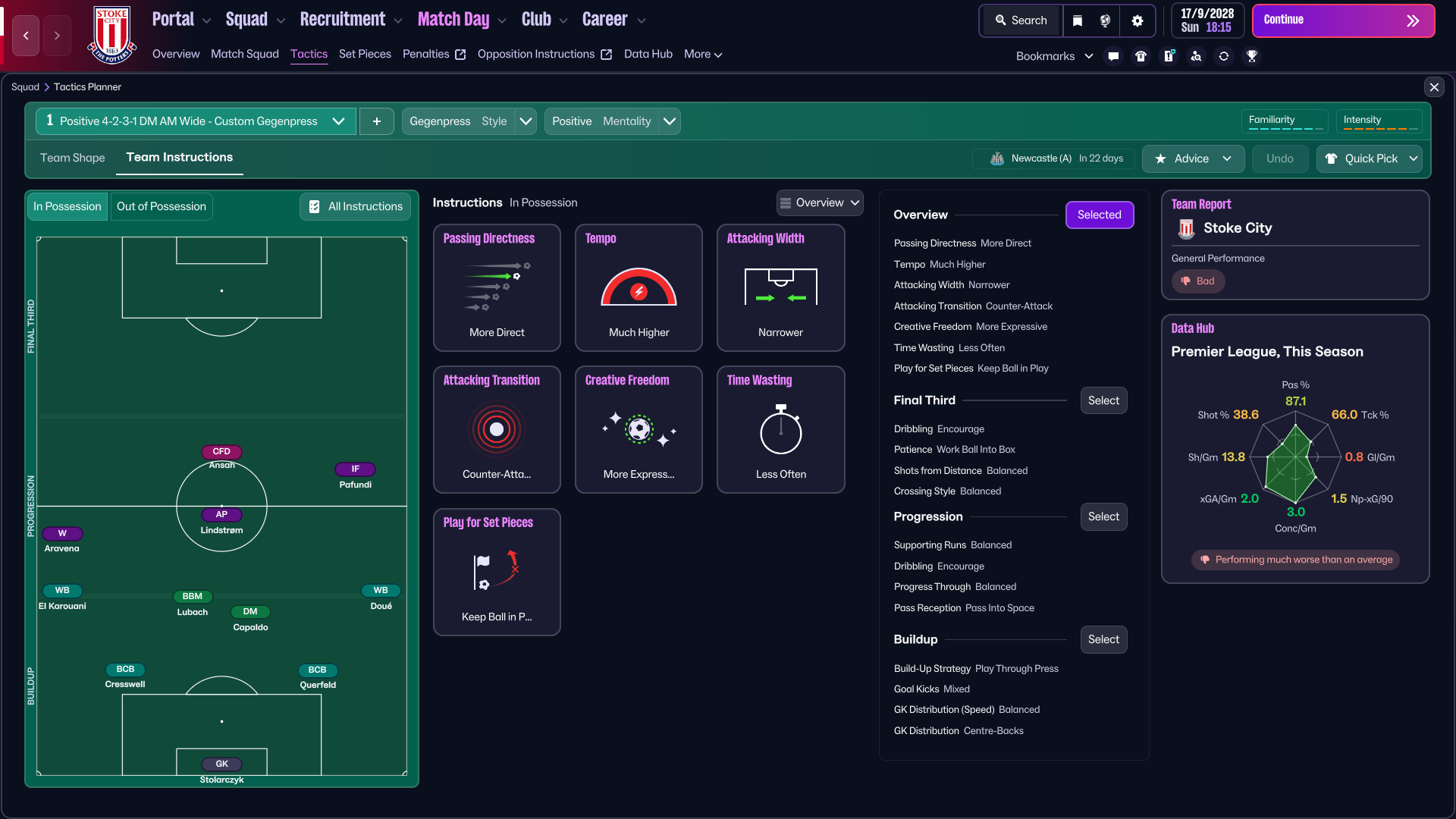
gegenpress
control possession
The tactical theory behind the 4-2-3-1 DM Wide: roles, instructions, and the trade-offs that decide whether the system holds up.
Klopp-style gegenpressing in FM, including squad profile, line-and-press pairing, sustainable workload, and the antipatterns to avoid.
Double pivots and flat pairs in 4-2-3-1 and 4-4-2: when each pairing works, when it collapses, and the AMC unicorn that rescues both.
Pass map, average position, xG, possession by zone: what each tablet panel tells you in FM and the tactical change it should trigger.