
4-2-3-1 DM Wide
An aggressive high press, rapid transitions and short central build-up, with the main trade-off being exposure behind the defence and potential congestion…
Loading tactical analysis...
4-2-3-1 DM Wide
4-4-1-1 2 DM
Positive
Clean Slate
1
3
Ball-Playing Goalkeeper
Goalkeeper
2
2
Ball-Playing Center-Back
Centre-Back
2
4
Ball-Playing Center-Back
Centre-Back
3
1
Wing Back
Full Back
3
3
Defensive Midfielder
Defensive Midfielder
3
5
Full Back
Full Back
4
2
Box-To-Box Midfielder
Defensive Midfielder
5
1
Inside Forward
Winger
5
5
Inside Winger
Winger
6
3
Channel Forward
Center Forward
5
3
Attacking Midfielder
Attacking Midfielder
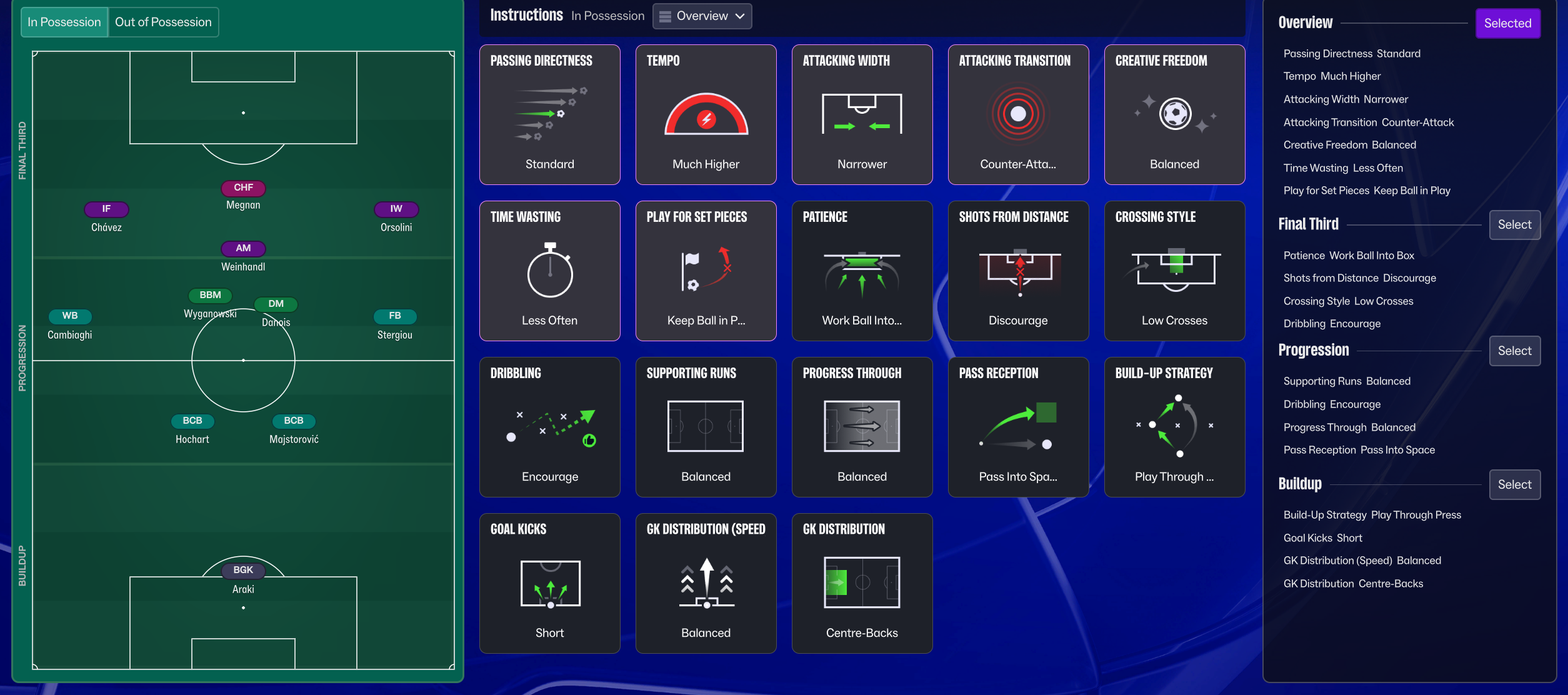
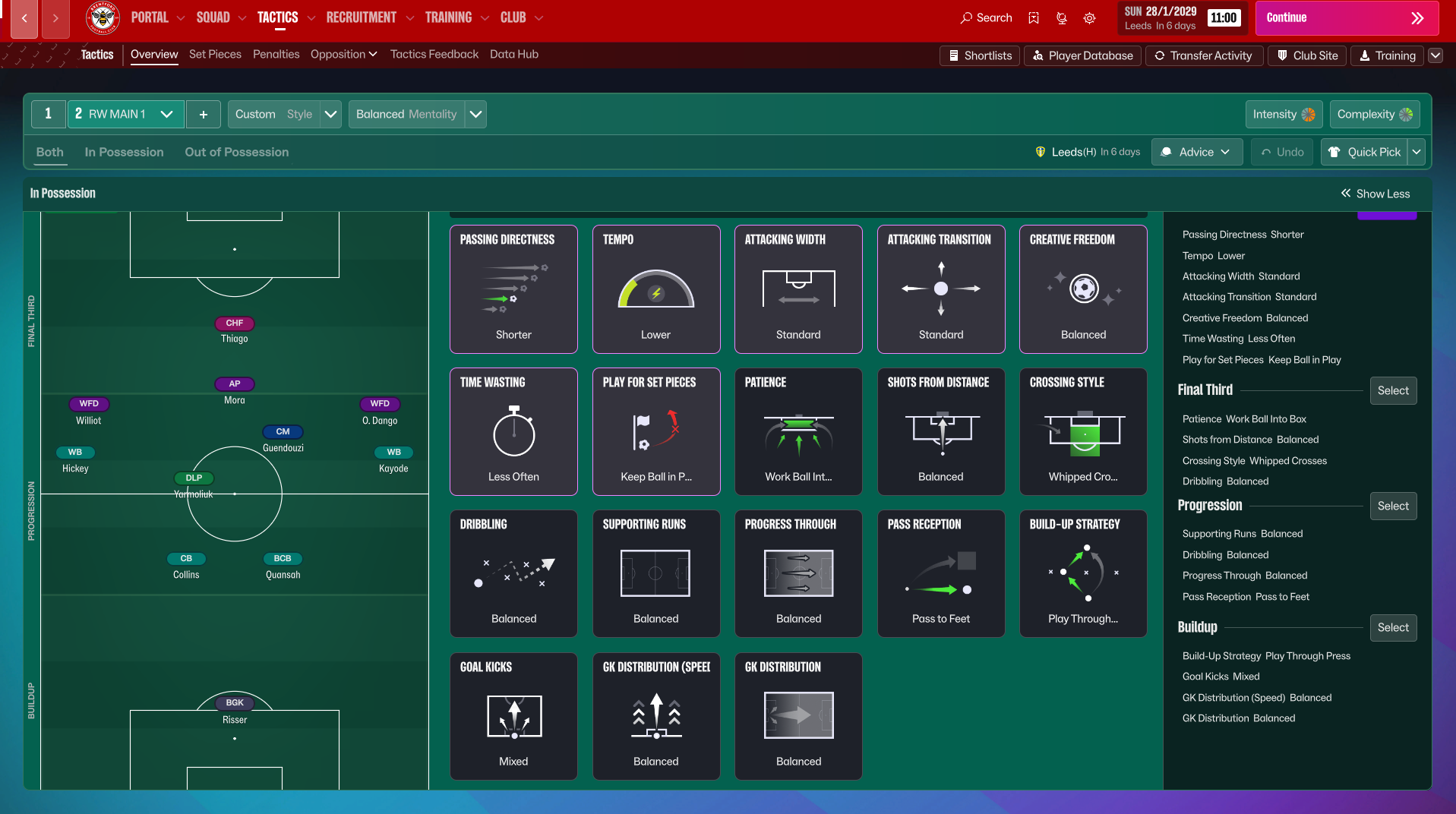
Standard
Much Higher
Narrower
Counter-Attack
Balanced
Less Often
Keep Ball in Play
Work Ball Into Box
Discourage
Low Crosses
Encourage
Overlap Balanced
Encourage
Balanced
Pass Into Space
Play Through Press
Short
Balanced
Center-Backs
Underlap Balanced
High Press
Higher
Step Up More
Much More Often
Counter-Press
Standard
Yes
Balanced
Balanced
Balanced
High Press, Much More Often pressing, and Counter-Press are aligned to seek turnovers high up the pitch.
High Press and Much More Often Trigger Press are supported by the Counter-Press setting; the Centre Forward at [6,3] and Wingers at [5,1] and [5,5] lead the pressure.
Pass Into Space and Counter-Attack can quickly exploit openings, while Work Ball Into Box and Low Crosses favour attempts from closer range.
The Channel Forward at [6,3] offers a forward target for Pass Into Space, with the Inside Forward at [5,1] and Inside Winger at [5,5] joining the attack.
Much Higher Tempo encourages rapid circulation, while Work Ball Into Box calls for patience in the final third; this may make it harder to sustain composed attacks.
Much Higher Tempo and Work Ball Into Box are paired with the Attacking Midfielder at [5,3] and Channel Forward at [6,3] as central attacking options.
Narrower Attacking Width combines with an Inside Forward and Inside Winger, concentrating players centrally and potentially making the attack congested.
Narrower Attacking Width sits alongside the Inside Forward at [5,1] and Inside Winger at [5,5].
Space behind the defensive line
High Press, a Higher Defensive Line and Step Up More make the team vulnerable to well-timed passes over the press, especially if the press is beaten.
The Higher Defensive Line and Step Up More expose the space behind the Centre-Backs at [2,2] and [2,4], with the Goalkeeper at [1,3] behind them.
high
Counter-attacks after pressing is bypassed
Much More Often Trigger Press and Counter-Press can pull players towards the ball; if opponents escape the pressure, gaps may open before the team recovers.
Much More Often Trigger Press and Counter-Press are paired with the Box-To-Box Midfielder at [4,2] and Defensive Midfielder at [3,3] as central cover.
medium
Ball-Playing Goalkeeper with Ball-Playing Centre-Backs
This trio gives the team central short-passing options for building through pressure.
The Ball-Playing Goalkeeper at [1,3] and Ball-Playing Centre-Backs at [2,2] and [2,4] complement Short Goal Kicks and Play Through Press.
Attacking Midfielder behind a Channel Forward
The central pairing provides a link between midfield and the forward line, with the Channel Forward able to threaten beyond the defence.
The Attacking Midfielder at [5,3] sits behind the Channel Forward at [6,3], with Pass Into Space and Counter-Attack selected.
How can I protect the space behind my Higher Defensive Line when I use Step Up More?
What should I look for in my players to make Play Through Press and Short Goal Kicks safer?
How can I create more width around my Inside Forward and Inside Winger without losing central support?
This is an ambitious, front-foot setup with a coherent pressing scheme and credible short build-up options. Its attacking combination of Pass Into Space, Counter-Attack and a Channel Forward can threaten quickly, but Much Higher Tempo sits awkwardly with Work Ball Into Box and the narrow width risks crowding the two inside attackers. The most important concern is the Higher Defensive Line combined with Step Up More: a ball over the press can expose the centre-backs, so reducing the line height is the first adjustment I would test.
The team builds short through the Ball-Playing Goalkeeper and Ball-Playing Centre-Backs, then looks to release forward runners with Pass Into Space. Narrower width and two inside attackers concentrate the attack, while Work Ball Into Box and Low Crosses favour close-range chances.
Counter-Press is intended to win the ball back quickly after turnovers, matching the aggressive High Press. If that first pressure is beaten, the Higher Defensive Line and Step Up More can leave space behind.
An aggressive high press, rapid transitions and short central build-up, with the main trade-off being exposure behind the defence and potential congestion in the final third.
clean slate
clean slate
gegenpress
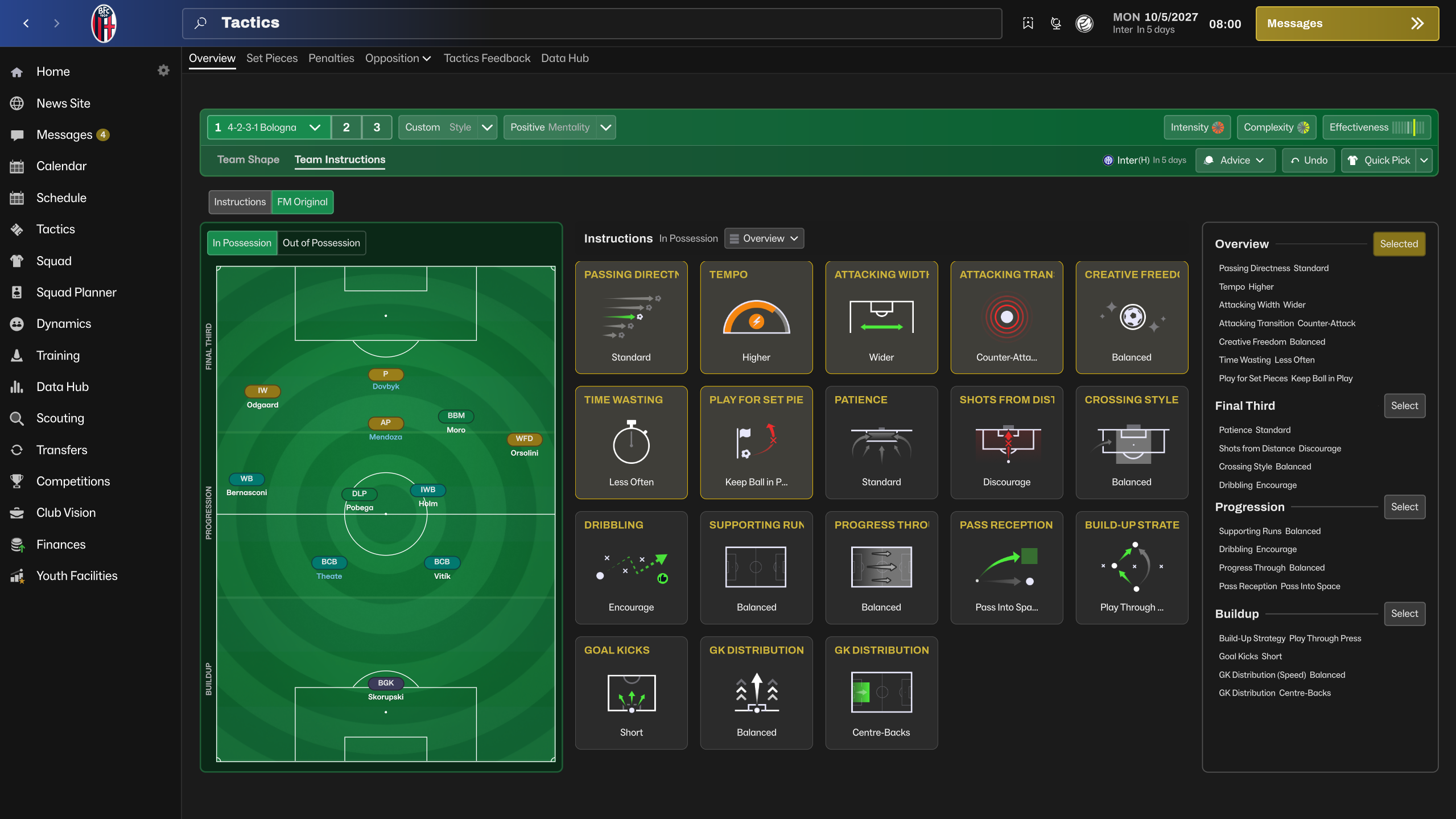
clean slate
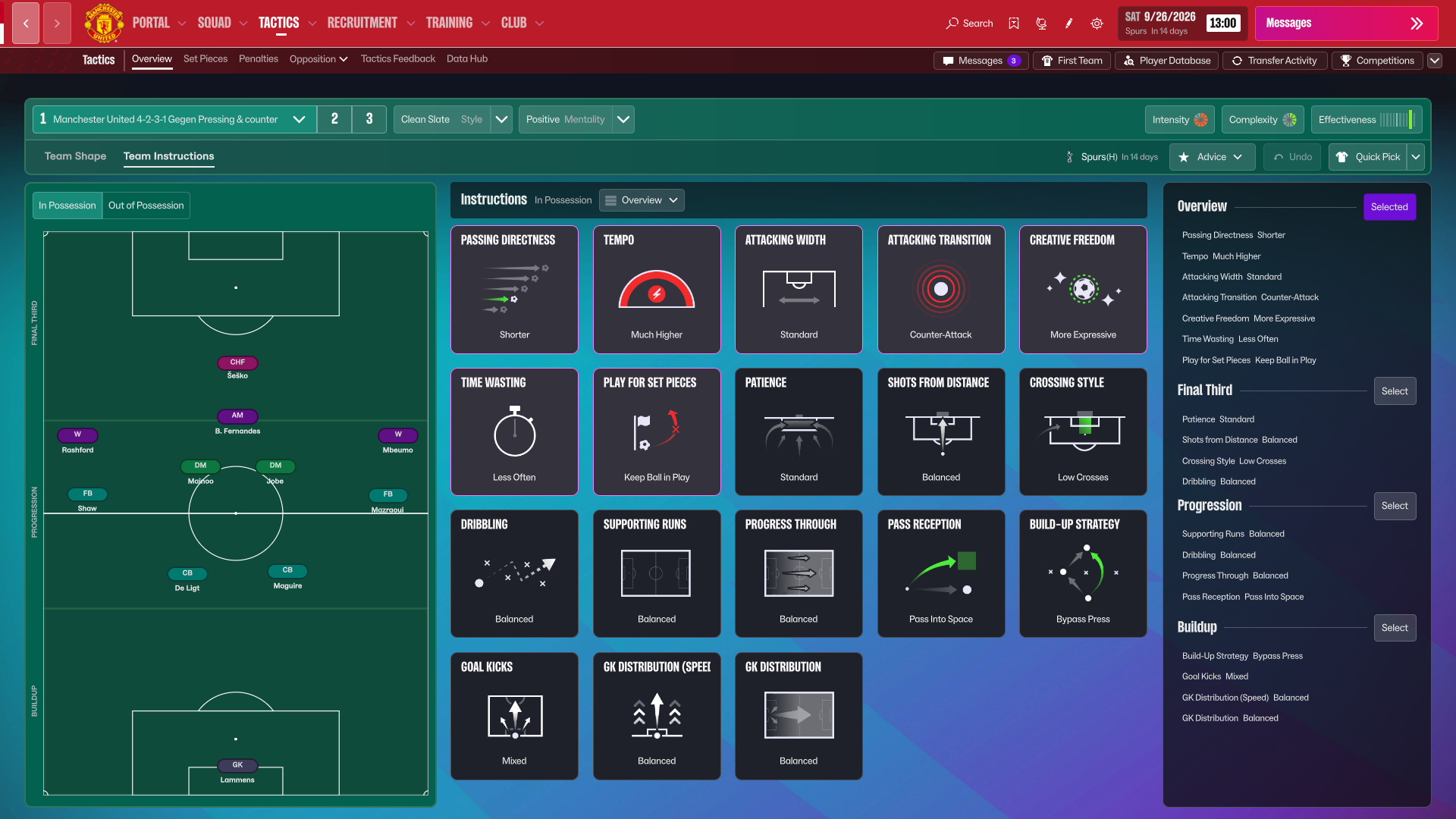
clean slate
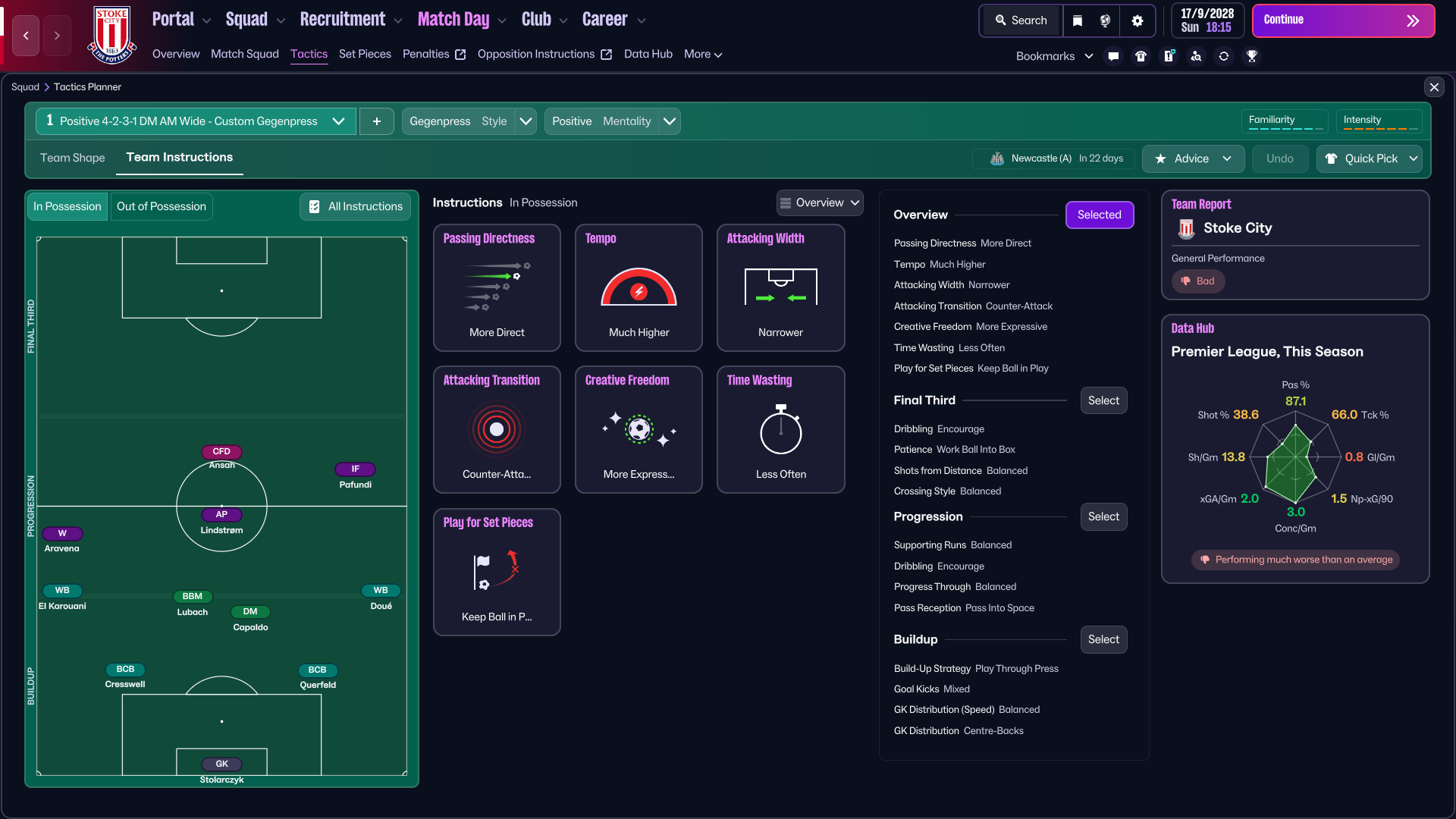
gegenpress
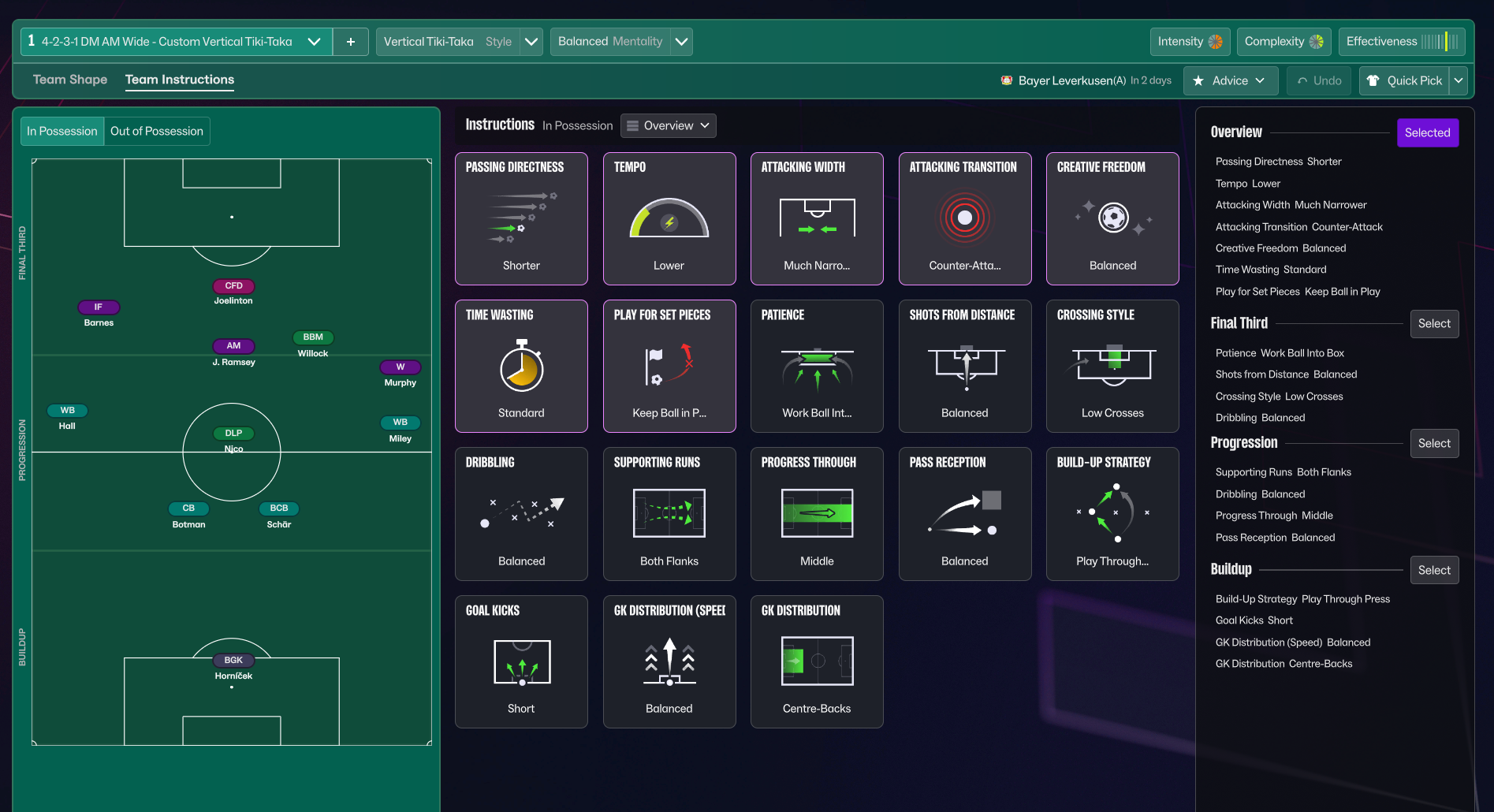
vertical tiki taka
control possession
The tactical theory behind the 4-2-3-1 DM Wide: roles, instructions, and the trade-offs that decide whether the system holds up.
Double pivots and flat pairs in 4-2-3-1 and 4-4-2: when each pairing works, when it collapses, and the AMC unicorn that rescues both.
Klopp-style gegenpressing in FM, including squad profile, line-and-press pairing, sustainable workload, and the antipatterns to avoid.
Routines, takers, and target picks. How to turn corners and free-kicks into a reliable third of your goal output.