
4-2-3-1 DM Wide
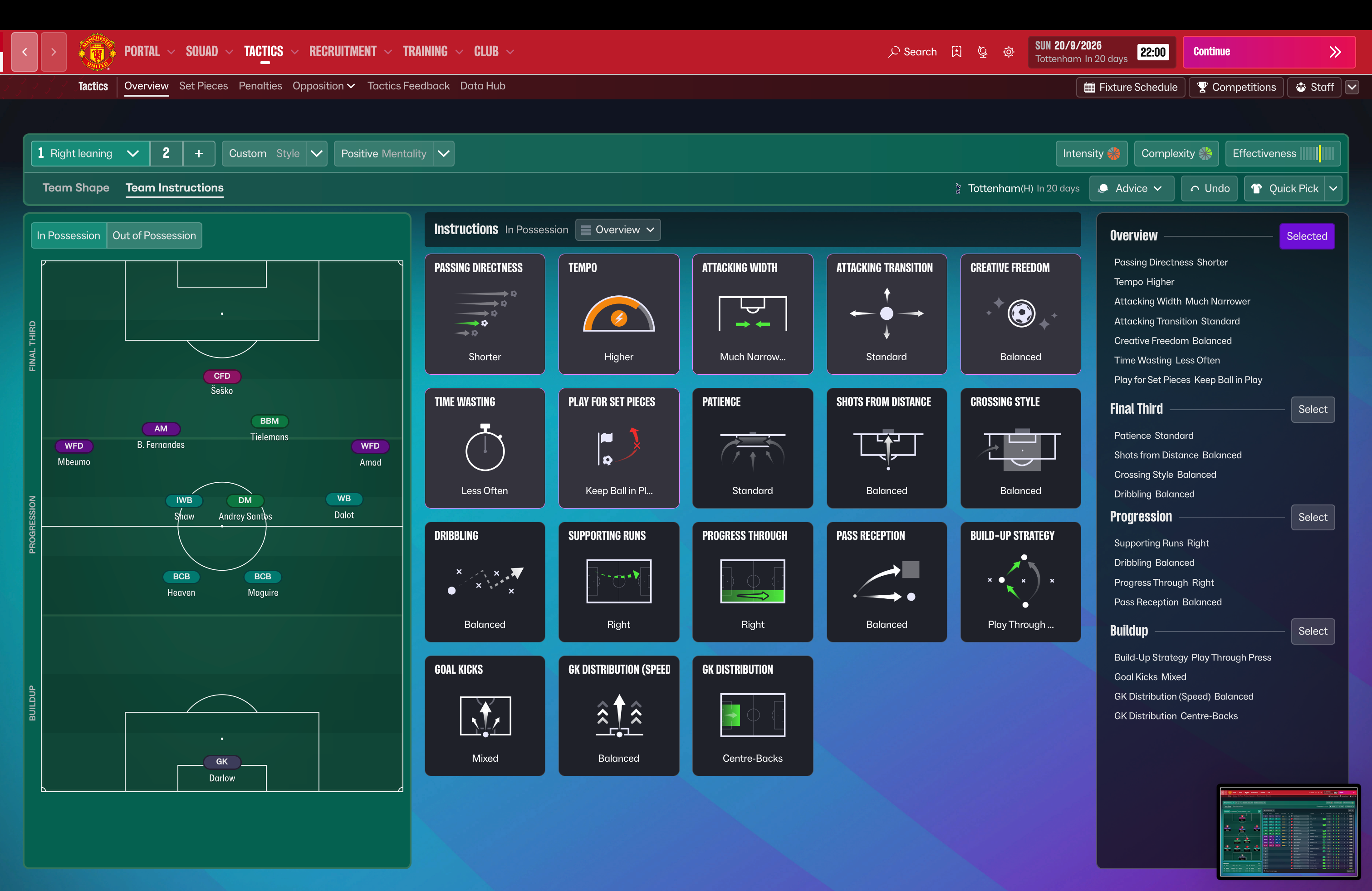
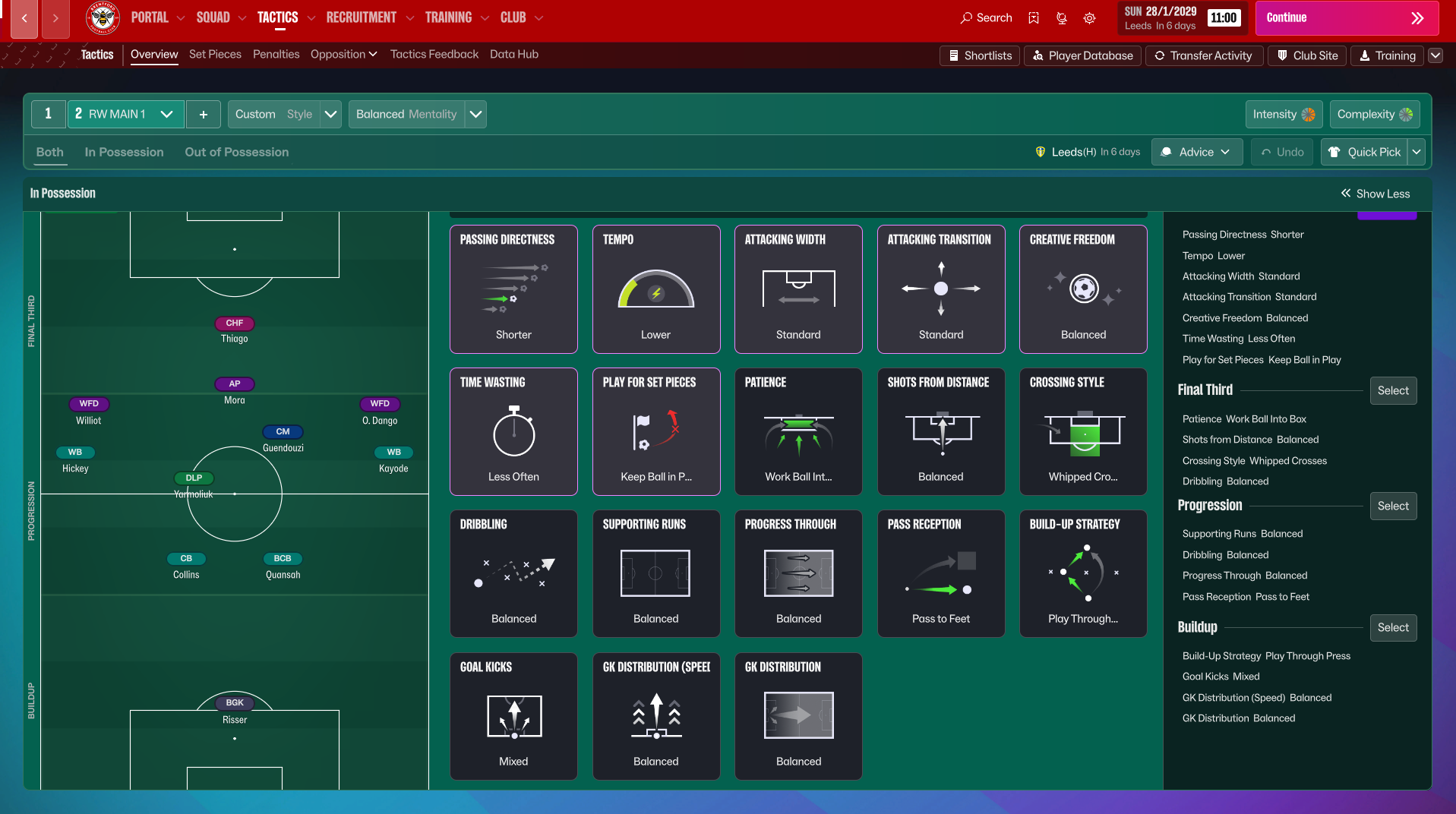
A positive, possession-oriented attack with a right-sided overload, paired with a High Press and frequent pressure on the opposition. Play Through Press…
Loading tactical analysis...
4-2-3-1 DM Wide
4-4-1-1 2 DM
Right leaning
Positive
Clean Slate
1
3
Goalkeeper
Goalkeeper
2
2
Ball-Playing Center-Back
Centre-Back
2
4
Ball-Playing Center-Back
Centre-Back
3
2
Inside Wing-Back
Full Back
3
3
Defensive Midfielder
Defensive Midfielder
3
5
Wing Back
Full Back
4
4
Box-To-Box Midfielder
Defensive Midfielder
5
1
Wide Forward
Wide Midfielder
5
2
Attacking Midfielder
Central Midfielder
5
5
Wide Forward
Wide Midfielder
6
3
Center Forward
Tracking Centre Forward
Shorter
Higher
Much Narrower
Standard
Balanced
Less Often
Keep Ball in Play
Standard
Balanced
Balanced
Balanced
Overlap Right
Balanced
Right
Balanced
Play Through Press
Mixed
Balanced
Center-Backs
Underlap Right
High Press
Standard
Drop Off More
More Often
Standard
Get Stuck In
Yes
Balanced
Balanced
Balanced
Play Through Press and shorter passing suit the two Ball-Playing Centre-Backs, giving the team a route to retain possession while progressing centrally.
Ball-Playing Centre-Back at [2,2] and Ball-Playing Centre-Back at [2,4] support Play Through Press and Shorter passing.
Right-sided overlap and progression focus can connect the Wing-Back with the right Wide Forward, while the Box-To-Box Midfielder offers an additional supporting runner.
Wing-Back at [3,5], Wide Forward at [5,5] and Box-To-Box Midfielder at [4,4] combine with Overlap Right and Progress Through Right.
The High Press seeks to engage high up the pitch, but Drop Off More can concede space and weaken the compactness needed to support that approach.
High Press is paired with Drop Off More defensive-line behaviour.
Much Narrower compresses the attack despite a right-sided overlap and a Progress Through Right focus, potentially making the intended wide route less effective.
Much Narrower attacking width conflicts with Overlap Right and Progress Through Right, supported by Wing-Back at [3,5].
Space behind the pressing line
High Press and More Often pressing can leave space to exploit if the first press is beaten; Drop Off More may also make the defensive line less coordinated with the high engagement.
High Press, More Often pressing and Drop Off More are used alongside Centre-Backs at [2,2] and [2,4].
high
Right-sided counter-attacks
The right Wing-Back is encouraged to join attacks, and the right-focused progression can draw players towards that flank, potentially exposing it when possession is lost.
Wing-Back at [3,5] supports Overlap Right and Progress Through Right, with Standard defensive transition.
medium
Right Wing-Back and right Wide Forward
The overlap instruction supports a two-player threat on the right, with the wide attacker able to combine or create room for the advancing Wing-Back.
Wing-Back at [3,5] and Wide Forward at [5,5] align with Overlap Right.
Ball-Playing Centre-Backs and Defensive Midfielder
The centre-backs can start the build-up through the press while the Defensive Midfielder provides a central passing option and protection.
Ball-Playing Centre-Backs at [2,2] and [2,4] are supported by Defensive Midfielder at [3,3] under Play Through Press.
How can I make my high press more secure when the defensive line is set to Drop Off More?
What should I look for in my Wing-Back and Wide Forward to make Overlap Right effective?
How can I keep my right-sided attacking focus from making my build-up predictable?
This positive, high-pressing 4-2-3-1 has a coherent central build-up through its Ball-Playing Centre-Backs and a clear right-sided overload built around the Wing-Back and Wide Forward. Its main weaknesses are the mismatch between High Press and Drop Off More, the very narrow attacking width despite the flank emphasis, and the predictability and counter-attacking exposure created by concentrating support on the right. I would first make the defensive-line behaviour more compatible with the press, then test a less narrow width and calmer tackling.
Build through the Ball-Playing Centre-Backs with shorter, higher-tempo passing, then focus progression and overlapping support on the right. The much narrower width encourages central combinations but may make that flank overload congested.
The transition is set to Standard, so there is no specified emphasis on either Counter-Press or Regroup after possession is lost.
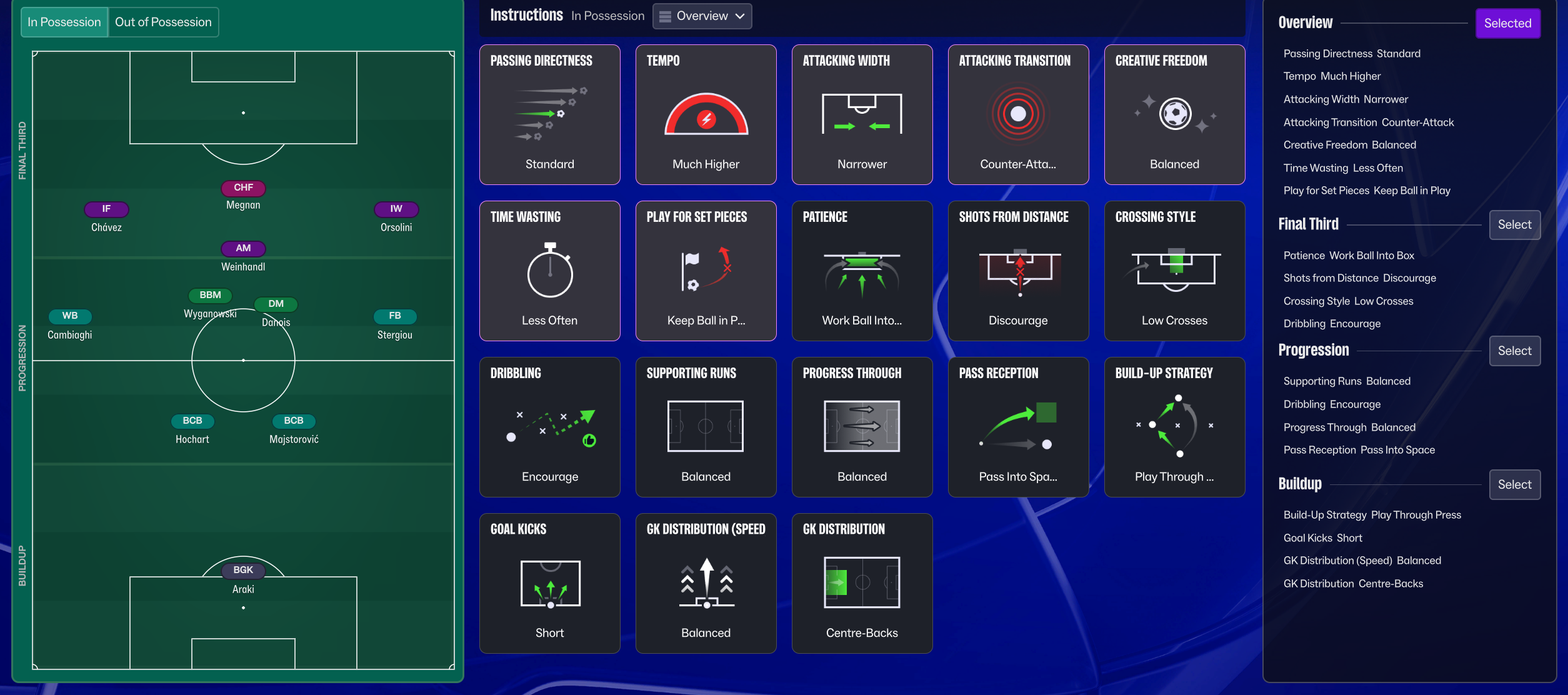
A positive, possession-oriented attack with a right-sided overload, paired with a High Press and frequent pressure on the opposition.
clean slate
clean slate
gegenpress
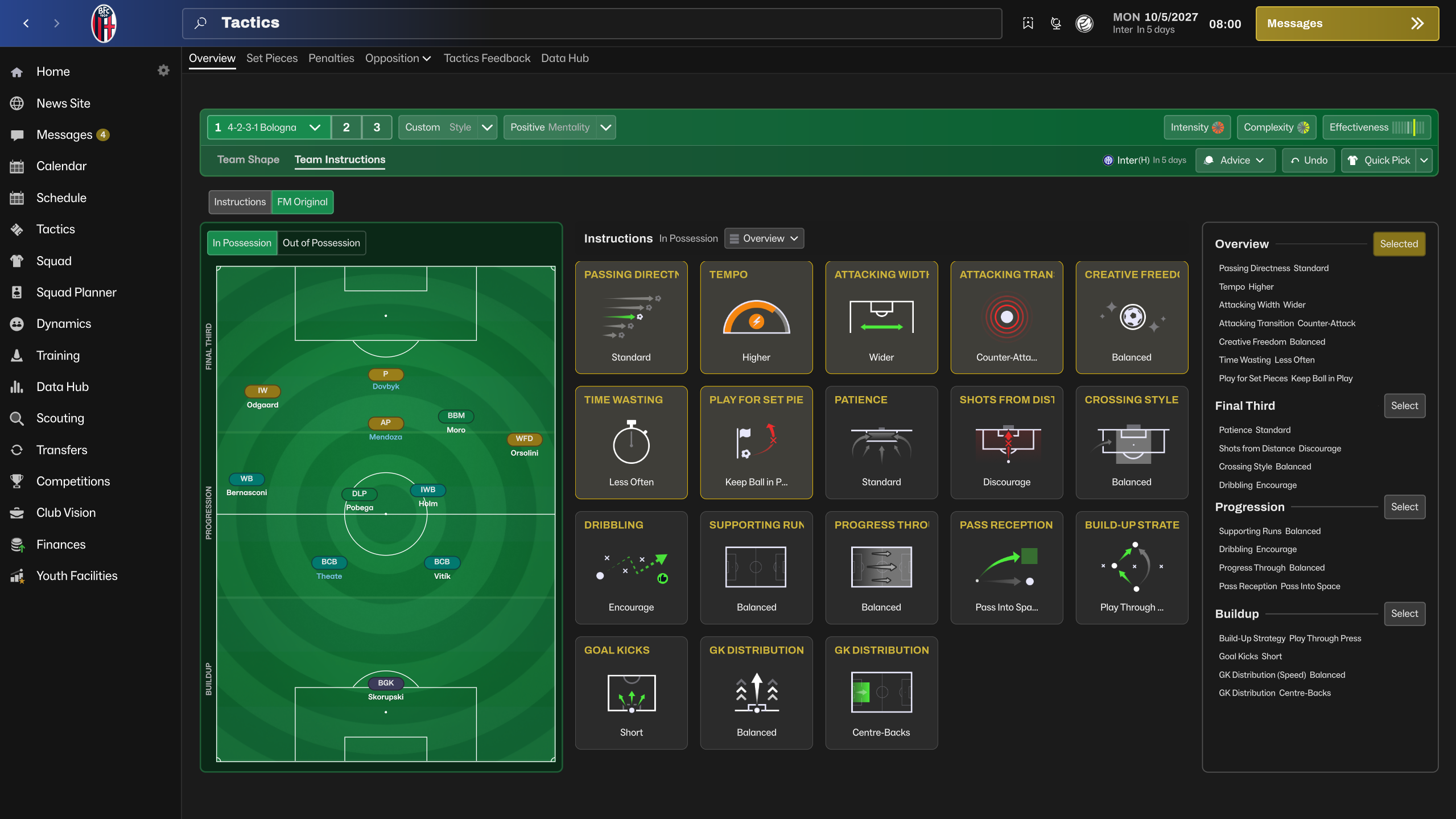
clean slate
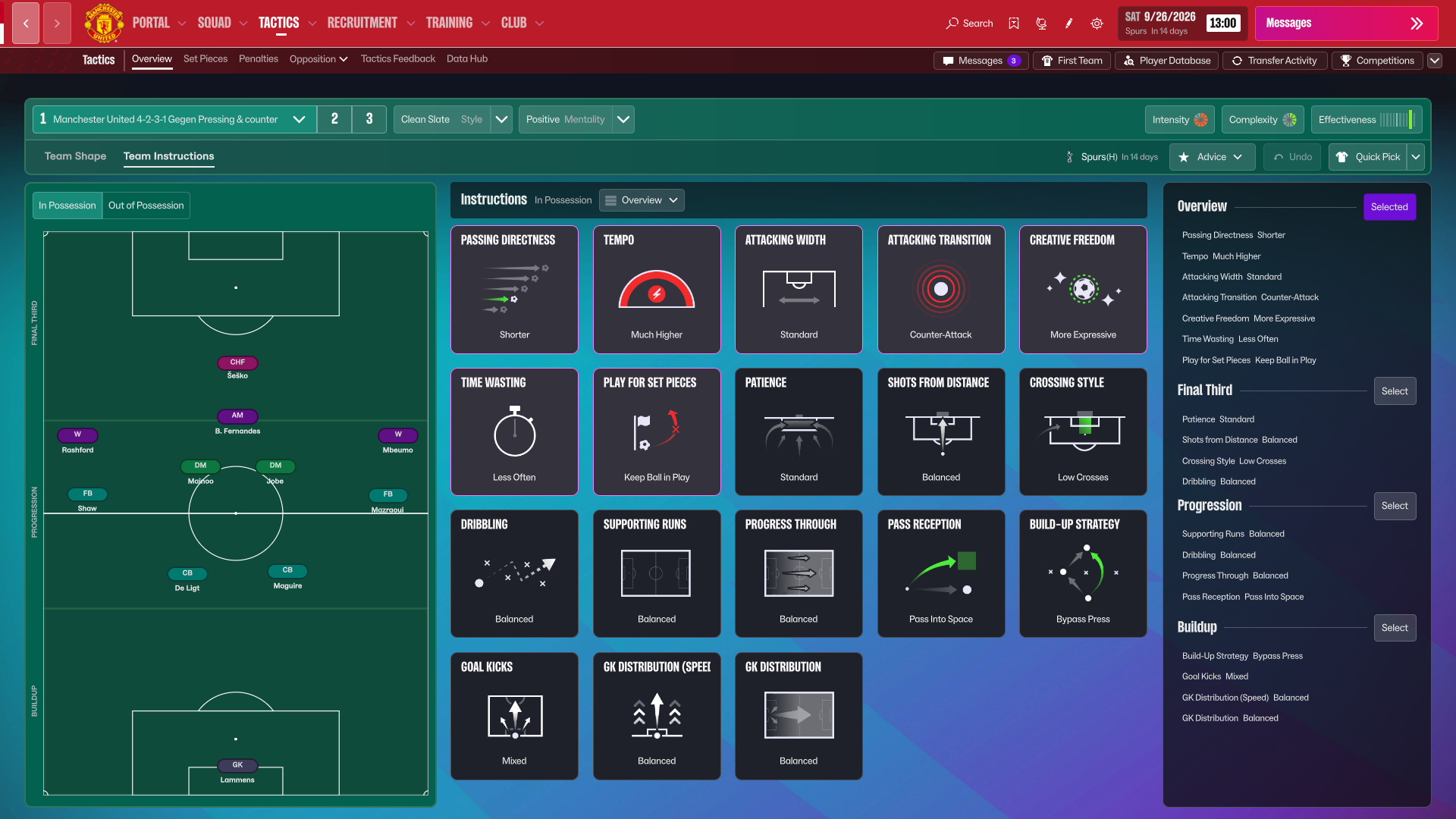
clean slate
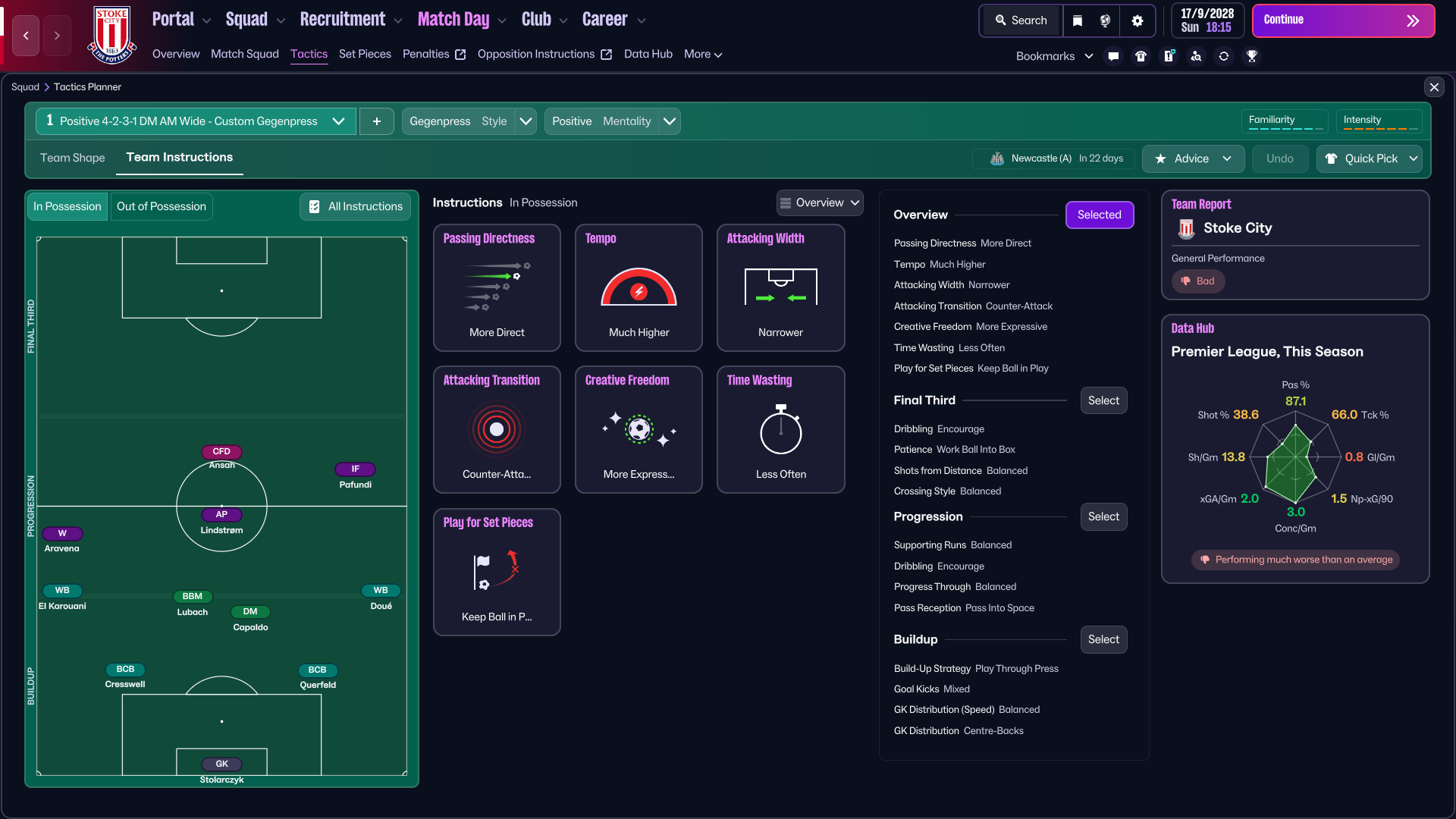
gegenpress
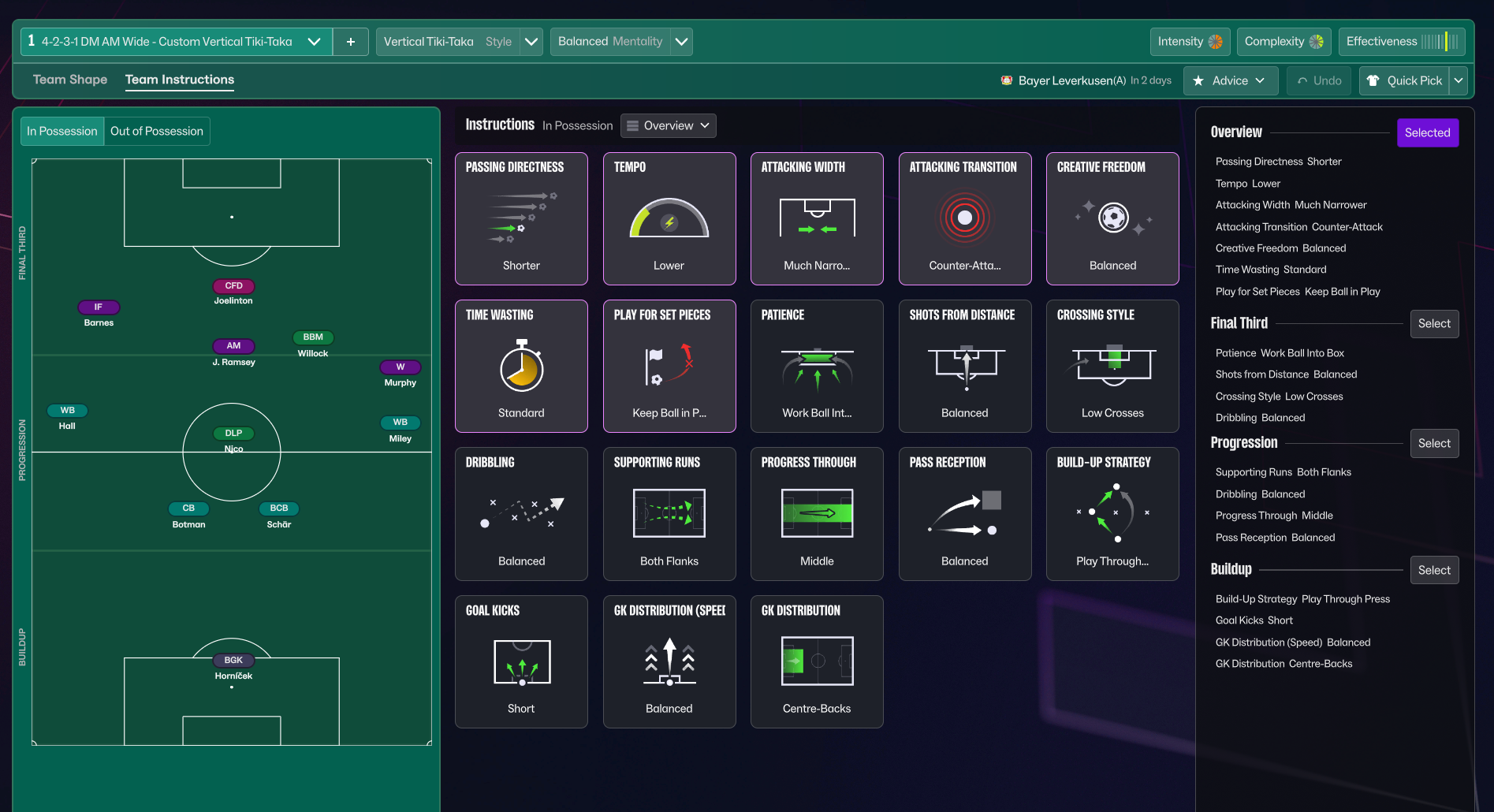
vertical tiki taka
control possession
The tactical theory behind the 4-2-3-1 DM Wide: roles, instructions, and the trade-offs that decide whether the system holds up.
Klopp-style gegenpressing in FM, including squad profile, line-and-press pairing, sustainable workload, and the antipatterns to avoid.
Double pivots and flat pairs in 4-2-3-1 and 4-4-2: when each pairing works, when it collapses, and the AMC unicorn that rescues both.
Pass map, average position, xG, possession by zone: what each tablet panel tells you in FM and the tactical change it should trigger.