
4-2-3-1 DM Wide
Controlling the ball and winning it back high up the pitch. Short goal kicks, Play Through Press and Shorter passing pair with a Ball-Playing Centre-Back…
Loading tactical analysis...
4-2-3-1 DM Wide
4-1-4-1 DM
Positive
Clean Slate
1
3
Goalkeeper
Goalkeeper
2
3
Centre-Back
Covering Centre-Back
2
4
Ball-Playing Center-Back
Centre-Back
2
1
Wing Back
Pressing Full-Back
3
2
Half Back
Screening Defensive Midfielder
4
2
Deep-Lying Playmaker
Screening Defensive Midfielder
4
3
Inside Wing-Back
Full Back
5
3
Free Role
Attacking Midfielder
5
1
Inside Forward
Winger
5
5
Winger
Winger
6
3
Deep-Lying Forward
Center Forward
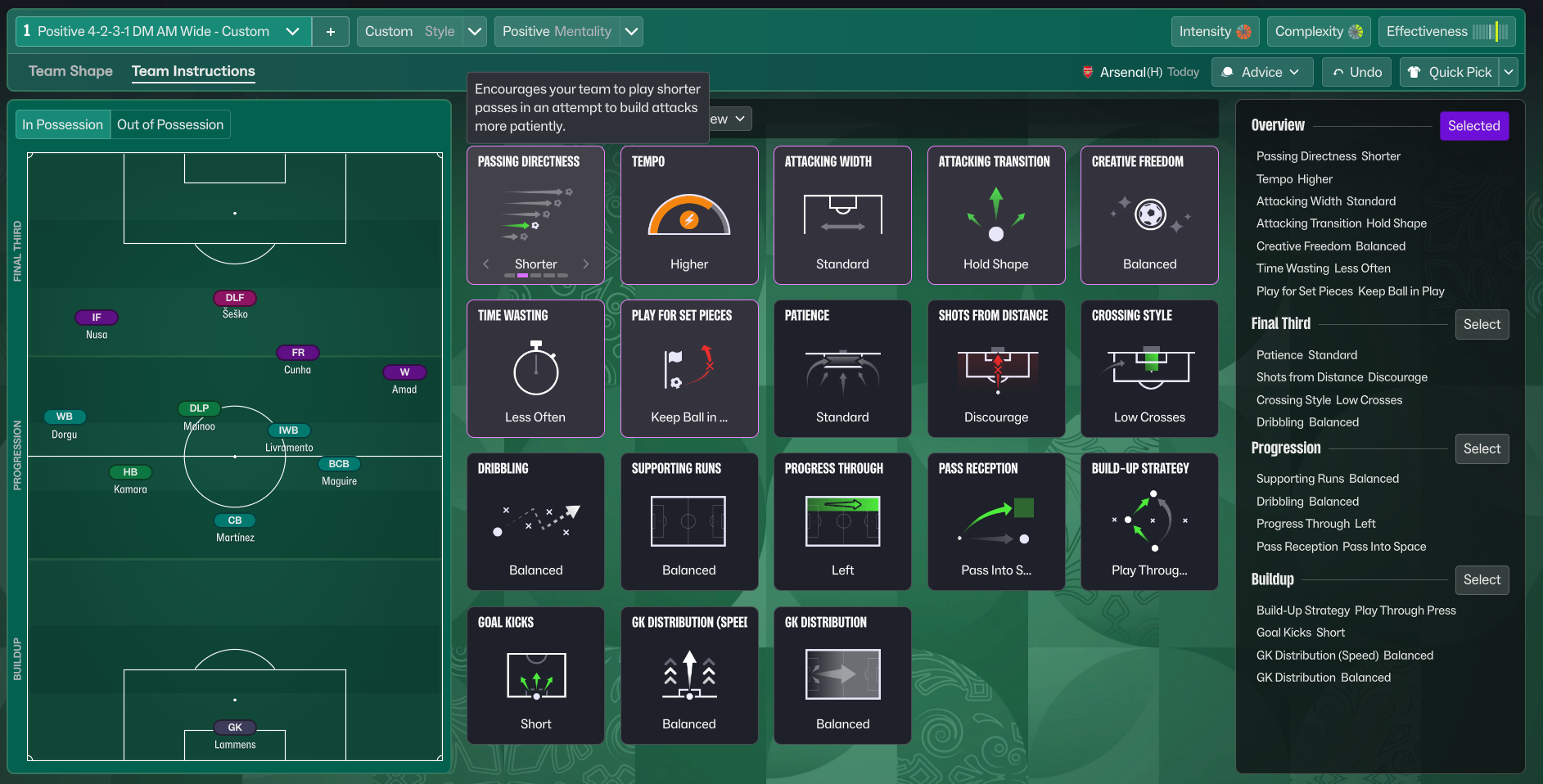
Shorter
Higher
Standard
Hold Shape
Balanced
Less Often
Keep Ball in Play
Standard
Discourage
Low Crosses
Balanced
Overlap Balanced
Balanced
Left
Pass Into Space
Play Through Press
Short
Balanced
Balanced
Underlap Balanced
High Press
Higher
Balanced
Much More Often
Counter-Press
Standard
Yes
Trap Outside
Trap Outside
Stop Crosses
Short goal kicks, Play Through Press and Shorter passing pair with a Ball-Playing Centre-Back and a Half Back, which gives safe, controlled progression.
[2,4] Ball-Playing Centre-Back and [3,2] Half Back support Play Through Press and short goal kicks.
High Press, Counter-Press and Much More Often triggers keep pressure on the ball, and a Pressing Full-Back plus a Screening Defensive Midfielder give some cover behind it.
[2,1] Pressing Full-Back and [4,2] Screening Defensive Midfielder.
Shorter passing and Play Through Press want patient, precise play, but Higher tempo and Pass Into Space push the team to rush and play riskier passes. Few runners ahead of the ball can exploit that space.
[6,3] Deep-Lying Forward and [5,3] Free Role are link players, not runners in behind.
Hold Shape slows the attack, while the out-of-possession plan is built on winning the ball back immediately. The two phases pull in different directions.
[2,1] Wing-Back and [4,3] Inside Wing-Back are asked to stay structured in possession but press hard out of it.
Space behind a high line
A Higher defensive line with a Much More Often press leaves space in behind if the press is bypassed, and only two centre-backs plus a Half Back protect it.
[2,3] Centre-Back / Covering Centre-Back and [2,4] Ball-Playing Centre-Back.
high
Left-side imbalance
The Wing-Back at [2,1] pushes forward and the Inside Forward sits ahead of it, so overall width is stretched by the press and attack focus on the left. This leaves the left flank exposed to counters.
[2,1] Wing-Back and [5,1] Inside Forward.
medium
Half Back + Deep-Lying Playmaker
Together they give a stable deep platform that dictates tempo and shields the back line.
[3,2] Half Back and [4,2] Deep-Lying Playmaker.
Deep-Lying Forward + Free Role
The forward drops to link play and the Free Role can exploit the space created.
[6,3] Deep-Lying Forward and [5,3] Free Role.
Do you have quick, mobile centre-backs to handle a Higher line and heavy pressing?
Are the left-sided players strong enough to justify Progress Through Left?
This is a possession-minded tactic with an aggressive press and a sound central structure, but it contradicts itself in a few places: higher tempo, Pass Into Space and Hold Shape pull against short build-up and Counter-Press. The Higher line combined with a Much More Often press is the biggest worry. Calming tempo and press intensity and using a more balanced reception style should make it more coherent and safer.
Patient short build-up from the back, funnelled centrally through the playmakers and progressed mostly down the left.
Immediate Counter-Press from a compact 4-1-4-1 with a high line.
Controlling the ball and winning it back high up the pitch.
clean slate
clean slate
clean slate
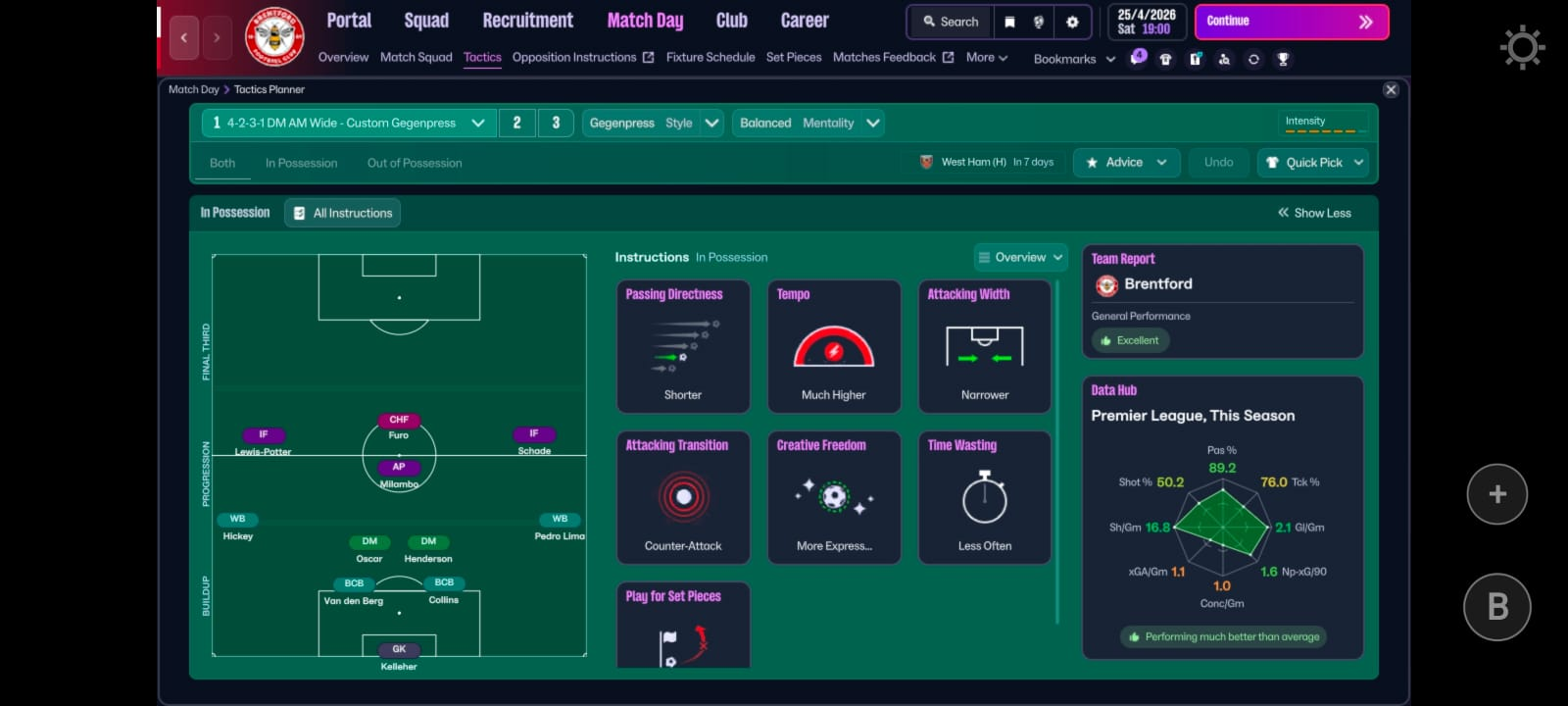
gegenpress
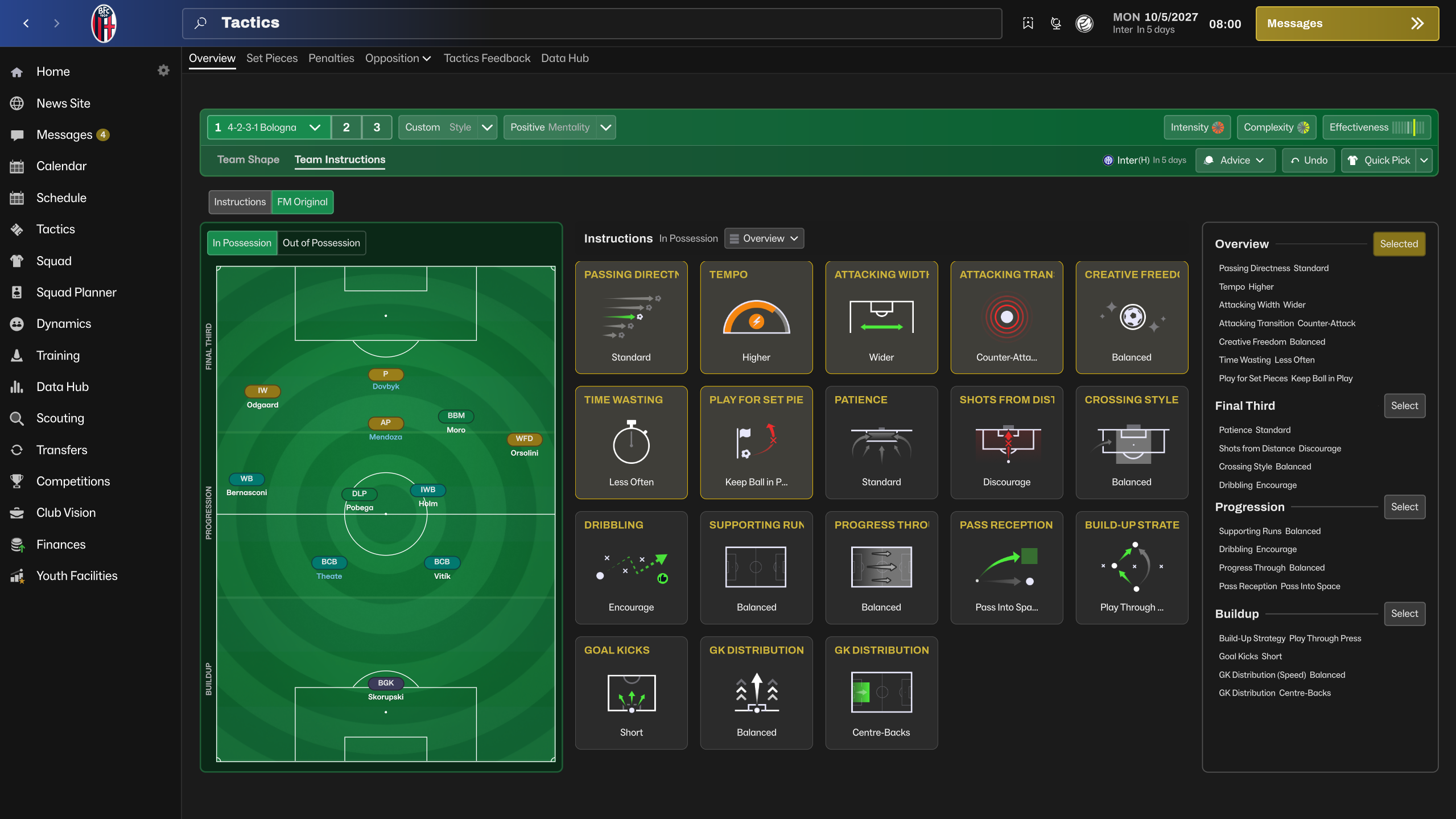
clean slate
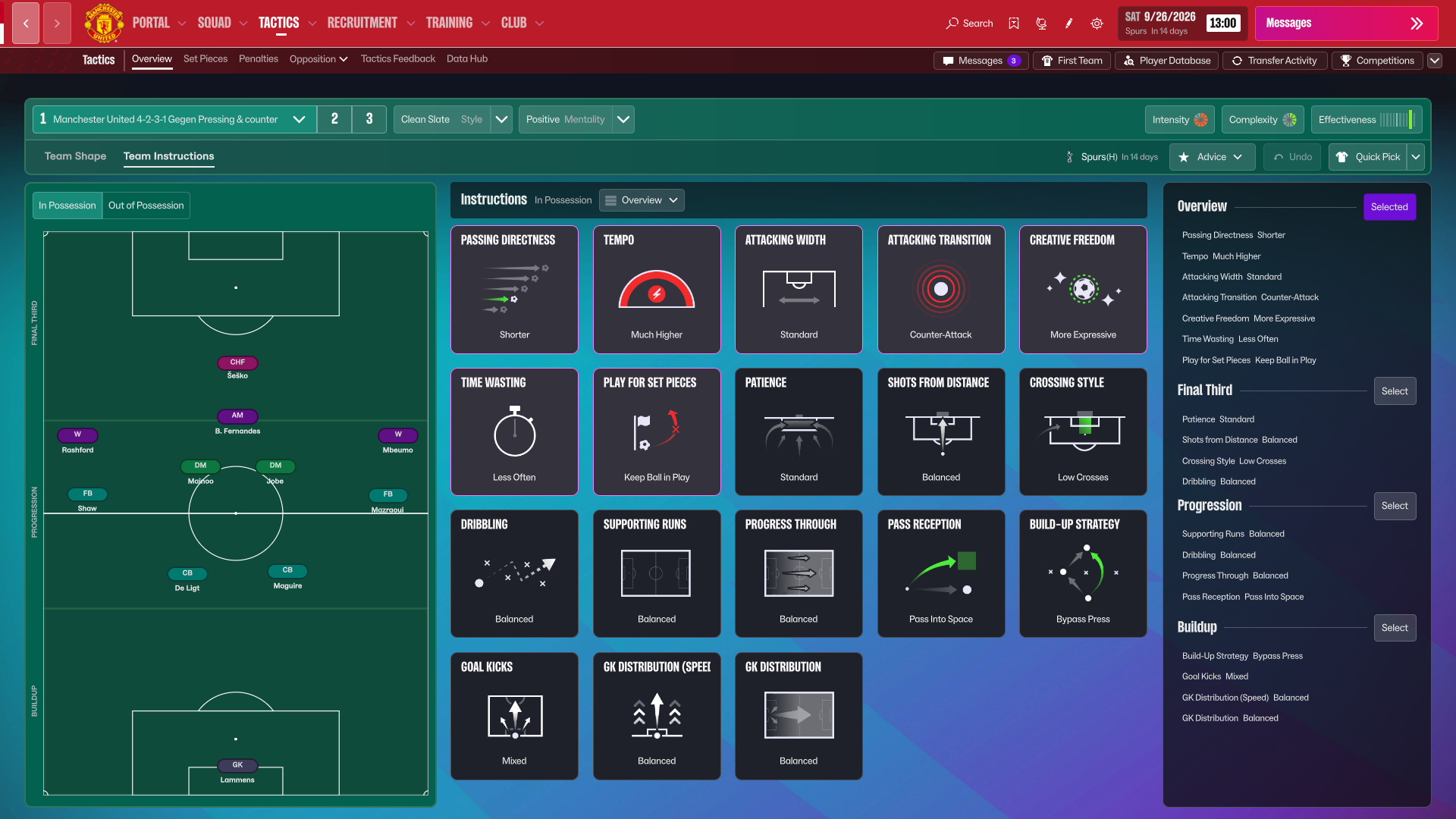
clean slate
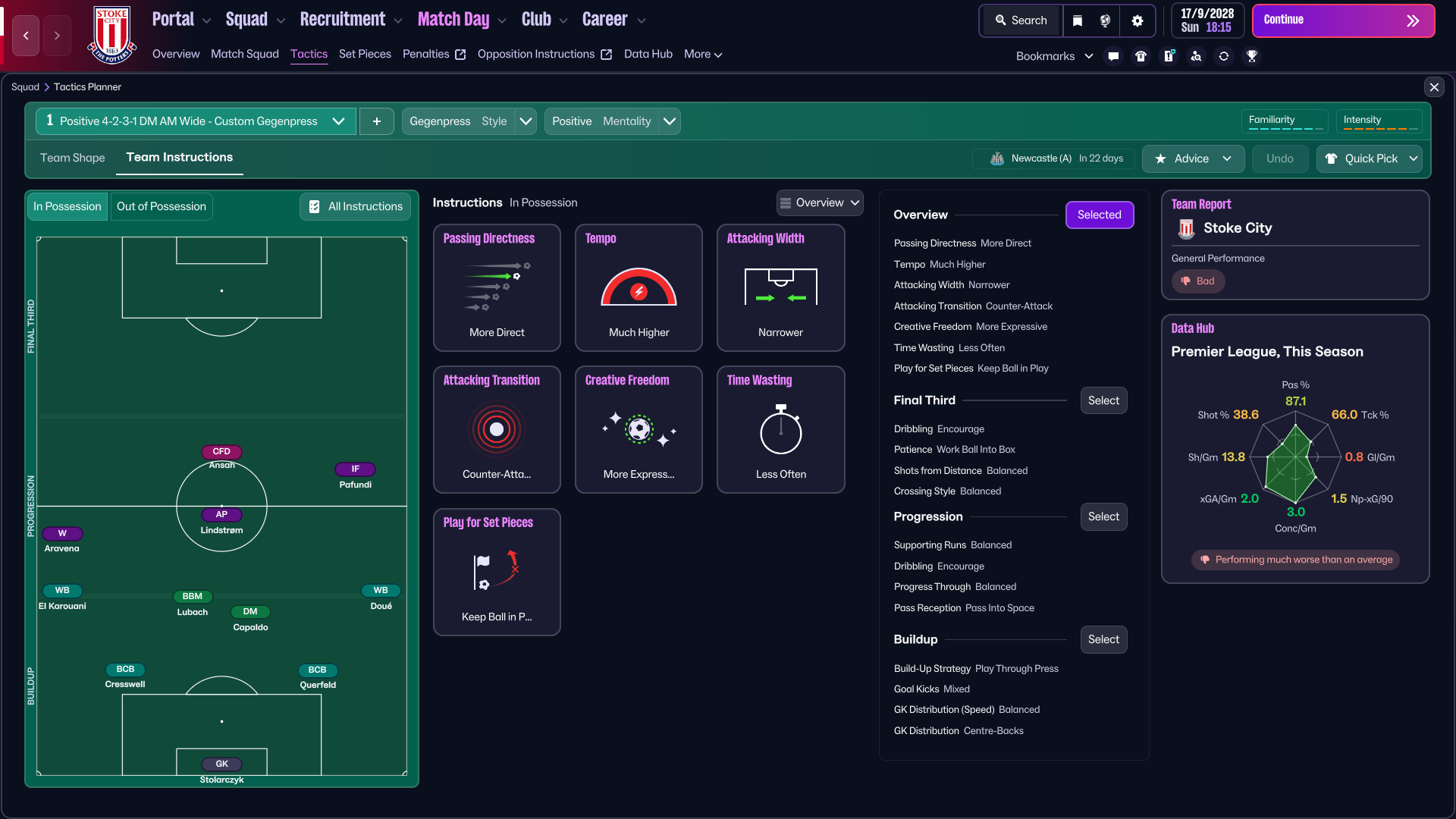
gegenpress
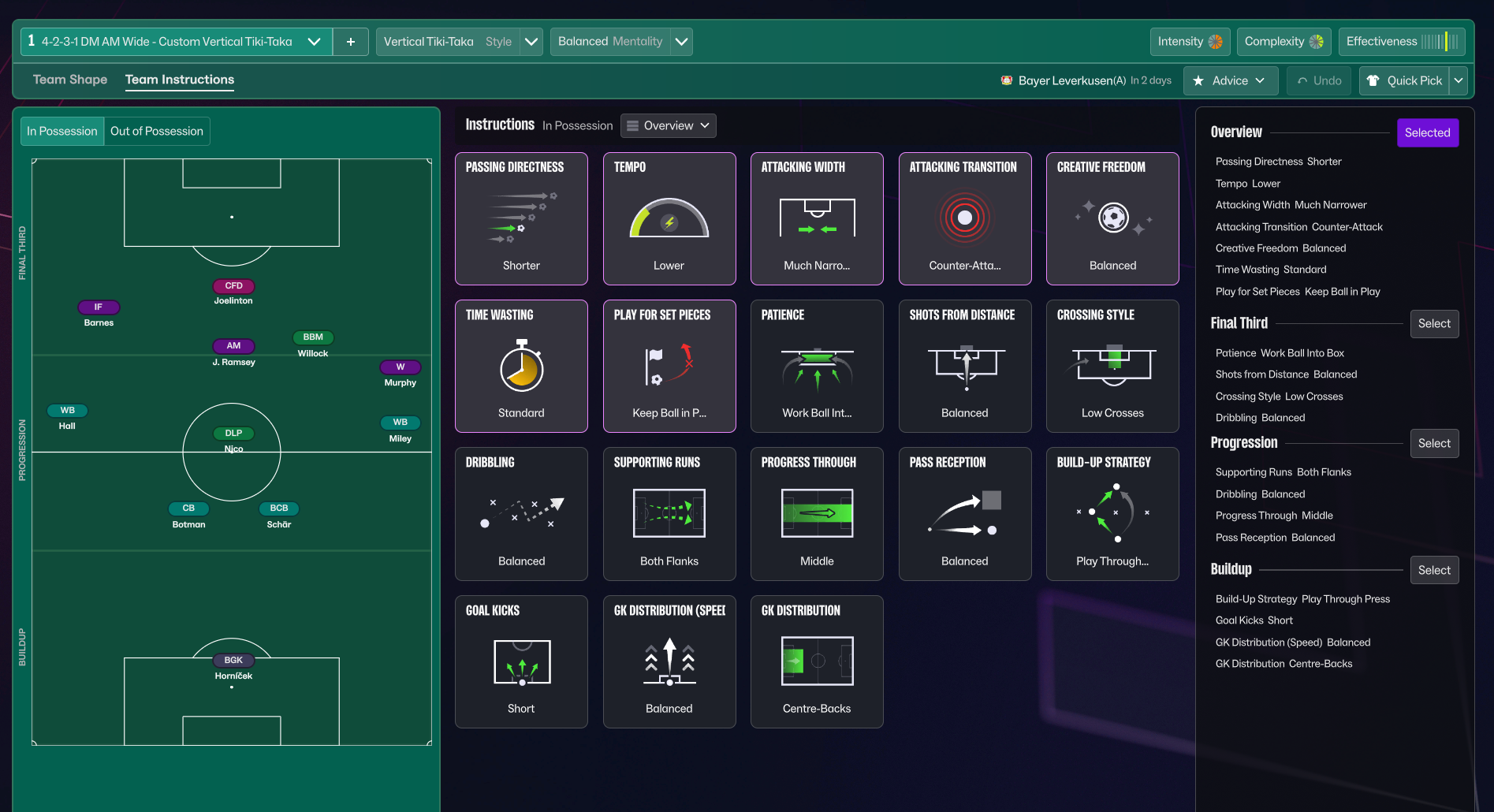
vertical tiki taka
The tactical theory behind the 4-2-3-1 DM Wide: roles, instructions, and the trade-offs that decide whether the system holds up.
Double pivots and flat pairs in 4-2-3-1 and 4-4-2: when each pairing works, when it collapses, and the AMC unicorn that rescues both.
Klopp-style gegenpressing in FM, including squad profile, line-and-press pairing, sustainable workload, and the antipatterns to avoid.
Counter-Press, Regroup, Stand Off, Trigger Press: what each pressing instruction does in FM and how to pair them without contradicting.