4-3-3 DM Wide
Control the ball through a short-passing build-up, create through both flanks and central support, and press high to recover possession. Much Shorter…
Loading tactical analysis...
4-3-3 DM Wide
4-1-4-1 DM
Positive
Clean Slate
1
3
Goalkeeper
Goalkeeper
2
2
Ball-Playing Center-Back
Centre-Back
2
4
Ball-Playing Center-Back
Centre-Back
3
1
Full Back
Full Back
3
3
Deep-Lying Playmaker
Screening Defensive Midfielder
3
4
Inside Wing-Back
Full Back
4
2
Midfield Playmaker
Central Midfielder
5
1
Winger
Wide Midfielder
5
4
Attacking Midfielder
Pressing Central Midfielder
5
5
Winger
Wide Midfielder
6
3
Target Forward
Center Forward
Much Shorter
Higher
Wider
Counter-Attack
Balanced
Less Often
Keep Ball in Play
Work Ball Into Box
Discourage
Low Crosses
Balanced
Overlap Balanced
Balanced
Both Flanks
Balanced
Play Through Press
Mixed
Balanced
Balanced
Underlap Balanced
High Press
Higher
Balanced
More Often
Counter-Press
Standard
Yes
Balanced
Balanced
Balanced
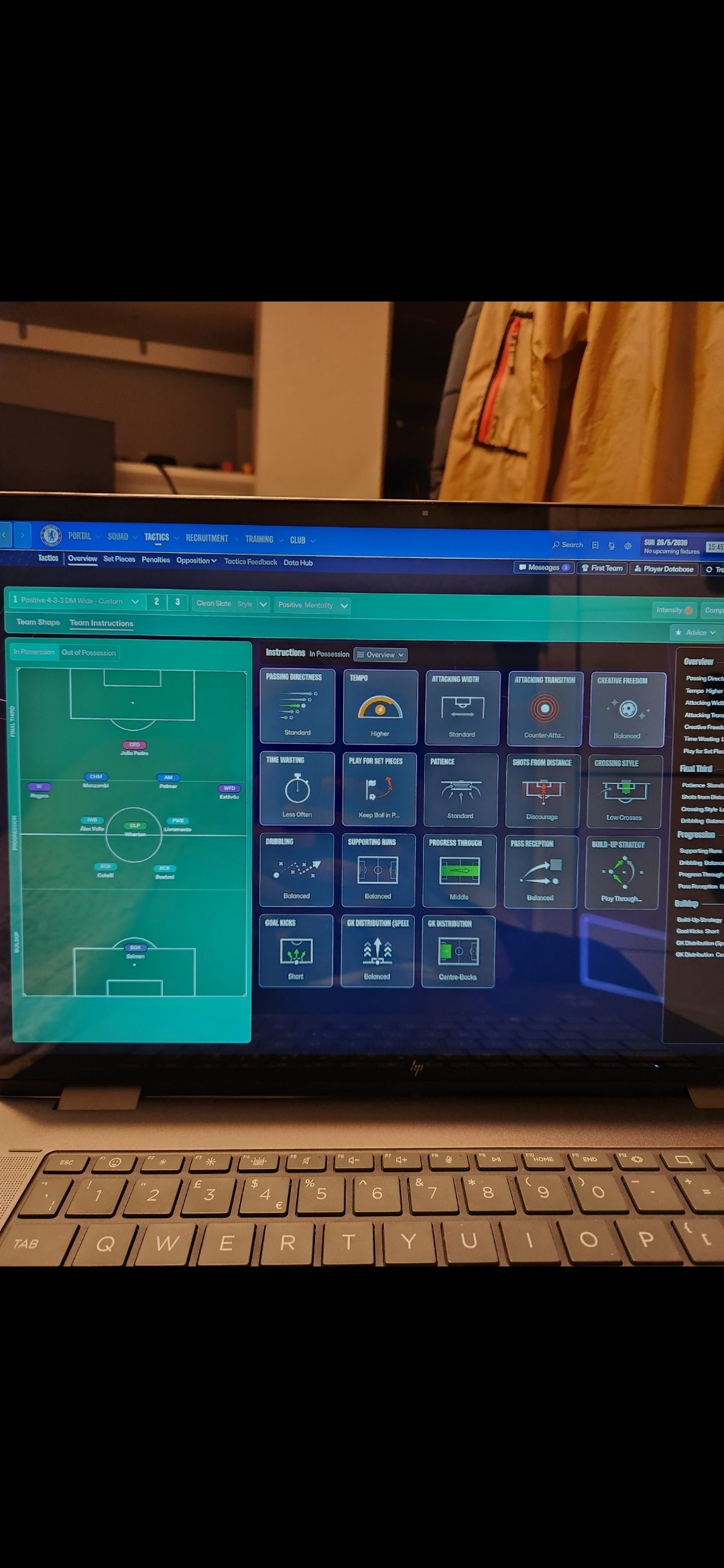
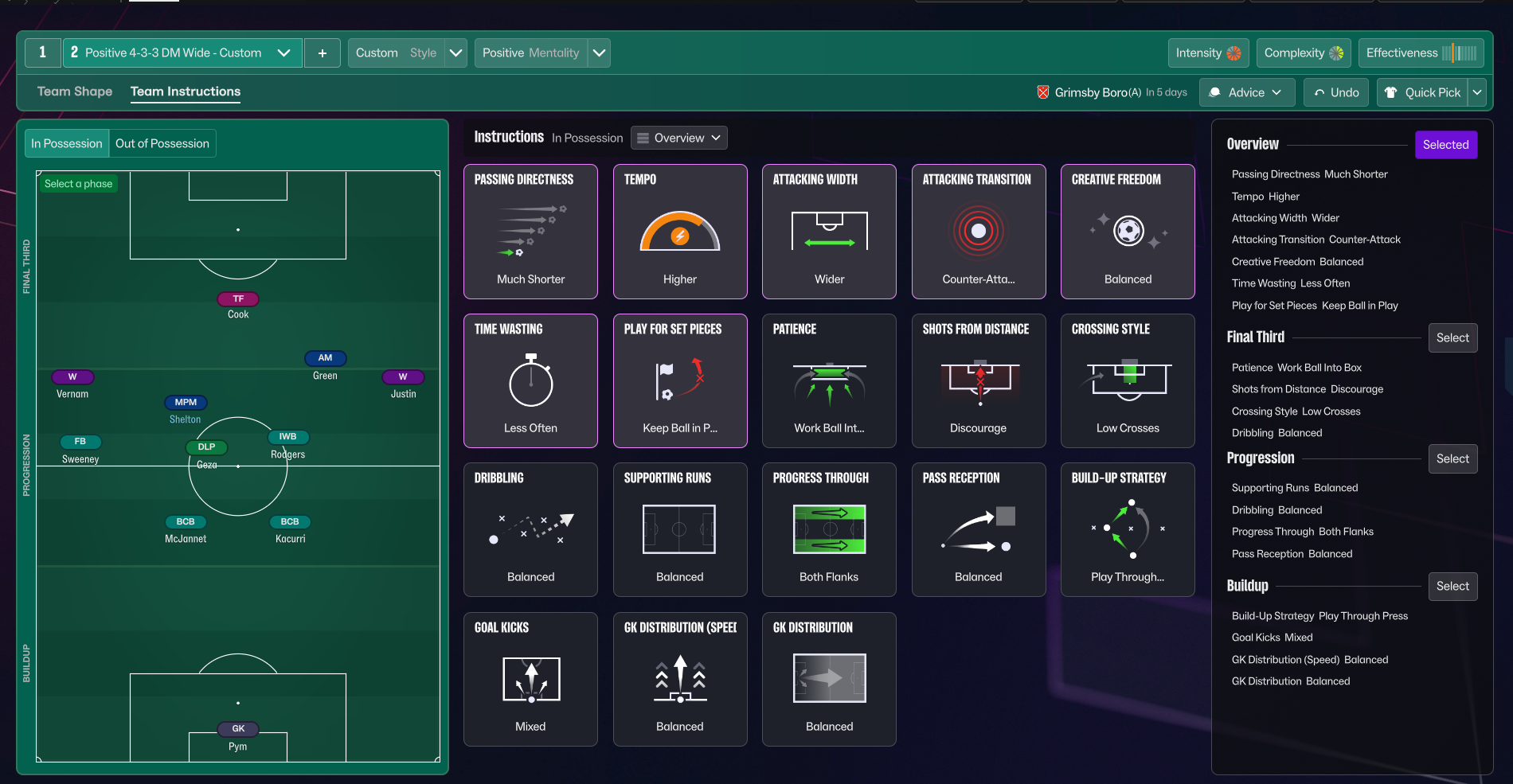
Much Shorter passing and Play Through Press support patient possession from the back, with the two Ball-Playing Centre-Backs and Deep-Lying Playmaker offering a strong base for progressing the ball.
Ball-Playing Centre-Back at [2,2] and [2,4], plus Deep-Lying Playmaker at [3,3], provide the build-up roles that fit Much Shorter passing and Play Through Press.
The Midfield Playmaker and Attacking Midfielder give the Target Forward nearby options for combinations, while the Wingers can stretch the pitch.
Midfield Playmaker at [4,2] and Attacking Midfielder at [5,4] can support the Target Forward at [6,3], with Wingers at [5,1] and [5,5].
Much Shorter passing and Work Ball Into Box favour careful possession, whereas Counter-Attack and Higher tempo seek quicker attacks. That can pull the side between retaining the ball and rushing forward after turnovers.
Deep-Lying Playmaker at [3,3] supports the short build-up, while Target Forward at [6,3] is the outlet for Counter-Attack.
Progress Through Both Flanks and Wider attacking width direct play outside, but Supporting Runs - Overlap is Balanced, so the tactic does not explicitly prioritise wide overloads.
Full-Back at [3,1] and Inside Wing-Back at [3,4] are the wide-support roles, while Wingers at [5,1] and [5,5] provide width.
Space behind the defensive line
A Higher defensive line combined with High Press can leave space for direct passes behind the defence, particularly if the press is bypassed.
Centre-Backs at [2,2] and [2,4] defend behind the High Press with a Higher defensive line.
high
Turnovers during short build-up
Play Through Press and Much Shorter passing can expose the team to dangerous losses if opponents disrupt the first phase. Counter-Press offers a chance to recover, but can leave space if beaten.
Ball-Playing Centre-Backs at [2,2] and [2,4] begin the Play Through Press build-up, with Deep-Lying Playmaker at [3,3] as a central outlet.
medium
Ball-Playing Centre-Backs with a Deep-Lying Playmaker
The two Ball-Playing Centre-Backs can feed the Deep-Lying Playmaker as a central progression point for the short build-up.
Ball-Playing Centre-Backs at [2,2] and [2,4] flank the Deep-Lying Playmaker at [3,3].
Midfield Playmaker and Attacking Midfielder supporting a Target Forward
The central creators can supply and combine around the Target Forward, while the Wingers offer outlets on either side.
Midfield Playmaker at [4,2] and Attacking Midfielder at [5,4] support Target Forward at [6,3], with Wingers at [5,1] and [5,5].
How can I protect the space behind my Higher defensive line when my High Press is bypassed?
What should I look for in my Ball-Playing Centre-Backs and Deep-Lying Playmaker to make Play Through Press and Much Shorter passing work?
How can I balance my Counter-Attack instruction with Much Shorter passing and Work Ball Into Box?
This is a coherent positive 4-3-3 built around short, press-resistant possession and an aggressive attempt to recover the ball high. The Ball-Playing Centre-Backs, Deep-Lying Playmaker and central creators give it a strong foundation, while the Wingers stretch play around the Target Forward. The main concern is the combination of a Higher defensive line and High Press, which can be vulnerable to direct balls in behind; the higher tempo also sits awkwardly with Much Shorter passing and Work Ball Into Box. I would first lower the tempo to Standard and consider a Standard defensive line to improve control and reduce transition risk.
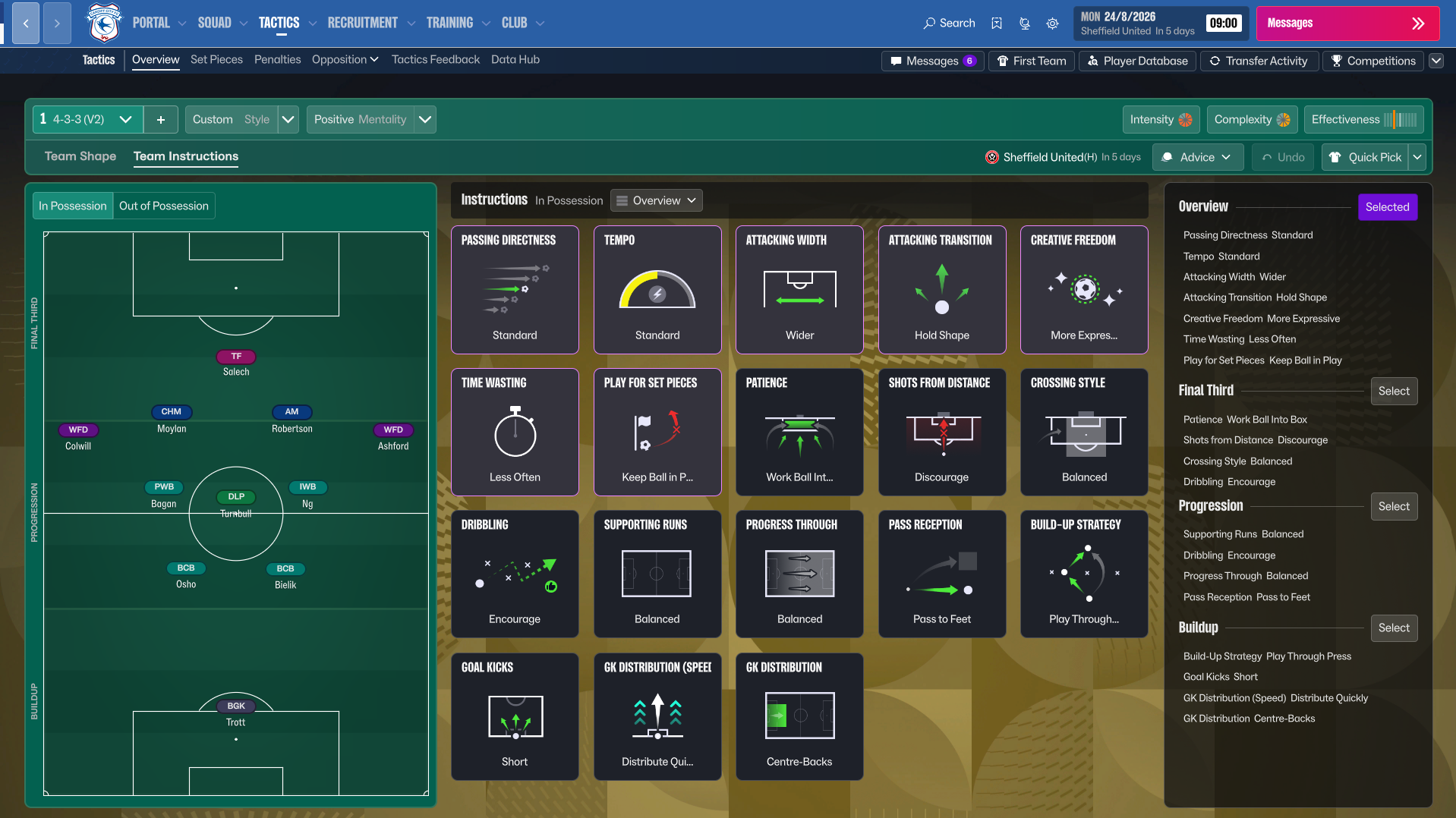
The side seeks to build with Much Shorter passing through the press, move the ball out towards both flanks, and work the ball into the box with low crosses. Counter-Attack and Higher tempo add urgency after turnovers, though they compete with the patient possession approach.
The team Counter-Presses immediately after losing possession, aiming to regain the ball quickly. This fits the High Press but can expose space if the pressure is beaten.
Control the ball through a short-passing build-up, create through both flanks and central support, and press high to recover possession.
The tactical theory behind the 4-3-3 DM Wide: roles, instructions, and the trade-offs that decide whether the system holds up.
Master the classic 4-3-3: player roles, tactical variations, and the trade-offs that decide whether it sings or stalls.
Holder, runner, creator: the role distribution rule for three-man midfields, the AMC variants, and the antipatterns that break them.
Build through the wide areas or through the middle? A working framework for picking the right one for your squad.