4-3-3 DM Wide
Winning the ball high up the pitch and attacking quickly through the middle. High Press, Much More Often triggers, Counter-Press and Step Up More all push…
Loading tactical analysis...
4-3-3 DM Wide
4-4-1-1 2 DM
Positive
Clean Slate
1
3
Ball-Playing Goalkeeper
Goalkeeper
2
2
Ball-Playing Center-Back
Covering Centre-Back
3
1
Inside Wing-Back
Full Back
3
5
Playmaking Wing-Back
Full Back
3
3
Deep-Lying Playmaker
Defensive Midfielder
4
2
Channel Midfielder
Pressing Defensive Midfielder
4
4
Attacking Midfielder
Tracking Centre Forward
4
1
Winger
Wide Midfielder
4
5
Wide Forward
Wide Midfielder
5
3
Center Forward
Tracking Centre Forward
2
4
Ball-Playing Center-Back
Stopping Centre-Back
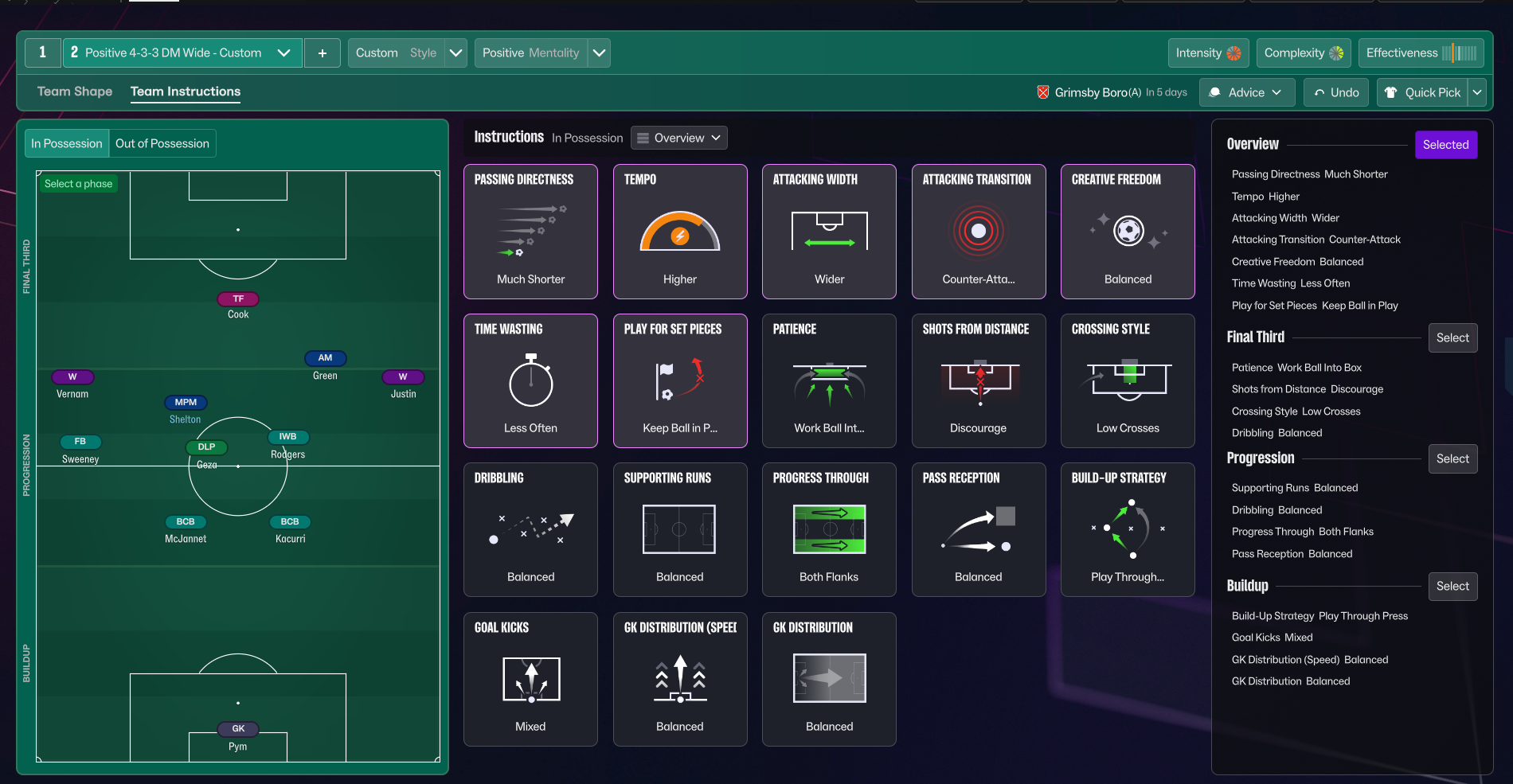
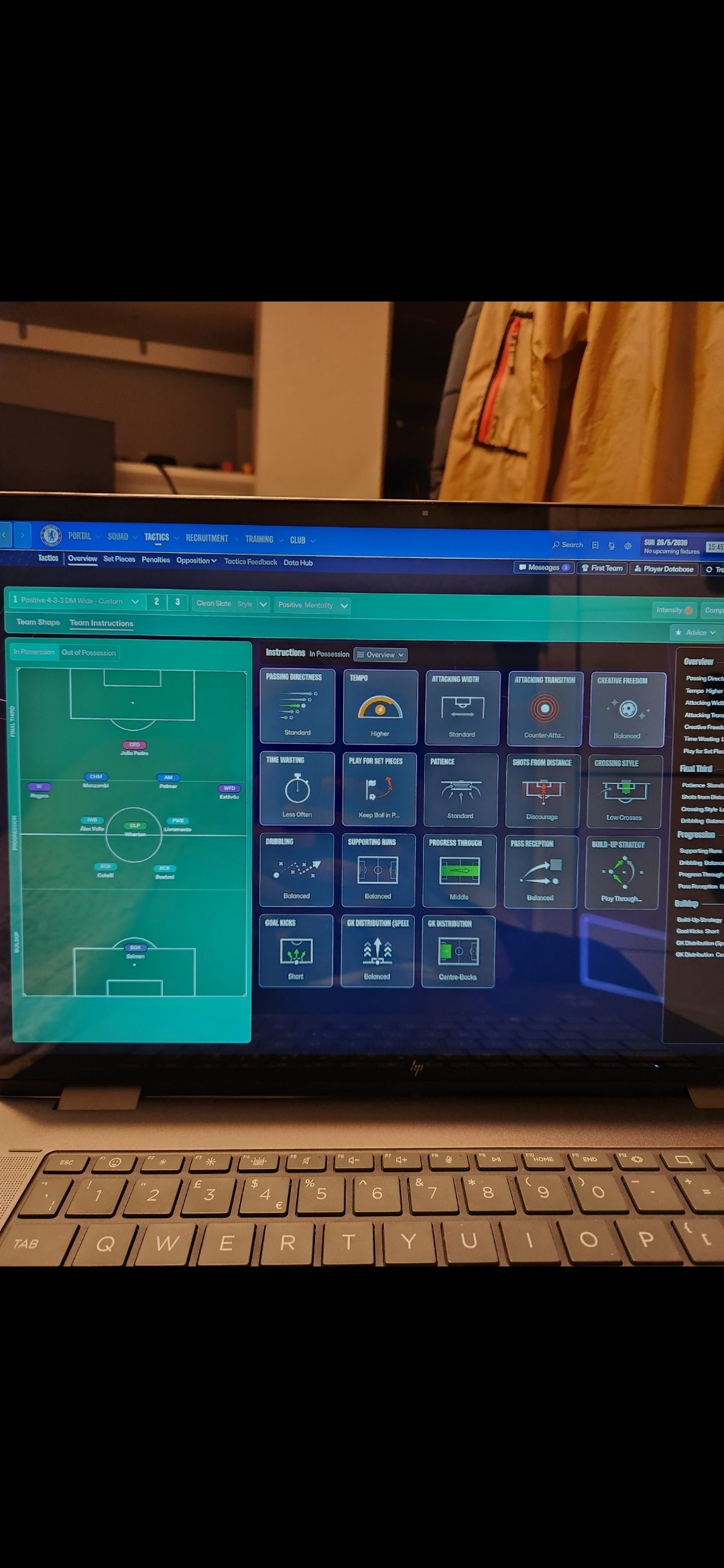
Standard
Higher
Standard
Counter-Attack
Balanced
Less Often
Keep Ball in Play
Standard
Discourage
Low Crosses
Balanced
Overlap Balanced
Middle
Balanced
Play Through Press
Short
Balanced
Center-Backs
Underlap Balanced
Balanced
High Press
Higher
Step Up More
Much More Often
Counter-Press
Standard
Yes
Balanced
Balanced
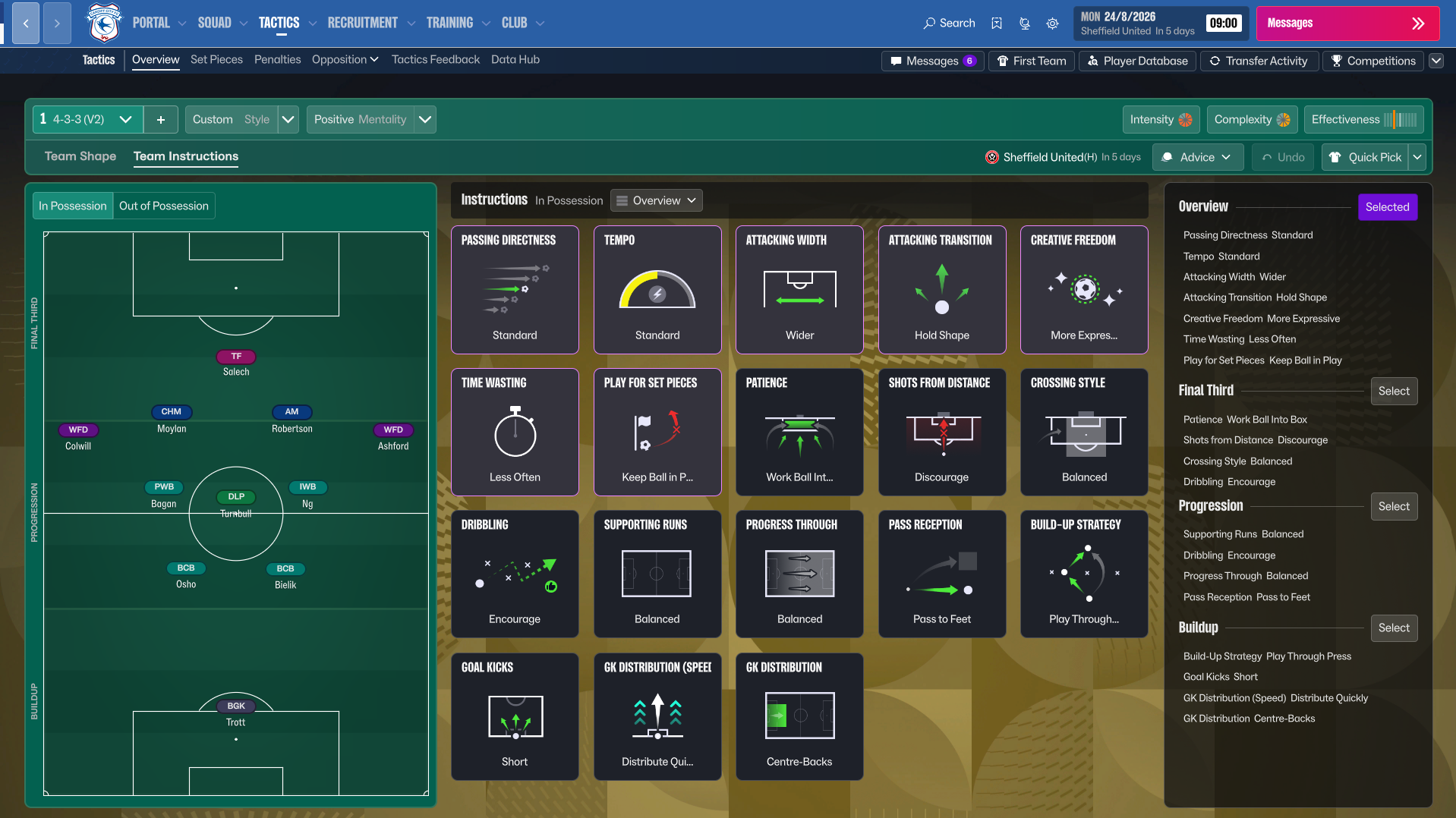
High Press, Much More Often triggers, Counter-Press and Step Up More all push the same way, so the team hunts the ball high and wins it back near goal.
[5,3] Tracking Centre Forward and [4,2] Pressing Defensive Midfielder lead the press.
Short goal kicks, Play Through Press and Centre-Backs distribution fit the ball-playing back line and the deep playmaker, giving a safe route out.
[1,3] Ball-Playing Goalkeeper, [2,2] Ball-Playing Centre-Back and [3,3] Deep-Lying Playmaker.
Short, play-through-the-press build-up needs control, but Higher tempo and Counter-Attack push for rushed passes and more turnovers.
[3,3] Deep-Lying Playmaker and [2,2] Ball-Playing Centre-Back work best with composure.
Low Crosses are chosen with Standard width while Progress Through is Middle, so the crossing plan is barely used.
[4,1] Winger and [3,5] Playmaking Wing-Back would supply the crosses.
Space behind a high line
Higher line with Step Up More leaves only two centre-backs exposed to balls over the top if the press is beaten.
[2,2] Covering Centre-Back and [2,4] Stopping Centre-Back.
high
Stamina and fatigue
Much More Often pressing plus Counter-Press is very demanding and will fade late in games.
[4,2] Pressing Defensive Midfielder and [4,4] Tracking Centre Forward.
medium
Deep-Lying Playmaker with Channel Midfielder
The playmaker dictates play from deep while the channel runner offers a forward option.
[3,3] Deep-Lying Playmaker and [4,2] Channel Midfielder.
Inside Wing-Back with Attacking Midfielder
Both drift inside, creating central overloads that suit the Middle focus.
[3,1] Inside Wing-Back and [4,4] Attacking Midfielder.
Do your centre-backs have the pace to cope with a Higher defensive line?
Do you want to play through the middle or use the wide players?
This is an aggressive, coherent pressing side with a short build-up and quick counters, but the very high line and constant pressing leave the back two exposed and tire the team. Lowering the defensive line, easing the trigger press and calming the tempo would keep the identity while making it more reliable.
Short build-up through the ball-playing centre-backs and deep playmaker, then quick central progression with a counter-attacking edge.
Counter-Press immediately after losing the ball, backed by a high press and Step Up More.
Winning the ball high up the pitch and attacking quickly through the middle.
The tactical theory behind the 4-3-3 DM Wide: roles, instructions, and the trade-offs that decide whether the system holds up.
Holder, runner, creator: the role distribution rule for three-man midfields, the AMC variants, and the antipatterns that break them.
Klopp-style gegenpressing in FM, including squad profile, line-and-press pairing, sustainable workload, and the antipatterns to avoid.
Build through the wide areas or through the middle? A working framework for picking the right one for your squad.