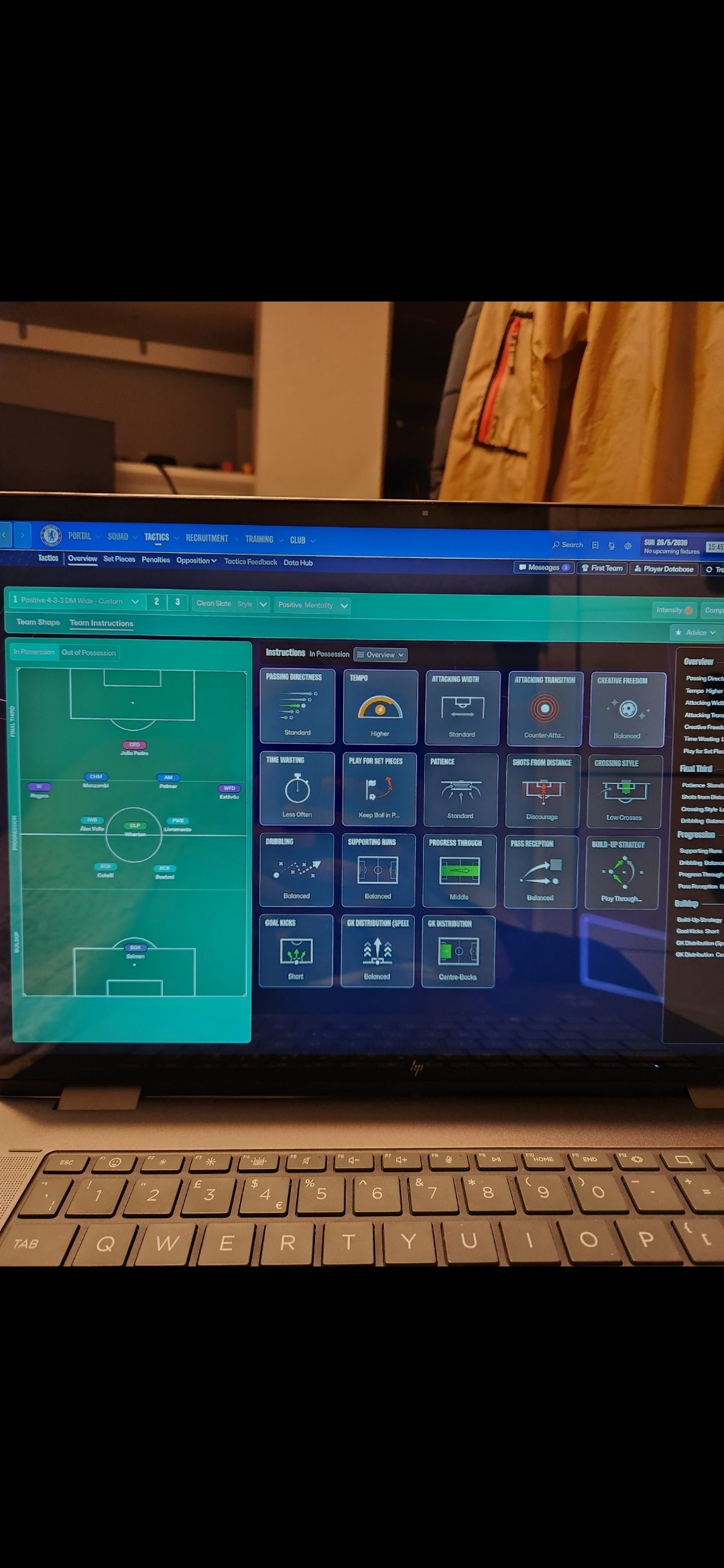
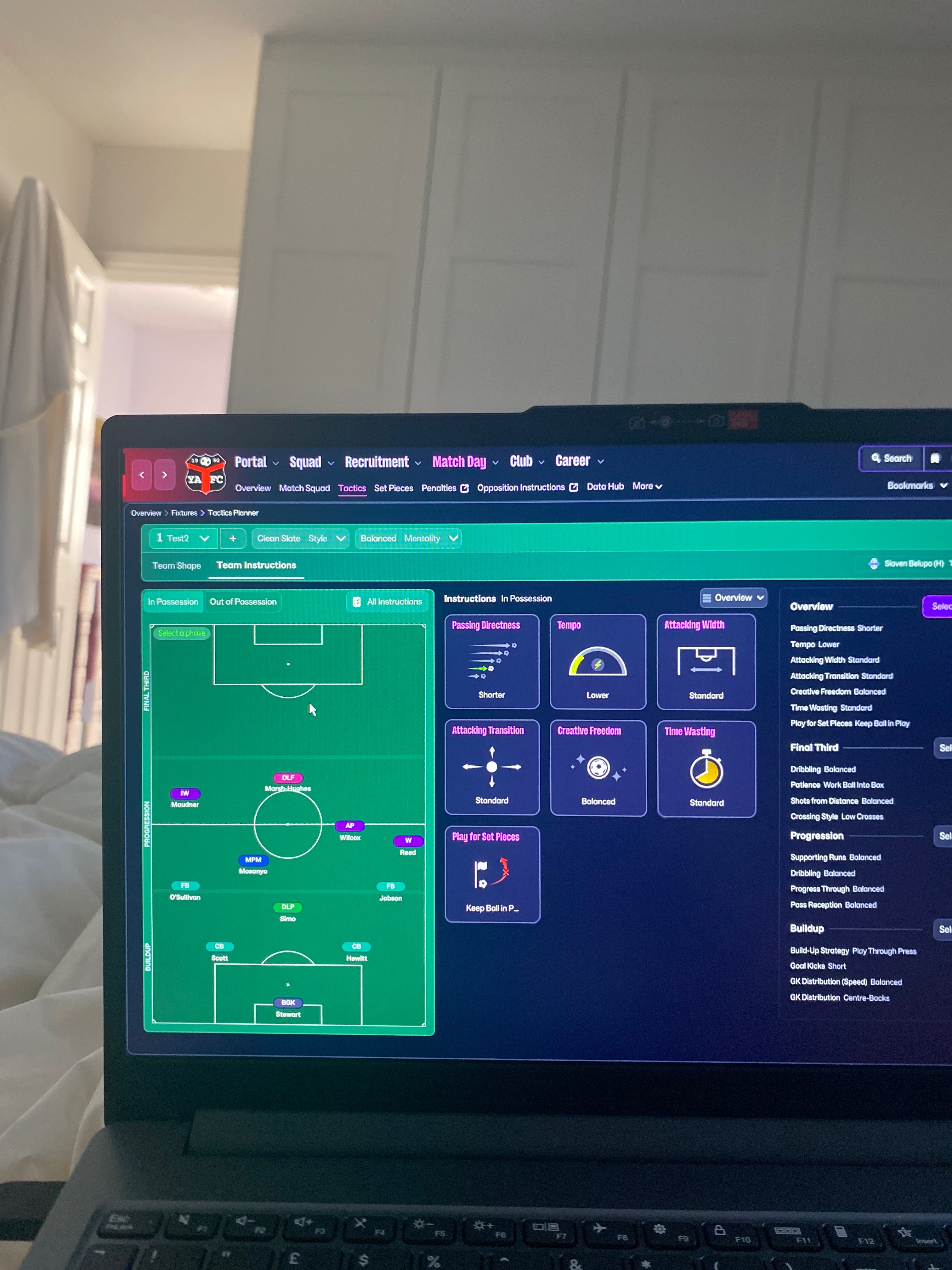
4-3-3 DM Wide
Controlled central possession backed by a high press. Shorter passing, Play Through Press, short goal kicks and Centre-Backs distribution all point to a…
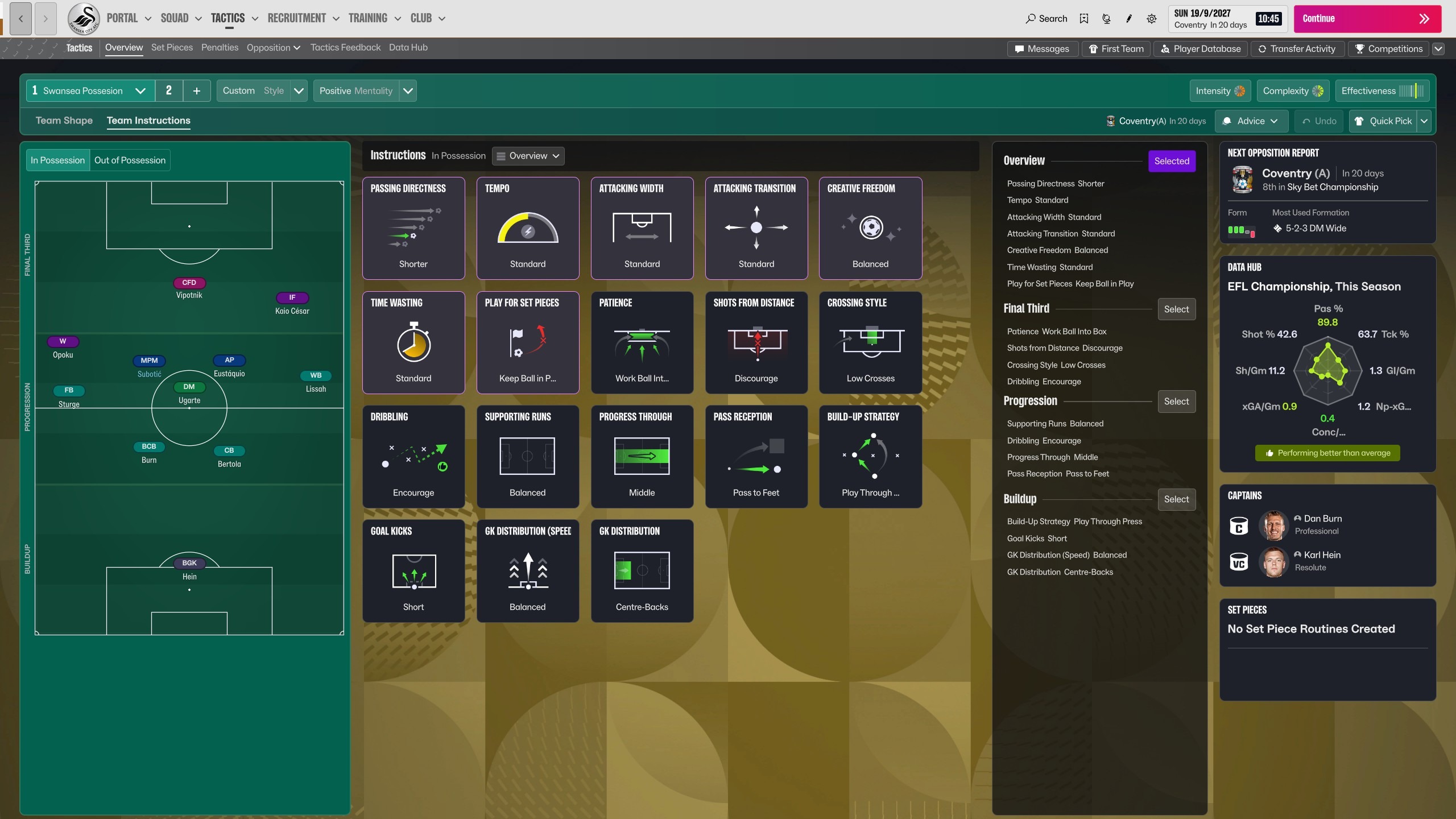
Loading tactical analysis...
4-3-3 DM Wide
4-3-3 DM Wide
Positive
Clean Slate
1
3
Ball-Playing Goalkeeper
Sweeper Keeper
2
1
Full Back
Full Back
2
2
Ball-Playing Center-Back
Covering Centre-Back
2
4
Centre-Back
Stopping Centre-Back
2
5
Wing Back
Full Back
3
3
Defensive Midfielder
Screening Defensive Midfielder
4
2
Midfield Playmaker
Central Midfielder
4
4
Advanced Playmaker
Pressing Central Midfielder
5
1
Winger
Tracking Winger
6
3
Center Forward
Tracking Centre Forward
6
5
Inside Forward
Tracking Winger
Shorter
Standard
Standard
Standard
Balanced
Standard
Keep Ball in Play
Work Ball Into Box
Discourage
Low Crosses
Encourage
Overlap Balanced
Encourage
Middle
Pass to Feet
Play Through Press
Short
Balanced
Center-Backs
Underlap Balanced
High Press
Higher
Balanced
More Often
Regroup
Standard
Yes
Trap Outside
Trap Outside
Stop Crosses
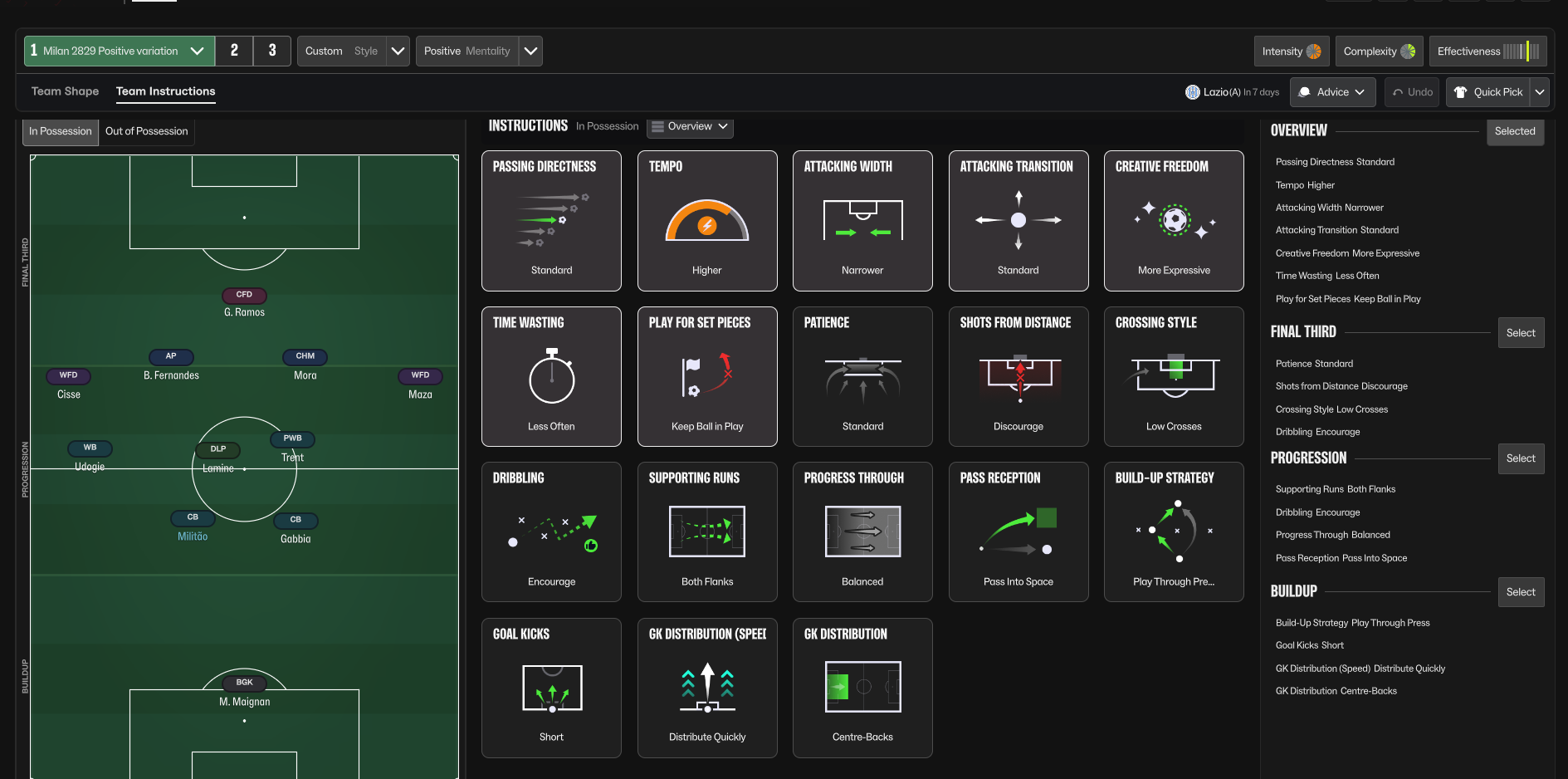
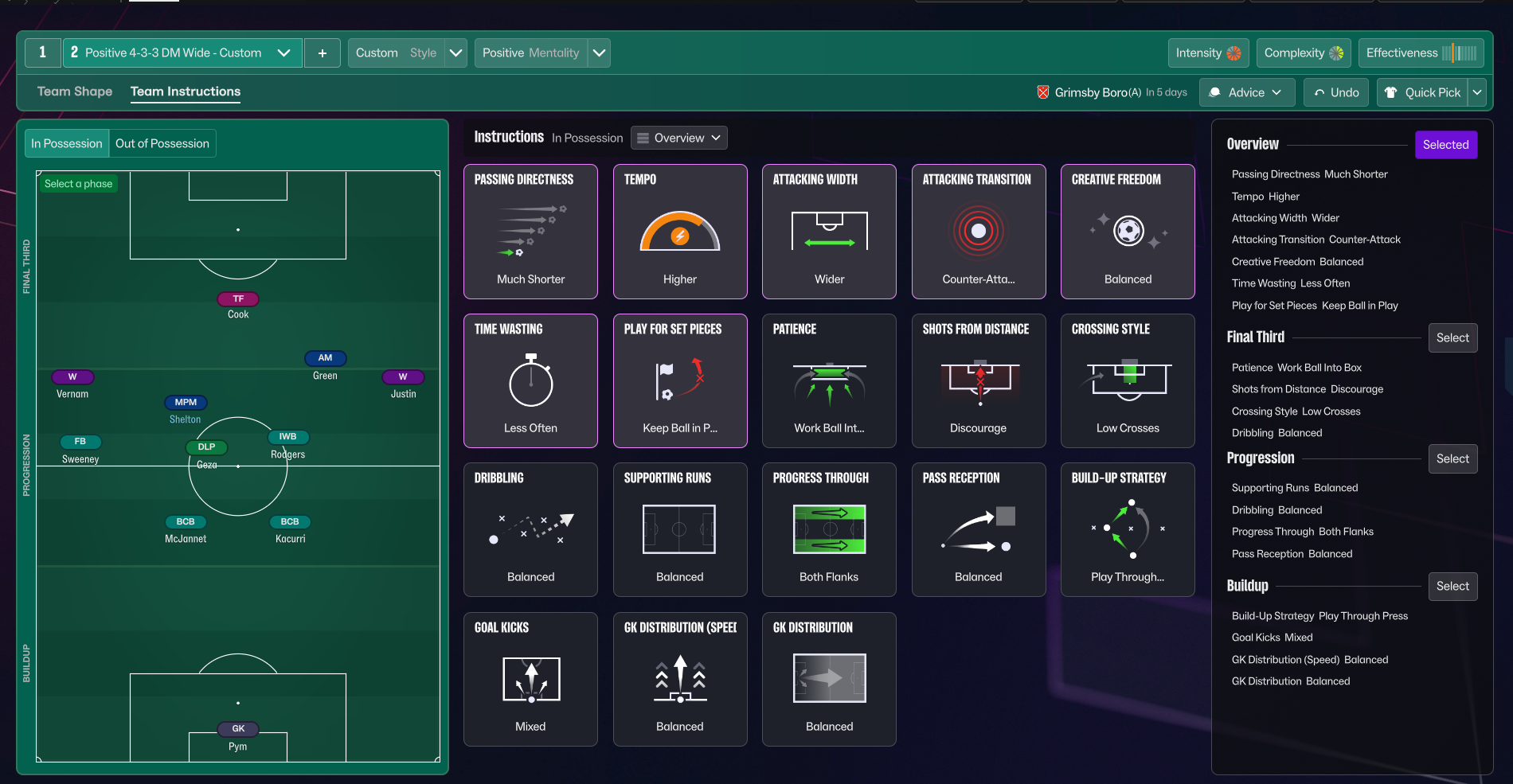
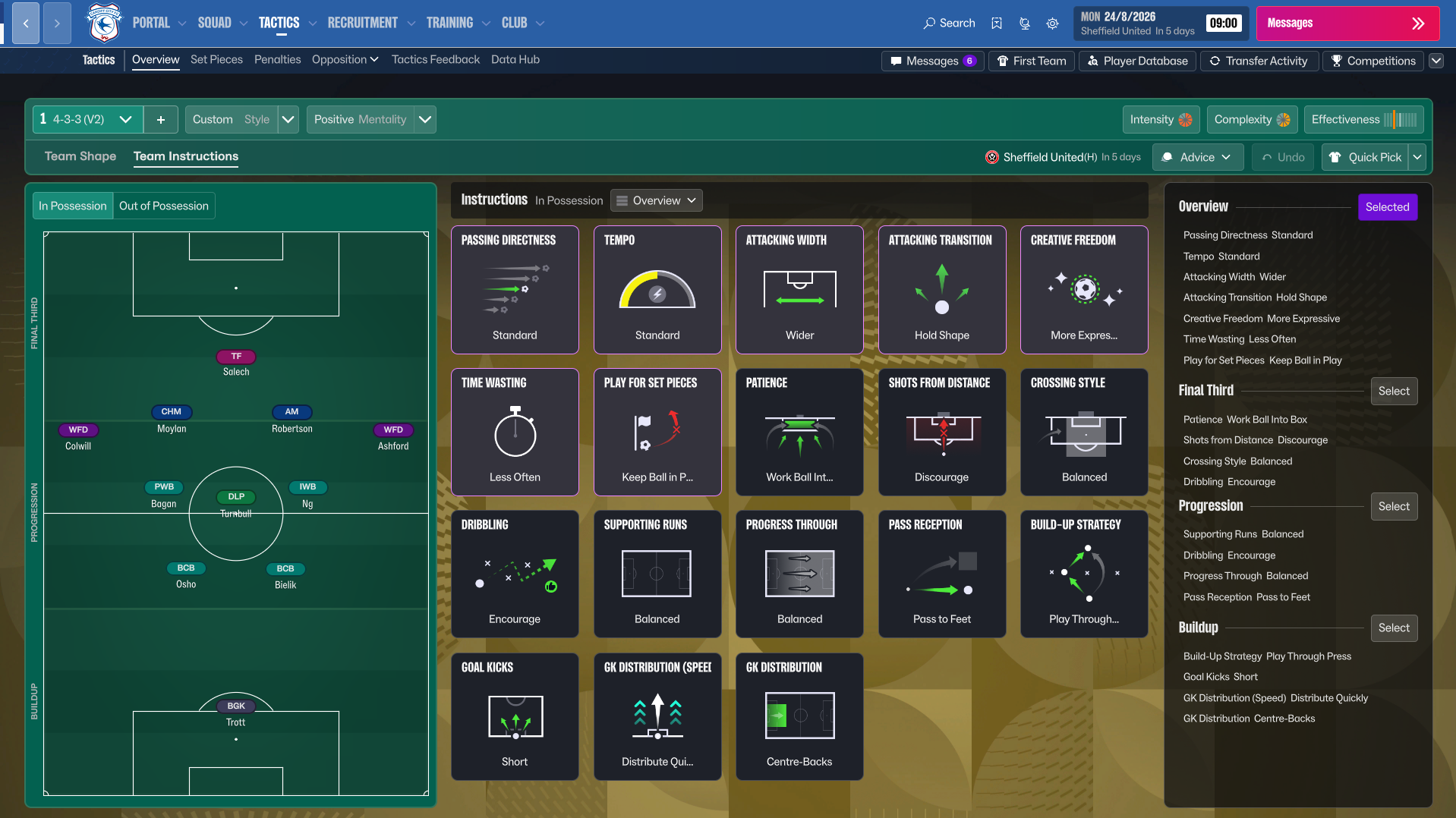
Shorter passing, Play Through Press, short goal kicks and Centre-Backs distribution all point to a patient build-up from the back.
The Ball-Playing Goalkeeper at [1,3] and the Ball-Playing Centre-Back at [2,2] suit this build-up.
Progress Through Middle fits the two playmakers and the Defensive Midfielder in central areas.
Midfield Playmaker at [4,2] and Advanced Playmaker at [4,4] support the Progress Through Middle instruction.
Pressing high and often while retreating to shape on turnover wastes the press. The team gets drawn out and then does not counter-press.
Tracking Centre Forward at [6,3] and Pressing Central Midfielder at [4,4] press, but Defensive Transition is Regroup.
Low Crosses suit a tactic that works the ball into the box, but Encourage Dribbling on both Dribbling settings works against Pass to Feet and Shorter passing. It raises turnovers.
Winger at [5,1] and Inside Forward at [6,5] dribble into wide areas while the midfield plays through the middle.
Space behind a higher line
A Higher defensive line with a Balanced line behaviour is exposed to balls over the top if the press is beaten.
Stopping Centre-Back at [2,4] and Covering Centre-Back at [2,2] defend a high line with only a Sweeper Keeper behind.
high
Weak defensive cover on transitions
The team has one holding midfielder and Regroup, so counter-attacks hit a stretched defence after turnovers.
Screening Defensive Midfielder at [3,3] is the only screen when the Advanced Playmaker at [4,4] is pressing.
medium
Ball-Playing Goalkeeper with Ball-Playing Centre-Back
Both give short, safe passing outlets that suit Centre-Backs distribution.
Ball-Playing Goalkeeper [1,3] and Ball-Playing Centre-Back [2,2]
Midfield Playmaker with Advanced Playmaker
They give creative passing options in central midfield.
Midfield Playmaker [4,2] and Advanced Playmaker [4,4]
Do your players have the pace to cope with a Higher line?
Do you have the technical quality for Pass to Feet and Encourage Dribbling?
This is a coherent short-passing, central build-up with an aggressive press, but the Regroup transition and the Higher line leave it exposed when the press is beaten. Switching to Counter-Press and lowering the line to Standard would fix the main weaknesses, and reducing the dribbling emphasis would tighten ball retention.
Patient short passing from the back through the middle with playmakers, then Low Crosses and dribbling in the final third.
The team regroups after losing the ball despite a High Press, which slows the recovery of the ball.
Controlled central possession backed by a high press.
The tactical theory behind the 4-3-3 DM Wide: roles, instructions, and the trade-offs that decide whether the system holds up.
Why circulation density and zonal occupation aren't the same thing in FM, and the half-space occupation rule that decides build-up.
Build the patient, control-the-tempo style without watching your opponents counter through the gaps you leave behind.
What Higher Tempo, Wider, and Narrower actually do in FM, plus the dial contradictions and antipatterns players run into most often.