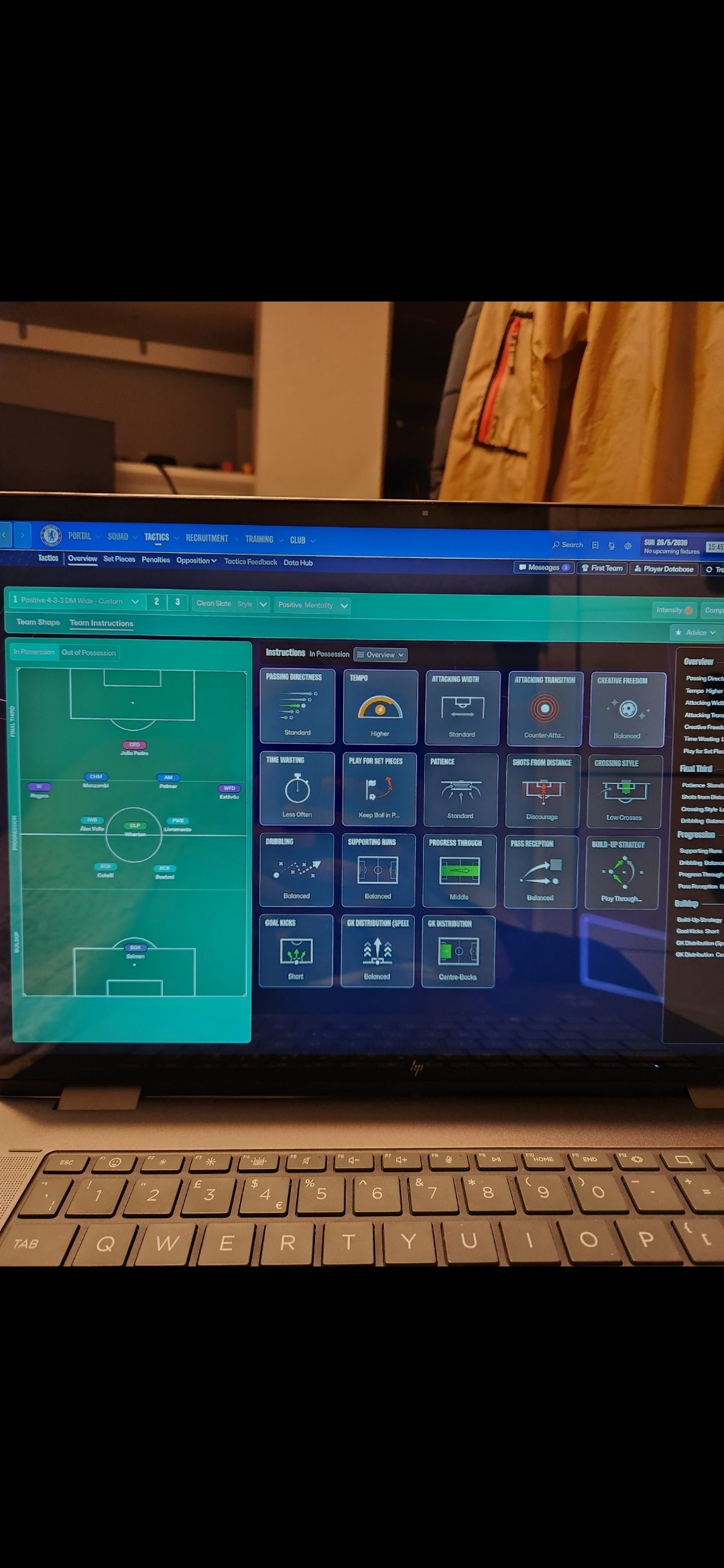
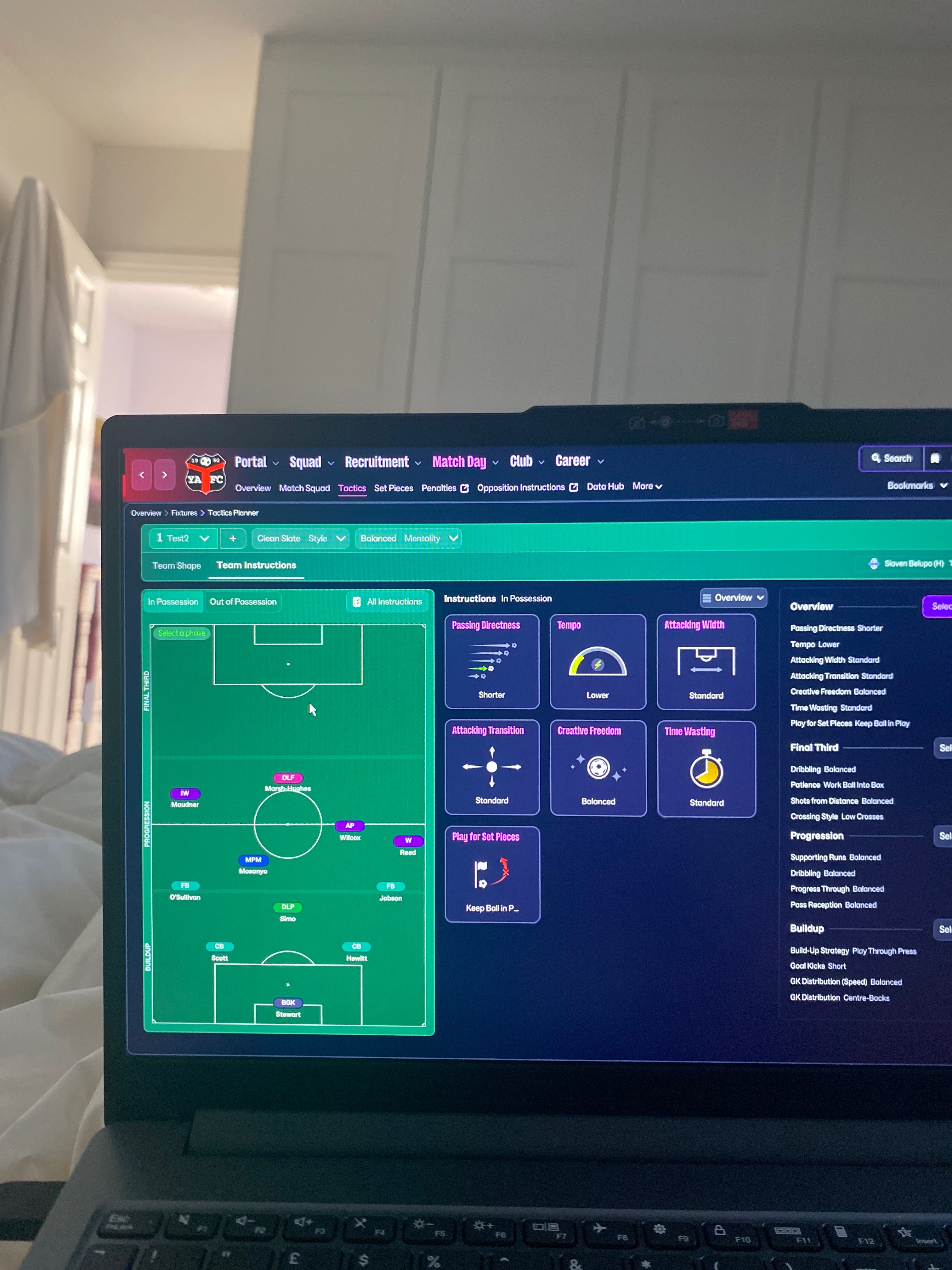
4-3-3 DM Wide
Possession and quick regains through a compact press. Play Through Press, Short goal kicks and Centre-Backs distribution fit the Tiki-Taka style, and…
Loading tactical analysis...
4-3-3 DM Wide
4-1-4-1 DM
4-3-3 (V2)
Positive
Tiki-Taka
1
3
Ball-Playing Goalkeeper
Sweeper Keeper
2
2
Ball-Playing Center-Back
Centre-Back
2
4
Ball-Playing Center-Back
Centre-Back
3
2
Playmaking Wing-Back
Full Back
3
3
Deep-Lying Playmaker
Defensive Midfielder
3
4
Inside Wing-Back
Full Back
5
1
Wide Forward
Wide Outlet Winger
5
2
Channel Midfielder
Pressing Central Midfielder
5
4
Attacking Midfielder
Pressing Central Midfielder
5
5
Wide Forward
Wide Outlet Winger
6
3
Target Forward
Tracking Centre Forward
Standard
Standard
Wider
Hold Shape
More Expressive
Less Often
Keep Ball in Play
Work Ball Into Box
Discourage
Balanced
Encourage
Overlap Balanced
Encourage
Balanced
Pass to Feet
Play Through Press
Short
Distribute Quickly
Center-Backs
Underlap Balanced
Mid Block
Standard
Step Up More
More Often
Counter-Press
Standard
Yes
Balanced
Balanced
Balanced
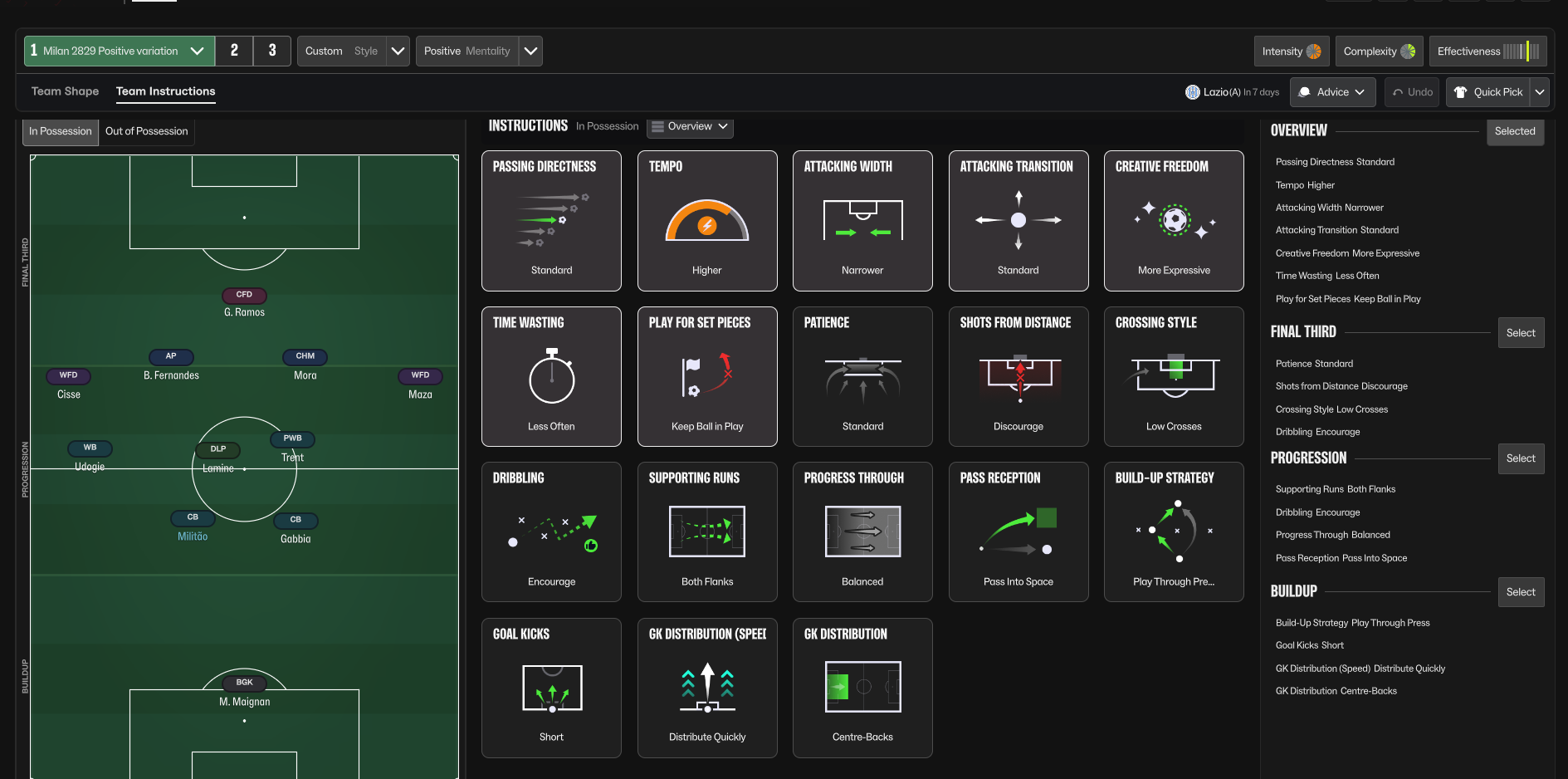
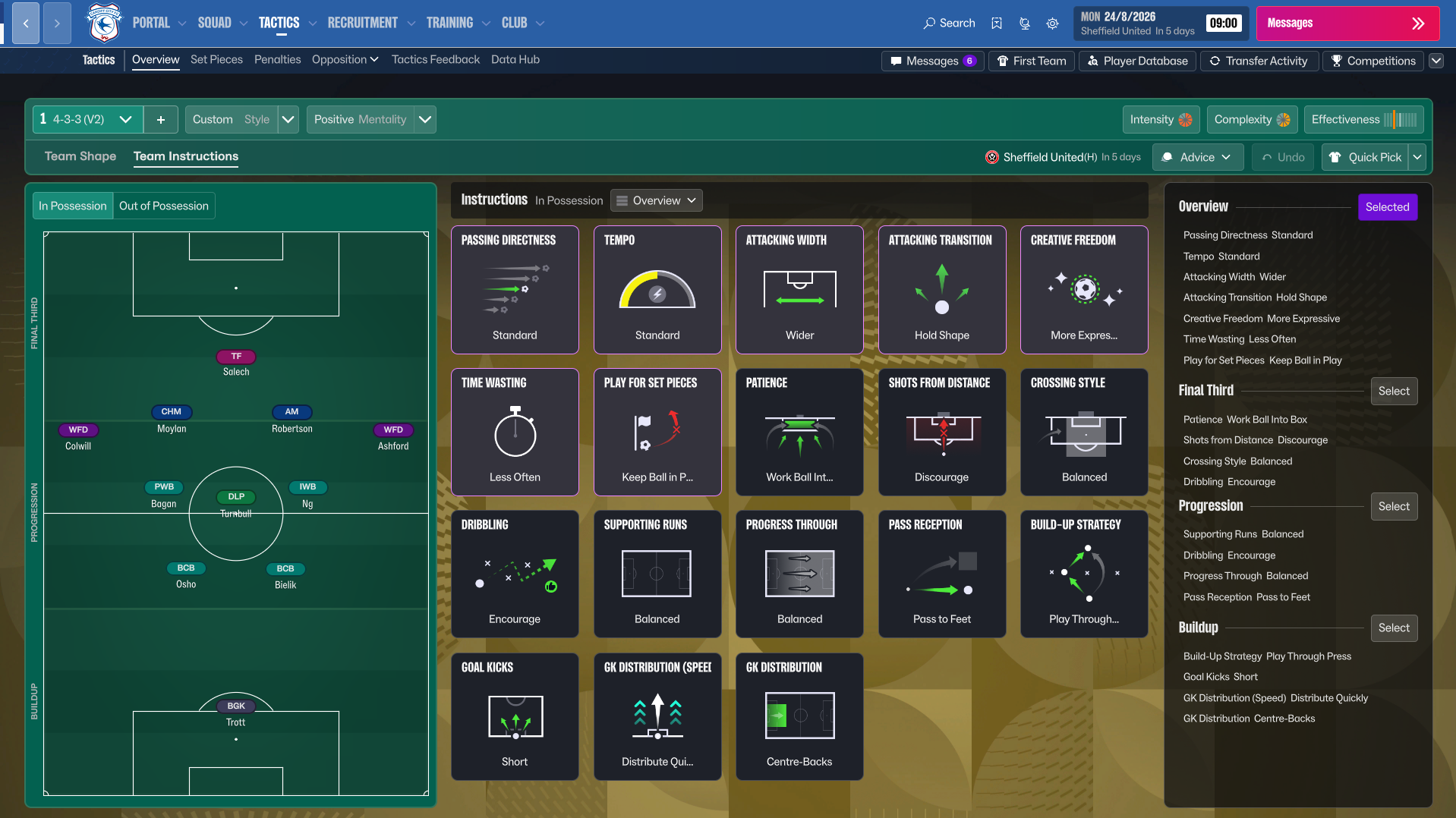
Play Through Press, Short goal kicks and Centre-Backs distribution fit the Tiki-Taka style, and there are passing outlets in every line.
[1,3] Ball-Playing Goalkeeper, [2,2] Ball-Playing Centre-Back and [2,4] Ball-Playing Centre-Back start moves, with Deep-Lying Playmaker at [3,3] as the pivot.
Mid Block with Step Up More, More Often pressing and Counter-Press wins the ball back quickly after a turnover, and the pressing midfielders support this.
[5,2] Pressing Central Midfielder and [5,4] Pressing Central Midfielder fit the Counter-Press and More Often Trigger Press.
Distribute Quickly lowers the chance of retaining the ball and gives teammates less time to get forward, which undermines a patient short build-up.
[1,3] Ball-Playing Goalkeeper with Short goal kicks and Centre-Backs distribution.
A Target Forward wants aerial or direct service, which Pass to Feet and Standard Passing Directness do not provide.
[6,3] Target Forward with Pass to Feet and two [5,1]/[5,5] Wide Forward roles.
Dangerous turnovers in build-up
Play Through Press with Encourage dribbling and Distribute Quickly risks losing the ball in the defensive third.
[2,2] Ball-Playing Centre-Back and [2,4] Ball-Playing Centre-Back under pressure.
high
Wide cover when wing-backs push
Both wing-backs are attacking roles and Counter-Press leaves space behind them if the press is beaten.
[3,2] Playmaking Wing-Back and [3,4] Inside Wing-Back.
medium
Deep-Lying Playmaker with Playmaking Wing-Back
They give a passing platform and a creative outlet on the left.
[3,3] Deep-Lying Playmaker and [3,2] Playmaking Wing-Back.
Inside Wing-Back with Attacking Midfielder
Both move into central areas, which supports short combinations and the counter-press.
[3,4] Inside Wing-Back and [5,4] Attacking Midfielder.
Do you have a physically strong striker to justify the Target Forward?
Are your centre-backs comfortable under pressure on the ball?
This is a coherent Tiki-Taka 4-3-3 with a strong press and patient final third. It is let down by the quick goalkeeper distribution and the Target Forward, which clash with the short-passing identity. Slow the distribution first, then consider a role change at [6,3].
Short, patient build-up from the goalkeeper and centre-backs, with wide forwards stretching the play and midfielders working the ball into the box.
Counter-Press with More Often pressing in a Mid Block, with a high line stepping up.
Possession and quick regains through a compact press.
The tactical theory behind the 4-3-3 DM Wide: roles, instructions, and the trade-offs that decide whether the system holds up.
Klopp-style gegenpressing in FM, including squad profile, line-and-press pairing, sustainable workload, and the antipatterns to avoid.
Why circulation density and zonal occupation aren't the same thing in FM, and the half-space occupation rule that decides build-up.
Counter-Press, Regroup, Stand Off, Trigger Press: what each pressing instruction does in FM and how to pair them without contradicting.