Uploaded Tactic
Formation & Style
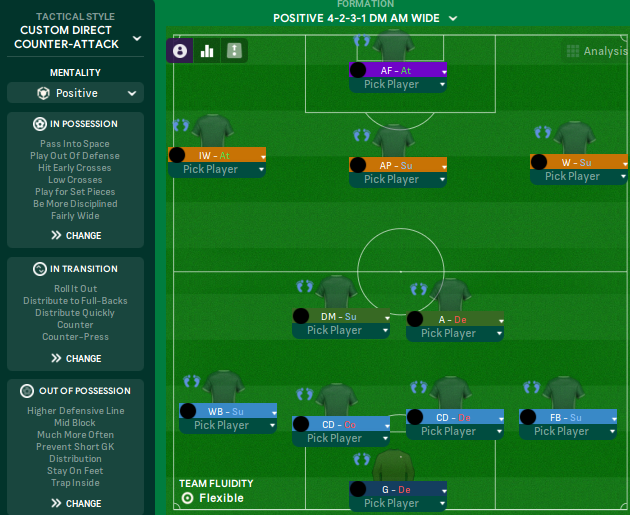
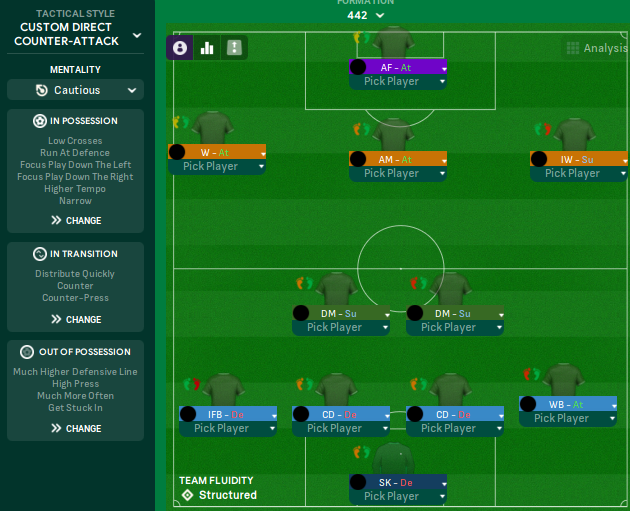
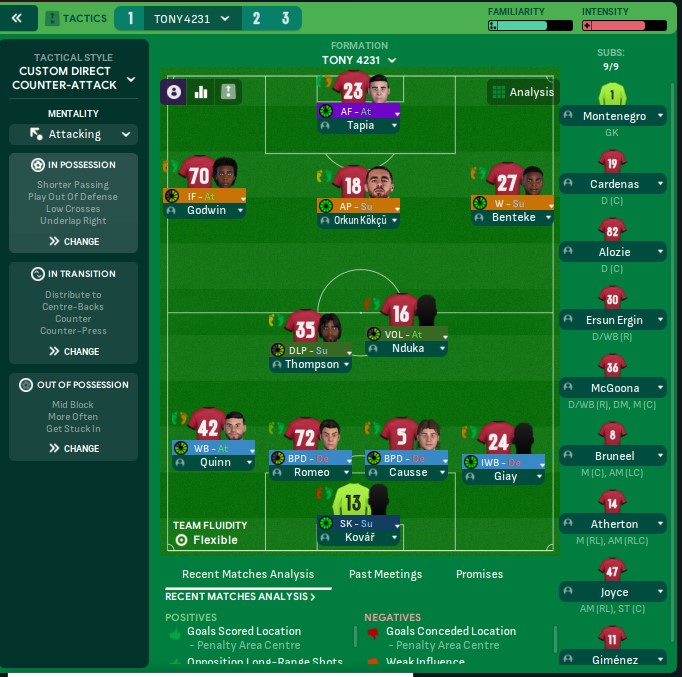
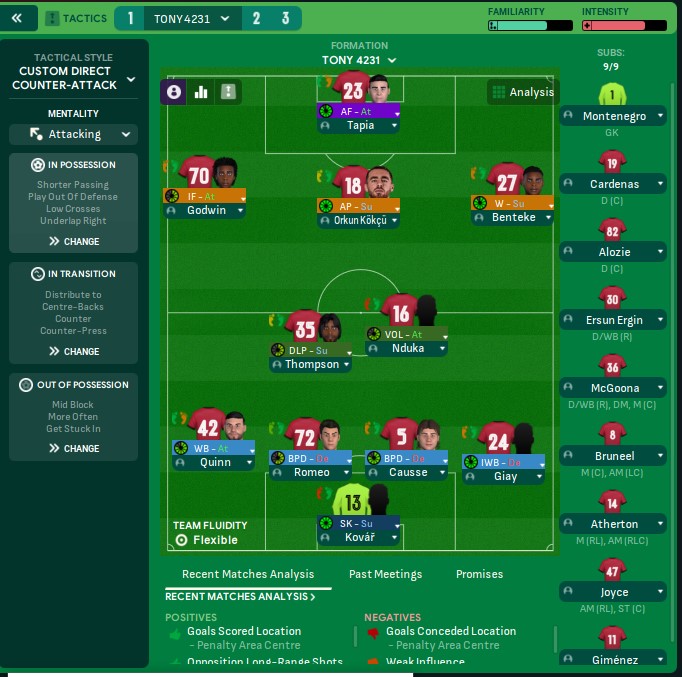
Tactical Style:Custom Direct Counter-Attack
Mentality:Positive
Formation:4-2-3-1 DM AM Wide
Team Fluidity:Flexible
In Possession
Pass Into Space
Play Out of Defence
Hit Early Crosses
Low Crosses
Prepare for Set Pieces
Be More Disciplined
Fairly Wide
In Transition
Roll It Out
Distribute to Full-Backs
Distribute Quickly
Counter
Counter-Press
Out of Possession
Higher Defensive Line
Mid Block
Much More Often
Prevent Short GK Distribution
Team Shape Without Ball
Shape:4-2
Description:A solid defensive shape with two dedicated midfielders shielding the back four.
Evidence:CD-De at [2,2] and [2,3] providing solidity.
Team Shape With Ball
Shape:4-3
Description:Utilizes flexibility and creativity in the attacking third to create chances.
Evidence:AF-At at [6,3], IW-At at [5,1], and W-Su at [5,5] providing width and depth.
Phase Description
Attacking Play
Focuses on quick transitions with players making runs into space, utilizing width.
Defensive Transition
Emphasizes immediate counter-pressing to regain possession quickly.
Main Focus
Utilize the pace of the wide players to exploit defensive weaknesses.
Key Strengths
Dynamic Attack
The presence of an Advanced Forward and Inside Winger provides depth and options in the final third.
Solid Midfield Structure
A dedicated DM provides a safety net for the defense, allowing more adventurous play from the midfield.
Wide Play Opportunities
Utilization of wide players allows for spreading the opposition and creating crossing opportunities.
Conflicting Directions
Counter-Press vs. Disciplined Play
Implementing a counter-press can lead to potential gaps if players are not properly disciplined.
Higher Defensive Line vs. Mid Block
A higher defensive line increases vulnerability to fast counter-attacks, especially when using a mid block.
Wide Play vs. Central Discipline
Focusing on wide play may pull players away from central positions, leading to a lack of support in the midfield.
Tactical Suggestions
Adjust Defensive Line
Consider lowering the defensive line to avoid vulnerabilities against quick counters.
Balancing Attack and Defense
Ensure midfielders provide adequate cover during attacking transitions to prevent gaps.
Reevaluate Wing Play
Consider tactical adjustments for width to avoid crowding in the central areas, ensuring fluidity.
Ask Questions About Your Lineup
Related Tactics
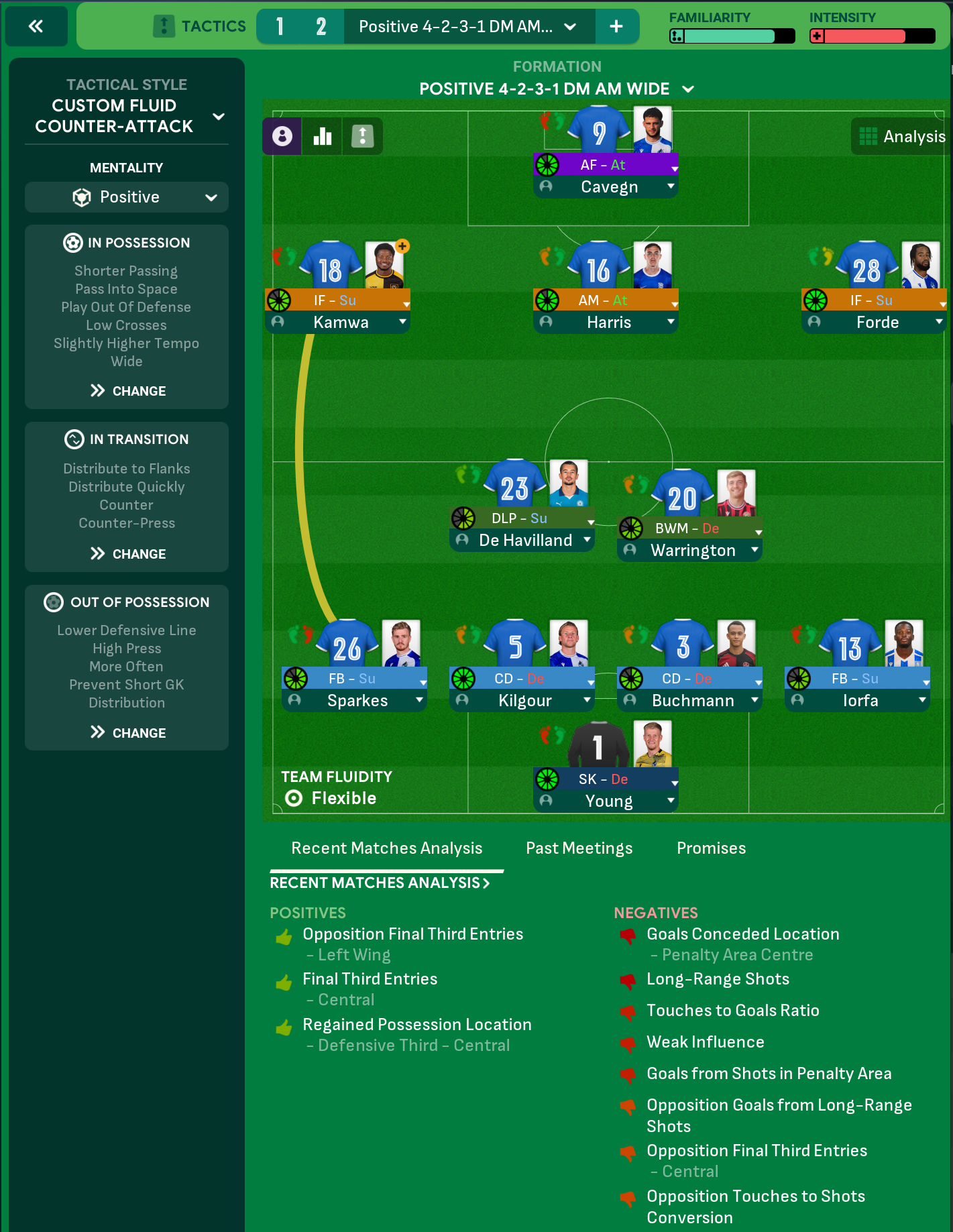
Fluid Counter-Attack 4-2-3-1 DM AM Wide
Custom Fluid Counter-Attack
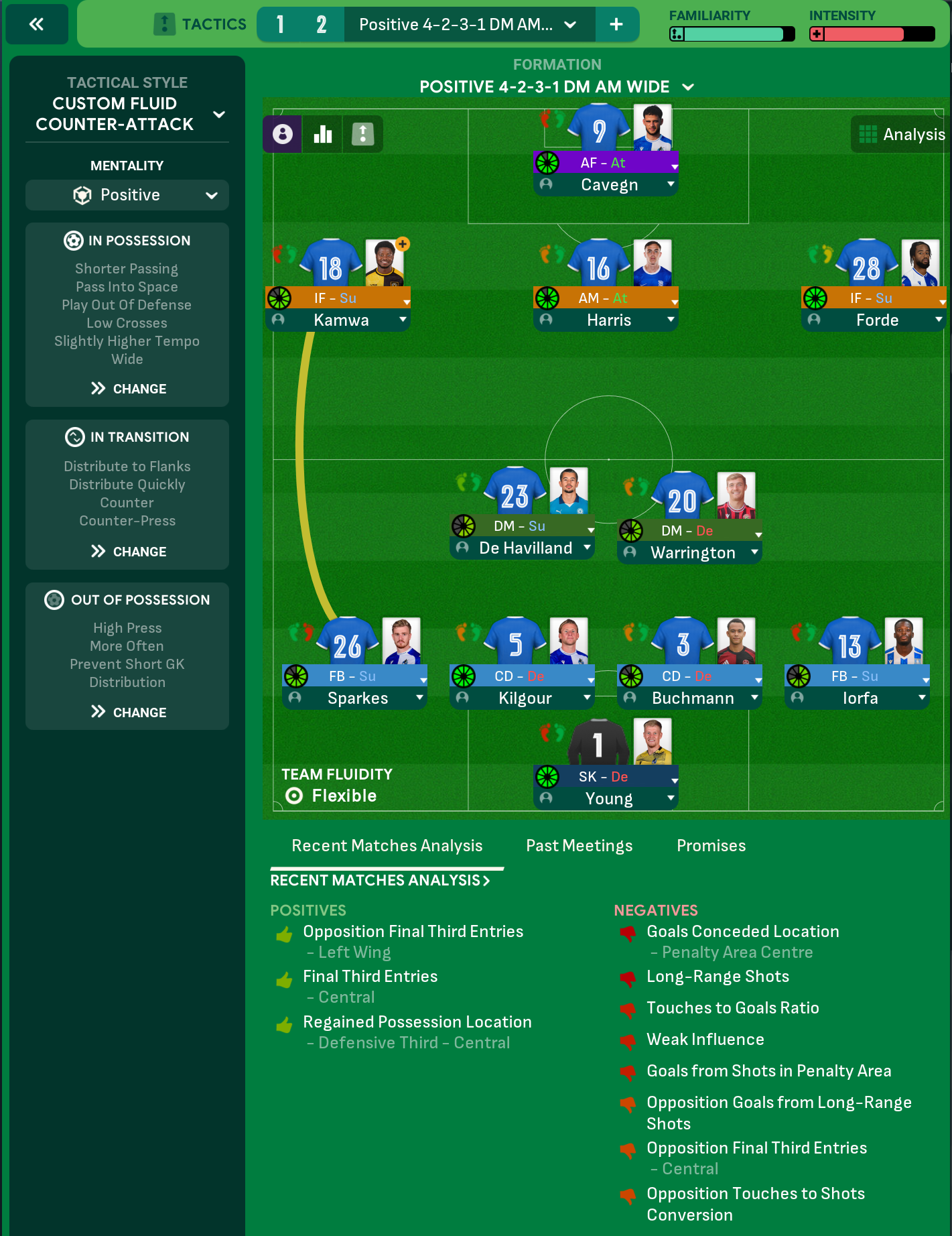
Fluid Counter-Attack 4-2-3-1 DM AM Wide
Custom Fluid Counter-Attack
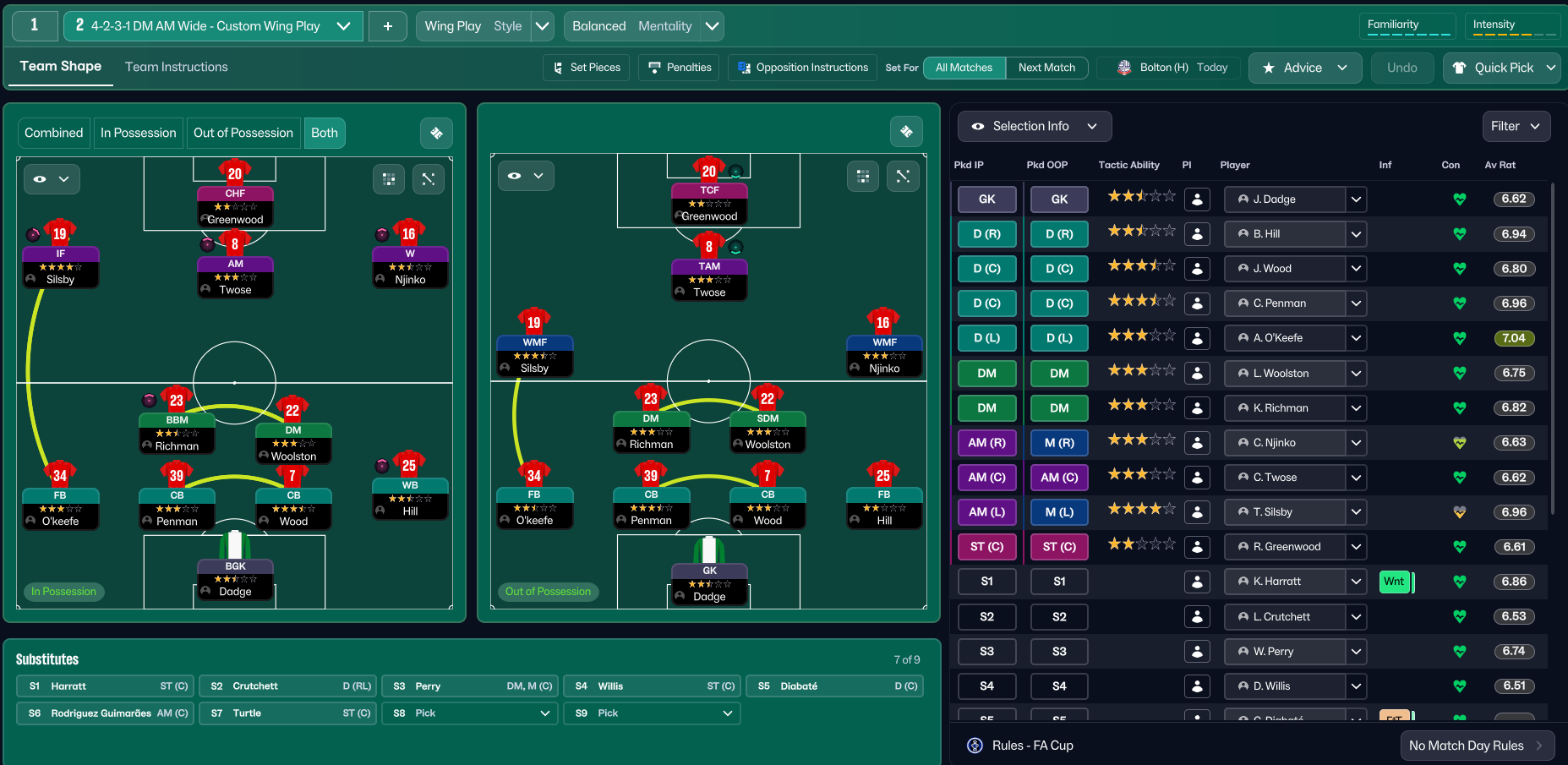
Wing Play 4-2-3-1 DM AM Wide
Wing Play
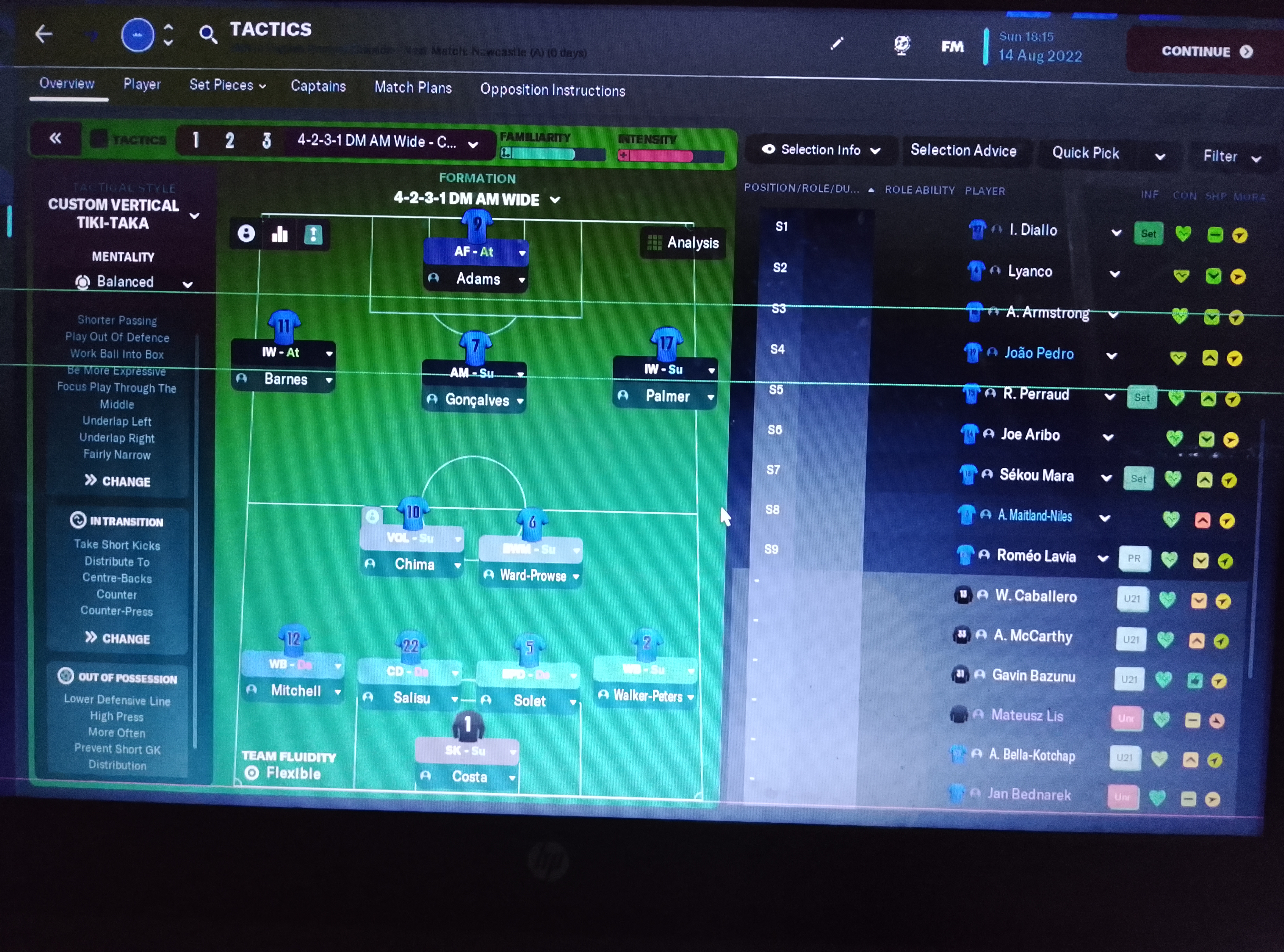
Vertical Tiki-Taka 4-2-3-1 DM AM Wide
Custom Vertical Tiki-Taka
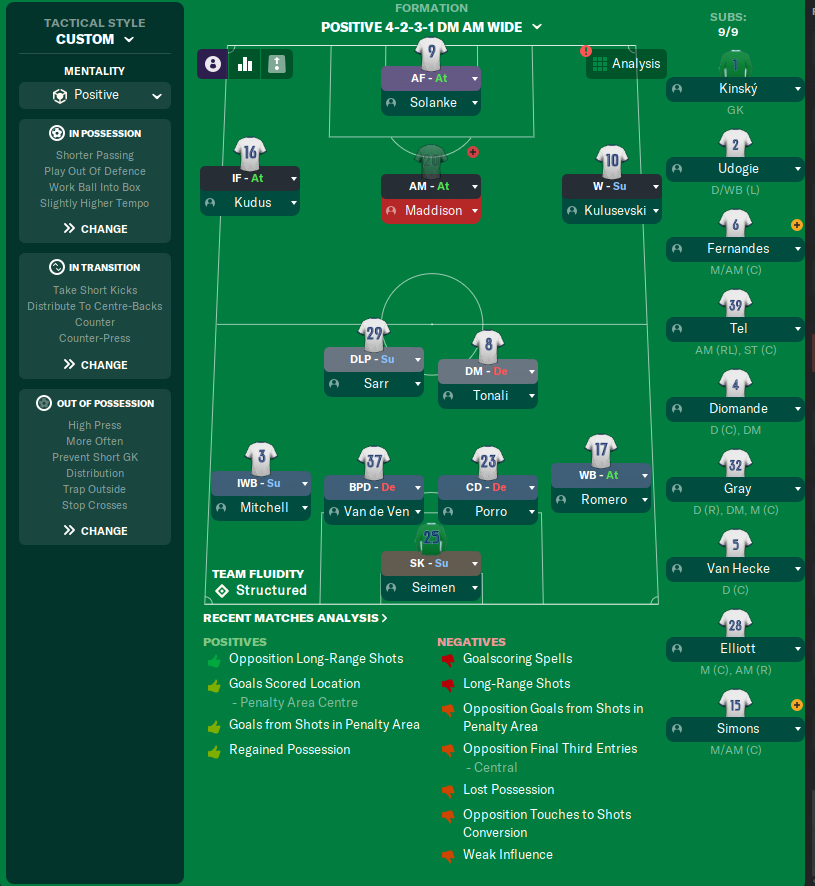
4-2-3-1 DM AM Wide Formation
Custom
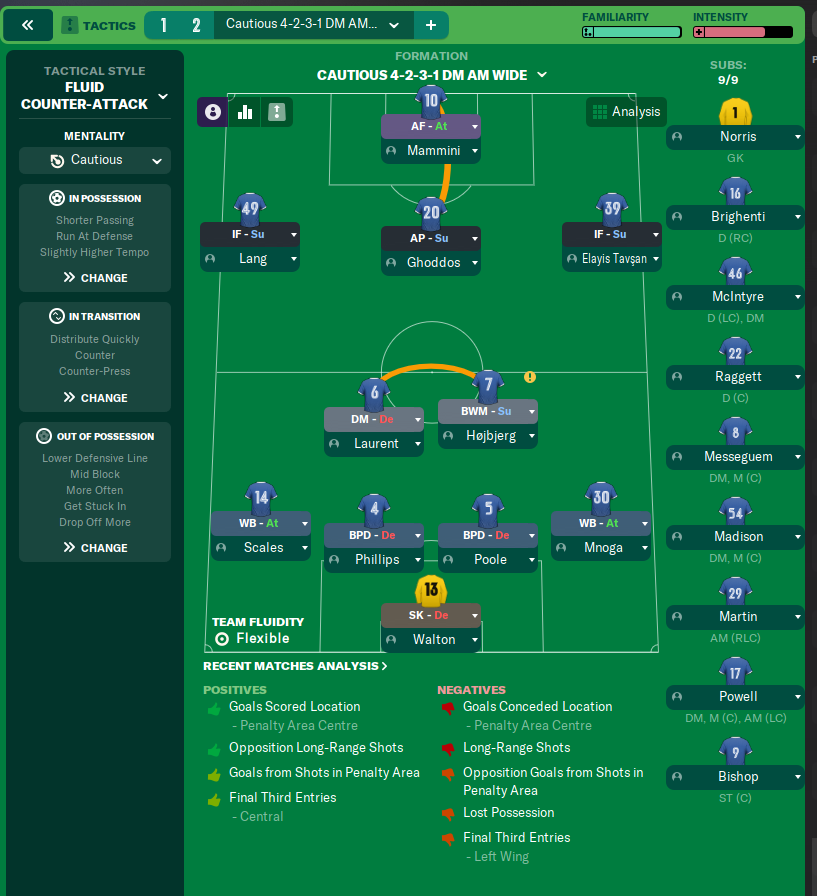
Fluid 4-2-3-1 DM AM Wide
Fluid
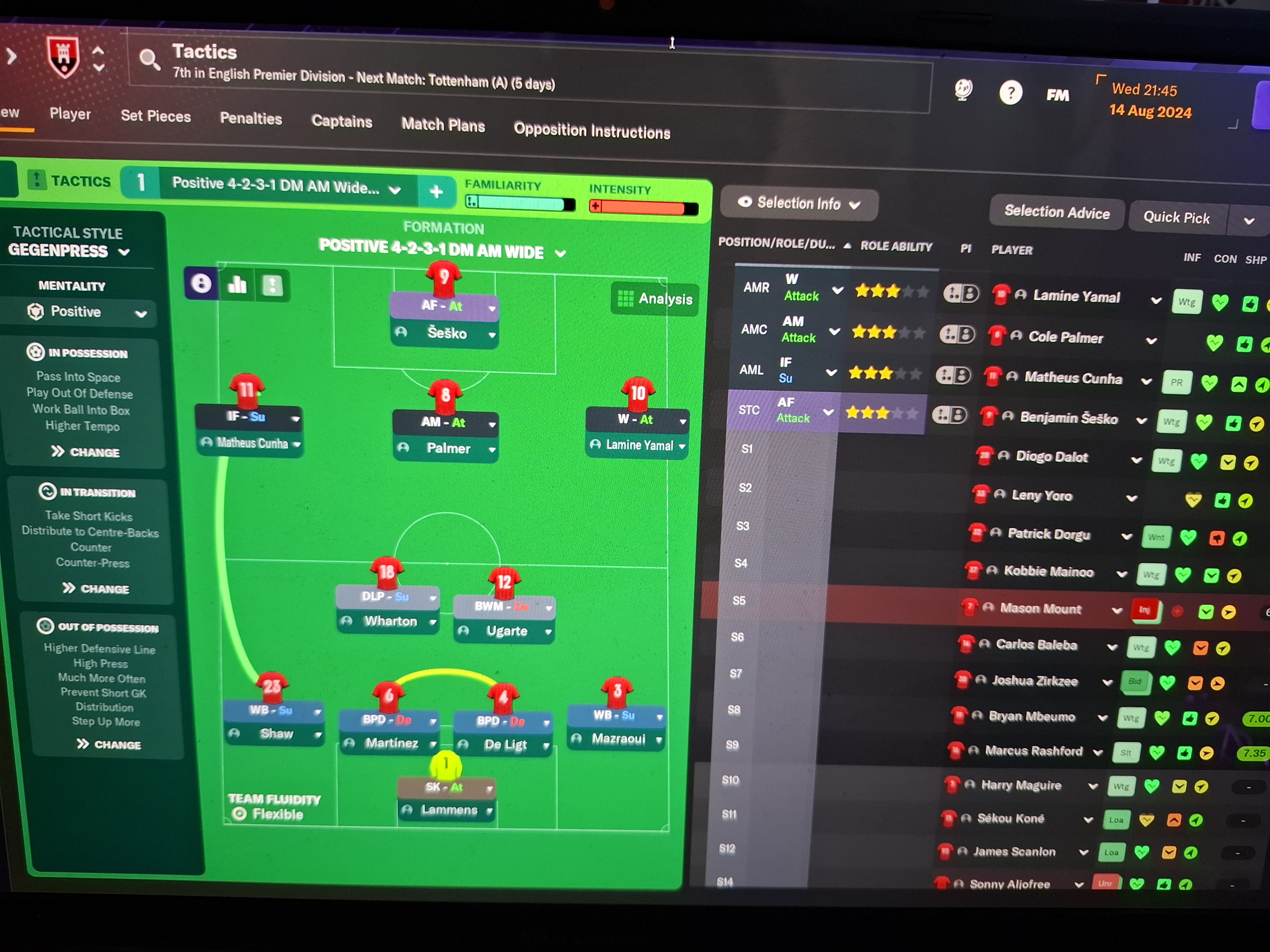
Gegenpress 4-2-3-1 DM AM Wide
Gegenpress
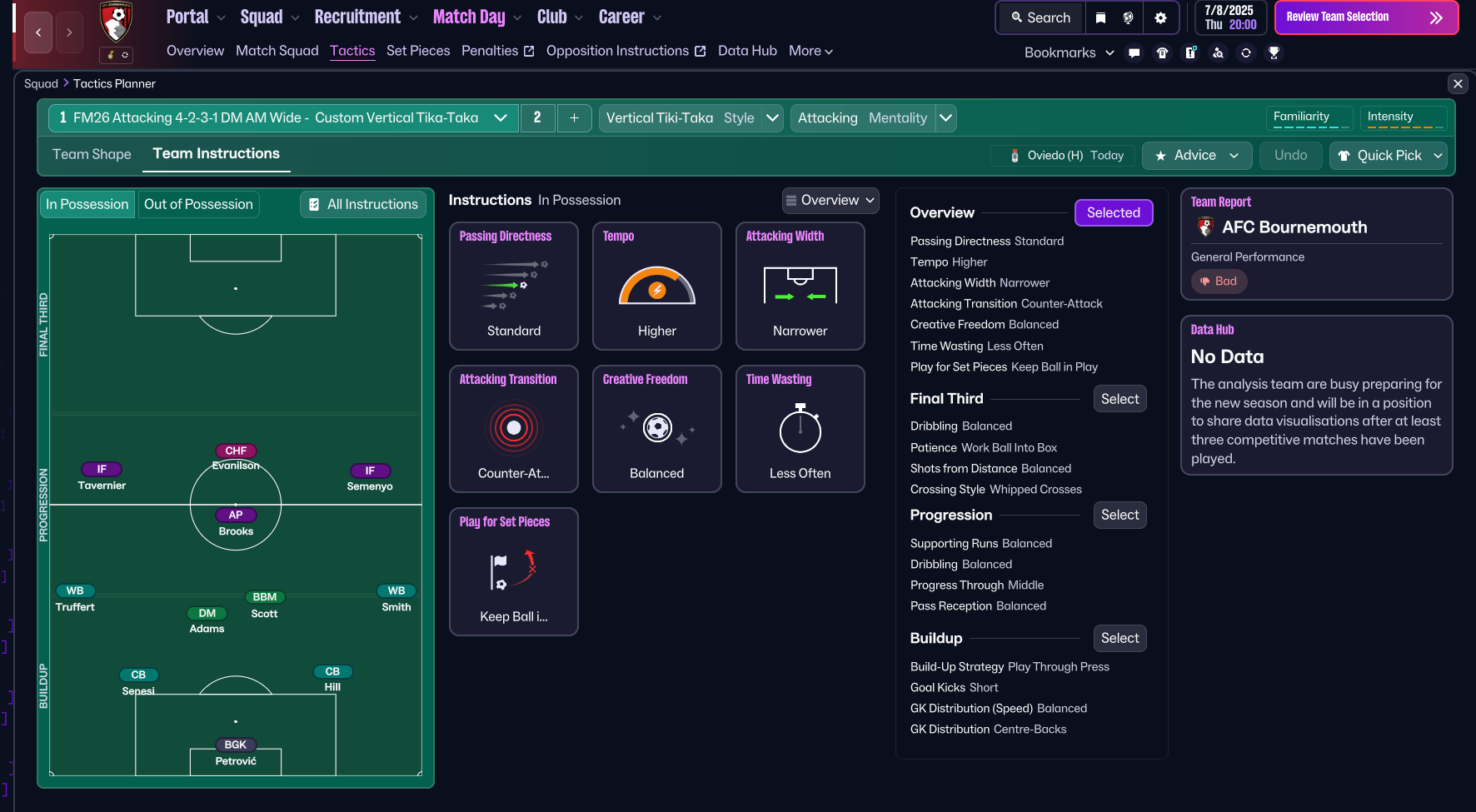
Vertical Tiki-Taka 4-2-3-1 DM AM Wide
Vertical Tiki-Taka
More Custom Direct Counter-Attack tactics
Guides for this formation
The tactical theory behind the 4-2-3-1 DM AM Wide: roles, instructions, and the trade-offs that decide whether the system holds up.
Player pairings
Midfield Pairs in 4-2-3-1 and 4-4-2
Double pivots and flat pairs in 4-2-3-1 and 4-4-2: when each pairing works, when it collapses, and the AMC unicorn that rescues both.
Read guide
Playing styles
Gegenpressing: A Full Guide
Klopp-style gegenpressing in FM, including squad profile, line-and-press pairing, sustainable workload, and the antipatterns to avoid.
Read guide