Uploaded Tactic
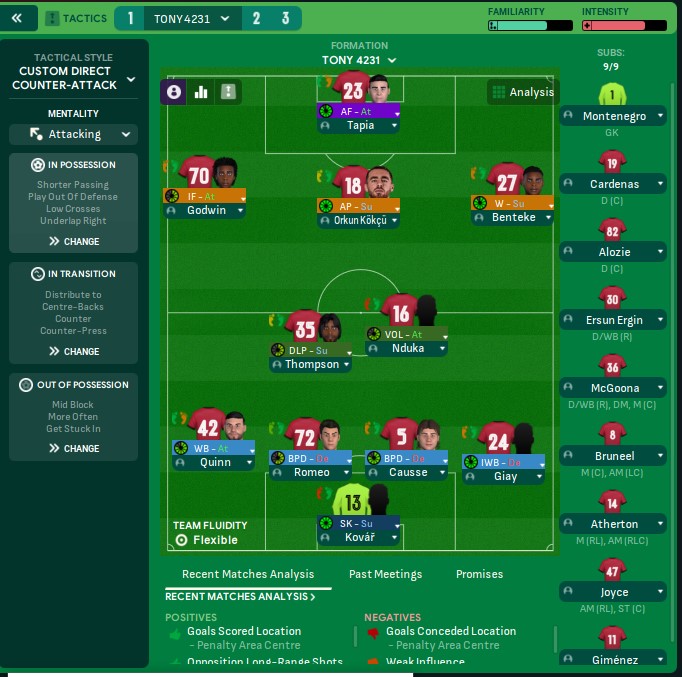
Formation & Style
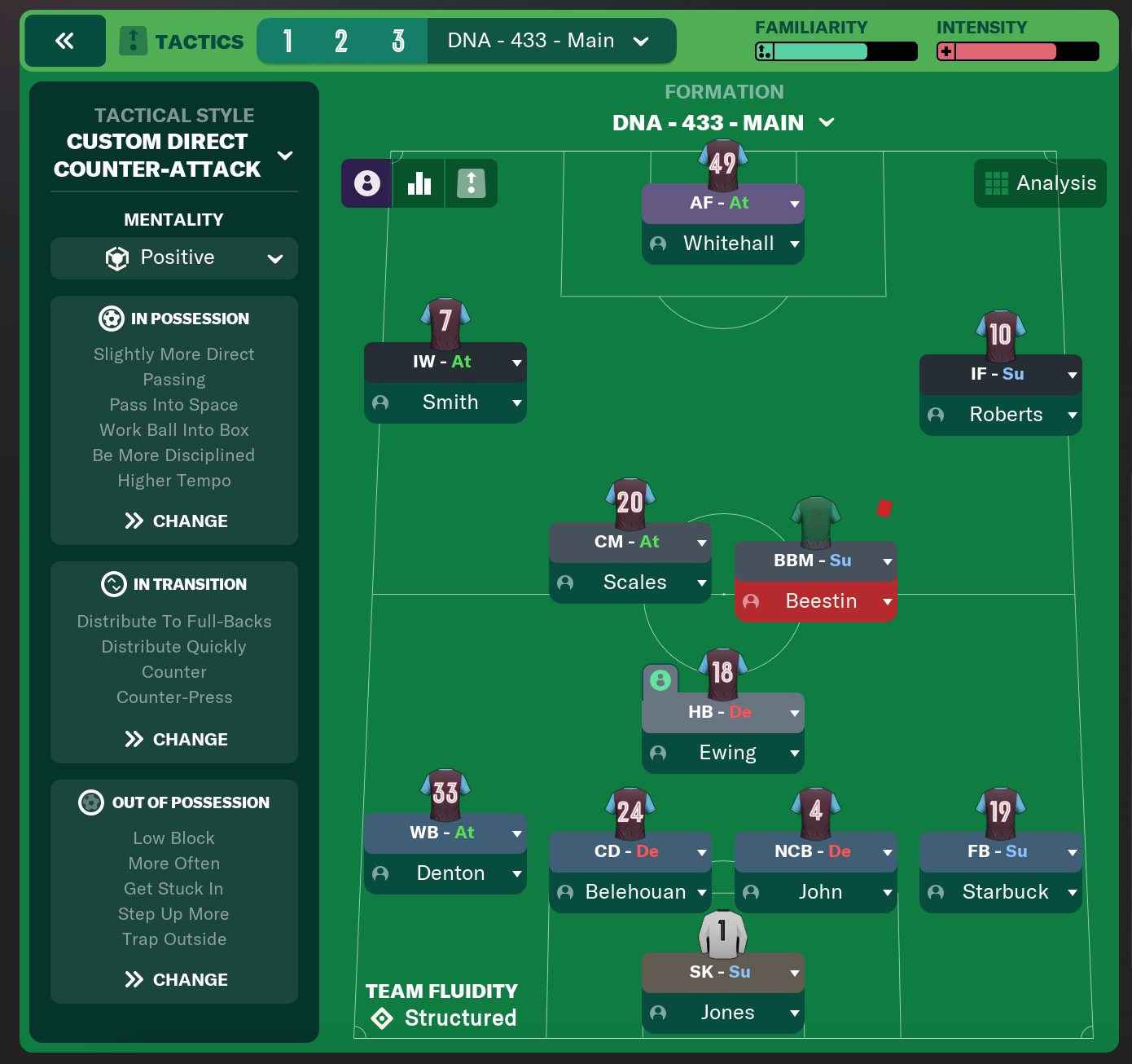
Tactical Style:Custom Direct Counter-Attack
Mentality:Attacking
Formation:4-2-3-1
Team Fluidity:Flexible
In Possession
Shorter Passing
Play Out of Defence
Low Crosses
Underlap Right
In Transition
Distribute to Centre-Backs
Counter
Counter-Press
Out of Possession
Mid Block
More Relative Width
Get Stuck In
Team Shape Without Ball
Shape:4-2-3-1
Description:A solid defensive shape with the midfielders helping to protect the back line.
Evidence:BPD-De at [2,2] and [2,4] anchoring the defence.
Team Shape With Ball
Shape:4-2-3-1
Description:Wide attacking options provided by inside forwards and wingers with an advanced forward leading the line.
Evidence:Inside Forward (IF) at [5,1], Advanced Playmaker (AP) at [5,3] and Winger (W) at [5,5].
Phase Description
Attacking Play
Focus on quick transitions with direct attacking play through the flanks, utilizing the speed of the wingers.
Defensive Transition
Aim to win the ball back immediately through counter-pressing upon losing possession.
Main Focus
Utilizing the attacking talent to create goal-scoring chances while maintaining solid defensive structure.
Key Strengths
Dynamic Wide Play
The use of inside forwards and wingers creates mismatches on the flanks.
Midfield Balance
A supportive midfield allowing for both defensive cover and offensive support.
Counter-Attacking Ability
Quick transitions from defence to attack taking advantage of opposing positioning.
Conflicting Directions
High Possession Teams
Struggles against teams dominating possession due to potential lack of pressing.
Teams Utilizing Width
May leave space in the center if wing-backs are too advanced.
Teams Employing Two Solo Strikers
Leaves a numerical disadvantage against a two-player center-back setup.
Tactical Suggestions
Adjust Width
Narrower width in defensive transitions could solidify the back line.
Change Wing-Back Roles
Consider switching to support duties to maintain solidity while attacking.
Utilize More Direct Passing
Increasing direct passing could exploit quick transitions effectively.
Ask Questions About Your Lineup
Related Tactics
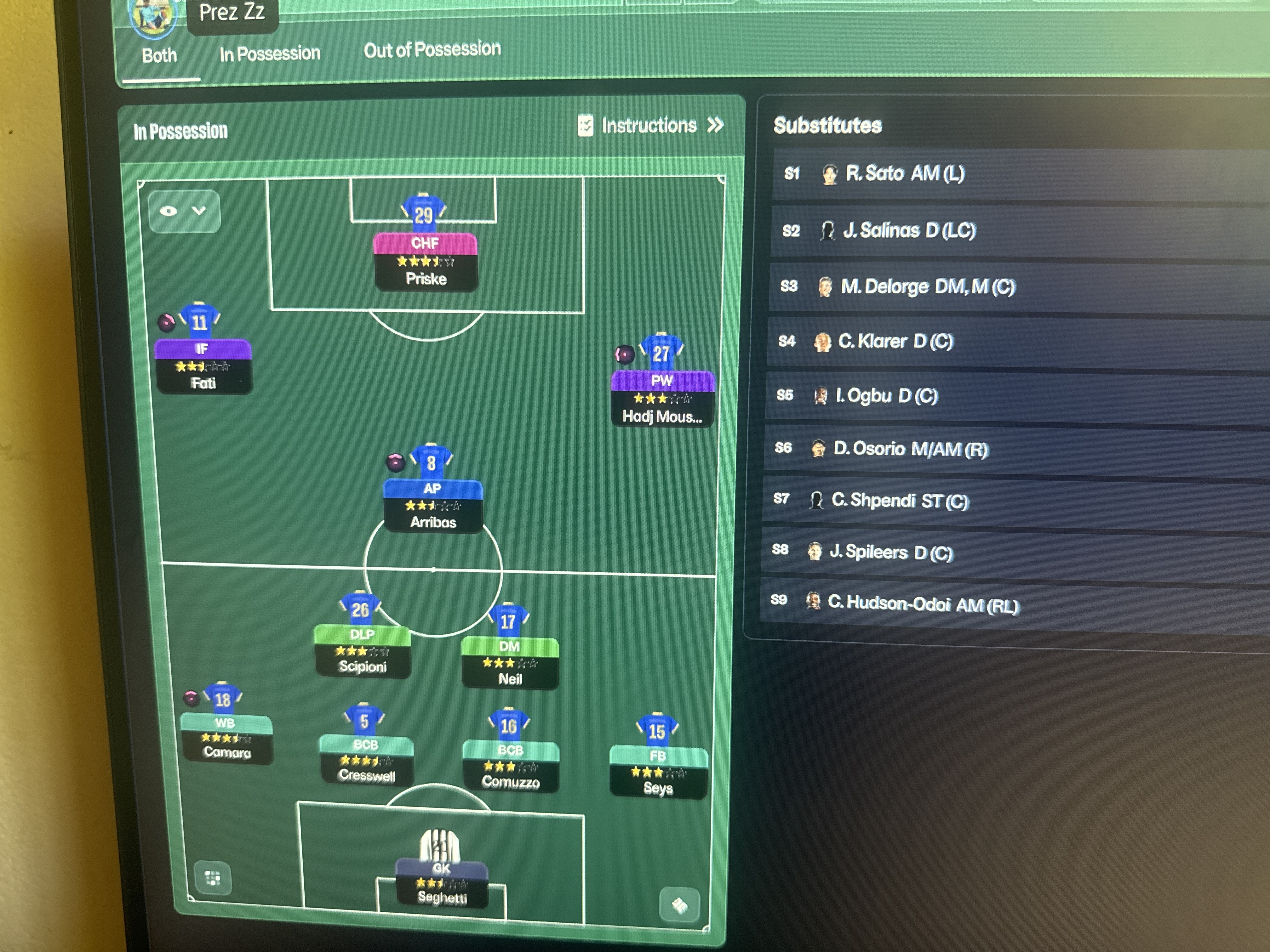
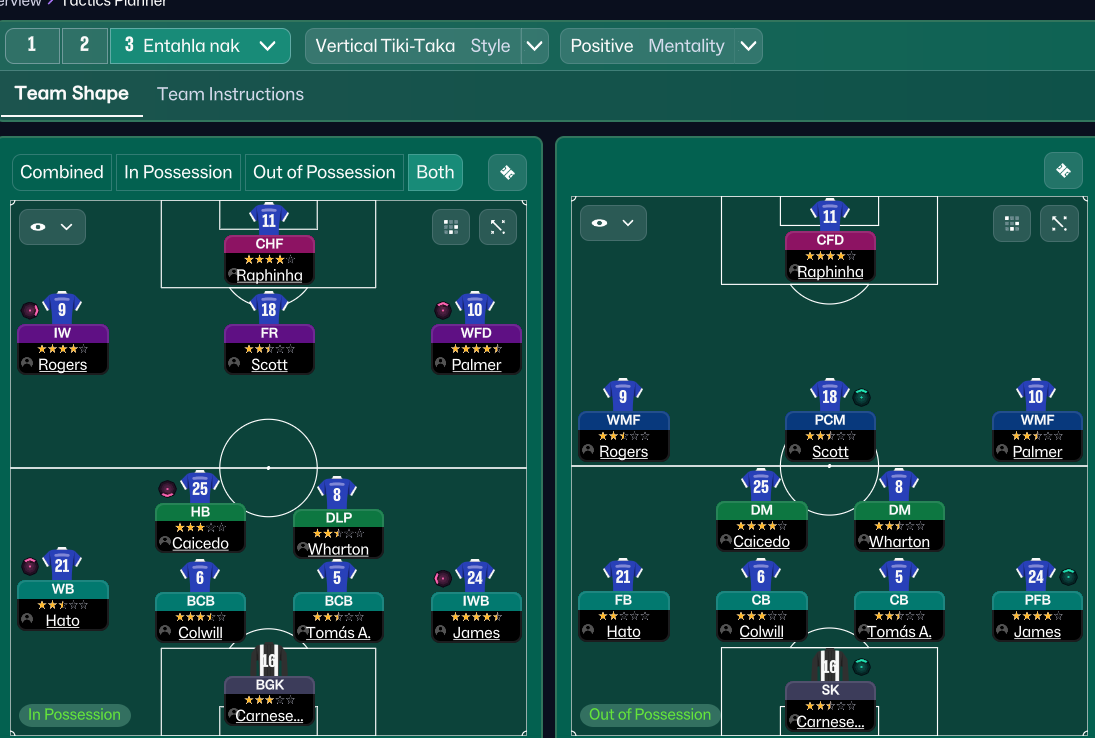
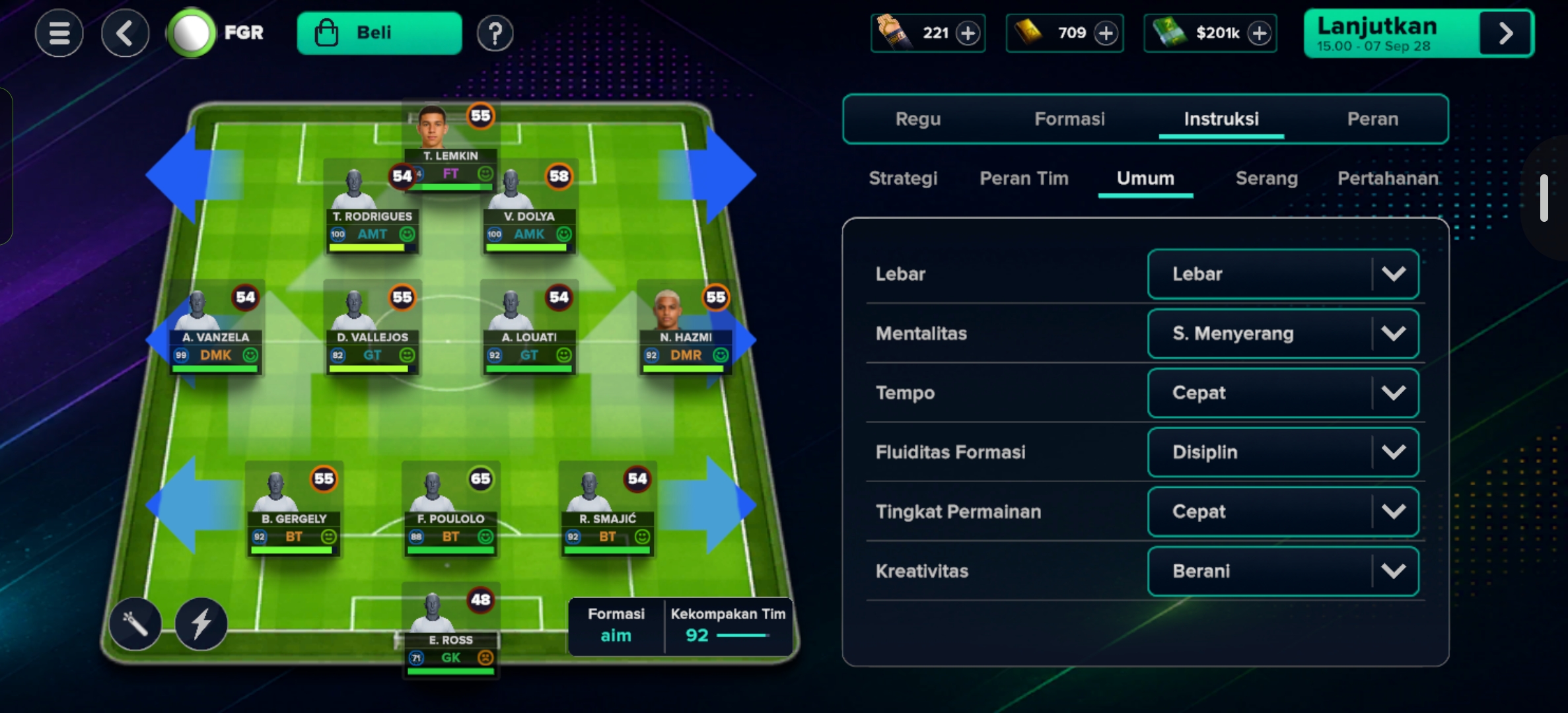
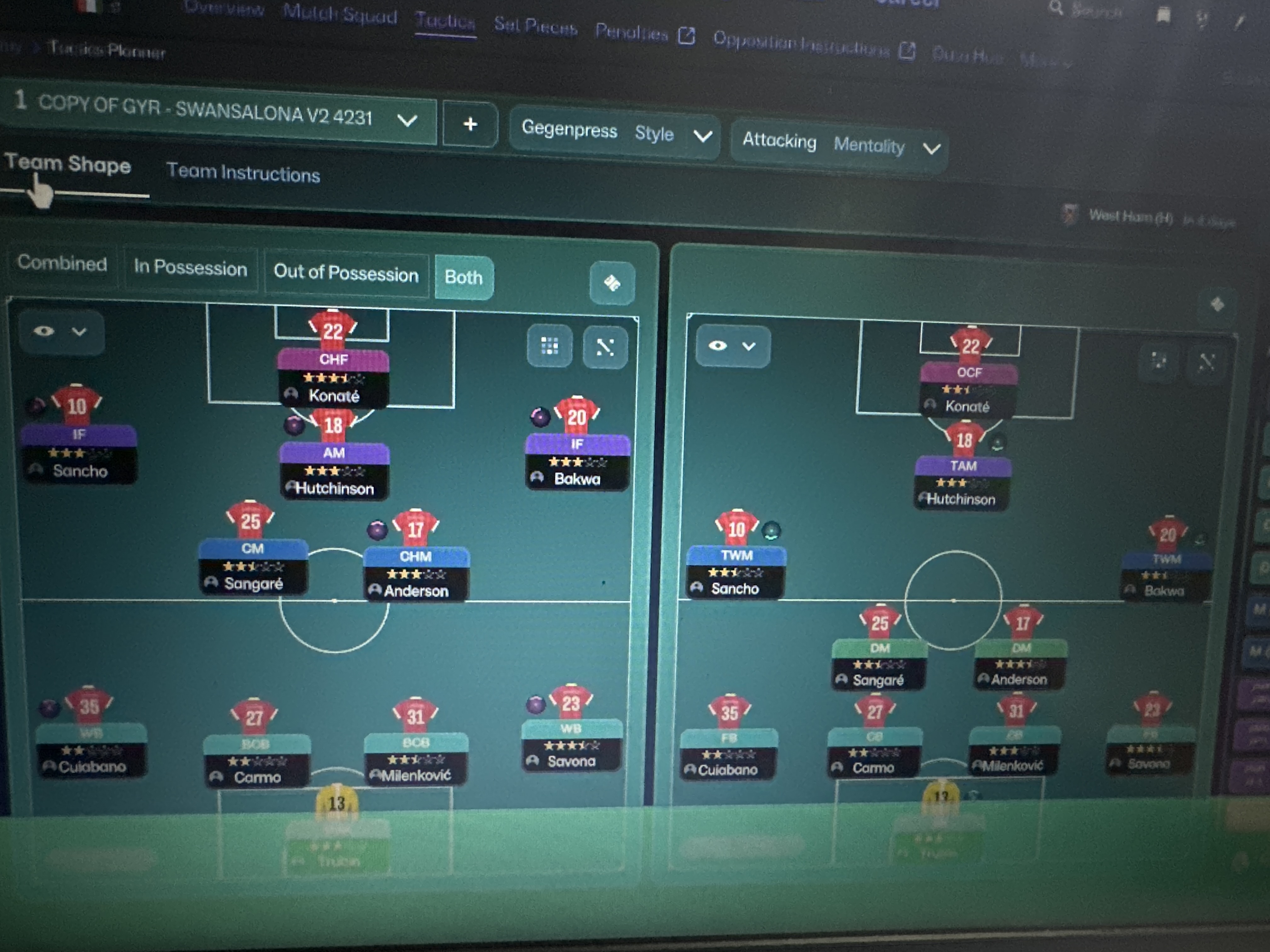
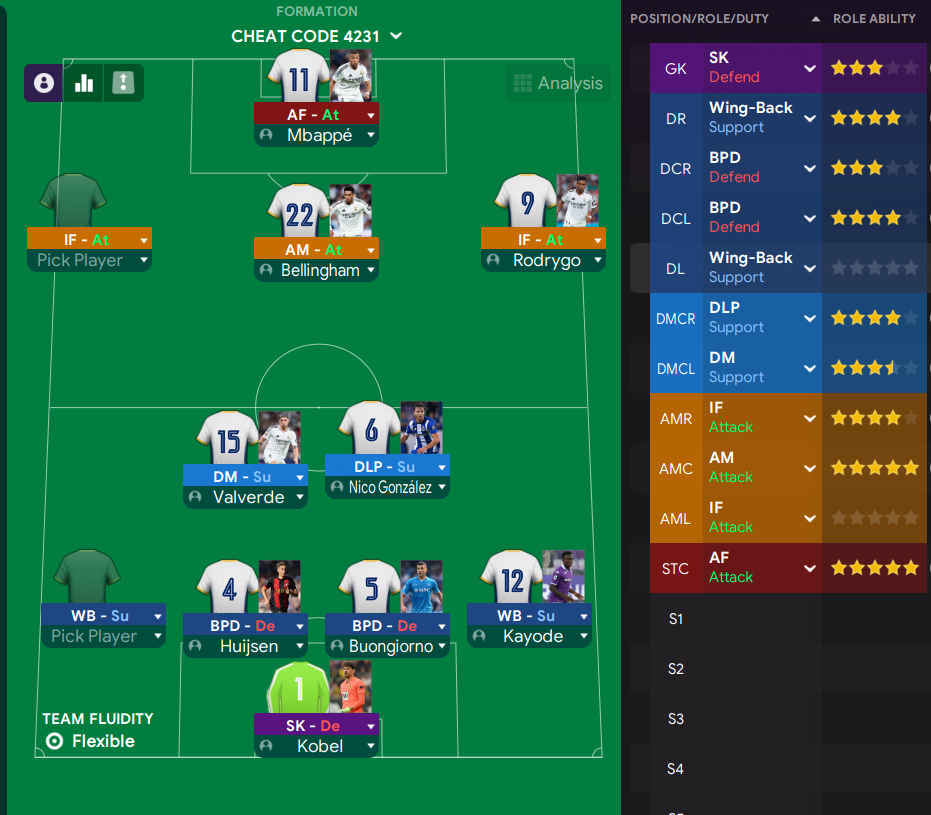
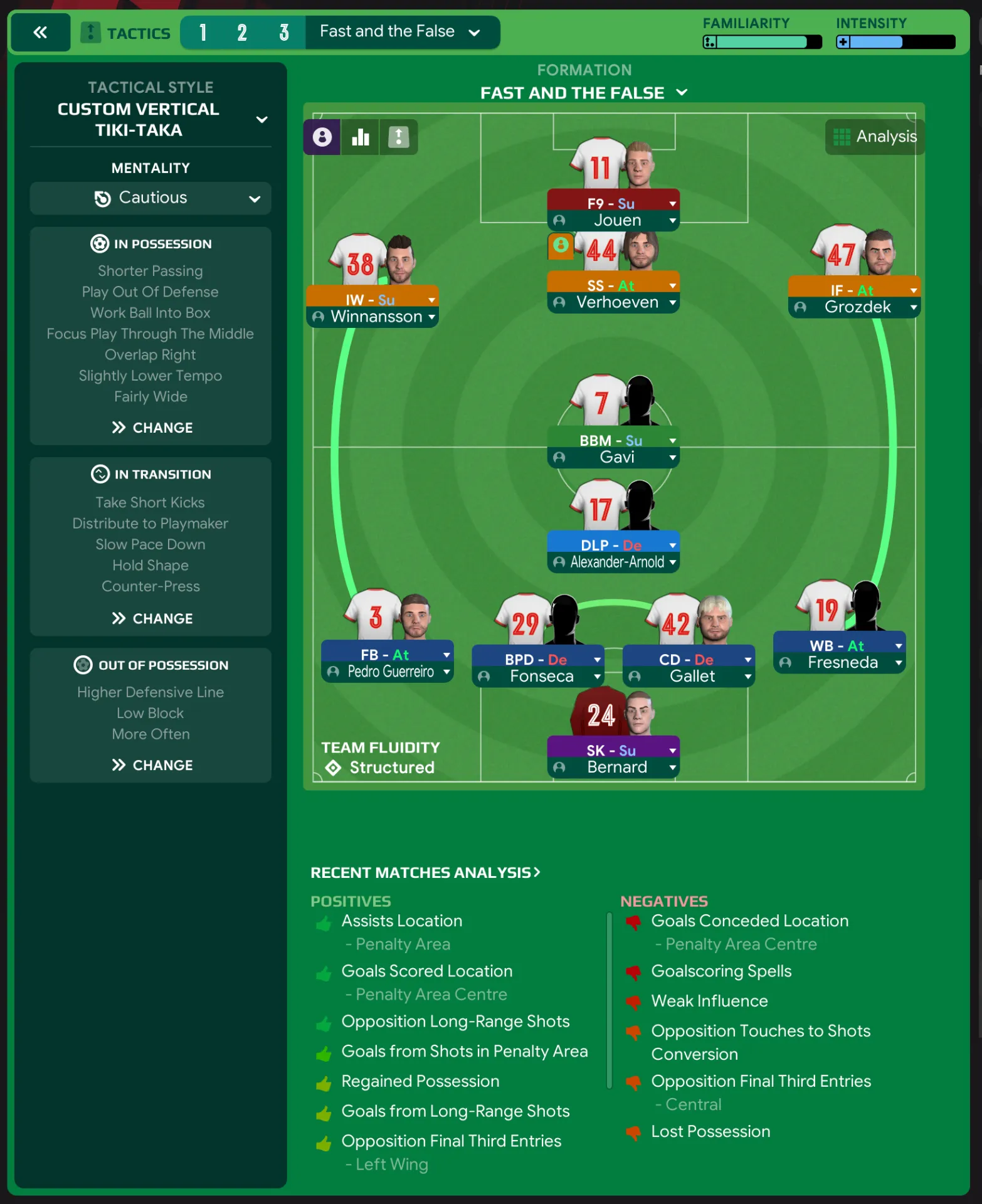
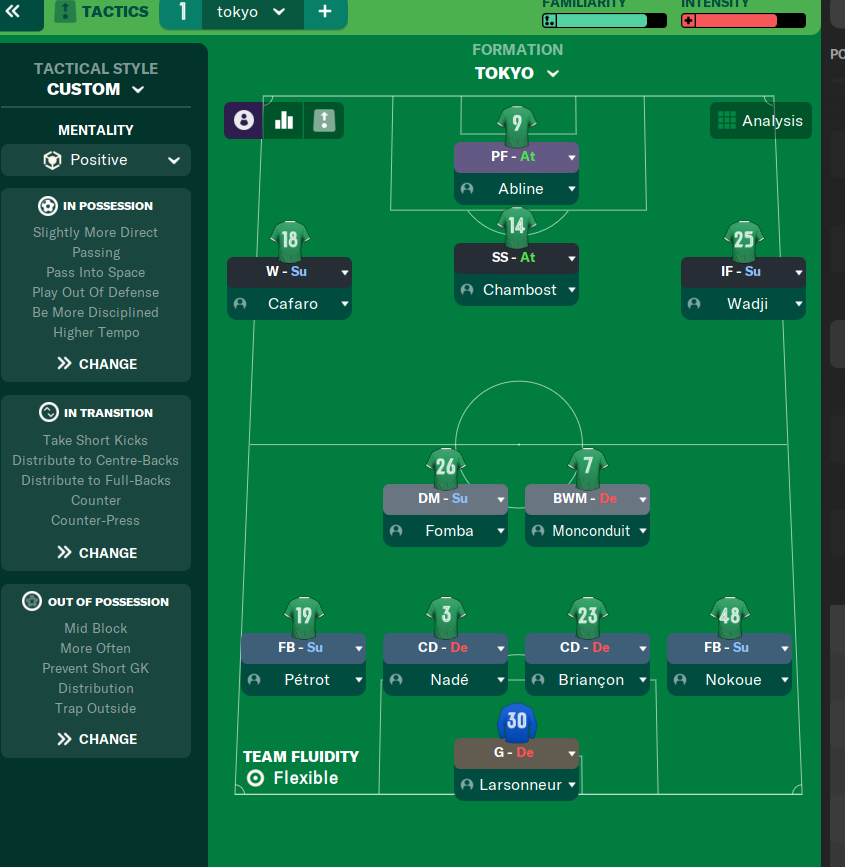
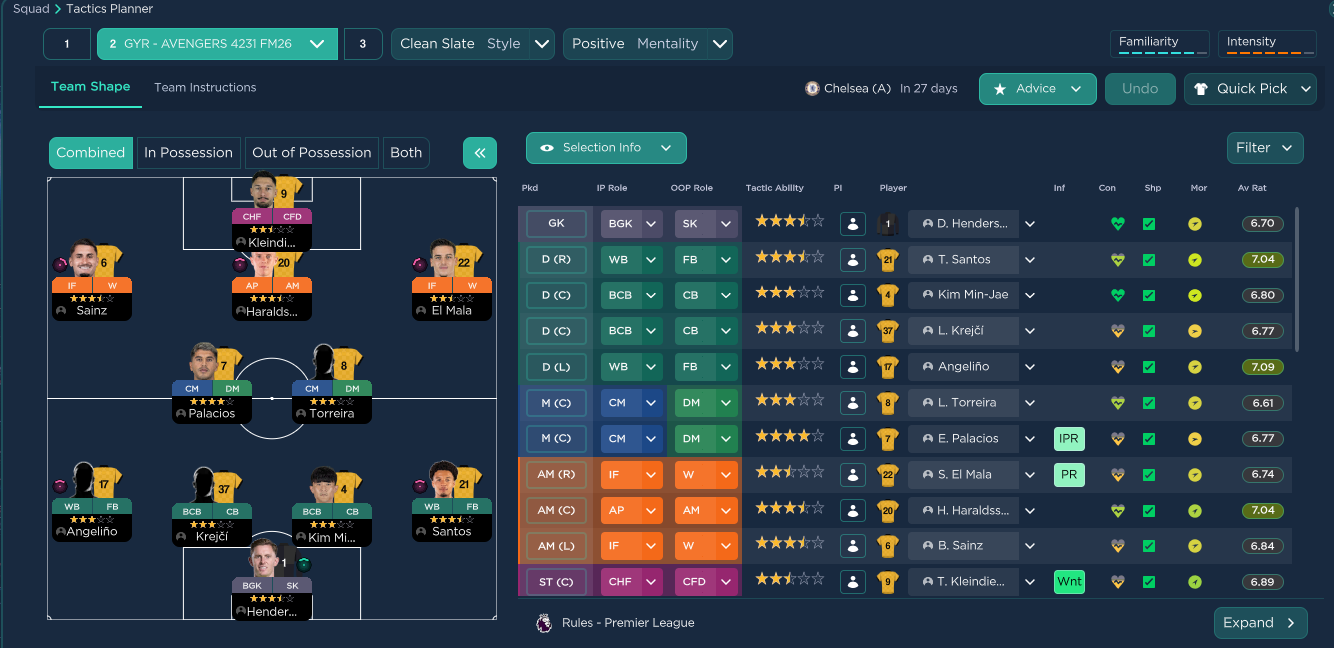
More Custom Direct Counter-Attack tactics
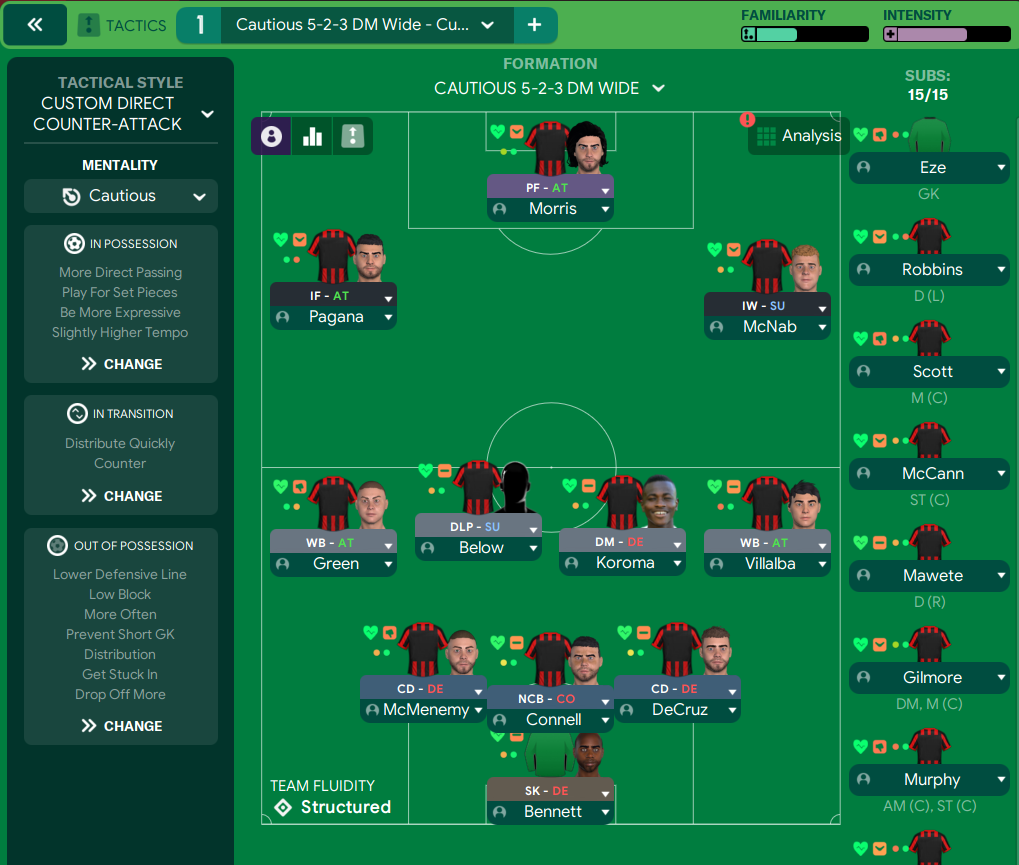
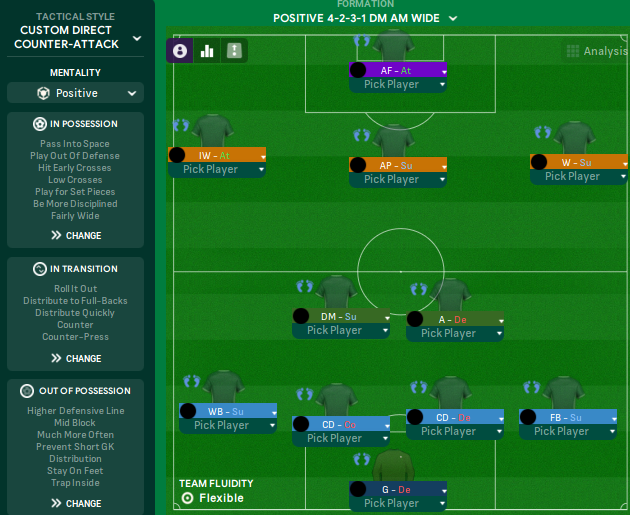
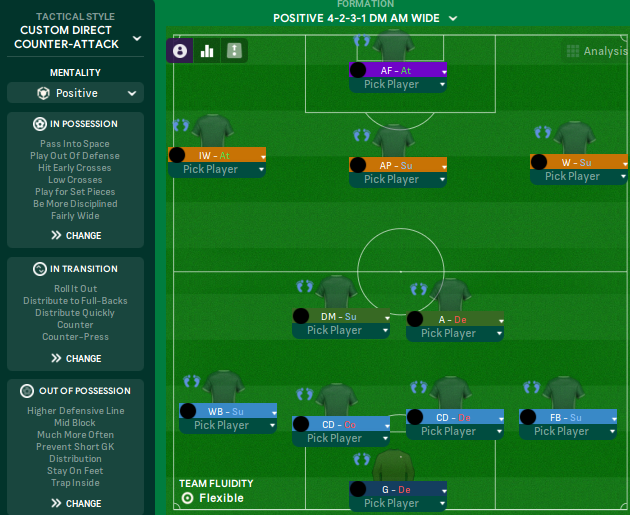
Guides for this formation
The tactical theory behind the 4-2-3-1: roles, instructions, and the trade-offs that decide whether the system holds up.
Player pairings
Midfield Pairs in 4-2-3-1 and 4-4-2
Double pivots and flat pairs in 4-2-3-1 and 4-4-2: when each pairing works, when it collapses, and the AMC unicorn that rescues both.
Read guide
Playing styles
Gegenpressing: A Full Guide
Klopp-style gegenpressing in FM, including squad profile, line-and-press pairing, sustainable workload, and the antipatterns to avoid.
Read guide