
4-2-3-1 DM AM Wide
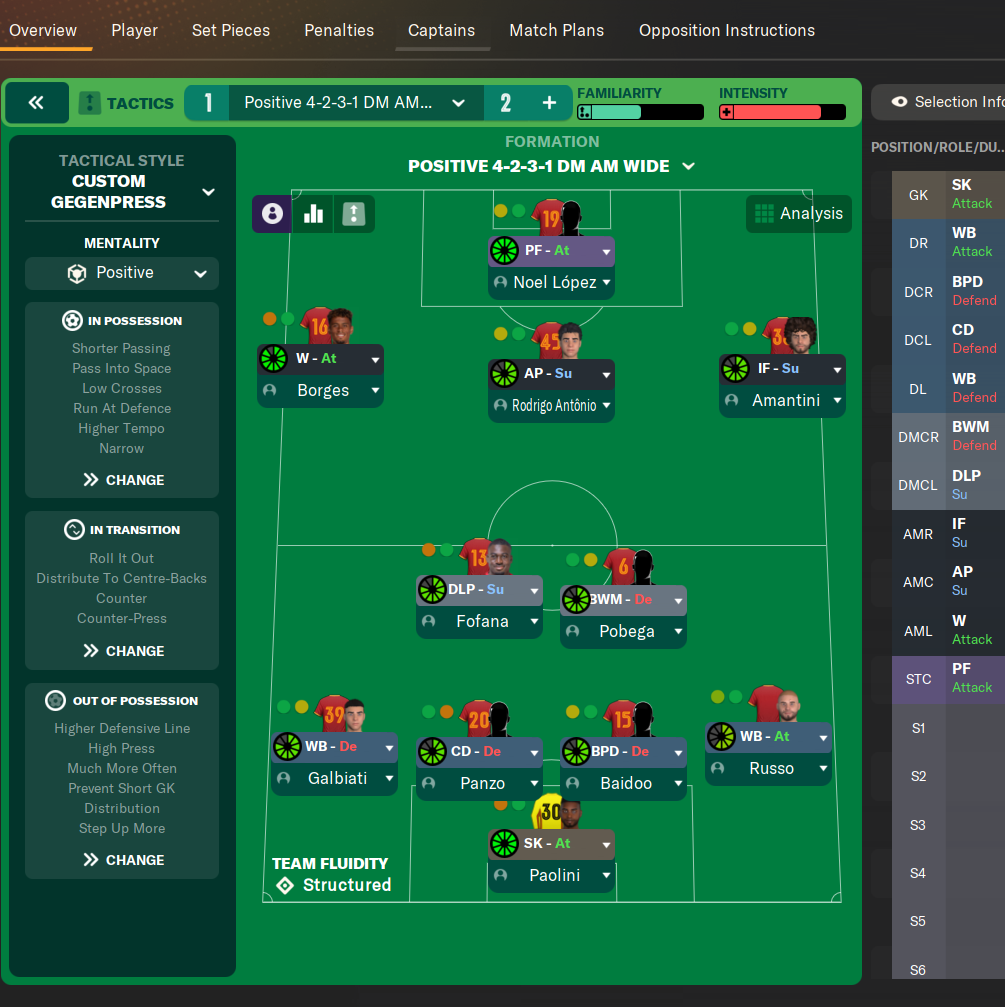
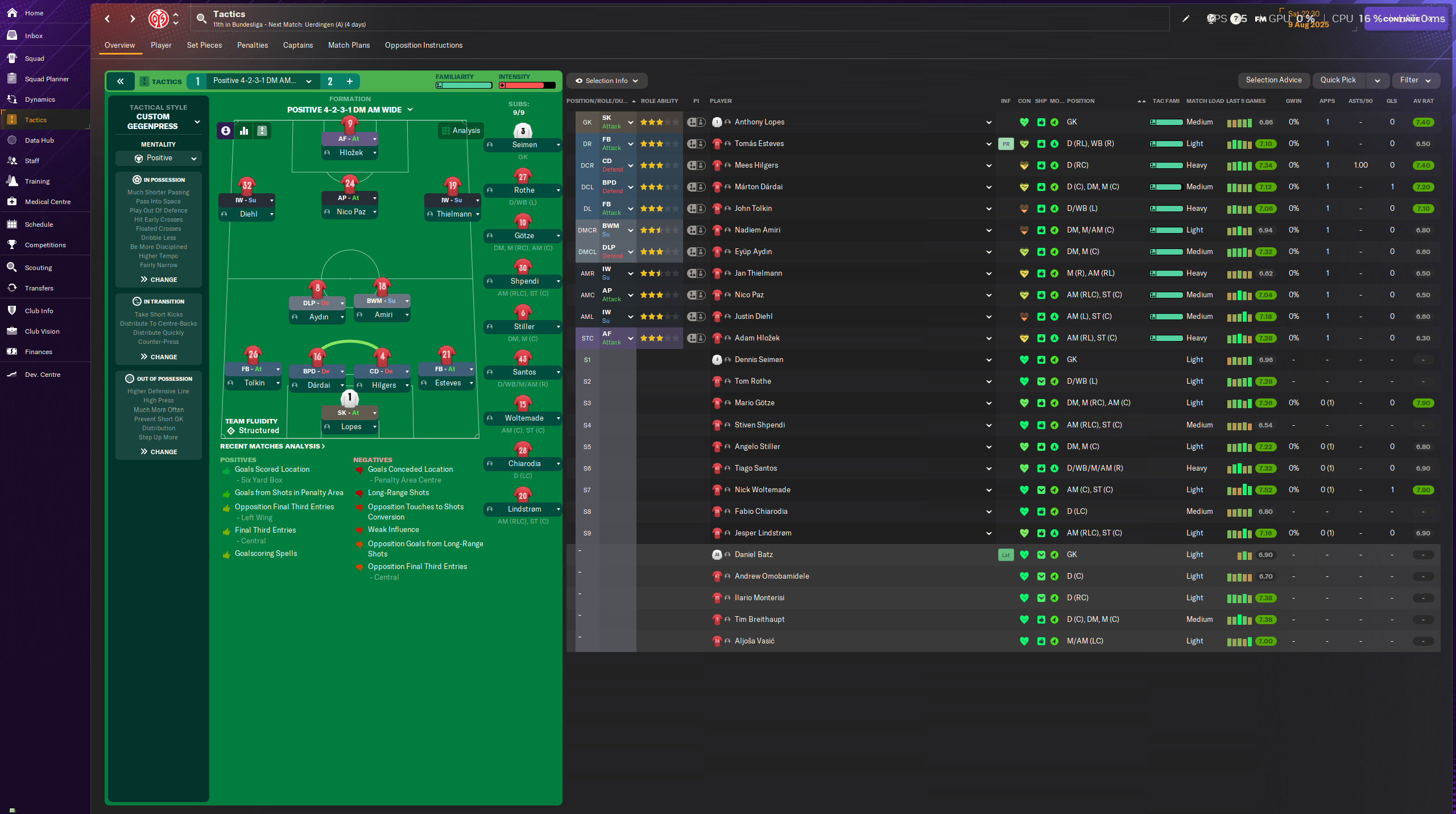
The combination of an Inside Forward and Winger with a creative Advanced Playmaker creates multiple layered attacking options.
Loading tactical analysis...
Gegenpress
Positive
4-2-3-1 DM AM Wide
Structured
Shorter Passing
Pass Into Space
Low Crosses
Run At Defence
Higher Tempo
Narrow
Roll It Out
Distribute To Centre-Backs
Counter
Counter-Press
Higher Defensive Line
High Press
Much More Often
Prevent Short GK Distribution
Step Up More
PF
Pressing Forward
Attack
W
Winger
Attack
AP
Advanced Playmaker
Support
IF
Inside Forward
Support
DLP
Deep-Lying Playmaker
Support
BWM
Ball-Winning Midfielder
Defend
CD
Central Defender
Defend
WB
Wing-Back
Attack
SK
Sweeper Keeper
Attack
The combination of an Inside Forward and Winger with a creative Advanced Playmaker creates multiple layered attacking options.
The high press aligns with the Gegenpress philosophy, helping regain possession quickly after losing the ball.
The narrower attacking shape may limit the effectiveness of the Wing-Backs, as they may not be used optimally on the flanks.
While a high defensive line helps push the opponent back, it can leave vulnerabilities against quick counter-attacks.
How can we better support the Pressing Forward in build-up play?
What alternative roles could optimize the use of wing play in our formation?
Should we consider altering the defensive line against faster opposition?
How can we reduce player fatigue while maintaining our aggressive playstyle?
What adjustments can we make to ensure better midfield support during transitions?
How might changing team fluidity affect our overall performance in matches?
Fluid
Custom
Positive
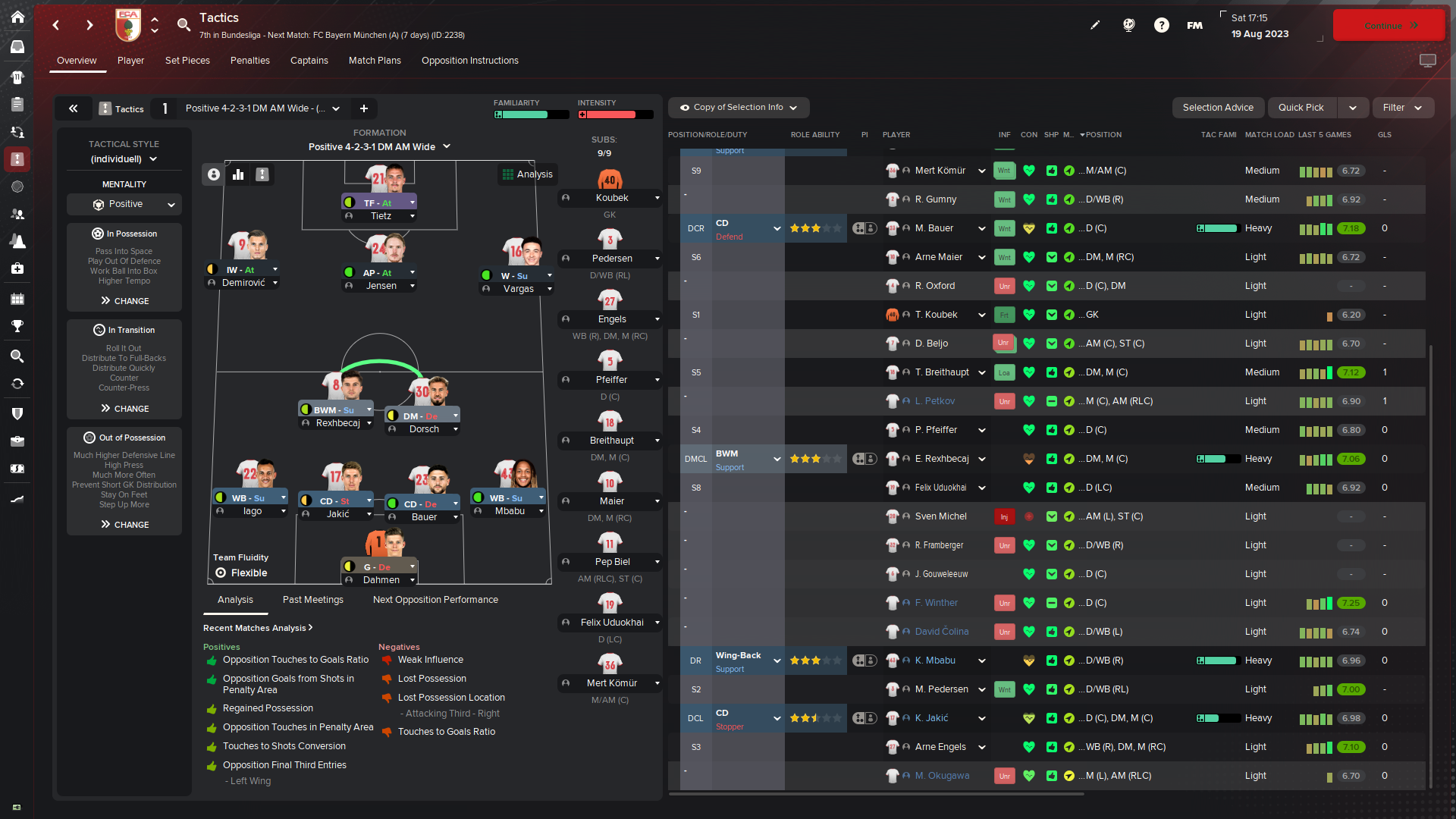
Positive
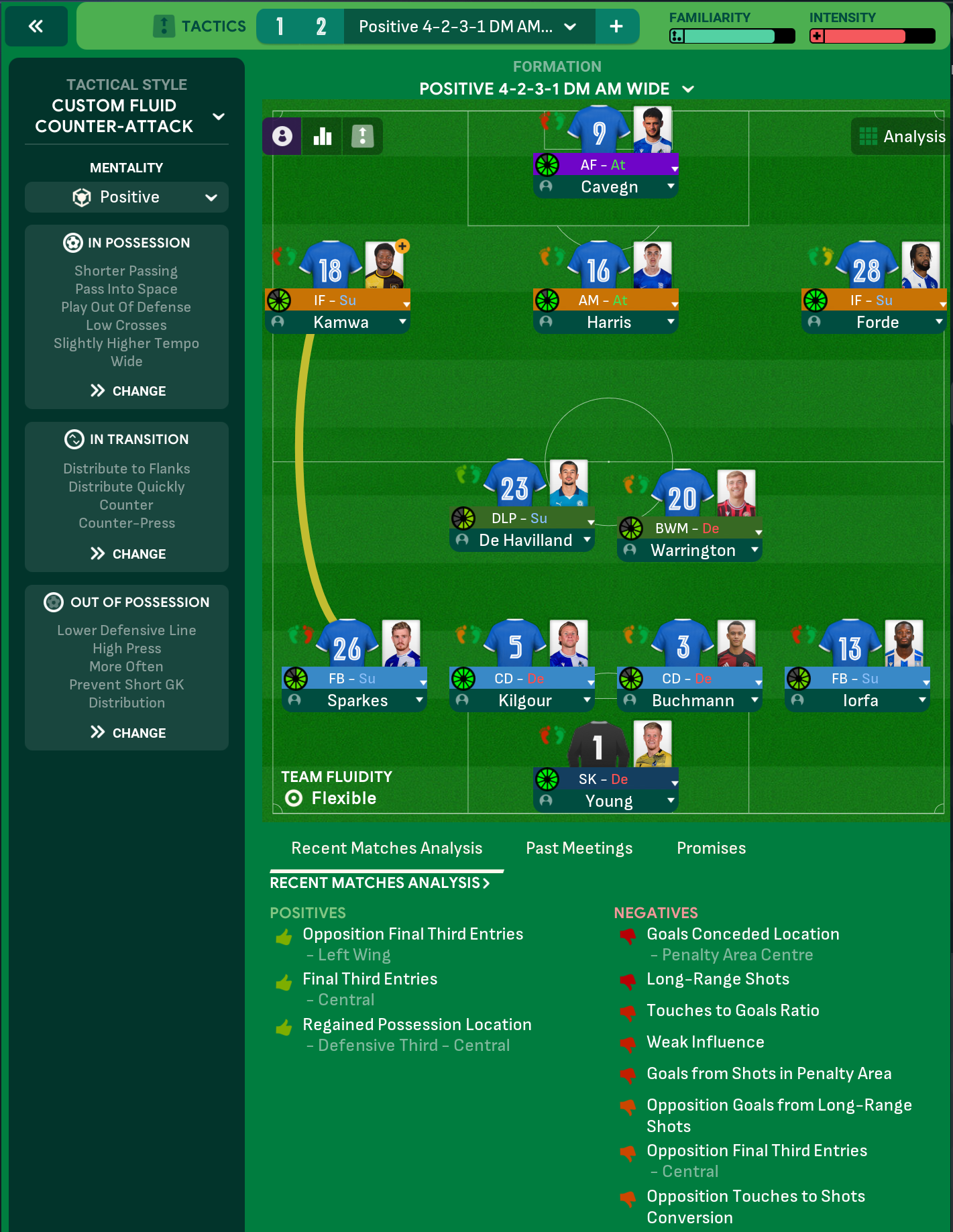
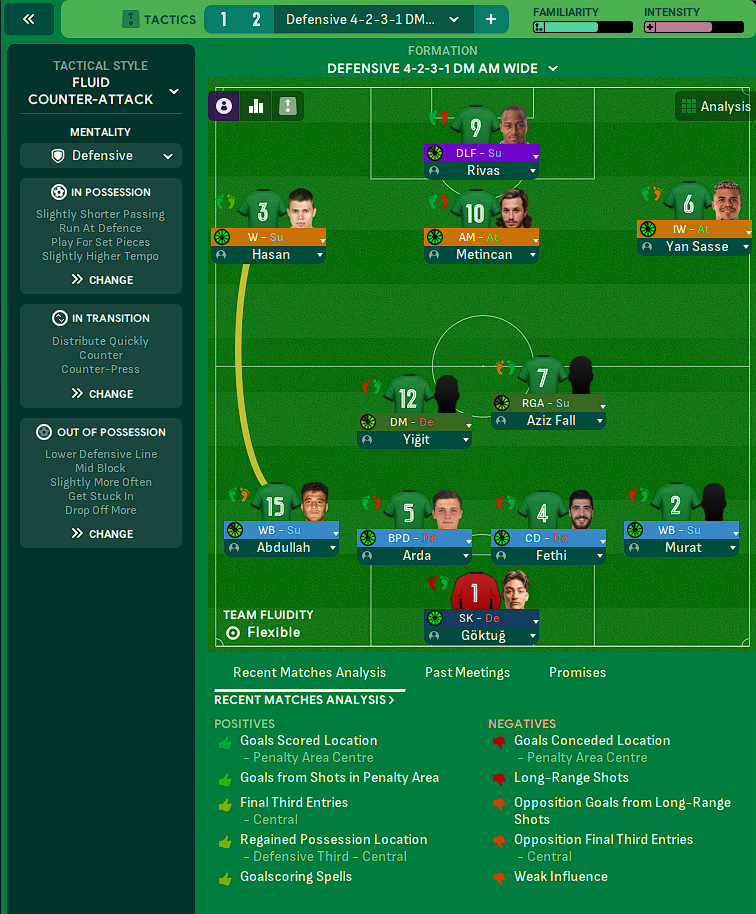
Custom Fluid Counter-Attack
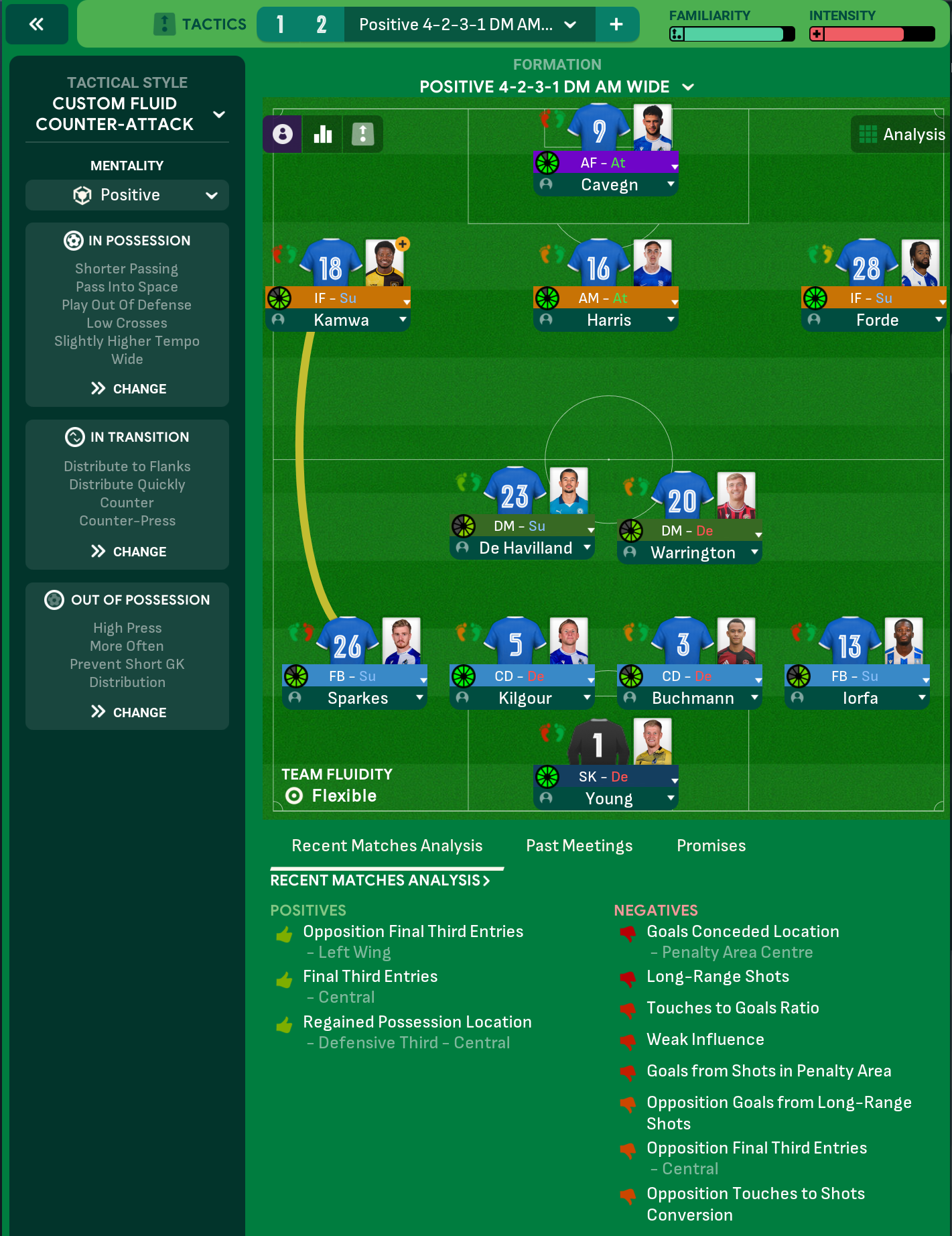
Custom Fluid Counter-Attack
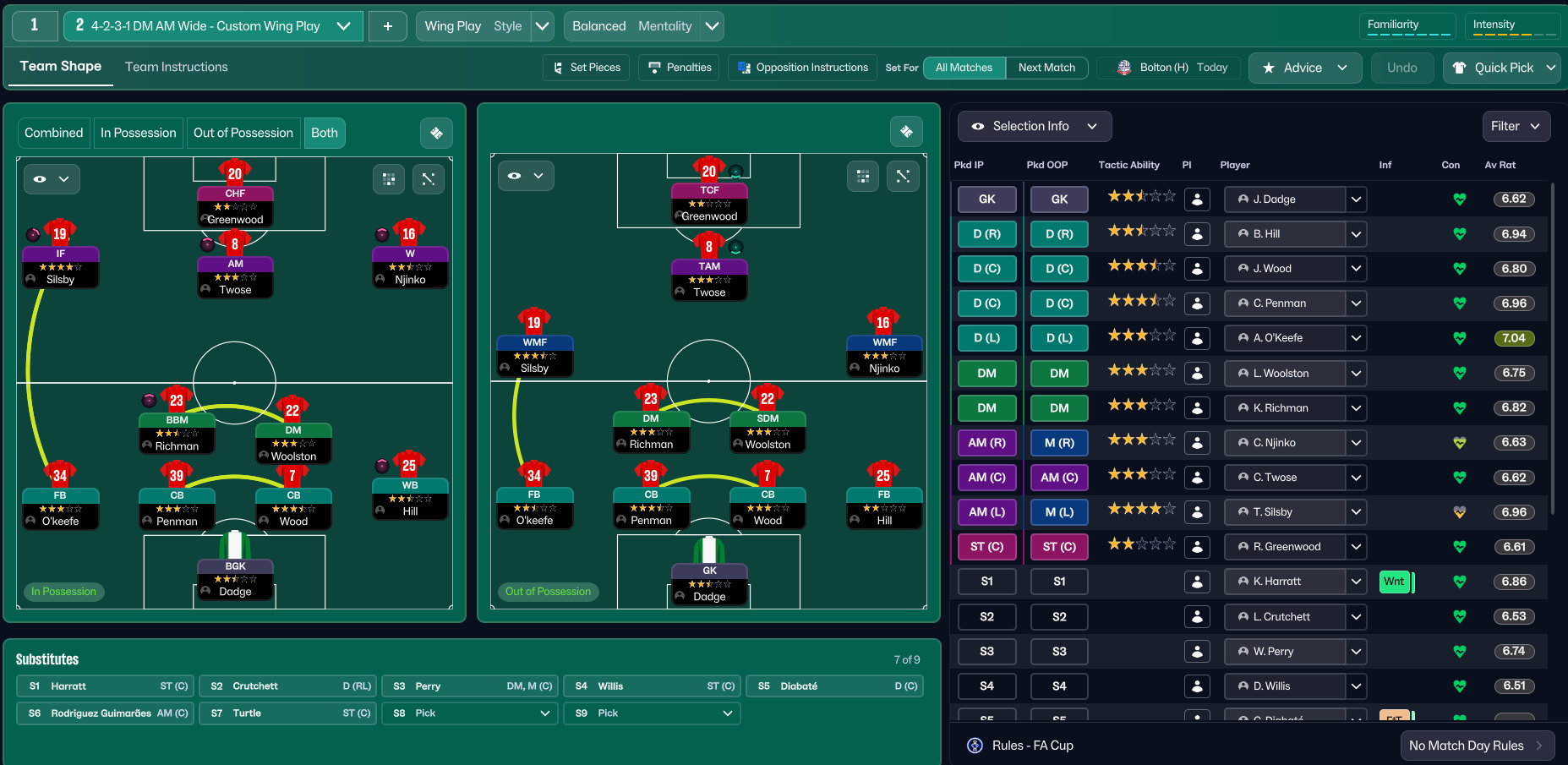
Wing Play
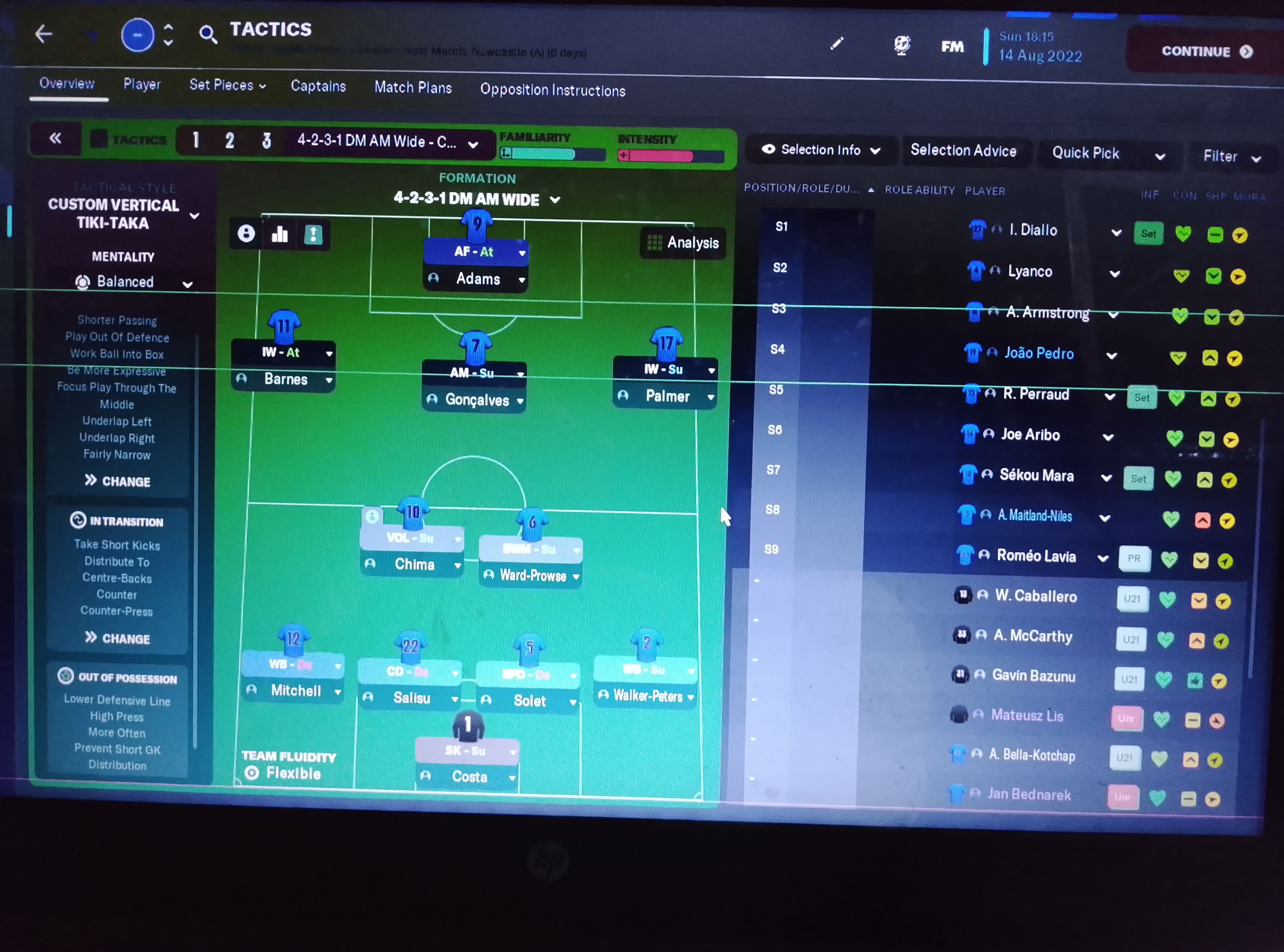
Custom Vertical Tiki-Taka
The tactical theory behind the 4-2-3-1 DM AM Wide: roles, instructions, and the trade-offs that decide whether the system holds up.
Double pivots and flat pairs in 4-2-3-1 and 4-4-2: when each pairing works, when it collapses, and the AMC unicorn that rescues both.
Klopp-style gegenpressing in FM, including squad profile, line-and-press pairing, sustainable workload, and the antipatterns to avoid.
How Mentality, Duty, and Role interact in FM, why duty trumps mentality every time, and the role-on-top-of-duty composition rules.



