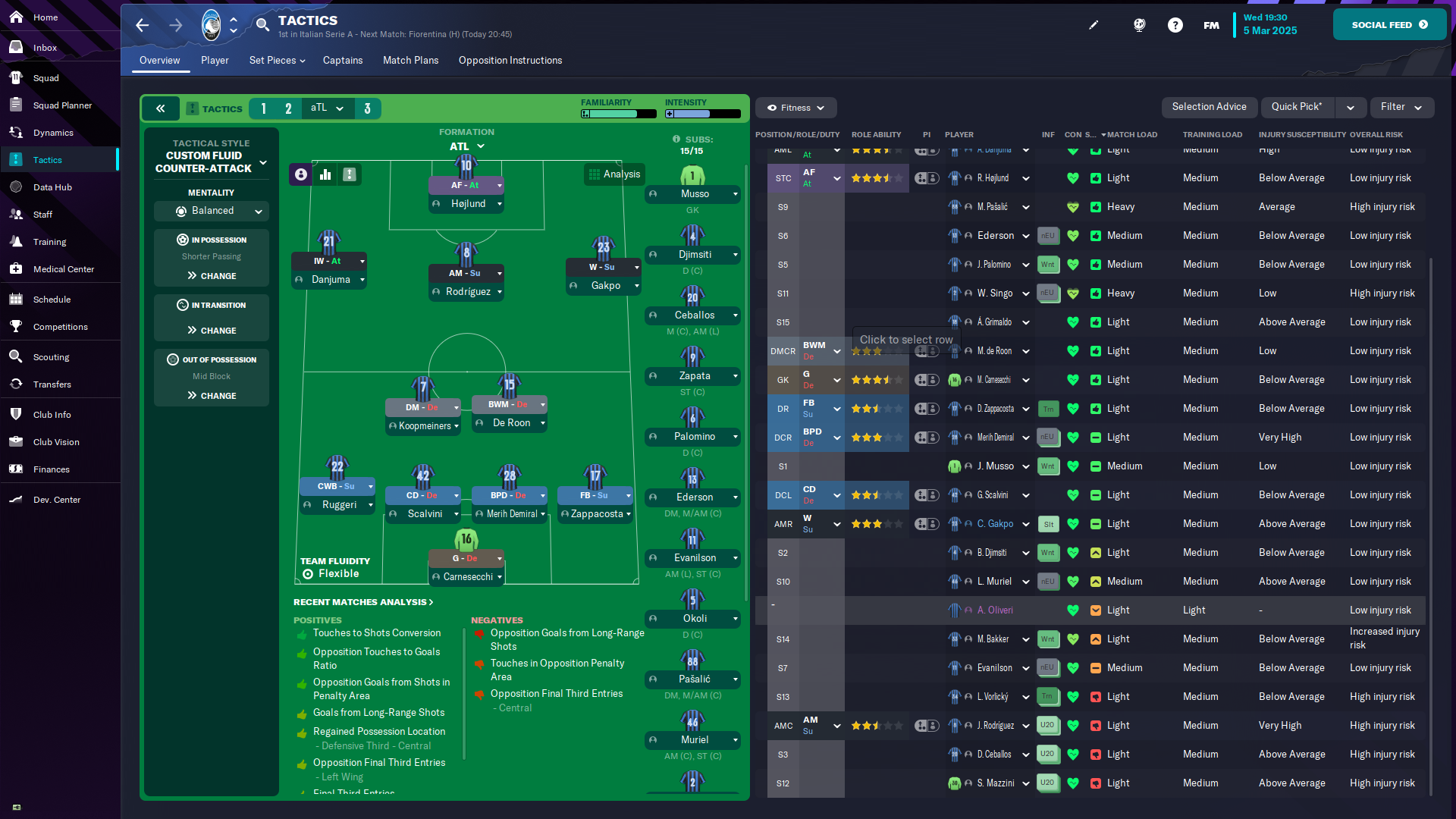
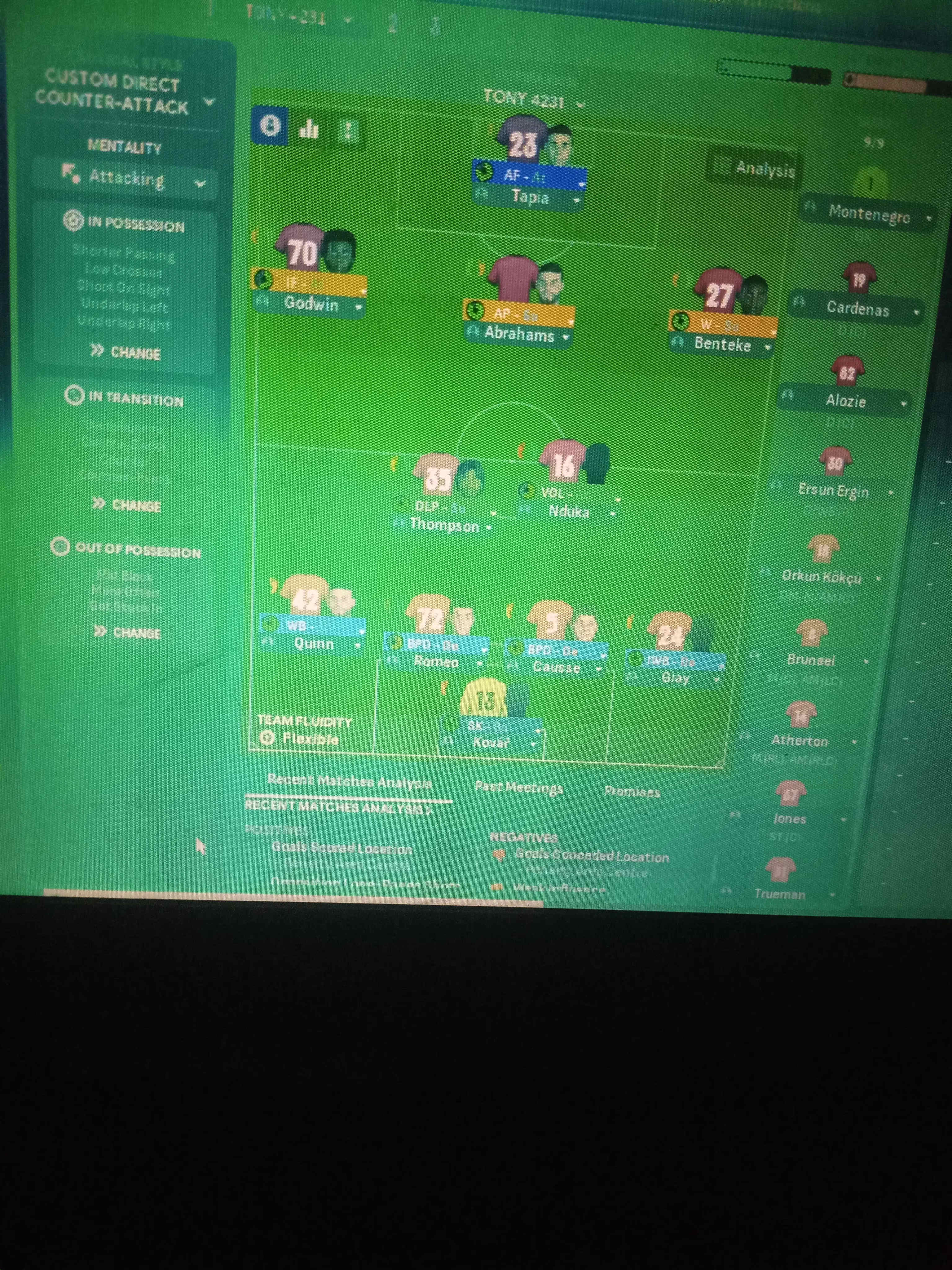
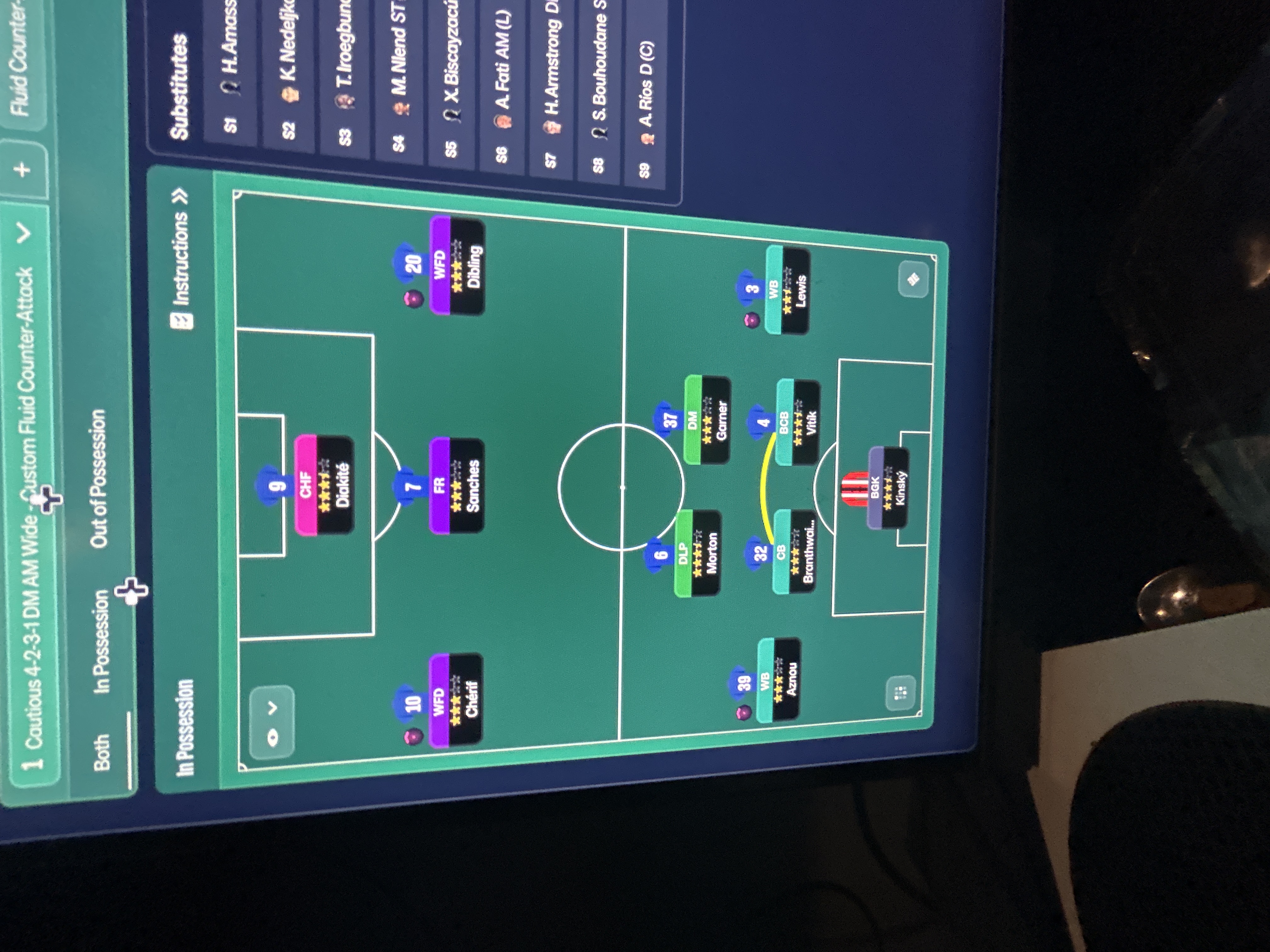
4-2-3-1 DM Wide
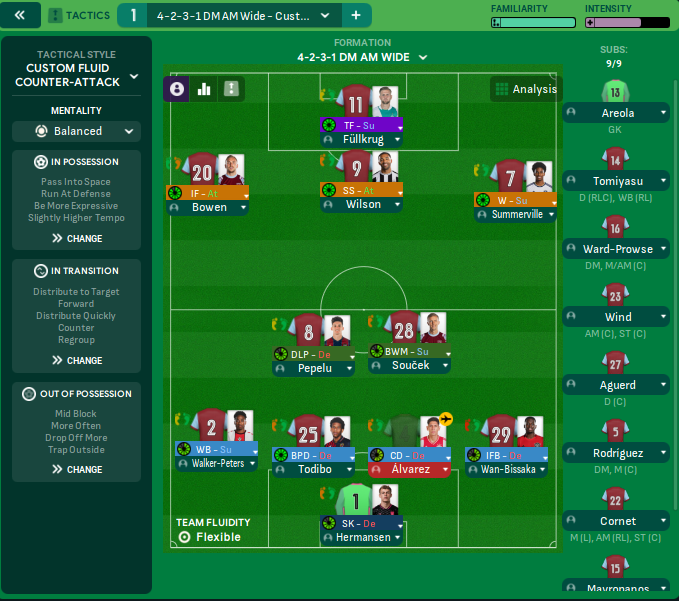
The tactical style focuses on quick transitions, allowing the team to exploit spaces left by opponents.
Loading tactical analysis...
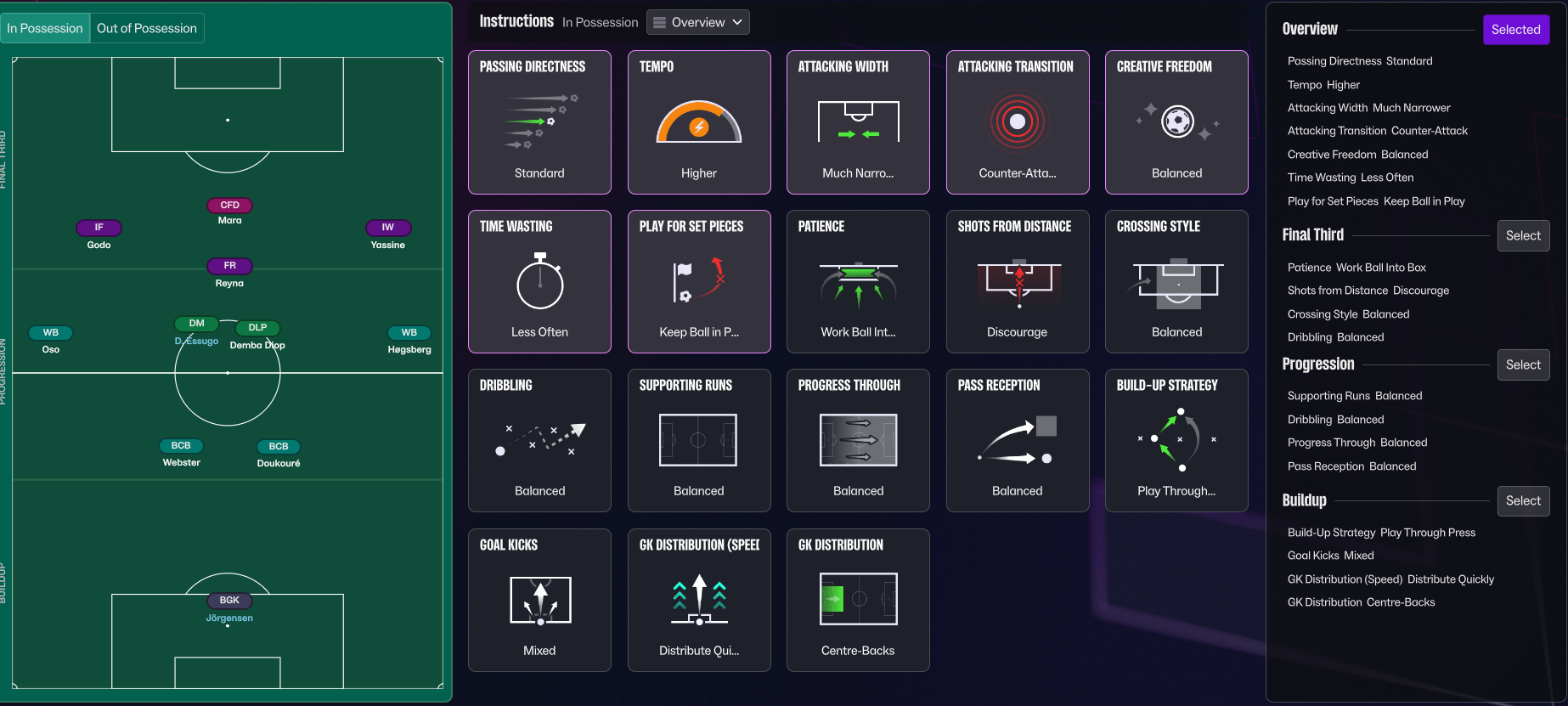
Counter Attack
Balanced
4-2-3-1 DM Wide
Flexible
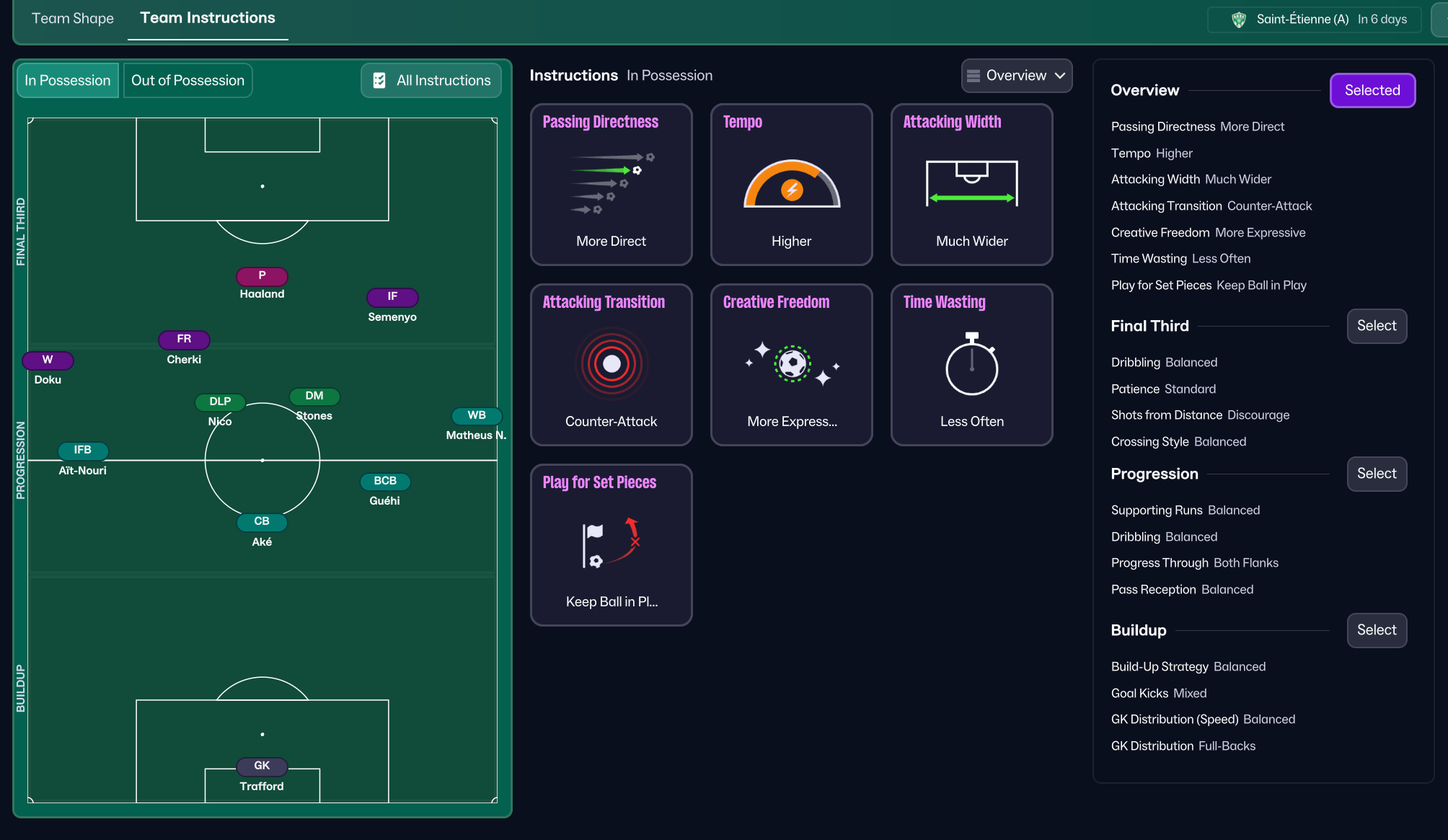
Pass Into Space
Run At Defense
Be More Expressive
Slightly Higher Tempo
Distribute to Target Forward
Distribute Quickly
Counter Regroup
Mid Block
More Often
Drop Off More
Trap Outside
TF
Support
Support
SS
Attack
Attack
IF
Attack
Attack
BWM
Support
Support
DLP
Defend
Defend
BPD
Defend
Defend
CD
Defend
Defend
WB
Support
Support
FB
Defend
Defend
SK
Defend
Defend
The tactical style focuses on quick transitions, allowing the team to exploit spaces left by opponents.
The use of Inside Forwards and a Shadow Striker complements the Target Forward, creating numerous attacking options.
Having both a Deep-Lying Playmaker and a Ball-Winning Midfielder could lead to a clash in roles, especially if they occupy similar spaces.
The Inside Forwards may conflict with the Wing Backs in terms of space occupation, leading to less effectiveness on the flanks.
How effective is the team at transitioning from defense to attack?
Is the midfield maintaining balance between creativity and defensive cover?
Do the Inside Forwards exploit spaces effectively on the flanks?
How well are the defenders communicating during counter-attacks?
What adjustments are made when the team is under sustained pressure?
How efficiently do the Wing Backs support the attack while maintaining defensive duties?
clean slate
clean slate
control possession
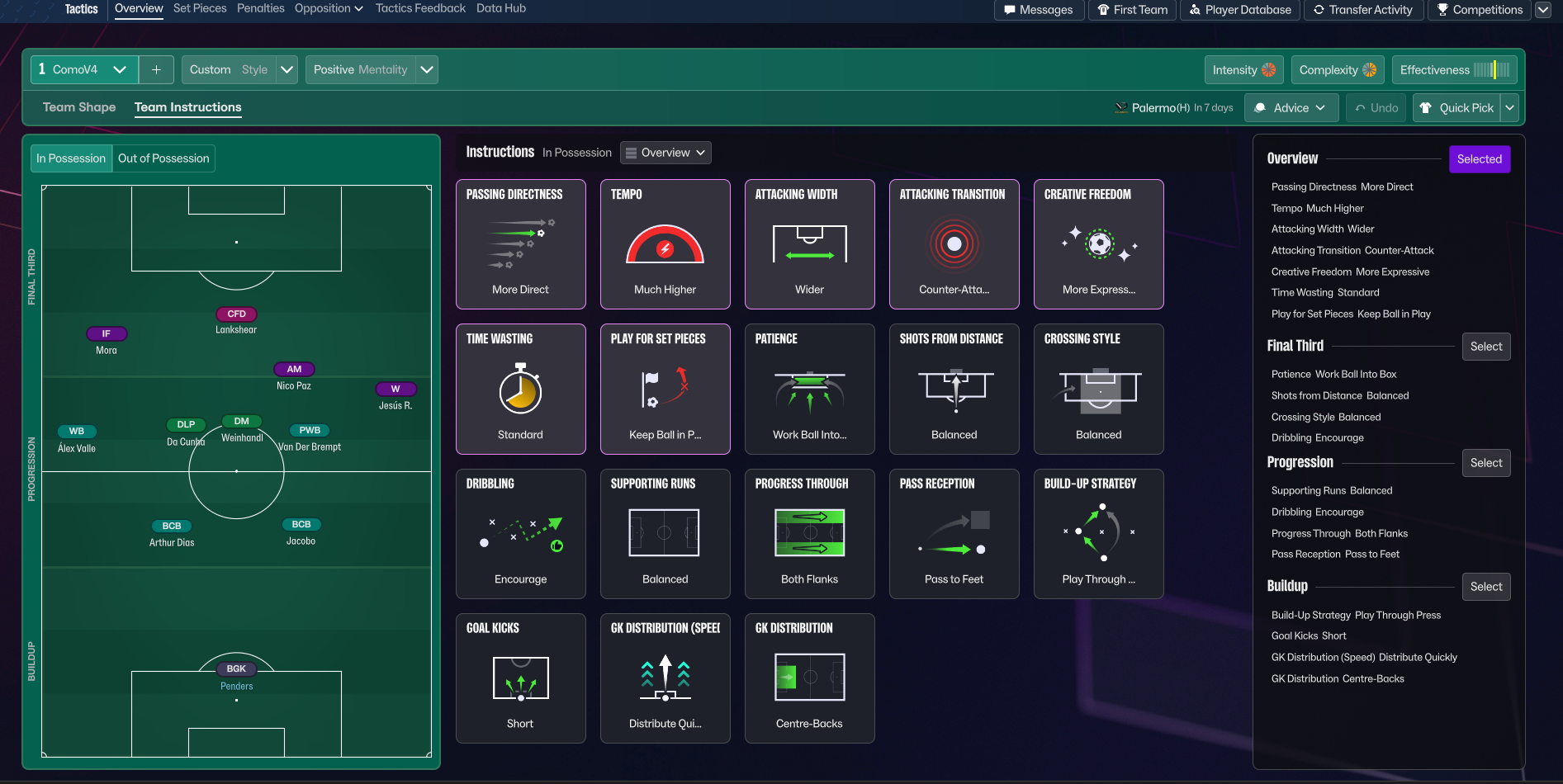
clean slate
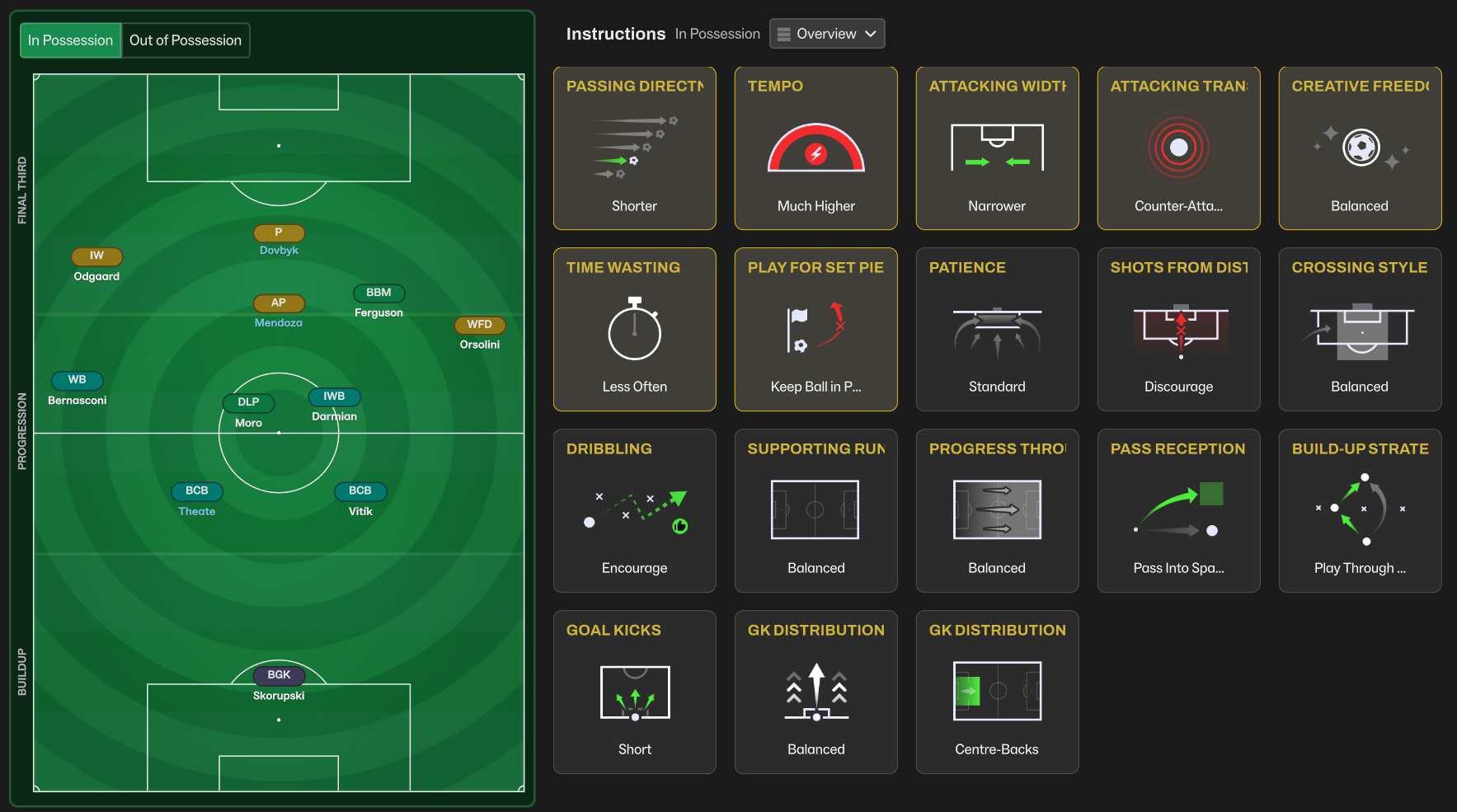
gegenpress
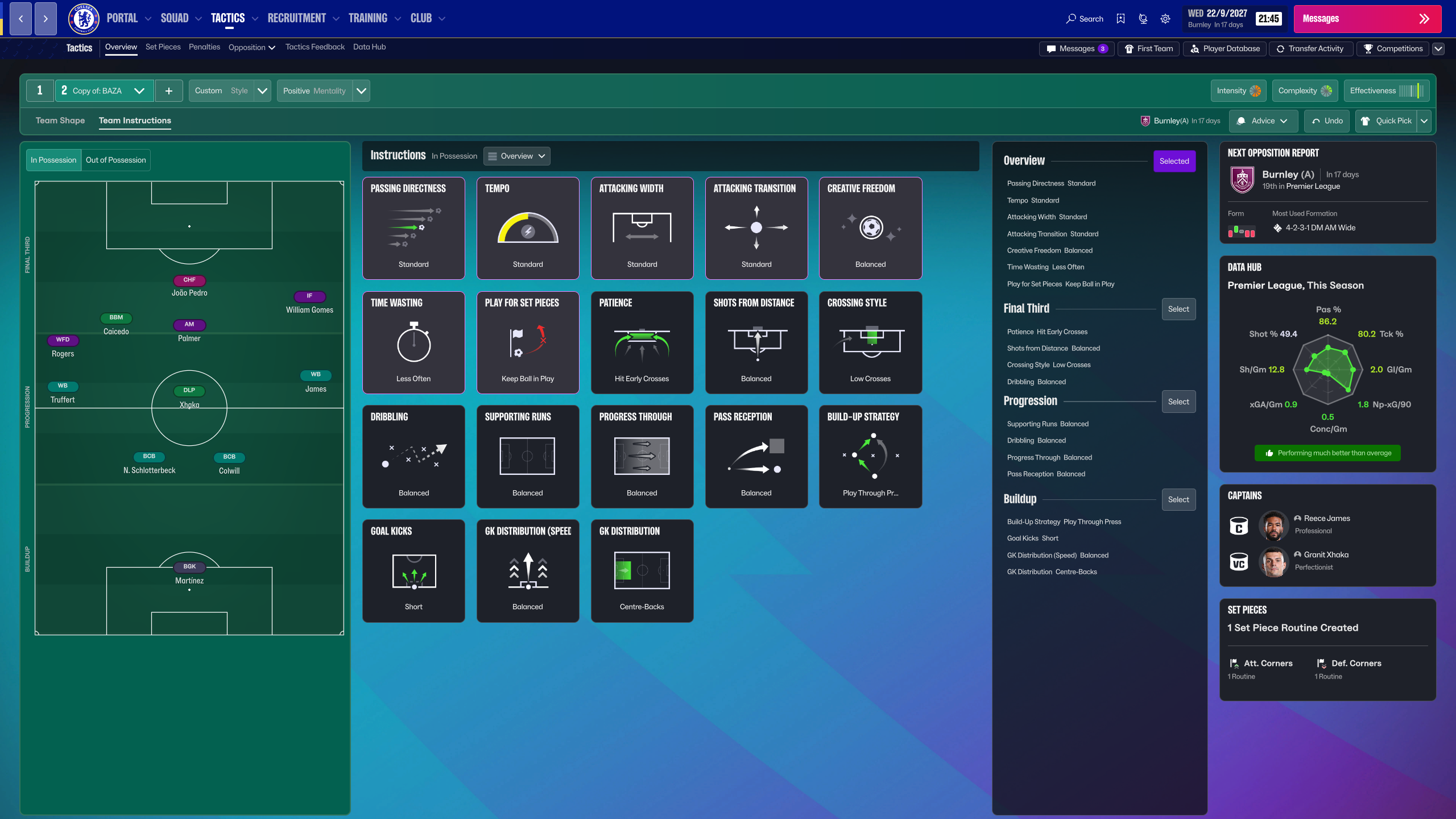
clean slate
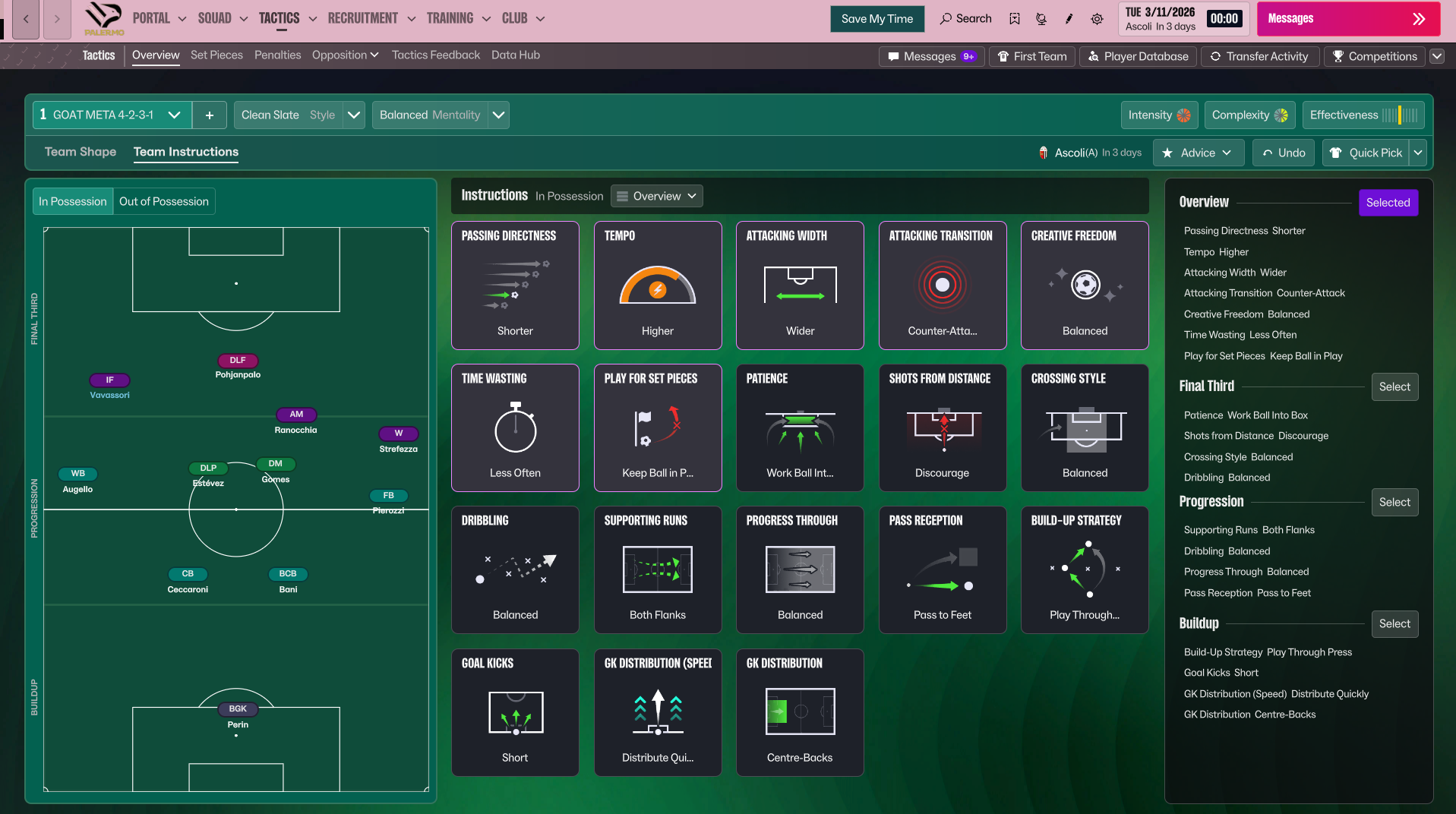
clean slate
clean slate
The tactical theory behind the 4-2-3-1 DM Wide: roles, instructions, and the trade-offs that decide whether the system holds up.
Klopp-style gegenpressing in FM, including squad profile, line-and-press pairing, sustainable workload, and the antipatterns to avoid.
Double pivots and flat pairs in 4-2-3-1 and 4-4-2: when each pairing works, when it collapses, and the AMC unicorn that rescues both.
The pairing rule for Defensive Line and Line of Engagement, all 9 combinations, and the gap that costs goals.