Uploaded Tactic
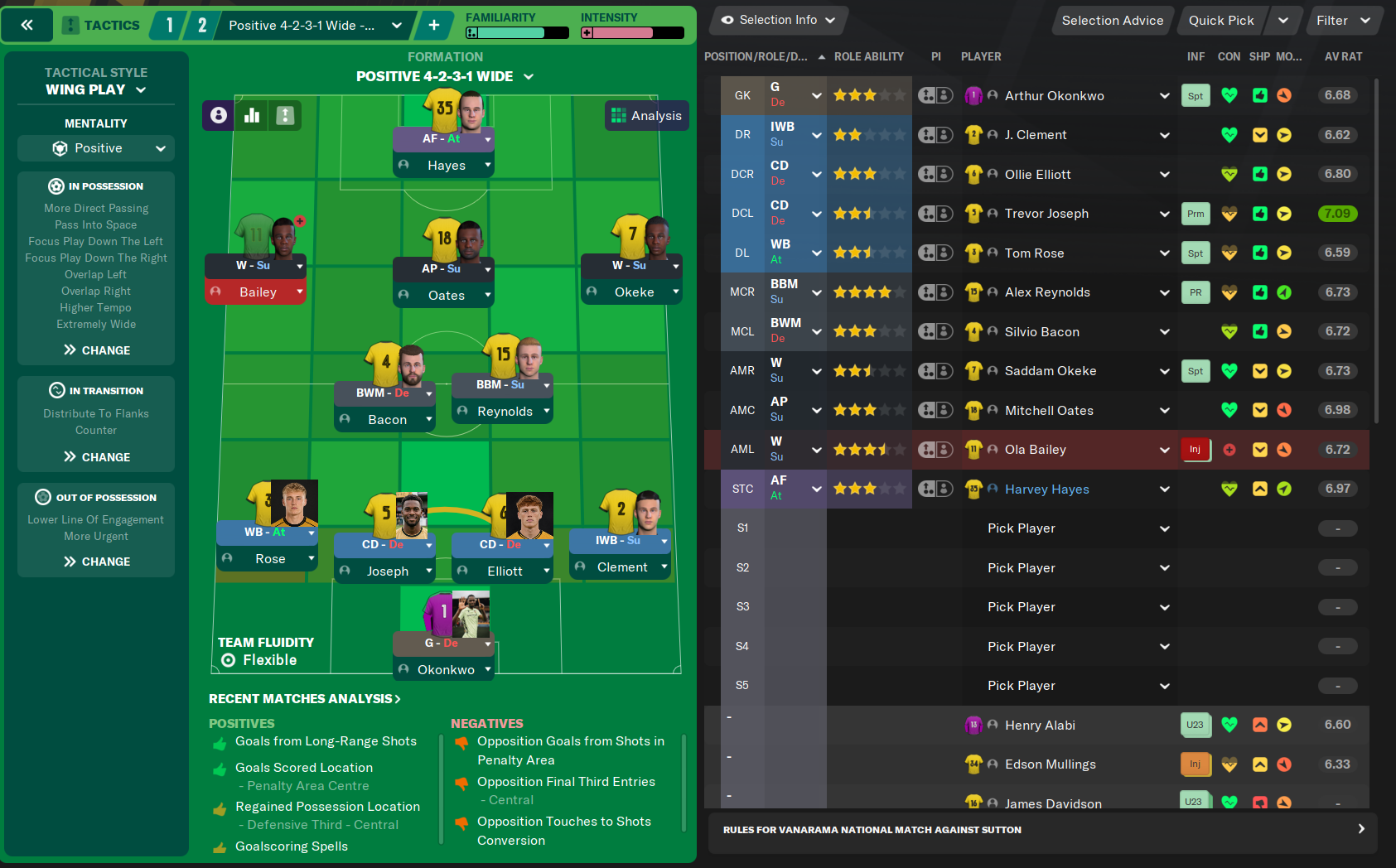
Formation & Style
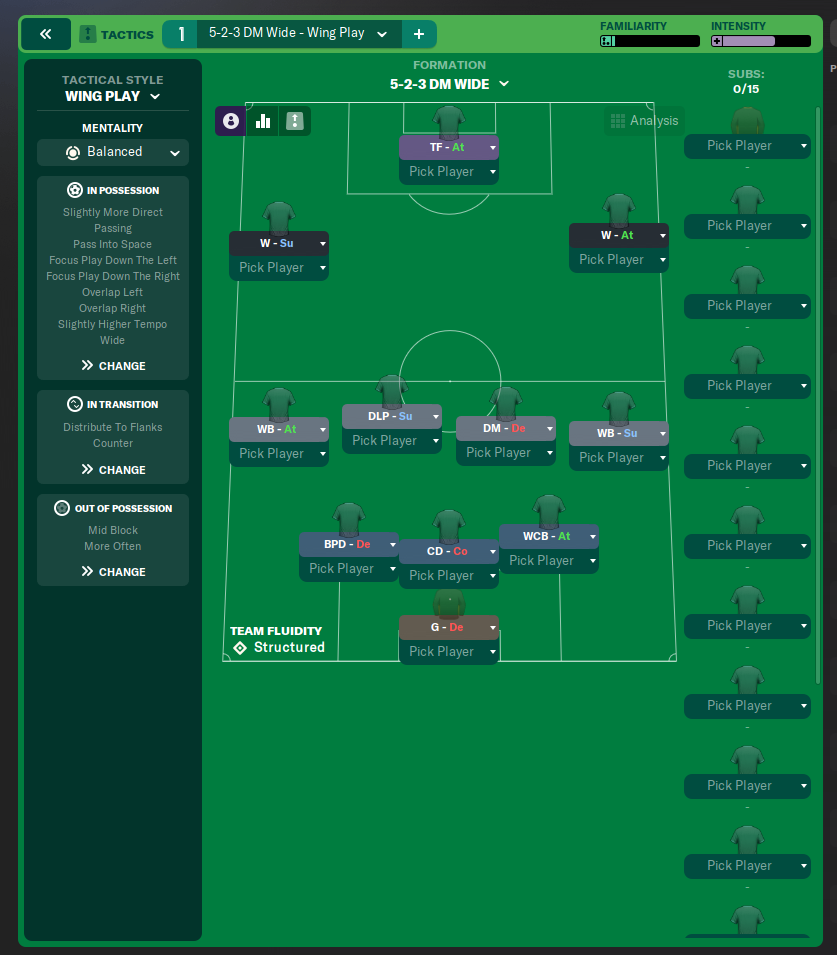
Tactical Style:Wing Play
Mentality:Positive
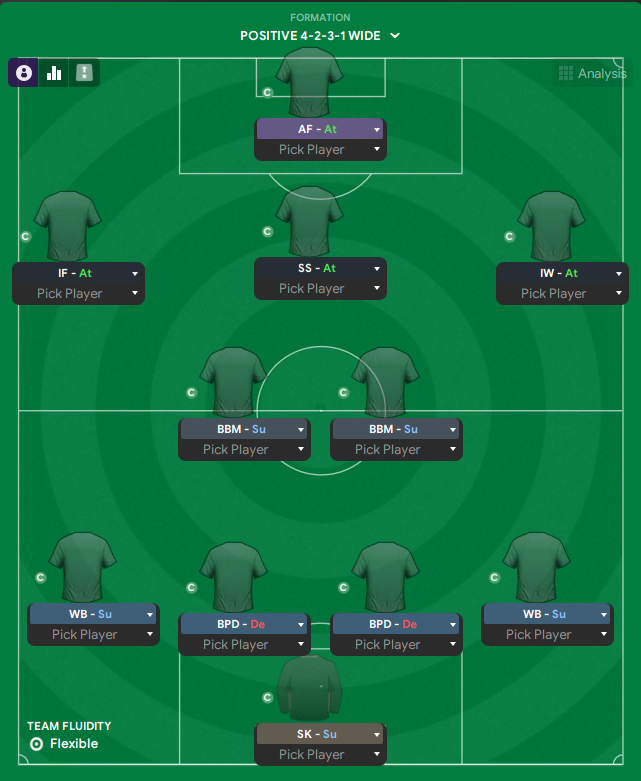
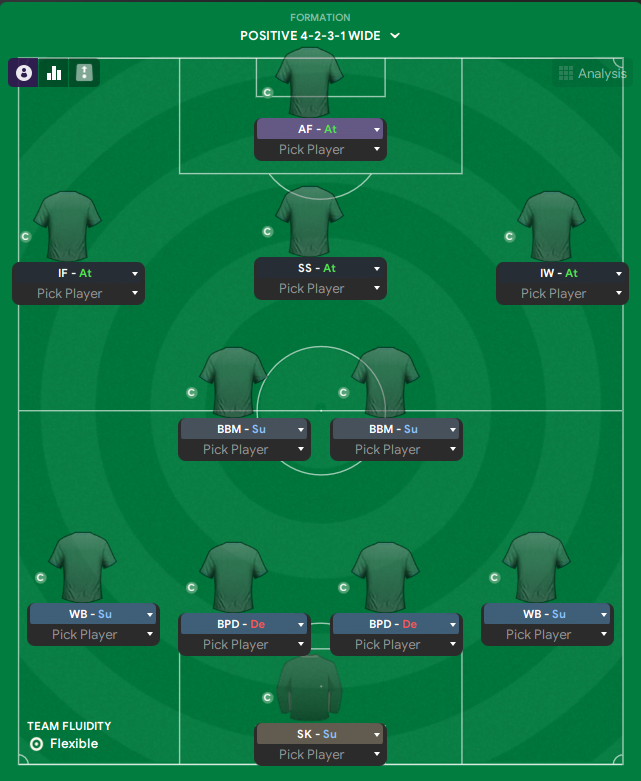
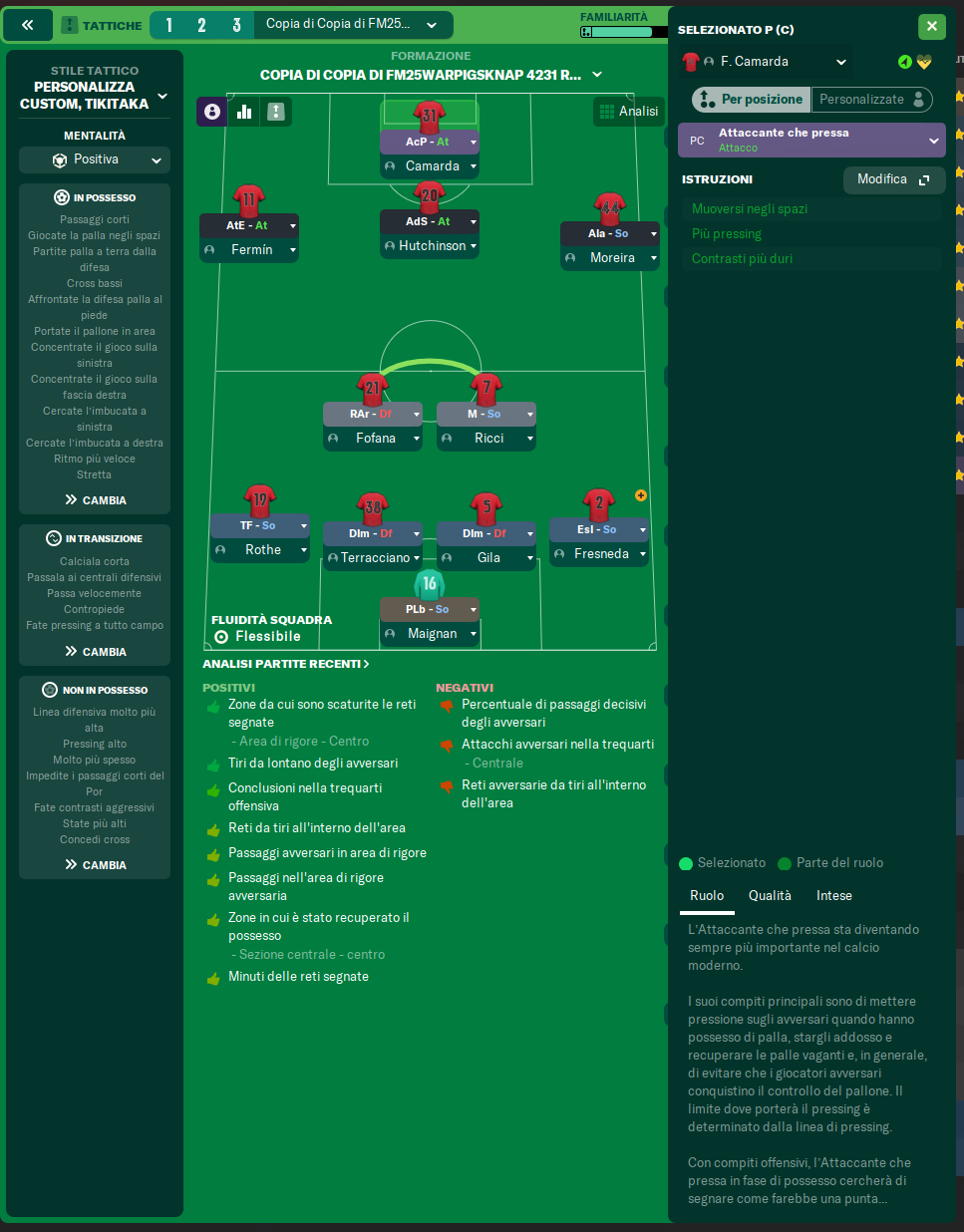
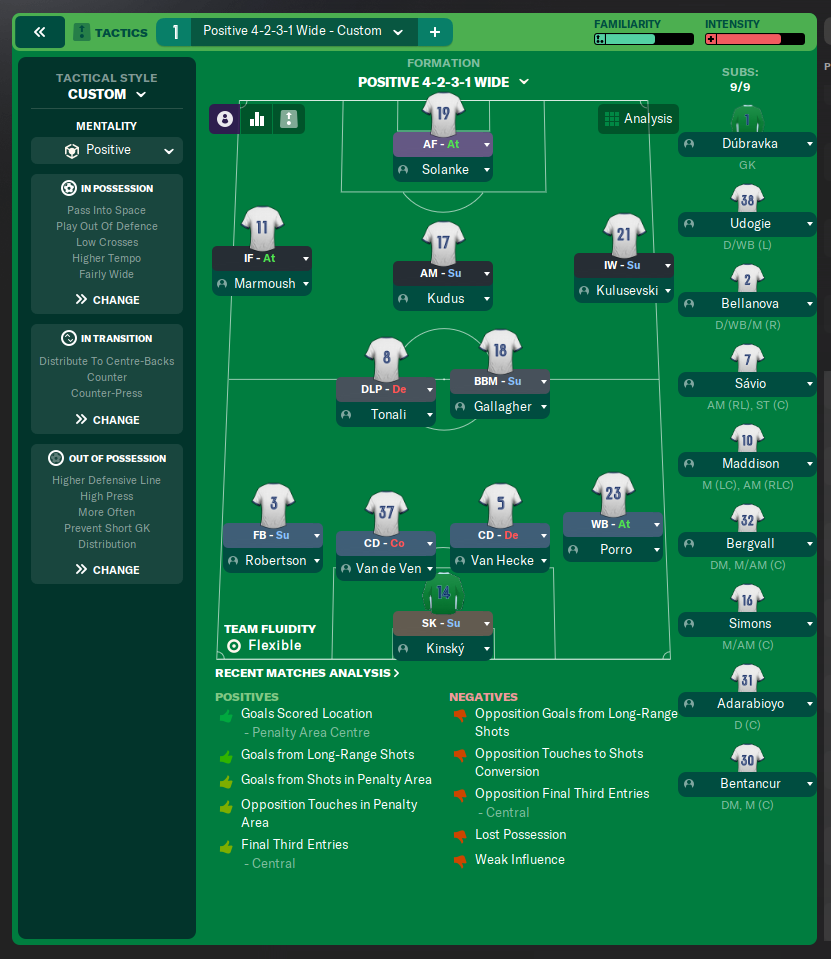
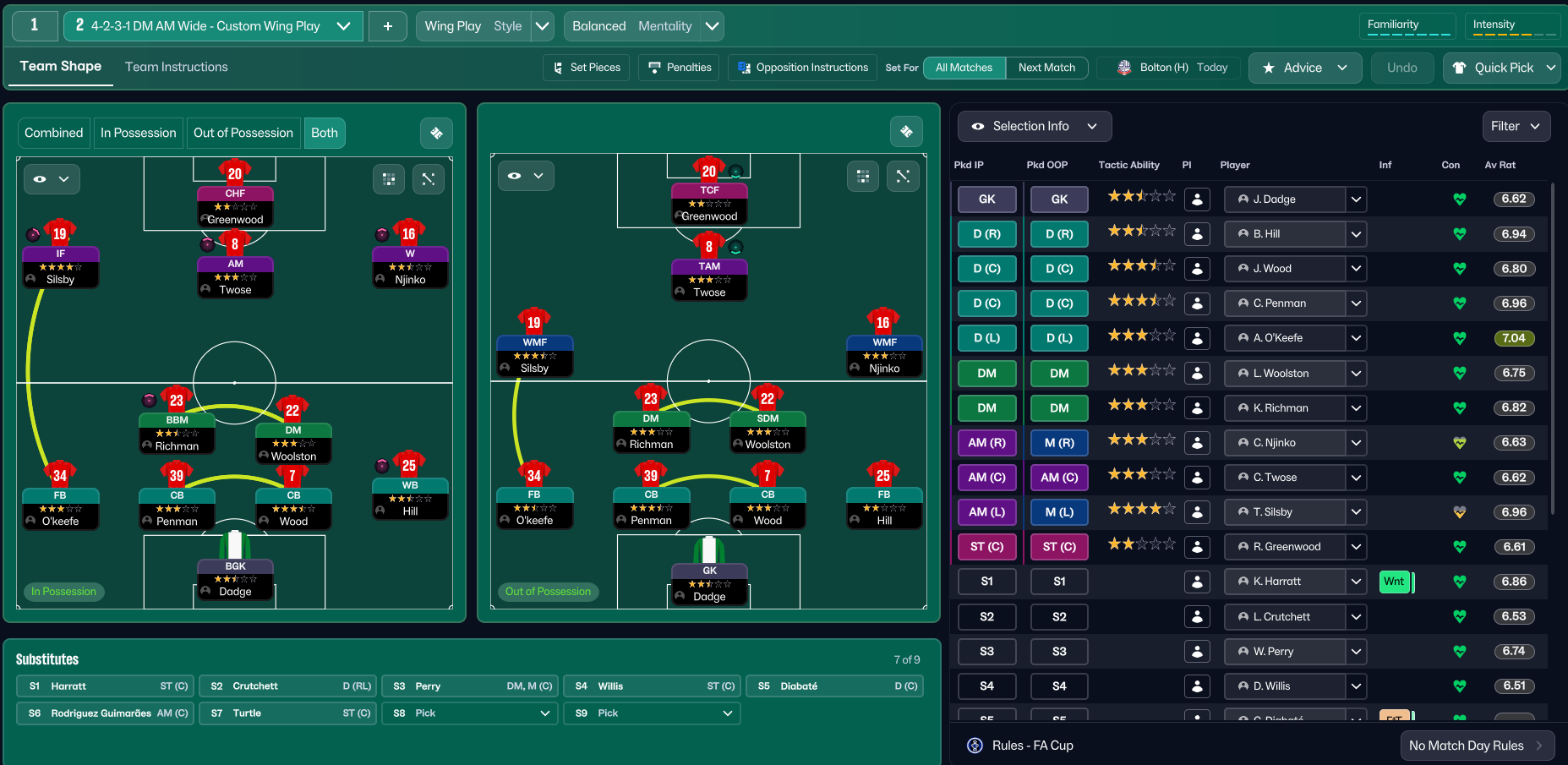
Formation:4-2-3-1 Wide
Team Fluidity:Flexible
In Possession
More Direct Passing
Pass Into Space
Focus Play Down The Left
Focus Play Down The Right
Overlap Left
Overlap Right
Higher Tempo
Extremely Wide
In Transition
Distribute To Flanks
Counter
Out of Possession
Lower Line of Engagement
More Urgent
Team Shape Without Ball
Shape:4-4-2
Description:The team defends in a compact block with four defenders and four midfielders covering central and wide areas.
Evidence:The presence of two defensive midfielders (BWM and BBM) provides additional support centrally, with the width maintained by the wing-backs.
Team Shape With Ball
Shape:4-3-3
Description:In attack, the team transforms into a more fluid shape with width provided by wingers and central penetration through the advanced playmaker.
Evidence:The use of overlapping runs from full-backs and wingers allows for a multi-dimensional attacking approach.
Phase Description
Attacking Play
The team looks to exploit width to stretch the opposition, utilizing wing play and aiming for direct attacks.
Defensive Transition
Upon losing possession, the team should counter-press to regain control while maintaining compactness.
Main Focus
The main focus is on quick transitions and exploiting spaces on the wings to create goal-scoring opportunities.
Key Strengths
Width and Overlap
The tactical instructions to overlap on both sides enhance wing play, making it difficult for opponents to defend against wide attackers.
Midfield Balance
The combination of a BBM and BWM ensures fluid movement and defensive solidity in midfield.
Direct Play
More direct passing and a higher tempo can disrupt opponents and lead to quick goal opportunities.
Conflicting Directions
Wide Play vs. Central Occupation
Focusing on wing play might leave central areas vulnerable to opposition attacks.
Injury Impacts
The injury of key player Bailey affects the wing play effectiveness and overall pace.
Defensive Line Height
A lower defensive engagement may invite pressure and limit recovery options in transition.
Tactical Suggestions
Increase Defensive Engagement
Raising the Line of Engagement could help in reclaiming possession higher up the pitch.
Dynamic Substitutions
Consider using fresh substitutes to maintain high energy in wide positions.
Adapt the Formation
Shifting to a 4-3-3 could provide more central support and flexibility.
Ask Questions About Your Lineup
Related Tactics
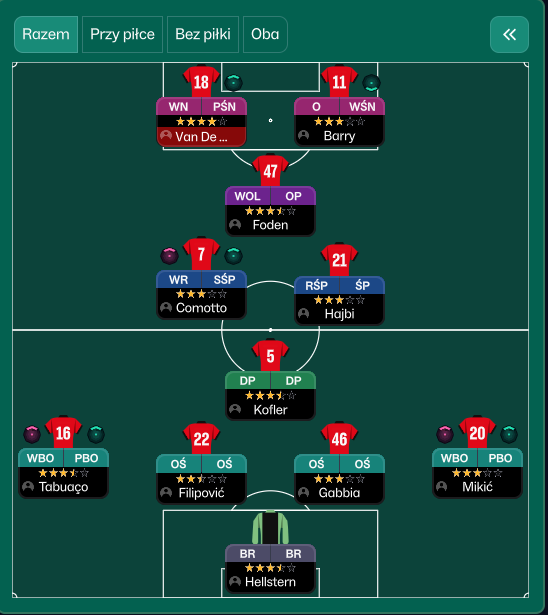
More Wing Play tactics
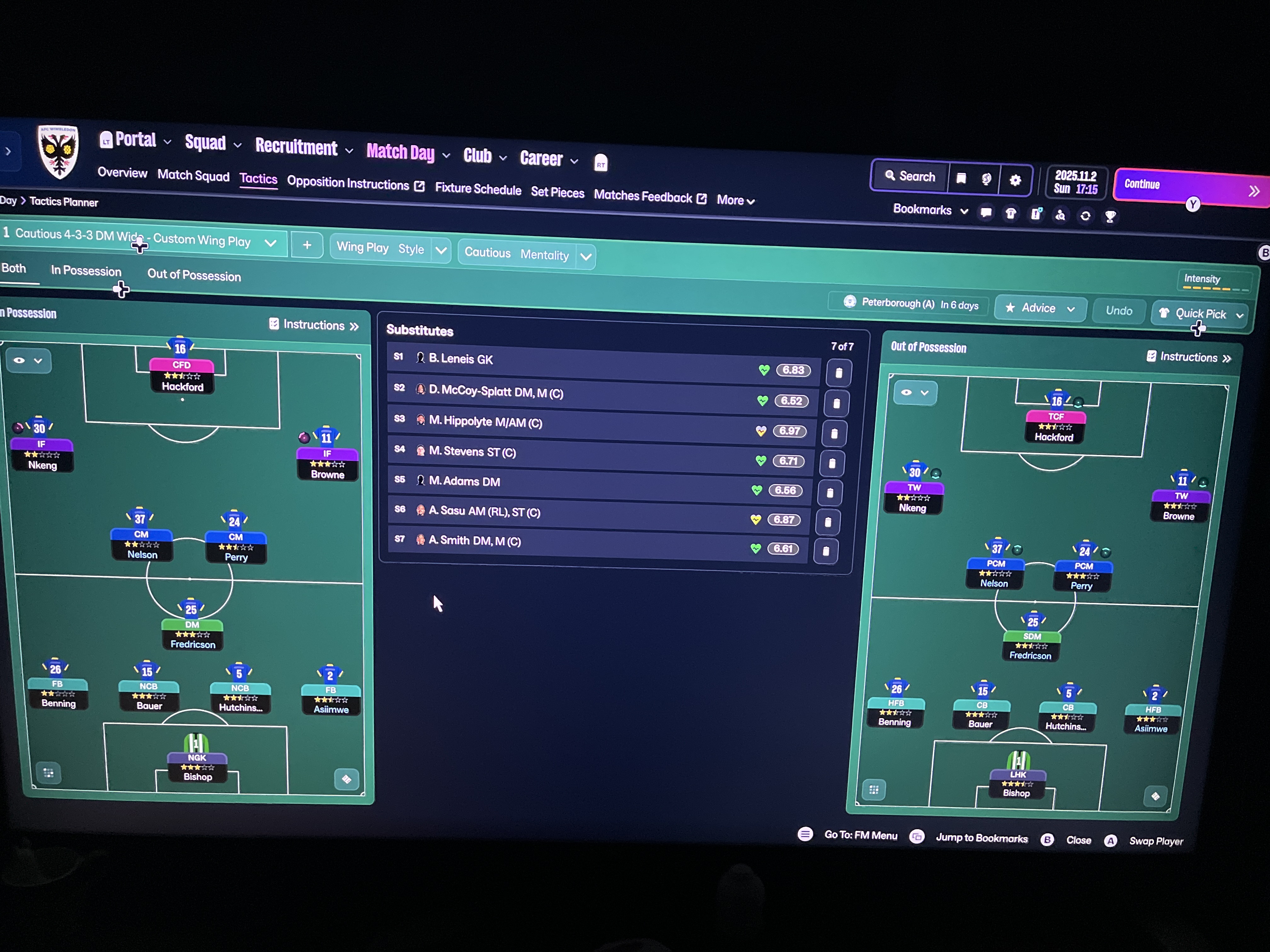
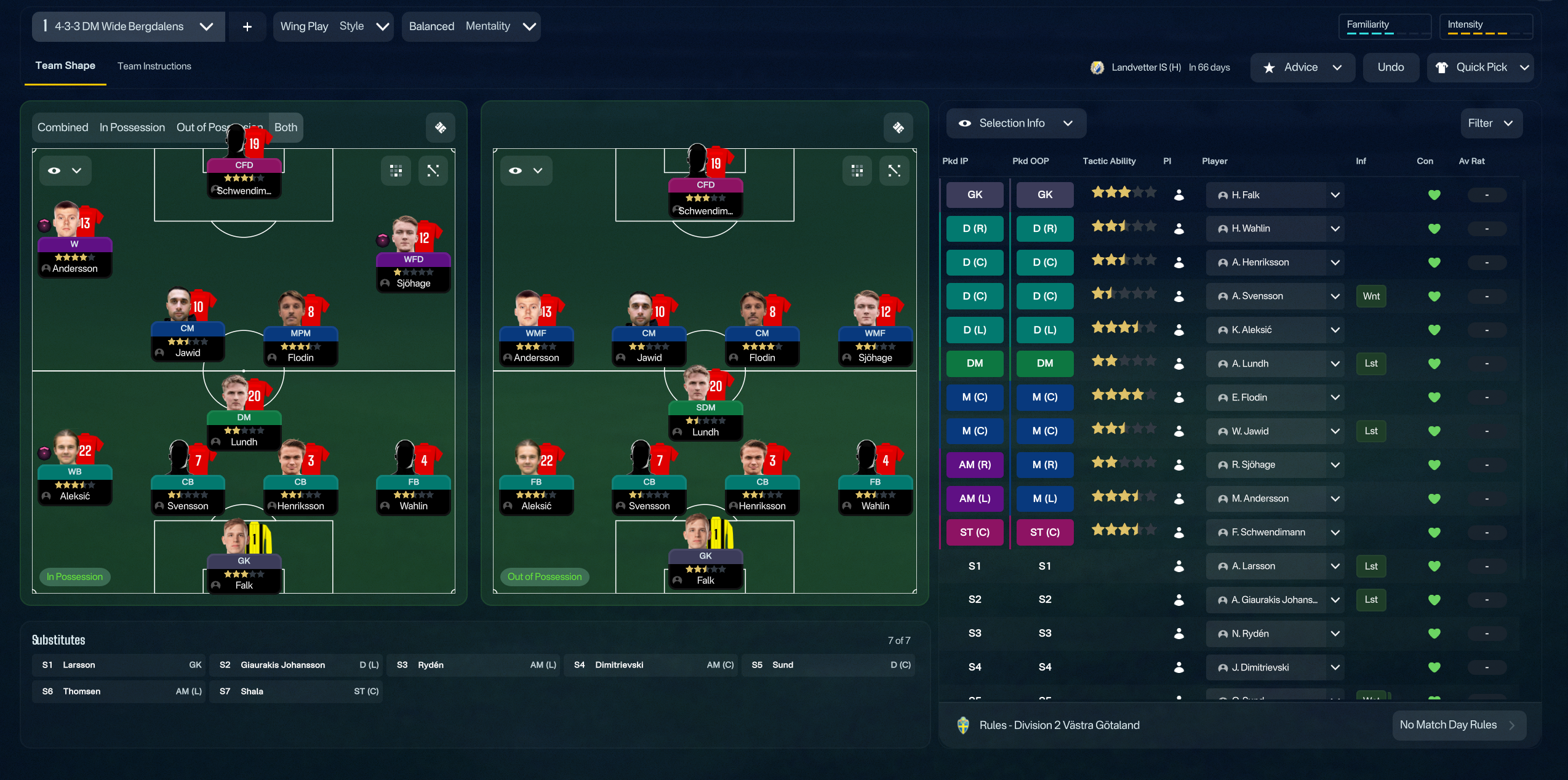
Guides for this formation
The tactical theory behind the 4-2-3-1 Wide: roles, instructions, and the trade-offs that decide whether the system holds up.
Player pairings
Midfield Pairs in 4-2-3-1 and 4-4-2
Double pivots and flat pairs in 4-2-3-1 and 4-4-2: when each pairing works, when it collapses, and the AMC unicorn that rescues both.
Read guide
Playing styles
Gegenpressing: A Full Guide
Klopp-style gegenpressing in FM, including squad profile, line-and-press pairing, sustainable workload, and the antipatterns to avoid.
Read guide