
4-2-3-1 Wide
Building play through the midfield and exploiting the flanks. Wingers can isolate defenders and create crossing opportunities.
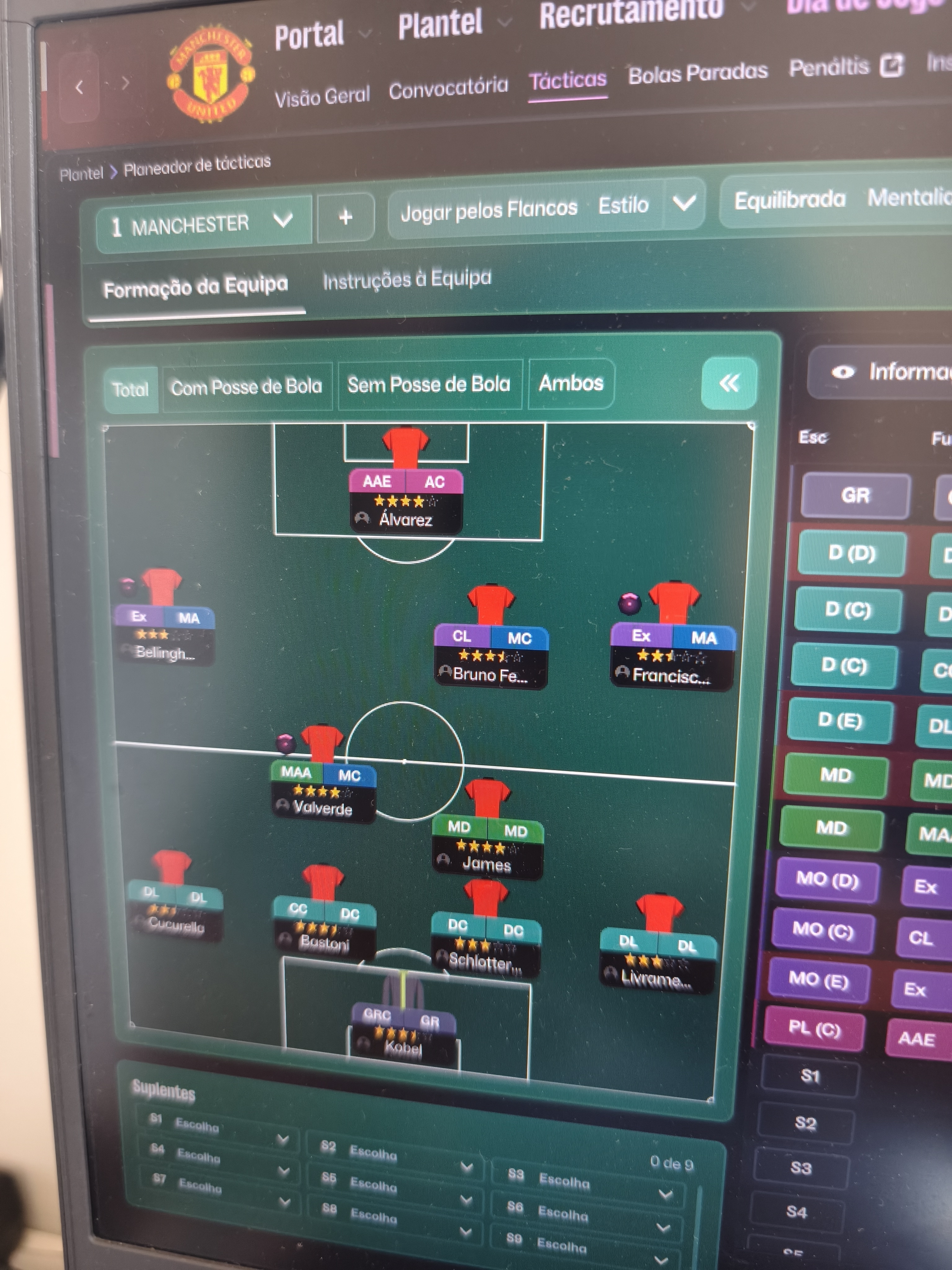
Loading tactical analysis...
4-2-3-1 Wide
Pass Into Space
Run At Defence
Counter
Distribute To Full-Backs
Higher Defensive Line
Higher Line of Engagement
GK
GK
De
CB
CB
De
CB
CB
De
LB
FB
De
RB
FB
De
CM
CM
Su
CM
DLP
Su
RM
WM
At
LM
WM
At
AM
TREQ
At
ST
AF
At
Focus on creative play through the middle with the trequartista and wingers providing width.
Quick transitions with the team looking to counter-attack when possession is lost.
Building play through the midfield and exploiting the flanks.
4-4-2 Defensive
The team maintains a compact shape with two solid banks of four when defending.
2 CBs in [2,2] and [2,4] ensuring central solidity, supported by FBs.
4-3-3 Offensive
Wingers push wide to stretch the opposition, allowing the central players to exploit gaps.
WMs at [6,1] and [6,5] and TREQ at [5,3] creating spaces for the AF at [6,3].
Wingers can isolate defenders and create crossing opportunities.
WMs at [6,1] and [6,5] engaging opposition wide defenders.
The combination of a DLP and CM can control the tempo and create chances.
DLP-S at [3,3] generating passes and distributing play.
Heavy use of wingers may lead to a lack of central penetration if the opponent adjusts.
WM-A at [6,1] and [6,5] may become predictable.
High line can be exploited during rapid counter-attacks.
Higher Defensive Line may leave gaps behind.
Wing Defenders
FBs may be caught high up the pitch during opposition breaks.
FB-D at [2,1] and [2,5] might leave defensive space vulnerable.
Central Midfield
If DLP is bypassed, midfield may struggle for control.
DLP-S at [3,3] is crucial for building play from back.
DLP and CM
Strong partnership in midfield allows for varied build-up play.
DLP-S at [3,3] and CM-S at [3,2] complement each other.
TREQ and AF
TREQ can feed the AF with probing passes, creating goal chances.
TREQ at [5,3] supporting AF at [6,3].
What adjustments can be made to better control midfield?
How can the team mitigate risks from opposition counter-attacks?
Should the attacking shape be more fluid or structured during games?
The tactical theory behind the 4-2-3-1 Wide: roles, instructions, and the trade-offs that decide whether the system holds up.
Double pivots and flat pairs in 4-2-3-1 and 4-4-2: when each pairing works, when it collapses, and the AMC unicorn that rescues both.
Klopp-style gegenpressing in FM, including squad profile, line-and-press pairing, sustainable workload, and the antipatterns to avoid.
Protect a 1-0, chase a 1-0, hold a draw away. How to manage game state in FM through duties and roles, not by lurching to Defensive.







