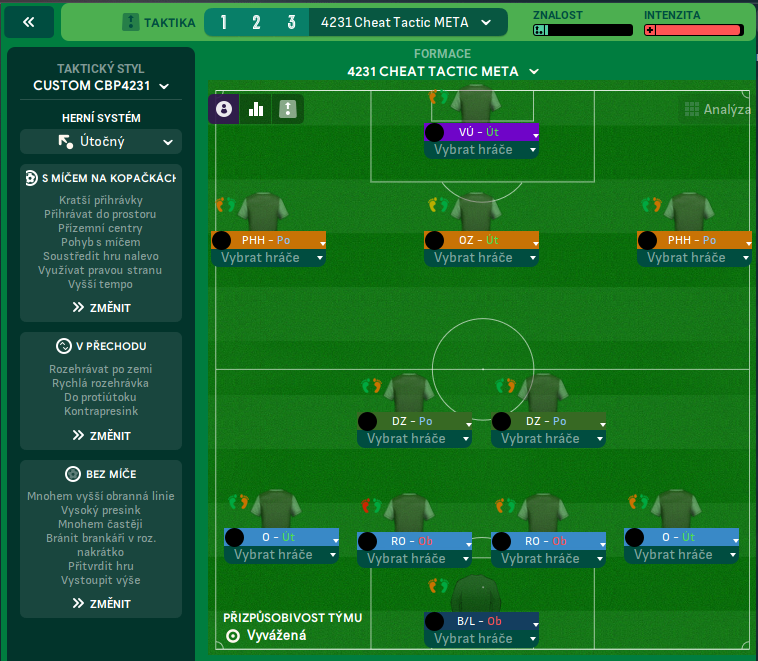
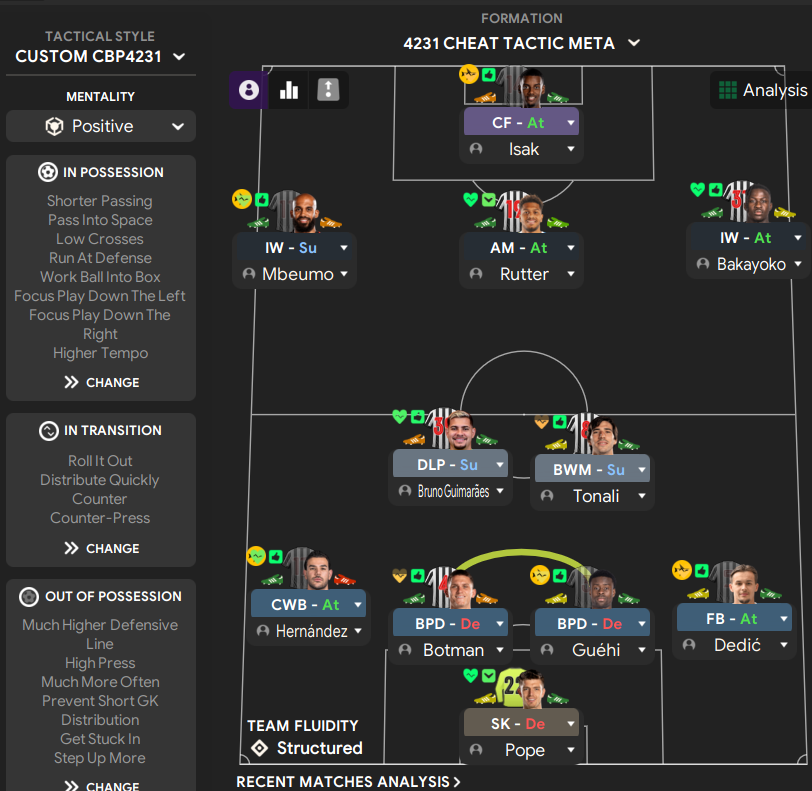
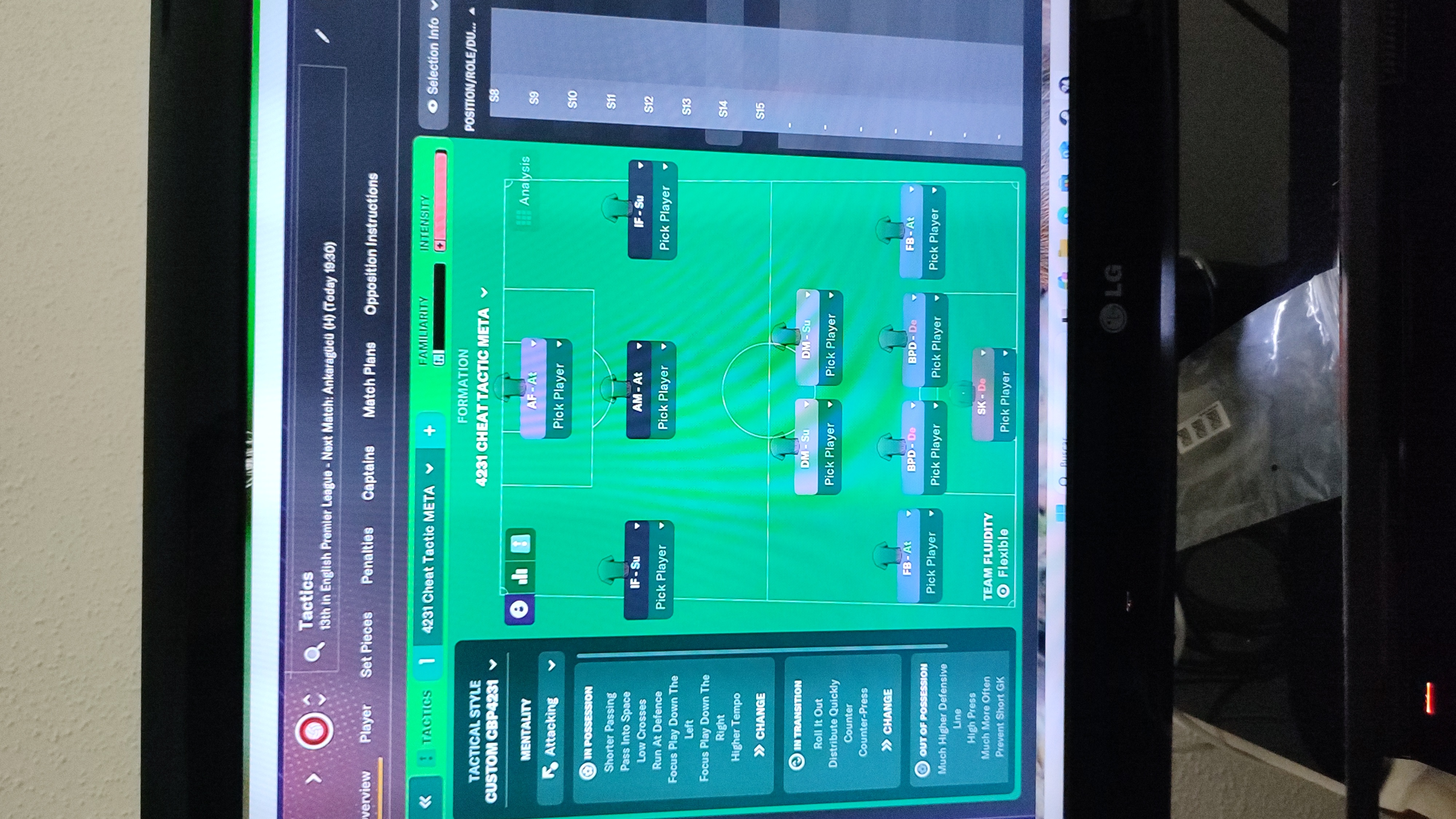
4-2-3-1 Wide
The use of counter-attacking tactics allows for quick transitions into offense, utilizing fast forward plays.
Loading tactical analysis...
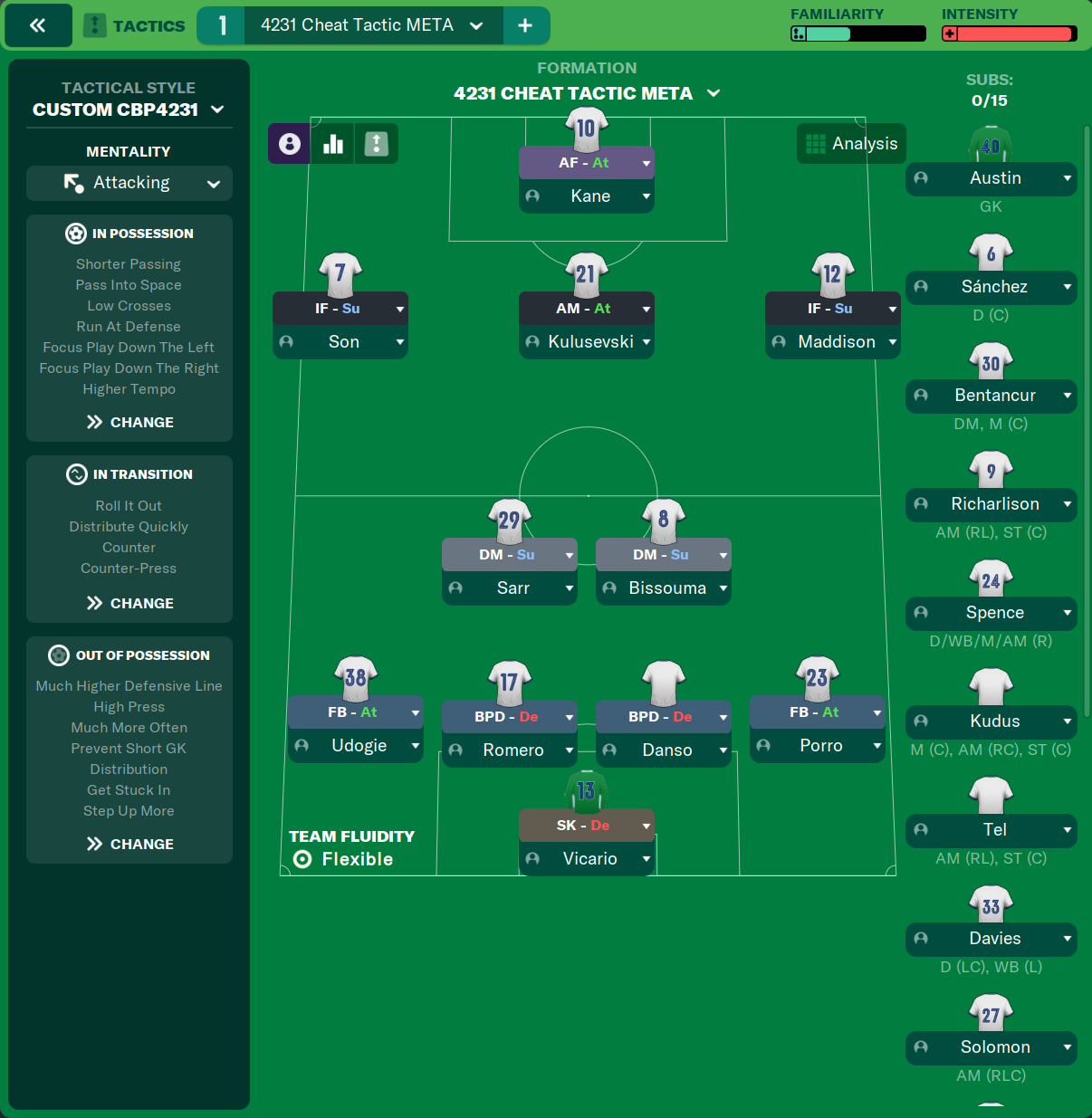
Custom CBP4231
Attacking
4-2-3-1 Wide
Flexible
Shorter Passing
Pass Into Space
Run At Defense
Focus Play Down The Left
Higher Tempo
Roll It Out
Distribute Quickly
Counter
Counter-Press
Much Higher Defensive Line
High Press
Much More Often Prevent Short GK Distribution
Get Stuck In
Step Up More
ST
Advanced Forward
Attack
AM
Attacking Midfielder
Attack
IF
Inside Forward
Attack
DM
Defensive Midfielder
Support
BPD
Ball Playing Defender
Defend
FB
Full Back
Attack
SK
Sweeper Keeper
Defend
The use of counter-attacking tactics allows for quick transitions into offense, utilizing fast forward plays.
A high pressing system can force opponents into making mistakes in their defensive third, creating scoring opportunities.
Two defensive midfielders on support duty may cause confusion in defensive transitions, should coordinate more clearly.
Adopting a much higher defensive line may expose the backline against fast counter-attacks, especially with a high press.
How often is the high press effectively recovering the ball?
Are the attacking midfielders supporting the front line adequately?
How do the full-backs adjust during counter-attacks?
Is the defensive line synchronized with the press intensity?
Are the team’s width and depth balanced during transitions?
How is the performance of the ball-playing defender impacting build-up play?
The tactical theory behind the 4-2-3-1 Wide: roles, instructions, and the trade-offs that decide whether the system holds up.
Klopp-style gegenpressing in FM, including squad profile, line-and-press pairing, sustainable workload, and the antipatterns to avoid.
Double pivots and flat pairs in 4-2-3-1 and 4-4-2: when each pairing works, when it collapses, and the AMC unicorn that rescues both.
The five seconds after losing the ball decide most matches. Counter-press, drop-and-recover, and how to know which one you should be doing.