
4-2-3-1 Wide
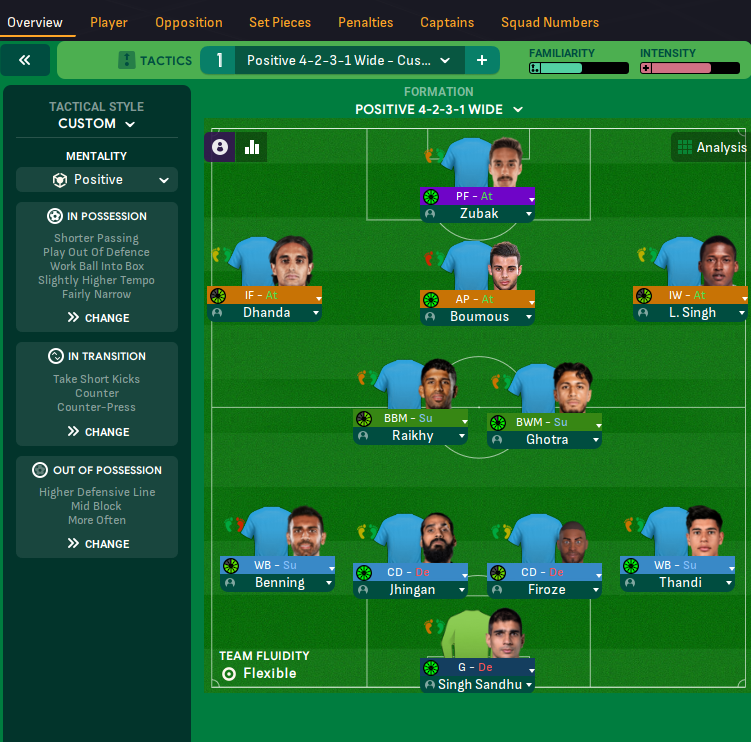
The inside forwards and advanced playmaker movement create multiple attacking options, making it difficult for defenders to predict threats.
Loading tactical analysis...
Custom
Positive
4-2-3-1 Wide
Flexible
Shorter Passing
Play Out Of Defence
Work Ball Into Box
Slightly Higher Tempo
Fairly Narrow
Take Short Kicks
Counter
Counter-Press
Higher Defensive Line
Block More Often
ST
Pressing Forward
Attack
IF
Inside Forward
Attack
AP
Advanced Playmaker
Attack
BBM
Box to Box Midfielder
Support
BWM
Ball Winning Midfielder
Support
WB
Wing Back
Support
CD
Central Defender
Defend
G
Goalkeeper
Defend
The inside forwards and advanced playmaker movement create multiple attacking options, making it difficult for defenders to predict threats.
With a box-to-box midfielder and a ball-winning midfielder, the team can dominate midfield battles and transition play effectively.
While the formation is wide, the 'Fairly Narrow' passing style may limit opportunities to fully use wing-backs and create width.
A higher defensive line might leave the team vulnerable to quick counter-attacks if possession is lost after a pressing phase.
Are the wing-backs contributing effectively in both attack and defense?
Is the team maintaining adequate pressure during transitions?
How often do midfielders support the attack during offensive phases?
Are the forwards effectively combining to break down defensive lines?
Is the defensive line vulnerable to counter-attacks?
Do the players understand their specific roles during pressing situations?
The tactical theory behind the 4-2-3-1 Wide: roles, instructions, and the trade-offs that decide whether the system holds up.
Klopp-style gegenpressing in FM, including squad profile, line-and-press pairing, sustainable workload, and the antipatterns to avoid.
Double pivots and flat pairs in 4-2-3-1 and 4-4-2: when each pairing works, when it collapses, and the AMC unicorn that rescues both.
The five seconds after losing the ball decide most matches. Counter-press, drop-and-recover, and how to know which one you should be doing.







