
4-2-3-1 Wide
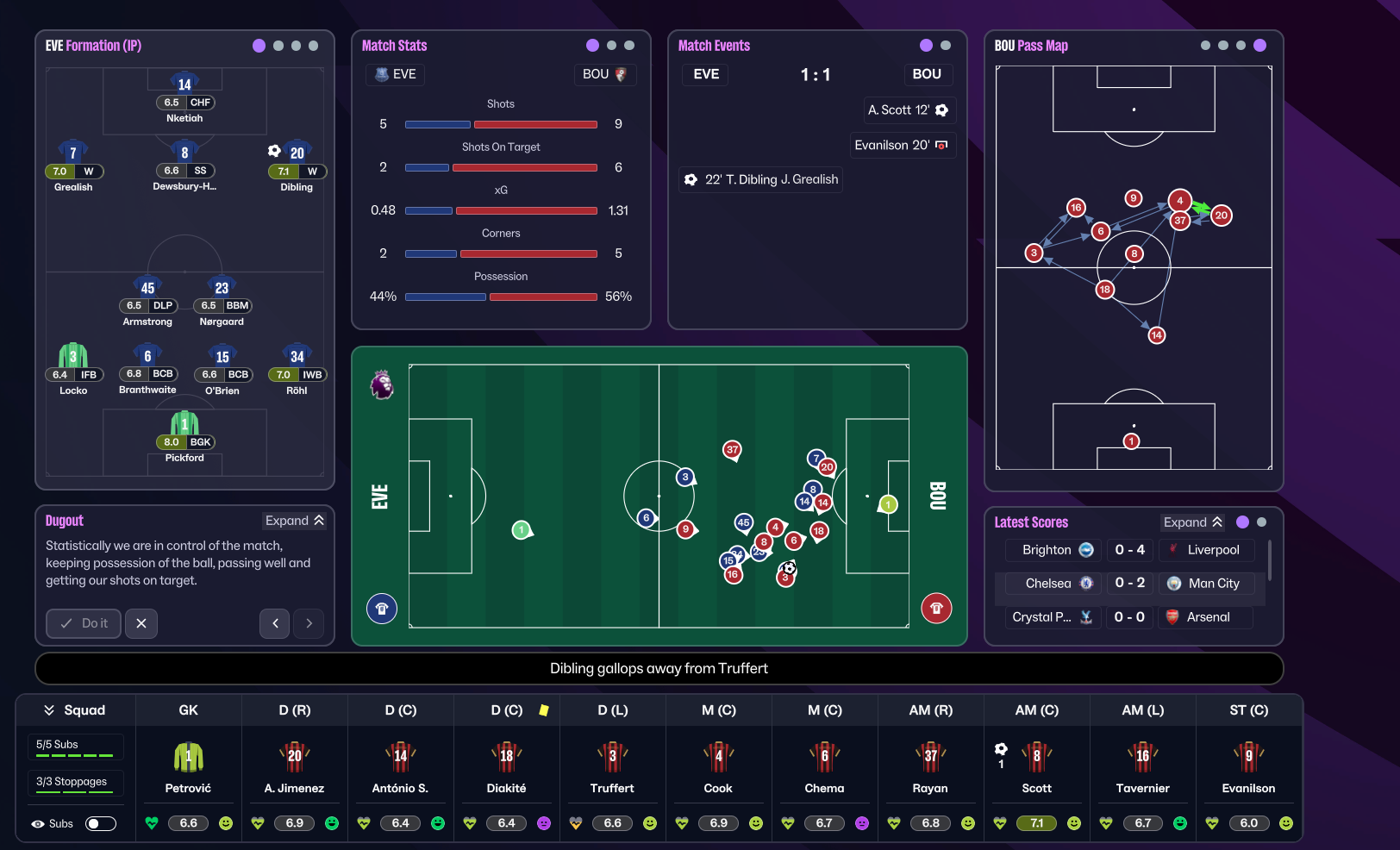
Possession-based play with a focus on creating high-quality chances. The presence of a Deep-Lying Playmaker supported by a Box-to-Box Midfielder allows…
Loading tactical analysis...
Positive
4-2-3-1 Wide
Pass Into Space
Run At Defence
Work Ball Into Box
Counter
Counter Press
Higher Defensive Line
Higher Line of Engagement
Prevent Short GK Distribution
GK
Goalkeeper
Defend
DF
Inverted Full-Back
Support
DF
Ball-Playing Defender
Defend
DF
Centre-Back
Defend
DF
Full-Back
Attack
DM
Deep-Lying Playmaker
Support
CM
Box-to-Box Midfielder
Support
AM
Shadow Striker
Attack
AM
Inside Forward
Support
ST
Striker
Support
Quick transitions enabling players to exploit space through the middle.
Immediate pressing to recover the ball after losing possession.
Possession-based play with a focus on creating high-quality chances.
Compact
Defenders maintain a compact shape limiting space for opposition attackers.
Higher Defensive Line and Higher Line of Engagement ensuring pressure.
Fluid 4-2-3-1
Width provided by full-backs while getting support from wide forwards.
Shadow Striker operating close to the striker, creating overloads in key areas.
The presence of a Deep-Lying Playmaker supported by a Box-to-Box Midfielder allows for effective ball distribution.
DLP-S at [3,3] and BBM-S at [4,2] providing balance and creativity.
The combination of an Inside Forward and a Shadow Striker ensures unpredictability in the final third.
SS at [5,3] and IF at [6,1] create potential goal-scoring opportunities.
While focusing on retaining possession, pressing may leave spaces behind the midfield.
Possession at 56% suggests control, but countered by Counter Press instruction.
With a higher defensive line, opposition's pacey attackers can exploit spaces left behind.
Higher Defensive Line selected combined with potential counter-attacks.
Defensive transition
Quick turnovers can exploit defensive vulnerabilities.
Immediate pressing may overlook defensive positioning after losing ball.
Wide spaces
Inverted Full-Backs may leave gaps wide that can be exploited.
IFB at [2,1] and FB at [2,4] can be outnumbered on the flanks.
DLP-S and BBM-S
DLP provides creative passing options while BBM makes late runs into the box.
DLP-S at [3,3] and BBM-S at [4,2] support team fluidity.
IF and SS
Both roles contribute to a dynamic attack creating space and goals.
IF-S at [5,1] and SS-A at [5,3] create chances in the final third.
How can I improve our goal conversion rate?
What adjustments should be made to handle counter-attacks more effectively?
Are the current attacking roles fitting well with our chosen formation?
The tactical theory behind the 4-2-3-1 Wide: roles, instructions, and the trade-offs that decide whether the system holds up.
Double pivots and flat pairs in 4-2-3-1 and 4-4-2: when each pairing works, when it collapses, and the AMC unicorn that rescues both.
Klopp-style gegenpressing in FM, including squad profile, line-and-press pairing, sustainable workload, and the antipatterns to avoid.
Build through the wide areas or through the middle? A working framework for picking the right one for your squad.







