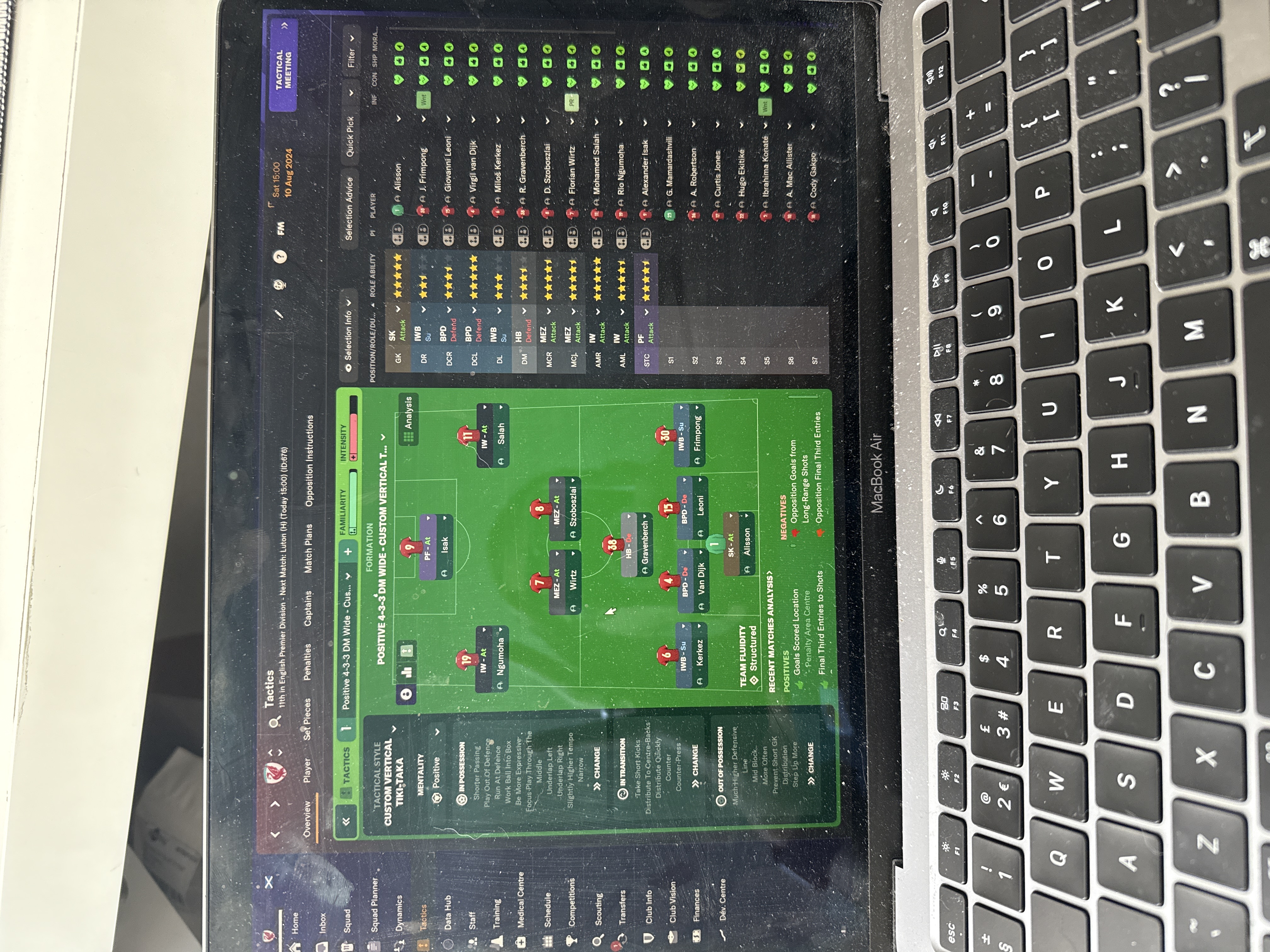
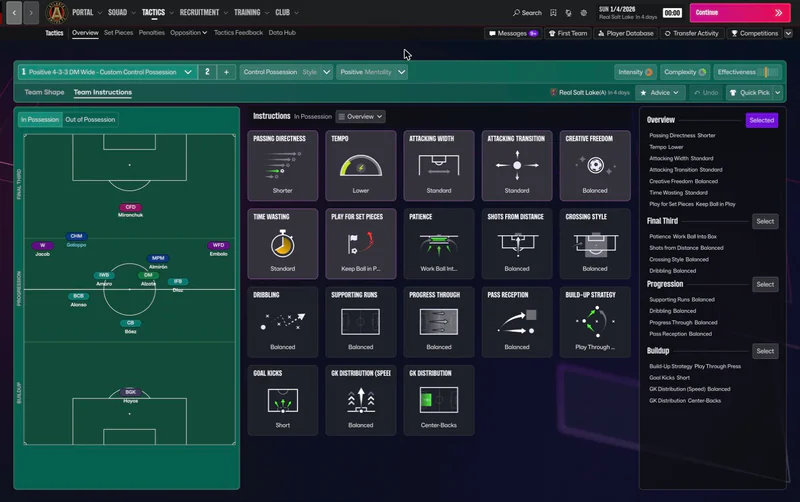
4-3-3 DM Wide
The use of inside forwards and an advanced forward creates overloads and allows for fluid attacking play in the final third.
Loading tactical analysis...
Tiki-Taka
Positive
4-3-3 DM Wide
Structured
Shorter Passing
Work Ball into Box
Focus Play down the Wings
Counter-Press
Counter
Higher Line of Engagement
Prevent Short GK Distribution
ST
Advanced Forward
Attack
RW
Inside Forward
Attack
LW
Inside Forward
Attack
CM
Mezzala
Attack
CM
Box to Box Midfielder
Support
CM
Deep Lying Playmaker
Defend
The use of inside forwards and an advanced forward creates overloads and allows for fluid attacking play in the final third.
The combination of a deep-lying playmaker and a mezzala ensures good ball retention and distribution from midfield.
A high line of engagement may expose the defense to quick counter-attacks, especially with slower center-backs.
With multiple attacking roles, the team might lack sufficient defensive cover during transitions, especially against teams with fast wingers.
How can I improve the effectiveness of my counter-press?
Are my center-backs quick enough to handle a high defensive line?
How often should I focus play on the right vs. left wing?
Which player roles can enhance midfield creativity?
Do I have enough defensive support during transitions?
What adjustments can I make to improve my set-piece effectiveness?
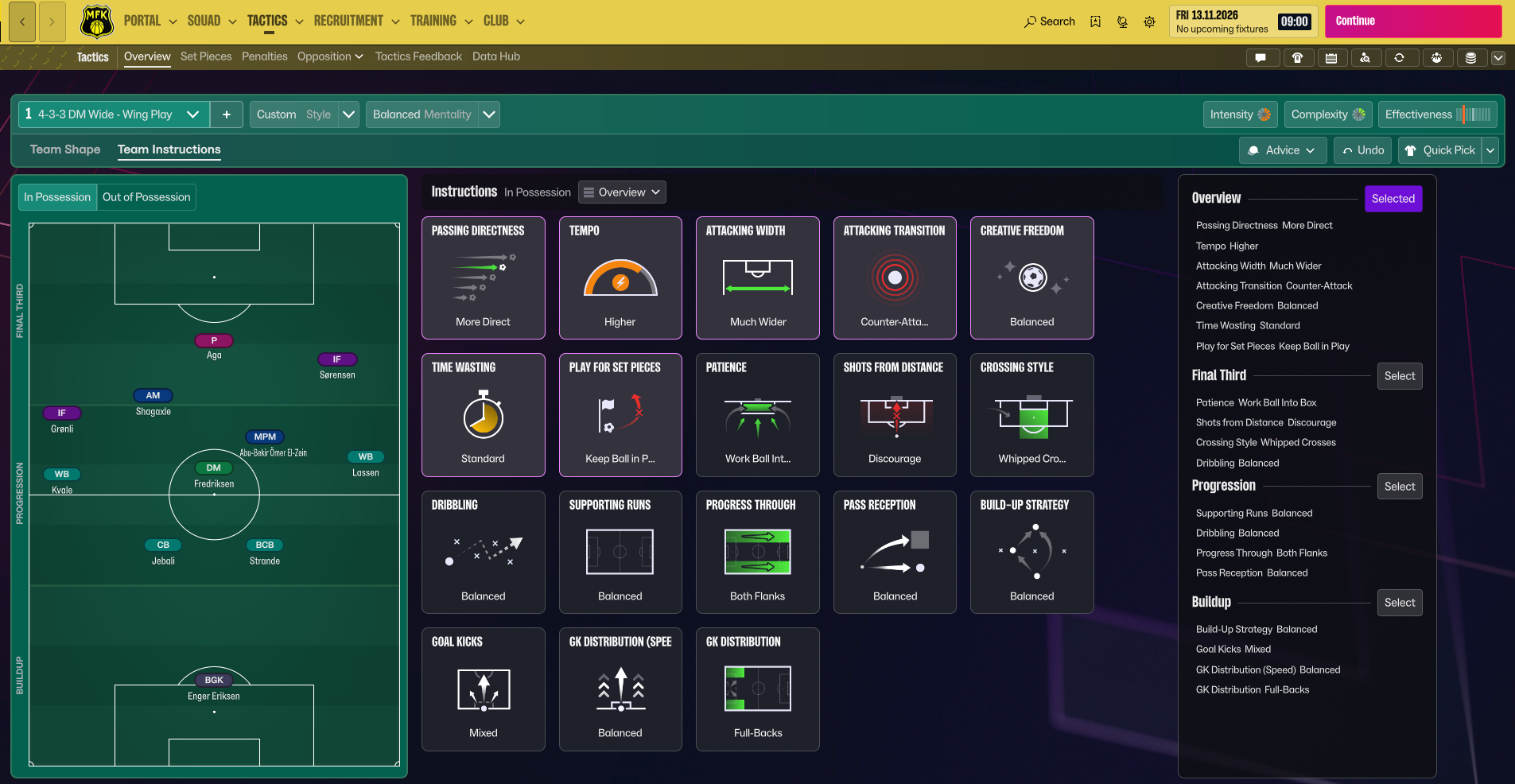
wing play
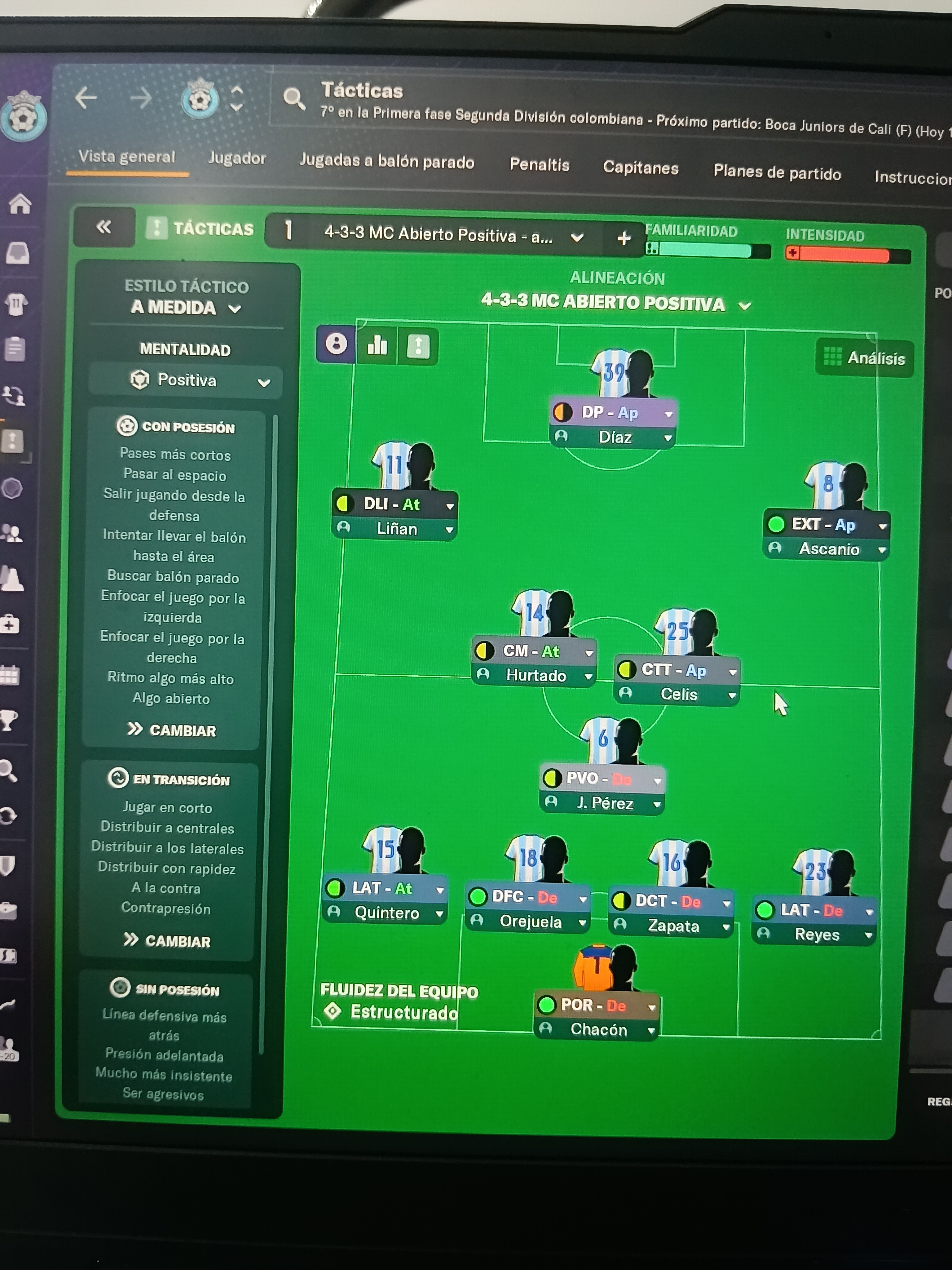
Gegenpress
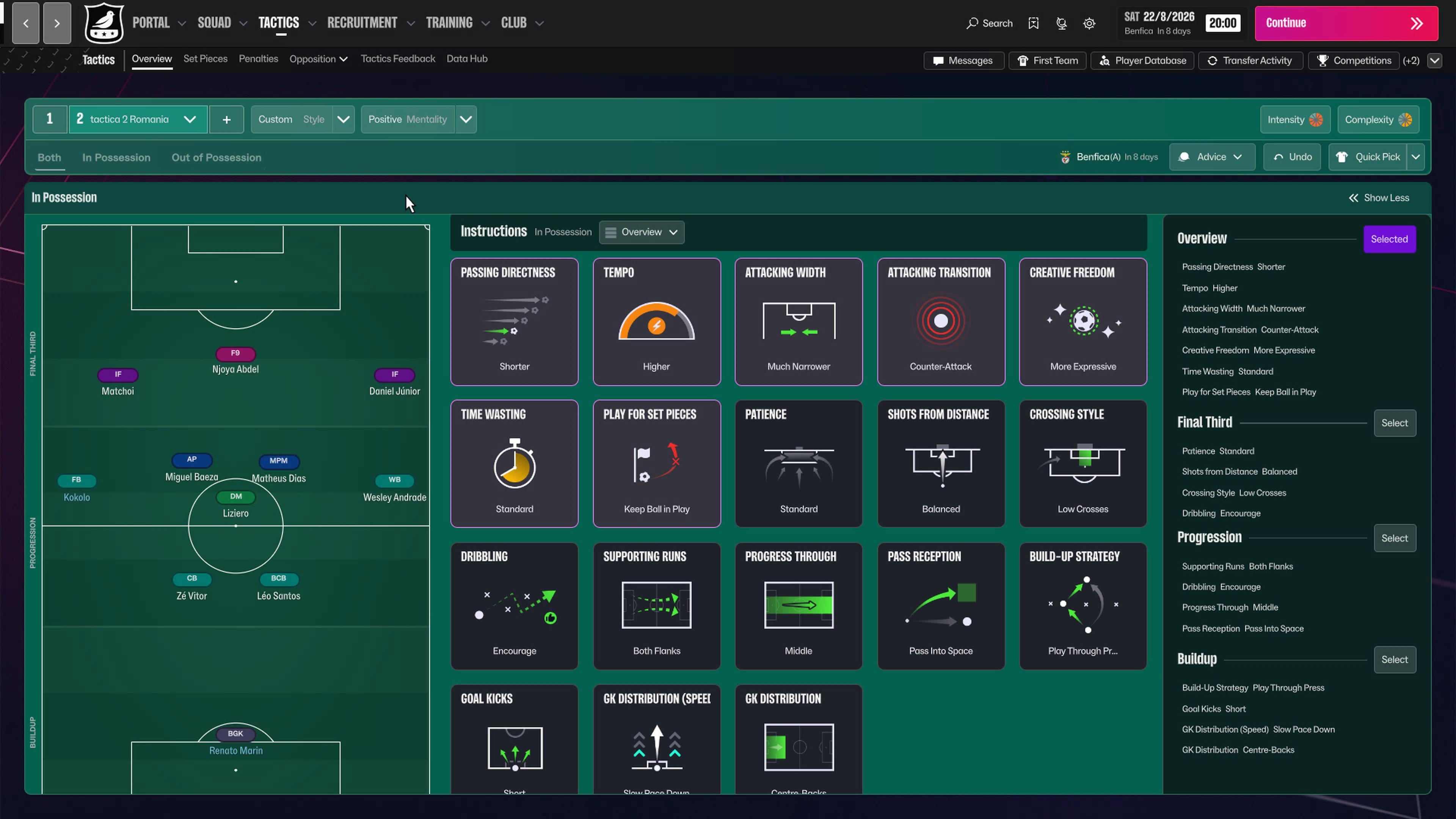
vertical tiki taka
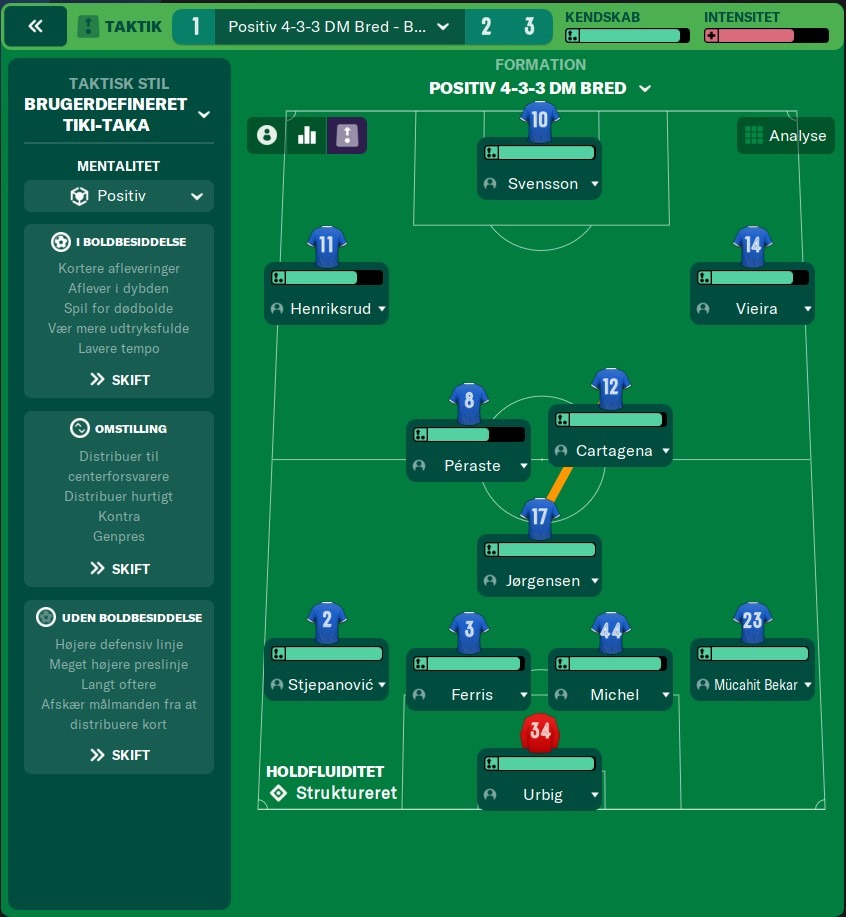
Tiki-Taka
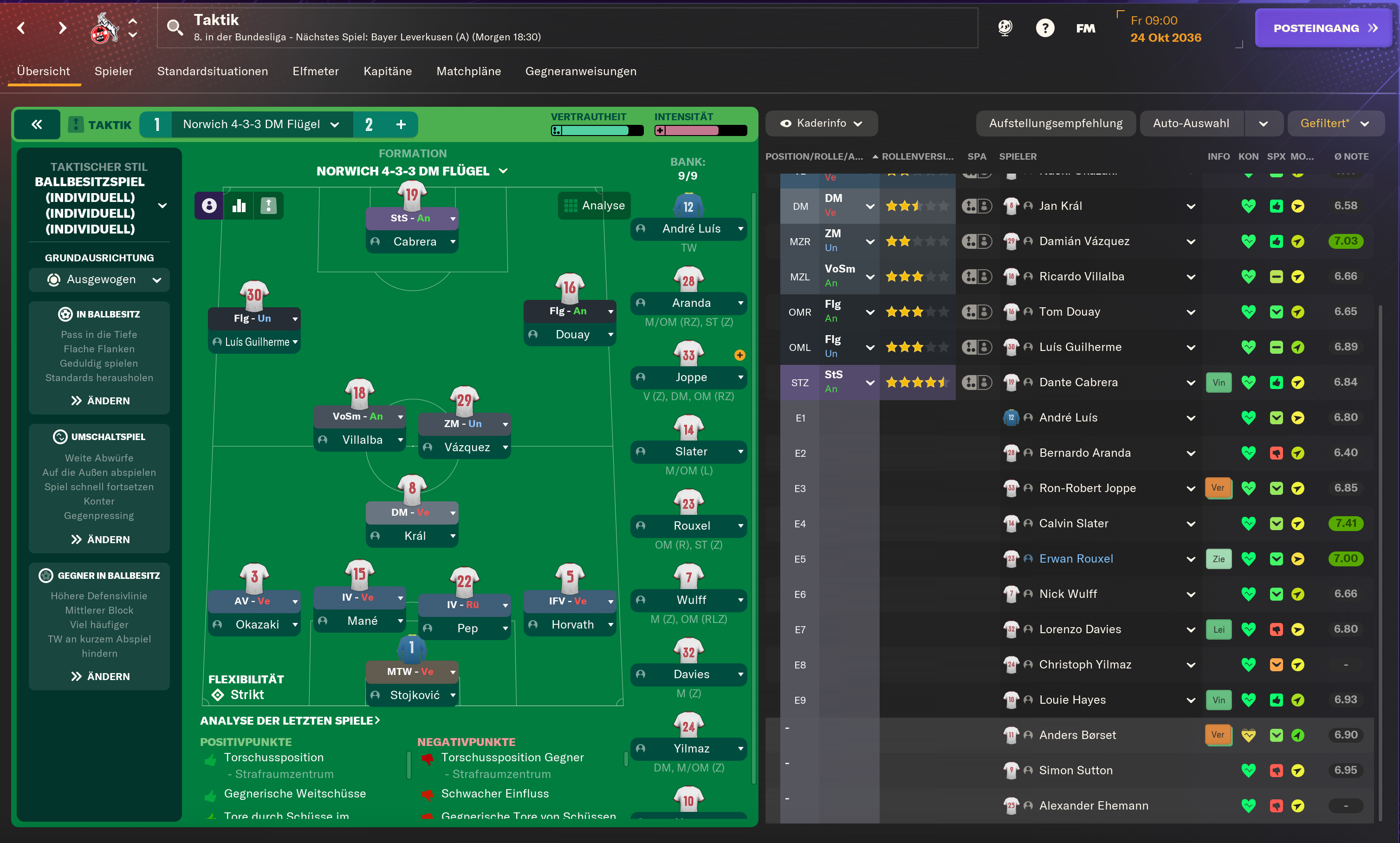
Wing Play
Vertical Tiki-Taka
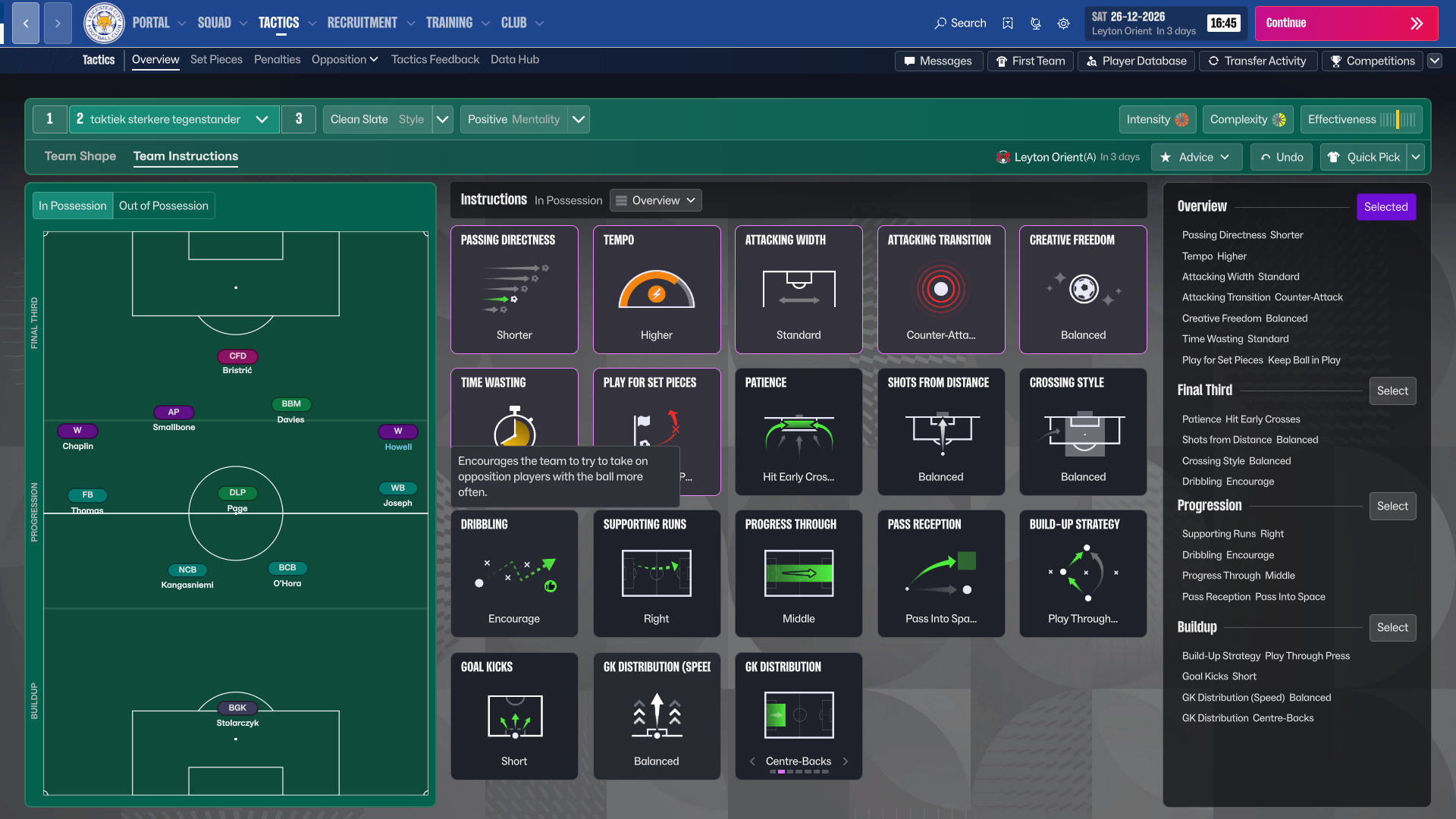
clean slate
control possession
The tactical theory behind the 4-3-3 DM Wide: roles, instructions, and the trade-offs that decide whether the system holds up.
Klopp-style gegenpressing in FM, including squad profile, line-and-press pairing, sustainable workload, and the antipatterns to avoid.
Why circulation density and zonal occupation aren't the same thing in FM, and the half-space occupation rule that decides build-up.
Protect a 1-0, chase a 1-0, hold a draw away. How to manage game state in FM through duties and roles, not by lurching to Defensive.