4-3-3 DM Wide
The tactic is designed to maintain possession through shorter passing and playing out from the back, helping to control the game's tempo.
Loading tactical analysis...
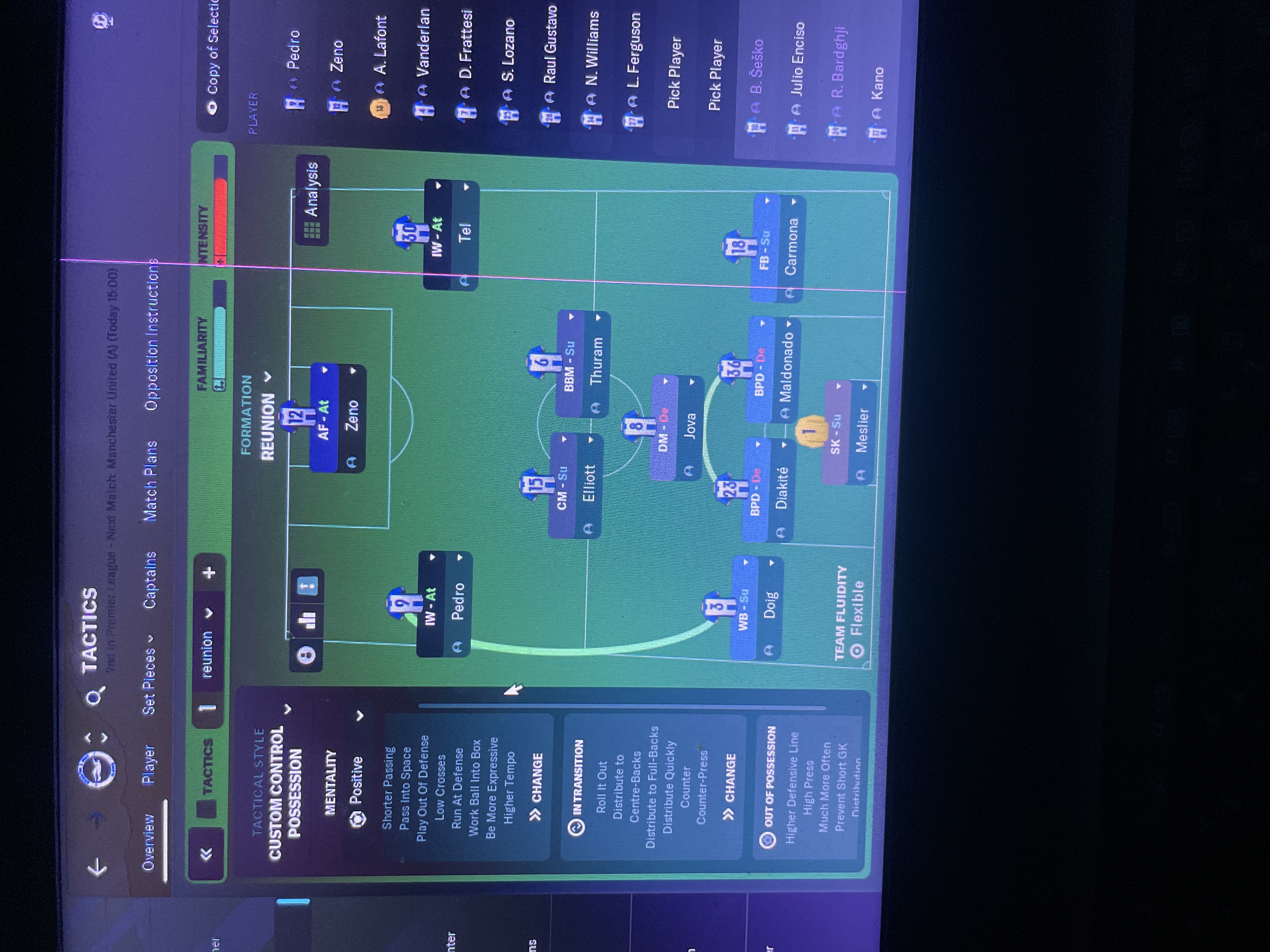
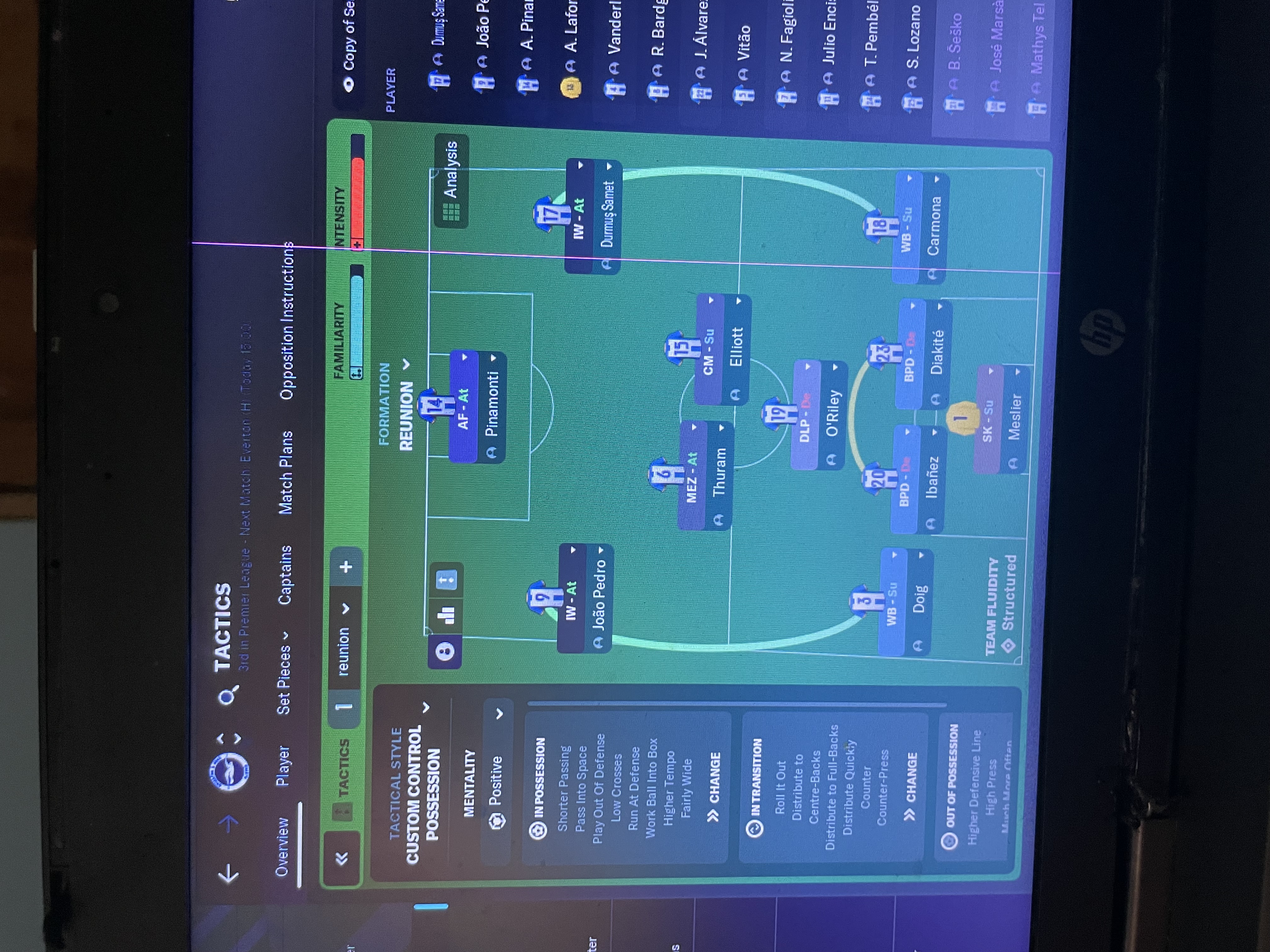
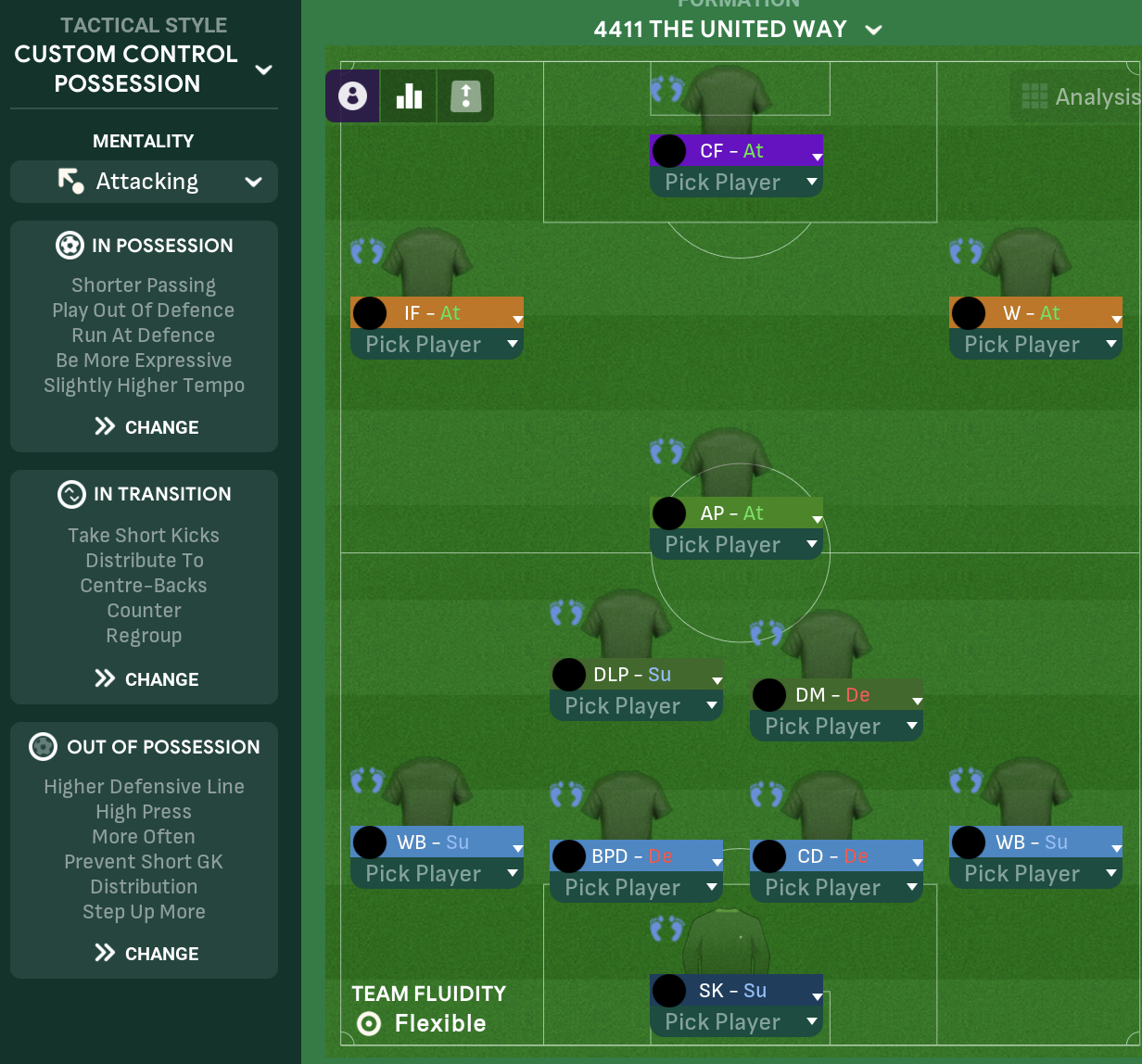
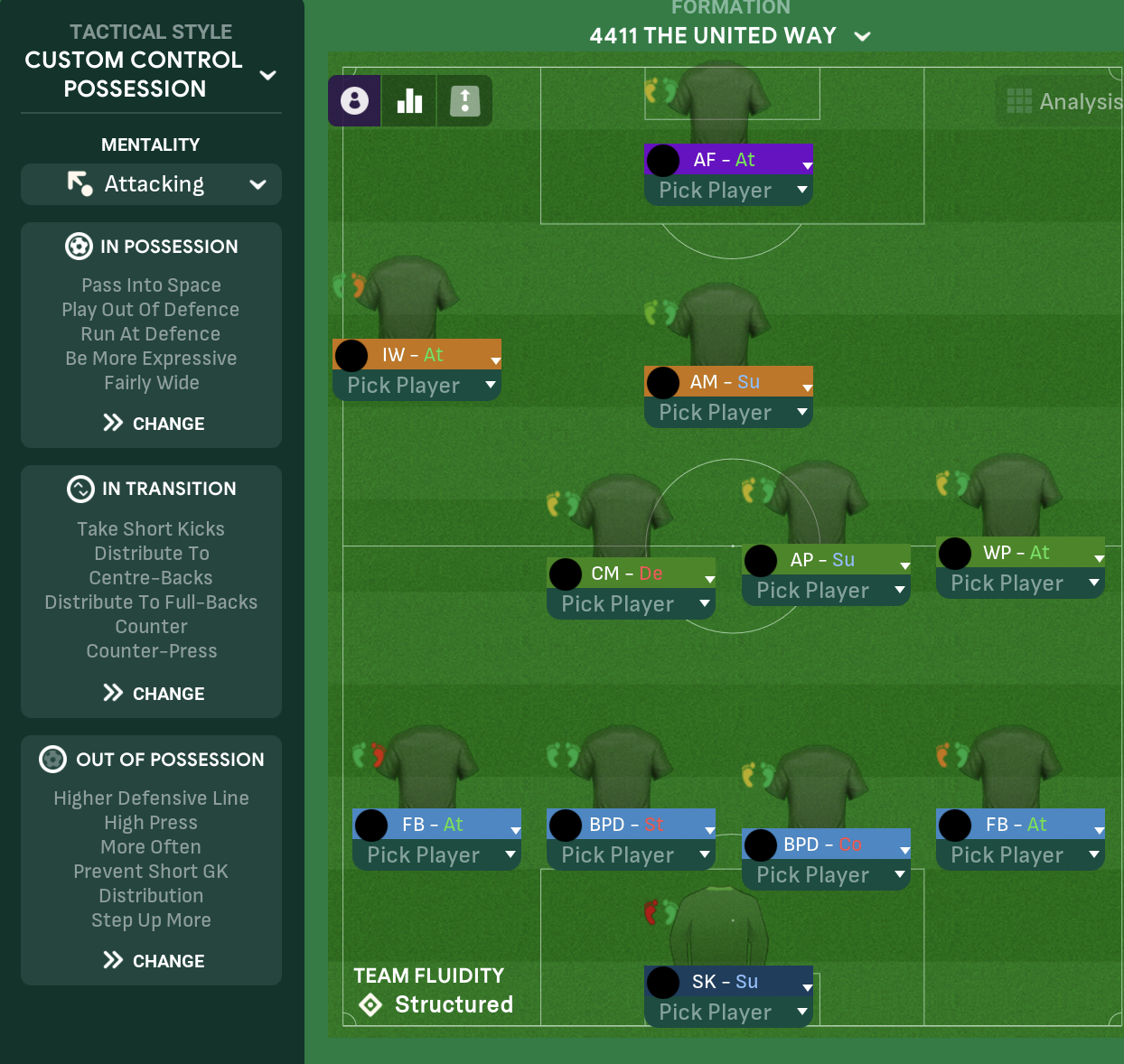
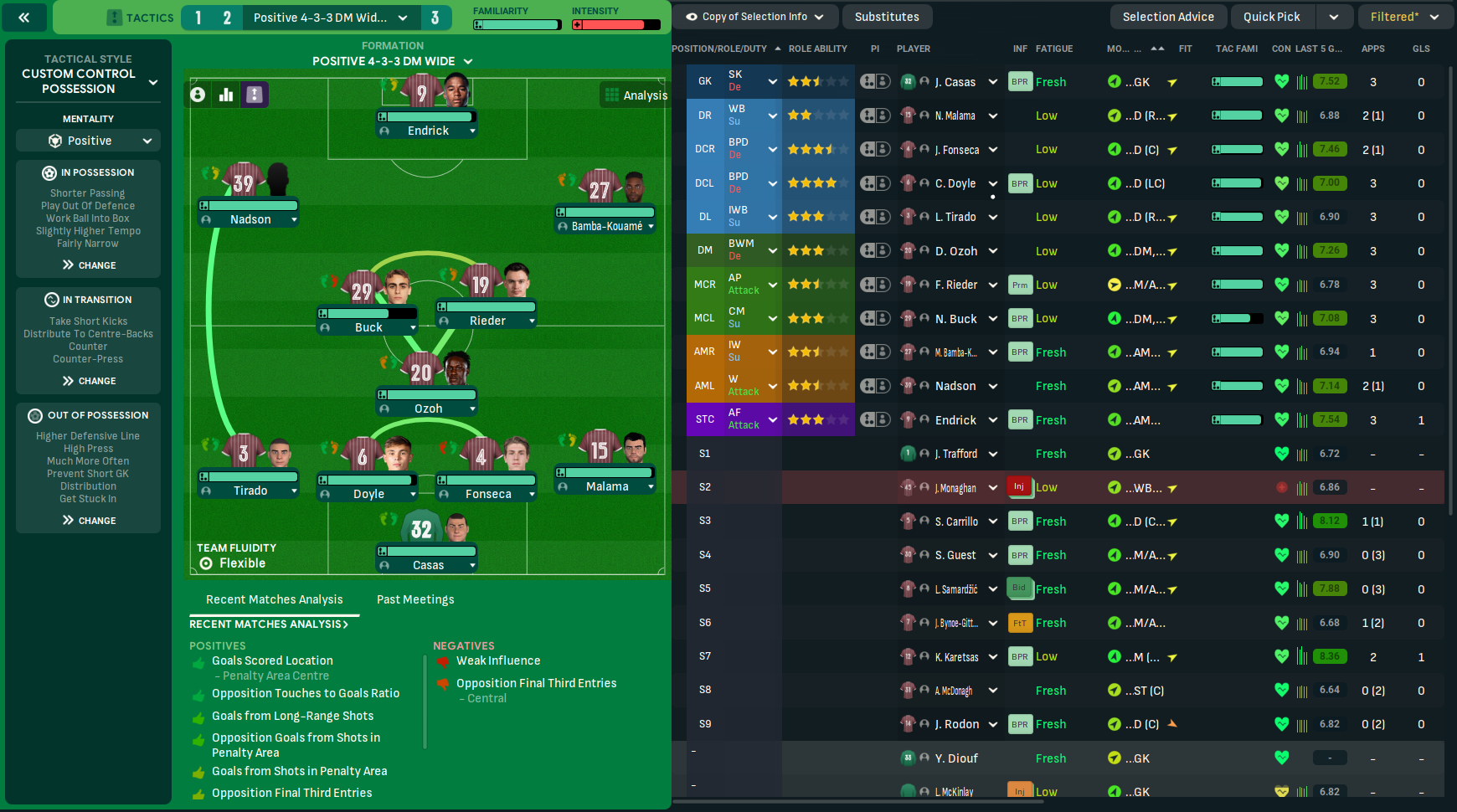
Custom Control Possession
Positive
4-3-3 DM Wide
Flexible
Shorter Passing
Play Out Of Defence
Work Ball Into Box
Slightly Higher Tempo
Fairly Narrow
Take Short Kicks
Distribute To Centre-Backs
Counter
Counter-Press
Higher Defensive Line
High Press
Much More Often Prevent Short GK Distribution
Get Stuck In
GK
Sweeper Keeper
Support
DL
Wing Back
Support
DCL
Ball Playing Defender
Defend
DCR
Ball Playing Defender
Defend
DR
Wing Back
Support
DM
Deep Lying Playmaker
Defend
MCR
Advanced Playmaker
Attack
MCL
Central Midfielder
Support
AMR
Inside Winger
Support
AML
Inside Winger
Attack
ST
Advanced Forward
Attack
The tactic is designed to maintain possession through shorter passing and playing out from the back, helping to control the game's tempo.
Utilizing inside wingers and an advanced forward creates multiple attacking lanes, allowing for varied goal-scoring opportunities.
While a higher defensive line supports pressing, it may leave gaps against teams with fast attackers, potentially exposing the backline.
Narrow attacking play can conflict with the wide role of wing-backs, possibly leading to underutilized space on the flanks.
How can I strike a balance between pressing intensity and maintaining defensive solidity?
Should I consider altering player roles to better fit the high-pressing style?
Would adjusting the width of the team help exploit the flanks more effectively?
Is there a need to make substitutions based on player fatigue during high-pressure games?
How can I incorporate set-piece strategies to enhance goal-scoring opportunities?
What adjustments can I make if the team struggles to maintain possession against very physical opponents?
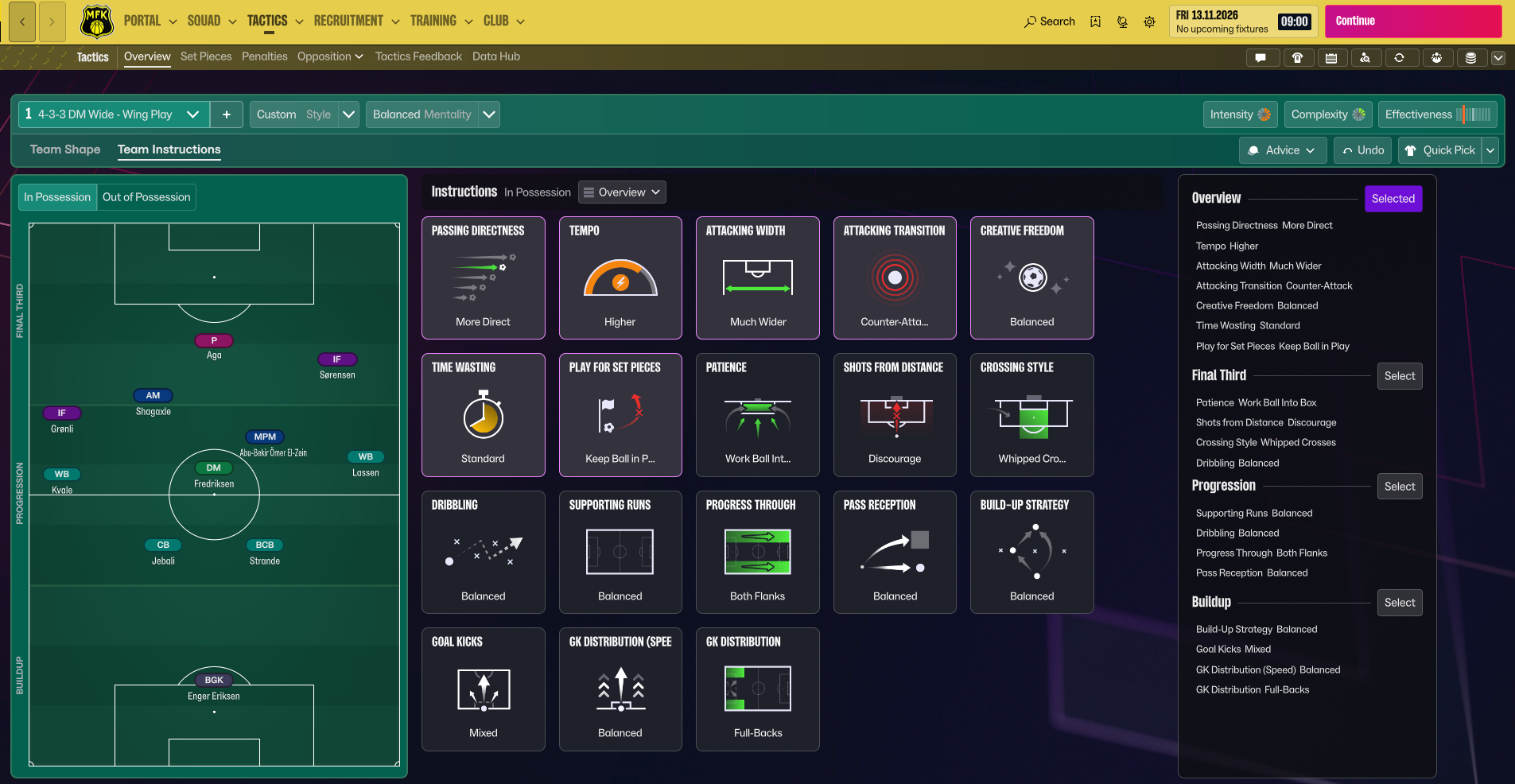
wing play
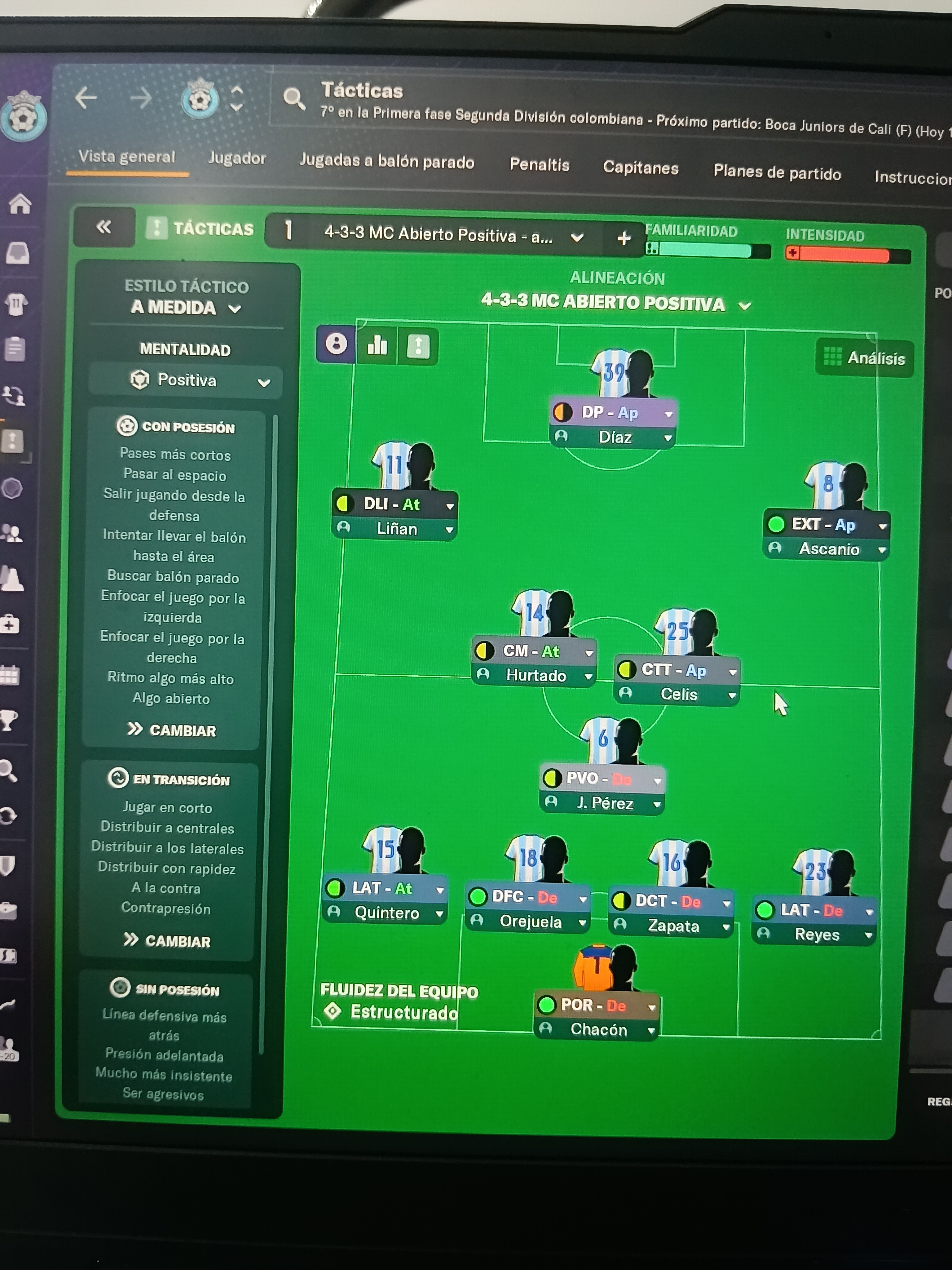
Gegenpress
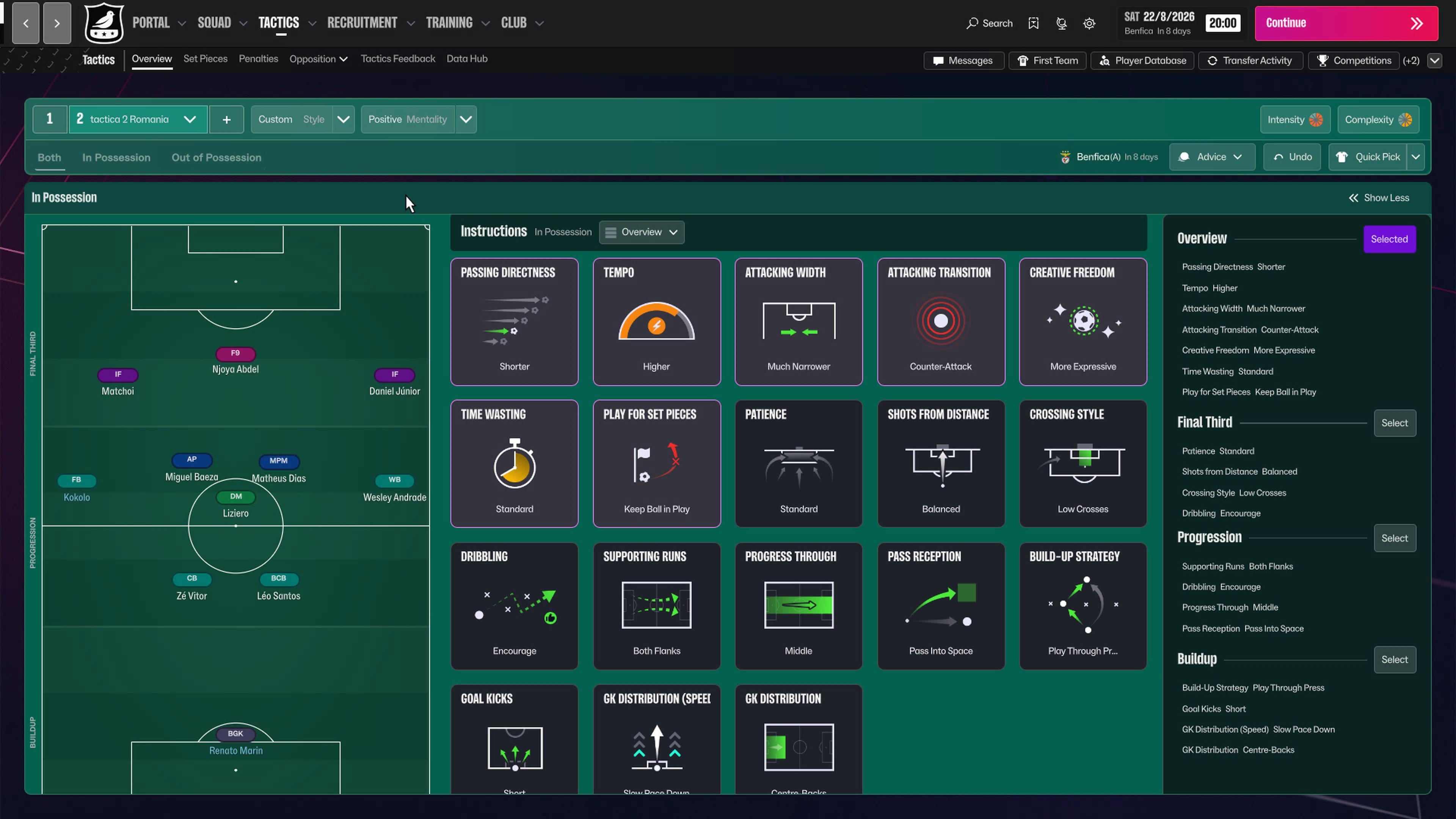
vertical tiki taka
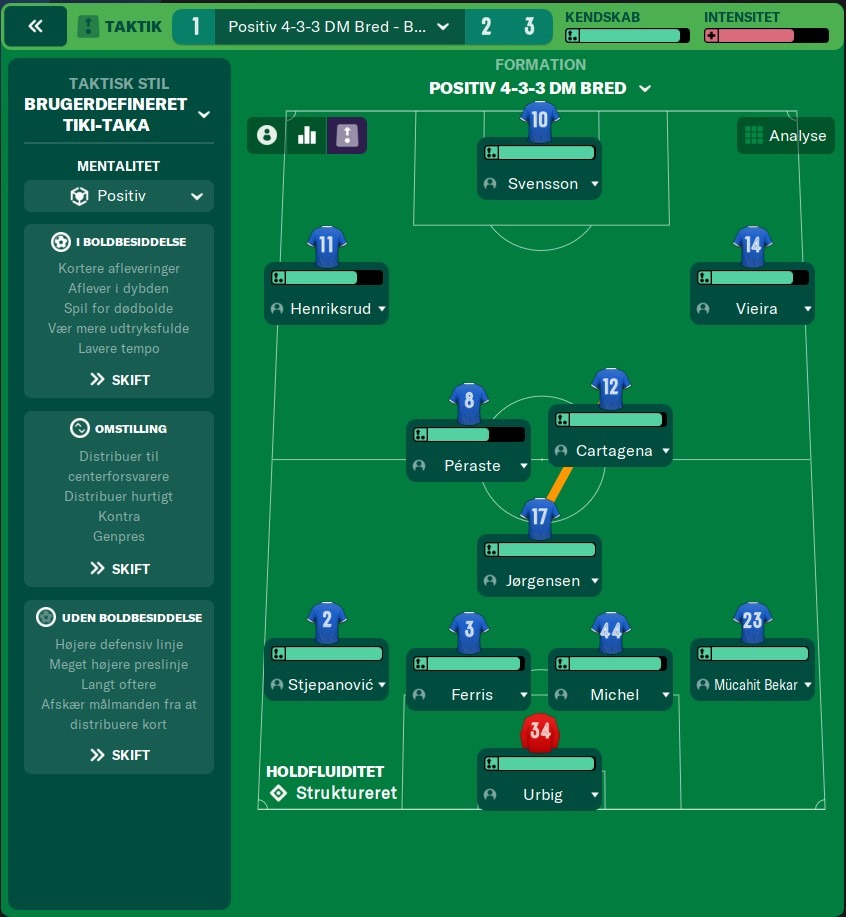
Tiki-Taka
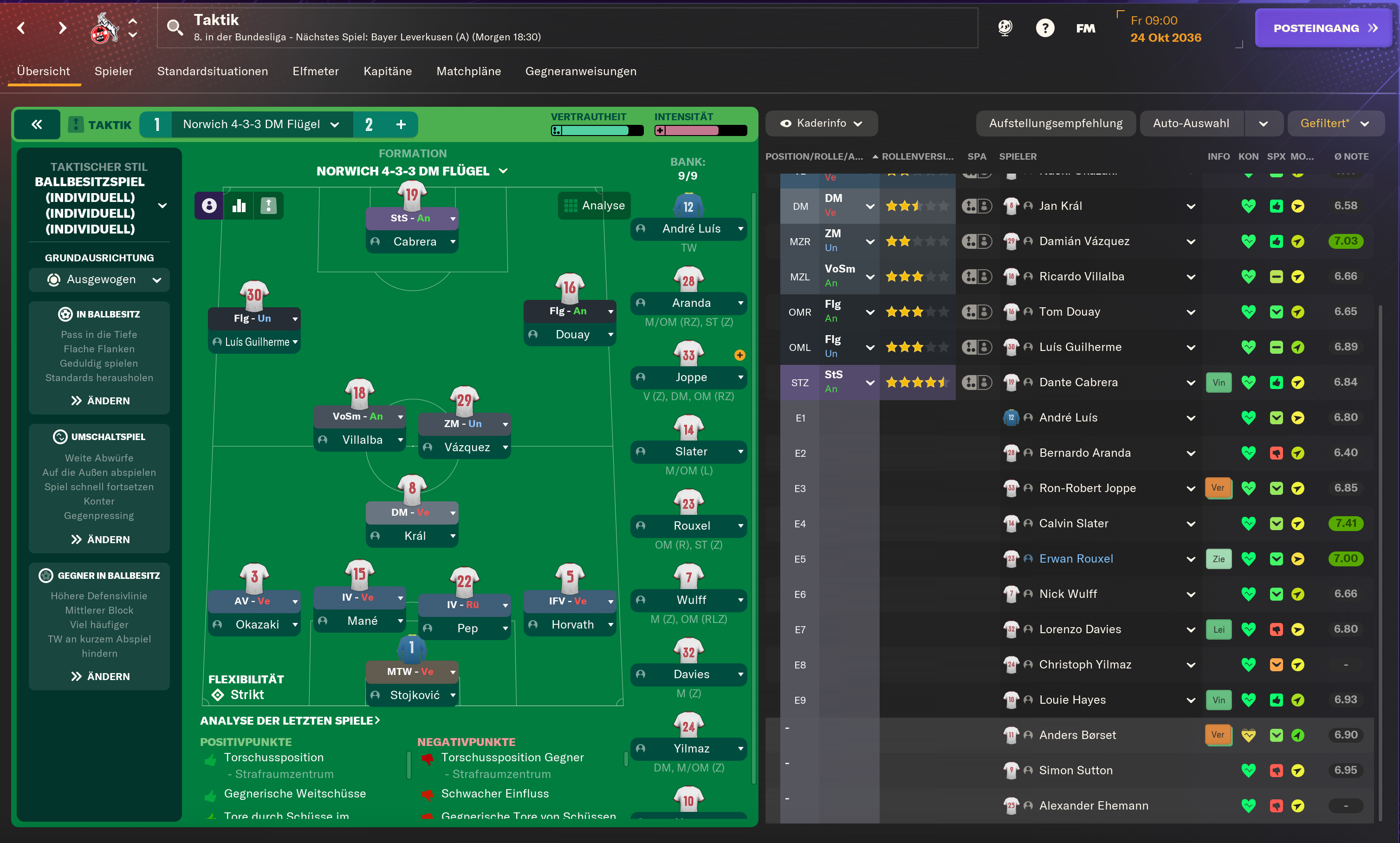
Wing Play
Vertical Tiki-Taka
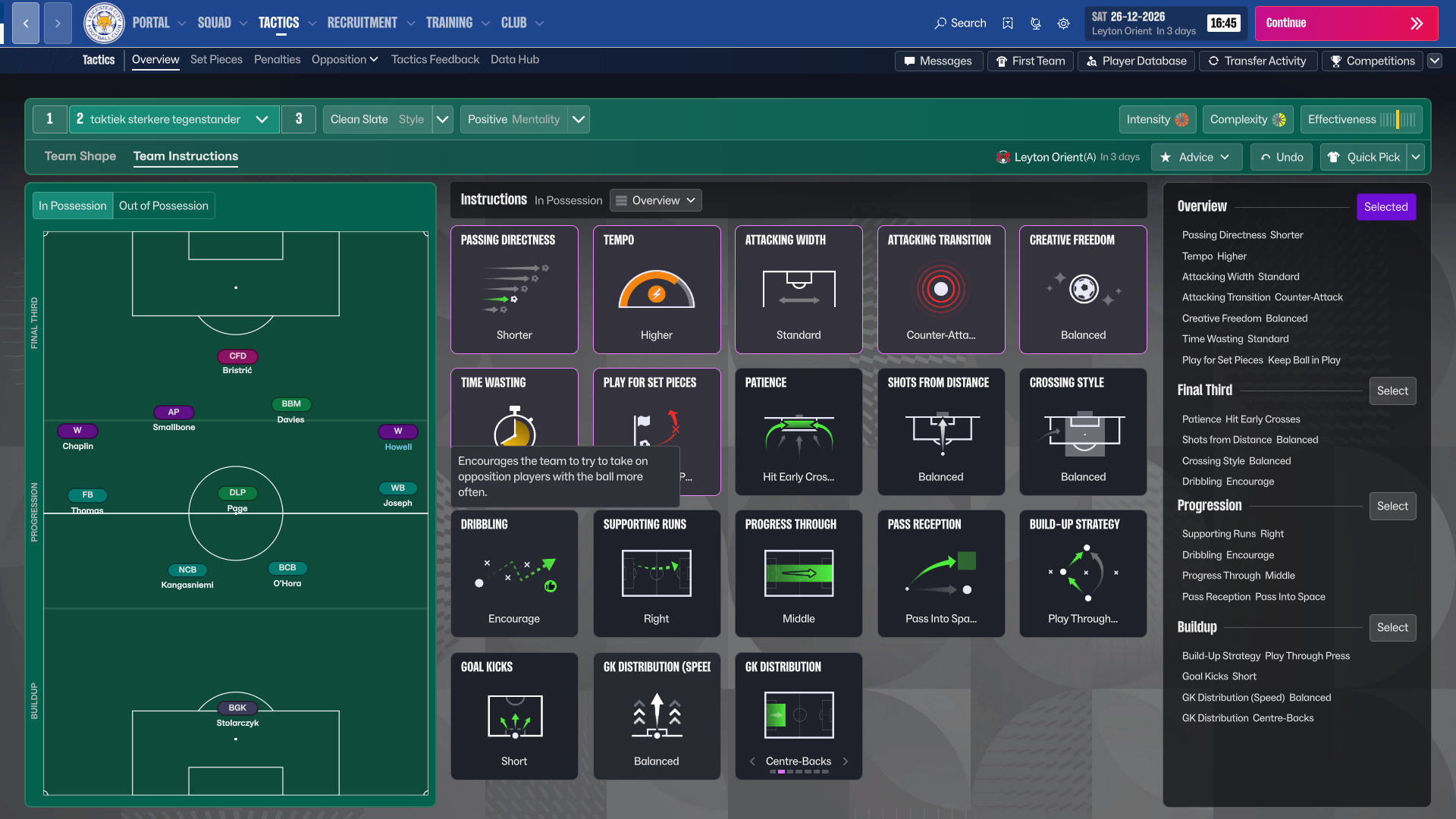
clean slate
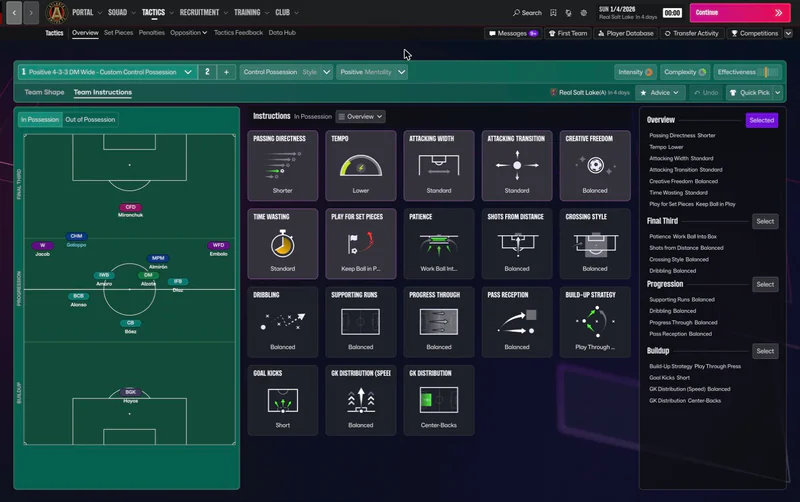
control possession
The tactical theory behind the 4-3-3 DM Wide: roles, instructions, and the trade-offs that decide whether the system holds up.
Why circulation density and zonal occupation aren't the same thing in FM, and the half-space occupation rule that decides build-up.
Build the patient, control-the-tempo style without watching your opponents counter through the gaps you leave behind.
What Higher Tempo, Wider, and Narrower actually do in FM, plus the dial contradictions and antipatterns players run into most often.