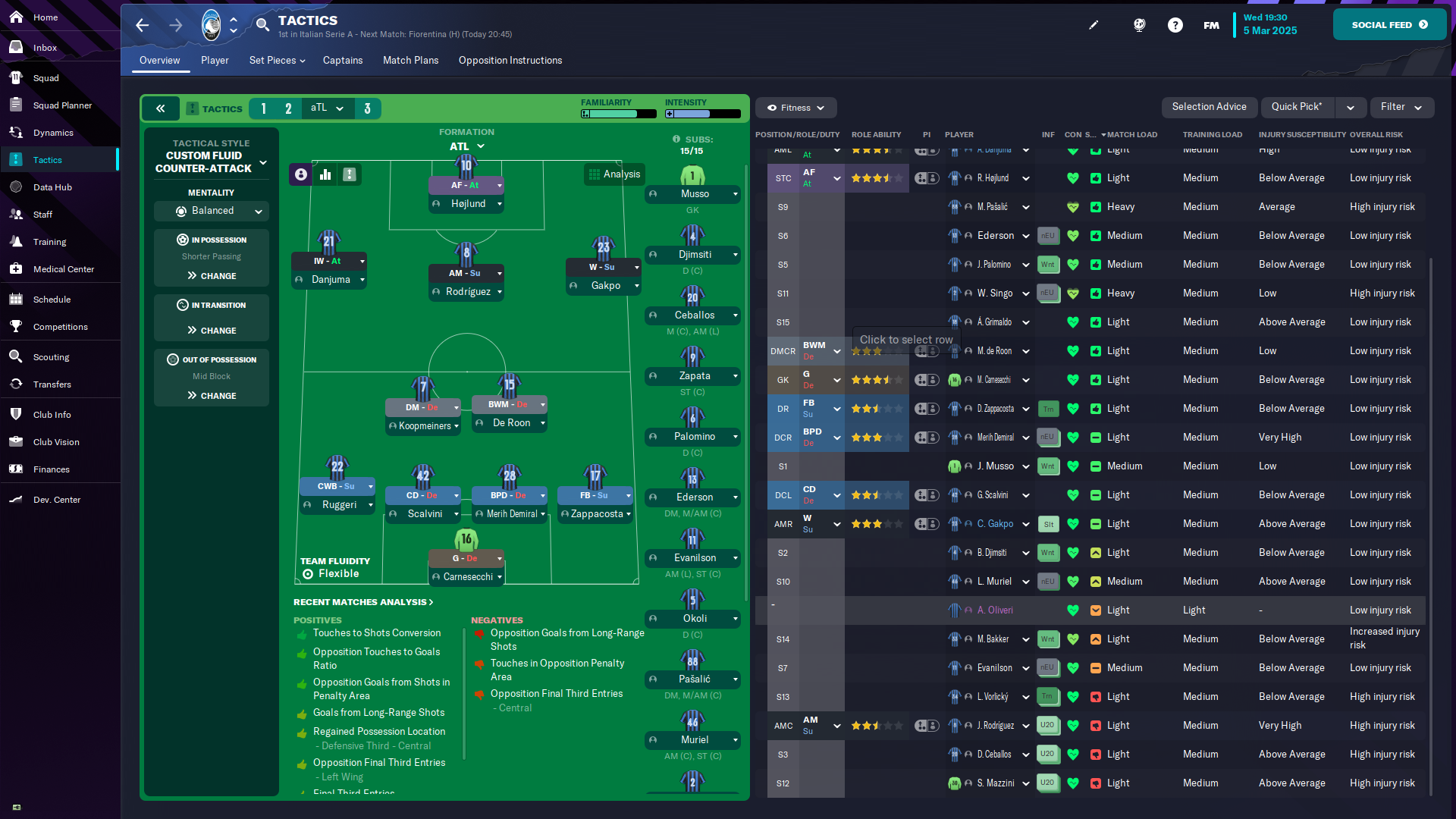
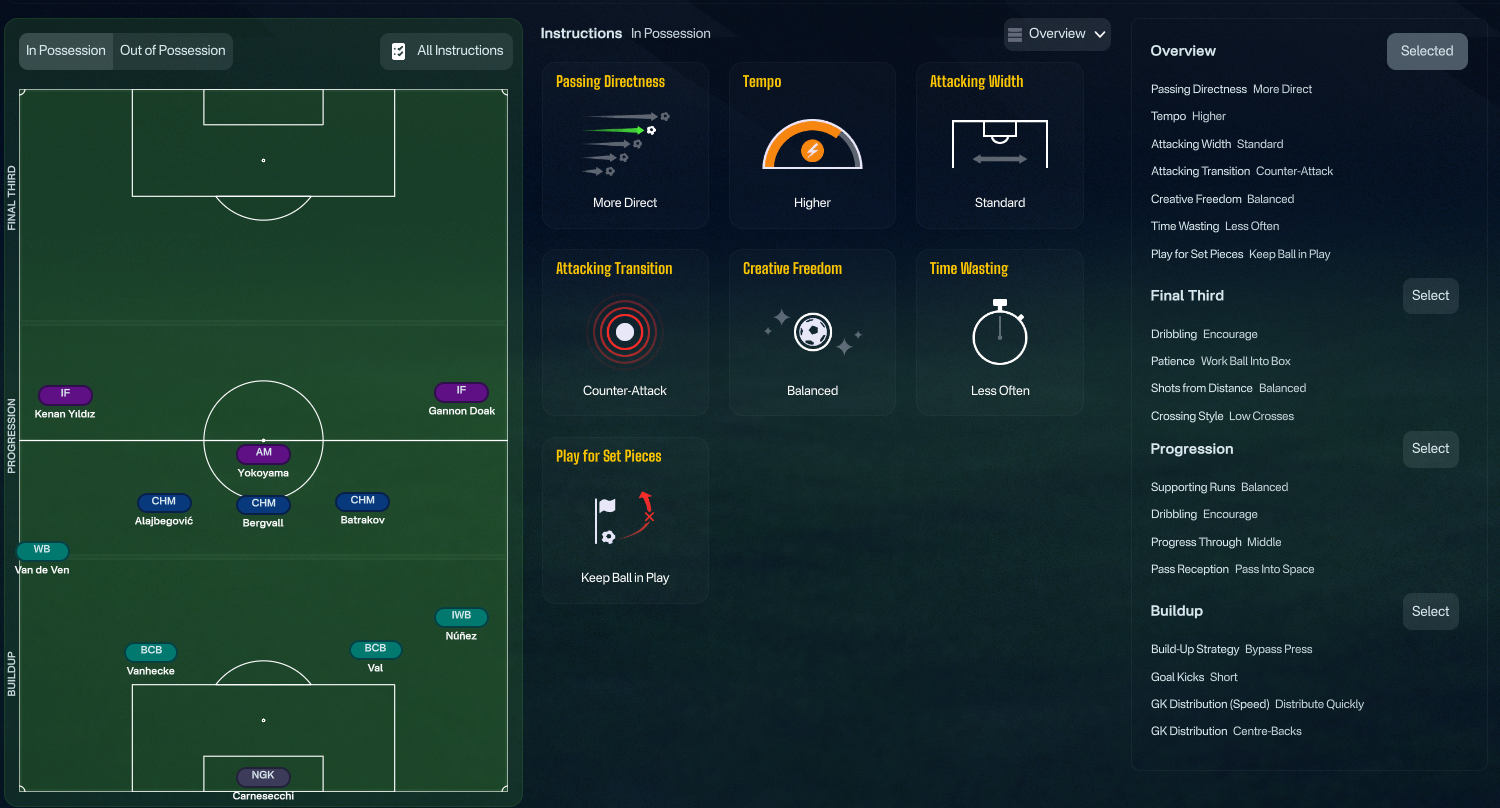
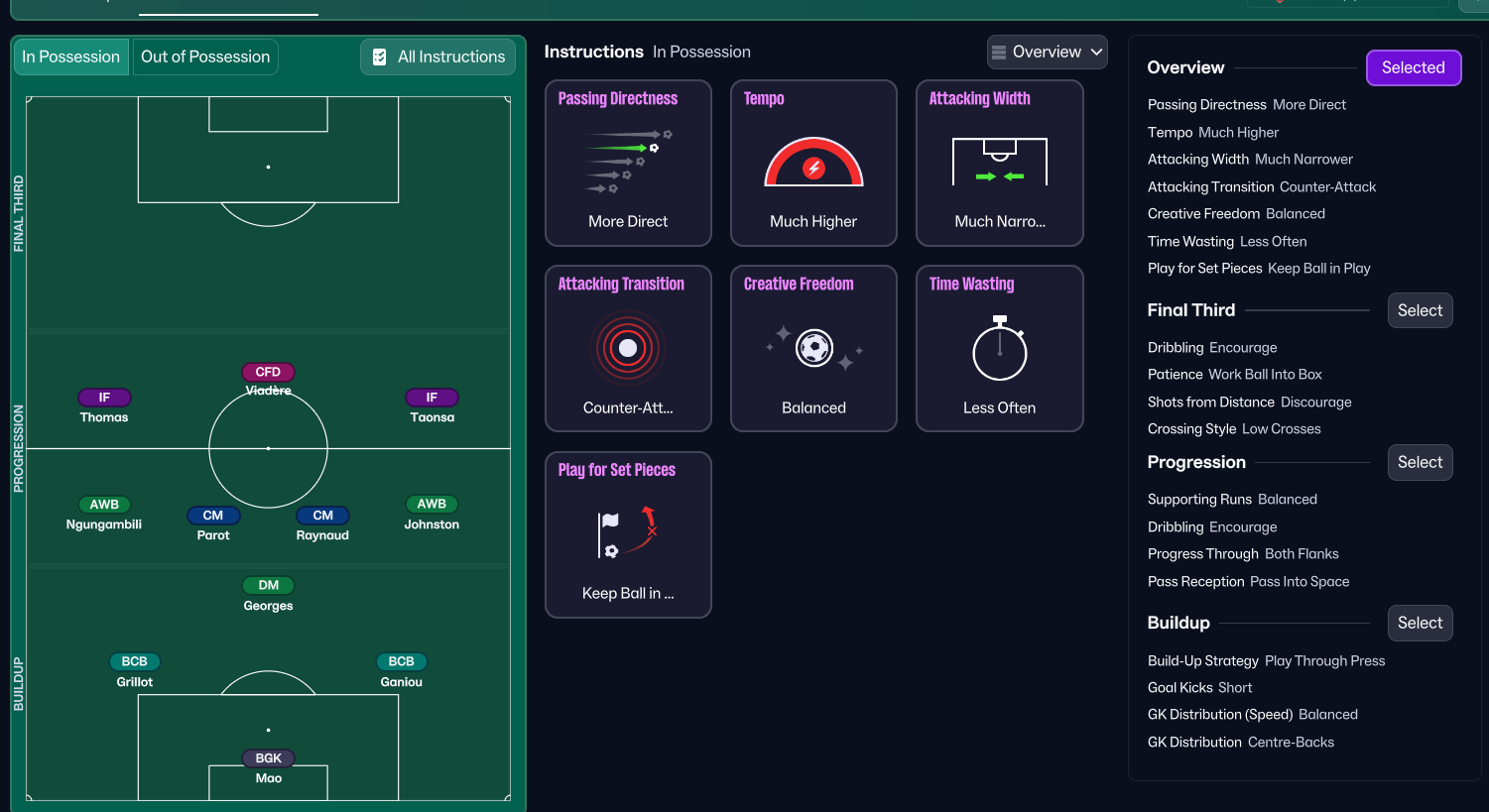
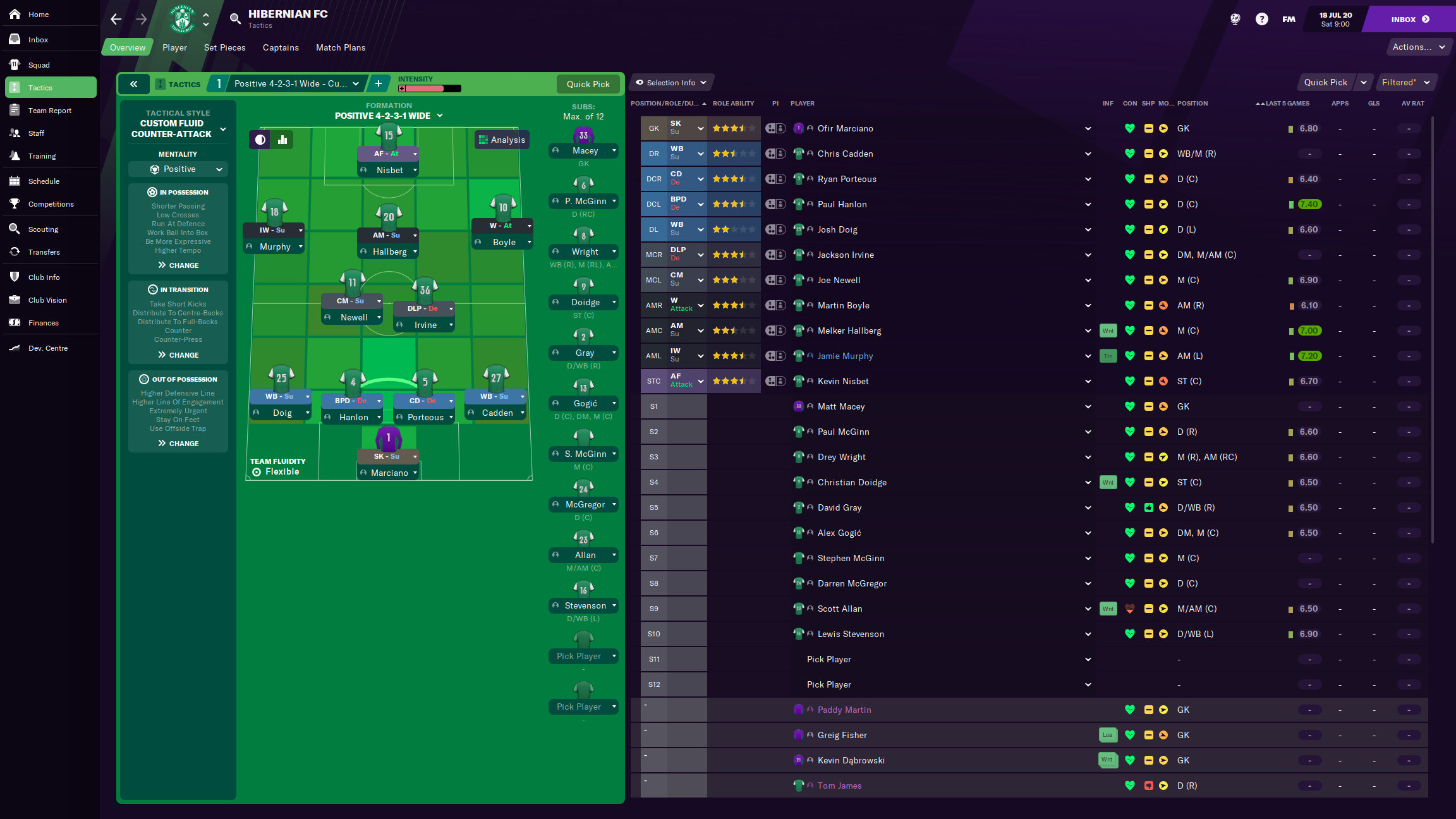
4-3-3 DM Wide
Utilizing wingers allows for stretching the opposition's defense, creating space for midfielders to exploit.
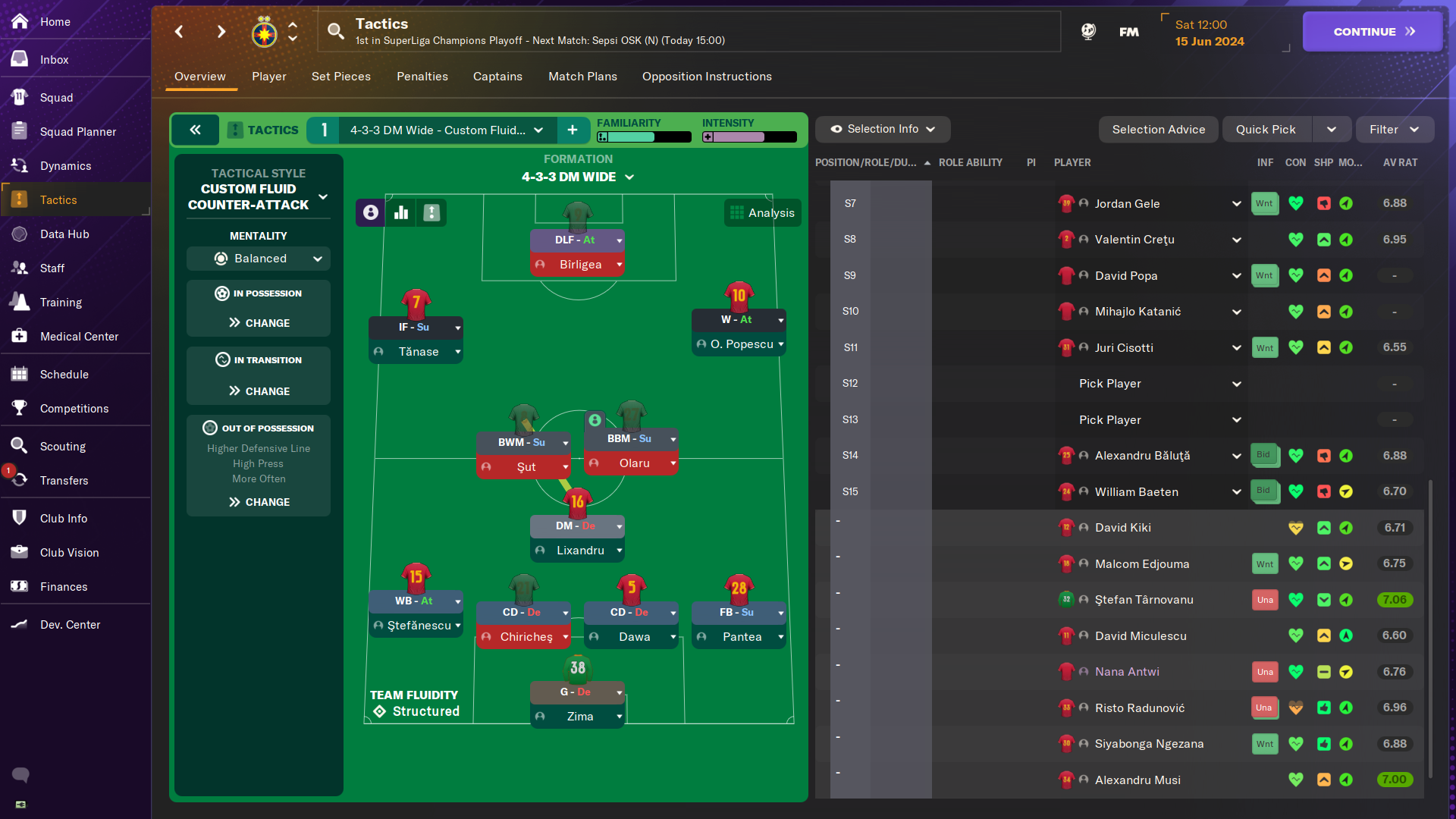
Loading tactical analysis...
Counter-Attack
Balanced
4-3-3 DM Wide
Structured
Focus Play Down the Wings
Work Ball Into Box
Counter
Counter-Press
Higher Defensive Line
High Press
DLF
Deep-Lying Forward
Attack
W
Winger
Attack
IF
Inside Forward
Support
BWM
Ball-Winning Midfielder
Support
BBM
Box-to-Box Midfielder
Support
DM
Defensive Midfielder
Defend
CD
Central Defender
Defend
FB
Full-Back
Attack
Utilizing wingers allows for stretching the opposition's defense, creating space for midfielders to exploit.
The defensive midfielder combined with two central defenders offers a strong foundation, reducing central threats.
While the tactic employs a high press, transitioning to a counter-attack may take longer if players are committed to pressing.
The structured team fluidity could limit the wingers' freedom, reducing their impact on wide plays.
How do the wingers contribute defensively?
Are the full-backs providing enough width in attack?
Is the DLF staying central enough to support attacking movements?
How effective is the high press against stronger opposition?
What adjustments can be made if possession is lost quickly?
How can we maximize the impact of the Box-to-Box Midfielder?
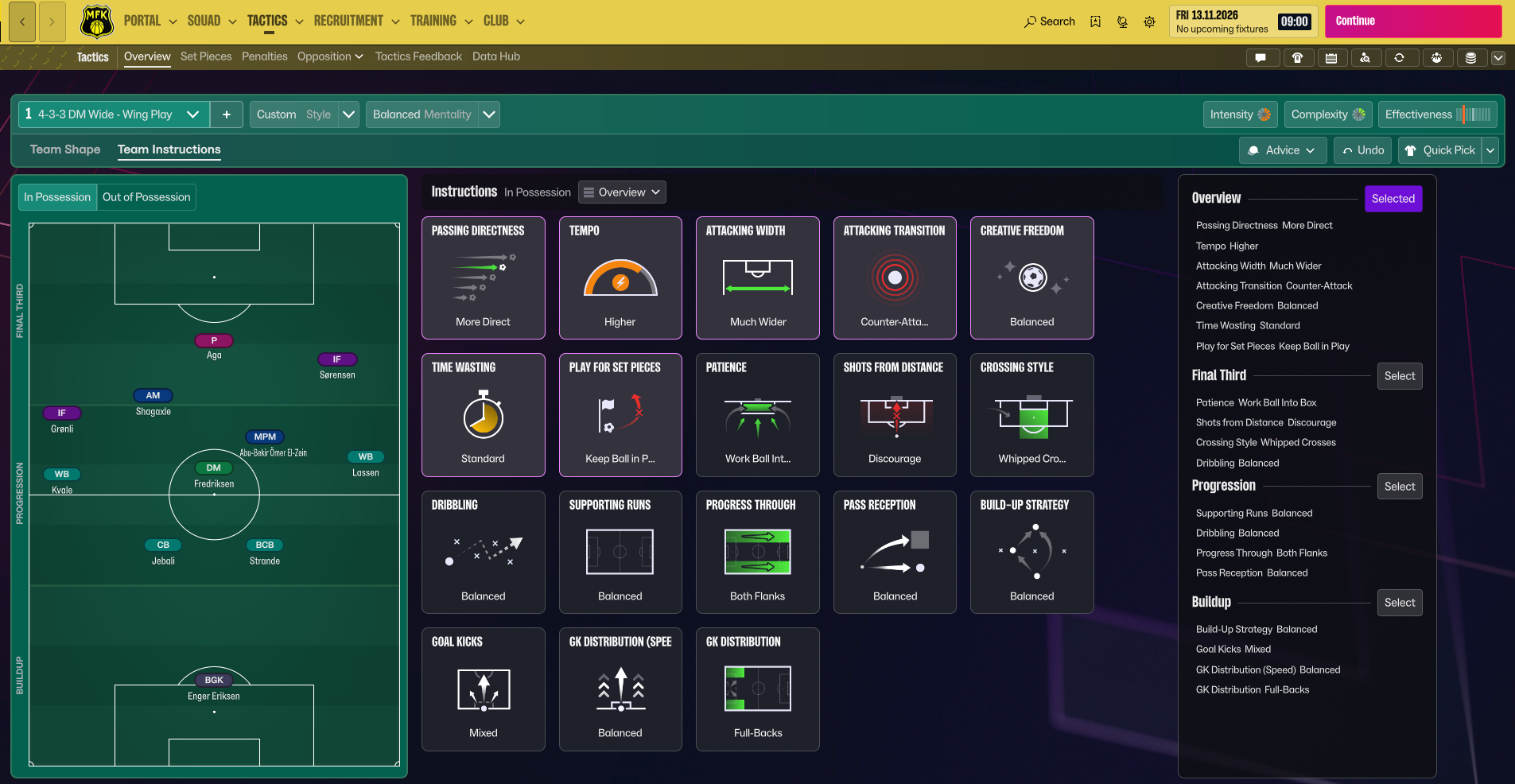
wing play
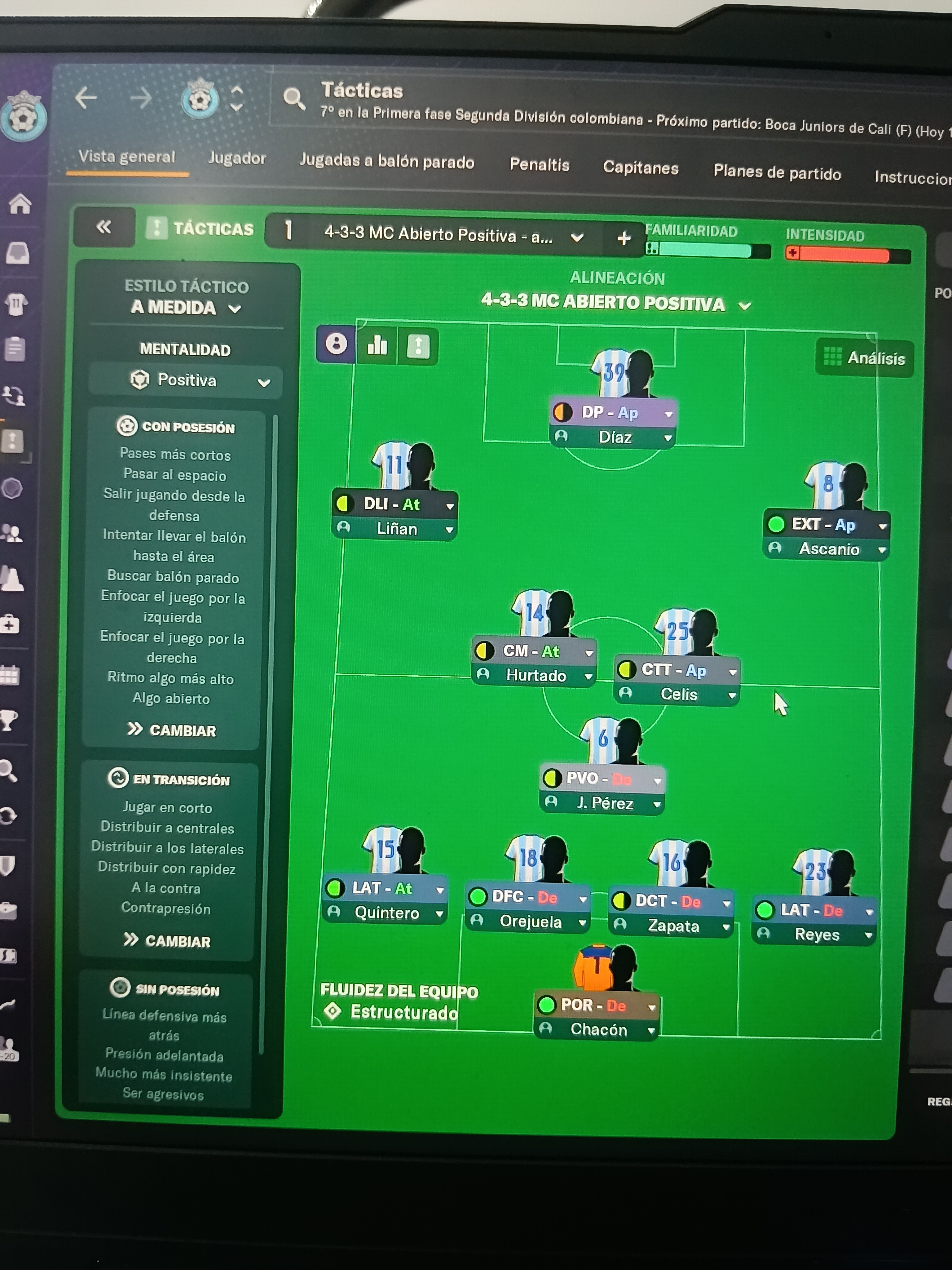
Gegenpress
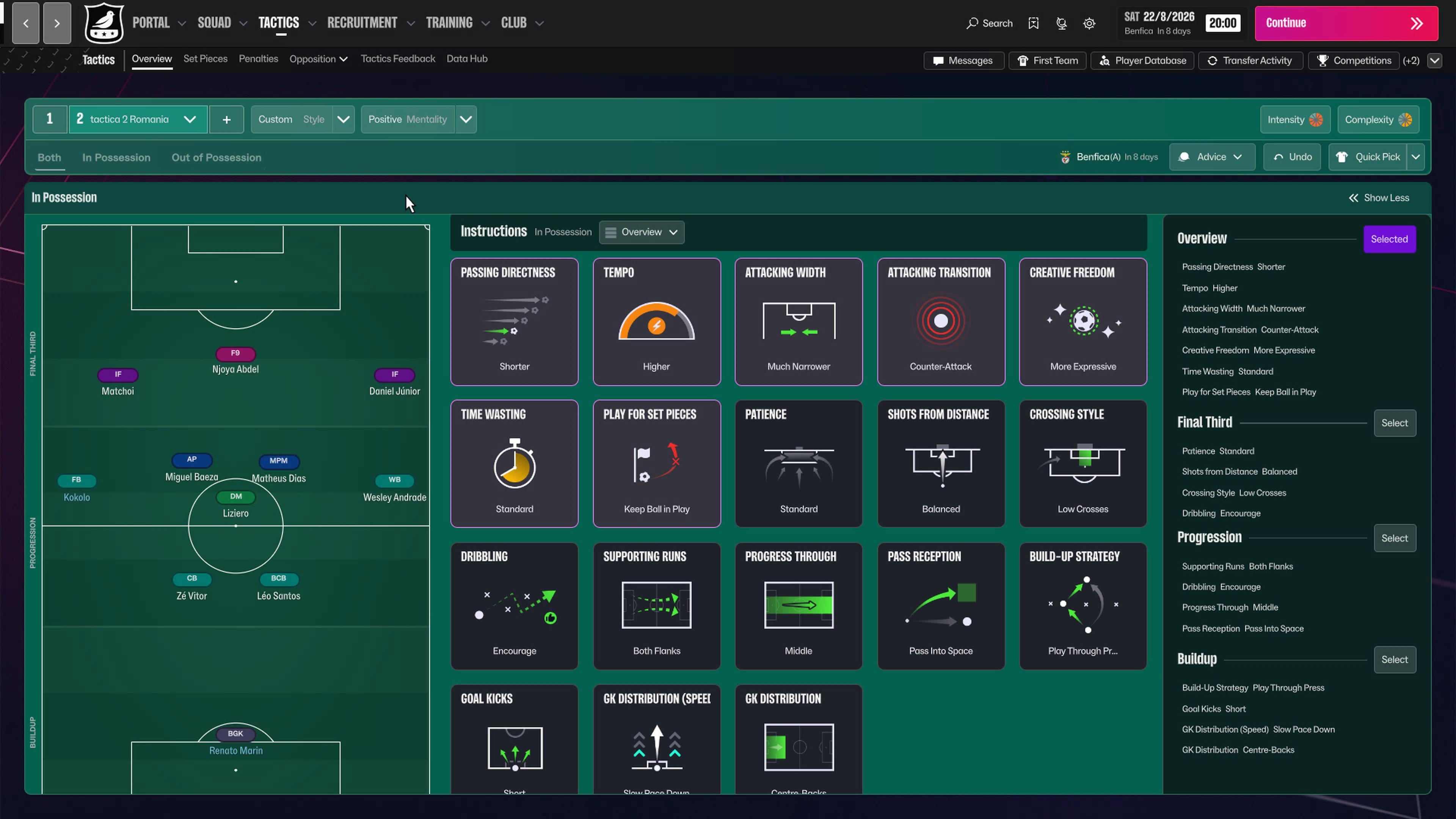
vertical tiki taka
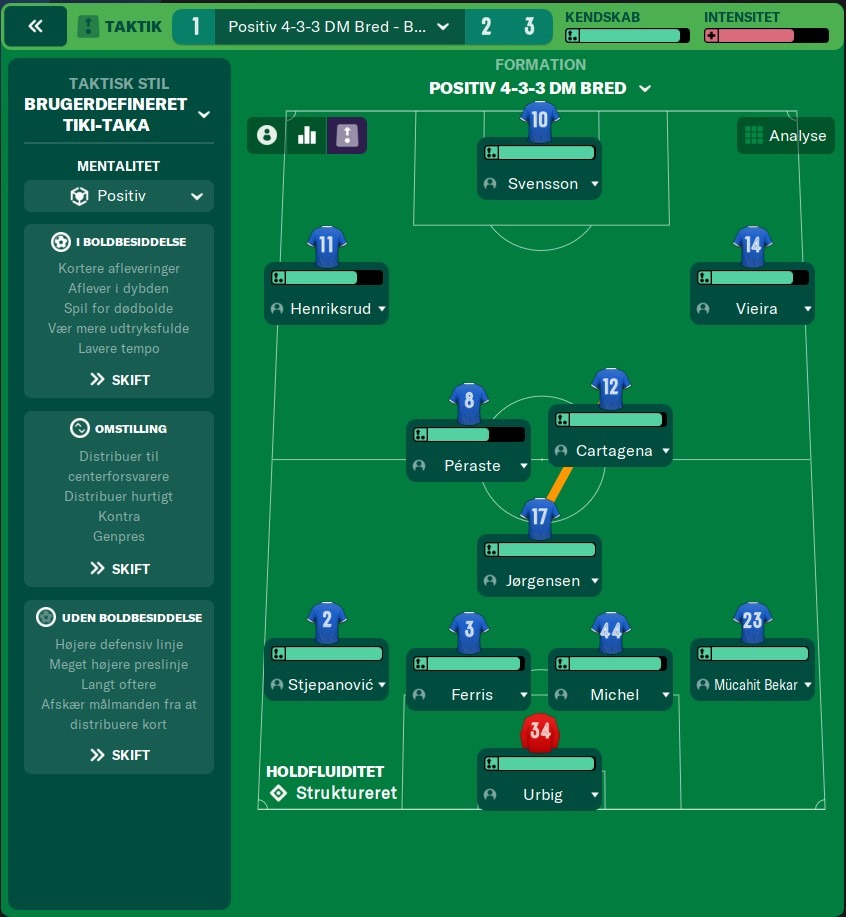
Tiki-Taka
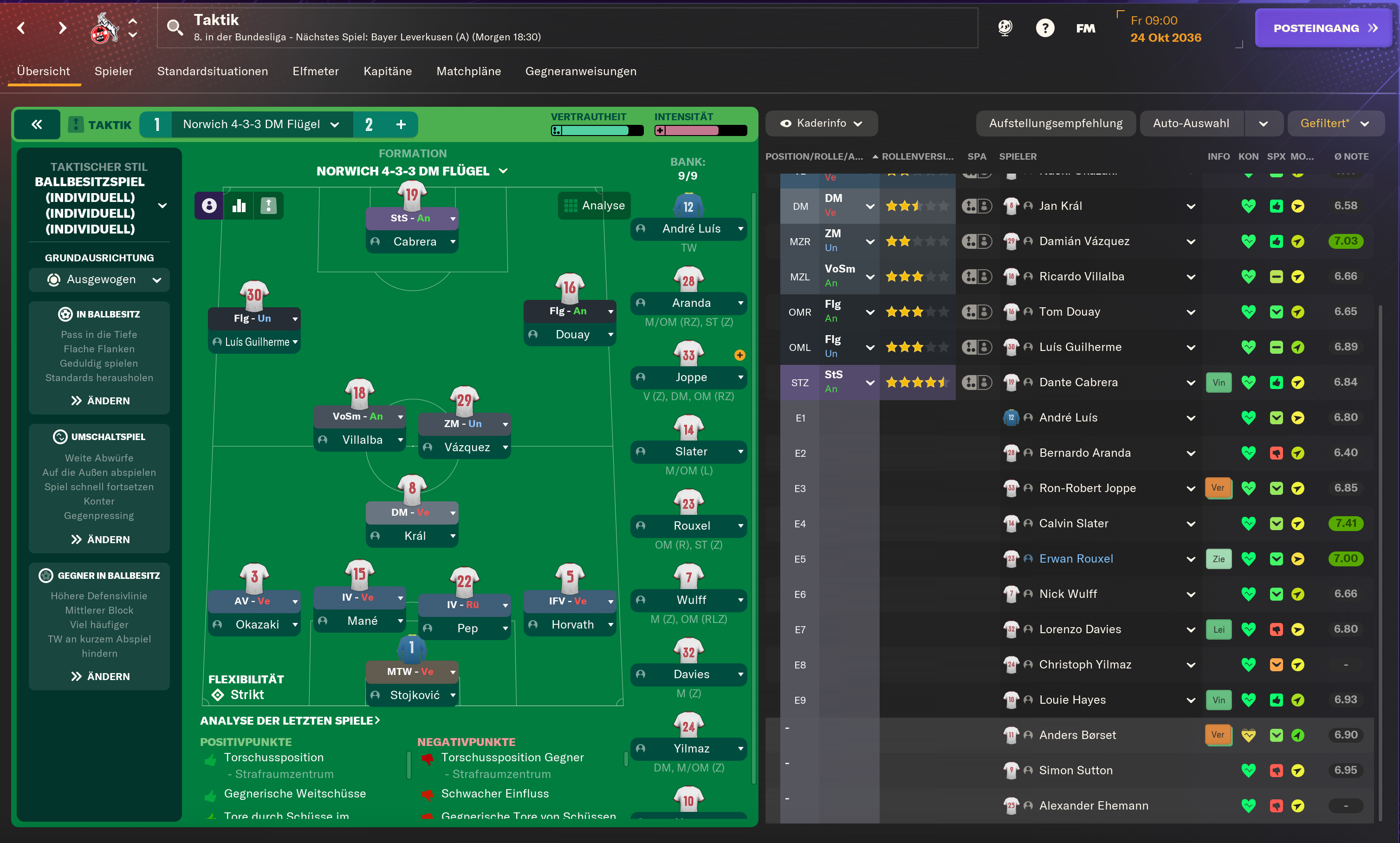
Wing Play
Vertical Tiki-Taka
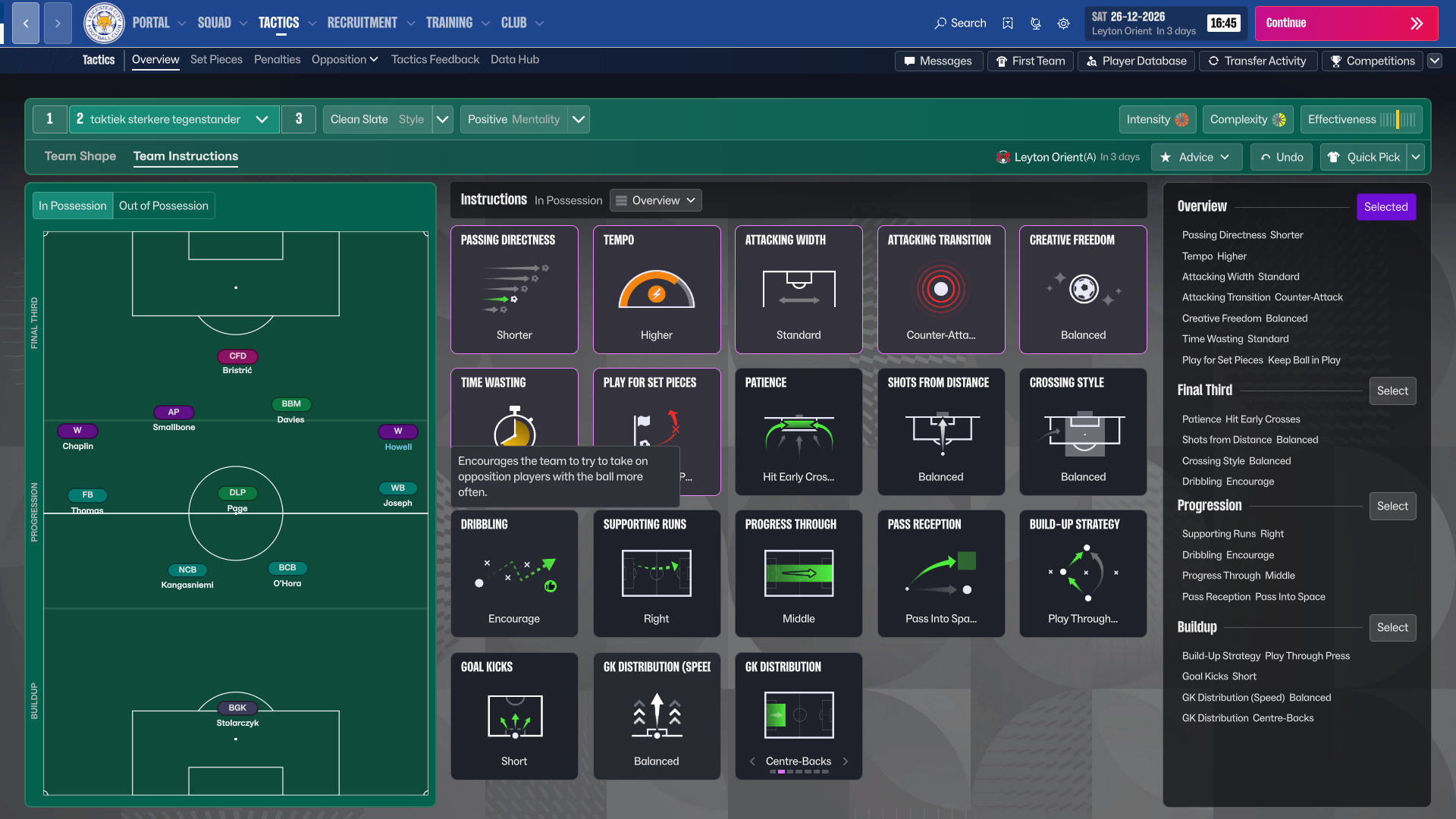
clean slate
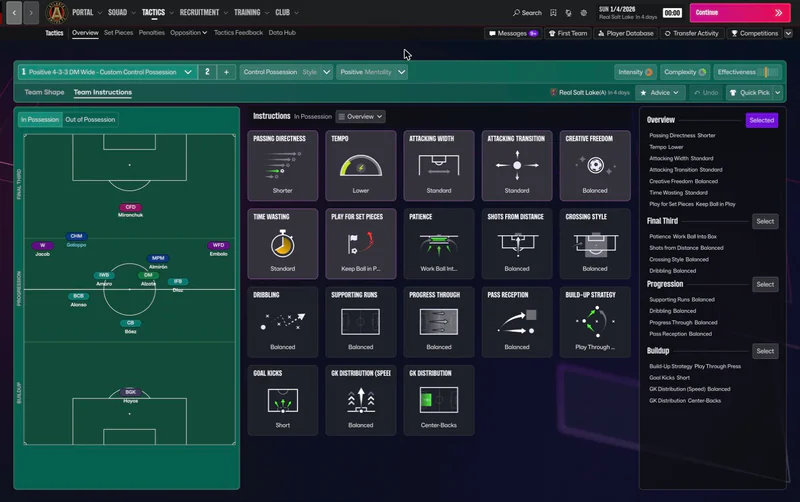
control possession
The tactical theory behind the 4-3-3 DM Wide: roles, instructions, and the trade-offs that decide whether the system holds up.
Build the patient, control-the-tempo style without watching your opponents counter through the gaps you leave behind.
Master the classic 4-3-3: player roles, tactical variations, and the trade-offs that decide whether it sings or stalls.
Build through the wide areas or through the middle? A working framework for picking the right one for your squad.