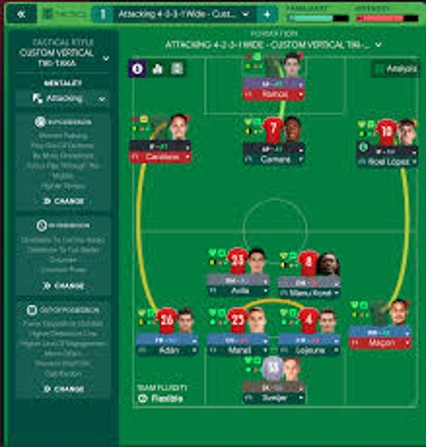
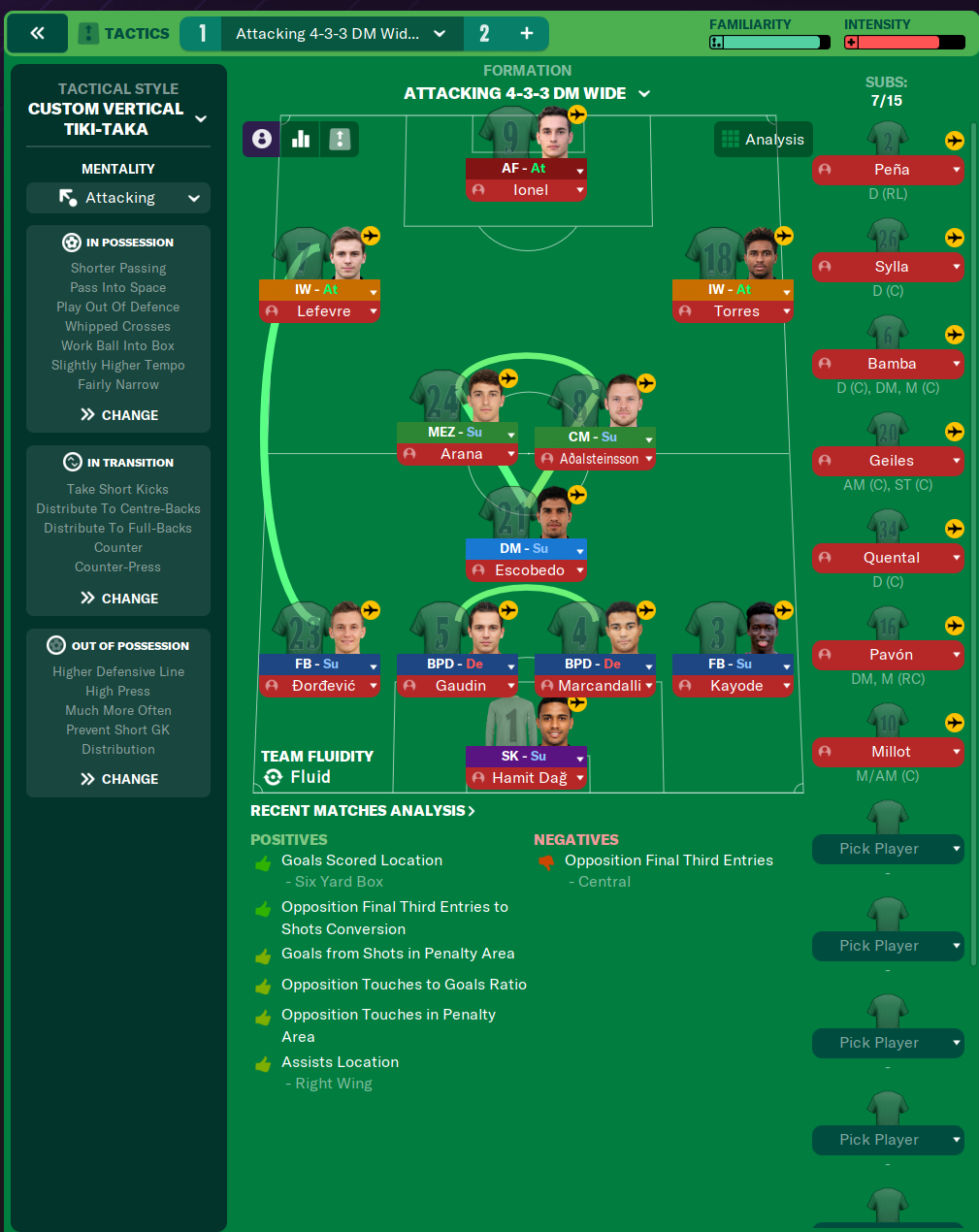
4-3-3 DM Wide
The combination of an attacking mentality with a fluid team structure allows players to interchange effectively, creating numerous goal-scoring…
Loading tactical analysis...
Custom Vertical Tiki-Taka
Attacking
4-3-3 DM Wide
Fluid
Shorter Passing
Pass Into Space
Whipped Crosses
Work Ball Into Box
Slightly Higher Tempo
Fairly Narrow
Distribute To Centre-Backs
Counter
Higher Defensive Line
High Press
Much More Often Prevent Short GK Distribution
AF
Advanced Forward
Attack
IW
Inside Forward
Attack
MEZ
Mezzala
Support
CM
Central Midfielder
Support
DM
Defensive Midfielder
Support
FB
Full-Back
Support
BPD
Ball-Playing Defender
Defend
SK
Sweeper Keeper
Support
The combination of an attacking mentality with a fluid team structure allows players to interchange effectively, creating numerous goal-scoring opportunities.
Utilization of Inside Forwards stretched the defense, creating space for midfielders and overlapping full-backs.
While a high press can disrupt opponents, it may also stretch the team structure too thin, leading to potential gaps defensively.
Short passing may inhibit quick counters, which could be beneficial against teams that struggle with swift transitions.
How can I better exploit the weaknesses of opposing defenses?
Should the pressing strategy be adjusted based on opponent strengths?
Is there a need to incorporate a target man for specific matches?
How can I enhance width in my play effectively?
What strategies can I implement when facing teams that counter quickly?
Is the current balance between attack and defense effective?
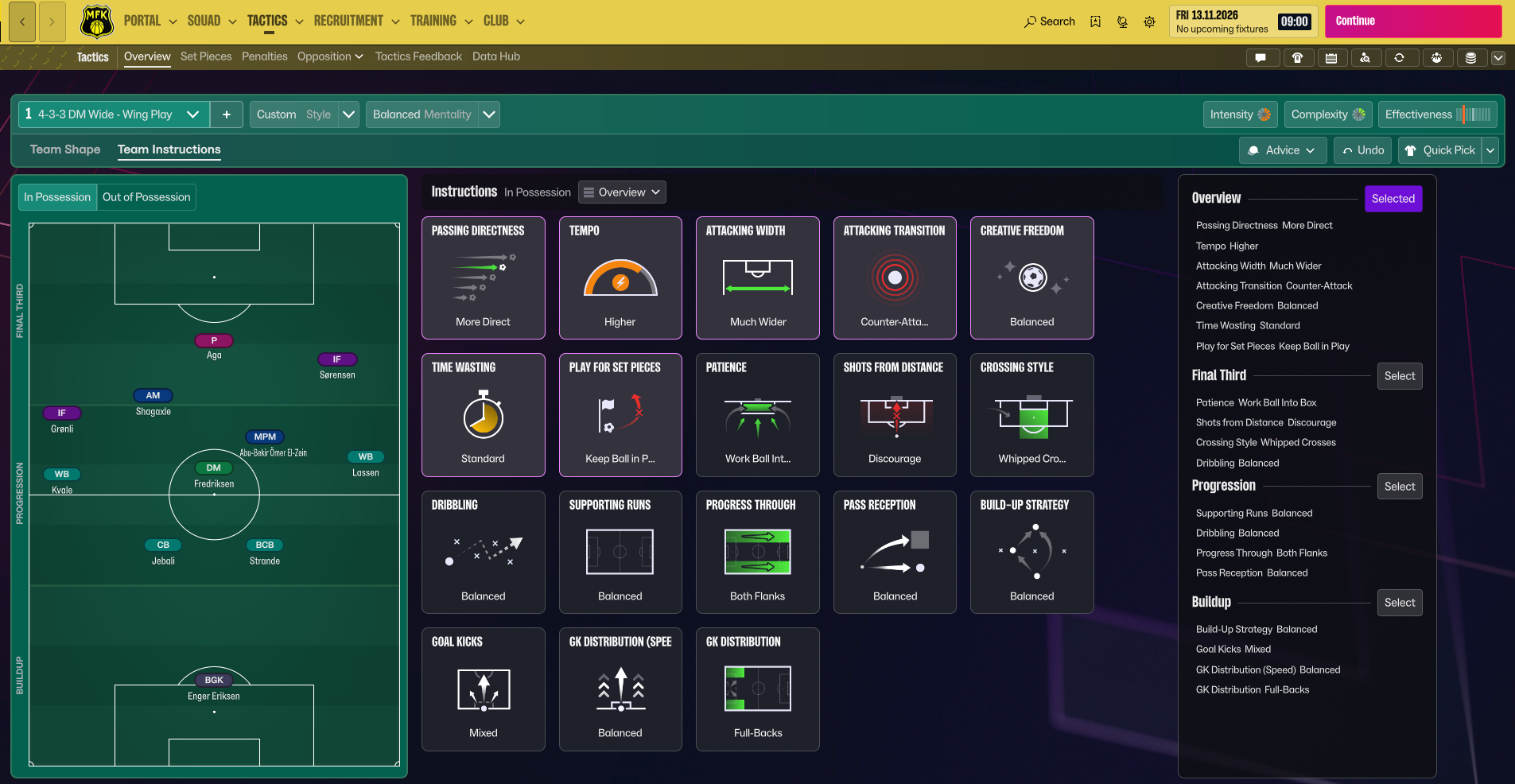
wing play
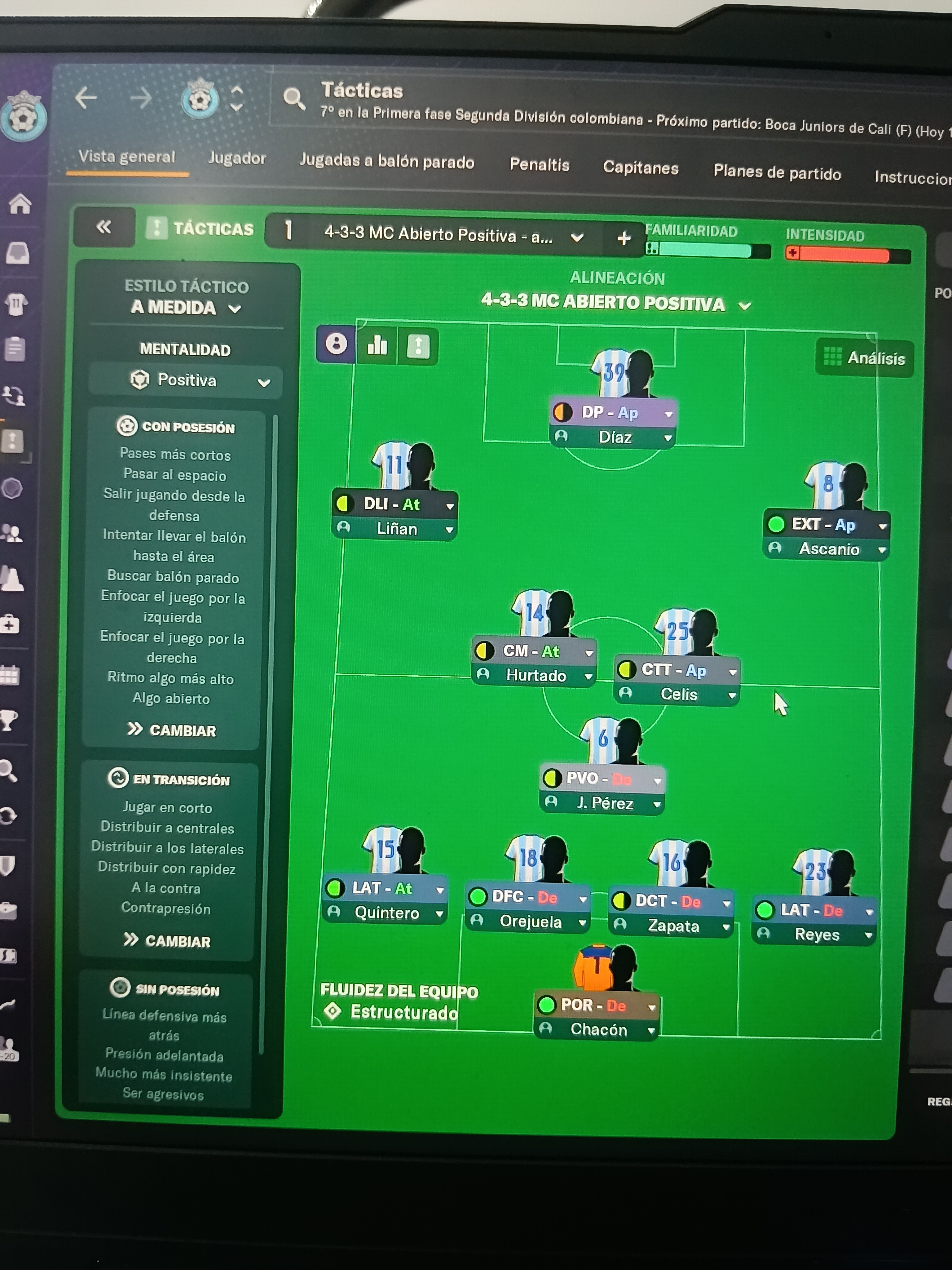
Gegenpress
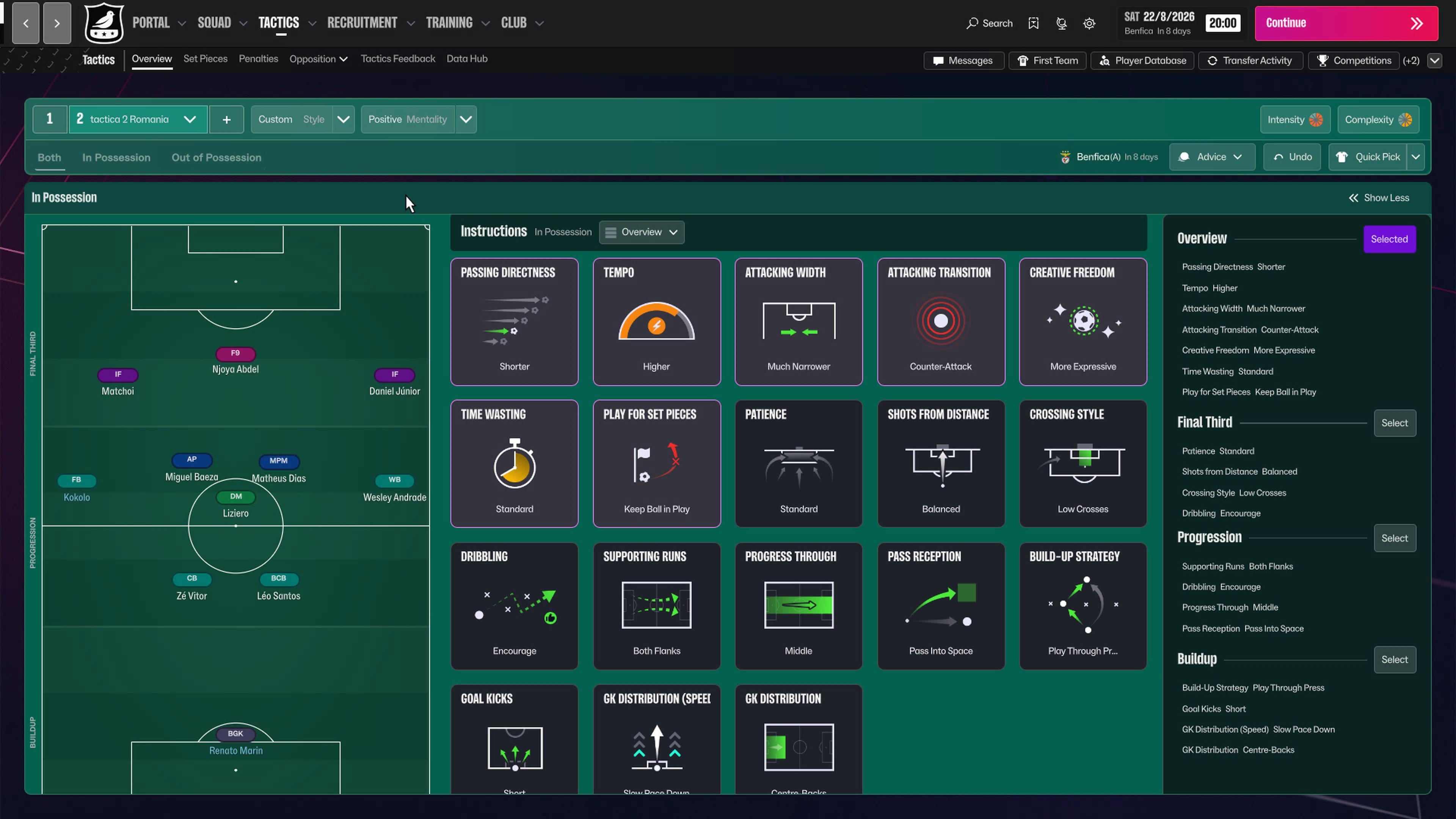
vertical tiki taka
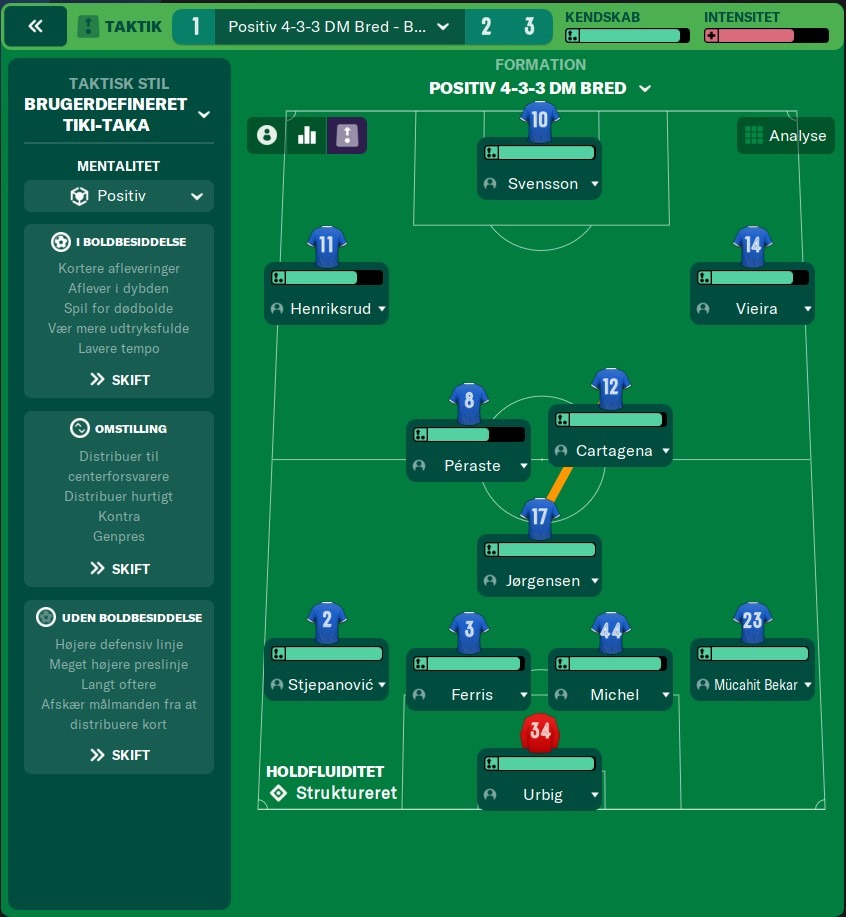
Tiki-Taka
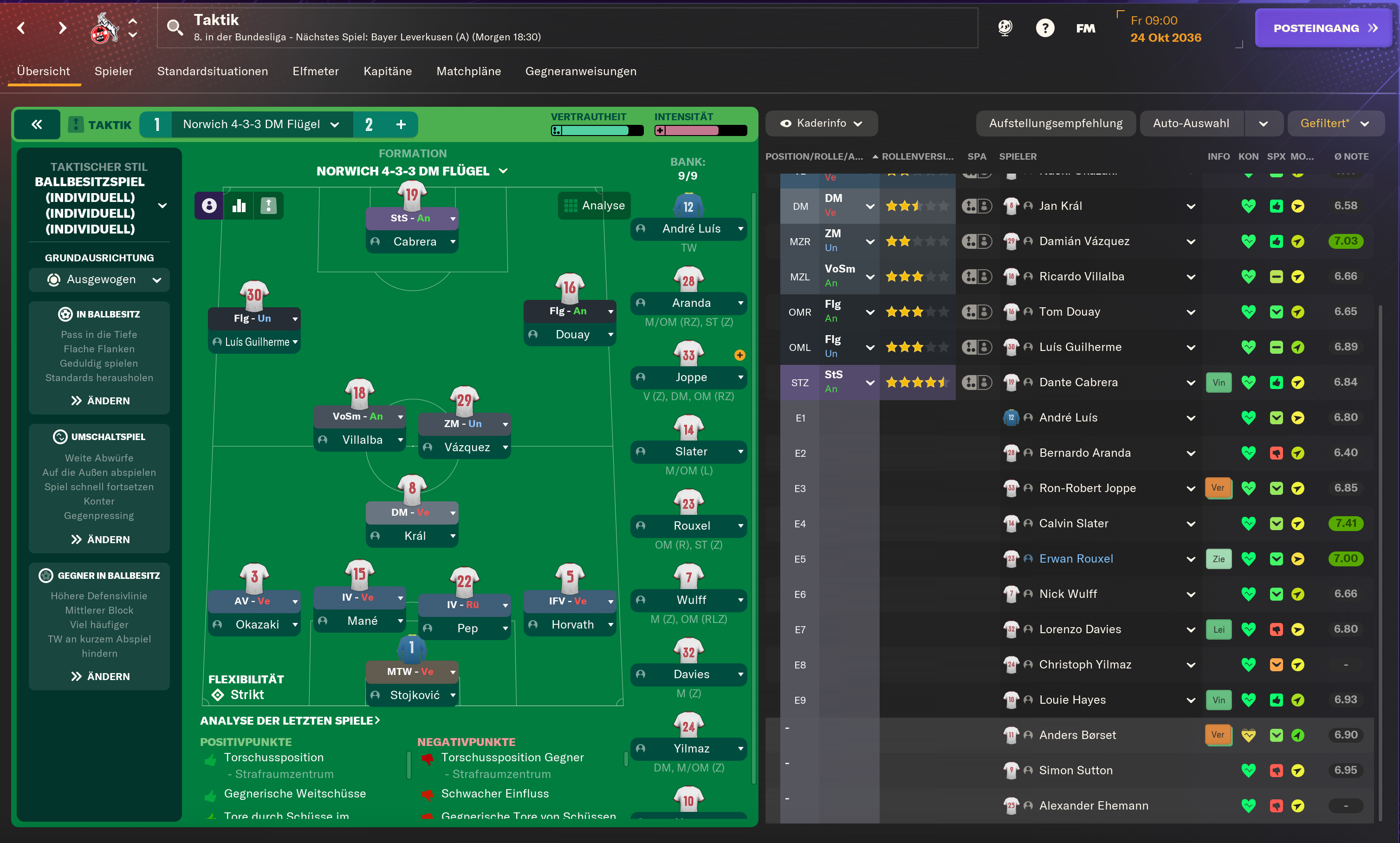
Wing Play
Vertical Tiki-Taka
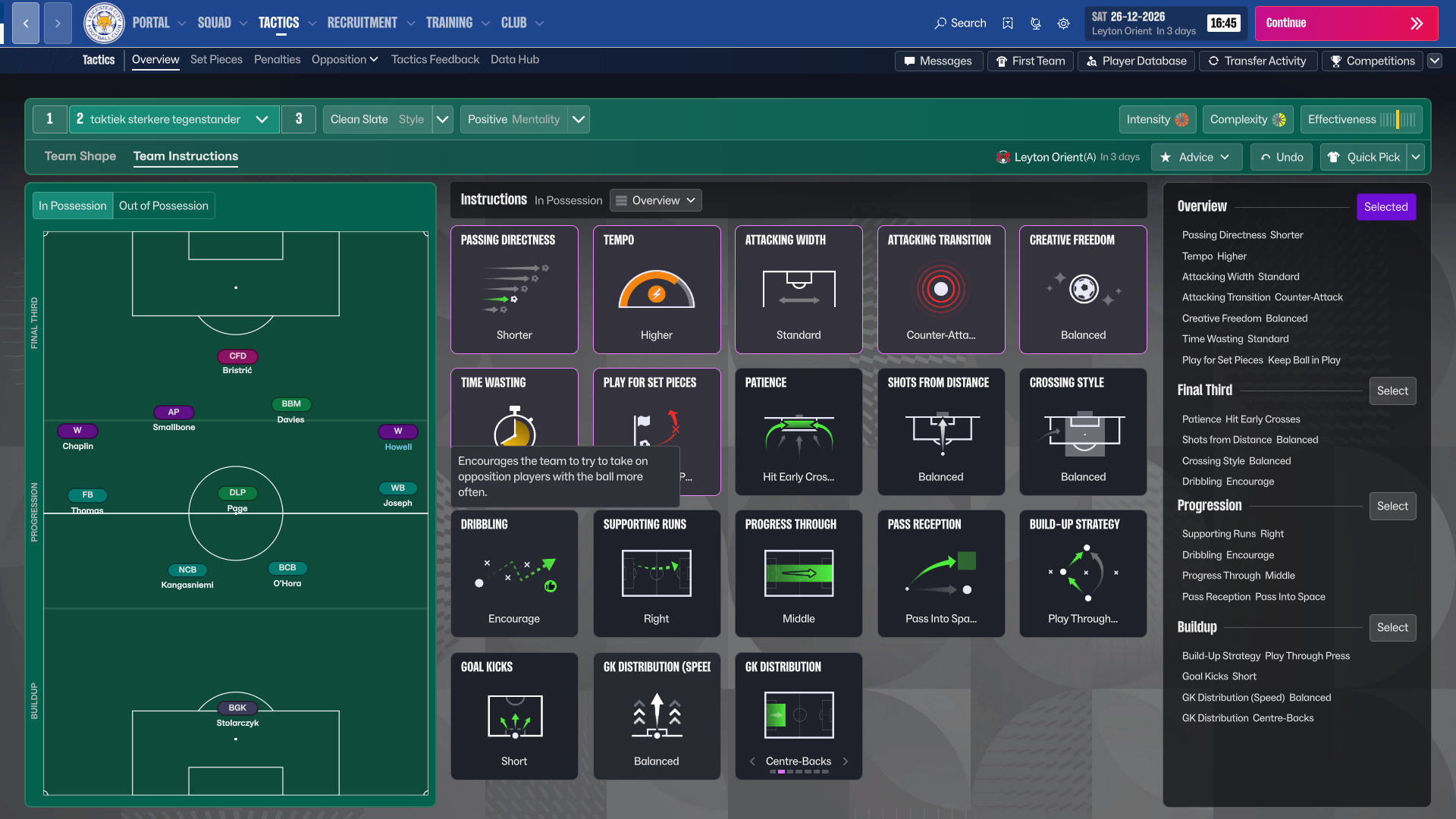
clean slate
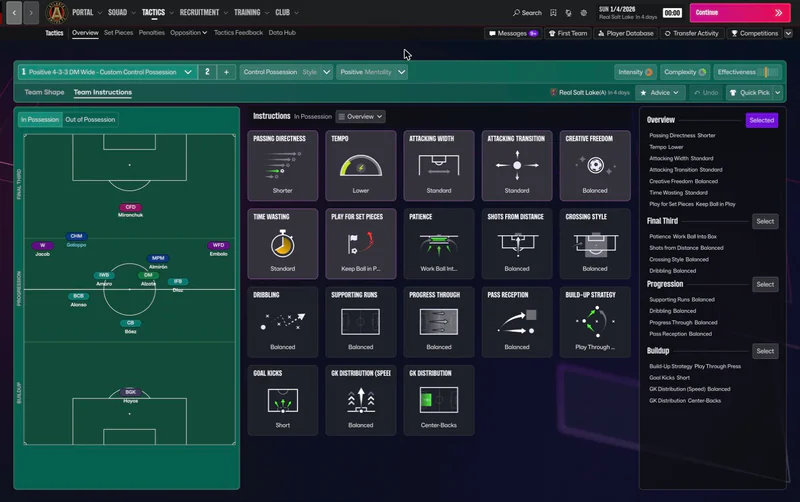
control possession
The tactical theory behind the 4-3-3 DM Wide: roles, instructions, and the trade-offs that decide whether the system holds up.
Why circulation density and zonal occupation aren't the same thing in FM, and the half-space occupation rule that decides build-up.
Build the patient, control-the-tempo style without watching your opponents counter through the gaps you leave behind.
Mentality, duty, role, instruction, sub. The change hierarchy from lightest to heaviest intervention, and 60th-minute patterns by game state.