4-3-3 DM Wide
The Tiki-Taka style promotes short passing and movement, ensuring players maintain possession and control the tempo of the match.
Loading tactical analysis...
Tiki-Taka
Positive
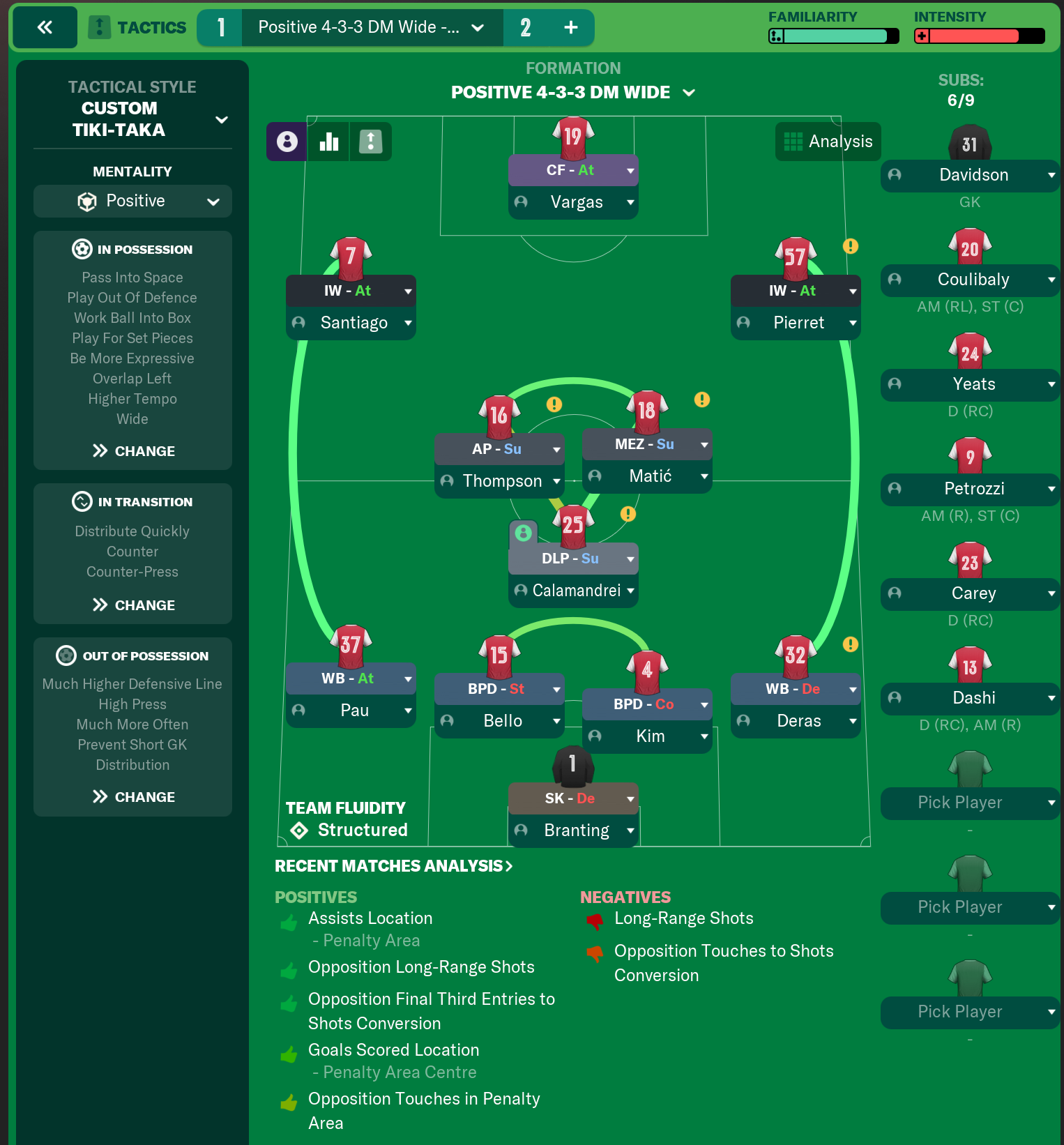
4-3-3 DM Wide
Structured
Pass Into Space
Play Out Of Defence
Work Ball Into Box
Be More Expressive
Overlap Left
High Tempo
Distribute Quickly
Counter
Counter-Press
Much Higher Defensive Line
High Press
Much More Often Prevent Short GK Distribution
CF
Complete Forward
Attack
LW
Inside Forward
Attack
RW
Inside Forward
Attack
CM
Mezzala
Support
CM
Deep-Lying Playmaker
Support
CM
Advanced Playmaker
Support
WB
Wing-Back
Attack
BPD
Ball-Playing Defender
Stopper
BPD
Ball-Playing Defender
Stopper
WB
Wing-Back
Defend
GK
Sweeper Keeper
Defend
The Tiki-Taka style promotes short passing and movement, ensuring players maintain possession and control the tempo of the match.
Utilizing two Inside Forwards and overlapping Wing-Backs creates space and stretches the opposition, leading to goal-scoring opportunities.
A much higher defensive line can be risky against quick counter-attacks, counteracting the benefits of a high press.
Having one Wing-Back on attack and another on defend can lead to asymmetrical transitions, potentially leaving gaps when possession is lost.
How do your players adapt to a high defensive line against counter-attacking teams?
Are the Inside Forwards effectively creating scoring chances from wide areas?
Is the Deep-Lying Playmaker consistently finding the right passing lanes?
How does the team transition from attack to defense under pressure?
Are the Wing-Backs able to maintain their width while contributing defensively?
How well does the goalkeeper adapt to the team's pressing style during build-up?
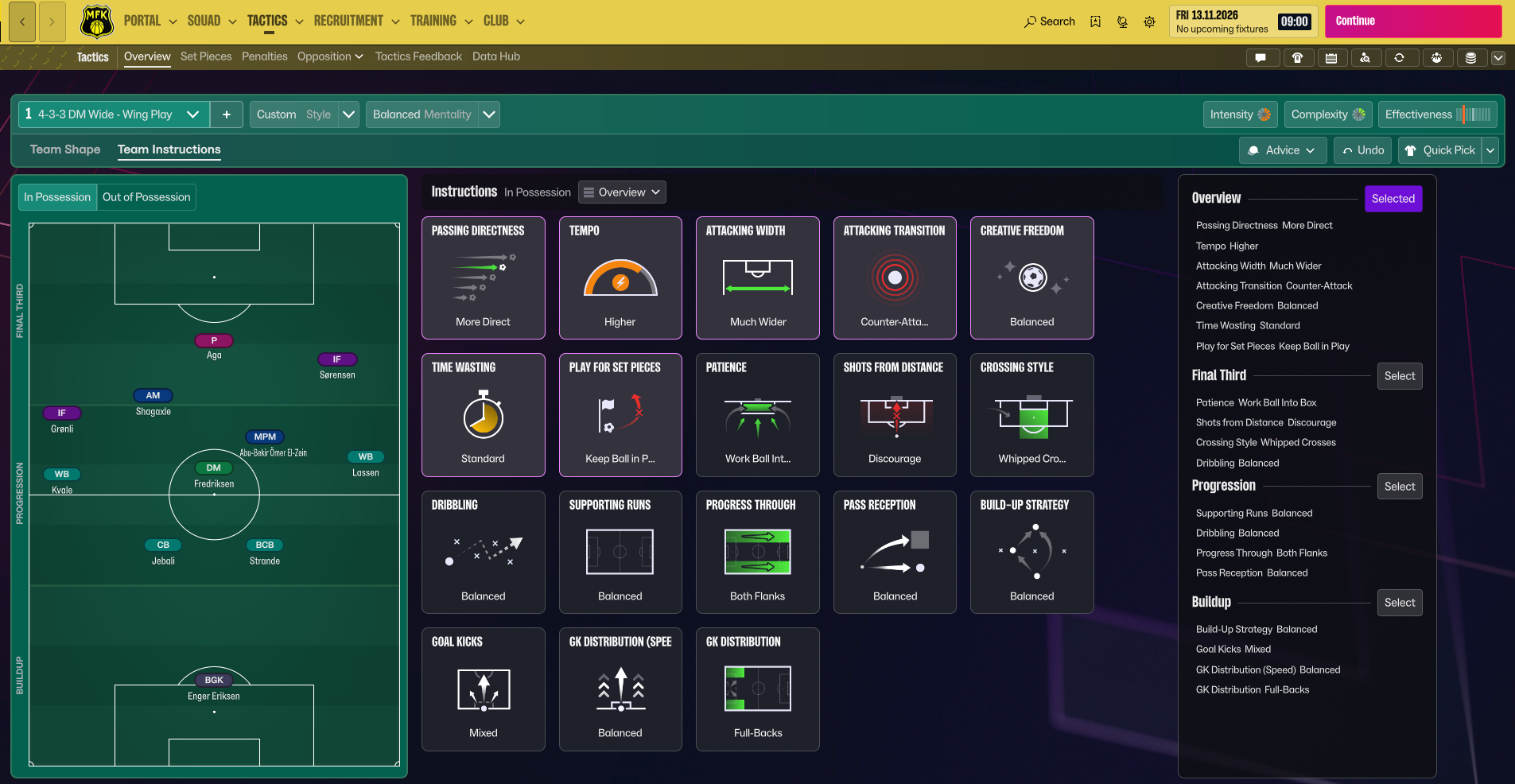
wing play
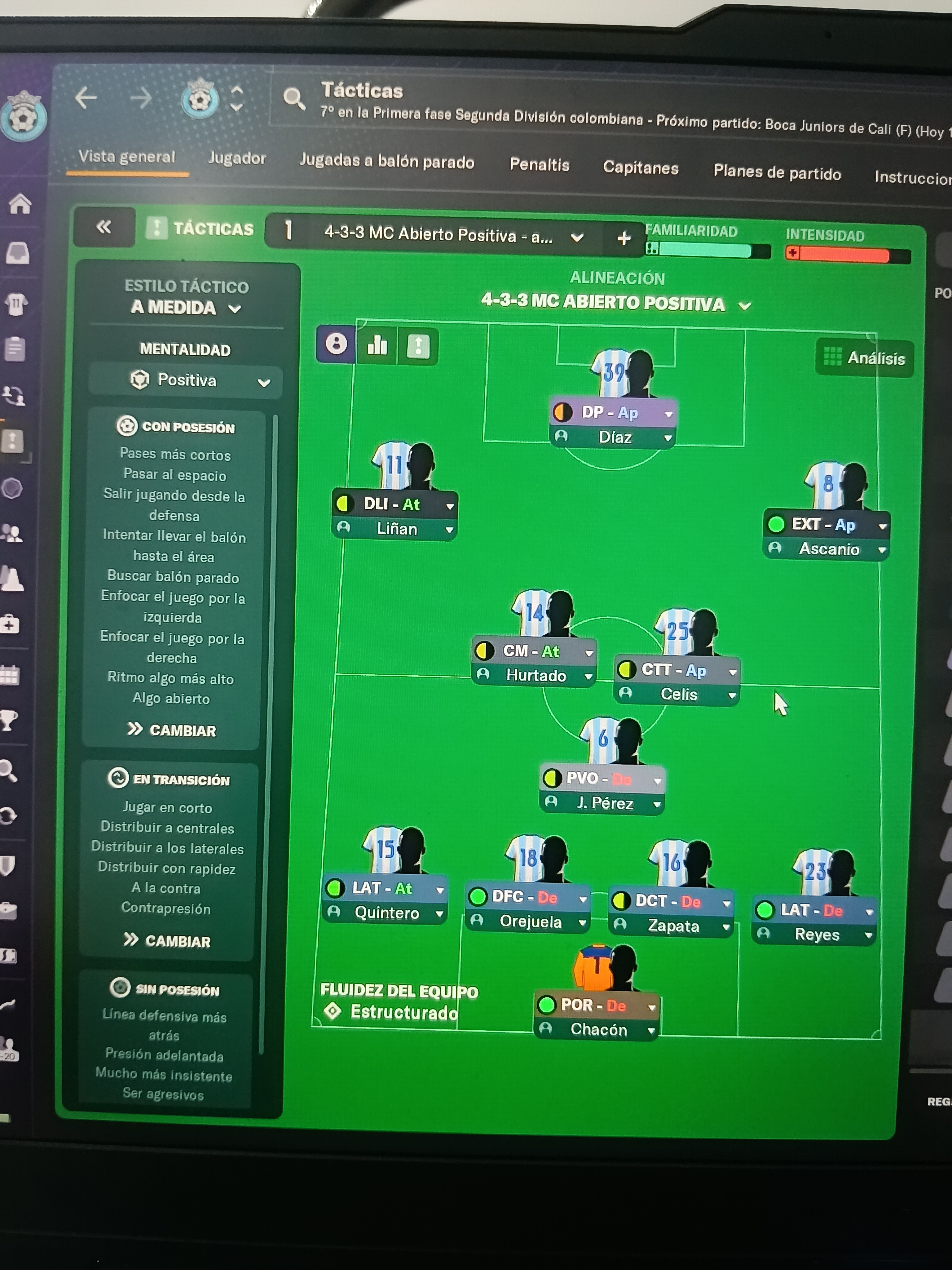
Gegenpress
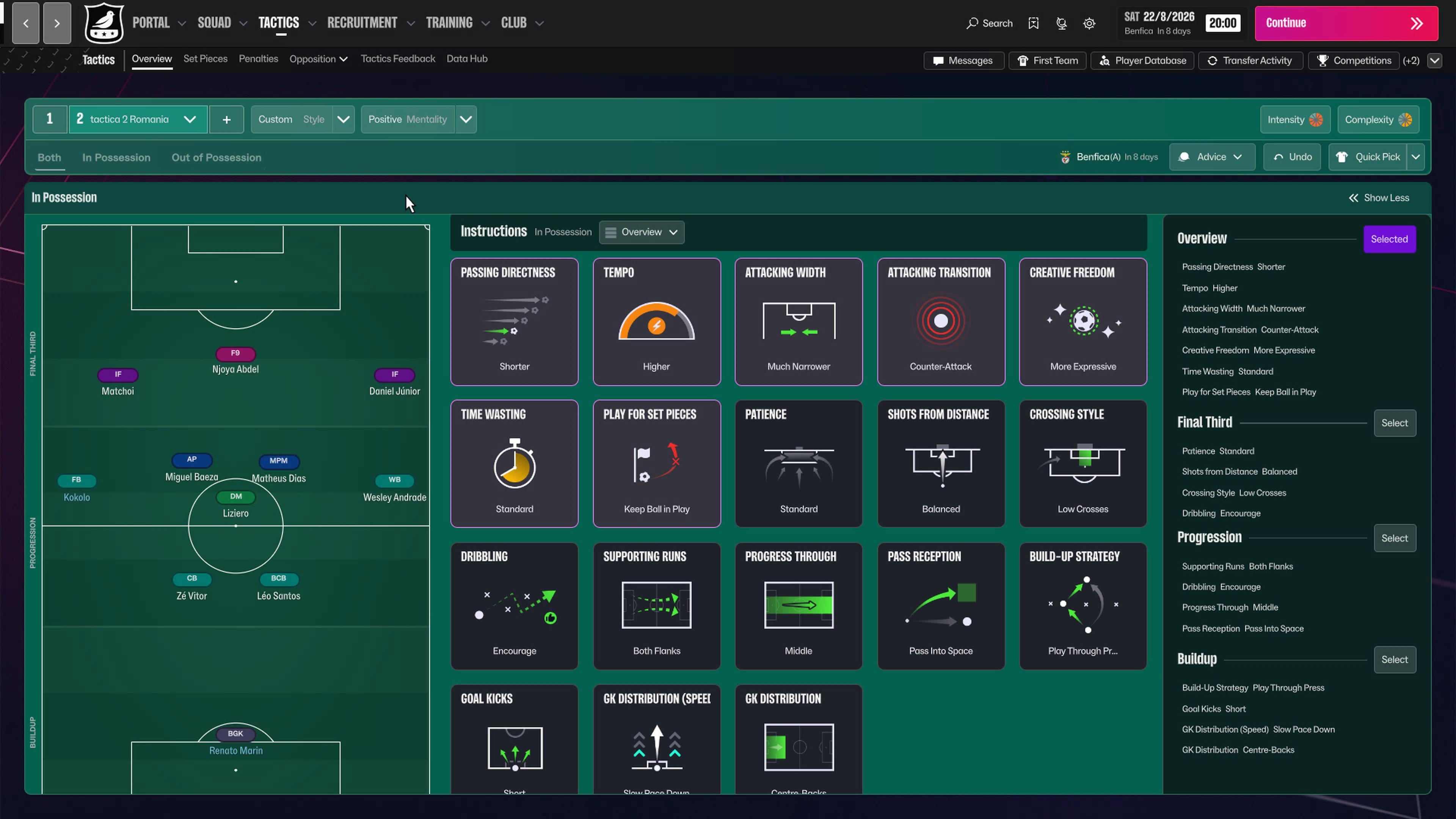
vertical tiki taka
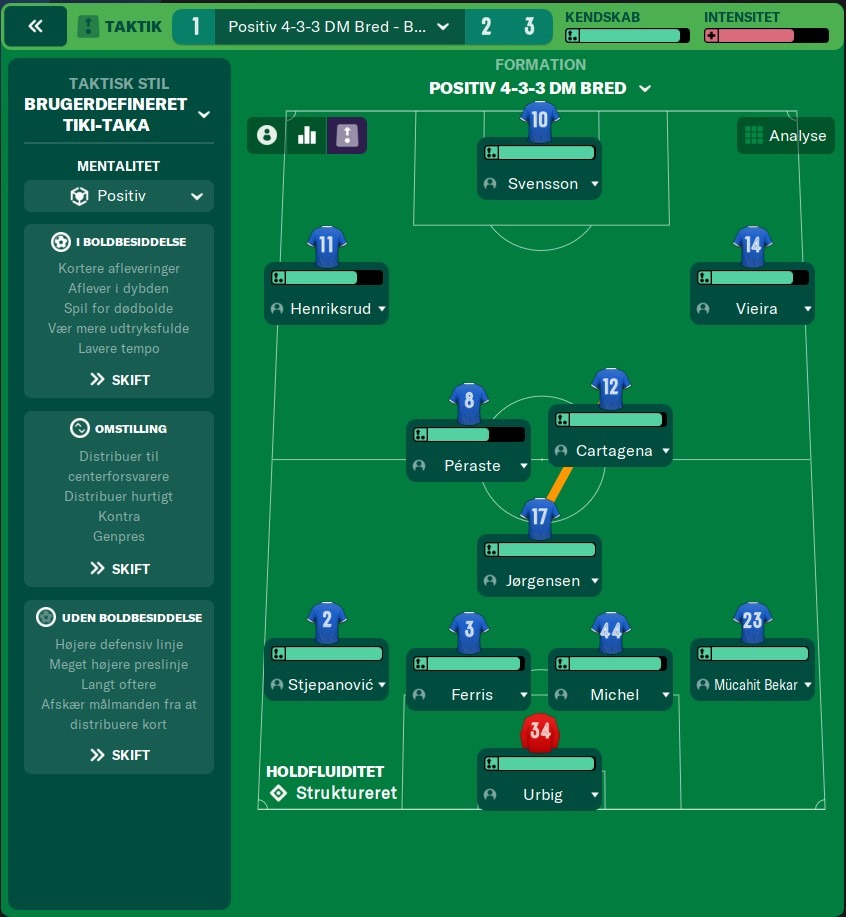
Tiki-Taka
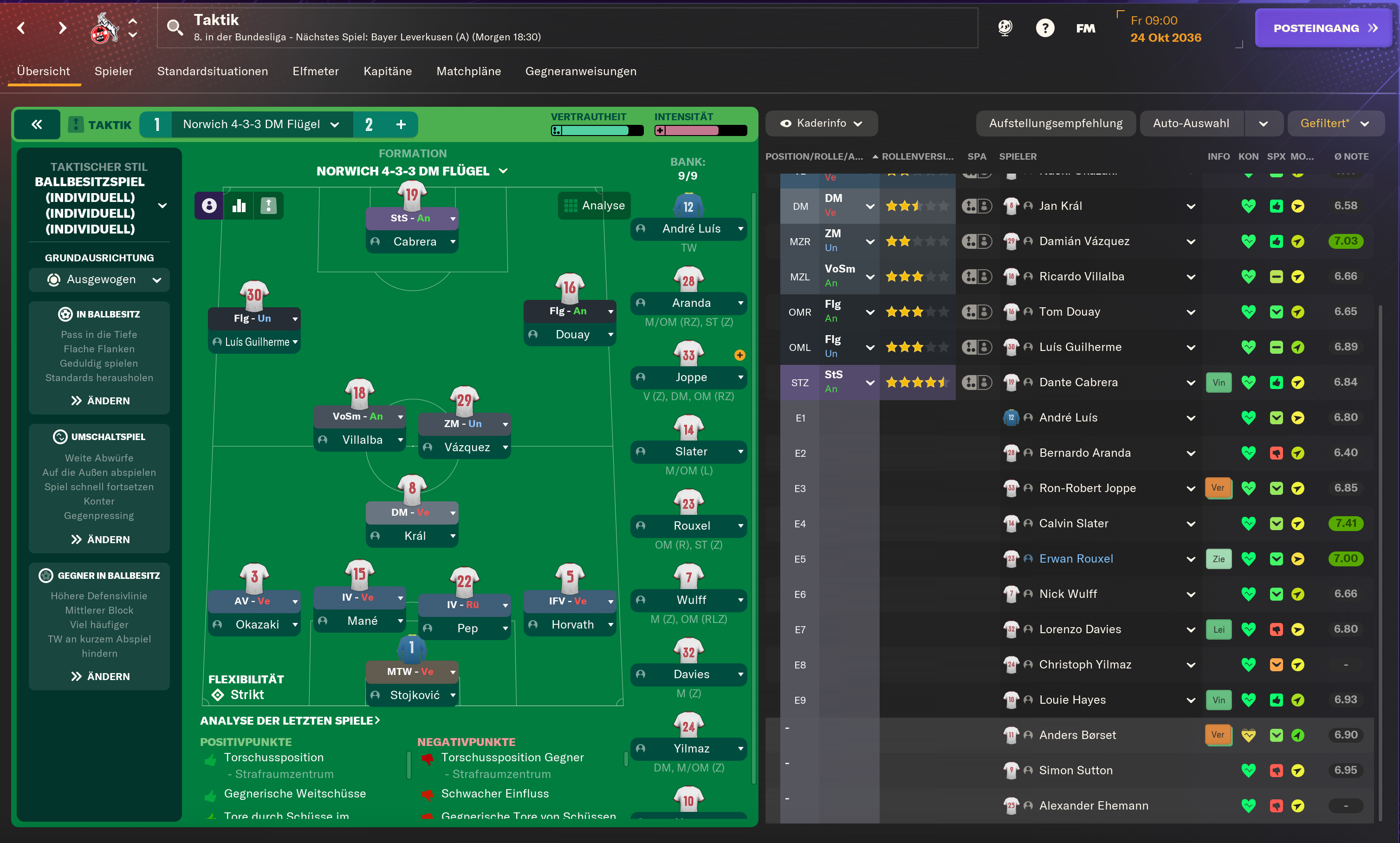
Wing Play
Vertical Tiki-Taka
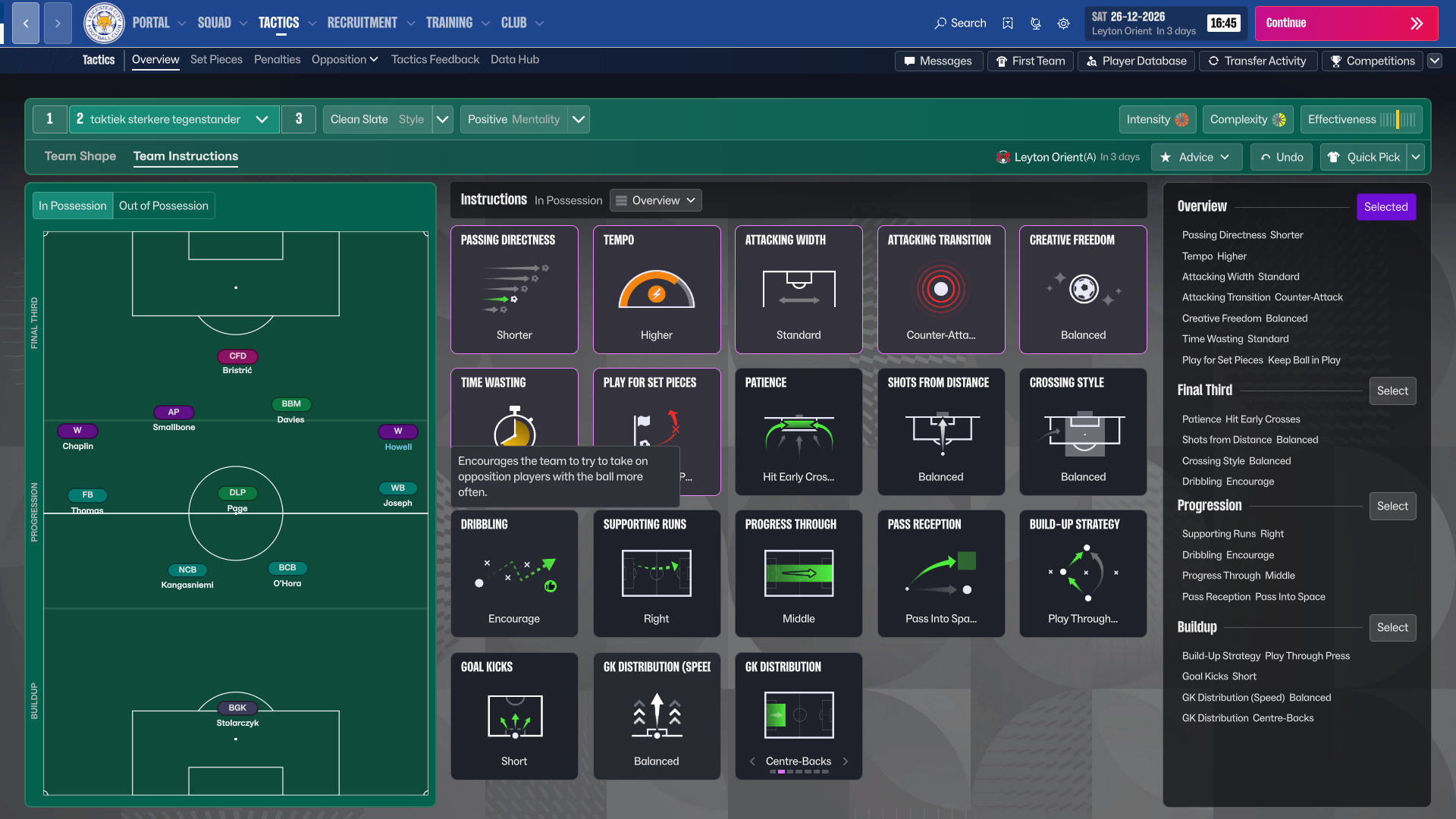
clean slate
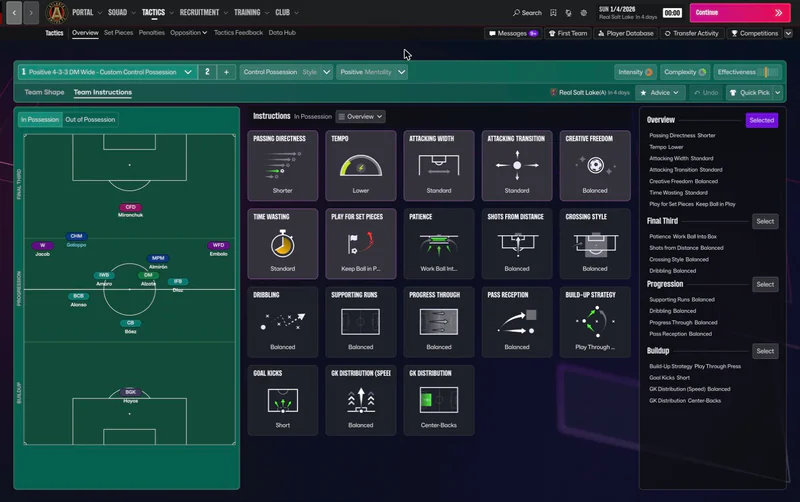
control possession
The tactical theory behind the 4-3-3 DM Wide: roles, instructions, and the trade-offs that decide whether the system holds up.
Build the patient, control-the-tempo style without watching your opponents counter through the gaps you leave behind.
Master the classic 4-3-3: player roles, tactical variations, and the trade-offs that decide whether it sings or stalls.
FM27 keeps FM26's tactic system. Here is what stays the same, the small changes that can catch you out, and what the new Tactical Effectiveness system asks of you.