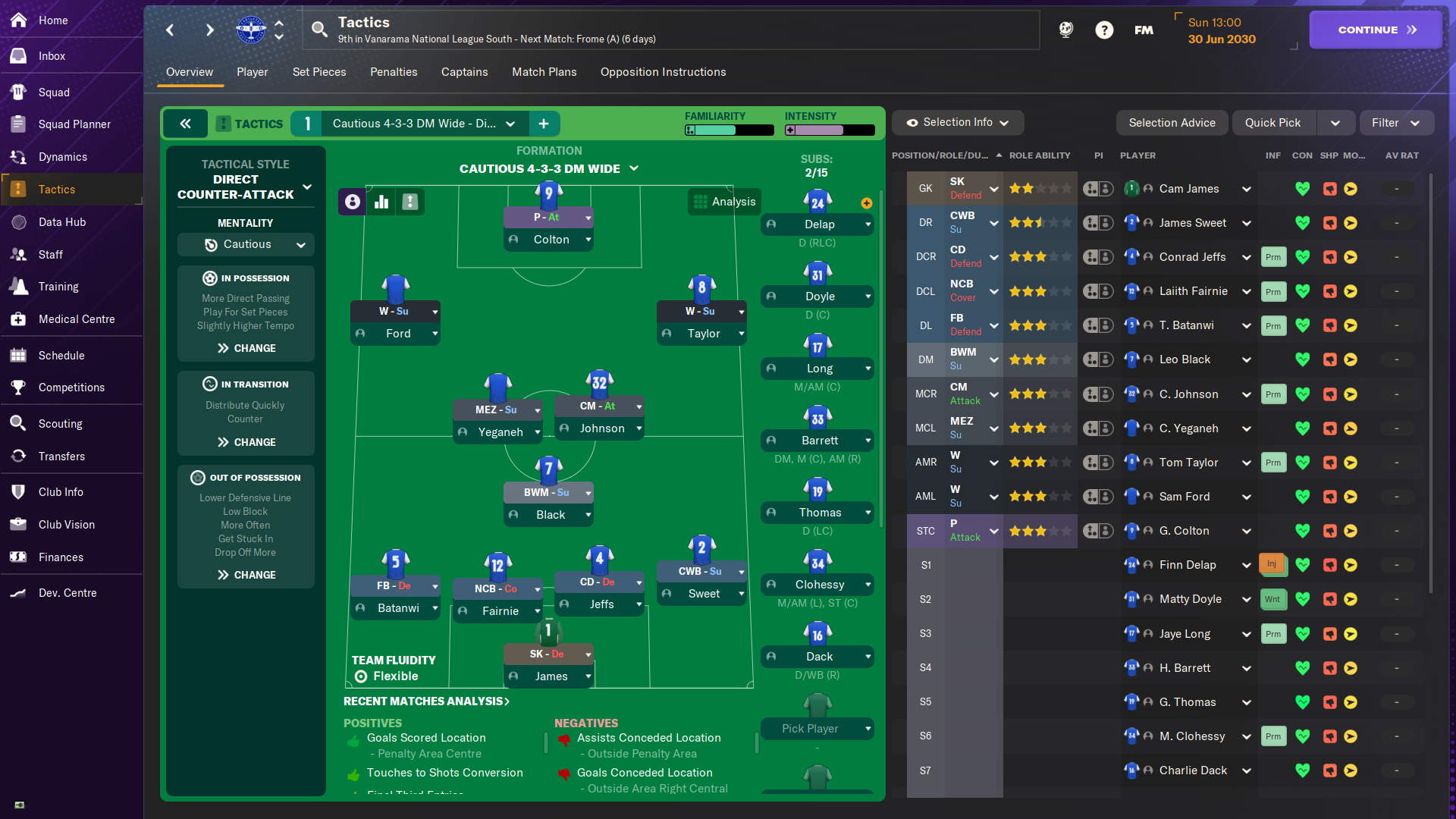
4-3-3 DM Wide
Utilizing a lower defensive line supports compactness and restricts space, making it harder for opponents to penetrate.
Loading tactical analysis...
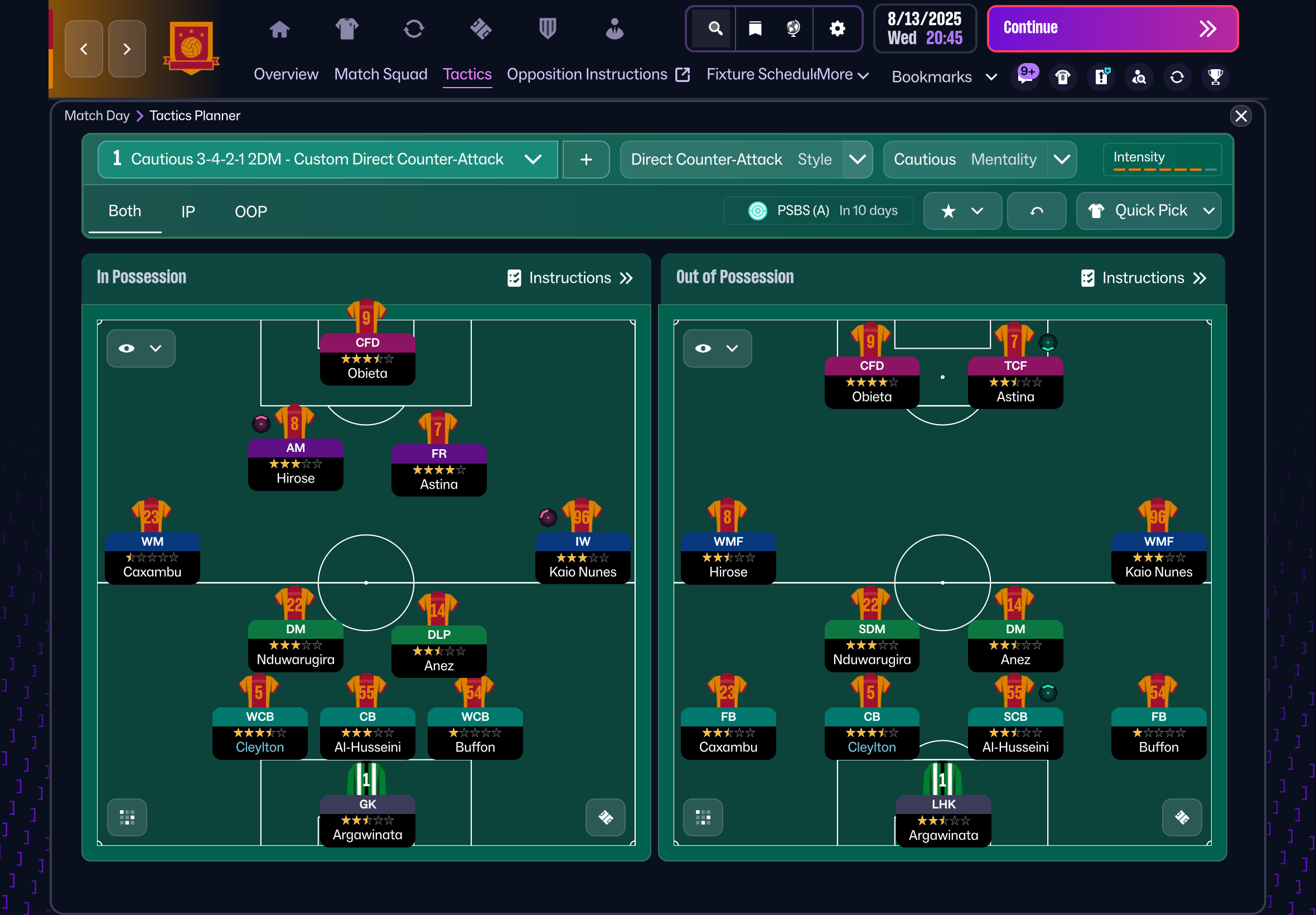
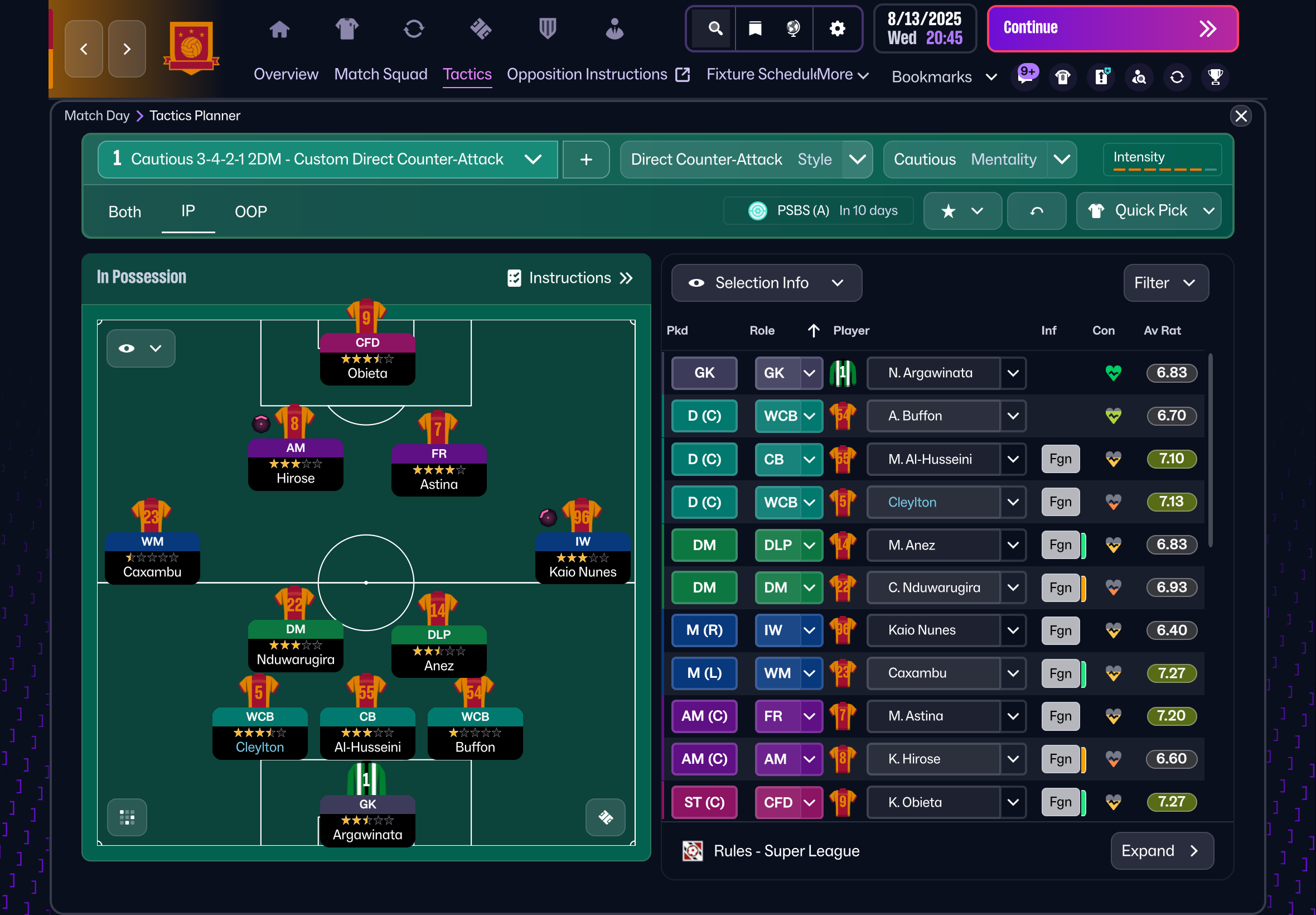
Direct Counter-Attack
Cautious
4-3-3 DM Wide
Flexible
More Direct Passing
Play For Set Pieces
Slightly Higher Tempo
Distribute Quickly Counter
Lower Defensive Line
Low Block More Often
Get Stuck In
Drop Off More
STC
Pressing Forward
Attack
MCR
Central Midfielder
Attack
MCL
Mezzala
Support
MC
Central Midfielder
Support
BWM
Ball Winning Midfielder
Support
DCR
No-Nonsense Centre Back
Cover
DCL
Central Defender
Defend
DR
Complete Wing Back
Support
DL
Full Back
Defend
Utilizing a lower defensive line supports compactness and restricts space, making it harder for opponents to penetrate.
Emphasis on quick counterattacks allows the team to exploit spaces left by opponents when they lose possession.
A cautious mentality may lead to underutilizing the potential of quick transitions despite having a direct playing style.
A lower defensive line may contradict the pressing forward role, limiting opportunities to win the ball high up the pitch.
How can we better utilize our midfielders to maintain possession during build-up?
Is the team capable of pressing high without leaving gaps in defense?
Should we consider changing the width to stretch the opposition?
Are our wing-backs providing enough support in attack?
How do we adapt our strategy against teams that dominate possession?
Should we prioritize specific player training to fit this tactical setup better?
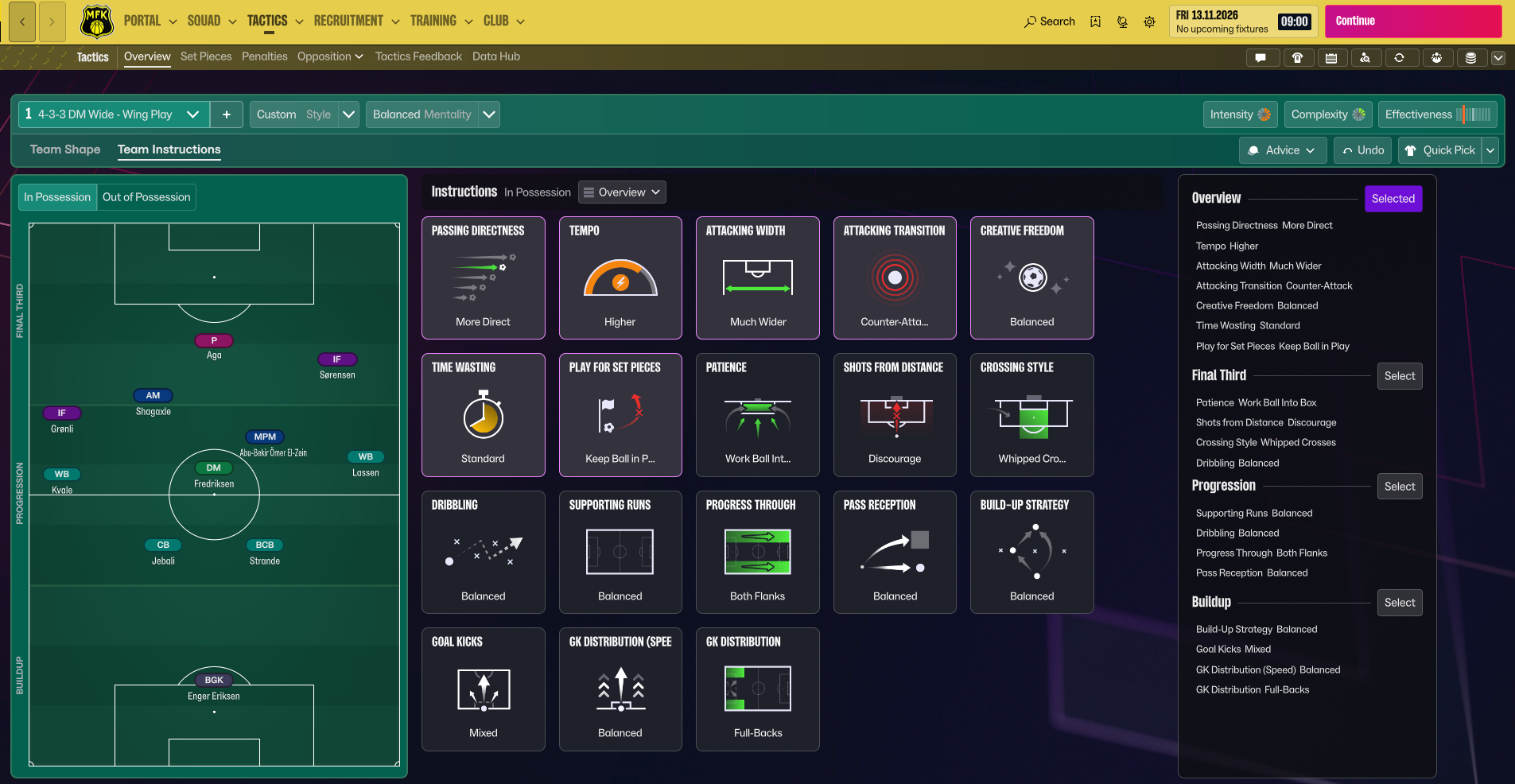
wing play
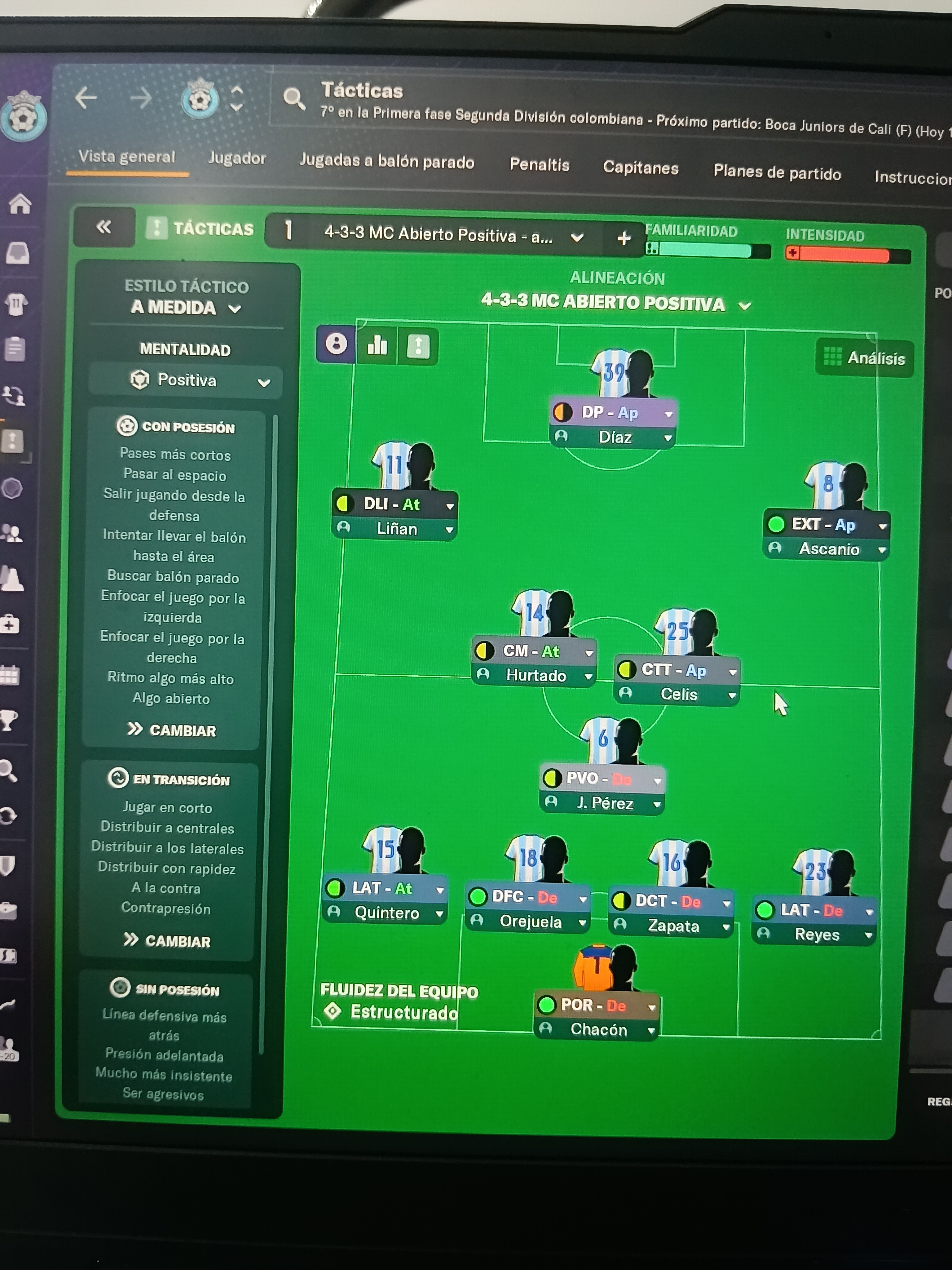
Gegenpress
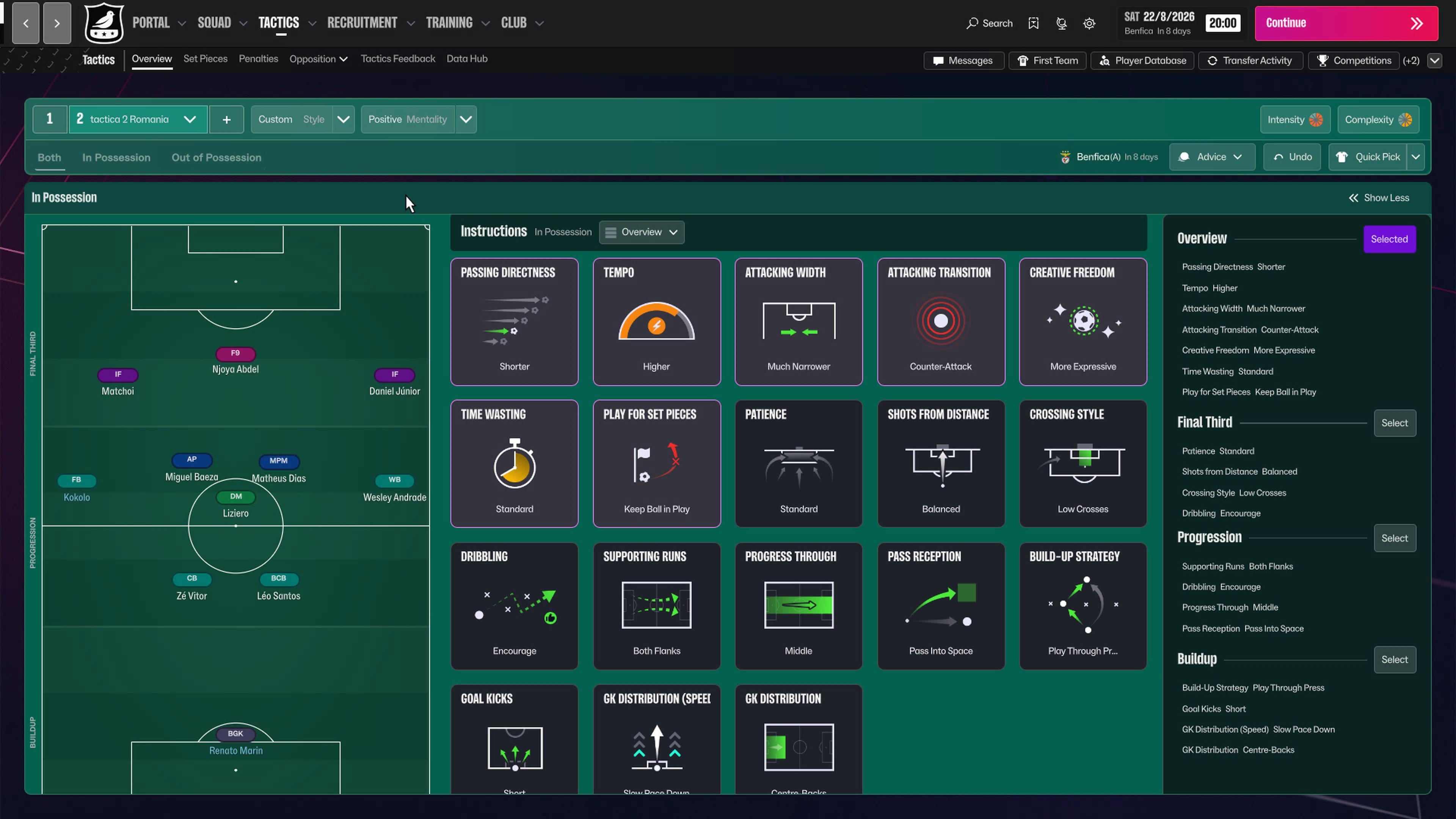
vertical tiki taka
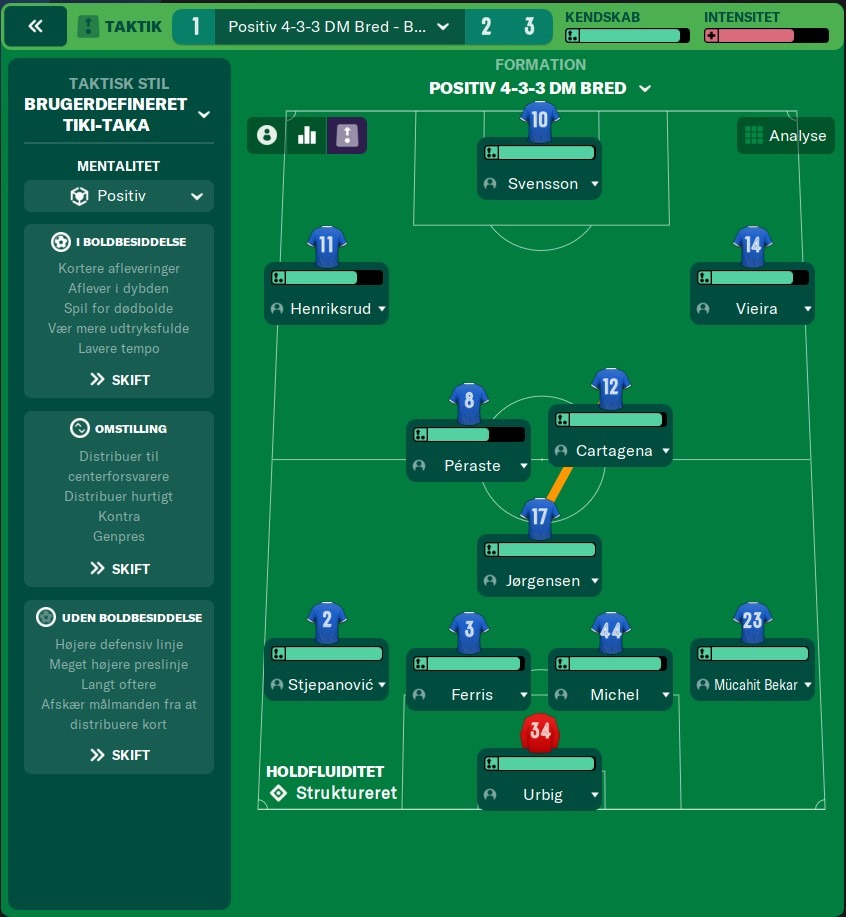
Tiki-Taka
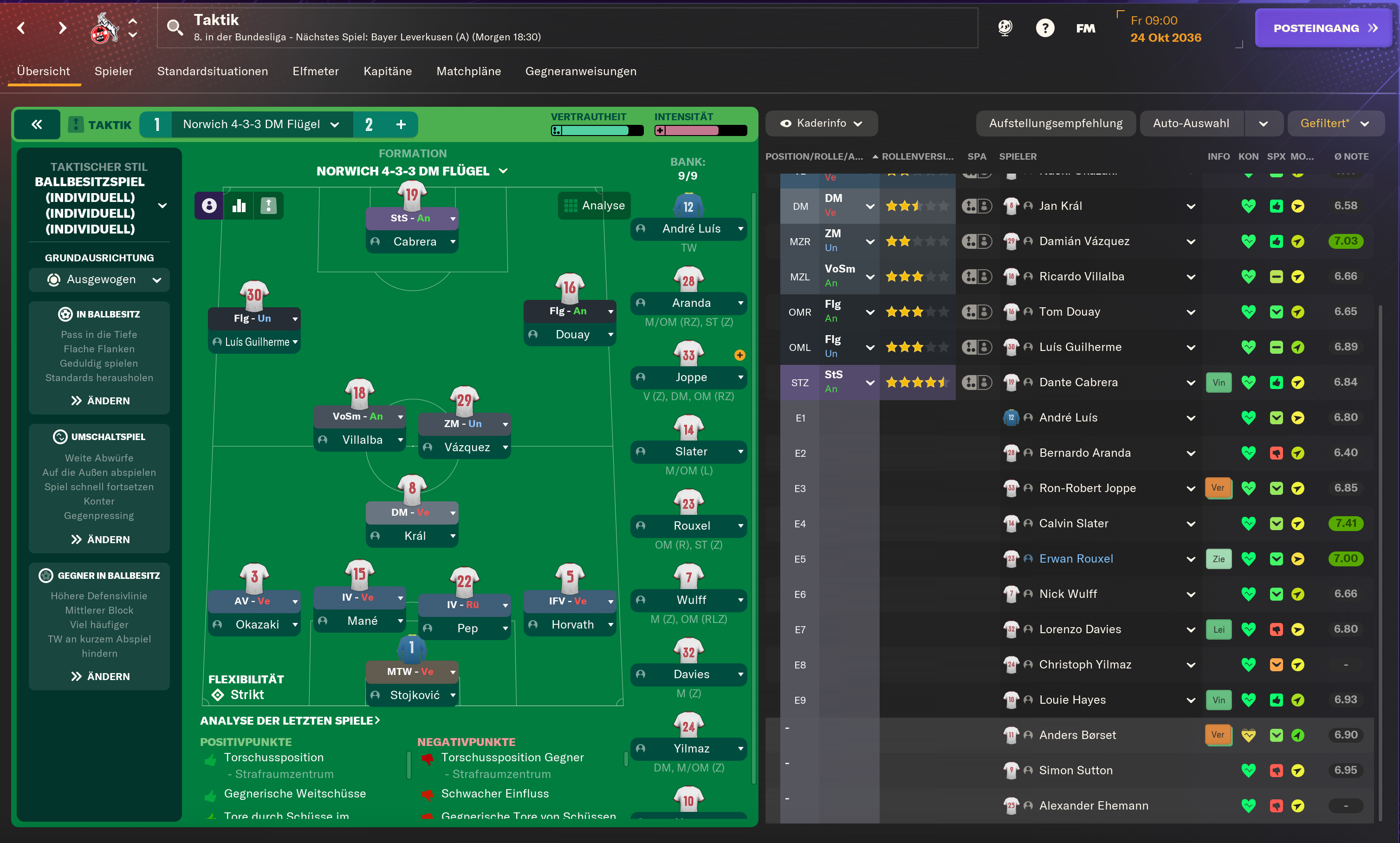
Wing Play
Vertical Tiki-Taka
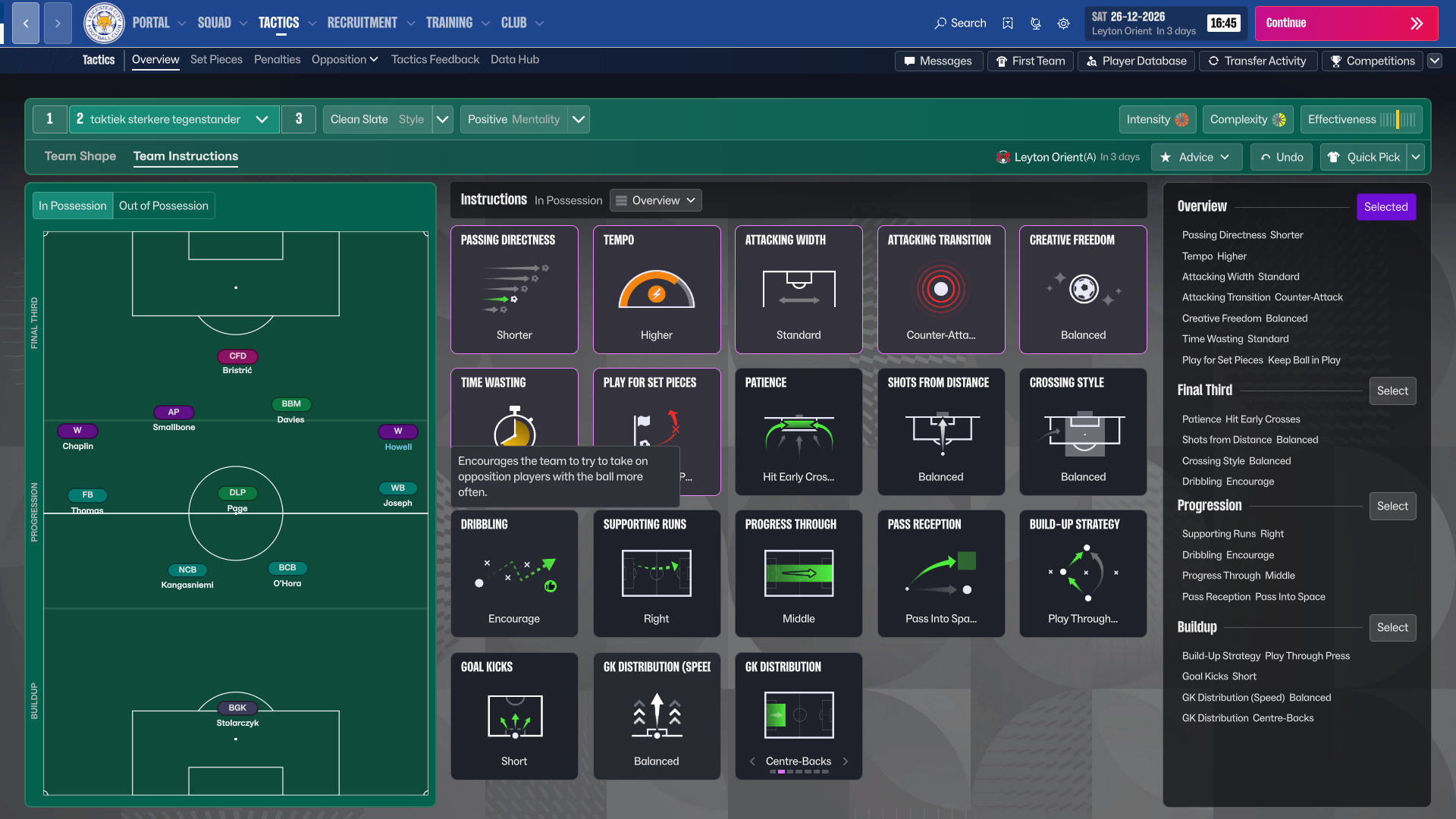
clean slate
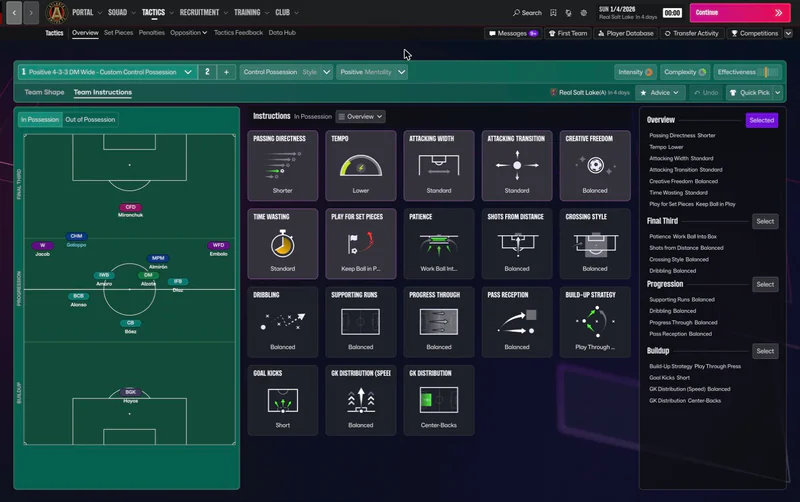
control possession
The tactical theory behind the 4-3-3 DM Wide: roles, instructions, and the trade-offs that decide whether the system holds up.
Why circulation density and zonal occupation aren't the same thing in FM, and the half-space occupation rule that decides build-up.
Build the patient, control-the-tempo style without watching your opponents counter through the gaps you leave behind.
Mentality, duty, role, instruction, sub. The change hierarchy from lightest to heaviest intervention, and 60th-minute patterns by game state.