Uploaded Tactic
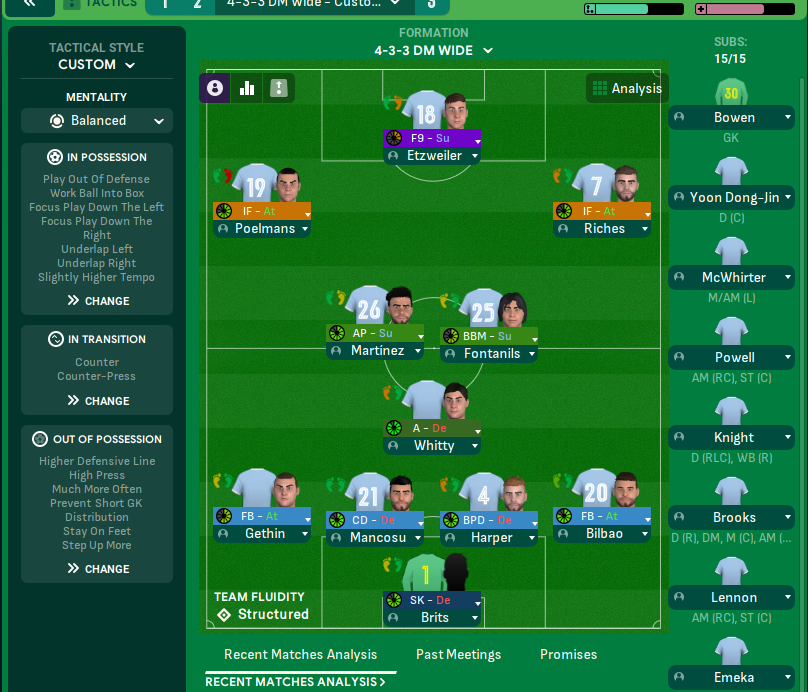
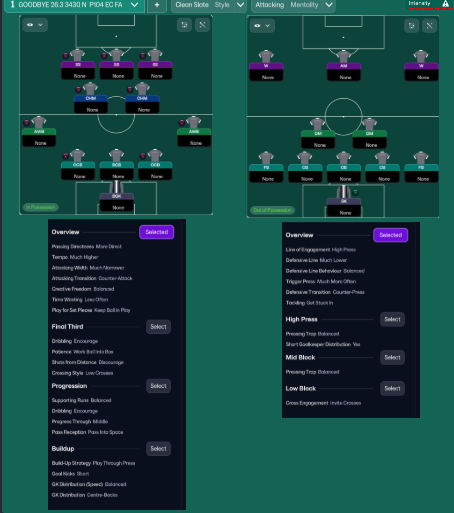
Formation & Style
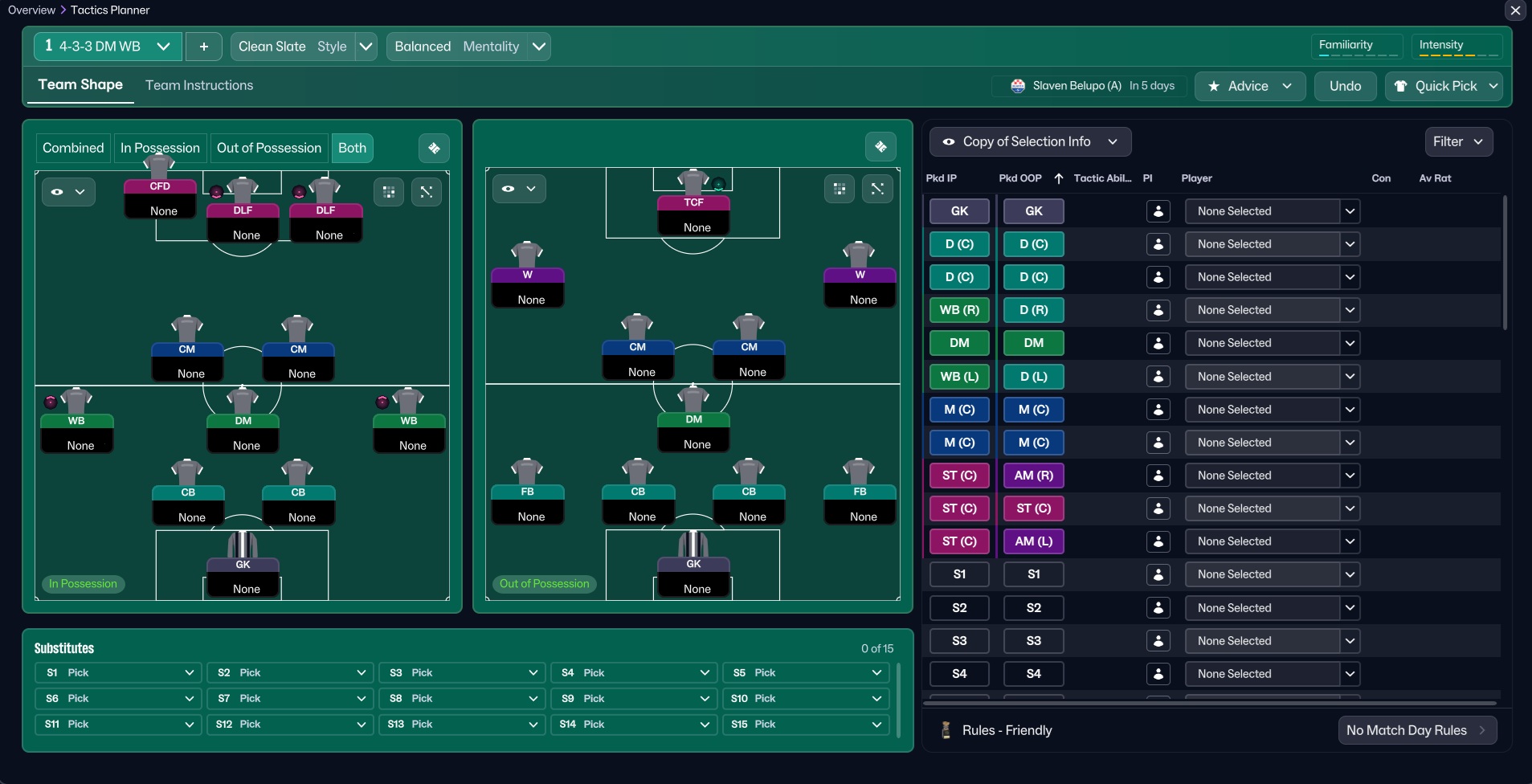
Tactical Style:Balanced
Mentality:Balanced
Formation:4-3-3 DM Wide
Team Fluidity:Structured
In Possession
Play Out of Defence
Work Ball into Box
Focus Play through Middle
In Transition
Counter-Press
Counter
Out of Possession
Higher Defensive Line
Higher Line of Engagement
Use Offside Trap
Team Shape Without Ball
Shape:4-1-4-1
Description:A compact defensive formation with a dedicated defensive midfielder shielding the back line and full-backs offering width when required.
Evidence:DM at [3,3] providing coverage for CBs at [2,2] and [2,4].
Team Shape With Ball
Shape:3-3-3-1
Description:The wingers stretch the opposition, providing width unlike the central players, creating opportunities for the target forward.
Evidence:W at [5,1] and [5,5] enhancing width to assist TF at [6,3].
Phase Description
Attacking Play
In possession, the team looks to build from the back and maintain possession, focusing on playing through the middle while also utilizing the width provided by the wingers.
Defensive Transition
In transition, the team promptly counters while pressing the opposition, aiming to win the ball back quickly.
Main Focus
The primary objective is to maintain a solid defensive structure while being able to attack effectively through quick transitions and wide plays.
Key Strengths
Strong Central Control
The three central players (2 CMs and 1 DM) provide solid control in midfield, allowing for better ball retention and distribution.
Effective Width
Wingers provide essential width in attack, stretching the opponent’s defense and allowing for crosses into the box.
Robust Defensive Shape
A solid defensive structure that allows the team to maintain possession and effectively counter-press.
Conflicting Directions
Overcommitment on Wings
With both full-backs set to attack, the team may leave spaces vulnerable defensively if they lose the ball.
Risk of Solitary Counter
With a focus on pressing and countering, a failure to regain possession may leave the team exposed if caught on the break.
Limited Forward Options
As the target forward role is less dynamic, it may limit agile counter-attacking options when pressing.
Tactical Suggestions
Adjust Full-Back Duty
Consider changing one full-back to support duty to provide better cover defensively.
Enhance Central Midfield Roles
Incorporate a more advanced role in CM to facilitate quicker transitions.
Introducing a Pressing Forward
Replacing the target forward with a pressing forward can enhance dynamic play and counter-attacking options.
Ask Questions About Your Lineup
Related Tactics
More Balanced tactics
Guides for this formation
The tactical theory behind the 4-3-3 DM Wide: roles, instructions, and the trade-offs that decide whether the system holds up.
Foundations
Understanding the 4-3-3 Formation
Master the classic 4-3-3: player roles, tactical variations, and the trade-offs that decide whether it sings or stalls.
Read guide
Player pairings
Midfield Trios
Holder, runner, creator: the role distribution rule for three-man midfields, the AMC variants, and the antipatterns that break them.
Read guide
Playing styles
Gegenpressing: A Full Guide
Klopp-style gegenpressing in FM, including squad profile, line-and-press pairing, sustainable workload, and the antipatterns to avoid.
Read guide