Uploaded Tactic
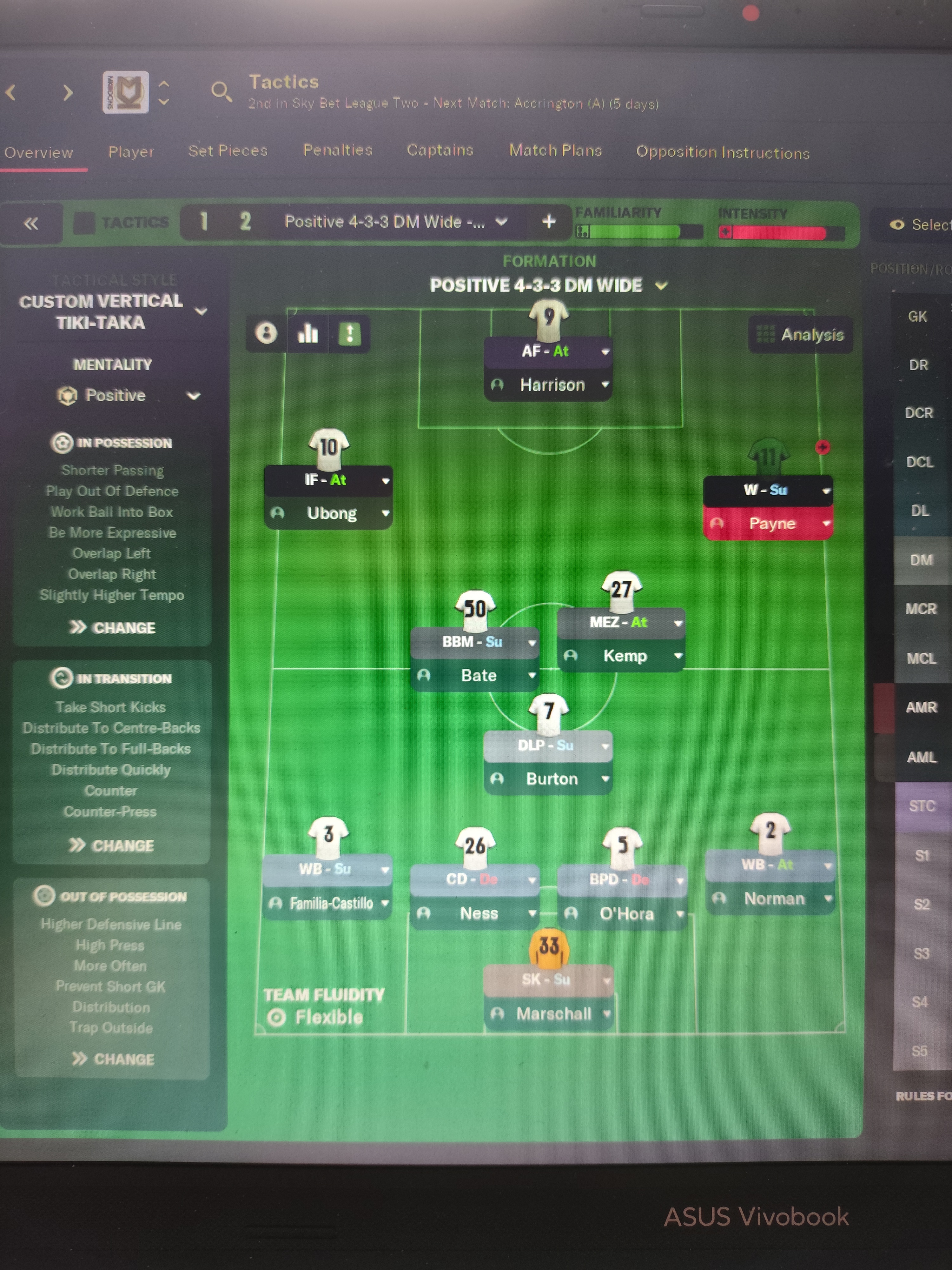
Formation & Style
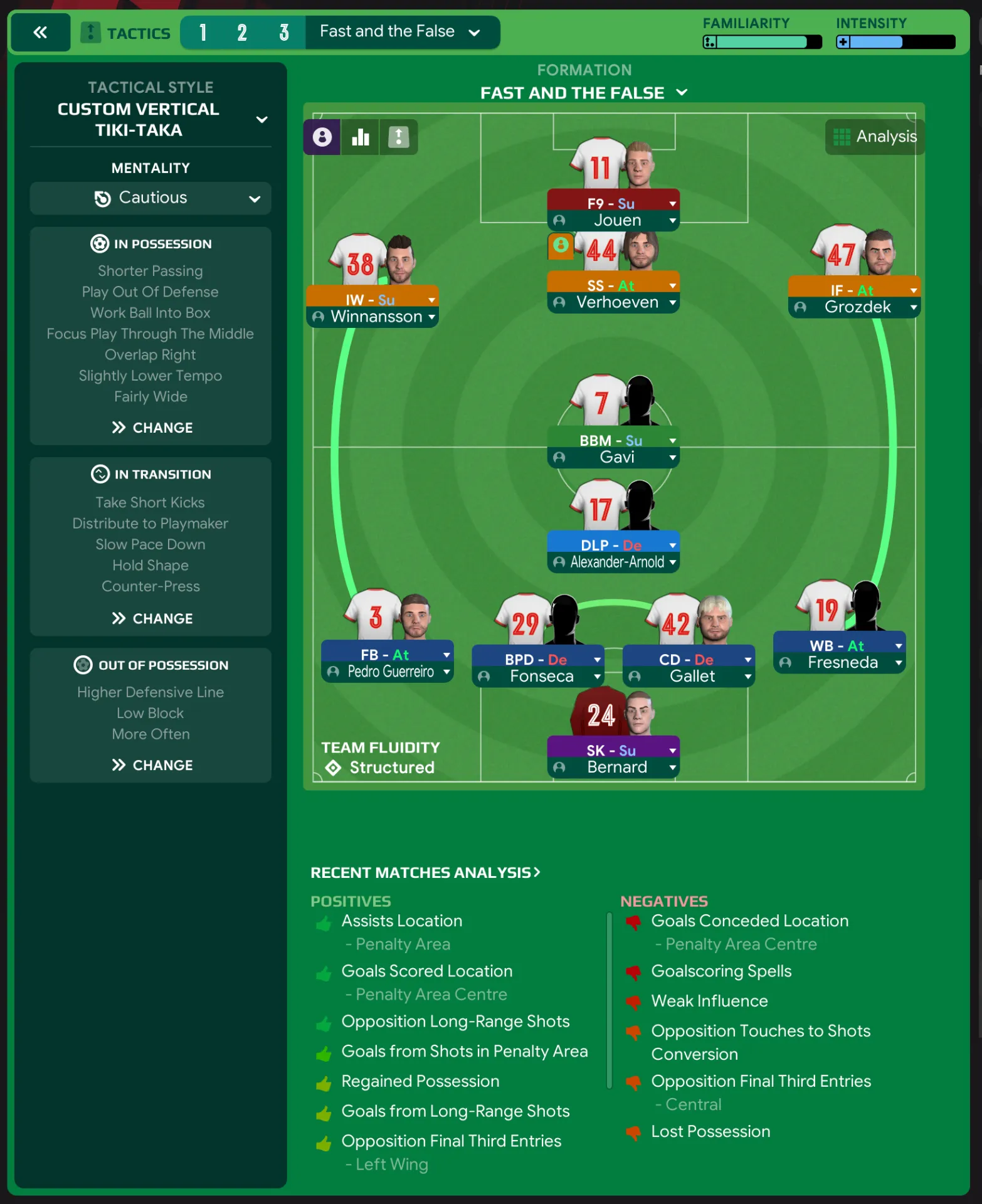
Tactical Style:Custom Vertical Tiki-Taka
Mentality:Positive
Formation:4-3-3 DM Wide
Team Fluidity:Flexible
In Possession
Shorter Passing
Play Out Of Defence
Be More Expressive
Overlap Right
Overlap Left
Slightly Higher Tempo
In Transition
Take Short Kicks
Distribute To Centre-Backs
Distribute To Full-Backs
Distribute Quickly
Counter
Counter-Press
Out of Possession
Higher Defensive Line
High Press
More Often Prevent Short GK Distribution
Trap Outside
Team Shape Without Ball
Shape:Flat 4
Description:A standard defensive shape with wing-backs supporting the backline.
Evidence:DCs [2,2], [2,3] along with WB [2,1], [2,5] provide a cohesive barrier.
Team Shape With Ball
Shape:Fluid 3
Description:The attacking shape sees intricate combinations between midfielders and forwards to exploit defensive gaps.
Evidence:The presence of an AF [6,3], IF [6,2], and WM [6,4] creates multiple attacking options and passing lanes.
Phase Description
Attacking Play
The team focuses on patient build-up play, utilizing shorter passes and overlapping runs to create space.
Defensive Transition
Upon losing possession, the team looks to counter-press quickly while maintaining a higher defensive line.
Main Focus
The main focus is to dominate possession and utilize width through the wing-backs and inside forwards for attacking threats.
Key Strengths
Dynamic Attacking Play
The combination of an Inside Forward and a Winger creates diverse attacking angles.
Strong Midfield Control
The midfield trio provides stability and creative spark.
Solid Defensive Structure
A balanced backline provides stability while supporting the midfield.
Conflicting Directions
High Defensive Line vs. Deep-lying Attackers
While the team presses high, it may be susceptible to balls over the top against fast attackers.
Wing-Backs' Minimal Support
With one Wing-Back set to Attack, the balance of width could be compromised.
Midfield Overload Potential
The decision for midfielders with overlapping roles could lead to congestion.
Tactical Suggestions
Consider a Deeper Defensive Line
To mitigate risks from counter-attacks, a slightly deeper defensive line could provide better coverage.
Balance Wing-Back Roles
One wing-back on attack could lead to uneven width; consider switching one to support.
Utilize Counter-Press More Effectively
Focus on counter-pressing immediately after losing the ball to retain possession.
Ask Questions About Your Lineup
Related Tactics
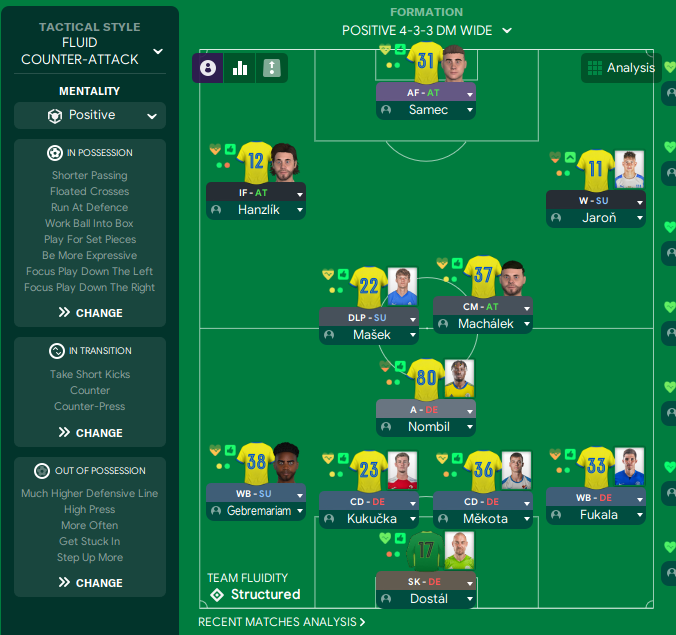
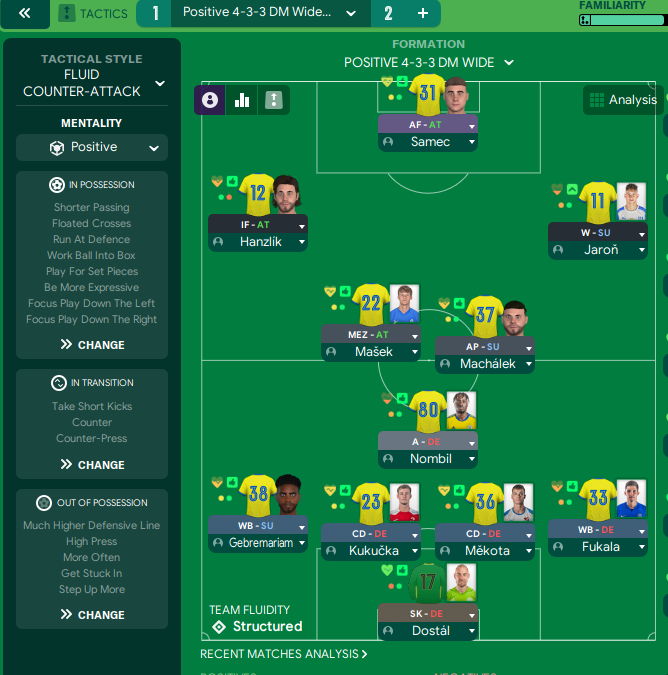
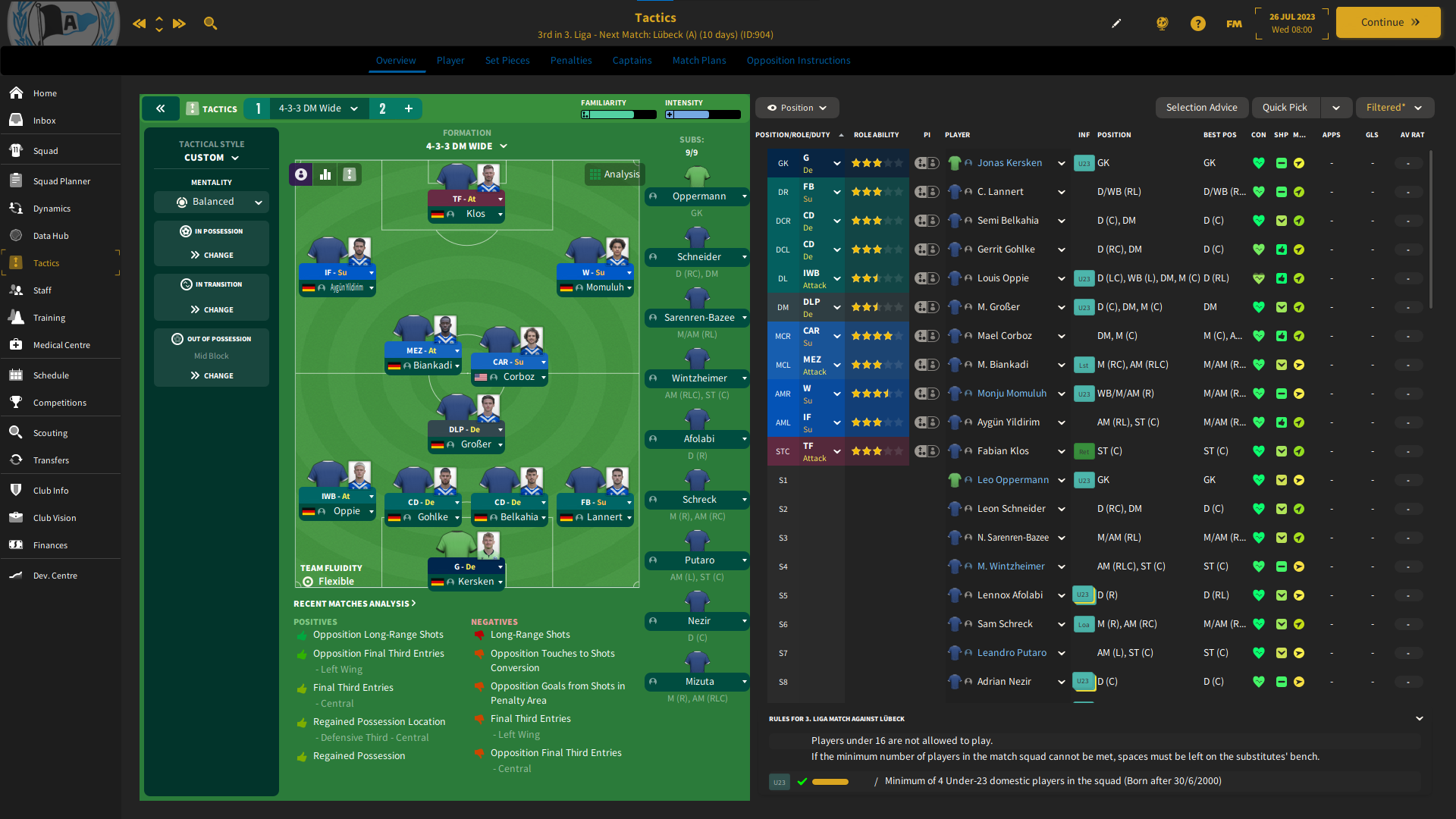
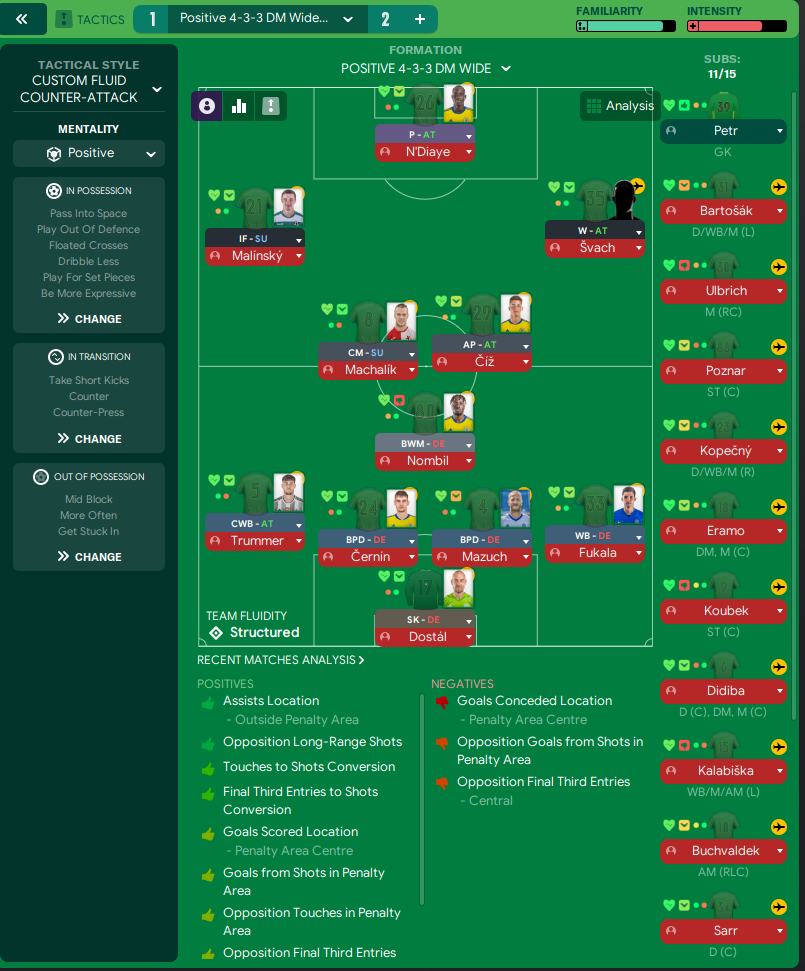
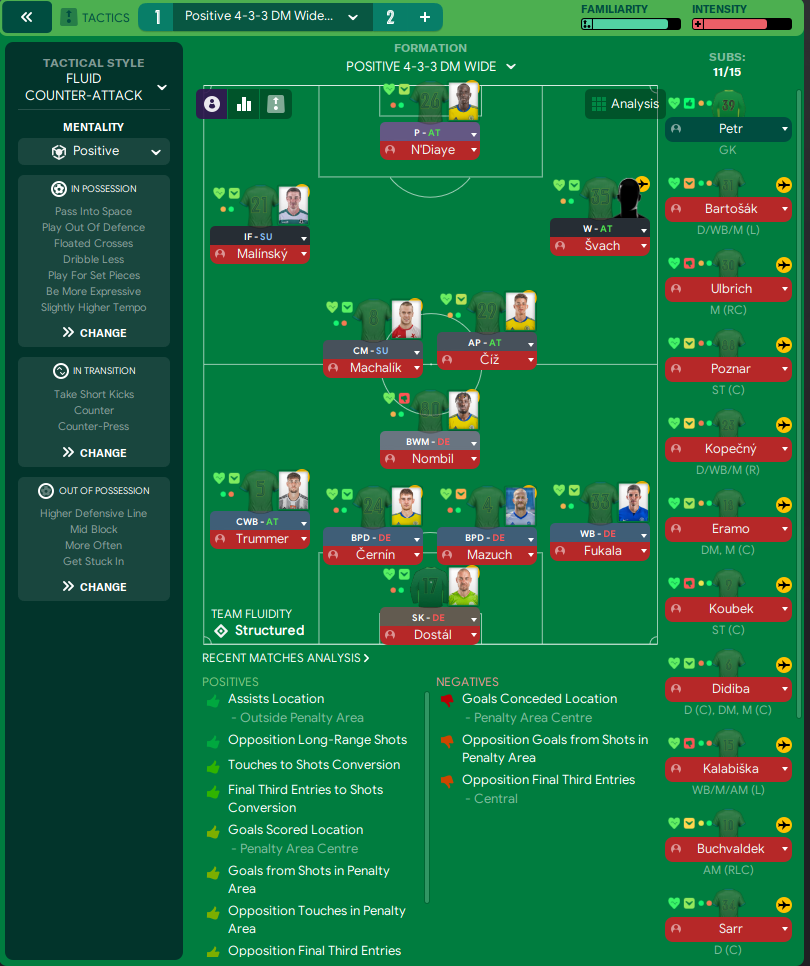
More Custom Vertical Tiki-Taka tactics
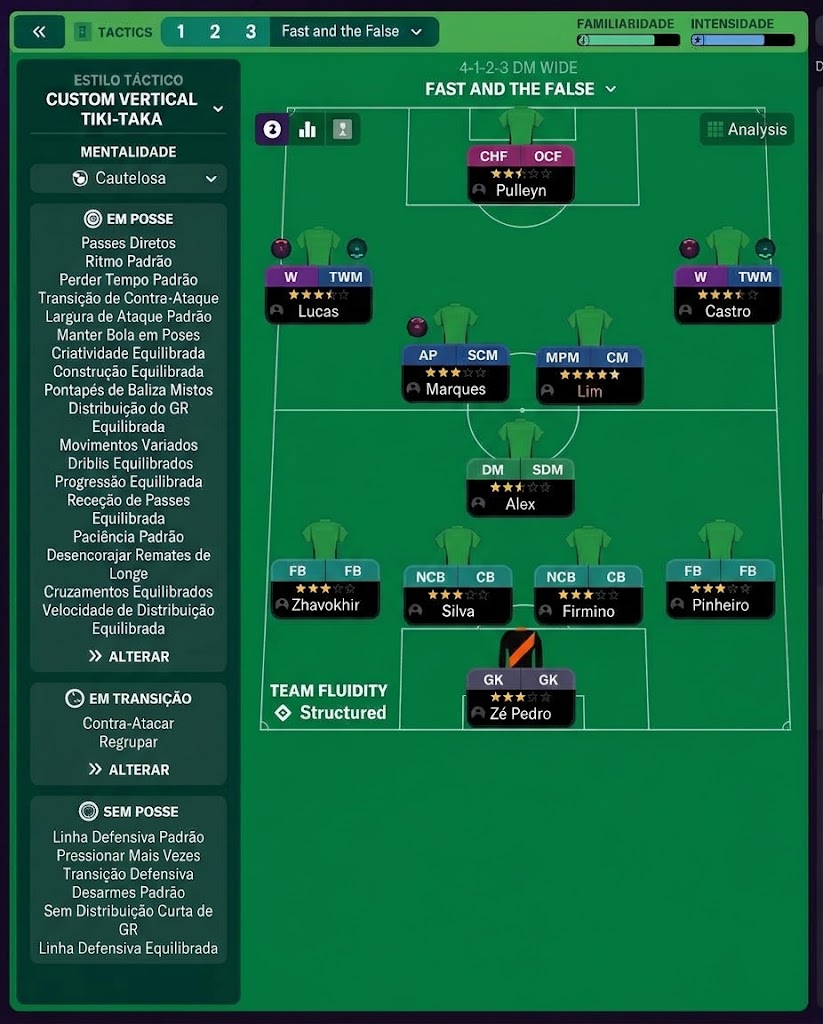
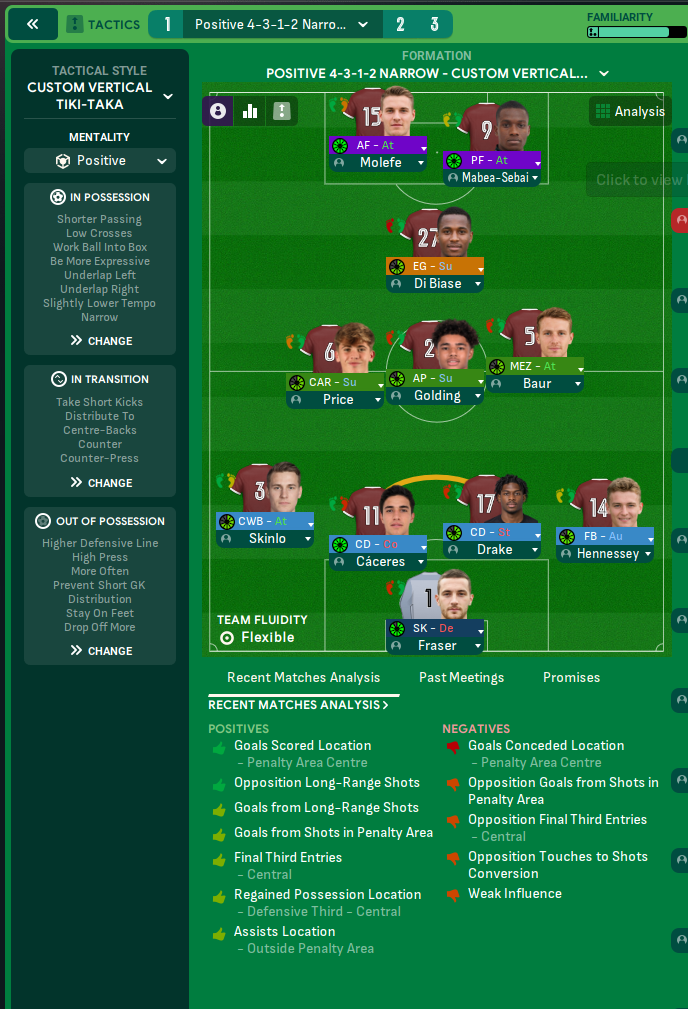
Guides for this formation
The tactical theory behind the 4-3-3 DM Wide: roles, instructions, and the trade-offs that decide whether the system holds up.
Foundations
Understanding the 4-3-3 Formation
Master the classic 4-3-3: player roles, tactical variations, and the trade-offs that decide whether it sings or stalls.
Read guide
Player pairings
Midfield Trios
Holder, runner, creator: the role distribution rule for three-man midfields, the AMC variants, and the antipatterns that break them.
Read guide
Playing styles
Gegenpressing: A Full Guide
Klopp-style gegenpressing in FM, including squad profile, line-and-press pairing, sustainable workload, and the antipatterns to avoid.
Read guide