Uploaded Tactic
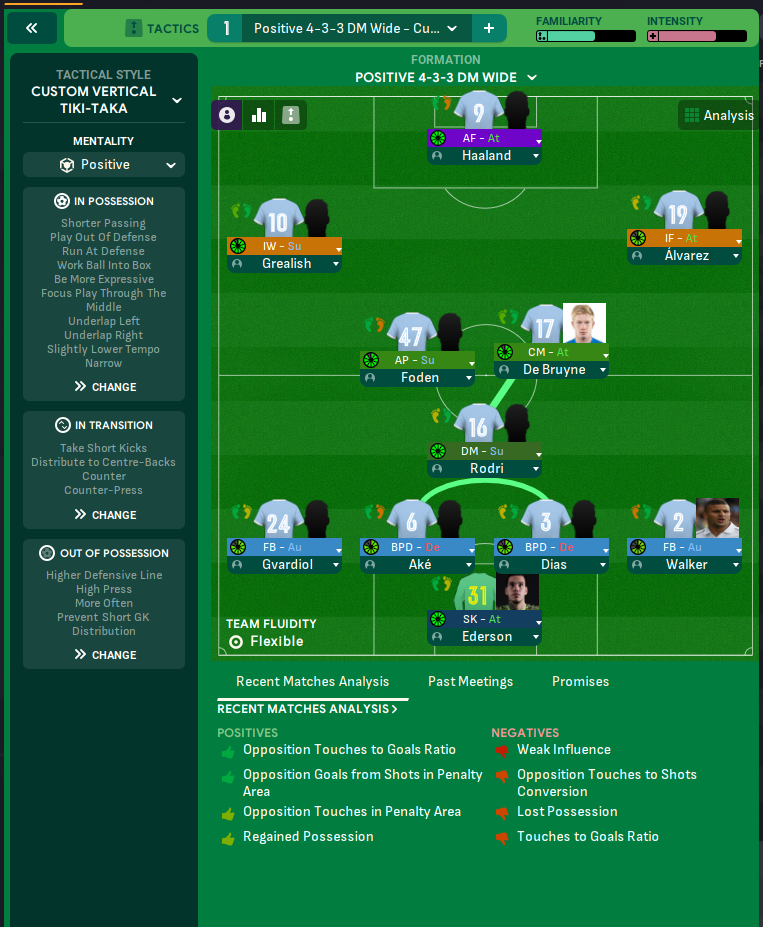
Formation & Style
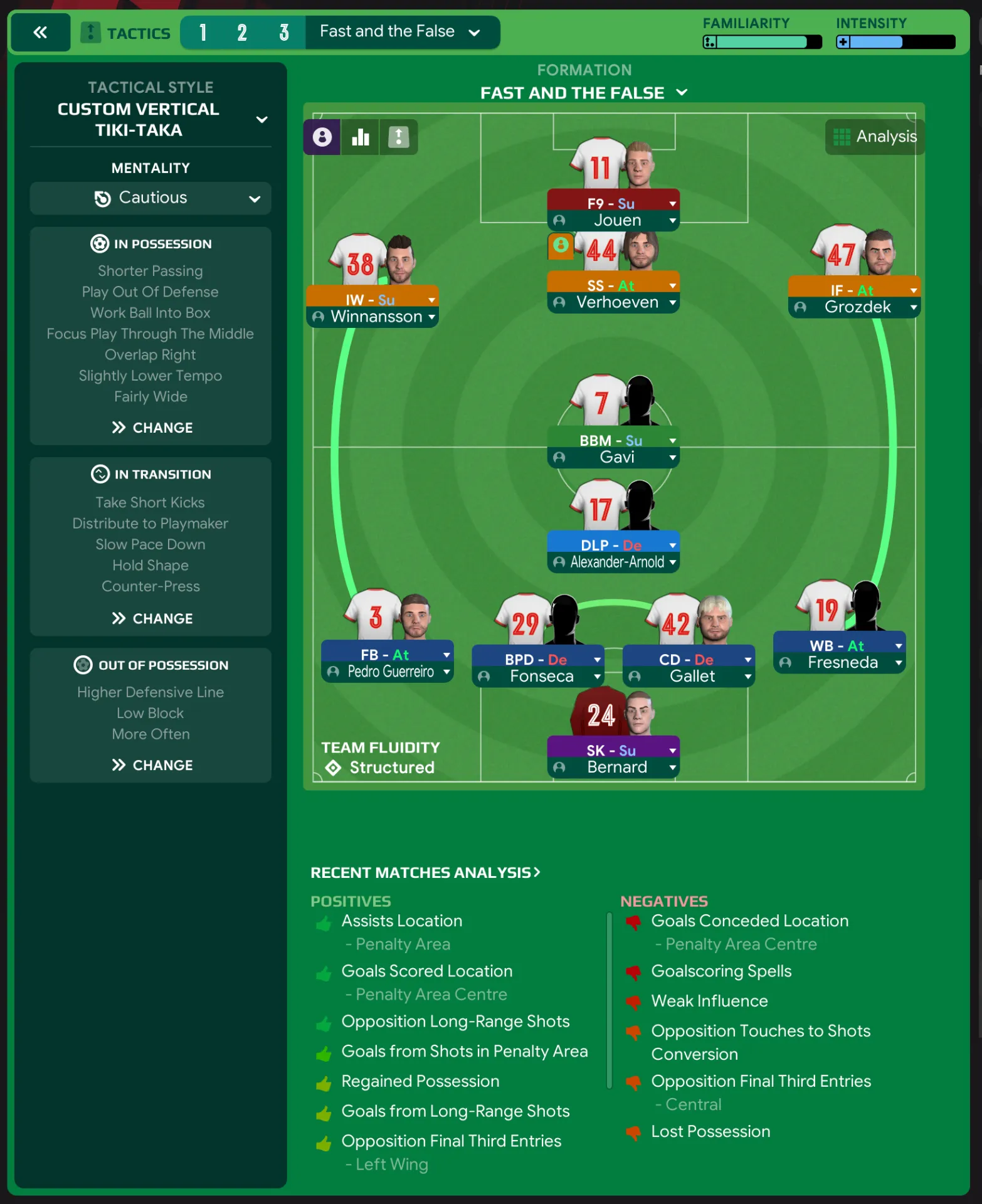
Tactical Style:Custom Vertical Tiki-Taka
Mentality:Positive
Formation:4-3-3 DM Wide
Team Fluidity:Flexible
In Possession
Shorter Passing
Play Out Of Defense
Run At Defense
Work Ball Into Box
Be More Expressive
Focus Play Through The Middle
In Transition
Take Short Kicks
Distribute To Centre-Backs
Counter
Counter-Press
Out of Possession
Higher Defensive Line
High Press
More Often
Prevent Short GK Distribution
Team Shape Without Ball
Shape:4-3-3
Description:A compact shape with a high defensive line aimed at squeezing the opposition into their half.
Evidence:Two full-backs push high while the central defenders stay back to support Rodri as the lone DM.
Team Shape With Ball
Shape:4-3-3
Description:Fluid attacks leveraging width from the full-backs and incisive runs from the attacking midfielders.
Evidence:Grealish and Alvarez providing width and Haaland as a focal point in attack.
Phase Description
Attacking Play
Quick, short passes are emphasized, with players aiming to penetrate defenses through the middle while maintaining width provided by the full-backs.
Defensive Transition
Once possession is lost, the team immediately engages in counter-pressing to regain control and maintains defensive shape.
Main Focus
To utilize high pressing and ball retention to create goal-scoring opportunities, focusing on the interplay between midfield and attacking players.
Key Strengths
Midfield Control
The presence of an Advanced Playmaker and a Supportive DM maintains fluidity and control in midfield.
Attacking Depth
Width and attacking options given by full-backs and inside forwards complement the central striker.
High Pressing
A coordinated high press creates opportunities to regain possession quickly.
Conflicting Directions
Defensive Vulnerability
Full-backs tasked with high attacking duties may leave gaps in defense.
Pressing Risk
High pressing can lead to counter-attacks if opposition breaks the first line too easily.
Individual Roles Conflict
Roles may compete for space in the attacking phase, leading to reduced effectiveness.
Tactical Suggestions
Adjust Full-Back Duties
Consider reverting one full-back to a more defensive duty to maintain balance.
Utilize Smoother Transitions
Incorporate a more structured approach for transitions to prevent being caught out in defense.
Explore Alternate Width
Use variation in width by sometimes playing narrower with wingers to disrupt defensive lines.
Ask Questions About Your Lineup
Related Tactics
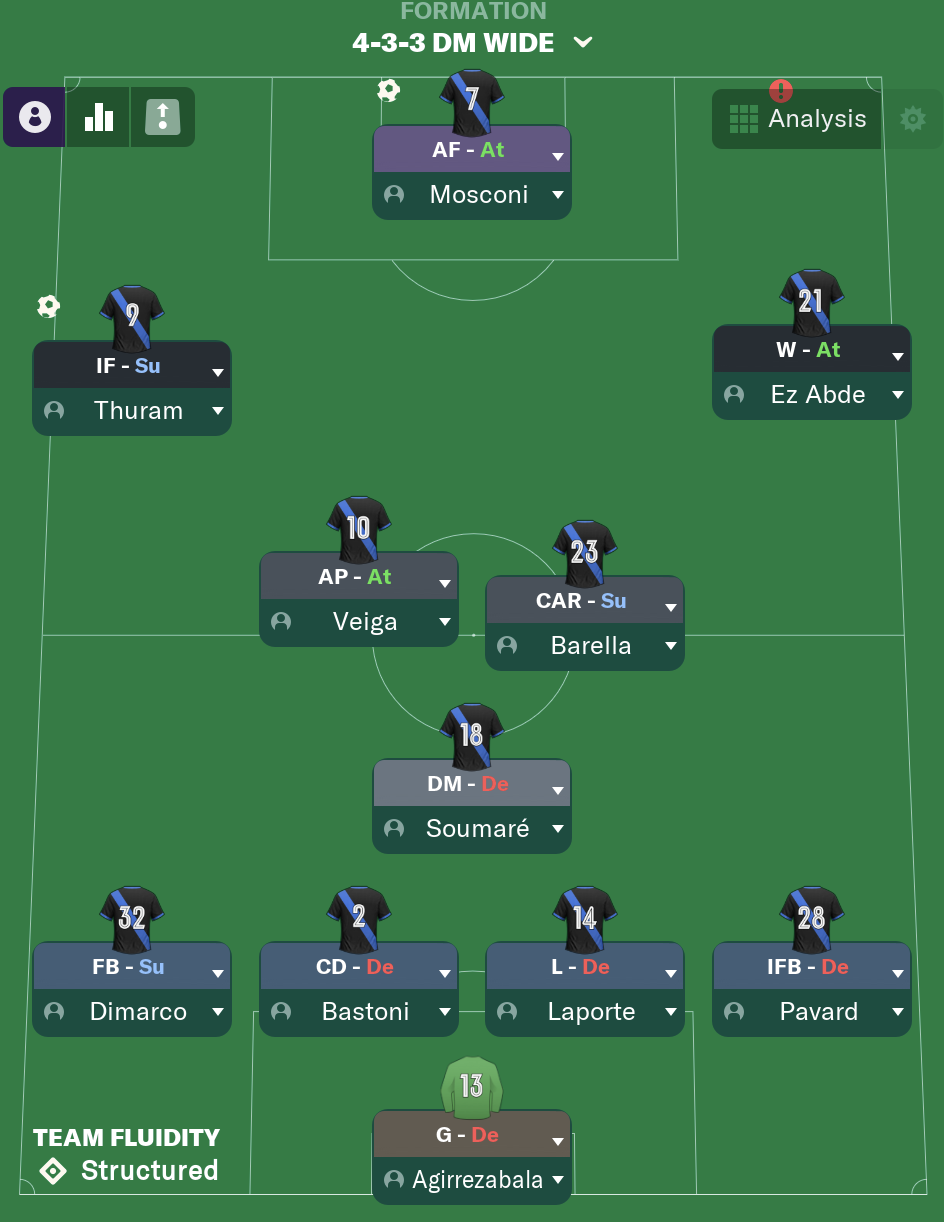
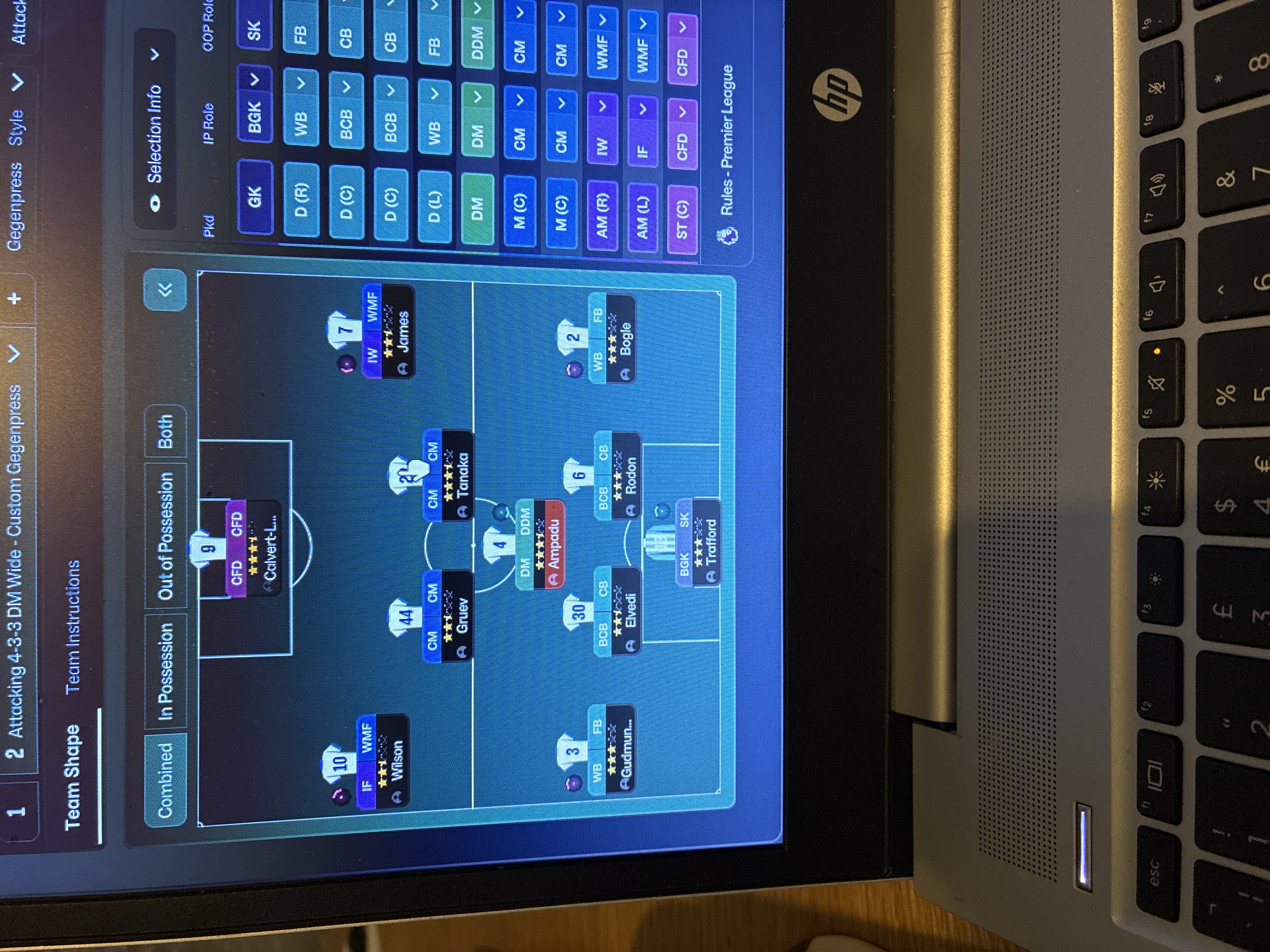
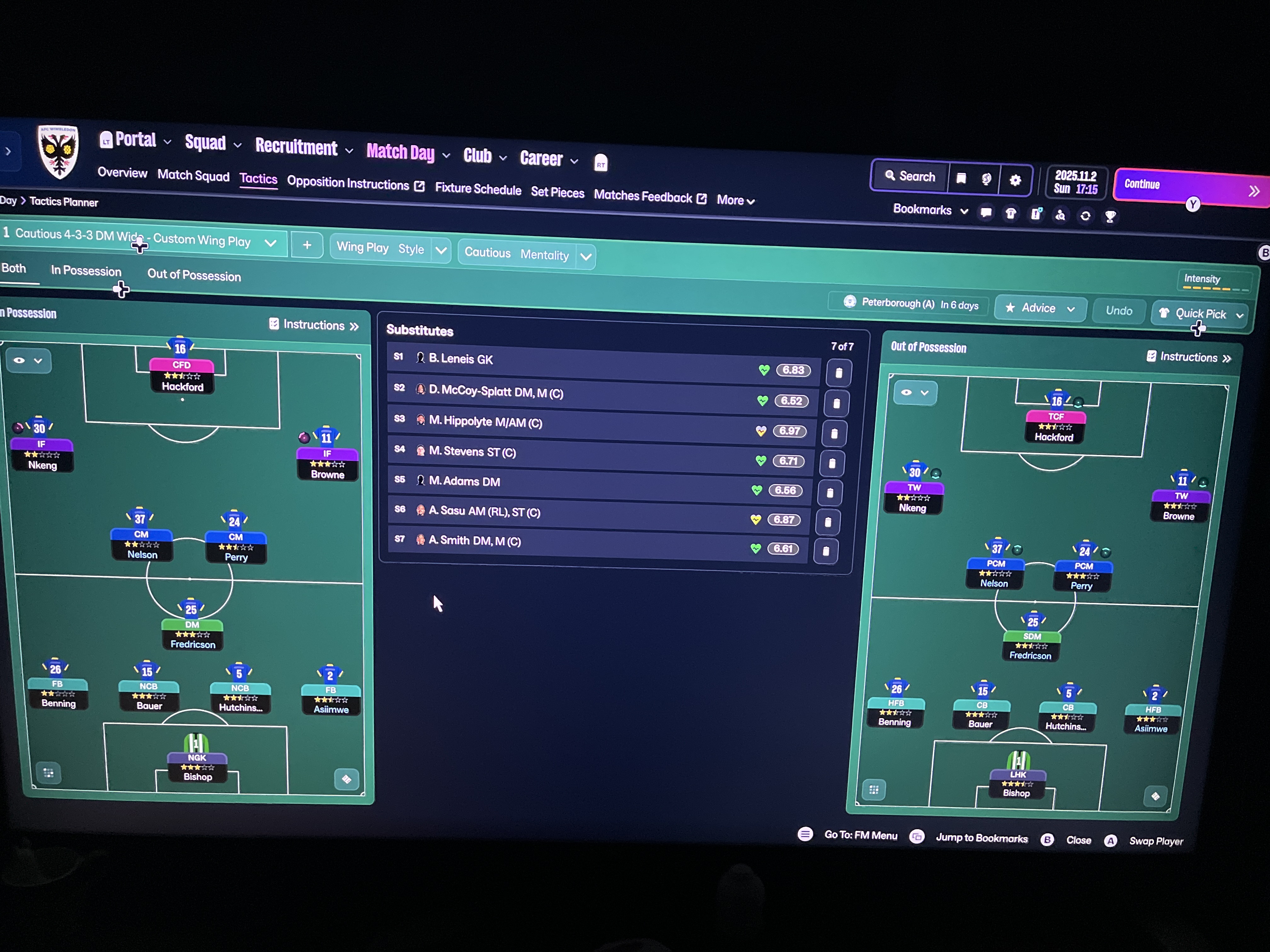
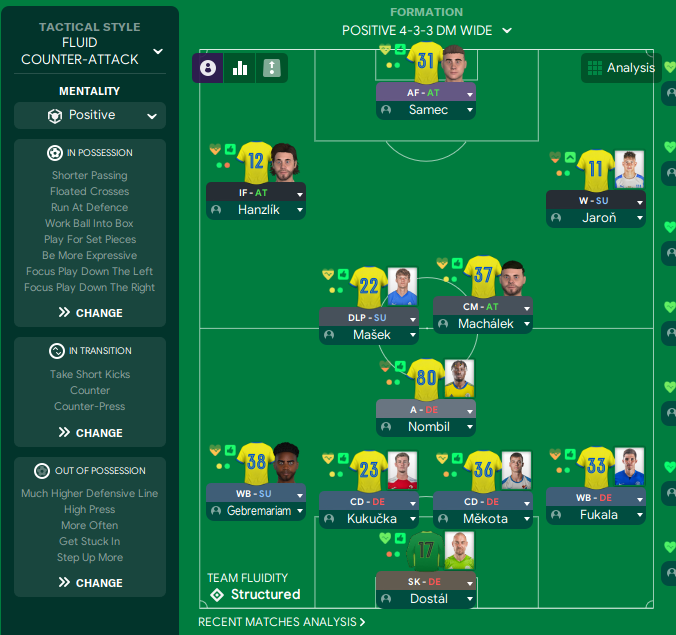
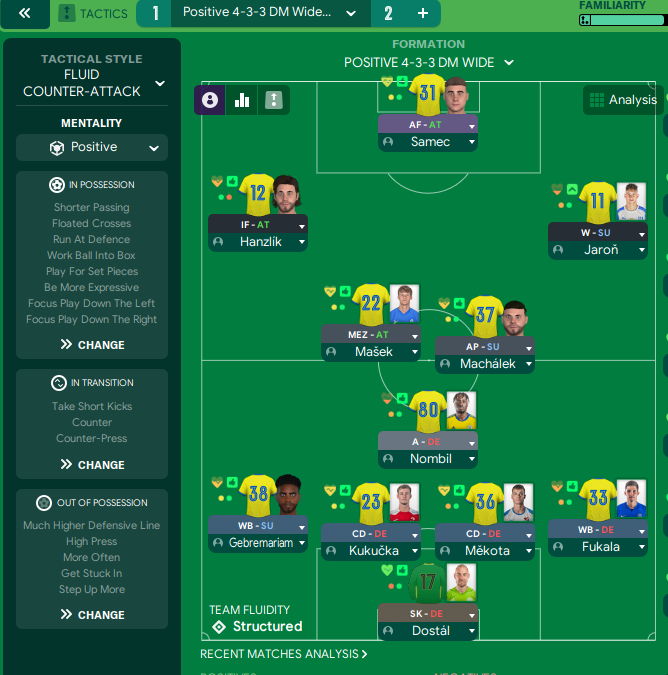
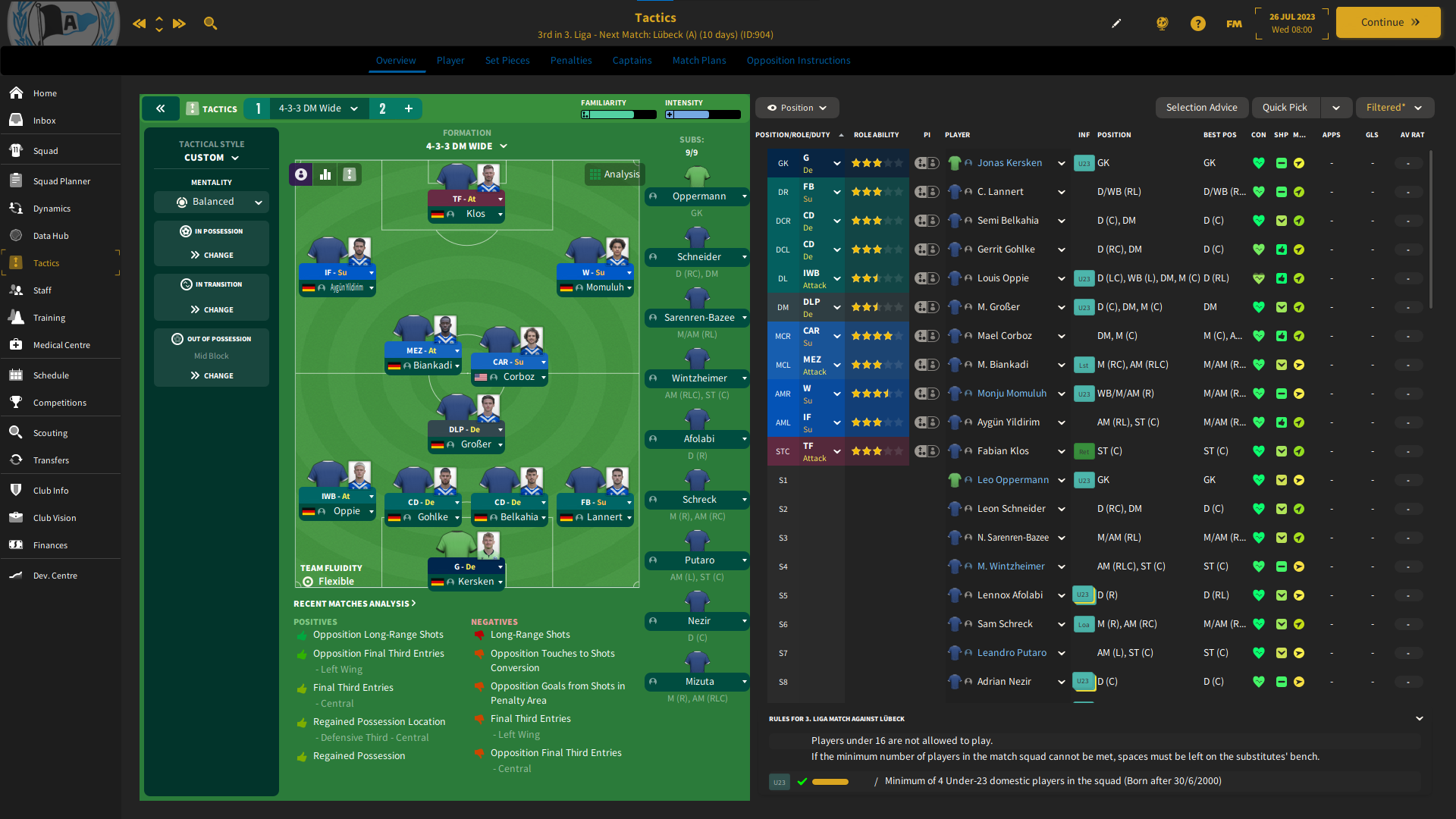
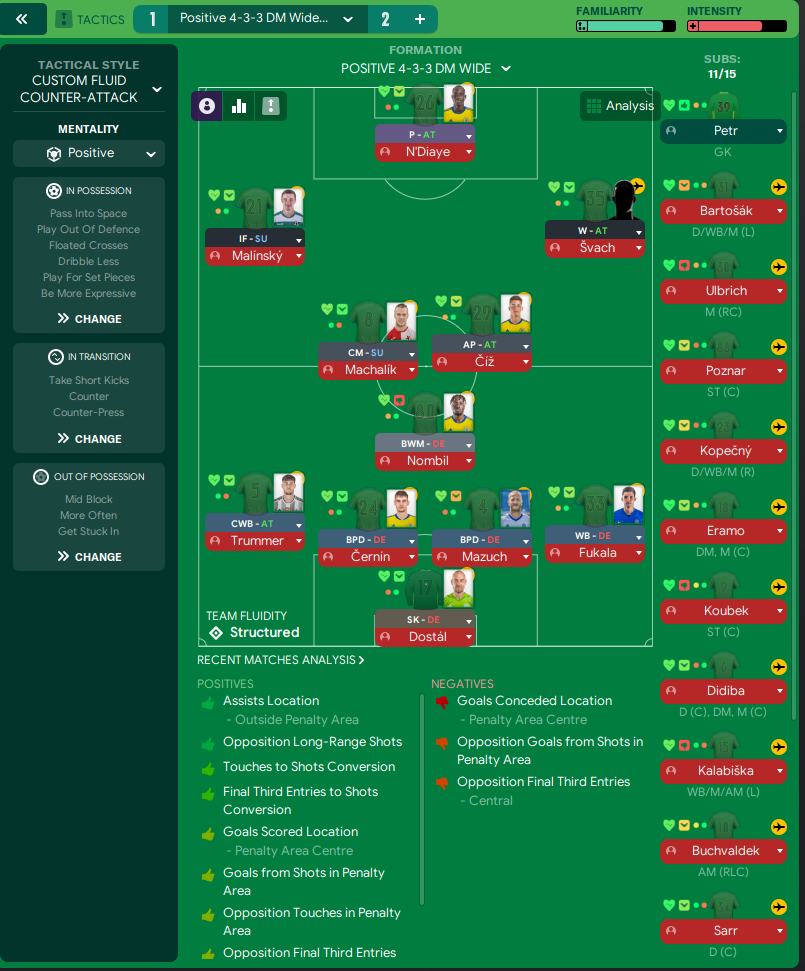
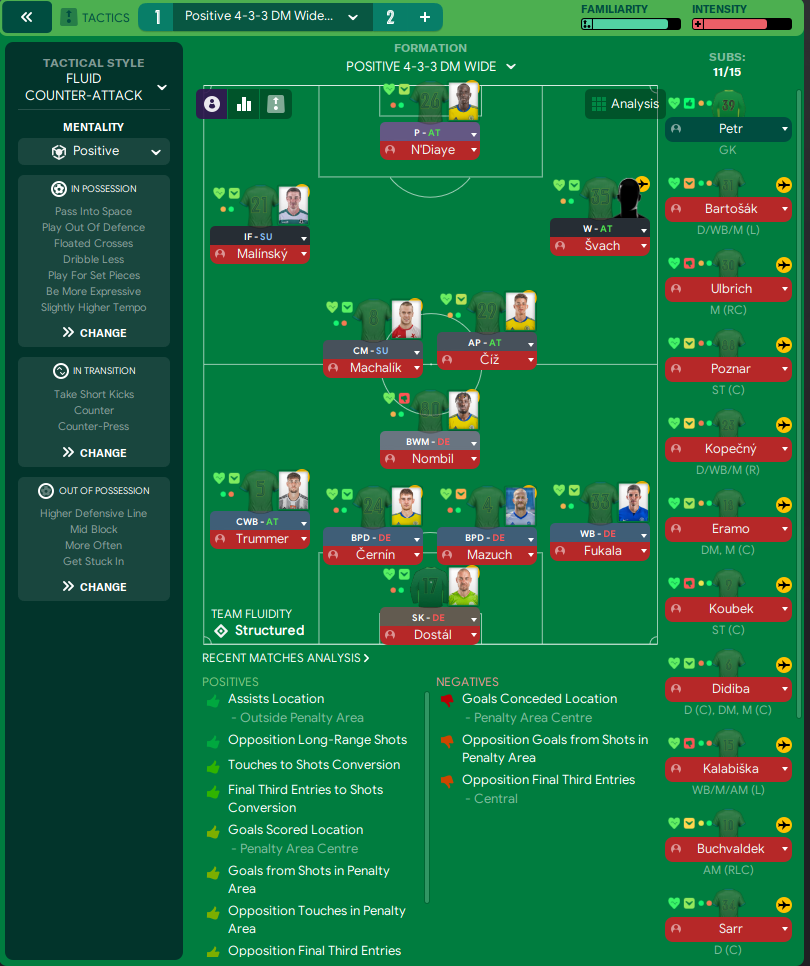
More Custom Vertical Tiki-Taka tactics
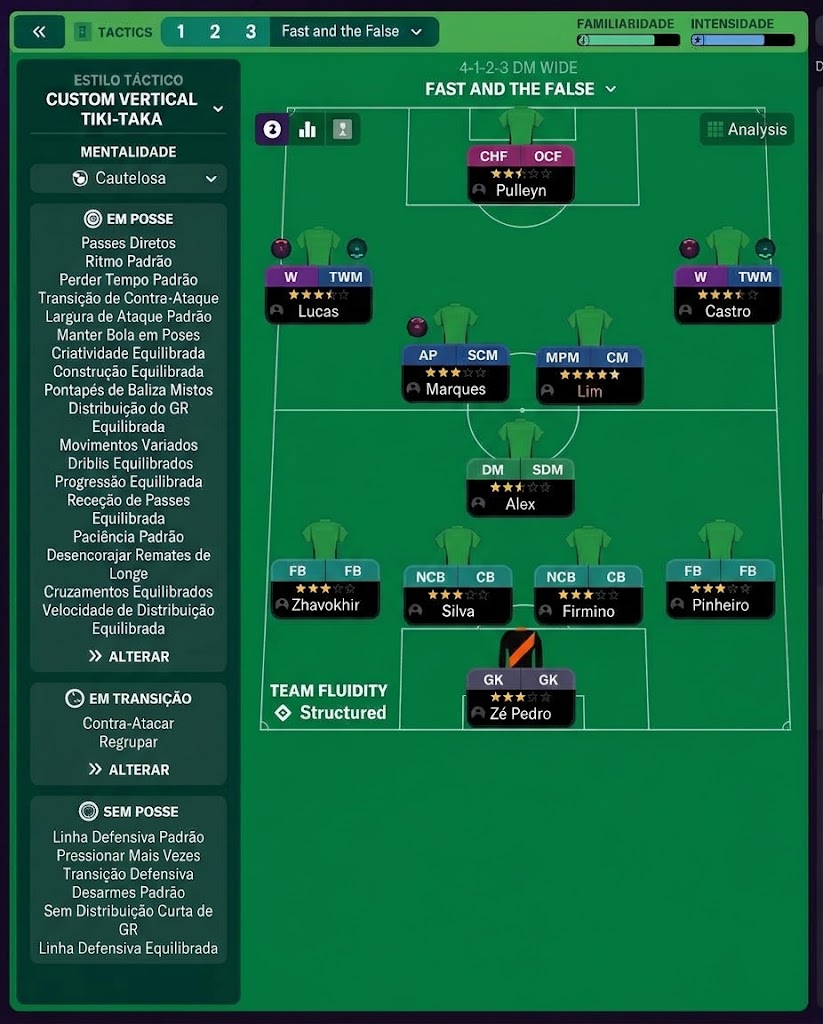
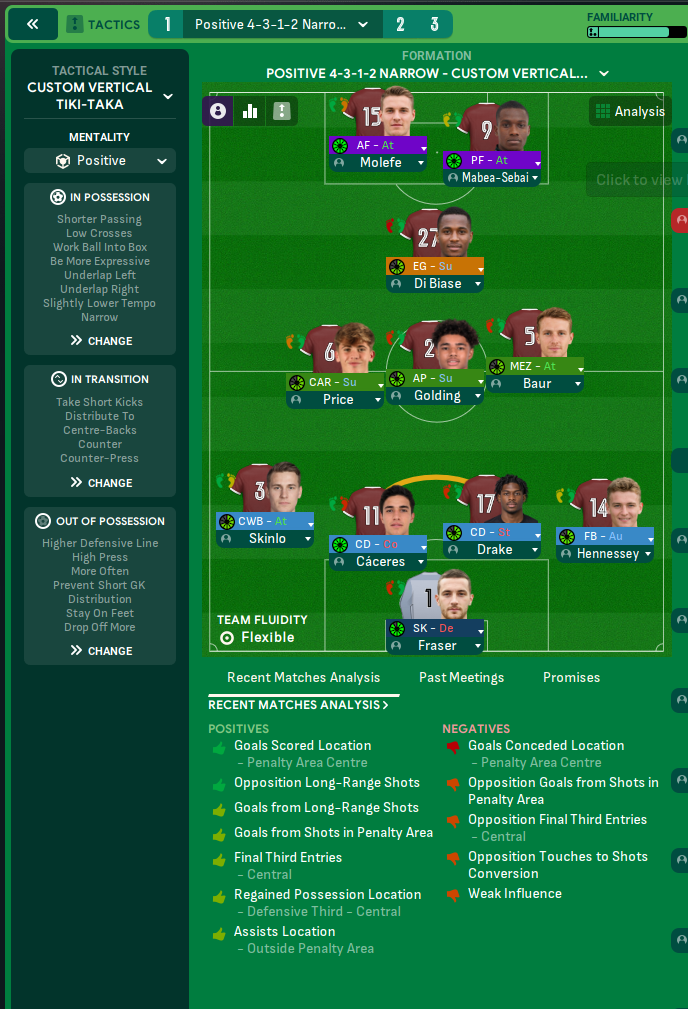
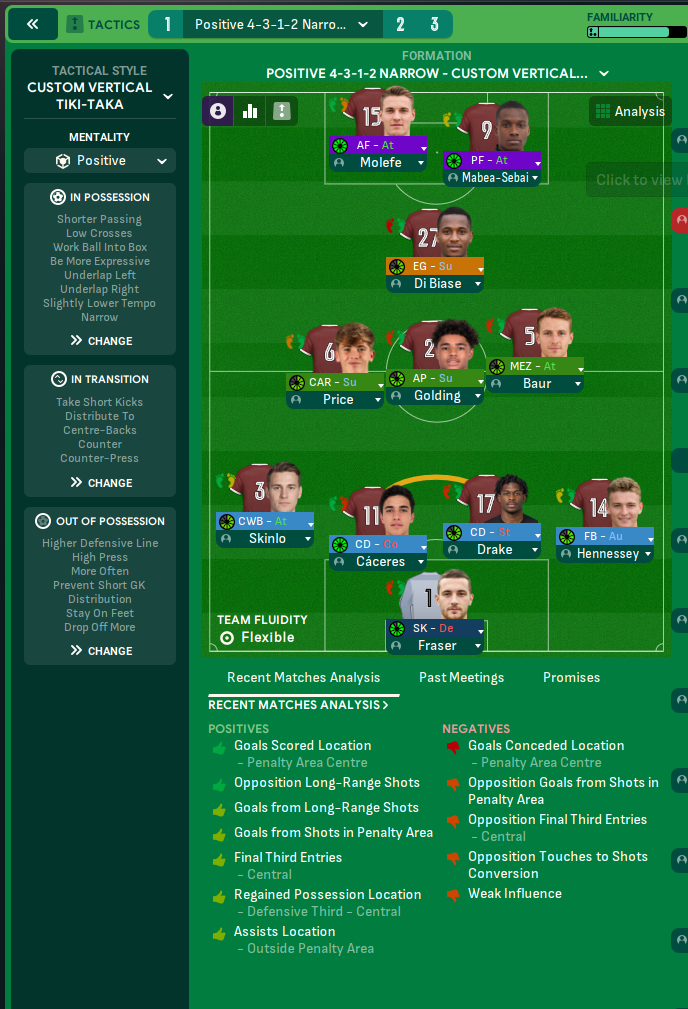
Guides for this formation
The tactical theory behind the 4-3-3 DM Wide: roles, instructions, and the trade-offs that decide whether the system holds up.
Foundations
Understanding the 4-3-3 Formation
Master the classic 4-3-3: player roles, tactical variations, and the trade-offs that decide whether it sings or stalls.
Read guide
Player pairings
Midfield Trios
Holder, runner, creator: the role distribution rule for three-man midfields, the AMC variants, and the antipatterns that break them.
Read guide
Playing styles
Gegenpressing: A Full Guide
Klopp-style gegenpressing in FM, including squad profile, line-and-press pairing, sustainable workload, and the antipatterns to avoid.
Read guide