Uploaded Tactic
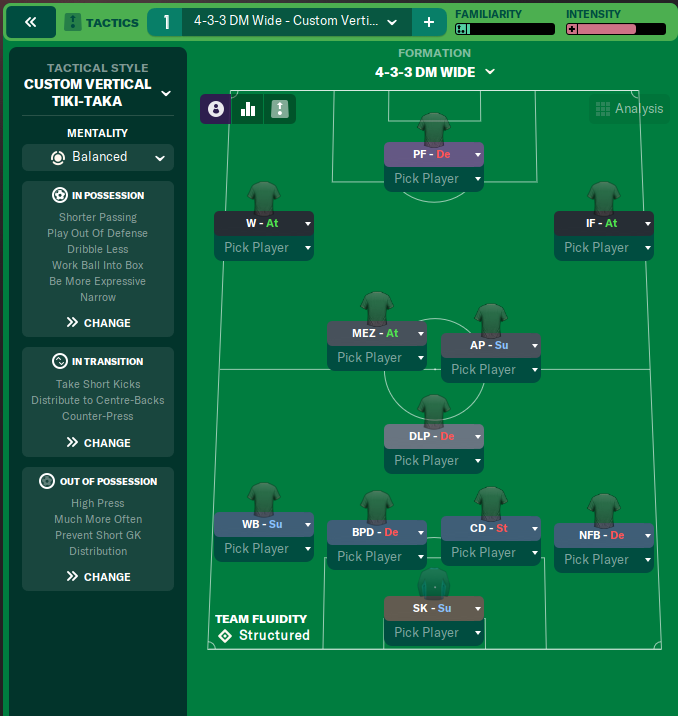
Formation & Style
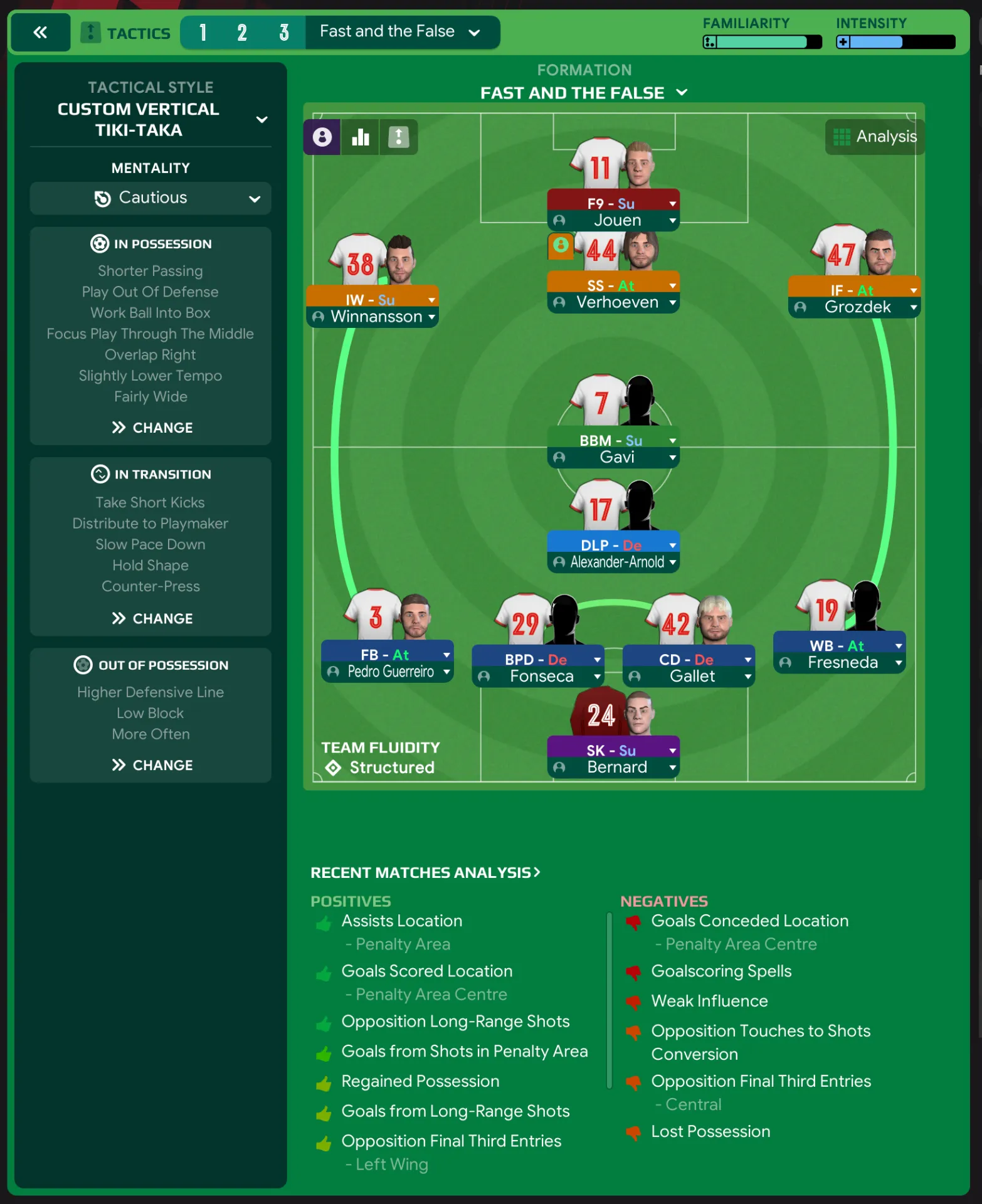
Tactical Style:Custom Vertical Tiki-Taka
Mentality:Balanced
Formation:4-3-3 DM Wide
Team Fluidity:Structured
In Possession
Shorter Passing
Play Out Of Defense
Dribble Less
Work Ball Into Box
Be More Expressive
Narrow
In Transition
Take Short Kicks
Distribute to Centre-Backs
Counter-Press
Out of Possession
High Press
Much More Often Prevent Short GK Distribution
Team Shape Without Ball
Shape:4-1-4-1
Description:A compact defensive shape that allows for robust protection of the backline.
Evidence:Defence organized with full-backs and a defensive midfielder covering central zones.
Team Shape With Ball
Shape:4-3-3
Description:Fluid attacking shape with width provided by wingers and central support from midfielders.
Evidence:Winger and inside forward combined with playmakers create various options upfront.
Phase Description
Attacking Play
Focus on possession and build-up, utilizing short passing and an expressive approach to break down defenses.
Defensive Transition
Quickly transition to a pressing approach, aiming to regain possession before the opposition can effectively counter.
Main Focus
Control of the game through midfield possession and tactical flexibility in attack.
Key Strengths
Midfield Control
The combination of DM with DLP-S and AP-S provides effective ball distribution and creativity.
Attacking Versatility
Utilization of a Mezzala and two attacking wingers allows for diverse attacking strategies.
Defensive Solidity
Well-structured defence with No-Nonsense Full-Backs supporting the central defenders.
Conflicting Directions
Inadequate Pressing
The pressing forward in the striker position may leave the team exposed if not complemented by wingers in defensive duties.
Excessive Tactical Flexibility
While expressive play is desired, it may contradict the structured team fluidity leading to inconsistency.
Defensive Midfielder Role Conflict
The DLP-D may sometimes focus too much on defensive duties, potentially hampering attacking transitions.
Tactical Suggestions
Reconsider Pressing Forward Role
Switching the PF-D to a more attacking role could provide a better press and service to midfield.
Adjust Full-Back Roles
Changing the DFB roles to more attacking duties can help improve width and crossing options.
Optimize Playmaker Duties
Aligning the DLP and AP duties based on flow of the game allows for better midfield synchronization.
Ask Questions About Your Lineup
Related Tactics
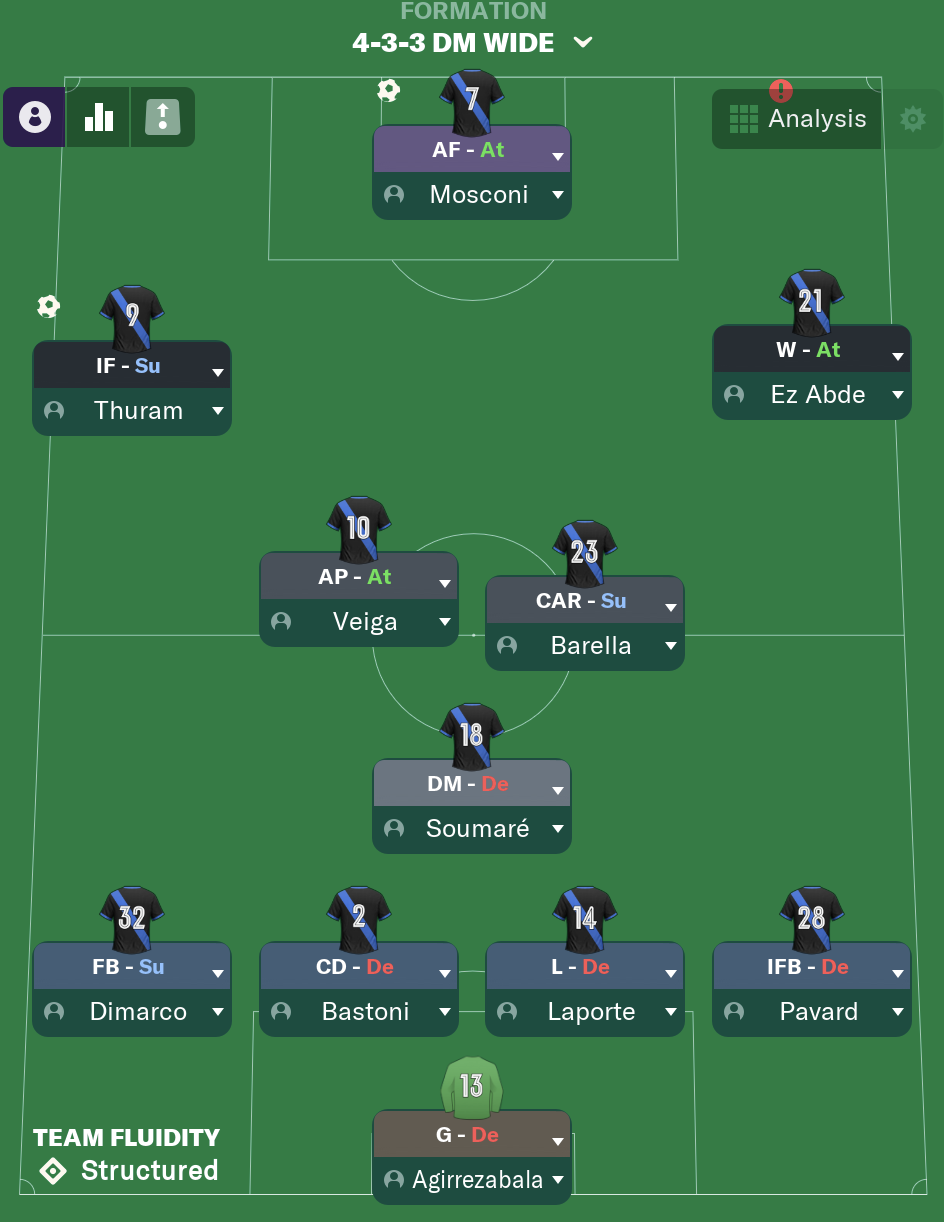
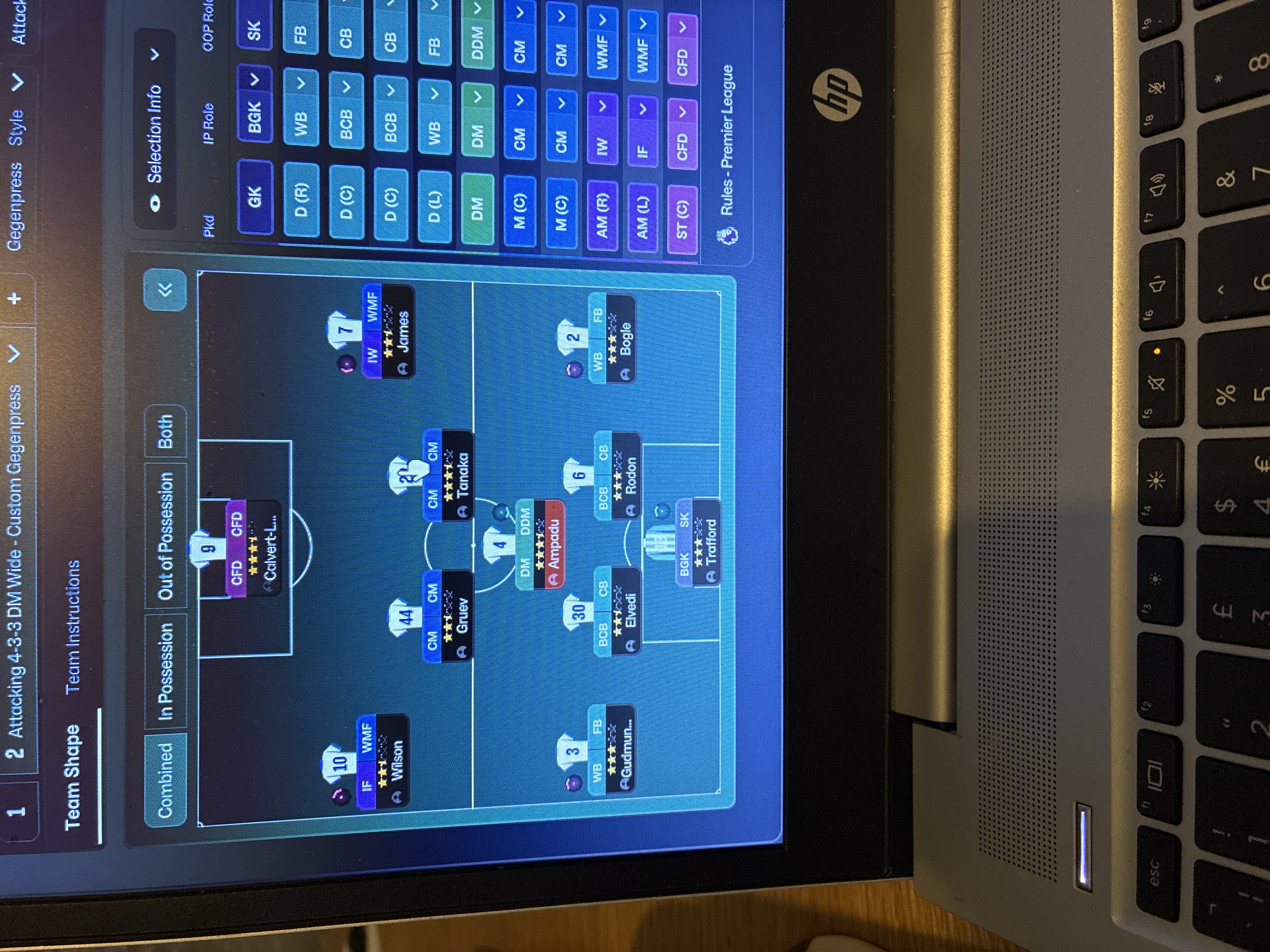
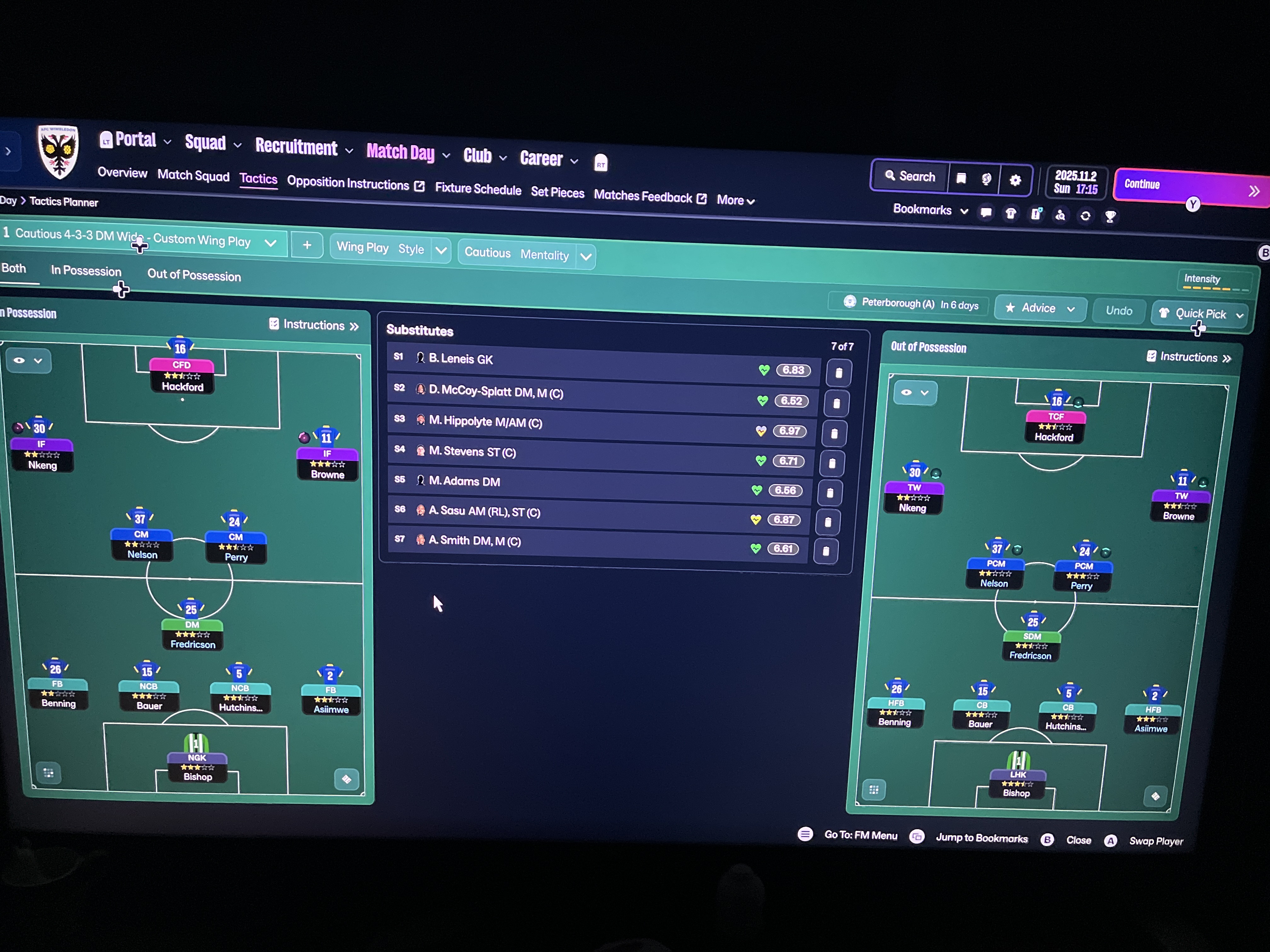
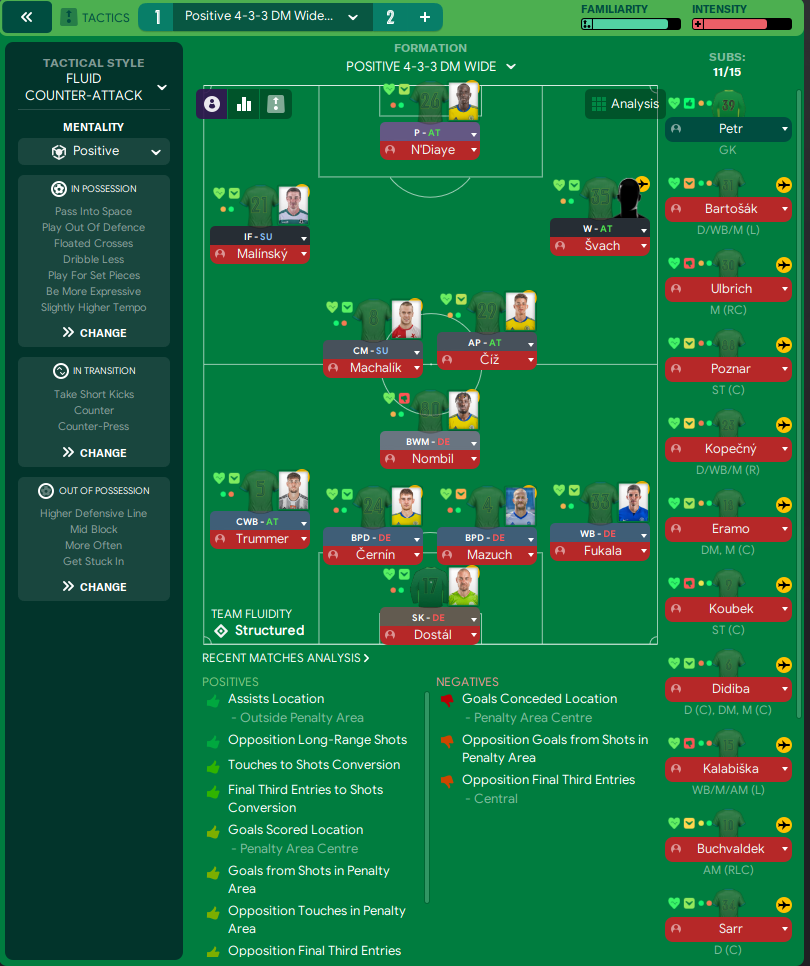
More Custom Vertical Tiki-Taka tactics
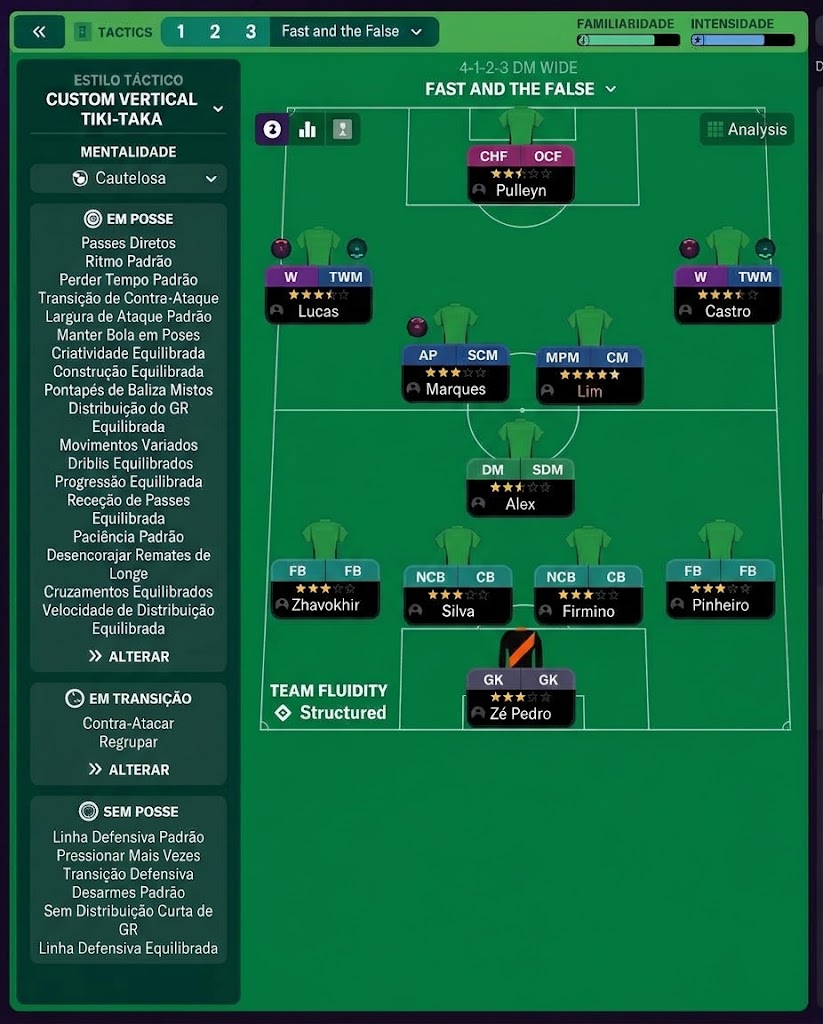
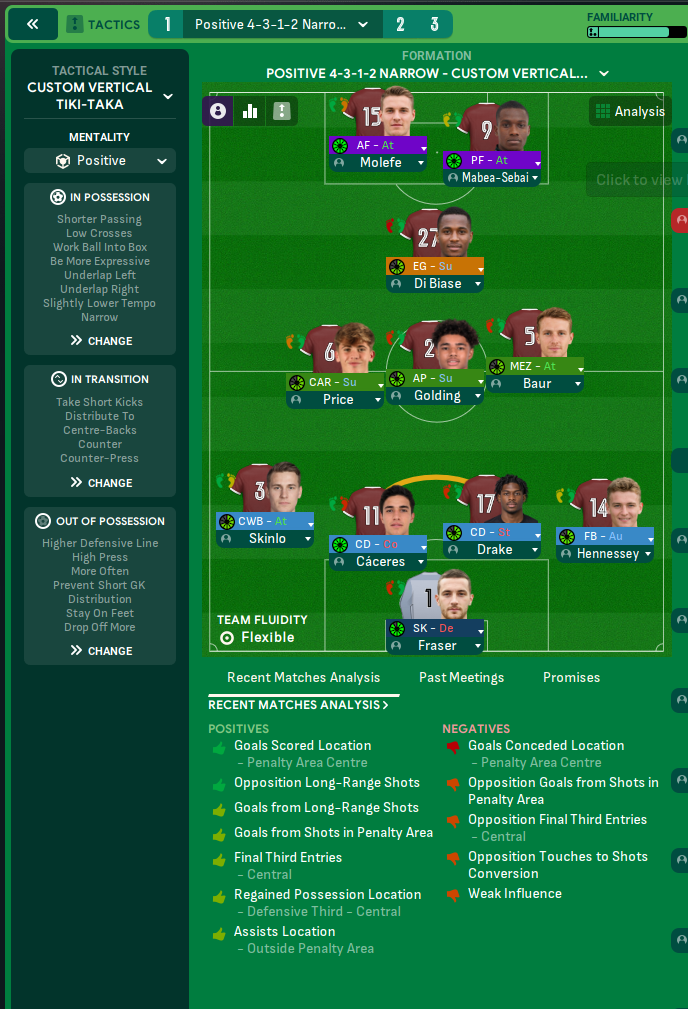
Guides for this formation
The tactical theory behind the 4-3-3 DM Wide: roles, instructions, and the trade-offs that decide whether the system holds up.
Foundations
Understanding the 4-3-3 Formation
Master the classic 4-3-3: player roles, tactical variations, and the trade-offs that decide whether it sings or stalls.
Read guide
Player pairings
Midfield Trios
Holder, runner, creator: the role distribution rule for three-man midfields, the AMC variants, and the antipatterns that break them.
Read guide
Playing styles
Gegenpressing: A Full Guide
Klopp-style gegenpressing in FM, including squad profile, line-and-press pairing, sustainable workload, and the antipatterns to avoid.
Read guide