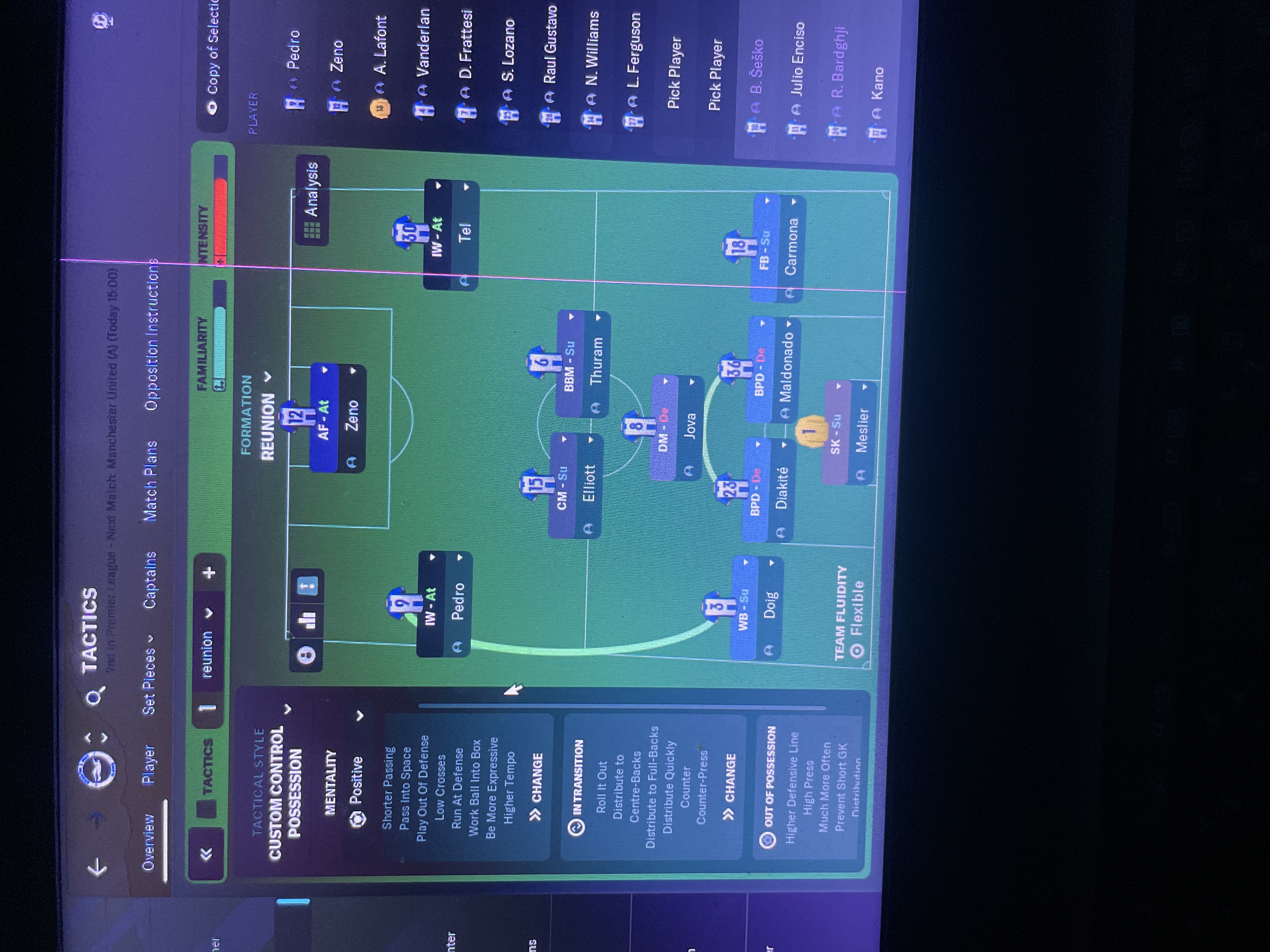
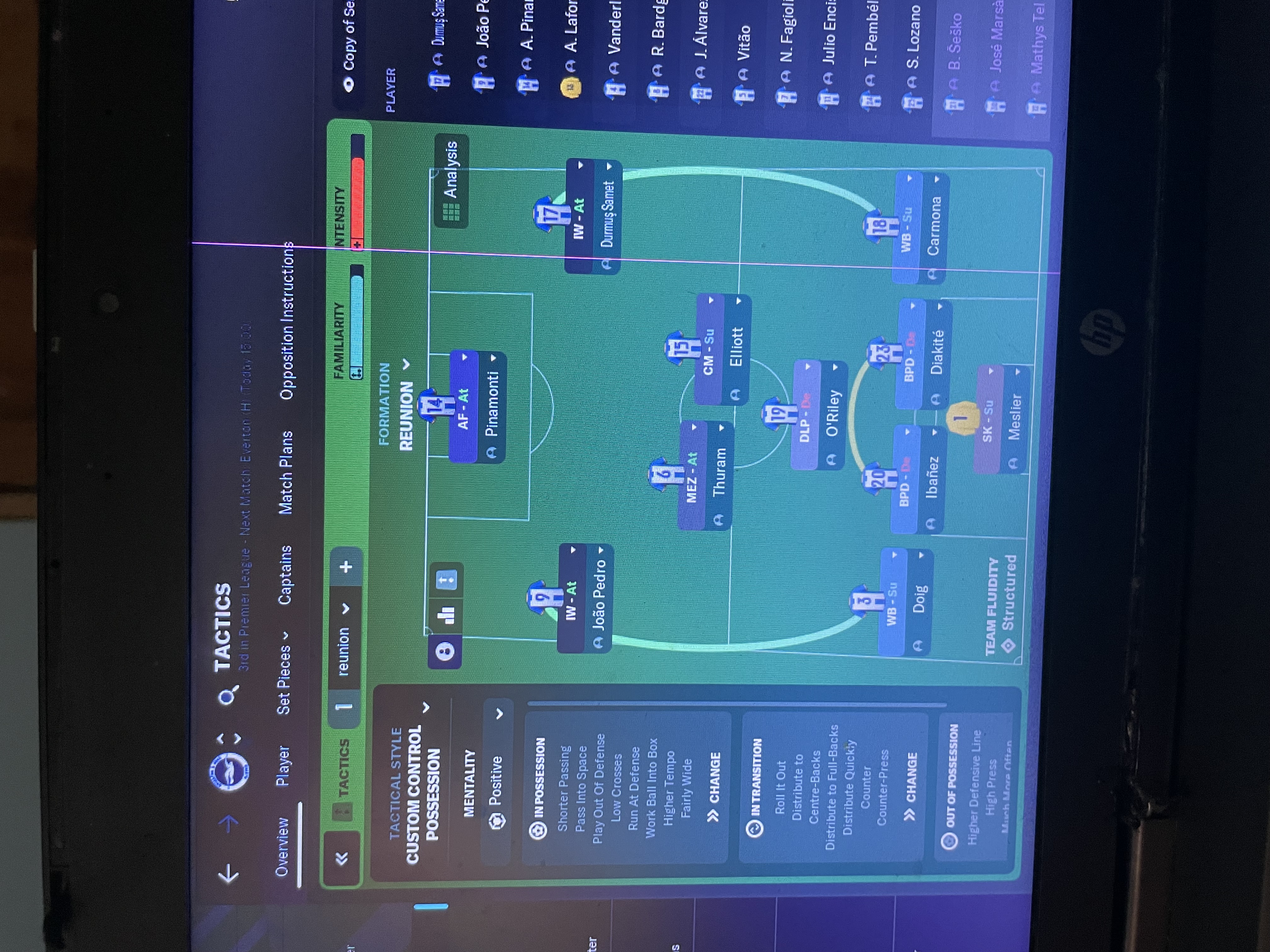
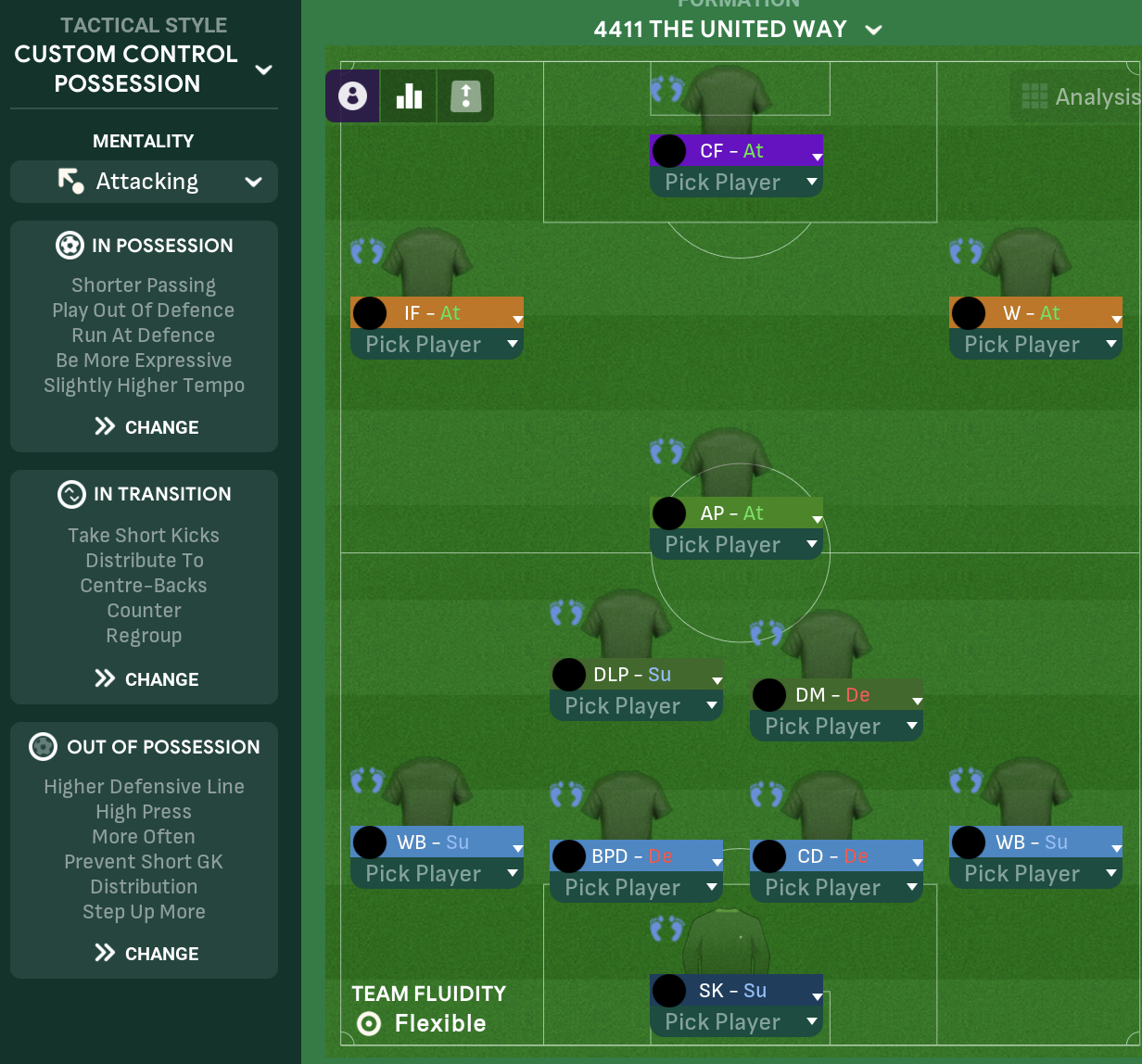
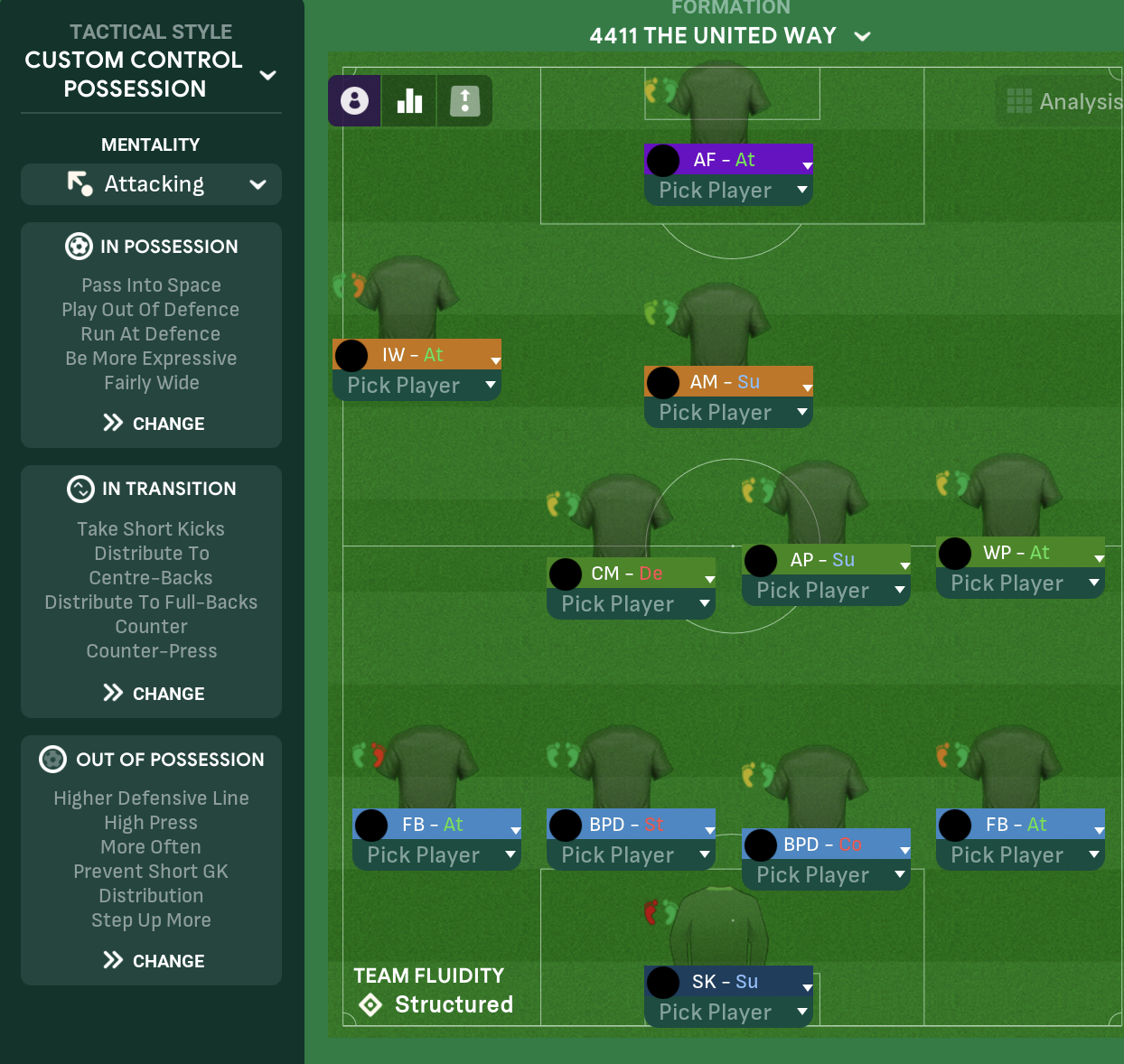
4-3-3 DM Wide
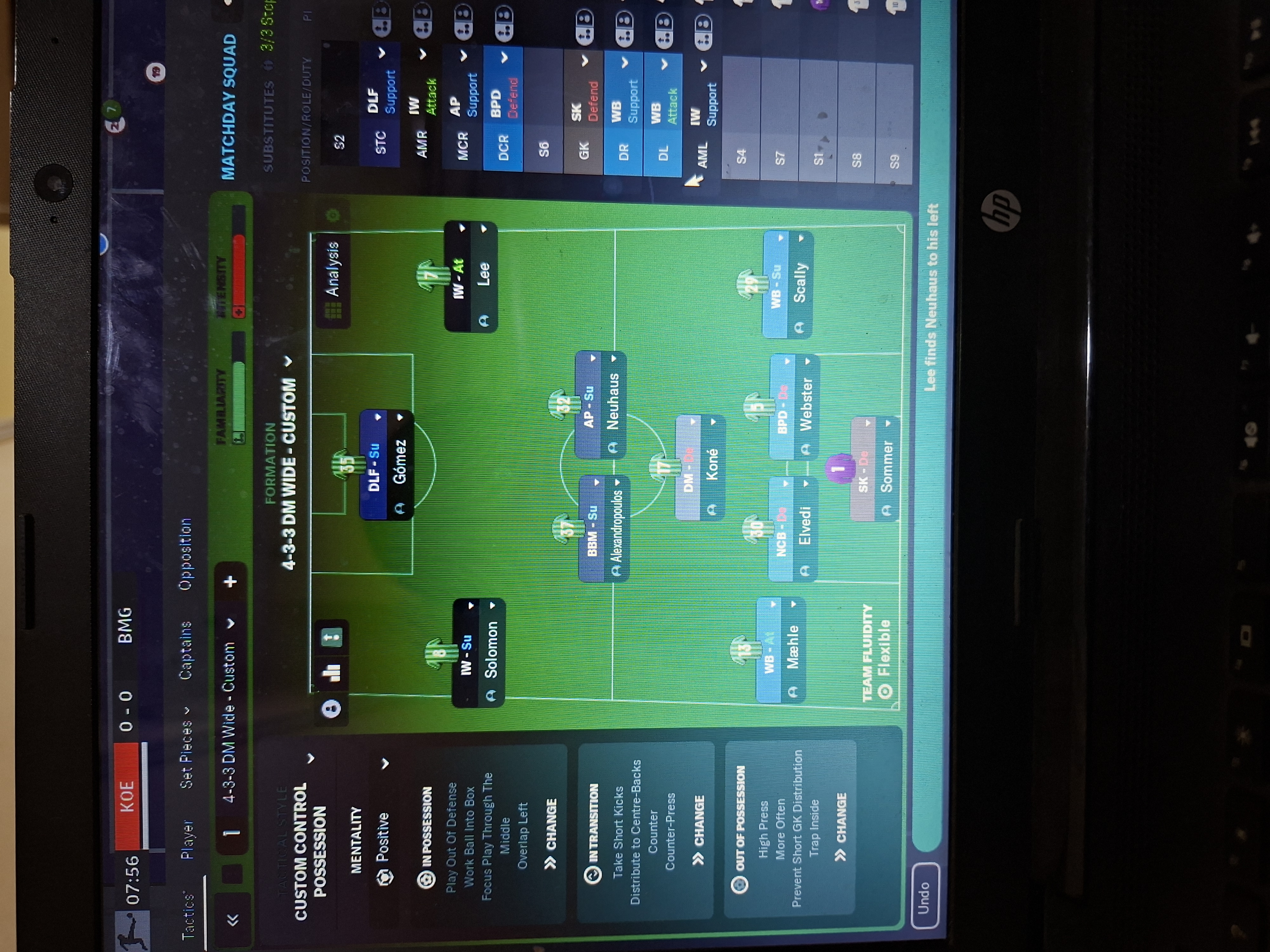
The combination of a Box to Box Midfielder and an Advanced Playmaker creates a fluid midfield capable of transitioning between defense and attack…
Loading tactical analysis...
Custom Control Possession
Positive
4-3-3 DM Wide
Flexible
Play Out Of Defense
Work Ball Into Box
Focus Play Through The Middle
Overlap Left
Take Short Kicks
Counter
Counter-Press
High Press
More Often
Prevent Short GK Distribution
Trap Inside
ST
Deep Lying Forward
Support
AML
Inside Winger
Support
AMR
Inside Winger
Attack
MCR
Box to Box Midfielder
Support
MCL
Advanced Playmaker
Attack
DM
Defensive Midfielder
Defend
WB
Wing Back
Attack
BPD
Ball Playing Defender
Defend
DC
Central Defender
Defend
WB
Wing Back
Defend
GK
Sweeper Keeper
Defend
The combination of a Box to Box Midfielder and an Advanced Playmaker creates a fluid midfield capable of transitioning between defense and attack effectively.
Utilizing Inside Wingers and Wing Backs provides the team with width, allowing for stretched opposition defenses and creating more space in central areas.
The roles of the Wing Backs and the Deep Lying Forward can create conflicts; if the Wing Backs push too high, it may leave gaps defensively, particularly if the DM is not positioned optimally.
The instruction to overlap on the left may lead to a lack of cover when the left Wing Back goes forward, potentially isolating the defense.
How effective is the high press against your opponent's playing style?
Are your Wing Backs creating enough width without compromising defensive stability?
Is the Deep Lying Forward contributing enough to the build-up play?
How can the team better link midfield play to the attacking third?
Is the counter-press yielding favorable turnovers in your attacking zones?
Could player roles be adjusted for a better balance between attack and defense?
wing play
Gegenpress
vertical tiki taka
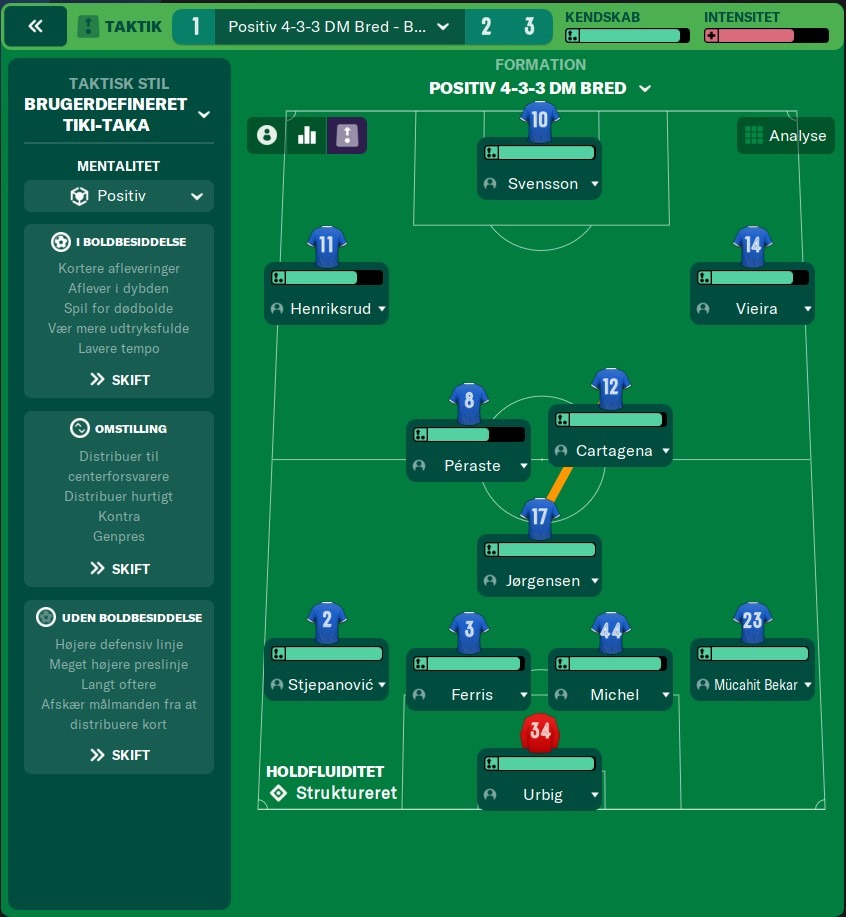
Tiki-Taka
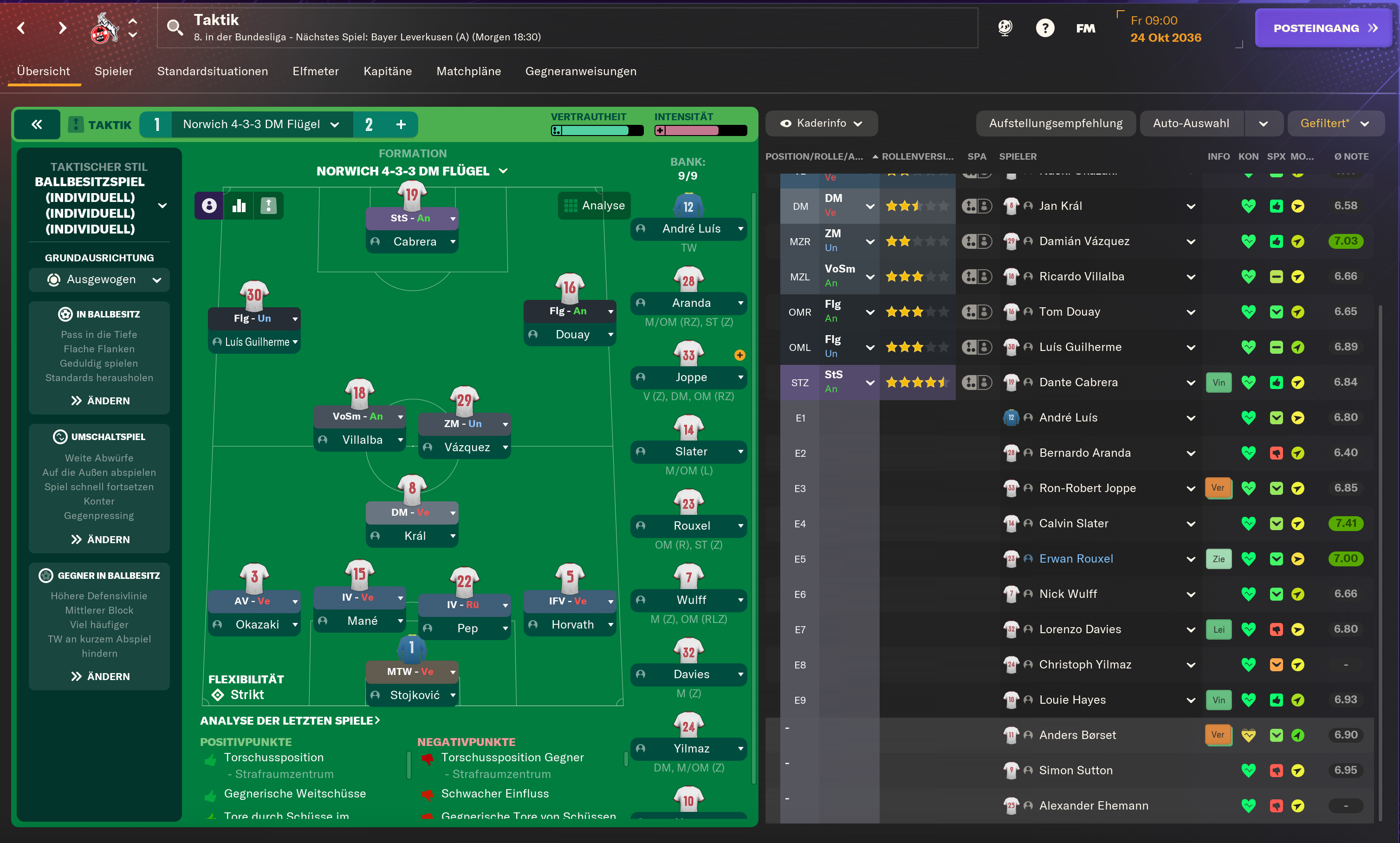
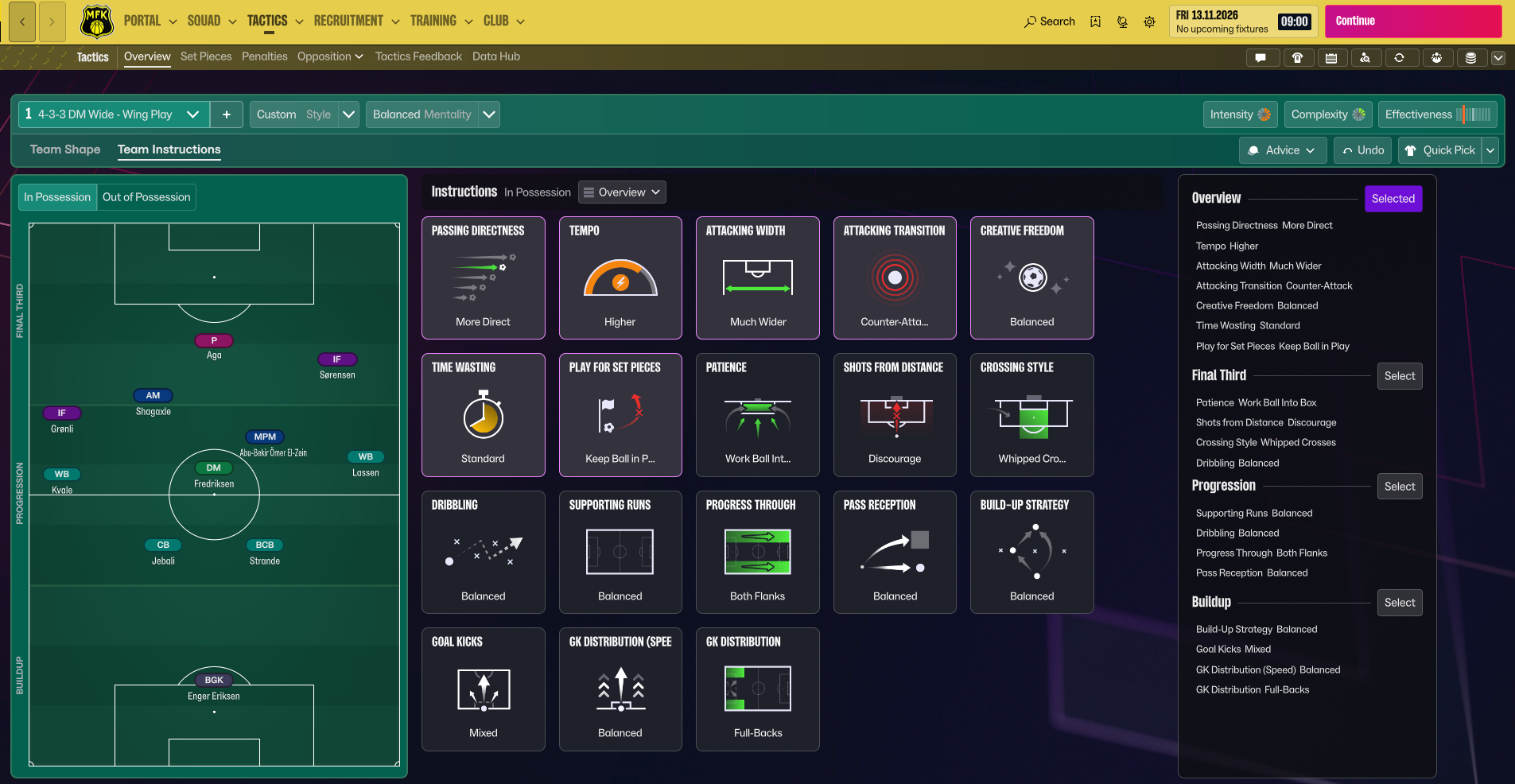
Wing Play
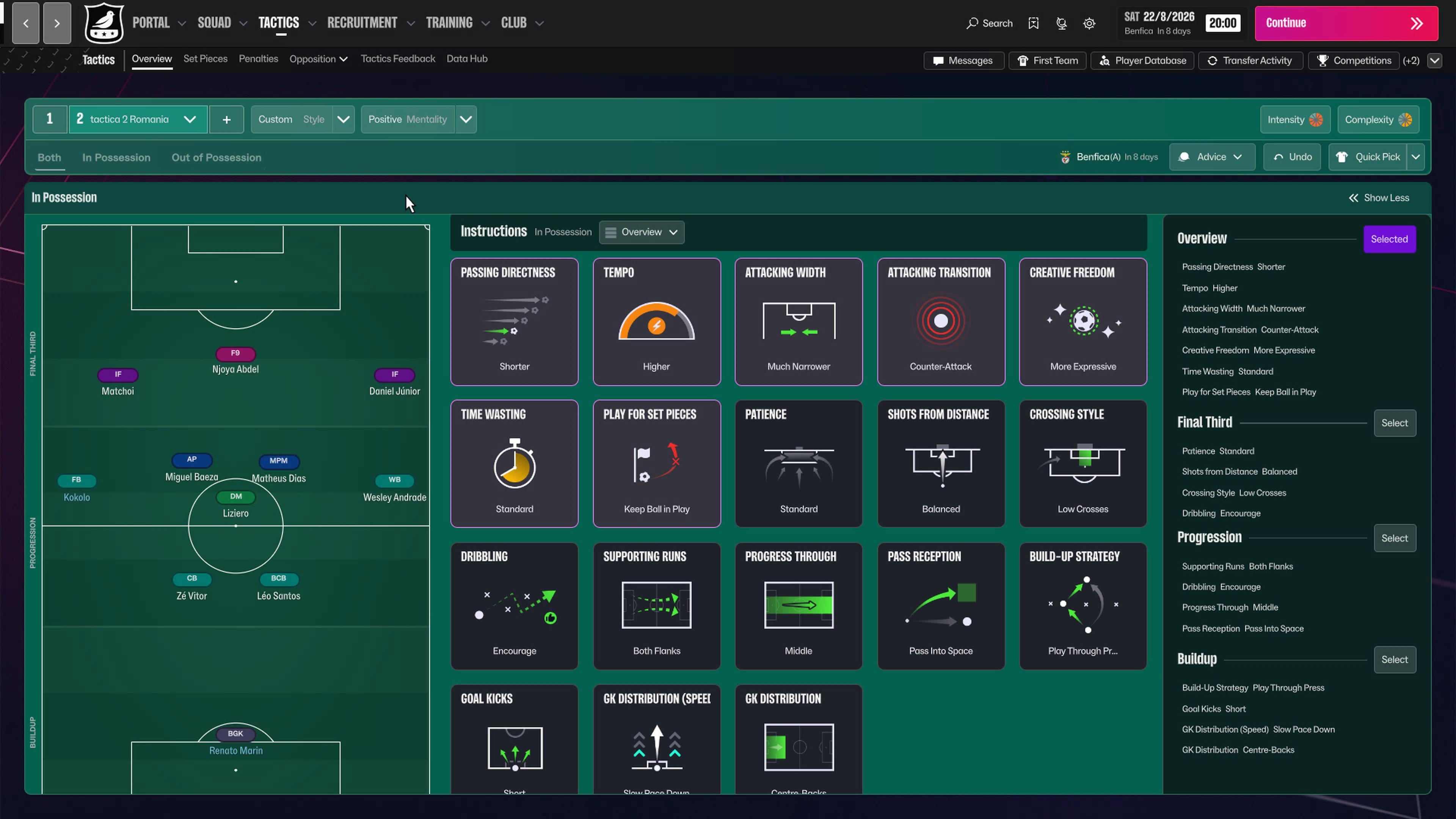
Vertical Tiki-Taka
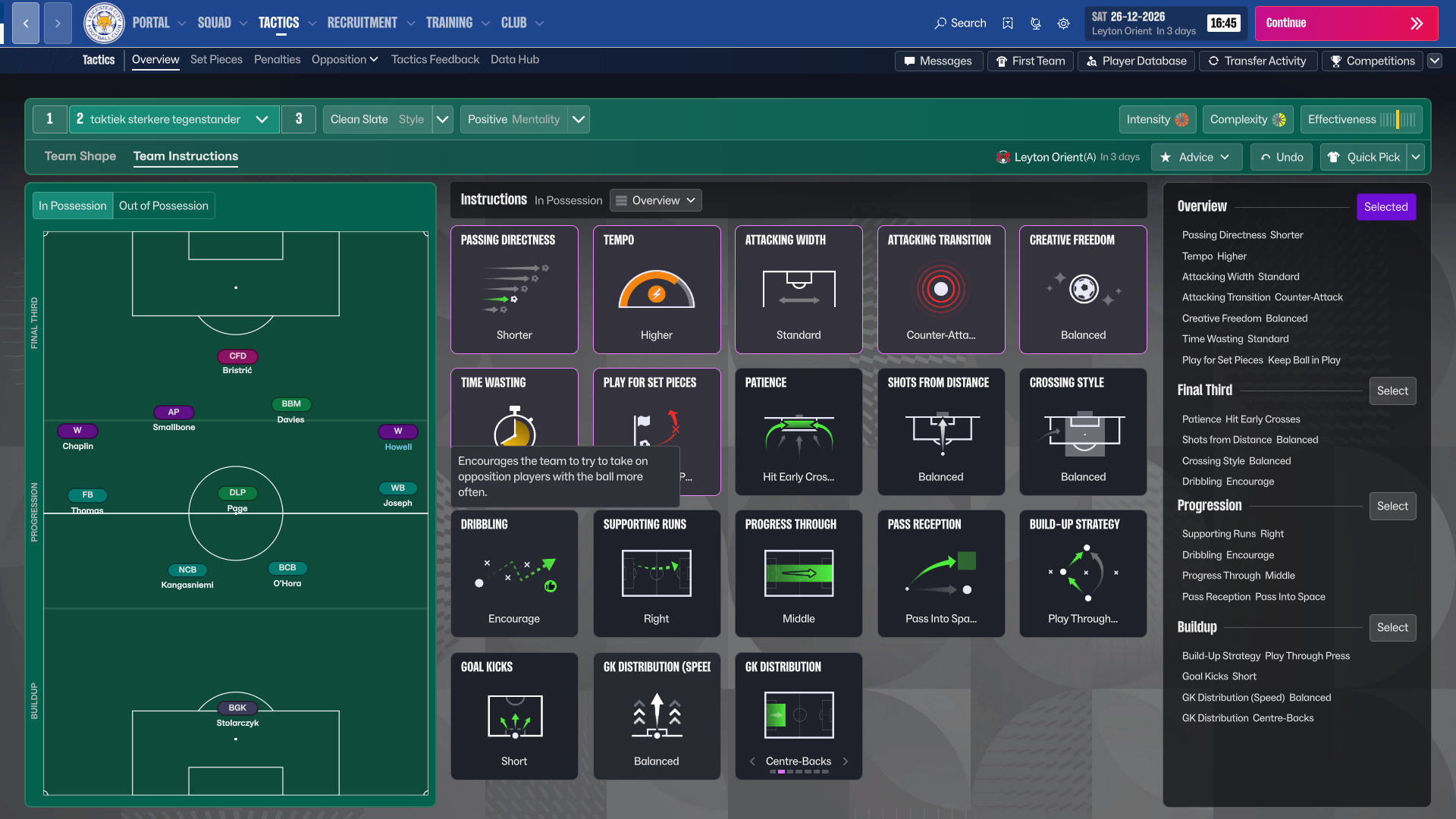
clean slate
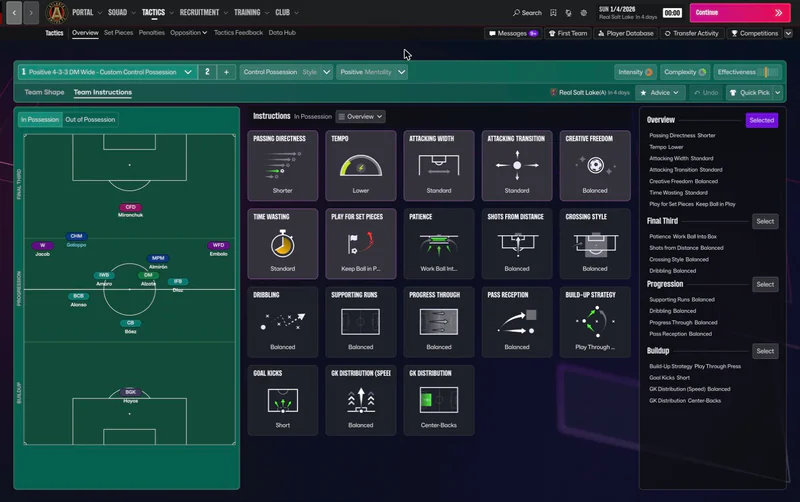
control possession
The tactical theory behind the 4-3-3 DM Wide: roles, instructions, and the trade-offs that decide whether the system holds up.
Why circulation density and zonal occupation aren't the same thing in FM, and the half-space occupation rule that decides build-up.
Build the patient, control-the-tempo style without watching your opponents counter through the gaps you leave behind.
The pairing rule for Defensive Line and Line of Engagement, all 9 combinations, and the gap that costs goals.