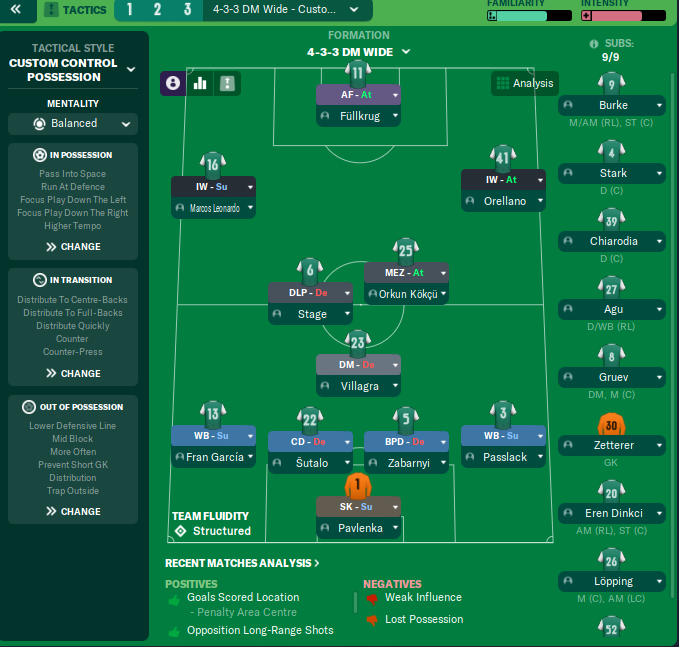
4-3-3 DM Wide
Utilizes wide players as Inside Forwards to stretch defenses, creating space for the central attacking players.
Loading tactical analysis...
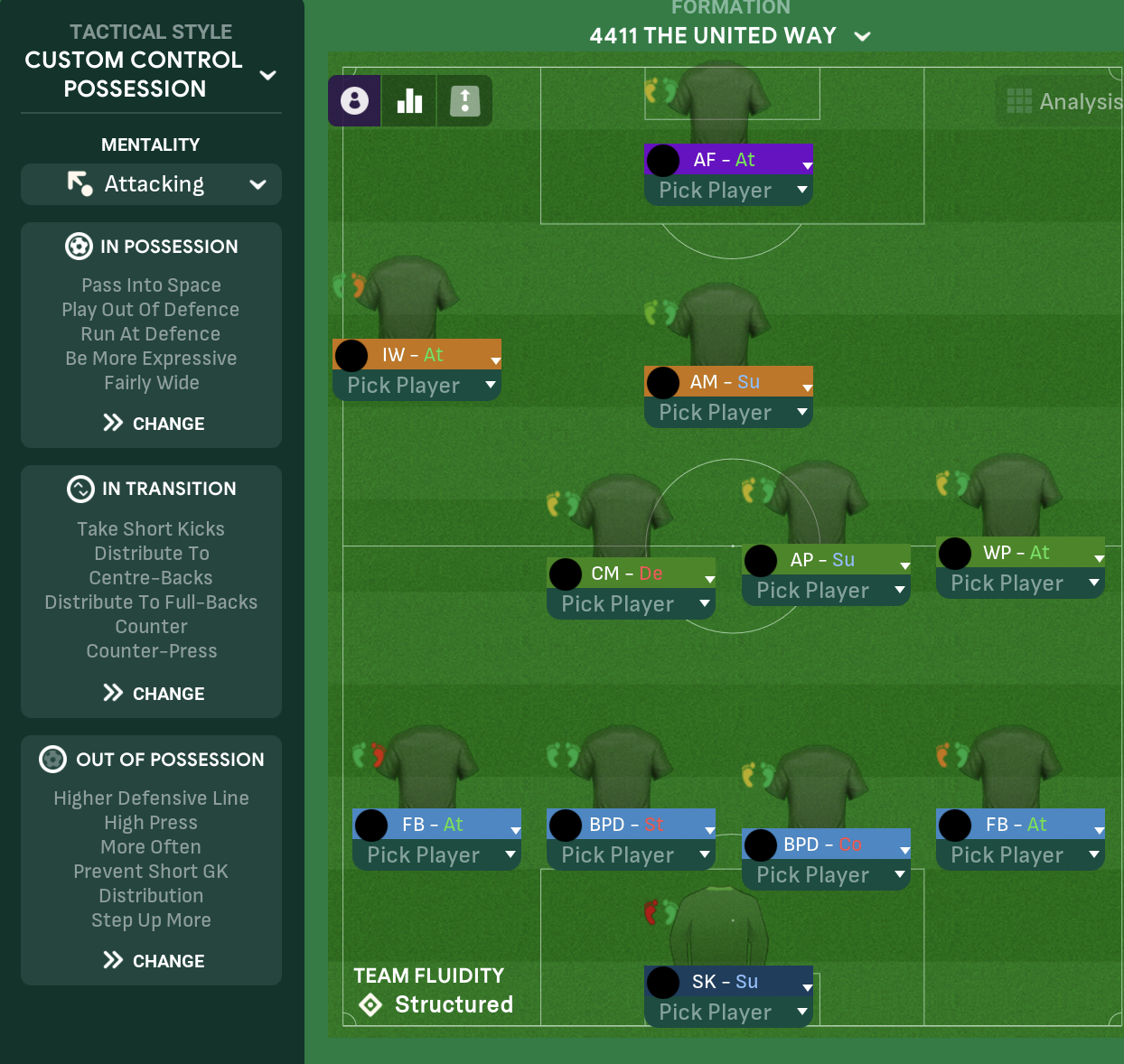
Custom Control Possession
Balanced
4-3-3 DM Wide
Structured
Pass Into Space
Run At Defence
Focus Play Down The Left
Focus Play Down The Right
Higher Tempo
Distribute To Centre-Backs
Distribute To Full-Backs
Distribute Quickly
Counter
Counter-Press
Lower Defensive Line
Mid Block
Prevent Short GK Distribution
Trap Outside
ST
Advanced Forward
Attack
LW
Inside Forward
Attack
RW
Inside Forward
Support
CM
Deep Lying Playmaker
Defend
CM
Mezzala
Attack
DM
Defensive Midfielder
Defend
FB
Wing-Back
Support
CB
Central Defender
Defend
CB
Ball-Playing Defender
Defend
GK
Sweeper Keeper
Support
Utilizes wide players as Inside Forwards to stretch defenses, creating space for the central attacking players.
The combination of a Deep Lying Playmaker and a Mezzala provides both creativity and stability in the midfield.
While there are attacking options on the wings, the Advanced Forward's positioning may congest the middle, limiting the effectiveness of the Mezzala.
A Sweeper Keeper with a support duty may not be optimized for high pressing, potentially exposing the defense if not well-timed.
How does the team perform against teams that sit deep defensively?
Are the players comfortable with the higher tempo of play?
What adjustments can be made for countering strong physical opponents?
Is the Sweeper Keeper's support duty affecting distribution efficiency?
How often do the Inside Forwards track back to support defensively?
Does the current midfield setup create enough chances for the forwards?
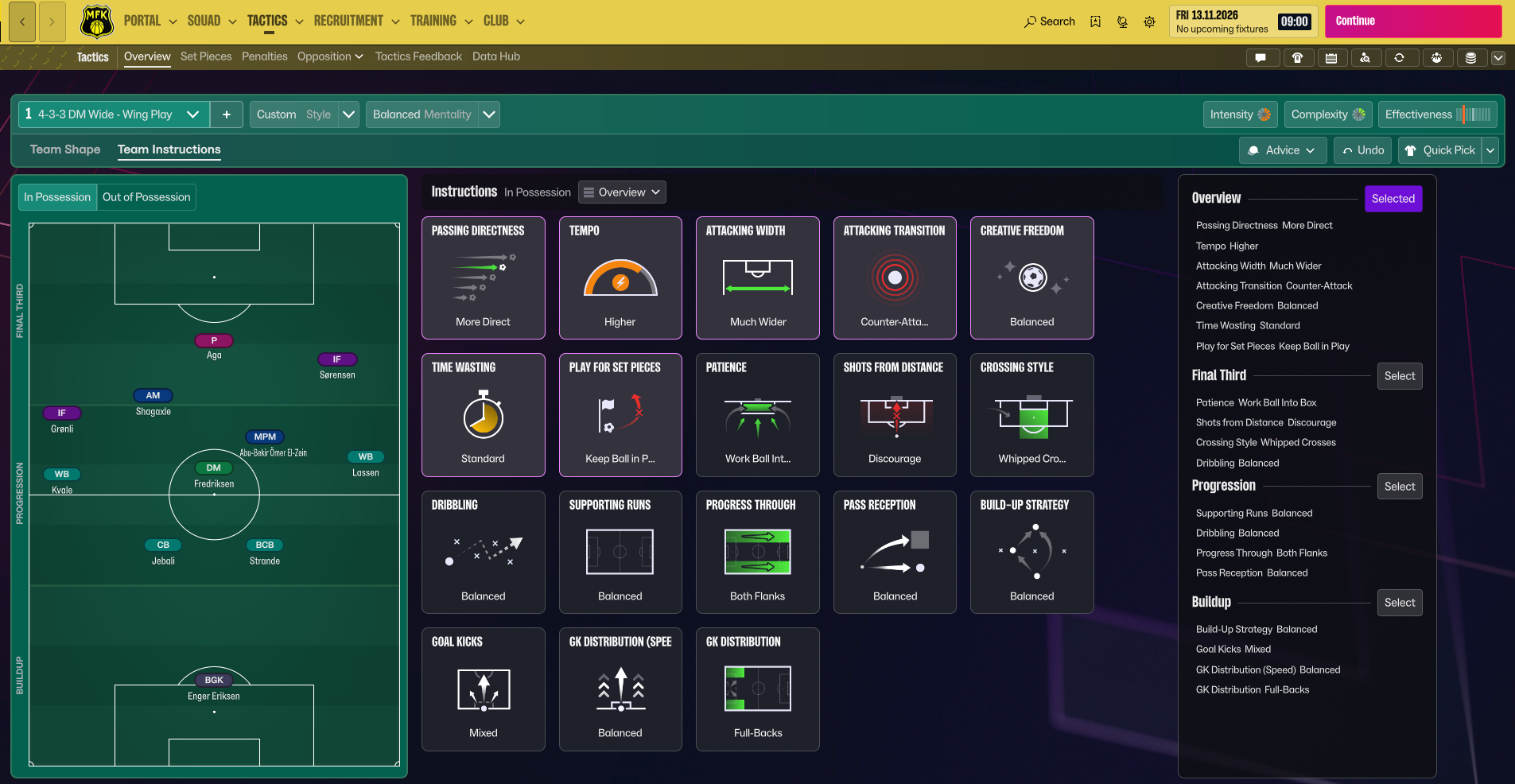
wing play
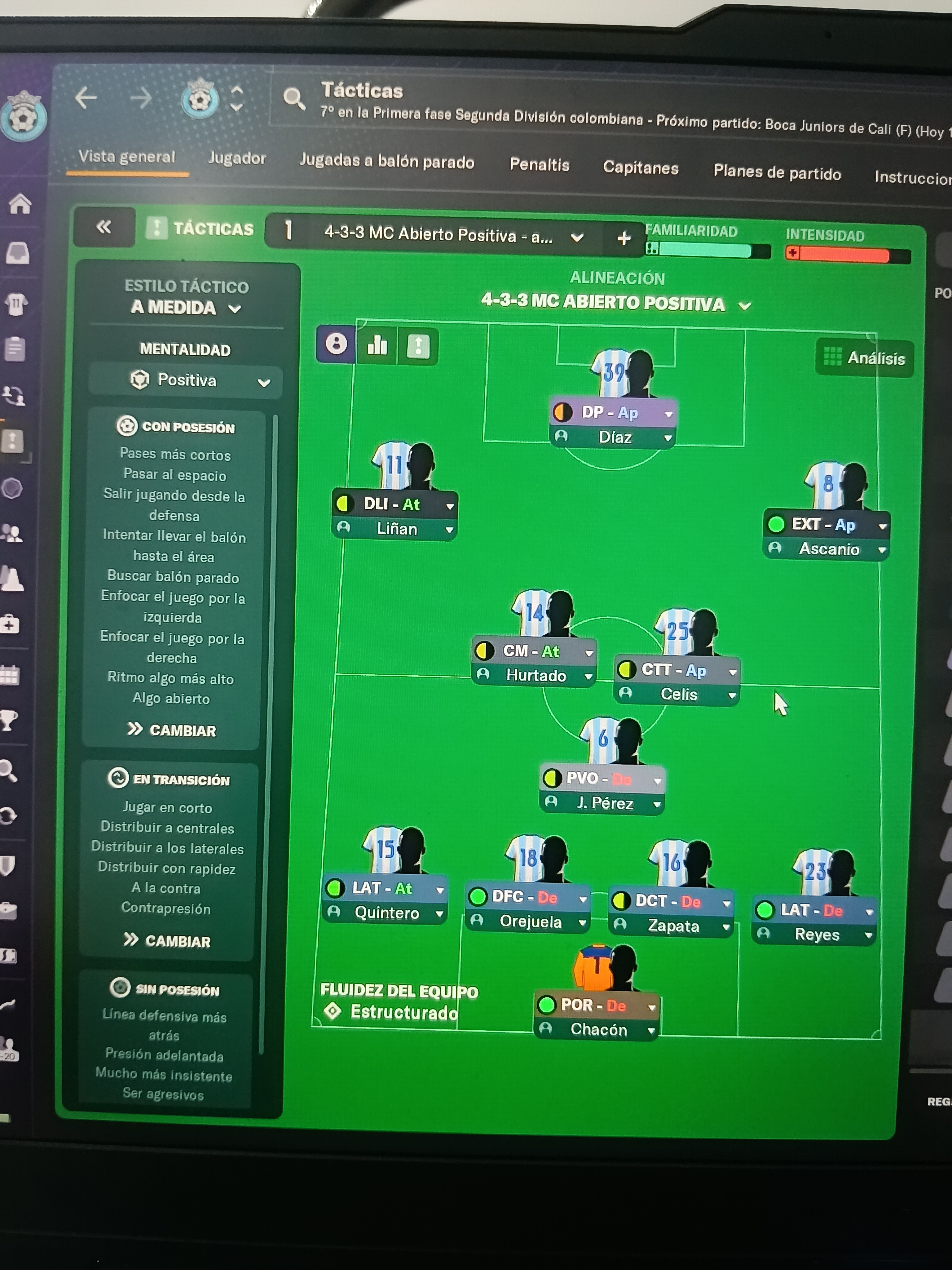
Gegenpress
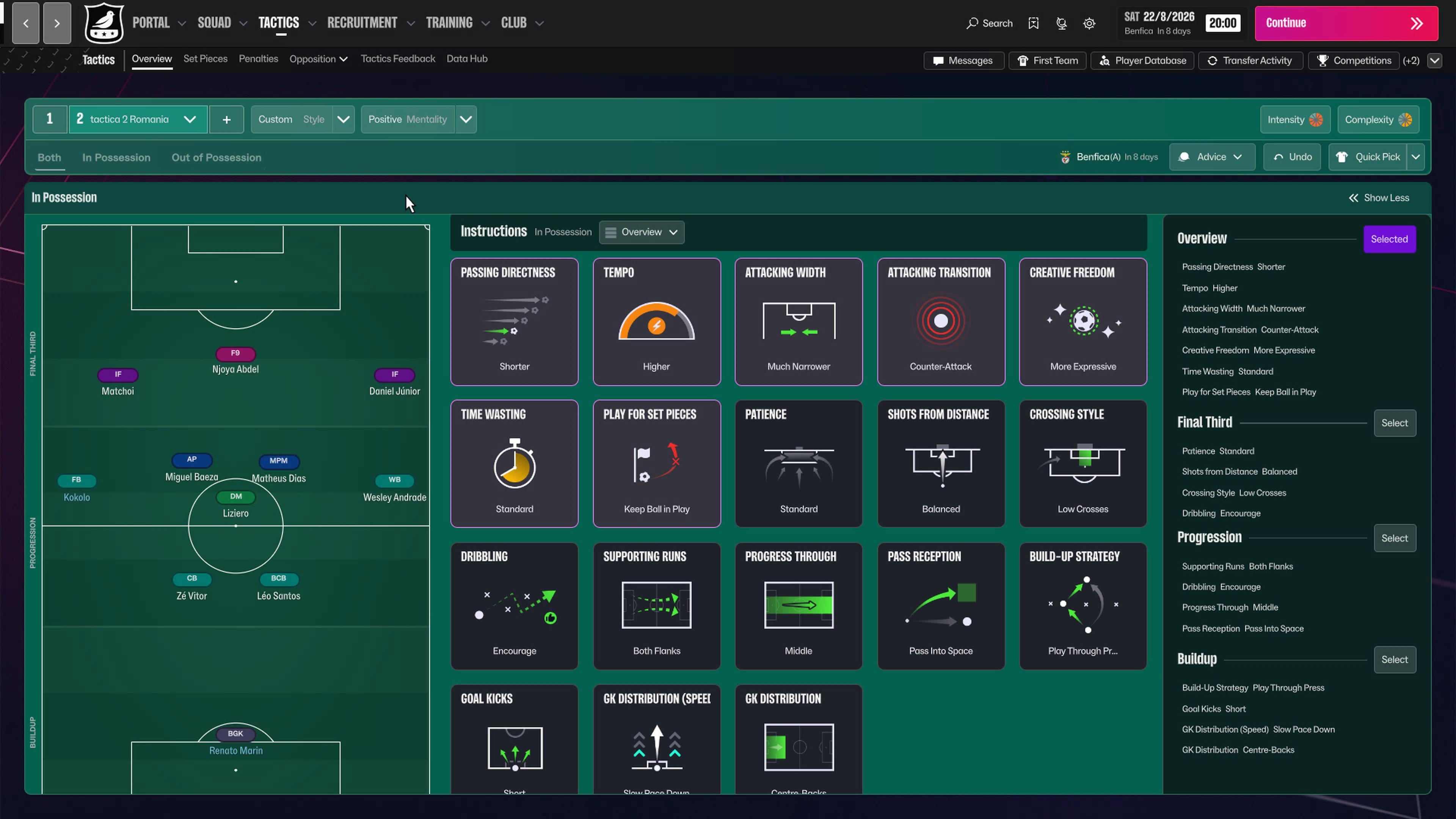
vertical tiki taka
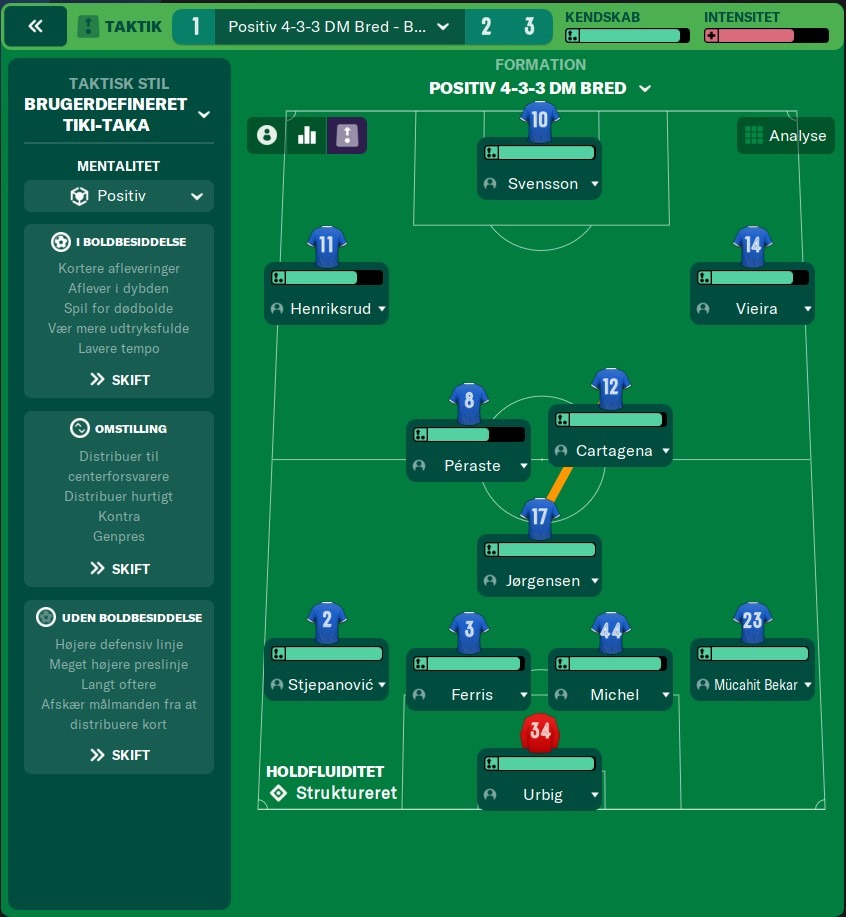
Tiki-Taka
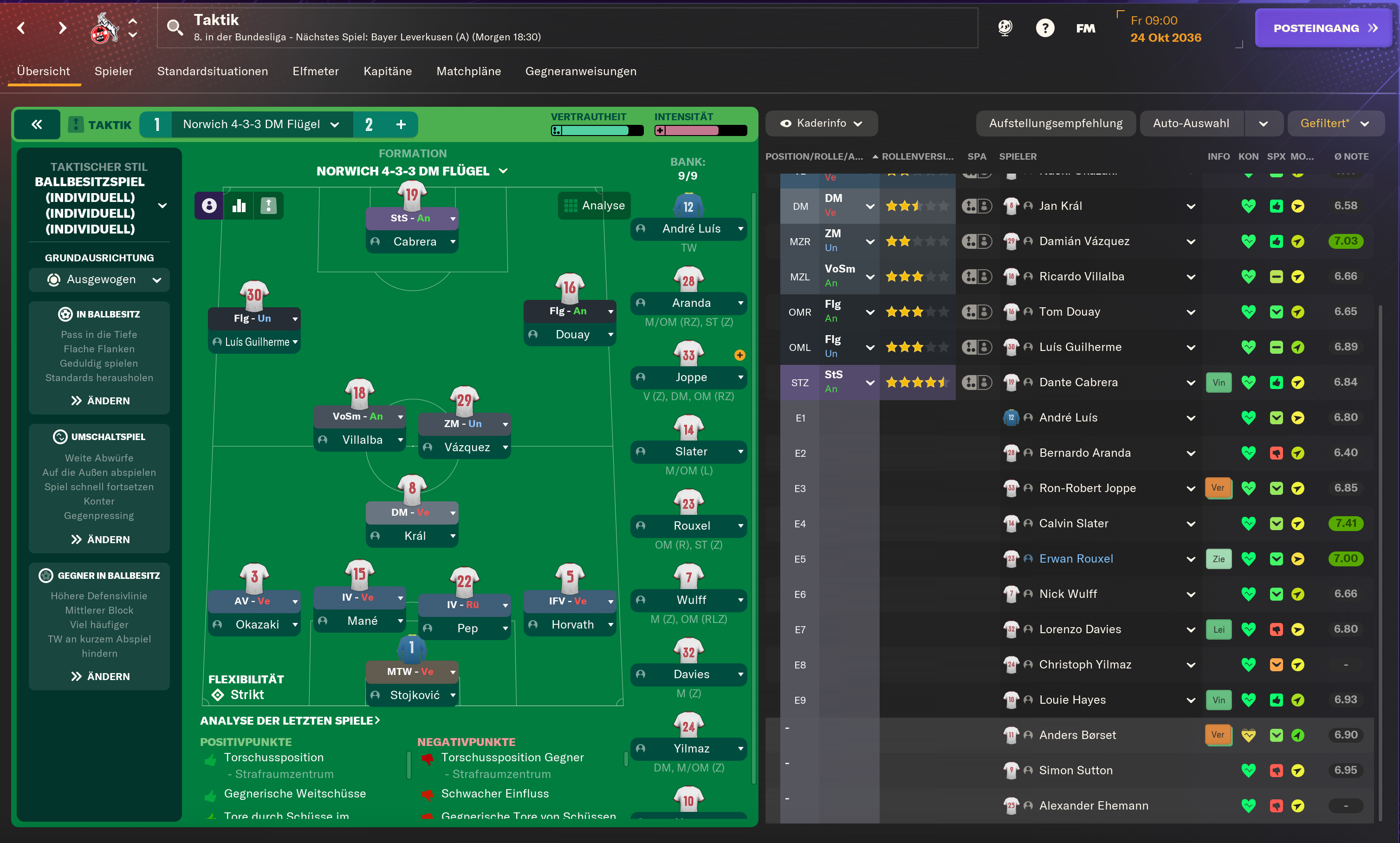
Wing Play
Vertical Tiki-Taka
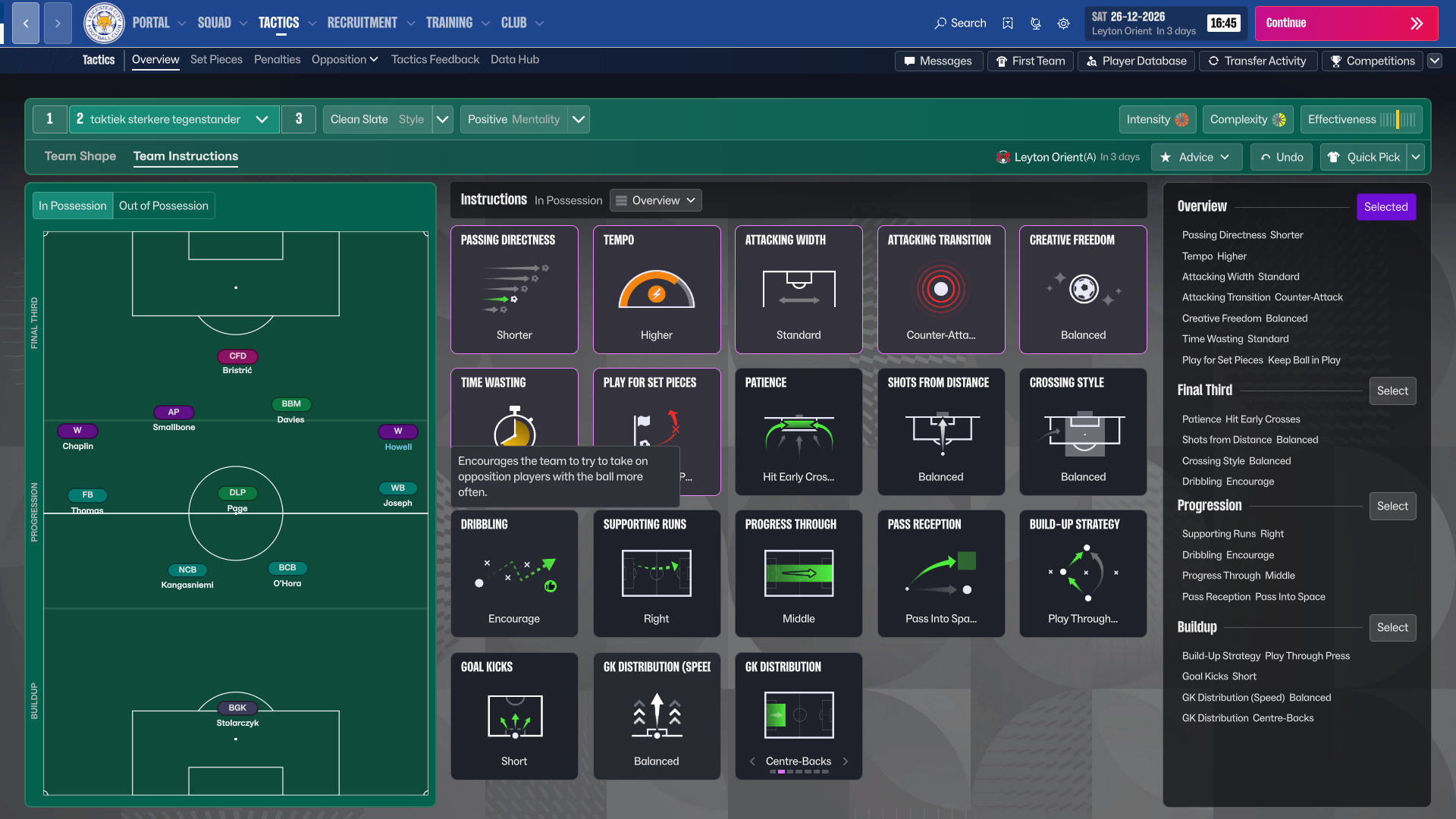
clean slate
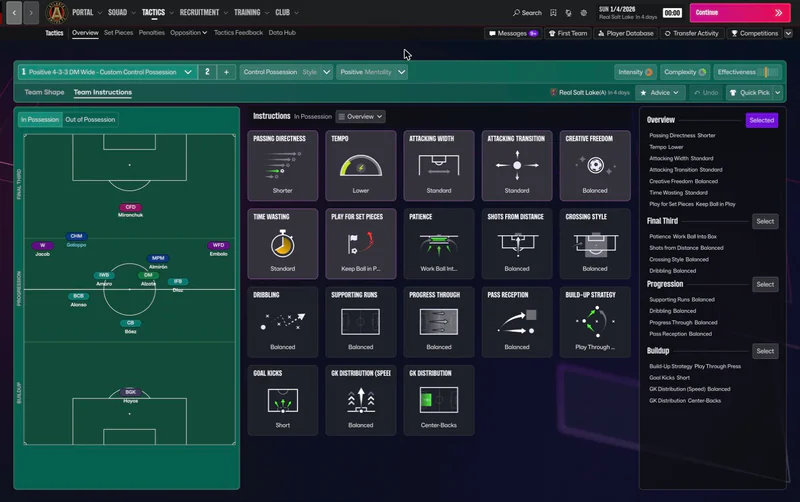
control possession
The tactical theory behind the 4-3-3 DM Wide: roles, instructions, and the trade-offs that decide whether the system holds up.
Holder, runner, creator: the role distribution rule for three-man midfields, the AMC variants, and the antipatterns that break them.
Klopp-style gegenpressing in FM, including squad profile, line-and-press pairing, sustainable workload, and the antipatterns to avoid.
How Mentality, Duty, and Role interact in FM, why duty trumps mentality every time, and the role-on-top-of-duty composition rules.